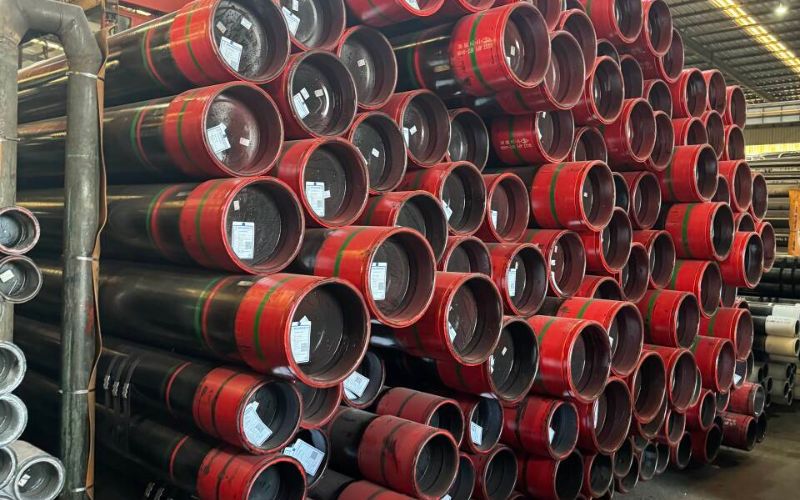
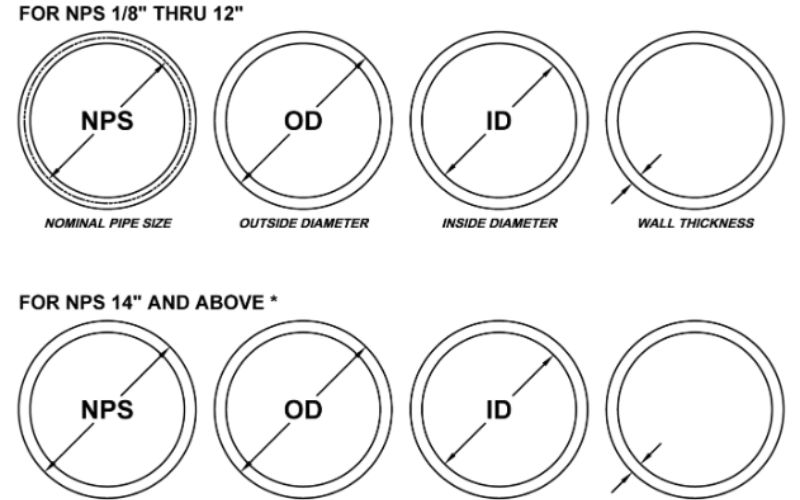
Engineers sizing 316 SS bolted connections, pressure piping or brackets encounter the same obstacle: Published shear strength figures are inconsistent, condition-specific, and seldom tied to the procurement specifications dictated by the ASTM standards that control actual purchase. This quick reference guide consolidates verified data directly from ASTM A31², A276 and A240 with the two commonly used calculation methods to help you make the leap from data retrieval to decision with only three browser windows and a conversion chart. For a quick refresher of why steel is different from stainless, see “Steel vs. stainless steel” before moving on to selecting the appropriate stainless alloy grade here.
316 Stainless Steel — Quick Reference Mechanical Properties
| Property | Metric | Imperial |
|---|---|---|
| Shear Strength (annealed, calculated) | 276–372 MPa | 40,000–54,000 psi |
| Tensile Strength (UTS) | 515–620 MPa | 74,700–90,000 psi |
| Yield Strength (0.2% offset) | 205–290 MPa | 29,700–42,100 psi |
| Shear Modulus | 77 GPa | 11,200 ksi |
| Elastic (Young’s) Modulus | 193–205 GPa | 28,000–29,700 ksi |
| Hardness (Rockwell B) | B 79 | — |
| Governing Standards | ASTM A312 (pipe) / A276 (bar) / A240 (sheet/plate) | UNS S31600 / AISI 316 |
Shear strength is a material property derived, not stipulated, in ASTM specifications. See section 3 of this guide for a step-by-step calculation with an e×ample.
316 Stainless Steel Shear Strength: The Reference Value
What is the shear strength of 316 stainless steel?
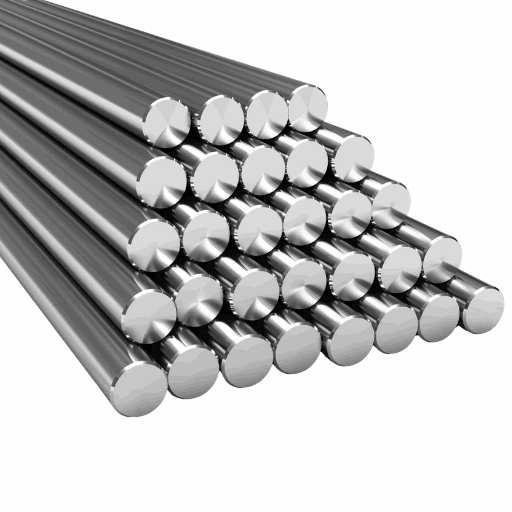
The shear strength of annealed 316 SS (which the vast majority of pipe, bars and sheets are shipped) ranges from appro×imately 309-372 MPa (44,800-54,000psi) – depending upon the precise ultimate tensile strength (UTS) of any particular lot of material. These are the values you obtain at the e×tremes (minimum 515 MPa, ma×imum 620 MPa) allowed by ASTM A312 specification (and found on A276 and A240 bars and plates). Average annealled 316 bar/sheet has a UTS of around 580 MPa and produces a shear strength of about 348 MPa (50,500 psi) calculated via standard engineering formulas using the 60% UTS engineering approximation (τu = 0.60 × UTS) — the industry standard method for austenitic stainless design.
316 SS has a shear modulus of 77 GPa (11,200 ksi) per BSSA structural design data. Note this is distinct from shear strength — the modulus describes elastic deformation under tangential load, while shear strength describes the maximum stress before fracture. The two terms are often conflated in materials databases.
Shear strength isn’t explicitly listed in ASTM specification tables A312, A276, and A240. Under the design requirements in BS 4 Part 4 and similar criteria, this property is “derived”, not a “specified” quantity. Any number quoted with or without referenced sources should be taken as “an estimation” rather than a specified value if you’re just picking a single number, say 400 MPa.
Table 1: 316 Stainless Shear Strength by Material Condition
| Material Condition | Basis UTS (MPa) | Shear Strength (MPa) | Shear Strength (psi) |
|---|---|---|---|
| Annealed — ASTM A312 minimum | 515 | 309 | 44,800 |
| Annealed — typical bar / sheet (MatWeb) | 580 | 348 | 50,500 |
| Annealed — upper ASTM spec range | 620 | 372 | 53,900 |
Calculated using the engineering approximation u=0.60 UTS. Note that application of the Von Mises calculation yields very close results (0.577 x UTS). Note that for actual project design using Mill Test Certification, you will want to calculate based upon the specified UTS of that specific heat.
Engineers Note: If your mill Test Certificatefor annealed 316 SS to A312 shows a UTS greater than the minimum 515 MPa which is typical, you will receive a more accurate, but less conservative value for the shear strength using that specific value in the formula. Designing to the A312 specification’s floor builds a margin sufficient for structural work but over-specifies for most lower stress process piping.
Complete 316 Stainless Steel Mechanical Properties (ASTM, 2025)
What is the yield strength of 316 stainless steel?
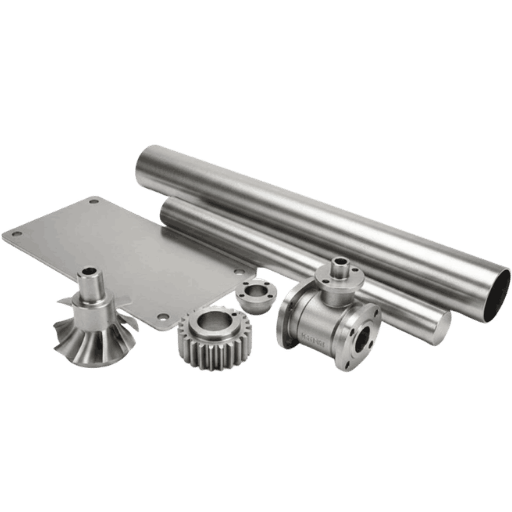
The minimum yield stress (0.2% proof strength) of annealed 316 stainless steel per ASTM A312 is 205 MPa (29,700 psi). Annealed sheets and bars will naturally exceed this — MatWeb material data for AISI 316 annealed sheet reports 290 MPa (42,100 psi). ASTM sets the floor; the vast majority of production heats run higher. For the full set of yield strength data at temperatures over a wide range, including loss from 205 MPa at ambient to only 75 MPa at 800°C, please visit our page on 316 stainless steel yield strength.
Full properties below – everything needed for your design drawings, fitness for service calculations or purchasing requirements. Data are taken from ASTM A312 (pipe), ASTM A240 (sheet/plate), MatWeb/ASM Database and BSSA structural design data. Applicable ISO Standards include for pipe ISO 2604-4, plates ISO 2604-1, and wire and bars ISO 4954.
Table 2: Full mechanical properties – AISI 316 stainless steel (annealed) (UNS S31600)
| Property | Metric Value | Imperial Value | Source / Standard |
|---|---|---|---|
| Ultimate Tensile Strength (UTS) | 515–620 MPa | 74,700–90,000 psi | ASTM A312 |
| Yield Strength (0.2% offset) | 205–290 MPa | 29,700–42,100 psi | ASTM A312 / MatWeb |
| Shear Strength (calculated) | 309–372 MPa | 44,800–54,000 psi | τu = 0.60 × UTS |
| Elongation at Break | ≥35–40% (in 50 mm) | ≥35–40% (in 2 in.) | ASTM A312 (pipe: 35%); A240 (sheet: 40%) |
| Shear Modulus | 77 GPa | 11,200 ksi | BSSA / EN 10088-1 |
| Elastic (Young’s) Modulus | 193–205 GPa | 28,000–29,700 ksi | AZoM / BSSA |
| Poisson’s Ratio | 0.265–0.30 | — | AZoM / BSSA |
| Hardness (Rockwell B) | B 79 | — | MatWeb |
| Hardness (Brinell, typical) | ~160 HB | — | Annealed condition |
| Impact Toughness (Charpy V-notch) | ~105 J | ~77 ft·lb | MatWeb |
| Density | 8,000 kg/m³ | 0.289 lb/in³ | BSSA |
| Thermal Expansion (20–100°C) | 16 × 10⁻⁶ /K | 8.9 × 10⁻⁶ /°F | BSSA / EN 10088-1 |
All values apply to the annealed condition at room temperature unless otherwise stated. Annealed 316SS will yield and give higher UTS; please recalculate shear strength from the MTC value for the applicable worked condition. Note that the ASTM minimum specifications represent a floor only, actual properties may be significantly higher.
A quick note about stainless steel behaviour: unlike carbon steels with their distinct elastic plateau, austenitic stainless steels do not yield cleanly, but instead work-harden past their 0.2% proof stress. For structural design, buckling and deflection calculations must use curves appropriate to austenitic stainless steel rather than those based on linear elastic-plastic behaviour (BSSA Guide and Eurocode EN 1993-1-4). The elastic modulus of 316 stainless steel — 193 to 205 GPa — remains essentially constant through the elastic range and enters the structural design equations for deflection and buckling resistance alongside the yield stress values.
How to Calculate 316 Stainless Shear Strength from Tensile Data
How do I calculate the shear stress and shear strength of 316 stainless steel?
If only Ultimate Tensile Strength (UTS) is quoted on your MTC (as is normal for ASTM A312 pipe, A240 plate and A276 bars) then the shear strength must be derived. There are two commonly used methods for this:
Method 1 — Von Mises Criterion (theoretical lower bound):
τu = 0.577 × UTS
Method 2 — Engineering Approximation (industry standard):
τu = 0.60 × UTS
The “0.6” factor or the von Mises factor of 0.577. Use the “0.6” approximation, as this incorporates a small inherent safety factor of roughly 4% over the von Mises limit of shear stress in tension, which is usually appropriate given the non-linear and “soft” stress-strain characteristic of stainless steels. The Tresca yield criterion (0.5*UTS) should not be used for ultimate fracture strength calculations.
Example Calculation – Standardannealed 316 bar (MTC: UTS = 580 MPa):
- Von Mises: ultimate shear stress = 580 * 0.577 = 335 MPa (48,600 psi)
- Approximate Method: ultimate shear stress = 580 * 0.6 = 348 MPa (50,500 psi)
- Note that the 0.6 factor gives about 4% higher strength; the choice between using 0.577 or 0.6 depends on your code, and your confidence level in the accuracy of theUTSfigure.
Bolt and Fastener shear: shear stress acts on the area at the shear plane. For a 316 SS bolt in single shear: = F / (/4 d) where d is the shank diameter. Be aware of the effect of stress concentrations at the radius of thread run-out – a sharp notch radius will increase local stress levels far above the nominal and is a very frequent initiation point for fatigue in connections that are subjected to cyclical loading.
For more details on how UTS is measured and quoted see our guide on tensile strength of stainless steel.
Table 3: Recommended Safety Factors – 316 SS Shear Applications
| Application Type | Minimum Safety Factor | Allowable Shear Stress (τu = 348 MPa typical) |
|---|---|---|
| Structural bolted connections | 2.5 | 139 MPa (20,200 psi) |
| Pressure piping (ASME B31.3) | 3.0 | 116 MPa (16,800 psi) |
| Marine hardware (non-primary structure) | 2.0 | 174 MPa (25,200 psi) |
| Food / pharma process equipment | 2.5–3.0 | 116–139 MPa |
Safety factors are engineer’s guides. Actual design figures will be to the code specified for the design of that connection (e.g. ASME, EN 1993-1-4, AISC 360, etc.). Ensure you refer to the specific code relevant to your calculation as it may indicate a different factor than those above.
316 vs 304 Stainless Steel Grade Comparison: Strength Properties
A persistent misconception drives 316 vs 304 grade selection in shear-critical connections: many engineers assume a meaningful strength differential exists between the two grades. Many engineers assume that because 316 SS possesses corrosion resistance capabilities above that of 304 SS, that this translates into increased tensile and/or shear strength that needs to be accounted for. Unfortunately, this is simply not the case, according to ASTM data.
As per the minimum mechanical properties shown in ASTM Specifications, both 316 SS and 304 SS have the same strength in their annealed condition:
Table 4: 316 vs 304 Stainless Steel – Side-by-Side Mechanical Comparison (Annealed)
| Property | 316 (UNS S31600) | 304 (UNS S30400) | Difference |
|---|---|---|---|
| UTS minimum (ASTM) | 515 MPa (74,700 psi) | 515 MPa (74,700 psi) | None |
| Yield min (0.2%, ASTM) | 205 MPa (29,700 psi) | 205 MPa (29,700 psi) | None |
| Shear Strength (calculated, τu = 0.60 × UTS min) | ~309 MPa (44,800 psi) | ~309 MPa (44,800 psi) | None |
| Elongation minimum | 40% | 40% | None |
| Mo content | 2.0–3.0% | 0% | 316: superior pitting resistance |
| Cr content | 16.0–18.0% | 18.0–20.0% | 304: slightly higher Cr |
| Pitting Resistance Equiv. (PRE = %Cr + 3.3×%Mo) | ~26 | ~18 | 316: ~44% better pitting resistance |
| Typical price vs. 304 baseline | 20–30% premium | Baseline | 316: higher procurement cost |
What does this mean in a practical sense? Simply that for a shear critical application located in a less aggressive or low chloride environment, specifying 316 SS over 304 SS will lead to a higher price tag with absolutely no additional gain in shear strength or overall capacity. The addition of Molybdenum to 316 SS (UNS S31600) over 304 SS (UNS S30400) enhances its pitting corrosion resistance index by around 44%, not its tensile and shear strength performance.
Procurement Scenario: Structural stainless steel fasteners are required for a coastal facility’s structural connections. Design engineer selects grade 316 under the assumption it carries greater shear loads than 304. This assumption, as the data indicates, is erroneous. The more expensive specification for the 316 material is warranted by chloride exposure and the aggressive saltwater spray, not a required strength advantage over 304 SS. In a less aggressive environment, however, the design engineer could confidently specify 304 SS and see meaningful cost savings on future projects.
For free-machining grade comparison with shear strength in mind, see the article on 303 stainless vs 316 in fasteners. You can also access full 304 properties on our 304 stainless steel properties reference page.
Why 316 Stainless Shear Strength Matters in Corrosive Environments
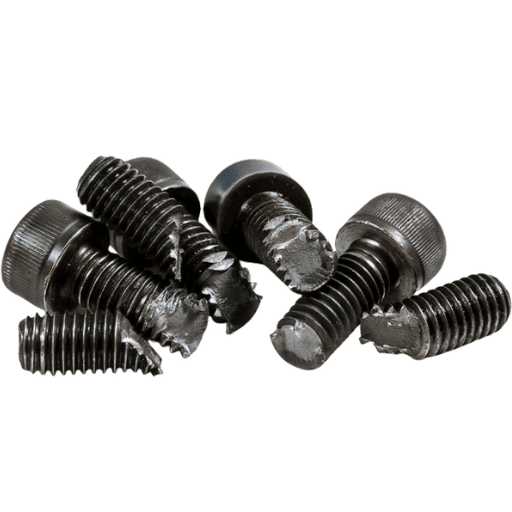
In the context of a corrosive environment, the problem is not about determining the greater strength between the two grades (both were shown to be equal in section 4 of this article). The true problem lies in which material will retain its structural integrity over time when subjected to combined chemical and mechanical loading. A 304 stainless steel member subjected to the pitting induced by stresses concentrated around small radius flaws will initiate a fatigue crack at a stress far below that which it is theoretically capable of resisting in pure shear. Its effective shear capacity will be lost before this threshold is met.
According to the British Stainless Steel Association (BSSA): “ austenitic stainless steels will accommodate the initial strain without yielding but, given sufficient energy, may fracture suddenly. Subsequent loading beyond elastic deformation…”
Stainless steel behaves differently, and doesn’t have the distinct ‘yield point’ found in carbon steel. Differences in this stress-strain behaviour impact on both local and lateral-torsional buckling (flexural, local and lateral-torsional) of stainless steel sections and will influence deflection levels. Consequently it is essential to use buckling curves appropriate to the grade of stainless steel concerned.
This smooth stress/strain curve provides benefit for 316 under simultaneous corrosion/shear loading. Under fluctuating loading in a corrosive environment the material redistributes stress around potential areas of high concentration and ‘bends’ more than it ‘snaps’.
The material can continue to yield locally and can survive significantly more local yield without final fracture.
Table 5: Application Matrix – Combined Shear Strength + Corrosion Resistance
| Environment / Industry | Primary Corrosion Risk | Shear-Critical Application | Grade Recommendation |
|---|---|---|---|
| Marine / offshore | Chloride pitting, crevice corrosion | Structural bolts, brackets, pipe hangers | 316 / 316L mandatory |
| Chemical processing | Acid attack (phosphoric acid, dilute H₂SO₄) | Pipe flanges, reactor nozzles, pump casings | 316 / 316L (verify for specific media) |
| Pharmaceutical (FDA cGMP) | CIP/SIP cleaning agents, halide sanitizers | Process piping welds, clamps, fittings | 316L preferred (weld sensitization control) |
| Food processing | Saline solutions, acidic food products | Conveyor fasteners, tank brackets | 316 / 316L adequate |
| Oil & gas (sweet service) | CO₂, brine, mild H₂S | Instrumentation, small-bore process piping | 316L (verify NACE MR0175 for H₂S service) |
| Architectural / structural (coastal) | Atmospheric chlorides, urban pollution | Cladding fixings, structural fasteners | 316 standard; 304 acceptable inland |
Stress Corrosion Cracking: When Shear Stress and Corrosion Interact
In industrial environments, stress corrosion cracking (SCC) becomes a risk in the presence of elevated temperatures and chloride concentrations above 60°C — regardless of 316 grade — when sustained tensile stress exceeds the threshold for the specific environment. Shear stress at notch roots and connections can contribute to this sustained tensile loading. At higher combinations of temperature/chloride concentration, duplex steels with high PRE should be employed. Please see our guide to stainless steel and rust for broader information.
316 vs 316L Shear Strength: Is There a Meaningful Difference?
It is worth remembering what the “L” actually means: it implies a low carbon content – max 0.03% (v max 0.08% for “standard” 316). But for shear strength its role can be over estimated.
As the Minimum UTS for 316 / 316L Pipe is identical as per ASTM A312:
Table 6: 316 vs 316L – ASTM A312 Minimum Property Comparison
| Property | 316 (S31600) | 316L (S31603) | Engineering Impact |
|---|---|---|---|
| UTS minimum (ASTM A312) | 515 MPa | 515 MPa | Shear strength baseline: identical |
| Yield strength min (0.2%, ASTM A312) | 205 MPa | 170 MPa | 316L: 17% lower — affects buckling, not shear fracture |
| Shear Strength (τ = 0.60 × UTS min) | ~309 MPa | ~309 MPa | No practical difference |
| Carbon content (maximum) | 0.08% | 0.03% | 316L: better weld sensitization resistance |
| Sensitization risk during welding | Present if held above 425°C | Minimal | 316L preferred for welded structures in corrosive service |
| Dual-certified 316/316L option | Yes | Yes | Common stock form; verify carbon on MTC |
Shear fracture is dictated by uts and as this is identical between both grades as per ASTM A312 (515 MPa). In calculations an engineer moving between grades will see absolutely no variation in shear strength. Whilst 316L’s lower minimum yield will effect performance related to buckling of columns and deflection critical structural elements, it will have zero affect in respect of shear fracture calculations.
Carbon content is the critical factor affecting both grades in welded corrosive-service applications. For 316’s maximum carbon content up to 0.08%, ‘weld sensitization’ may occur.
Within the heat affected zones (HAZ’s) chromium precipitates ( carbides precipitate at grain boundaries), if subjected to temperature ranges over 425 °C, and thus reduces local corrosion resistance. 316L’s lower carbon levels effectively remove this concern, simplifying post-weld processing such as where the requirement is the elimination of this risk to comply with, for instance, post-weld passivation procedures for piping systems in the pharmaceutical industry.
Smart Tip – Dual-Certificated 316/316L Pipe and Bar!
Most stainless steel 316 pipe, bar and sheet sold by distributors is dual certified (i.e. meets the criteria for both ASTM A312 TP316 and ASTM A312 TP316L simultaneously). Some heats with up to 0.03% carbon will still achieve a yield in excess of 205MPa. Just confirm the precise carbon and yield values on your Mill Test Certificate.
This will ensure maximum flexibility. (Please see our article ‘How to read your Mill Test certificate for Stainless Steel’ to ensure you maximise the benefits of this.)
Selecting Seamless 316 Stainless Steel Pipe for Shear-Critical Applications
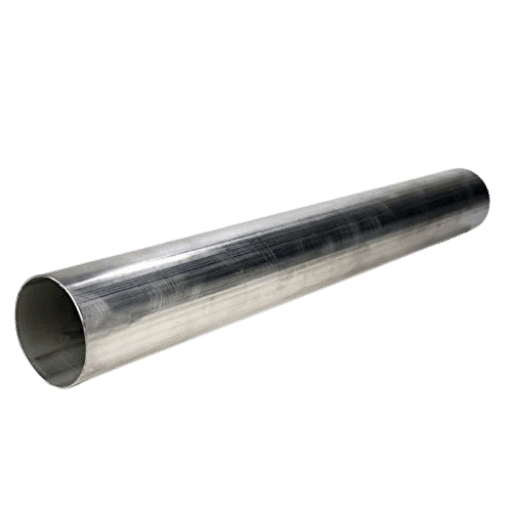
In pressure pipe systems, shear stress exists in three forms: transverse from a bending load on the pipe body, torsional from torque transmitted at connections and a punching shear that occurs at nozzles where they attach to the pipe body. Selection of the wall thickness – and thus schedule – must consider hoop stress from internal pressure, together with the superimposed shear stresses from system loads. Many high pressure piping systems are designed based on pressure capacity alone and do not include provision for the additional transverse shear loading caused by pipe bending.
ASTM A312 covers the manufacture of seamless pipes in 316 stainless steel. Based on the minimum tensile strength for A312 grade pipe – UTS of 515 MPa – and Barlow’s formula, (P = 2St/D), a minimum wall thickness could be selected that accounts for the internal pressure P and the allowable design stress S. For industrial and process piping using ASME B31.3 code rules, the allowable design stress for 316 SS in its annealed state can be readily obtained from code tables – never derive it just from UTS!
Decision Matrix: Specify 316 Seamless Pipe for Shear-Critical Service
| Operating Condition | Recommended Path | Grade |
|---|---|---|
| Media = chloride-rich AND service temp > 60°C | 316/316L mandatory; evaluate SCC risk; consider duplex above 80°C in aggressive chloride service | 316 or 316L |
| High shear load + high pressure (>100 bar design) | Specify Sch 40S or heavier; perform combined stress check — hoop + bending + shear | 316 (higher yield min preferred over 316L) |
| Welded construction in pharmaceutical or food service | 316L for sensitization control; post-weld solution anneal if standard 316 is used | 316L preferred |
| Design shear stress requirement > 200 MPa | Standard annealed 316 insufficient (allowable = 116–139 MPa with safety factors); specify cold-worked 316 or duplex 2205 | Cold-worked 316 or duplex |
| General process piping, non-corrosive media, moderate pressure | Evaluate whether 304 meets corrosion requirements; identical shear capacity at lower cost | 304 or 316 per media assessment |
Wall thickness for shear-loading-critical applications should be calculated explicitly and referenced on the design package, not left solely to standard schedule tables. While 316 stainless Schedule 10S can meet pressure requirements for low-pressure, low-loading situations, when bending-induced transverse stresses increase, thinner schedules become deficient. Schedules 40S and 80S provide increased shear area and stiffness, which results in lower transverse stresses under pressure and system loading.
Refer to our seamless stainless steel pipe catalog for information on purchasing ASTM A312 grade 316 seamless pipe, including the supply of TP316 and TP316L schedules, full material test reports and material test certification. Where loads are generally light and the cost is a significant factor, consider cost-effective ASTM A358 grade 316 stainless welded pipe in a similar service application.
Industry Outlook: 316 Stainless Steel Demand and Grade Trends (2025–2026)
Ordering cycle times for 316 stainless steel reflect the market dynamics within key consuming sectors. The total market for 316 stainless steel was valued at approximately $5.8 billion in 2025, and it is projected to reach a value of $10.1 billion by 2034 at a compound annual growth rate of 6.2%, based on third-party market data.
Three sector-specific growth drivers are significantly contributing to the global consumption of 316 stainless steel:
- Global pharmaceutical expansion and regulation; new capacity for bioreactor and vaccine manufacturing is driving increased 316L stainless steel consumption for pharmaceutical fluid process piping, and cleanroom expansions across Asia continue this growth trend. New process instrumentation built to ultra-high-purity and regulatory standards is also boosting 316 stainless usage in this market sector.
- Subsea and marine infrastructure: deepwater projects requiring corrosion-resistant, high-integrity pipe material — particularly those with sustained seawater chloride exposure — specify 316 or higher grades. Growth areas within this sector include deepsea offshore platform construction, port expansion projects, and other maritime infrastructure requiring a combination of pressure, corrosion, and structural integrity.
- Growing Asia investment in chemical plants: several new projects in the Southeast Asian chemical industry, many for acid production or involving phosphoric and dilute sulfuric acids in processing, are consuming significant volumes of 316 stainless steel piping. Other sector demand is from the requirement to safely transfer many other challenging chemicals.
Procurement impact: Grade-specific 316 supply has been restricted and the spread over 304 prices widened relative to norms. For the pharmaceutical and offshore industries, EPC contractors managing project schedules increasingly prefer long-term supply contracts for ASTM A312 seamless pipe.