📐 Quick Reference: Pipe Schedule Overview
- Governing Standard: ANSI/ASME B36.10M (carbon steel) ANSI/ASME B36.19M (stainless steel)
- Schedule Range: Sch 5, 10, 20, 30, 40, 60, 80, 100, 120, 140, 160, STD, XS, XXS
- NPS Coverage: through 36 (DN 6 through DN 900)
- Key Rule: higher schedule number = thicker wall = higher pressure capacity
- Common mistake: STD Sch 40 for pipe NPS 12 and above
A pipe schedule chart is among the most widely used reference tools in piping engineering, steel procurement, and construction planning. Schedule numbers are translated to actual wall thickness dimensions in hundreds of a inch in the sheet metal world- removing guesswork from every piping purchase and delivery. But only a fundamental understanding of what those schedule numbers mean, how they are defined, and where they apply differentiates the novice “grab a spec” ordering approach to the informed, engineered choice.
Below you will find the global pipe schedule chart per ASME B36.10M for carbon, and ASME B36.19M, stainless steel pipe, with dimension references specific to Schedule 40 and Schedule 80- the two most prevalent and industrially often specified schedules in pipe orders.
What Is a Pipe Schedule and Why Does It Matter?
What is a pipe schedule? A steel pipe schedule is defined by ASME B36.10M. it is an identifier for a series of weight and thickness steps which specify the wall thickness of a steel pipe for a given nominal pipe size (NPS). This a series number: Sch 5, 10, 20, 30, 40, 60, 80, 100, 120, 140, 160, along with the traditional Sch designation STD (Standard), XS (E×tra Strong), and XXS (Double e×tra strong).
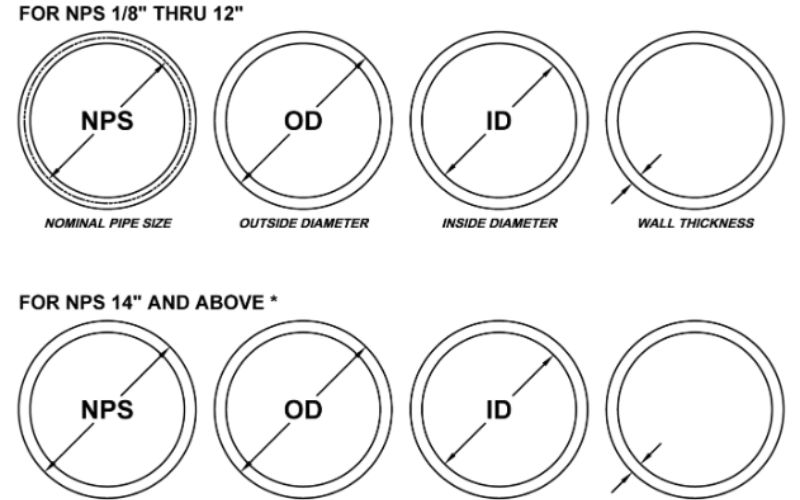
Greater pipe wall thickness = a higher schedule number for any given NPS, or higher pressure capacity. ANSI developed the scheme- often shortened to “sched” in a shop drawing- to create a high or low-pressure system that was interchangeable for all industries. So, NPS has the same outside diameter, whatever the schedule, only the wall wall varies. Actually, this is the main reason owners and contractors specify a schedule, rather than a wall thickness: changing from NPS 12 Sch 40 to NPS 12 Sch 80 doubles the weight and price but doesn’t change the flanges!
NPS is a North American width designation based on inches. In international nomenclature, the equivalent is DN (Nominal Diameter), expressed in millimeters. This is not a direct mm translation of NPS- it is simply a rounded he Nominal designation. For example, NPS 2 = DN 50, even though the OD measure 60.3 mm., The metric designation typical of NPS is DN, designed and distinguished by ISO 6708.
What Is the Nominal Pipe Size (NPS)?
Nominal Pipe Size is the equivalent absent non-dimensional designator for pipe throughout the North American industry. It does not relate the NPS number with the outside diameter for NPS through NPS 12 (this is an artifact from the older era of iron pipe which had vastly thicker walls so NPS roughly indicated the bore). Above NPS 14, the actual outside diameter is still the size in inches. This defeats similar ignorance on the part of ordering departments, where 4 inch NPS pipe has an outside diameter of 4.500 not 4.000. Always check the pipe schedule chart to make sure you are ordering according to the correct outside diameter. Note that the nominal bore (NB) terminology still found in some specs is equivalent to NPS.
Another potential point of confusion arises from standards for pipe vs tube. The tube NPS is based on actual outside diameter, while the pipe NPS is based on NA (nominal bore). Confusing the two in specifications will lead to fit-up issues on site.
How Pipe Schedule Numbers Are Calculated
The ‘original’ pipe schedule formula (introduced with the 1939 ASA B36.10 original B16.10 standard, now revised as ASME B36.10M) is inline with the max. working pressure and allowed material stress:
P = design pressure (psi) · S = allowable stress of material at design temperature (psi)
For instance, carbon steel pipe (ASTM A106 Grade B) at room temperature, with an allowed stress of approx. 16,600 psi. With a design pressure of 1,000 psi: Sch = 1,000 1,000 / 16,600 60. .
resulting in a Schedule 60 designation — the bore specified in the ASME table.
However, modern schedule designations in the ASME B36.10M chart do not necessarily follow the formula, but rather are distanced into types, which prescribe non-dimension wall thickness values in inches. When in doubt; the specification costumer’s need should define the line size, but the exact dimensions should be checked against the chart, below.
Complete Pipe Schedule Chart — NPS ⅛″ to 24″
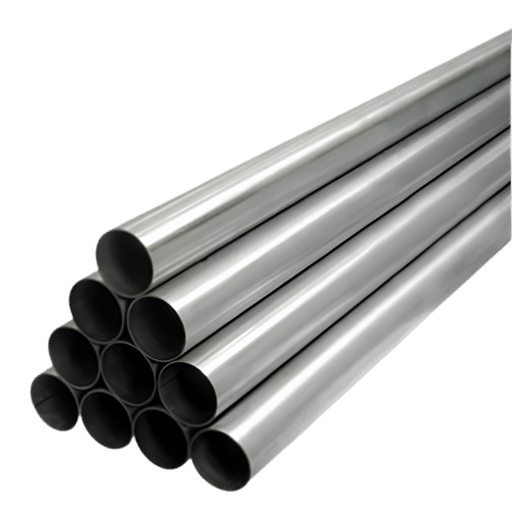
Below is a pipe schedule size chart listing wall thickness values in inches for the most commonly specified schedule designations per ASME B36.10M. Outside diameter stays constant for each NPS regardless of schedule — only wall thickness and inside diameter change:
| NPS | DN | OD (in) | OD (mm) | Sch 5 | Sch 10 | STD | Sch 40 | XS | Sch 80 | Sch 160 | XXS |
|---|---|---|---|---|---|---|---|---|---|---|---|
| ½ | 15 | 0.840 | 21.3 | 0.065 | 0.083 | 0.109 | 0.109 | 0.147 | 0.147 | 0.187 | 0.294 |
| ¾ | 20 | 1.050 | 26.7 | 0.065 | 0.083 | 0.113 | 0.113 | 0.154 | 0.154 | 0.218 | 0.308 |
| 1 | 25 | 1.315 | 33.4 | 0.065 | 0.109 | 0.133 | 0.133 | 0.179 | 0.179 | 0.250 | 0.358 |
| 1½ | 40 | 1.900 | 48.3 | 0.065 | 0.109 | 0.145 | 0.145 | 0.200 | 0.200 | 0.281 | 0.400 |
| 2 | 50 | 2.375 | 60.3 | 0.065 | 0.109 | 0.154 | 0.154 | 0.218 | 0.218 | 0.343 | 0.436 |
| 3 | 80 | 3.500 | 88.9 | 0.083 | 0.120 | 0.216 | 0.216 | 0.300 | 0.300 | 0.437 | 0.600 |
| 4 | 100 | 4.500 | 114.3 | 0.083 | 0.120 | 0.237 | 0.237 | 0.337 | 0.337 | 0.531 | 0.674 |
| 6 | 150 | 6.625 | 168.3 | 0.109 | 0.134 | 0.280 | 0.280 | 0.432 | 0.432 | 0.718 | 0.864 |
| 8 | 200 | 8.625 | 219.1 | 0.109 | 0.148 | 0.322 | 0.322 | 0.500 | 0.500 | 0.906 | 0.875 |
| 10 | 250 | 10.750 | 273.1 | 0.134 | 0.165 | 0.365 | 0.365 | 0.500 | 0.593 | 1.125 | — |
| 12 | 300 | 12.750 | 323.9 | 0.156 | 0.180 | 0.375 | 0.406 | 0.500 | 0.687 | 1.312 | — |
| 14 | 350 | 14.000 | 355.6 | 0.156 | 0.250 | 0.375 | 0.437 | 0.500 | 0.750 | 1.406 | — |
| 16 | 400 | 16.000 | 406.4 | 0.165 | 0.250 | 0.375 | 0.500 | 0.500 | 0.843 | 1.593 | — |
| 18 | 450 | 18.000 | 457.2 | 0.165 | 0.250 | 0.375 | 0.562 | 0.500 | 0.937 | 1.781 | — |
| 20 | 500 | 20.000 | 508.0 | 0.188 | 0.250 | 0.375 | 0.593 | 0.500 | 1.031 | 1.968 | — |
| 24 | 600 | 24.000 | 609.6 | 0.218 | 0.250 | 0.375 | 0.687 | 0.500 | 1.218 | 2.343 | — |
Source: Dimensional data through ASME B36.10M. Wall thickness in inches. “-” denotes the Schedule is not defined for that NPS.
For reference: How a given schedule relates to wall thickness values is seen in the above example for NPS 12. Schedule STD = 0.375 and Schedule 40, 0.406. The argument holds true for NPS > 10; NPS 10 to NPS 12 differ insignificantly.
If NPS 16 is ordered “Standard” where the note says “Schedule 40,” the pipe comes with 1/4inch nominal wall thickness instead of 13/86inch. Such a procurement error ranks among the most frequent large-diameter pipe mistakes of the project as it results in a 25 percent shorted pipe wall spec. Always state (preferably in the note) the correct schedule number, not weight of pipe body.
Schedule 40 Pipe Dimensions
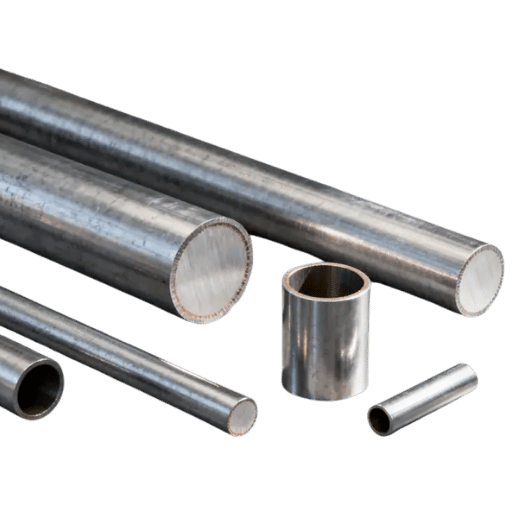
Most general purpose steel pipe uses Schedule 40 as the default specification – plumbing, air conditioning/heating, low-to-moderate pressure process piping, structural supports. If a specification reads “standard pipe” and gives no schedule number, Sch 40 is the probability. The table below shows the full pipe schedule 40 dimensions for the most common ordered carbon steel sizes including outside diameter, wall thickness, inside diameter, and pipe weight per foot.
| NPS | OD (in) | Wall (in) | ID (in) | Weight (lb/ft) |
|---|---|---|---|---|
| ½ | 0.840 | 0.109 | 0.622 | 0.85 |
| ¾ | 1.050 | 0.113 | 0.824 | 1.13 |
| 1 | 1.315 | 0.133 | 1.049 | 1.68 |
| 1½ | 1.900 | 0.145 | 1.610 | 2.72 |
| 2 | 2.375 | 0.154 | 2.067 | 3.65 |
| 3 | 3.500 | 0.216 | 3.068 | 7.58 |
| 4 | 4.500 | 0.237 | 4.026 | 10.79 |
| 6 | 6.625 | 0.280 | 6.065 | 18.97 |
| 8 | 8.625 | 0.322 | 7.981 | 28.55 |
| 10 | 10.750 | 0.365 | 10.020 | 40.48 |
| 12 | 12.750 | 0.406 | 11.938 | 53.52 |
Data per ASME B36.10M. Graphs for calculating pipe weight assume plain-end Schedule 40 carbon steel pipe.
Is Schedule 40 or Schedule 80 Thicker?
Schedule 80 refers specifically to pipe with thicker walls than Schedule 40 for the same NPS. The pipes share the same outside diameter the difference is solely in outside wall thickness. Wall thickness for a NPS 2 pipe is 0.154 for Sch 40 and 0.218 for Sch 80 42% higher. That increased wall thickness reduces inside diameter from 2.067 to 1.939 and adds just over 1.5lb/ft to weight. The advantage of Sch 80 is it can withstand more than twice the working pressure of Sch 40 but the tradeoff is a greatly reduced flow area and increased price of the pipe and fittings.
A frequently-encountered procurement mistake on the large projects is to specify “Sch 40” when ordering, and get 12″NPS pipe with 0.406 wall instead of a pipe with 0.375 wall. This costs significantly more on a 40′ long joint. Verify whether the engineering spec truly calls for Sch 40 or just the Standard weight of pipe the terminology is different for NPS 12 and above.
Schedule 80 Pipe Dimensions
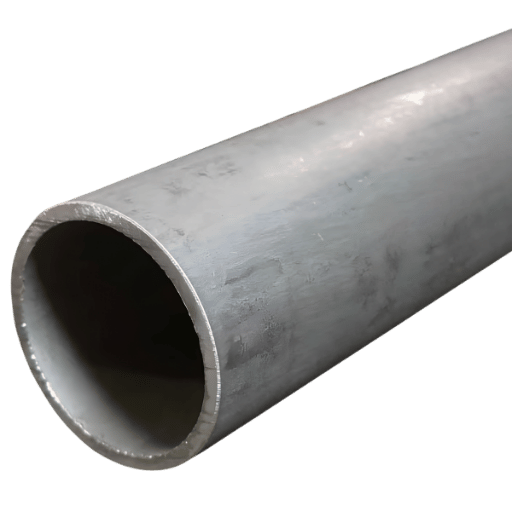
Engineers call out pipe schedule 80 dimensions in design documents when higher pressure capacity or greater mechanical strength over Sch 40 is required. Increasing wall thickness means less flow area for a given NPS, a factor to weigh in hydraulic calculations. Below are the commonest NPS sizes for Sch 80 carbon steel pipe.
| NPS | OD (in) | Wall (in) | ID (in) | Weight (lb/ft) |
|---|---|---|---|---|
| ½ | 0.840 | 0.147 | 0.546 | 1.09 |
| 1 | 1.315 | 0.179 | 0.957 | 2.17 |
| 2 | 2.375 | 0.218 | 1.939 | 5.02 |
| 3 | 3.500 | 0.300 | 2.900 | 10.25 |
| 4 | 4.500 | 0.337 | 3.826 | 14.98 |
| 6 | 6.625 | 0.432 | 5.761 | 28.57 |
| 8 | 8.625 | 0.500 | 7.625 | 43.39 |
| 10 | 10.750 | 0.593 | 9.564 | 64.43 |
| 12 | 12.750 | 0.687 | 11.376 | 88.63 |
“Choosing Schedule 80 when Schedule 40 could meet the working pressure is one of the most common over-engineering errors in industrial pipe work. The additional wall thickness increases weight per foot by 30-50%, increases material cost, and reduces weld speed in installation. Always calculate pressure vs. temperature demands before defaulting to the heavier schedule.”
— Senior Piping Engineer, cited on industry forums
In practice, the question is when Schedule 80 is actually necessary. For water service at less than 150 psi to ambient temperature, Sch 40 carbon steel pipe (ASTM A53 Grade B or ASTM A106 Grade B) can take the strain with margin. Schedule 80 becomes warranted when the pressure exceeds the Sch 40 rating for that NPS and material, or when the pipe will be threaded as that process removes wall material and the greater thickness offsets that loss.
Stainless Steel Pipe Schedule Chart (ASME B36.19M)
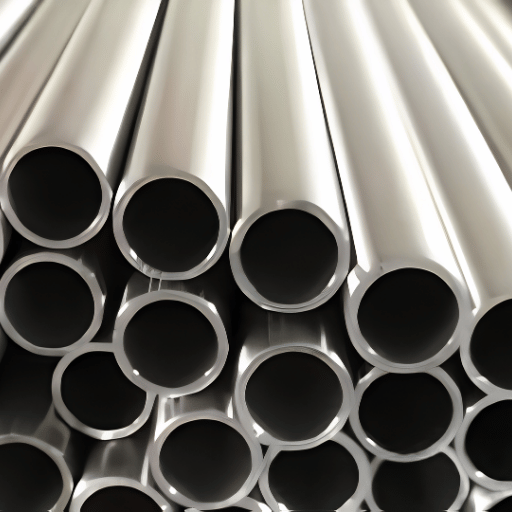
Stainless steel pipe sizing follows a separate standard — ASME B36.19M — covering dimensions of both welded and non-welded stainless steel pipe and tubing. Schedules 5S, 10S, 40S, 80S carry the “S” suffix to differentiate them from carbon steel pipe schedules in B36.10M.
Most sizes of NPS up to NPS 10 align with schedule 40 S (steel) and schedule 80 S (steel). For example, an NPS 8 Sch 40 S and an NPS 8 Sch 80 S will have the same wall thickness. At the larger sizes, namely NPS 10 and NPS 12, the values are sch10s has a different wall thickness than sch80 (carbon). It is essential that the purchasing agents for mixed-material systems reference the correct standard for each material type.
| NPS | OD (in) | 5S | 10S | 40S | 80S |
|---|---|---|---|---|---|
| ½ | 0.840 | 0.065 | 0.083 | 0.109 | 0.147 |
| 1 | 1.315 | 0.065 | 0.109 | 0.133 | 0.179 |
| 2 | 2.375 | 0.065 | 0.109 | 0.154 | 0.218 |
| 4 | 4.500 | 0.083 | 0.120 | 0.237 | 0.337 |
| 6 | 6.625 | 0.109 | 0.134 | 0.280 | 0.432 |
| 8 | 8.625 | 0.109 | 0.148 | 0.322 | 0.500 |
| 10 | 10.750 | 0.134 | 0.165 | 0.365 | 0.500 |
| 12 | 12.750 | 0.156 | 0.180 | 0.375 | 0.500 |
Wall thickness in inches per ASME B36.19M. Typical stainless steels are ASTM A312 (304/304L, 316/316L) and ASTM A358 (welded pipe).
The schedules under B36.19M do not exactly match B36.10M even at all sizes. NPS 10 sch 80s stainless has a wall (0.500).NPS 10 sch 80 (carbon) B36.10M steel has a wall (0.593).For a mixed-material system, specifying just sch 80 or any other schedule without clarifying that standard can result in a mismatched wall thickness difference of 16% between the carbon and stainless steel.
How to Choose the Right Pipe Schedule for Your Application
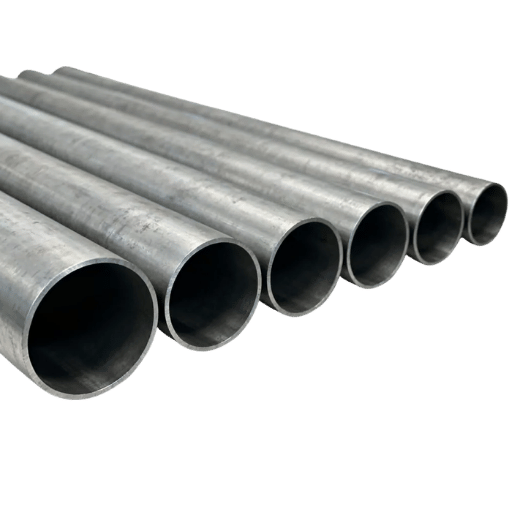
In the pipe schedule chart, you can see the dimensions, but choosing the schema requires matching those dimensions to your operating Conditions-water, air, steam, or whatever pressure, temperature, fluid type, and whatever code your industry specifies. Nothing about that decision is arbitrary. Federal pipeline safety rules per 49 CFR Part 192 require Sch 40 (or heavier per ASME B36.10M) wall pipe for threaded joints on natural gas pipelines – no exceptions.
Following are condition-based recommendations for the three most common piping applications – process piping, power piping, and miscellaneous. These are only a guide, not the final dimensional specification. To determine the actual appropriate pipe schema, compare the dimensions from the piping schedule chart to the actual conditions you need to transmit in your piping – pressure, temperature, fluid flow, pipe material and code of construction.
| Application | Typical Schedule | Common Material Standard | Governing Code |
|---|---|---|---|
| Oil & gas pipeline | Sch 40 – 160 | API 5L Grade B/X42-X70 | ASME B31.4 / B31.8 |
| Plumbing / HVAC | Sch 40 | ASTM A53 Grade B | Local plumbing code |
| Low-pressure water / fire sprinkler | Sch 10 / STD | ASTM A53 / A135 | NFPA 13 |
| Chemical processing (SS) | 10S / 40S | ASTM A312 (304/316) | ASME B31.3 |
| High-temp steam | Sch 80 – 160 | ASTM A106 Grade B/C | ASME B31.1 |
| Structural / piling | STD / Sch 40 | ASTM A500 Grade B | AISC 360 |
An example of the costs of selecting the wrong schema: a Sch 80 specification for a system of compressed-air pipe would cost a contractor implementing an integrated-system framework thousands of dollars of extra materials, as well as additional support hangers. This system was installed at a manufacturing plant, with 90 psi branch lines feeding pneumatic tools. Working pressure for each tool was about 150 psi at ambient temperature. NPS 2 Sch 40ASTM A53 Grade B pipe has a working pressure of 150psi (pressurized at 70F). Priority pipe upgrading for sch80 added 7277 pounds of pipe – an additional 37 percent weight for the same 2000 feet of pipe, an outside-the-costs value impact.
Never select a schedule by rule of thumb. As you have seen, the working pressure capability and maximum wall thickness of the pipe is based on the pipe material grade, temperature, the weld joint efficiency factor, and the time, of the system. A Sch 40 pipe in ASTM A106Grade (C94, do not confuse here with grade A pipe in ASTM A53 grade (F80 at 50F is very different from at 500F). Double check your choice with a calculation or consult the published pressure-temperature tables from your applicable ASME code section.
Frequently Asked Questions About Pipe Schedules
Q: How is the pipe schedule number calculated?
View Answer
Q: What schedule pipe is considered standard?
View Answer
Q: What materials are pipe schedules available in?
View Answer
Q: What is the difference between NPS and DN?
View Answer
Q: Does the pipe schedule affect outside diameter?
View Answer
No. The outside diameter of a pipe is constant for all NPS and does not alter with a change of schedule. As the schedule increases, the wall thickness inward increases.
As a result, inside diameter and flow area both shrink. So all pipes of a given NPS with any schedule fit the same flanges, fittings, and supports.
Q: Can Schedule 40 pipe handle high-pressure applications?
View Answer
Need Carbon Steel or Stainless Steel Pipe in the Right Schedule?
Baling Steel supplies hot-finished and cold-drawn steel pipe, ERW pipe, and stainless steel pipe from Schedule 10 through Schedule 160, cut-to-length and ready to ship.
About This Reference
Baling Steel China is a steel pipe producer-exporter of carbon and stainless steel pipe to customers in all major construction, oil & gas and industrial markets. Our pipe schedule data listed in this article is obtained from standards ASME B36.10M and B36.19M and confirmed from published industry references. We created this guide because it has been pointed out to us many time by purchasing teams and project engineers that schedule term in quoting needs to be made clear and precise at order so that costly re-sourcing and project delays can be avoided.
References & Sources
- ASME B36.10M — Wrought Steel Pipe Dimensions (Welded and Non-Welded) — American Society of Mechanical Engineers
- ASME B36.19M — Wrought Stainless Steel Pipe Dimensions — American Society of Mechanical Engineers
- 49 CFR Part 192 [transportation of natural and other gas by pipeline, U. S. Department of Transportation, PHMSA]
- Pipeline Safety: Annual References to the Regulations (2024) – Federal Register
- Tabelle mit den Standard Nennrohrenstärken und Nenndurchmessern (Pipe Schedules) Schemata – Engineers Edge
- Wall Thickness in Piping: Historical and Fundamentals—Asahi/America
Related Articles
- The map covers the most commonly used size standards which include:—American National Standard Pipe Sizes NPS—German Norm DN—Outside Diameter OD
- How to Calculate and Chart the Pipe Weight Per Foot
- What Is the Difference Between Pipe and Tube?
- Schedule 40 Carbon Steel Pipe Size and Specifications:
- Hot-Finished and Cold-Drawn Steel Pipe — Grades, Standards, and Applications
- The Complete Guide to ERW Pipe