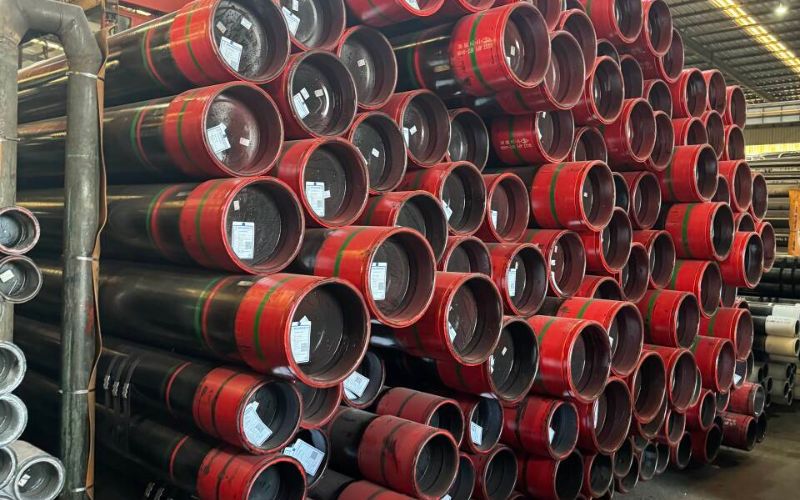
The typical cost of GI pipe runs about $0.41–$0.65 per kilogram (China FOB) for standard export-grade pipe, or ₹127–₹1,665 per metre for Jindal-branded IS 1239 Medium class in India. US market retail for 2″ Schedule 40 galvanized runs $3.50–$7.00 per foot. Actual cost depends on pipe size, wall thickness class, zinc coating quality, and your sourcing location — all covered below.
| Parameter | Detail |
|---|---|
| Material | Galvanized Iron — Hot-Dip Galvanized Steel Pipe |
| Standards | BS 1387:1985 | IS 1239 Part 1:2004 | ASTM A53 |
| Size Range | 1/2″ NPS (15 mm) to 6″ NPS (150 mm) |
| Classes | Light (A) | Medium (B) | Heavy (C) |
| Standard Length | 6 metres (20 ft) per piece |
| Zinc Coating Min. | 375 g/m² (BS 1387 Class B) | 475 g/m² (Class C) |
| Price Range | $0.41–$0.65/kg (China FOB) | ₹80–₹110/kg (India) | $3.50–$7.00/ft (US 2″ retail) |
Data Sources: IS 1239 part1: 2004 (official standard of the BIS ); BS 1387: 1985 official document ; The Jindal Star Authorized Dealer Price List (May 2026 ); The amount of zinc from union-steels .com ( BS 1387 class b / c ). prices reference market purposes only, please confirm with your seller before making a purchase.
How Much Does GI Pipe Cost? 2025 Price Overview
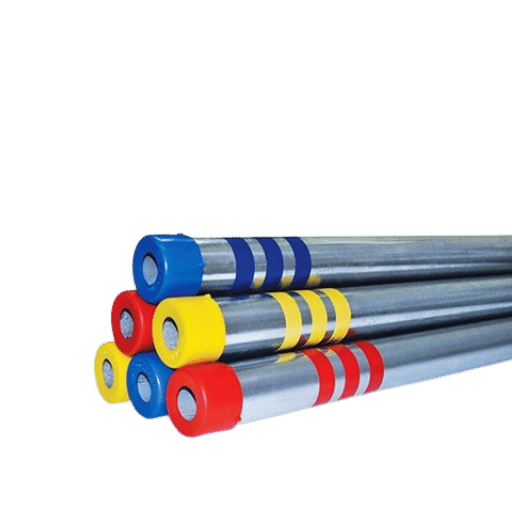
Prices for GI pipe can vary greatly in different markets and classes. Before picking up the phone and calling your provider, take a look at the following 4 reference prices to get an idea of budget .
China FOB (Export)
$409–$593/ton
Standardround hot dip gi , range 1 / 2 – 2
India Market (IS 1239)
₹80–₹110/kg
Jindal star , All Classes
Philippines (Sch 40 Welded)
₱603–₱15,718/6m piece
1/2″ to 6″ range
USA Retail (2″ Sch 40)
$3.50–$7.00/ft
Schedule 40 galvanized, US suppliers
How Much Does GI Pipe Cost per Length?
The standard 6-metre (20 ft) GI pipe piece runs from ₱603 to ₱15,718 in the Philippines, varying by class and diameter. In India, you will find that a typical 20ft length of medium class Jindal can be anywhere from ₹762 (1/2″ diameter) to ₹9,990 (6″ diameter) when buying from wholesale suppliers in Chennai, or higher — ₹1,278–₹16,878 at Delhi ex-warehouse prices. Retail for 20ft length of 2 Schedule40 Galvanized from a wholesale dealer would cost about $70 to $140 in the United States, or significantly more if purchasing a short, cut-to-length amount for a do-it-yourself project. However, if you are purchasing this in bulk for export purposes, China FOB export prices run $0.41–$0.65/kg before freight and import duties. For size-specific pricing, see the reference chart below. For full technical specifications beyond pricing, our complete GI pipe technical guide covers the rest.
Important note :China FOB price and other locally priced products are not the same thing. If buying for domestic use in another country outside China, expect the prices for your market to be 40-90 percent higher due to the added shipping cost and import duty(es).
GI Pipe Price by Size: 1/2″ to 6″ Reference Chart
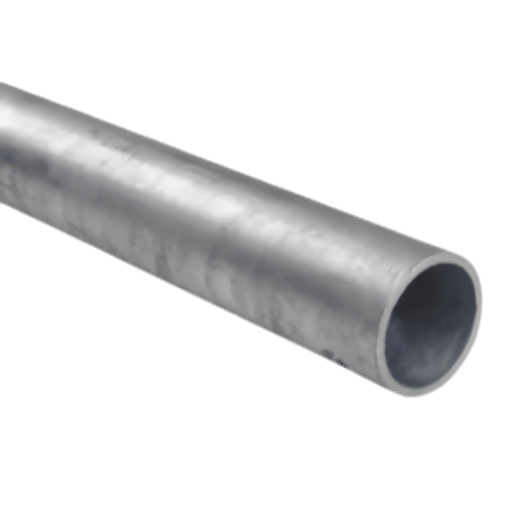
This is where to find more specific costs — provided from current price data from India, the Philippines, and China export markets. To calculate GI pipe price per kg: divide any 6m piece price by the pipe weight (kg/m × 6). To estimate GI pipe price per foot: divide the 6m price by 19.69 (feet per 6m). Both calculations are straightforward using the weight column below.
wall thickness and Weight Ref ( IS 1239: 2004 /BS 1387 – official std data )
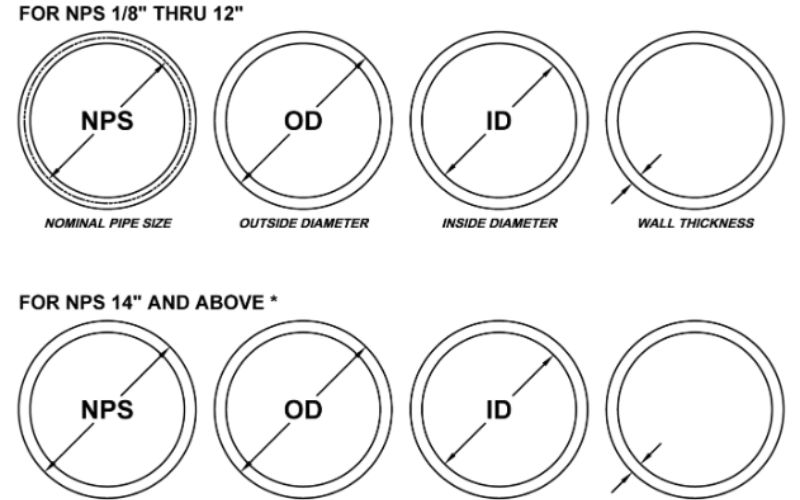
| NPS | OD (mm) | Light Class | Medium Class | Heavy Class | |||
|---|---|---|---|---|---|---|---|
| Wall (mm) | Wt (kg/m) | Wall (mm) | Wt (kg/m) | Wall (mm) | Wt (kg/m) | ||
| 1/2″ (15mm) | 21.4 | 2.0 | 0.95 | 2.65 | 1.21 | 3.25 | 1.44 |
| 3/4″ (20mm) | 26.9 | 2.3 | 1.38 | 2.65 | 1.56 | 3.25 | 1.90 |
| 1″ (25mm) | 33.8 | 2.6 | 1.98 | 3.25 | 2.41 | 4.0 | 2.94 |
| 1-1/4″ (32mm) | 42.5 | 2.6 | 2.54 | 3.25 | 3.10 | 4.0 | 3.80 |
| 1-1/2″ (40mm) | 48.4 | 2.9 | 3.23 | 3.25 | 3.57 | 4.0 | 4.38 |
| 2″ (50mm) | 60.3 | 2.9 | 4.08 | 3.65 | 5.03 | 4.5 | 6.19 |
| 2-1/2″ (65mm) | 76.2 | 3.25 | 5.71 | 3.65 | 6.43 | 4.5 | 7.93 |
| 3″ (80mm) | 88.9 | 3.25 | 6.72 | 4.0 | 8.37 | 4.85 | 10.1 |
| 4″ (100mm) | 114.3 | 3.65 | 9.75 | 4.5 | 12.2 | 5.4 | 14.5 |
| 5″ (125mm) | 139.7 | N/A | N/A | 4.85 | 16.2 | 5.4 | 17.9 |
| 6″ (150mm) | 165.1 | N/A | N/A | 4.85 | 19.2 | 5.4 | 21.3 |
Sources : IS1392 Part1: 2004 , tables 3 / 4 / 5 ( Bureau Of Indian standards ); BS 1387: 1985 Tables 3 / 4 / 5 . the amount of zinc coating on both Standards were the Same for each class .light Class are No Manufacture AT 5 and 6 inch Diameter
Indicative GI Pipe Prices — Medium Class per 6m length (≈20 ft). For GI pipe price per metre, divide each figure by 6. India prices are also quoted by dealers at ₹/metre; see the per-metre rates in Section 5.
| NPS | India (₹/6m) Jindal Star, Delhi May 2026 |
Philippines (₱/6m) Sch 40 Welded Jul 2025 |
China FOB ($/6m) Indicative 2025–2026 |
|---|---|---|---|
| 1/2″ | ₹1,278 | ₱603 | $2.47–$3.23 |
| 3/4″ | ₹1,632 | ₱807 | $3.19–$4.17 |
| 1″ | ₹2,304 | ₱1,243 | $4.93–$6.45 |
| 1-1/2″ | ₹3,300 | ₱1,963 | $7.27–$9.52 |
| 2″ | ₹4,620 | ₱2,627 | $12.25–$16.02 |
| 3″ | ₹7,428 | ₱5,396 | $21.45–$28.07 |
| 4″ | ₹10,758 | ₱8,360 | $30.63–$40.09 |
| 6″ | ₹16,878 | ₱15,718 | $47.40–$62.03 |
What Is the Price of 3-Inch GI Pipe per 10 Feet?
A 3-inch (80mm NB) GI pipe in Medium class weighs 8.37 kg per metre per IS 1239:2004 (T1 source). 10ft is 3.048 mtrs. 10ft weight = 8.37 kg/mtr x 3.048mtr = 25.5kg. The cost of 10ft at Indian wholesale rates (Jindal Star Medium class, ₹1,238/mtr ex-Delhi) = ₹3,773 + GST and cutting. At China FOB 470 $/tonne, the raw material itself of pipe alone in that 25.5kg piece = 470 /1000 x 25.5kg =$12 + freight .
The GI pipe price per foot at US retail for 3-inch Sch 40 galvanized sits between $1.80 and $3.50 per foot, depending on vendor and whether you buy a full 20-ft length or a cut piece. Always ask for prices per full 6m length — short cut pieces attract a cutting premium of 10–25%. For the full weight-per-foot reference, see our steel pipe weight per foot chart.
What Determines GI Pipe Price? 5 Key Cost Factors
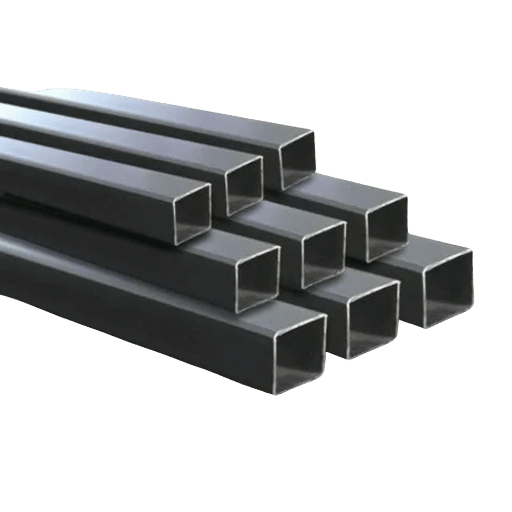
We have found that two quotes from us for the same pipe size can range in excess of 40%! Below are the five main factors which make the greatest impact.
- Zinc Coating Weight —
The least regulated source of cost escalation. A Hot-Dip Galvanised pipe manufactured to BS 1387 Class B standards must have minimum of 375g/m of zinc coating. The maximum is 475g/m for Class C.There are numerous pipes openly advertised in the export market on the same “GI pipe” label with only Z80 coating (80 g/m² of zinc), which is only 21% of the Class B minimum requirement. 375–475 g/m² of zinc is more costly. 375–475 g/m² of zinc will give considerably better protection from corrosion. Whenever you are getting a quotation ask them to mention the zinc coating weight in g/m². For more details on galvanizing read the information given in the Hot-Dip Galvanisation Guide.A pipe with 80g/m galvanising will perform almost exactly like a plain steel pipe. - Wall Thickness Class (Light / Medium / Heavy) —
When going from Light class to Heavy class there is about 48-52% more steel per meter on the same diameter pipe & price closely correlates to weight. 1-inch pipe Light class 1.98kg/mtr Vs Heavy class 2.94kg/mtr. The price difference per IS 1239 standards per price list from Jindal Star Light(A)- 324 /mtr Vs Heavy(C)-451 /mtr gives 39% more cost in Heavy compared to Light.For 2-inch pipe from Medium class to Heavy class it is 19% more only.Use Medium class where the application system’s max operating pressure is less than 0.86MPa as specified in plumbing and irrigation per IS 1239 Table 6. - Steel Feedstock (Hot-Rolled Coil — HRC) Spot Price —
At 50-70% of total costs, the biggest contributor to pipe is steel, with HRC steel costs subdued during early 2025 ($904/ ton to $940/ton in Q1), only to stage a remarkable rebound to $1,157/ton by May 2026, an increment of 28.7% on a yearly basis. The next key cost factor is the galvanized layer, where LME zinc reached $3,560/ton in May 2026, an increment of 31.6% on a yearly basis. Overall, with inflated costs of both raw materials, mid-2026 pricing for GI pipe has input cost that is substantially higher than 18 months ago.Any buyer that committed to contracts during Q4 2025 managed a much better price than any buying during 2026. - Trade Policy & Country of Origin —
Import duties may even completely offset an apparent FOB price advantage. The U.S. Section232 tariff puts a 25% levy on steel products, including GI pipe, from most countries of origin. A EU carbon border mechanism puts a burden on high-carbon-intensive imported steel. Various markets may have anti-dumping duty on Chinese ERW pipe. With a China FOB price of $500/ton, including freight and other charges, landed cost to the US may be $750 – $800/ton, significantly closer to domestic price. - Order Volume (MOQ & Volume Breaks) —
Small volume orders under 1 tonne command a price premium. China FOB pricing for GI pipe usually comes with standard volume break discounts (for typical tonnages, this could be): • 1-4 tonnes: $530 – $600 per tonne • 5-19 tonnes: $490 – $530 per tonne • 20+ tonnes: $460 – $490 per tonne Transitioning from a 1-tonne sample order to a 20-tonne regular order would often save between 15-20% per tonne. This pattern typically holds true for Indian domestic markets too; example pricing from an Indian dealer for Jindal StarIS 1239 can also be seen reflected below for volume purchase.
GI Pipe vs. Black Steel, PVC & HDPE: Full Cost Comparison
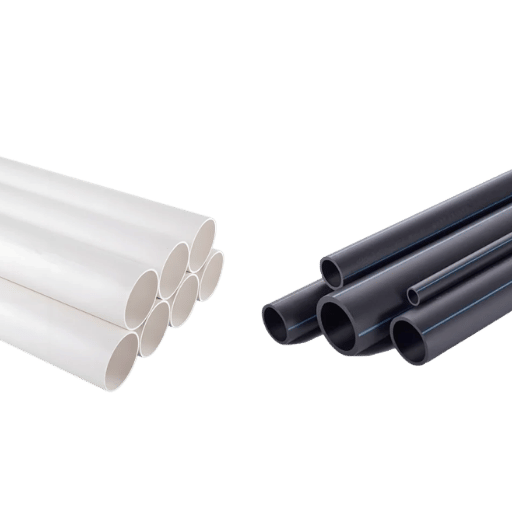
GI pipe is not always the most suitable – nor always the most expensive choice. Six common pipe materials are compared below for water supply, drainage, and structural applications:
| Material | Indicative Price (2″ pipe, per ft) |
Service Life (Outdoor) |
Corrosion Resistance |
Best Application | TCO Notes |
|---|---|---|---|---|---|
| GI Pipe (Hot-Dip) | $3.50–$7.00 | 20–25 years | High (zinc barrier) | Outdoor water supply, irrigation, scaffolding, gas lines | Higher upfront; 70% lower TCO vs black steel over 10 years in outdoor use (T3) |
| Black Steel Pipe (ERW) | ~$1.88–$3.50 | 3–5 years (outdoor) 10–15 years (indoor dry) |
Low (no coating) | Indoor dry gas lines, structural/temporary, fire suppression with N₂ | 25–31% cheaper upfront; recurring maintenance/replacement cost in corrosive environments |
| PVC Pipe (Sch 40) | $0.30–$0.80 | 25–50 years (non-UV) | Excellent (no metal) | Low-pressure water, drainage, irrigation (cold water) | Lowest material cost; limited to cold water and lower pressures; no structural use |
| HDPE Pipe | $0.50–$2.50 | 50+ years | Excellent (chemical resistant) | Buried water mains, aggressive soil, chemical lines | Higher installation cost (fusion welding); best for corrosive underground or marine environments |
Which Pipe Material Is Right for Your Application?
- Outdoor or wet environment/ buried applications GI pipe (minimum) HDPE (aggressive soil chemistry)
- Indoor dry conditions (gas, structure) Black Steel Acceptable. Cheaper, not necessarily best over long term.
- Low-pressure cold-water distribution: PVC or HDPE if non-structural
- High-temperature or chemical exposure: Stainless steel or specialist alloy
To find a more detailed comparison of black steel pipe vs. mild steel pipe specifications, refer to the product pages linked below.
Common Purchasing Mistakes: Using black steel instead of GI pipe to save 25-31% initially for outdoor water supply pipeline pipe. Carbon steel, once painted, begins to rust as surface oxide (Fe3O4) within 45 days of exposure at 90% relative humidity (Source: lab testing data, Huayang Steel, with data published under CC license BY). A 2-year replacement frequency wipes out the initial saving, not to mention the costs and downtime for installation. Except for short term, low value, temporary pipework of under 5 years, there is no justifiable reason to choose black steel pipe over GI pipe for outdoor applications.
GI Pipe Classes Explained: How Grade Affects Price
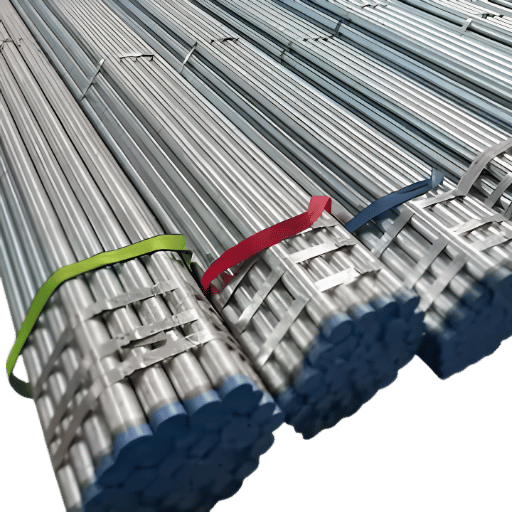
The IS 1239 (Indian Standard) and BS 1387 (British Standard) have designated three classes: Light Class (Class A/L), Medium Class (Class B/M) and Heavy Class (Class C/H). The class designation represents minimum acceptable pipewall thickness for a given nominal pipe diameter. pipewall thickness is critical for pipe weight, pressure ratings and cost.
Table of pipe wall thicknesses vs class for major sizes (IS 1239:2004 / BS 1387 – standard values)
| NPS | Light (mm) | Medium (mm) | Heavy (mm) | Light→Heavy Weight Increase |
|---|---|---|---|---|
| 1/2″ (15mm) | 2.0 | 2.65 | 3.25 | +52% |
| 1″ (25mm) | 2.6 | 3.25 | 4.0 | +48% |
| 2″ (50mm) | 2.9 | 3.65 | 4.5 | +52% |
| 3″ (80mm) | 3.25 | 4.0 | 4.85 | +50% |
| 4″ (100mm) | 3.65 | 4.5 | 5.4 | +49% |
Estimated premium per class above Light Class – Jindal StarIS 1239 (Delhi Ex-works, May ‘26)
| NPS | Light (A) | Medium (B) | Heavy (C) | Light→Medium Premium |
Medium→Heavy Premium |
|---|---|---|---|---|---|
| 1/2″ | ₹196 | ₹213 | ₹241 | +8.7% | +13.1% |
| 1″ | ₹324 | ₹384 | ₹451 | +18.5% | +17.4% |
| 2″ | ₹643 | ₹770 | ₹918 | +19.7% | +19.2% |
| 3″ | ₹1,021 | ₹1,238 | ₹1,415 | +21.3% | +14.3% |
| 5″ | N/A | ₹1,996 | ₹2,225 | — | +11.5% |
| 6″ | N/A | ₹2,813 | ₹3,076 | — | +9.4% |
(Note:Light class is not manufactured in sizes 5″ & 6″ by Jindal Star. Prices exclude 18% GST. Source: vijaysalescorp.com authorised Jindal dealer, May 6, 2026.)
Note from Design/Engineering Dept.:IS 1239 Table 6 specifies maximum permissible working pressure as 0.86 MPa for screwed/socketed joints for sizes 40mm through 80mm NB and 1.03 MPa for sizes up to 25mm NB. 3-6 bar (0.3 – 0.6 MPa) working pressures are typical for municipal water supplies and many irrigation projects, which can be safely handled with Medium class pipe. High-pressure industrial applications, steam lines, and pipe for structural columns typically require Heavy class pipe. Using Heavy class for standard gravity feed irrigation or fence framing projects will cost at least an additional 14–21% more on your pipe budget.
For an explanation of manufacturing methods – specifically the distinction between pre-galvanized versus post-galvanized pipe – please refer to our guide on how ERW welded pipe is produced. Our linked pipe schedule chart shows how schedule numbers relate to wall thickness — useful context when reading through this class table.
GI Pipe Price Trends 2025–2026: What’s Moving the Market
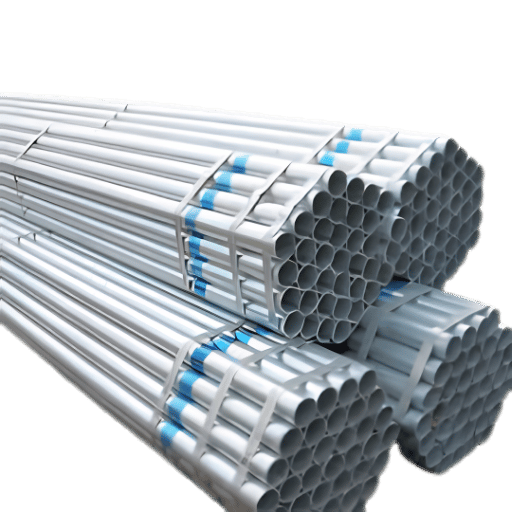
Hot rolled steel coil and zinc account for the vast majority of raw material costs in GI pipe production. As you can see below, the price of both has skyrocketed in the second half of the last calendar year. Here’s a snapshot based on current market data.
| Driver | 2025 Range | May 2026 Price | YoY Change | Buyer Signal |
|---|---|---|---|---|
| LME Zinc | $2,521–$3,351/ton (avg $2,870) |
$3,560/ton | +31.6% | Galvanizing cost rising; zinc coating specs matter more than ever |
| HRC Steel | $904–$940/ton (Q1) recovering Q4 |
$1,157/ton | +28.7% | Feedstock inflation being passed through to pipe prices |
| Trade Policy | US Section 232 in effect; EU CBM phasing in | No change announced | Stable | Non-US buyers retain full FOB advantage; US buyers assess landed cost |
Zinc market data: LME cash zinc averaged $2,869/ton across full-year 2025 — then accelerated sharply in Q4 2025 to a high of $3,350.50/ton (December 2, 2025). By late May 2026, zinc reached $3,560/ton — near a 3.5-year high. Supply disruptions contributed: Nexa’s Cajamarquilla smelter in Peru temporarily halted operations, and Glencore’s Kazzinc facility in Kazakhstan reduced output following a blast. According to Trading Economics commodity analysts, zinc is projected to trade near $3,764/ton within 12 months.
Steel Raw Materials – through most of the calendar year in which is being referenced, the price pressure in steel (HRC) was consistent and worldwide, a dynamic described by GMKCenter market analysts as”moderate pressure in the year in which is being referenced.” Q1 prices for this feedstock troughed out at $904-$940/ton. The subsequent recovery, carried through Q4 in which is being referenced and into, sent HRC costs soaring to $1,225/ton by the close of May, representing a 28.7% rise year over year.
Implication for Purchasing Timelines -Both of our critical input commodities are priced considerably higher today versus our historical year over year average. As such, buyers who secured contracts during Q1-Q2 in which is being referenced benefit from locking in prices at cycle lows. Currently, we see a full cyclical rally in both steel and zinc – these current market prices include this entire run up. If purchasing is not urgent, it can be prudent to watch monthly prices on HRC and the LME cash price for zinc prior to placing new large orders. If there’s an established project timeline with an immovable completion date, the best option is to quote now, accepting current price, and bake a 5-10% buffer into your budget.
How to Get Competitive GI Pipe Pricing: Sourcing & Verification Checklist

In the procurement of GI pipe, what differentiates a smart buy from a bad one rarely lies with the seller’s offerings, but rather what has been requested in the RFP. The following is a GI Pipe Procurement Checklist that Baling Steel implements when managing enquiries received and when purchasing on behalf of our customers.
GI Pipe Procurement Checklist: 8 Variables to Specify Before Signing a Purchase Order
- Specify nominal pipe size (NPS) and OD — both NPS and actual outside diameter in mm. Confusion between NPS and actual OD is a common quoting mismatch, especially when comparing IS 1239 and ASTM A53 specifications.
- State wall thickness class AND numerical thickness — the class (Medium/B) AND the specific wall thickness in mm (e.g., 3.65mm for 2″ Medium IS 1239). This prevents the supplier from quoting a lower wall under a different class designation.
- Require zinc coating weight in g/m² specified in writing — the most commonly under-specified variable. For outdoor water or gas service, require BS 1387 Class B minimum (375 g/m²) or equivalent. Verify via Mill Certificate (section: hot-dip zinc coating). Pre-galvanized pipe (often quoted at Z80, 80 g/m²) is NOT a substitute.
- Applicable standard — IS 1239:2004, BS 1387:1985, ASTM A53 Grade B, or another. Standards differ in OD tolerances and wall thickness defaults.
- Standard length and end finish — 6m (most common) or custom cut. Specify Plain End (PE) vs Screwed & Socketed (S&S) — threading is sometimes included, sometimes a separate line item. See galvanized pipe supplier specifications for typical inclusion terms.
- Manufacturing method — ERW (electric resistance welded) vs full-bore non-welded pipe. For 1/2″–4″, ERW is standard and fully code-compliant under IS 1239, BS 1387, and ASTM A53. Non-ERW (drawn) pipe carries a 20–40% price premium and is only warranted for high-pressure or high-temperature applications above 4″.
- Order volume and delivery window — State your MOQ and required delivery date clearly. Volume breaks typically apply at 5T, 20T, and 50T+ tranches. Rush production or partial-container shipments carry premiums. A 20-tonne order scheduled 4–6 weeks out will price materially better than a 2-tonne order needed in 10 days.
- Trade compliance and duties — If importing, state the destination country and request an Incoterms-clear quotation (e.g., FOB, CIF, DDP). Ask for the HS code on the commercial invoice (73063090 for ERW GI pipe) and verify applicable import duties in your jurisdiction before comparing quotes.
Pro Tip on Mill Certificates – The place where quality shortcomings most commonly manifest is the zinc coating weight specification within a Mill Certificate (alternately called“Zinc Coating Mass” or “Coating Weight”). To satisfy BS 1387 Class B, the certificate should read 375 g/m². Anything significantly less, or completely missing, should result in instant disqualification -regardless of the offered price.
Warning: Online marketplaces such as Alibaba often feature listings for Z80 (80 g/m²) and Z275 (275 g/m²) GI pipe at identical prices, typically in the $400–$600/ton range. Both products will often simply be listed as “GI pipe.” Remember, the minimum specification in BS 1387 Class B is 375 g/m² — nearly 5× the zinc weight of a Z80 coating. A Z80 coated pipe has virtually no chance of lasting long in a damp or external environment; its lifespan will be similar to that of uncoated mild steel pipe. Without reference to the Mill Certificate, you can’t distinguish between these clearly.
Need a GI Pipe Quote?
Baling Steel manufactures hot-dip galvanized steel pipe to IS 1239, BS 1387 and ASTM A53 standards.Request quantity based price on our GI pipe product page, with Mill Certificate document.
Frequently Asked Questions: GI Pipe Price
What is the cost of GI pipe per length?
A standard 6-metre GI pipe piece will set you back between ₱603 (1/2″ ERW welded, Philippines) and ₱15,718 (6″ ERW welded, Philippines) for Sch40 pipe. In India, Jindal Star Medium class pipe is priced at ₹1,278 to ₹16,878 per 6m (ex-warehouse Delhi, GST not included, May 2026), scaling with diameter. For US buyers, it’s more: a 20-ft length of 2 Schedule40 galvanized pipe from a U.S. supplier costs around $70–$140, with small cut pieces commanding a higher per-foot rate. Chinese export prices (FOB) are centered around $0.41-$0.65/kg before any freight and import duties are factored in.Refer to the size chart in this guide for a complete break down.
What is the price of 3-inch GI pipe for 10 feet?
A 3-inch (80mm NB) Medium-class GI pipe is about 8.37kg per metre, or 25.5kg for a 10-foot (3.048m) section. From India wholesale (Jindal Star Medium class, 1,238/mtr ex-Delhi, May 2026), 10 feet is roughly 3,773 plus GST. Philippine prices (Sch40 welded 5,396 per 6m) mean a 10-ft section comes to approximately 2,697. US retail prices for a 3 Schedule40 galvanized pipe piece are between $18 and $35 for a 10-ft section, depending on whether you’re buying a full length or a cut.Buying a full length (20ft / 6m) will be more cost-effective per foot.
How expensive is galvanized pipe compared to black steel?
Hot-dip galvanized pipe costs between 25% and 35% more per tonne or per metre compared to standard black steel pipe. This additional price reflects the investment in zinc coating and the galvanizing process. Data from an authorized dealer in India show that 1-inch Medium GI pipe by Jindal Star is 225/mtr, compared to the equivalent black steel pipe by the same manufacturer at 176/mtr (a GI premium of 27.8%, May 2026). In terms of overall project costs, a complete galvanized dry-pipe sprinkler system can be around 25% more costly than a comparable black steel system, according to Potter Signal’s industry analysis. This difference can quickly become insignificant given the product’s average service life of 20-25 years outdoors compared to 3-5 years for unprotected black steel.
How much does GI pipe price change with order volume?
If you’re planning on buying large quantities, you can expect significant discounts on GI pipe. Chinese exporters may offer the following indicative price points:1-4 tonnes: $530-$600/ton;5-19 tonnes: $490-$530/ton;20+ tonnes: $460-$490/ton. By transitioning from ordering a one-tonne order to a 20-tonne agreement, you could see a cost saving of around 15-20 per cent per unit. This kind of discount structure applies across all suppliers, and is particularly beneficial for those with larger or ongoing projects that require several deliveries throughout the year. Not only does ordering in larger volumes help you get more per kilogram, but the relative cost of transport will also be reduced, particularly from overseas.For project managers that have staggered material needs, arrange a blanket order rather than making multiple spot buys; you will still qualify for volume pricing without having all of your material on site too early.
Does GI pipe price include threading and coupling?
Not necessarily – which is another common point of confusion between quotes. IS 1239 and BS 1387 allow for two types of end-finish: Plain End (PE) and Screwed & Socketed (S&S). Screwed & Socketed pipe are cut with threads at the factory with one socket coupler provided per length within the quoted price. Plain End pipe, conversely, are neither; as a general rule they tend to be cheaper. The majority of Jindal Star dealer price lists (e.g. the ones referenced in this guide) reference them as either Plain End or Screwed End Without Socket (couplers are charged separately). Ensure you are clear as to the exact end-finish quoted and that thread cutting is included on plain-end orders where specified. A full supply quote should indicate end-finish, standard, class, zinc coating and length from any competent manufacturer of galvanized pipe.