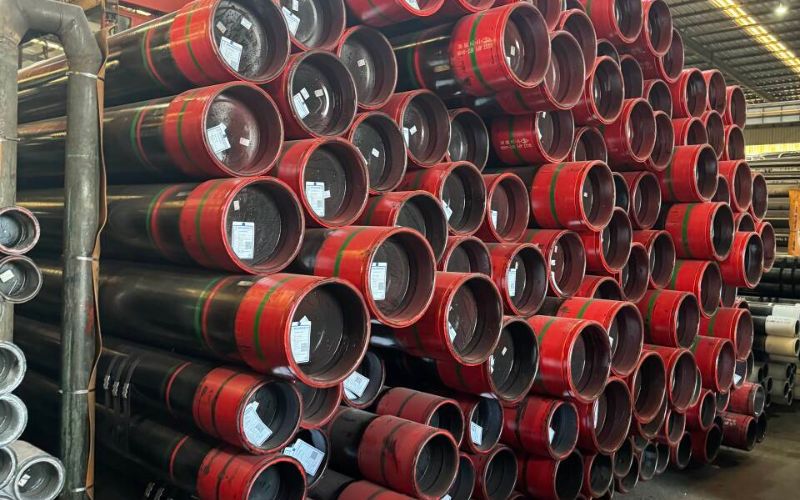
Eine typische Suche nach „Stahlrohrlieferanten in meiner Nähe“ führt zu einer wenig aussagekräftigen kommerziellen Seite: nur eine Telefonnummer, eine Produktliste ohne Angaben zu Güte oder Zertifizierung und kein Hinweis darauf, ob der Ansprechpartner für einen zugelassenen Hersteller oder lediglich als Zwischenhändler eines Handelshauses tätig ist. Das kann die Beschaffung teuer zu stehen kommen: Rohre außerhalb der Spezifikation, fehlende Werksprüfzeugnisse und Logistikverzögerungen, die Baustellen zum Stillstand bringen.
In diesem Leitfaden kommen wir direkt auf den Punkt. Sie erfahren, welche Stahlrohrtypen und Spezifikationen Sie kennen müssen. Außerdem erklären wir die ASTM- und API-Gütecodes und was diese Spezifikationen konkret für Ihr Projekt bedeuten.
Ein einfacher Leitfaden mit 7 Punkten zur Qualifizierung neuer Lieferanten. So lesen Sie ein Werksprüfzeugnis und gehen vor, wenn es nicht mit dem gelieferten Rohr übereinstimmt. Außerdem: Preisfaktoren. Und eine Prognose für den Beschaffungsmarkt 2025-2026. Ganz gleich, ob Sie bei einem Lager vor Ort kaufen oder direkt bei einem anerkannten ausländischen Rohrwerk bestellen: Der Qualifizierungsprozess ist derselbe.Kurzübersicht: wichtigste Stahlrohrtypen und Normen
| Typ | Norm | Verfahren | Wanddickenreihen | Hauptanwendung |
|---|---|---|---|---|
| Kohlenstoffstahl (ERW) | ASTM A53 Güte B | Geschweißt | 10–160 | Allgemeiner Rohrleitungsbau, Konstruktionen |
| Kohlenstoffstahl (nahtlos) | ASTM A106 Güte B | Nahtlos | 10–XXH | Hochtemperatur- und Hochdruckverfahren |
| Verzinkt | ASTM A53 + A123 | Feuerverzinkung | 10–80 | Trinkwasser, Außenkonstruktionen |
| Konstruktionshohlprofile | ASTM A500 | Kaltgeformt | Wanddicke | Stützen, Fahrzeugrahmen, tragende Konstruktionen |
| Edelstahl (geschweißt/nahtlos) | ASTM A312 | WIG-geschweißt oder nahtlos | 5S–160 | Einsatz bei korrosiven Bedingungen |
| Leitungsrohr | API 5L | ERW oder nahtlos | Wandgüte | Transport von Öl, Gas und Wasser |
Stahlrohrtypen und -größen: Was jeder Einkäufer wissen sollte
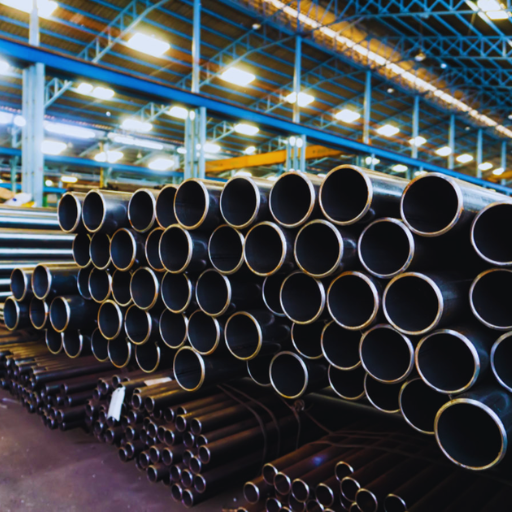
Stahlrohr ist keine Massenware wie Betonstahl oder Walzdraht – die Kategorie umfasst mindestens sechs verschiedene Produkttypen. Jeder wird nach einer anderen Norm und mit einem anderen Verfahren für einen anderen Druck- und Temperaturbereich gefertigt. Die falsche Ausführung in der Anfrage verzögert das Projekt; eine günstigere Ausführung, die bei der Normenprüfung durchfällt, kann noch größere Folgen haben.
Kohlenstoffstahlrohr ERW (elektrisch widerstandsgeschweißt) ist der vielseitige Standard der Branche. Für die Herstellung wird ein flaches Stahlband zu einem Rohr geformt und die Längsnaht anschließend mit elektrischem Strom geschweißt (ohne Zusatzwerkstoff). Das fertige Rohr hat gleichmäßige Abmessungen und vorhersehbare mechanische Eigenschaften – ausreichend für Konstruktionen, den Wassertransport und allgemeine Rohrleitungsanwendungen bis etwa 300°F.
Die wichtigste Norm ist ASTM A53. Güte B ist die am häufigsten bei US-amerikanischen Händlern und Service-Centern vorrätige Standardrohrgüte und macht den größten Anteil des inländischen Kohlenstoffstahlrohrbestands nach Volumen aus.Alle diese Druckrohre bestehen aus nahtlosem Kohlenstoffstahl. Sie werden aus einem massiven Stahlknüppel hergestellt, der gelocht und ohne Schweißnaht gewalzt wird. Da keine Naht vorhanden ist, gibt es auch keine Spannungskonzentration an einer Nahtstelle. Deshalb verlangen ASME-Normen für Hochtemperatur- und Hochdruckanwendungen nahtlose Rohre nach ASTM A106. Diese Ausführung ist teuer: Bei gleicher Güte und Wanddickenreihe beträgt der Aufpreis gegenüber ERW gewöhnlich 15-25 %.
Verzinkte Rohre sind ERW- oder nahtlose Rohre, die nach der Herstellung durch Eintauchen in ein Zinkbad verzinkt werden. Die Zinkbeschichtung schützt vor Korrosion. Deshalb werden verzinkte Rohre in Trinkwassersystemen, Außenkonstruktionen und Feuerlöschleitungen eingesetzt. Das Grundrohr entspricht ASTM A53; die Verzinkung des Grundrohrs erfolgt je nach Formstücktyp nach ASTM A123 oder A153.
Konstruktionshohlprofile nach ASTM A500 werden im Unterschied zu Druckrohren hauptsächlich anhand der Wanddicke statt einer Wanddickenreihe bemessen. Runde, quadratische und rechteckige Hohlprofile ähneln zwar optisch Rohren nach A53 und A106, sind aber für tragende Konstruktionen und nicht für die Aufnahme von Druck ausgelegt. Verwenden Sie kein rundes A500-Profil als Ersatz für A53 oder A106 in einer Druckrohrspezifikation.
Edelstahlrohre nach ASTM A312 sind geschweißte oder nahtlose Produkte aus austenitischen Güten. TP304, TP304L, TP316 und TP316L sind die gängigsten Spezifikationen. Edelstahlrohre kosten gegenüber vergleichbaren Kohlenstoffstahlrohren 3–5× so viel. Bei jeder Edelstahlbeschaffung ist die richtige Gütenauswahl wichtig: 304 sollte gewählt werden, wenn es den Normen entspricht, ohne unnötig 316L vorzuschreiben.
Leitungsrohre nach API 5L werden für den Transport von Öl, Gas und Wasser eingesetzt. Die Norm sieht zwei Produktnormstufen vor (PSL1 und PSL2); die verfügbaren Güten reichen von X42-X120. Projekte zur Sammlung, zum Transport oder zur Verarbeitung schreiben in ihren Beschaffungsunterlagen API 5L statt ASTM A53 oder A106 vor.
Normen für Kohlenstoffstahlrohre: ASTM A53, A106, A312 und API 5L im Überblick
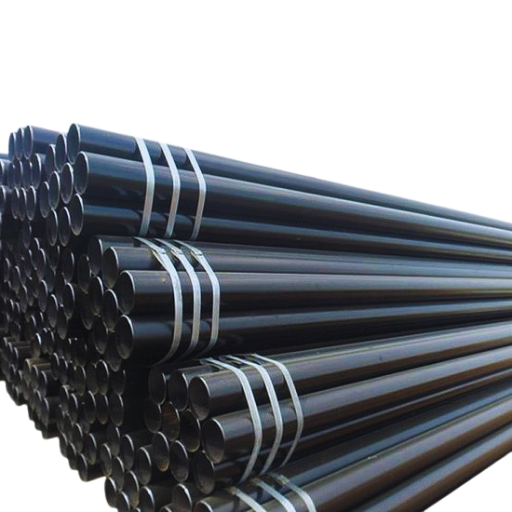
Bei jeder Stahlrohrbeschaffung sollten eine konkrete Norm und eine bestimmte Güte angegeben werden. Wer lediglich „Kohlenstoffstahlrohr“ angibt, ermöglicht dem Lieferanten, das günstigste Produkt zu liefern, das sich noch vernünftig unter dieser Bezeichnung einordnen lässt. In der folgenden Tabelle finden Sie die Güten, denen Sie bei den meisten Beschaffungsvorgängen begegnen.
| Norm | Werkstoffgüte | Mindeststreckgrenze (psi) | Mindestzugfestigkeit (psi) | Typische Anwendung |
|---|---|---|---|---|
| ASTM A53 | Güte A | 25,000 | 45,000 | Niederdruck- und Biegeanwendungen |
| ASTM A53 | Güte B | 35,000 | 60,000 | Allgemeiner Rohrleitungsbau, Konstruktionen, Sanitärinstallationen |
| ASTM A106 | Güte B | 35,000 | 60,000 | Hochtemperatur-Rohrleitungen (nahtlos) |
| ASTM A106 | Güte C | 40,000 | 70,000 | Hochtemperatur- und Hochdruck-Rohrleitungen |
| API 5L | Güte X52 | 52,000 | 66,000 | Fernleitungen (PSL1 / PSL2) |
| API 5L | Güte X65 | 65,000 | 77,000 | Hochdruck-Fernleitungen |
| ASTM A312 | TP304 | 30,000 | 75,000 | Allgemeine Anwendungen mit Korrosionsbeanspruchung |
| ASTM A312 | TP316L | 25,000 | 70,000 | Chemische Verfahrenstechnik, Schifffahrt, Pharmaindustrie |
Was ist der Unterschied zwischen Stahlrohren nach ASTM A53 und A106?
Beide Normen umfassen die Güte B, und beide Güten B erfüllen dieselben mechanischen Mindestwerte: 35.000 psi Streckgrenze und 60.000 psi Zugfestigkeit. Sie unterscheiden sich im Anwendungsbereich. ASTM A53/A53M-22 – die aktuelle Ausgabe (Stand Juli 2022), die durch Verweis in bundesstaatliche Pipelinevorschriften aufgenommen wurde – spezifiziert geschweißte und nahtlose Rohre für allgemeine Anwendungen, darunter Konstruktionen, Sanitärinstallationen und Verfahrenstechnik bis etwa 300F. Vollständige Tabellen zu Abmessungen und Toleranzen finden Sie in der ASTM-A53-Rohrspezifikation.
ASTM A106/A106M-19A – die aktuelle Ausgabe (Stand November 2019 und in der jüngsten Aktualisierung der bundesstaatlichen Verweisnormen unverändert) spezifiziert ausschließlich nahtlose Rohre für Hochtemperaturanwendungen; sie sind für den Dauereinsatz bis 750F erforderlich. Liegt die Temperatur Ihrer Prozessrohrleitungen über 300F oder entsprechen sie ASME B31.3, ist A106 Güte B die richtige Referenz und nicht A53. Weitere Informationen zum Gütenvergleich finden Sie hier: nahtloses ASTM-A106-Güte-B-Rohr.
Rohrlieferanten in Ihrer Nähe: Beschaffungskanäle – Händler, Service-Center und Direktbezug vom Rohrwerk

Die Lieferkette für Stahlrohre umfasst drei Hauptebenen. Der falsche Kanal kann bei Ihrem Projekt zu hohen Kosten oder Verzögerungen führen – oft zu beidem. Hier erfahren Sie, wie die einzelnen Kanäle funktionieren und wann Sie welchen wählen sollten.
| Beschaffungskanal | Mindestbestellmenge | Typische Lieferzeit | Preisniveau | Am besten geeignet für |
|---|---|---|---|---|
| Händler / Lager vor Ort | 1 Rohr (18–24 ft) | 1–5 Werktage | Marktpreis +20–35 % | Kleine Mengen, Eilaufträge, Aufträge mit gemischten Spezifikationen |
| Stahl-Service-Center | 5–50 Rohre | 3–10 Werktage | Marktpreis +10–20 % | Ablängen, Gewindeschneiden, Anfasen, mittlere Mengen |
| Direktbezug vom Rohrwerk / zertifizierter Importeur | 1–5 metrische Tonnen | 4–12 Wochen (Standardspezifikation) | Marktpreis | Große Mengen, Standardgüten, kostenbewusste Projekte |
Was ist der Unterschied zwischen einem Stahlrohrlieferanten und einem Händler?
Die Begriffe werden oft synonym verwendet, doch je nach Anwendung gibt es einen Unterschied. Ein Stahlrohrlieferant kann jede Art von Verkäufer sein: ein Rohrwerk, ein Importeur, ein Händler oder ein Handelshaus. Ein Händler hält gezielt einen Lagerbestand an Standardgüten und Wanddickenreihen, kauft größere Mengen bei einer Primärquelle ein und verkauft sie in kleineren Mengen mit kurzer Lieferzeit weiter. Ein Großhändler führt die größte Auswahl an Güten und Wanddickenreihen und verkauft an kleinere regionale Händler sowie direkt an Industriekunden. Zertifizierte Stahlrohrhersteller, die direkt exportieren, sparen die Händlermarge ein. Das ist vor allem bei großen Bestellungen gängiger Standardgüten relevant. Bei kleinen Bestellungen oder dringendem Bedarf ist ein lokaler Rohrlieferant oder Großhändler für die meisten US-amerikanischen Käufer weiterhin der schnellste Weg.
Kurzübersicht zur Wahl des Beschaffungskanals:
- Weniger als 5 Rohre oder Lieferung innerhalb einer Woche erforderlich: Händler vor Ort
- Ablängen, Gewindeschneiden oder Anfasen erforderlich: Stahl-Service-Center
- Mehr als 1 Tonne einer Standardgüte mit mindestens 3 Wochen Lieferzeit: Angebote direkt vom Rohrwerk einholen und mit Händlerpreisen und Lagerverfügbarkeit vergleichen
- Sonderabmessungen, enge Toleranzen oder proprietäre Spezifikation: Service-Center oder Spezialimporteur
Stahlrohrlieferanten prüfen: 7 Qualitäts- und Servicekontrollen vor der Bestellung
Jeder Stahlrohrhändler kann eine professionell wirkende Website erstellen. Aussagekräftig sind jedoch die Dokumente des Lieferanten – und seine Reaktion, wenn Sie vor einer Zusage unbequeme Fragen stellen.
Checkliste mit 7 Punkten zur Prüfung von Stahlrohrlieferanten
- Qualitätszertifikat. Nicht NA, dieses Ioleoz ISO 9001; API-Monogramm für Öl- und Gasrohre. Fragen Sie zunächst nach der aktuellen Nummer des Zertifikats bzw. der ausstellenden Stelle und prüfen Sie sie in der Datenbank. Grafiken auf Websites sind Marketing; ein gültiges, verifizierbares Zertifikat enthält stets diese Angaben und lässt sich gegenprüfen.
- Verfügbarkeit eines Werksprüfzeugnisses für jede Schmelze. Zu jeder Lieferung gehört ein vollständiger Satz Werksprüfzeugnisse. Wenn der Lieferant die Zeugnisse „bis zur Anfrage“ zurückhält, ist das verdächtig. Ein solches Warnsignal sollte früh im Prozess erkannt werden, bevor der Lieferant offiziell beauftragt wird …
- Schriftlicher Nachweis des Herstellungslands. Er ist erforderlich, wenn für das geplante Projekt oder Terminal Herkunftsbeschränkungen gelten (Aisc, Buy-America-Kriterien, öffentliche Aufträge). Lassen Sie sich die Herkunft vor der Bestellung bestätigen, nicht erst bei der Einfuhr.
- Bisherige Lieferzuverlässigkeit. Bitten Sie um 3-5 Referenzlieferungen aus den vergangenen 12 Kalendermonaten für vergleichbare Werkstoffe und Abmessungen. Das Verhältnis von Lieferzeit zu … ermöglicht ein aufschlussreicheres Gespräch als eine Empfehlungsseite.
- Musterregelung. Können sie vor der Bestellung ein 300 mm langes Prüfmuster liefern, das alle Abmessungen aufweist und „so hart wie möglich“ ist, bevor sie es zurücksenden? Verantwortungsbewusste und verlässliche Lieferanten tun das.
- Schriftliche Antwort auf die RFQ per E-Mail. Ihre Bestellung sollte schriftlich bestätigt werden, wobei Spezifikation – genaue Norm und Güte, Wanddickenreihe bzw. Toleranz, Härte und Herstellungsland – ausdrücklich angegeben sind. Ein unterschriebener Lieferschein gilt als verbindliche „Zusage“; eine mündliche Bestätigung ist rechtlich nicht bindend.
- Verkaufsbedingungen und Mindestbestellmenge. Klären Sie Mindestbestellmengen und Zahlungsbedingungen, bevor Sie über den Preis sprechen. Bei Importen sind Vorauszahlungen per telegrafischer Überweisung (T/T) von 30 % bei Bestellung und 70 % gegen dokumentierten Frachtbrief üblich; bei guter Geschäftsbeziehung ist eine Zahlung innerhalb von 30 Tagen möglich, unabhängig davon, ob Sie lokal kaufen oder selbst versenden.
- „Werksprüfzeugnis auf Anfrage verfügbar“ – Zeugnisse sollten als etablierter Dokumentationsbestandteil mit dem Rohr geliefert werden und nicht optional sein.
- Keine überprüfbare ISO-9001-Zertifizierungsnummer (ein Firmenlogo mit ISO 9001 ohne Nummer ist wertlos).
- Der Lieferant will die Herkunft nicht schriftlich bestätigen, bevor er eine Bestellung angenommen hat.
Stahlrohre ohne Anforderung des Werksprüfzeugnisses anzunehmen, ist die häufigste Abkürzung, die dazu führt, dass Projekte bei der Wareneingangskontrolle gestoppt werden. Wenn der Qualitätsprüfer nach der Ankunft eine Abweichung der Schmelzennummer feststellt, liegen die Rohre oft bereits auf einem Rückbiegegestell. Ersatzrohre zu beschaffen und die Arbeitsstunden für Prüfung und erneute Montage passender Rohre aufzubringen, kostet in der Regel das Doppelte oder Dreifache des ursprünglichen Preises für das Bauteil. Fachleute, die zahlreiche Wareneingänge von Stahlrohren bearbeitet haben, bestätigen: Keine andere Ursache führt häufiger zu Fehlern und Projektstillständen als die fehlende Möglichkeit, das Werksprüfzeugnis anhand der Schmelzennummern zu überprüfen.
Werksprüfzeugnisse lesen: 7 Qualitätsprüfungen zum Schutz Ihres Materials
Ein Werksprüfzeugnis (MTC) ist für ein Stahlrohr so etwas wie eine Geburtsurkunde. Es dokumentiert die tatsächliche chemische Zusammensetzung und die mechanischen Eigenschaften der von Ihnen gekauften Schmelze und ist einer bestimmten Schmelzennummer zugeordnet. Ohne das zugehörige Werksprüfzeugnis lässt sich bei Problemen während der Prüfung, einer Normenprüfung oder im Garantiefall oft nicht nachweisen, dass das Rohr den Anforderungen entspricht.
Mit dem Zeugnis liegt Ihnen ein Rückverfolgbarkeitsnachweis vor, der Ihnen im Mindestfall einen Grund für die Zurückweisung liefert und im besten Fall eine dokumentierte Grundlage für eine Reklamation bietet.| Angabe im MTC | Was zu prüfen ist |
|---|---|
| Schmelzennummer | Sie muss mit der Schmelzennummer übereinstimmen, die auf den Rohrenden oder dem Rohrkörper gestempelt oder schabloniert ist. Jede Abweichung macht die Rückverfolgbarkeit der gesamten Lieferung ungültig. |
| Chemische Zusammensetzung | Jedes aufgeführte Element (C, Mn, P, S, Si) muss innerhalb der in der geltenden Norm festgelegten Bereiche liegen. Für ASTM A106 Güte B: C ≤ 0,30 %, Mn 0,29–1,06 %. |
| Mechanische Eigenschaften | Streckgrenze, Zugfestigkeit und Bruchdehnung in % müssen mindestens die Mindestwerte der Güte erreichen. ASTM A53 Güte B: ≥35.000 psi Streckgrenze / ≥60.000 psi Zugfestigkeit. |
| Prüfdruck der Wasserdruckprüfung | Der während der Herstellung im Rohrwerk angewandte Prüfdruck wird nach der Formel der geltenden Norm berechnet. Vergleichen Sie ihn mit dem Auslegungsdruck Ihres Systems, um die Eignung zu beurteilen. |
| ZfP-Ergebnis | Bei nahtlosen Rohren sind das zerstörungsfreie Prüfverfahren (Ultraschall, elektromagnetische Prüfung oder Wasserdruckprüfung) und das Ergebnis (bestanden/nicht bestanden) eindeutig anzugeben. |
| Prüfbescheinigungstyp | EN 10204 Typ 3.1 oder Typ 3.2 – siehe den technischen Hinweis unten. Klären Sie vor der Bestellung, welchen Typ Ihre Projektspezifikation verlangt. |
| Prüferunterschrift | Von einem qualifizierten Qualitätsprüfer gestempelt und unterschrieben. Ein nicht unterschriebenes und nicht gestempeltes Werksprüfzeugnis hat in den meisten Rechtsordnungen keine vertragliche oder rechtliche Gültigkeit. |
Nahtlose und geschweißte Rohre: Druckstufen, mechanische Eigenschaften und Verfügbarkeit bei Lieferanten
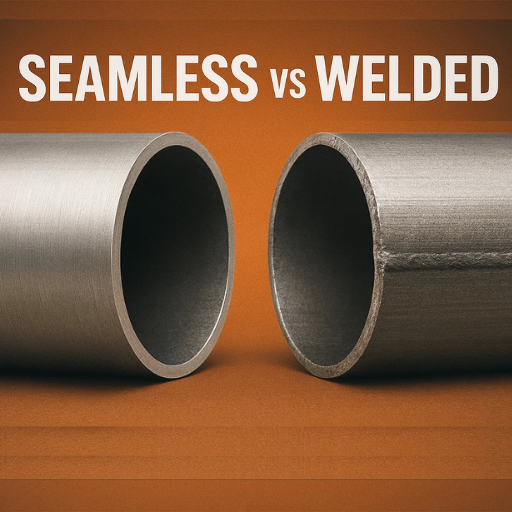
Die Entscheidung zwischen nahtlosen und ERW-Rohren wirkt sich auch auf die Kosten und die Auswahl möglicher Lieferanten aus. Nicht alle Stahlrohrlieferanten führen beide Typen in allen Größenbereichen. Wenn Sie vorab wissen, welche Ausführung Sie tatsächlich benötigen, vermeiden Sie eine unnötige Anfrage.
✔ Wann nahtlose Rohre vorgeschrieben werden sollten (ASTM A106)
- Hochtemperatureinsatz über 300°F nach ASTM A106
- Hochdruckanwendungen, bei denen die Nahtintegrität nach Norm geprüft werden muss
- Präzisionsbearbeitete Teile mit engen Toleranzen (DOM-Förderrohr für mechanische Anwendungen)
- ASME-B31.3-Systeme mit einem Nahtfaktor E = 1.0
⚠ Wann ERW (ASTM A53) die bessere Wahl ist
- Konstruktionshohlprofile (tragend, nicht für Druck)
- Rohrleitungen für allgemeine Anwendungen unter 300F, bei denen A53 Güte B den Normen entspricht
- Wassertransport, Feuerlöschanlagen, HLK-Systeme
- Kostenbewusste Projekte, bei denen ERW die geltende Norm erfüllt
Oft werden nahtlose Rohre außerhalb der Spezifikation oder überdimensioniert vorgesehen, obwohl ERW nach ASTM A53 Güte B den erforderlichen Druck und die Temperatur zu einem um eine Größenordnung niedrigeren Preis bewältigt. Bei der großen Mehrheit der Konstruktions- und allgemeinen Rohrleitungsanwendungen unter 300F erfüllt ERW die Mindestanforderungen der Norm oder übertrifft sie. Bei einer Wasserleitung mit 150°F den Aufpreis für nahtlose Rohre zu zahlen, bringt einen Fertigungsunterschied ohne funktionalen Vorteil für diese Anwendung.
Für Anwendungen, die tatsächlich nahtlose Produkte erfordern, sollten Sie Lieferanten suchen, die werkszertifizierte nahtlose Stahlrohre mit rückverfolgbaren MTCs des Typs 3.1 oder 3.2 liefern können. In allen anderen Fällen sind ERW-Rohre vergleichbarer Qualität – also nach derselben Norm, mit derselben Güte und derselben Rückverfolgbarkeit der Schmelze – die passende und kostengünstigere Wahl.
Stahlrohrpreise: Großhandelspreise, Zusatzbearbeitung und wettbewerbsfähige Angebote
Der Preis für Metallrohre lässt sich nicht einfach aus einem Katalog ablesen. Er hängt von sechs Faktoren ab, die sich gegenseitig beeinflussen. Zwei Lieferanten können für ein „3 inch SCH 40 Kohlenstoffstahlrohr“ um 20 30 % voneinander abweichen, wenn der eine A53 Güte A ERW in Zufallslängen anbietet und der andere A106 Güte B nahtlos, auf Länge geschnitten und einschließlich Gewindeschneidkosten.
Keiner der beiden Preise ist falsch; angeboten werden unterschiedliche Produkte.| Preisfaktor | Auswirkung auf den Preis |
|---|---|
| Güte (A53 gegenüber A106 und API 5L) | Nahtlose Rohre nach A106 kosten bei vergleichbarer Wanddickenreihe 15–25 % mehr als A53 ERW |
| Wanddickenreihe (Wanddicke) | SCH 80 kostet bei gleichem NPS-Durchmesser 30–50 % mehr als SCH 40 |
| Längenausführung | Auf Länge geschnittene Rohre kosten etwa 10 % mehr als Bestellungen in Zufallslängen |
| Oberflächenbehandlung | Verzinkung / Beschichtung verursacht zusätzliche Zink- und Bearbeitungskosten; in der Regel +15–25 % gegenüber schwarzem Stahl |
| Herkunftsland | Zölle nach Section 232 (25 % auf die meisten Stahlimporte, in Kraft seit 2018) erhöhen den Mindestpreis für Rohre aus den USA im Vergleich zu zertifizierten Importen aus Ländern mit geregelten Zollbedingungen. |
| Bestellmenge | Die Stückkosten sinken ab 5 MT+; bei vollen Containerladungen (20–26 MT) gibt es deutliche Preisnachlässe. |
Was kostet Stahlrohr pro Fuß?
Schwarze Kohlenstoffstahlrohre der Wanddickenreihe SCH 40 im NPS-Bereich von 2–4 Zoll kosten im US-Großhandel und bei Händlern je nach Güte, Längenart und regionalen Marktbedingungen etwa $5–$12 pro laufendem Fuß. Der FRED-Erzeugerpreisindex für Eisen- und Stahlrohre (Reihe PCU33121033121002) lag im März 2026 bei 193.6. Dabei handelt es sich um Indexwerte, nicht um Preise pro Fuß; sie berücksichtigen die höheren Preise nach Einführung der Zölle im Vergleich zur Basis vor 2018. Fordern Sie noch heute ein Angebot von Ihrem Rohrlieferanten an, das genau Ihrer benötigten Spezifikation entspricht, da sich die Kosten stets je nach Schulterbreite, Güte und NPS, Wanddickenreihe, Rohrtyp (ERW oder SMLS), Längenart, Oberflächenbehandlung und Herkunftsanforderung ändern.
Eine passende Güte und Wanddickenreihe zu wählen, ohne dieselbe Nummer anzufragen, ist der häufigste Beschaffungsfehler bei der Beschaffung von Stahlrohren. Ein Angebot für SCH 40 als Antwort auf eine Anfrage für SCH 80 gewinnt zwar immer beim Preis, bietet aber nur die halbe Wanddicke. Siehe auch: Referenzdaten zum Gewicht von Stahlrohren pro Fuß und Maßtabellen für Kohlenstoffstahlrohre der Wanddickenreihe 40.
Stahlrohre nach Branche: Leitfaden zur Auswahl von Güte, Anwendung und Wanddickenreihe
Der kostspieligste Fehler bei der Rohrbeschaffung ist, die richtige Menge in der falschen Spezifikation zu bestellen. Ordnen Sie anhand der folgenden Tabelle die Branche Ihres Kundenprojekts den passenden Güten und Wanddickenreihen zu. Nutzen Sie diese Angaben als Ausgangspunkt für Ihre Angebotsanfrage und gleichen Sie sie anschließend mit dem geltenden Regelwerk und der zuständigen Behörde (AHJ) ab.
| Branche / Anwendung | Norm | Werkstoffgüte | Wanddickenreihe | Hinweise |
|---|---|---|---|---|
| Öl- und Gastransport | API 5L | X42–X65 (PSL1 / PSL2) | Wandgüte | PSL2 für den Einsatz in Sauergasumgebung und Offshore-Anwendungen |
| Prozessrohrleitungen für Öl und Gas | ASTM A106 | Güte B. (Güte C für Hochdruck.) | 40, 80, 160 | Nahtlose Ausführung erforderlich; maßgeblich ist ASME B31.3 |
| Konstruktion / Bauwesen | ASTM A500 | Güte B oder C | Wanddicke vorgegeben | Runde, quadratische und rechteckige Hohlprofile (HSS); keine Druckrohrspezifikation |
| Sanitär / HLK | ASTM A53 | Güte B | 40, 80 | ERW ist zulässig; verzinktes A53 für den Einsatz in Wasserleitungen |
| Brandschutzanlagen | ASTM A795 | — | Light / Standard / Xtra | UL/FM-Zulassung erforderlich; Anforderungen des Versicherers prüfen |
| Chemische Prozessindustrie | ASTM A312 | TP304, TP316L | 5S–160 | Bei Schweißarbeiten Güten mit niedrigem Kohlenstoffgehalt und der Kennzeichnung „L“ verwenden |
| Maschinenbau / Präzisionstechnik | ASTM A513 | 1020, 4130 | Individuelle Wanddicke | DOM-Förderrohr; engere Toleranzen für Außen- und Innendurchmesser als bei Druckrohren |
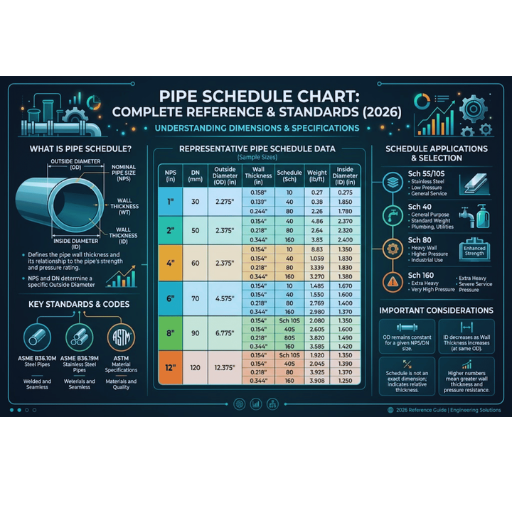
In der Tabelle zu Rohr-Wanddickenreihen finden Sie alle genormten NPS, Außendurchmesser und Wanddicken für sämtliche Standardgrößen.
Stahlrohrmarkt: Trends bei Energie, Infrastruktur und Beschaffung 2025–2026
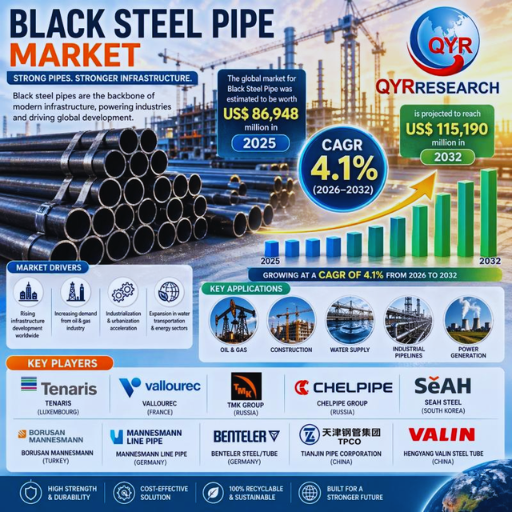
Derzeit beeinflussen drei wichtige Faktoren die Kaufentscheidungen für Stahlrohre: Handelspolitik, Infrastrukturbedarf und die Versorgung durch asiatische Stahlwerke.
Handelspolitik: Seit 2018 gilt der durch Section 232 eingeführte Zoll von 25 % auf die meisten Stahlimporte mindestens bis 2025. Der Zoll legte einen Mindestpreis für Rohre aus US-Produktion fest und hielt zugleich Käufer bei Standardgüten wettbewerbsfähig, sofern sie über ein zertifiziertes Stahlwerk in einem Herkunftsland mit Beschränkungen beschafften. Das Rohstoffteam von S&P Global prognostizierte eine anhaltende Abschwächung des Stahlmarkts bis zur zweiten Jahreshälfte 2025 und eine moderate Erholung 2026.
Nachfragedynamik: Ausgaben für Pipeline-Infrastruktur, kommunale Programme zur Erneuerung von Wasserhauptleitungen und LNG-Exportanlagen stützen den regelmäßigen Absatz nahtloser A106-Rohre und von Leitungsrohren nach API 5L in den USA. Laut Daten von Worldsteel (über Specialty Steel Industry of North America) dürfte die Nachfrage in Europa 2026 um +3,2 % wachsen, gestützt durch höhere Militärausgaben und Infrastrukturprojekte.
Versorgung durch asiatische Stahlwerke: Der Verbrauch in China lag 2025 etwa 2 % unter dem Vorjahreswert; die chinesische Produktion sank bis August um 2,8 %. Infolgedessen vermarkteten Stahlwerke in China und Südkorea Standardgüten auf dem Weltmarkt offensiver. Für asiatische Rohre mit Sonderabmessungen gelten nach dem chinesischen Neujahrsfest längere Lieferzeiten von 12-16 Wochen.
Häufig gestellte Fragen zu Stahlrohrlieferanten
Wie werden Stahlrohre bemessen – was bedeutet NPS?
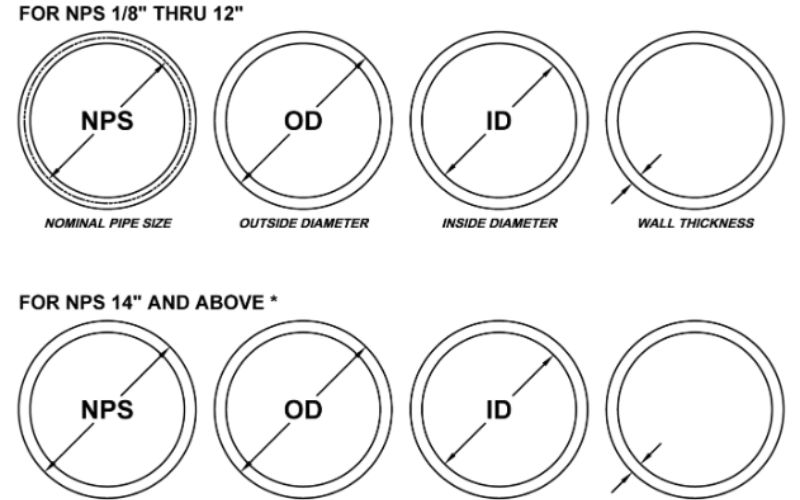
NPS steht für Nominal Pipe Size und bezeichnet eine dimensionslose, in den USA verwendete Kennung; im metrischen System entspricht ihr DN. Bei Rohren bis einschließlich 12 NPS besteht nach der Metallrohrnorm kein direkter Zusammenhang zwischen NPS und Außendurchmesser. Ein Rohr mit 4 NPS hat einen Außendurchmesser von 4.500 und nicht 4.000. Ab 14 NPS entspricht der Außendurchmesser in Zoll dem NPS-Wert. Die Wanddicke wird separat über die Wanddickenreihe 10, 40, 80 oder 160 beziehungsweise die älteren Bezeichnungen STD, XS und XXS festgelegt. Geben Sie bei der Beschreibung eines Stahlrohrs stets NPS, Wanddickenreihe und die aktuell geltende Norm an.
Was ist der Unterschied zwischen Stahlrohren der Wanddickenreihen 40 und 80?
Beide Bezeichnungen für die Wanddickenreihe geben die Dicke der Rohrwand an. Im Allgemeinen ist die Wand eines Rohrs der Reihe SCH 80 bei gleichem Nenndurchmesser dicker als die eines Rohrs der Reihe SCH 40. Für ein Rohr mit 3″ NPS gelten folgende Wanddicken: SCH 40: Wanddicke = 0.216; SCH 80: Wanddicke = 0.300. Die größere Wanddicke von SCH 80 ermöglicht höhere Betriebsdrücke und lässt mehr Material für Gewinde oder Korrosionszuschlag. Sie erhöht außerdem das Gewicht und die Kosten; pro Fuß liegen diese etwa 30-50 % über denen eines Rohrs der Reihe SCH 40 mit gleichem Nenndurchmesser. SCH 40 ist die gängigste Wanddickenreihe für Sanitär, HLK und leichte Konstruktionen, während SCH 80 höheren Betriebsdrücken oder Gewindeanwendungen vorbehalten ist.
Bieten Stahlrohrlieferanten Zuschnitt auf Länge und Gewindeschneiden an?
Zuschnitt auf Länge (CTL) und NPT-Gewindeschneiden sind Zusatzleistungen, die die meisten Stahl-Service-Center und viele Rohrhändler mit Lager anbieten. Bei einem CTL-Auftrag fällt gegenüber einer Bestellung mit Zufallslängen üblicherweise ein Bearbeitungszuschlag von etwa 10 % an. Das Gewindeschneiden wird normalerweise pro Ende oder Gewinde berechnet. Die meisten Lieferanten mit Direktbezug vom Stahlwerk liefern Zufallslängen (16-22 Fuß bei den meisten Güten). Ist die Übergabe an ein weiteres Stahlwerk erforderlich, wird der nachgelagerte CTL-Zuschnitt üblicherweise von einem Service-Center übernommen. Wenn Sie mit Lieferanten an Projekten mit bestimmten Zuschnittlängen arbeiten, klären Sie deren CTL- und Toleranzmöglichkeiten frühzeitig.
Was ist ein Werkszeugnis (MTC) und warum ist es wichtig?
Ein MTC ist ein vom Hersteller ausgestelltes Qualitätszeugnis für eine bestimmte Rohrschmelze, das deren tatsächliche chemische Zusammensetzung und mechanische Eigenschaften aufführt. Die Schmelzenangabe auf einem MTC muss mit einer Kennzeichnung auf dem Rohr übereinstimmen (der sogenannten Schmelzennummer oder Kennzeichnung). Eine fehlende Schmelzennummer ist so lange kein Problem, bis Sie bei einer Inspektion, einer Prüfung nach Regelwerk oder im Gewährleistungsfall einen Nachweis der Spezifikationen vorlegen müssen. Für die meisten Bestellungen zwischen Unternehmen ist EN 10204 Typ 3.1 (Herstellerzertifizierung) der Standard. Für ASME-, API-PSL2- oder nukleare Anwendungen kann ein Typ 3.2 (Prüfung durch Dritte) erforderlich sein.
Was ist der Unterschied zwischen nahtlosen und geschweißten Stahlrohren?
Anforderungen an den Einsatz bei hohen Temperaturen oder unter hohem Druck machen nahtlose Rohre erforderlich; ASTM A106 schreibt nahtlose Rohre statt geschweißter Rohre (ERW, elektrisch geschweißt) vor. Nahtlose und geschweißte Rohre für Wasseranwendungen, etwa nach ASTM A53 Güte B, weisen typischerweise dieselbe Mindeststreckgrenze und Mindestzugfestigkeit auf und eignen sich für fast alle Anwendungen mit Wasser und für allgemeine Anwendungen, sofern keine hohen Temperaturen oder Drücke vorliegen. Nahtlose Rohre können bei gleicher Normqualität und Wanddickenreihe 15-25 % mehr kosten, wenn die nahtlose Ausführung tatsächlich erforderlich ist.
Wo finde ich Stahlrohrlieferanten in meiner Nähe?
Am schnellsten finden Sie Stahlrohrlieferanten in Ihrer Nähe (wenn Sie sich in den USA befinden), indem Sie die online veröffentlichten Mitgliedersuchen der NASPD (National Association of Steel Pipe Distributors) und des MSCI (Metals Service Center Institute) nutzen. In den meisten großen Ballungsräumen gibt es 3-5 Händler mit Lagerbestand an Rohren in Standard-Wanddickenreihen und -güten, die Abholung oder Lieferung am nächsten Tag anbieten. Bei großen Bestellungen von Spezialgüten oder kundenspezifischen Ausführungen können günstigere Importeure direkt aus ausländischen Stahlwerken liefern. Sie können US-Preise erreichen oder unterbieten und haben Zugriff auf eine größere Auswahl an Güten.
Wie lange dauert die Lieferung von Stahlrohren normalerweise?
Die Lieferzeit hängt vollständig vom Beschaffungskanal ab. Bei einem US-Händler mit Lager: 1-5 Werktage. Bei einem Service-Center für Standardgüten (bei Zuschnitt auf Länge und Zusatzbearbeitung länger): 3-10 Werktage. Direkt vom Stahlwerk: 4-8 Wochen bei Standardgüten (Stahlwerke mit Lagerbestand) und 8-16 Wochen bei Sonderabmessungen.
Gehen Sie unmittelbar nach dem Produktionsstillstand zum chinesischen Neujahrsfest immer vom oberen Ende dieser Zeitspanne aus. Berücksichtigen Sie neben der Transportzeit vom Stahlwerk zum Importeur auch die Zollabfertigung (bei „sauberen“ Sendungen üblicherweise 3-7 Tage), die Entlade-Warteschlange am Einfuhrhafen und den anschließenden Inlandstransport vom Hafen.Quellen und Literatur
- U.S. Federal Register, „Pipeline Safety: Periodic Standards Update II“, 90 FR 40749 (21. Aug. 2025) – aktuelle Ausgaben von ASTM A53/A53M-22 und A106/A106M-19A bestätigt. federalregister.gov
- PHMSA, IBR Standards Update Fact Sheet (1. Jul. 2025) – Aufnahme von A53/A53M-22 in 49 CFR Parts 192 und 195. phmsa.dot.gov
- Federal Reserve Bank of St. Louis (FRED), Erzeugerpreisindex: Eisen- und Stahlrohre (PCU33121033121002) = 193.609 (März 2026). fred.stlouisfed.org
- Project Materials Blog, „Werkszeugnis 3.1 vs. 3.2 – EN 10204 erklärt.“ blog.projectmaterials.com
- Practical Machinist Forum, Diskussion: „Was hat es mit Zufallslängen auf sich?“ (practicalmachinist.com, 20.995 Aufrufe – Diskussion zur Beschaffung aus der Praxis). practicalmachinist.com
Verwandte Artikel
- Stahlrohrhändler in Ihrer Nähe: So finden und vergleichen Sie Anbieter
- Edelstahlrohrlieferanten: Güten, Spezifikationen und Anwendungen
- Nahtlose Edelstahlrohre: Der umfassende Beschaffungsleitfaden
- Tabelle der Rohr-Wanddickenreihen: alle Reihen und Größen
- API 5L-Leitungsrohre: Umfassender Einkaufsleitfaden