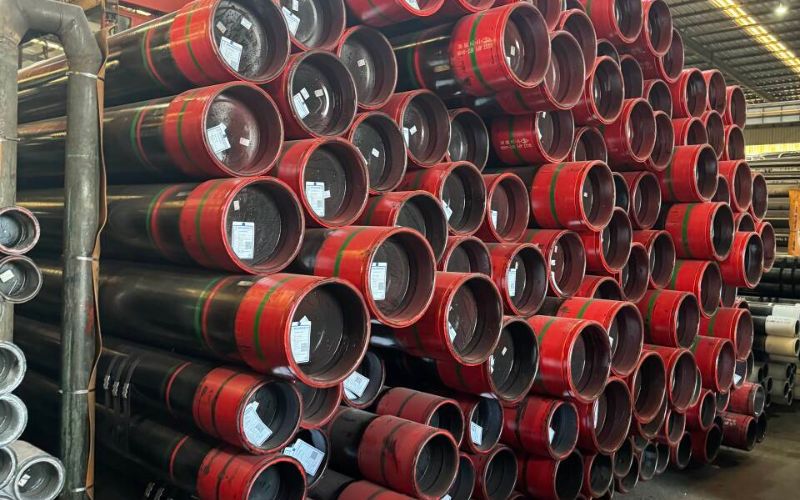
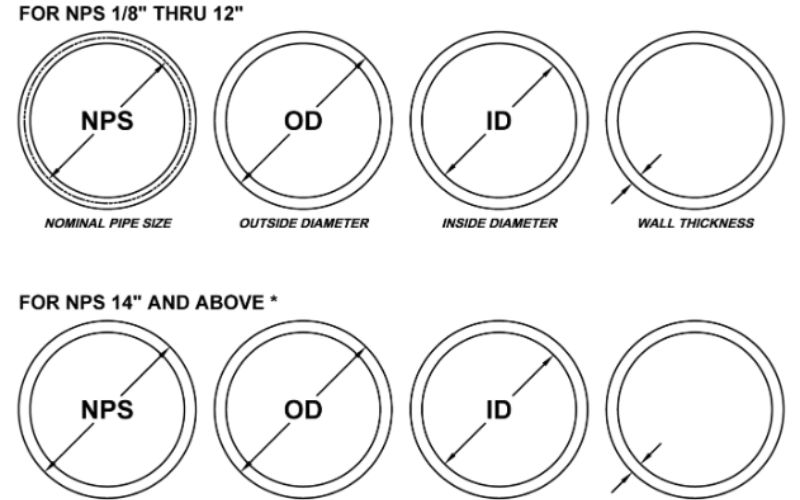
ASTM A106 is the standard specification for seamless carbon steel pipe built for high-temperature service, and it is one of the most widely specified pressure-pipe standards in power, refining, and petrochemical plants. This guide breaks down the three grades, the exact chemical and mechanical limits, dimensions and weights, how A106 differs from A53 and API 5L, and what to verify before you buy.
Quick Specs: ASTM A106 Pipe
| Standard | ASTM A106/A106M (ASME equivalent: SA106) |
| Product | Seamless carbon steel pipe, high-temperature service |
| Grades | A, B, C (Grade B is the workhorse) |
| Size range | NPS 1/8″–48″ (DN 6–1200) |
| Grade B tensile / yield (min) | 60,000 psi (415 MPa) / 35,000 psi (240 MPa) |
| Service temperature | Up to ~750°F (400°C) under ASME codes |
| Governing codes | ASME B31.1, B31.3; ASME BPVC |
What Is ASTM A106 Pipe?
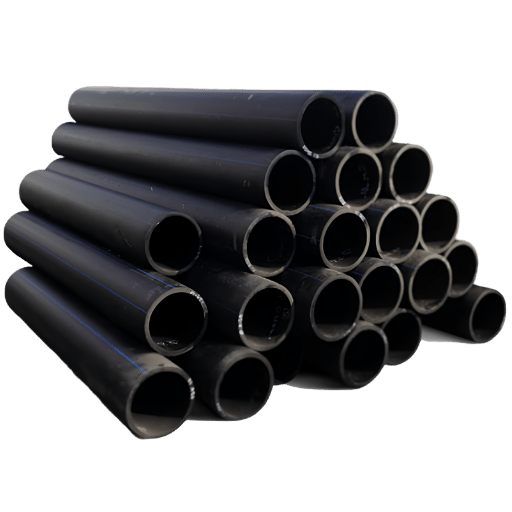
ASTM A106 material is seamless carbon steel pipe made specifically for carrying fluids and gases at elevated temperatures and pressures. The ASTM A106/A106M pipe specification covers pipe in NPS 1/8 through NPS 48, supplied in three strength grades and produced without a weld seam. Because there is no longitudinal weld, the pipe has uniform structure around its full circumference, which is why engineers reach for it on pressure and temperature-cycling duty.
When people ask what A106 “is,” the short answer is: it is the carbon-steel pressure-pipe standard for heat. That same physical pipe is frequently certified to its ASME twin, SA106, so the material can be used inside ASME B31.1 power piping and boiler systems. If your line stays near ambient temperature, you probably do not need A106 at all, and a general-purpose grade like ASTM A53 pipe may be the cheaper, correct choice.
A106 = seamless + carbon steel + rated for high temperature. Drop any one of those three and a different standard usually fits better.
ASTM A106 Grades: A, B, and C Explained
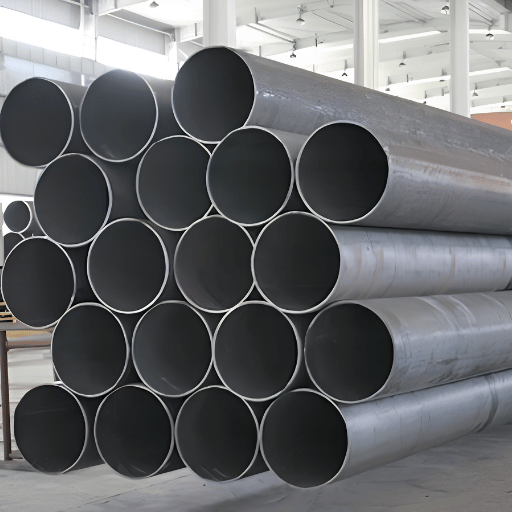
A106 comes in three grades that differ by strength and carbon content. Grade A is the softest and most formable, Grade B is the default for the vast majority of piping, and Grade C is the strongest. That trade-off is simple: more strength means more carbon, and more carbon means tougher welding.
| Grade | Tensile min | Yield min | Carbon max | Typical use |
|---|---|---|---|---|
| A | 48,000 psi (330 MPa) | 30,000 psi (205 MPa) | 0.25% | Cold-bending, tight forming |
| B | 60,000 psi (415 MPa) | 35,000 psi (240 MPa) | 0.30% | General high-temp pressure piping |
| C | 70,000 psi (485 MPa) | 40,000 psi (275 MPa) | 0.35% | Higher allowable stress, thinner walls |
The Grade B Default Rule. Grade B earns its place as the default because its 60,000 psi tensile and 35,000 psi yield satisfy the allowable-stress math for most ASME B31.3 process piping designs, while its 0.30% carbon ceiling keeps it field-weldable without exotic procedures. You only step up to Grade C under three conditions: (1) the pressure design needs the higher yield to thin the wall and cut weight, (2) the code calculation actually demands it, and (3) you accept the stricter weld controls (preheat and post-weld heat treatment) that the extra carbon bring. Outside those cases, Grade C buys you welding headaches you didn’t need.
ASTM A106 Chemical Composition
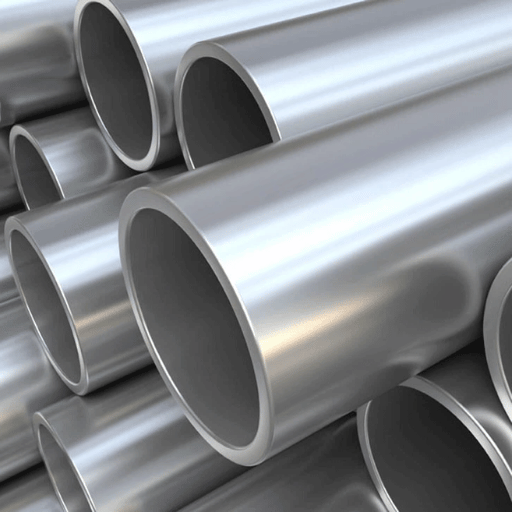
A106’s chemical composition is controlled tightly because the chemistry is what lets the pipe survive heat. Heat-analysis limits for all three grades appear below. By far the most important line is silicon: A106 requires a minimum of 0.10%, which makes it a killed (fully deoxidized) steel and underpins its high-temperature rating.
| Element | Grade A | Grade B | Grade C |
|---|---|---|---|
| Carbon, max | 0.25% | 0.30% | 0.35% |
| Manganese | 0.27–0.93% | 0.29–1.06% | 0.29–1.06% |
| Phosphorus, max | 0.035% | 0.035% | 0.035% |
| Sulfur, max | 0.035% | 0.035% | 0.035% |
| Silicon, min | 0.10% | 0.10% | 0.10% |
| Chromium, max | 0.40% | 0.40% | 0.40% |
| Copper, max | 0.40% | 0.40% | 0.40% |
| Molybdenum, max | 0.15% | 0.15% | 0.15% |
| Nickel, max | 0.40% | 0.40% | 0.40% |
| Vanadium, max | 0.08% | 0.08% | 0.08% |
Two rules sit underneath that table. First, the combined total of chromium, copper, molybdenum, nickel, and vanadium must not exceed 1.00%. Second, A106 allows a manganese trade for carbon: for every 0.01% the carbon falls below its grade maximum, you may add 0.06% manganese above the listed maximum, up to 1.65% manganese (the ASME SA106 version caps that at 1.35%). That flexibility let a mill hit strength targets while keeping carbon low for weldability.
When you read a Mill Test Certificate, check that silicon is actually at or above 0.10% on the heat analysis. A106 is a killed steel; if silicon reads below 0.10%, the material isn’t conforming A106 regardless of what the stencil says. Cross-check the carbon equivalent too if you plan to weld thick sections.
ASTM A106 Mechanical Properties
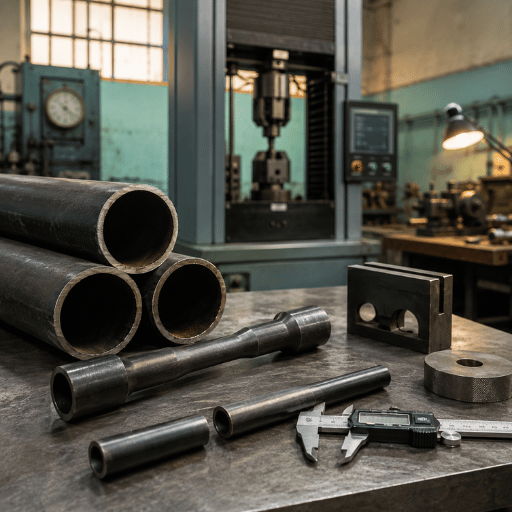
A106’s mechanical properties give you the design allowables for pressure calculations. Tensile strength, yield strength, and elongation are all set by grade. These numbers are the specified minimums; mill values are usually higher, but you design to the minimum.
| Property | Grade A | Grade B | Grade C |
|---|---|---|---|
| Tensile strength, min | 48,000 psi (330 MPa) | 60,000 psi (415 MPa) | 70,000 psi (485 MPa) |
| Yield strength, min | 30,000 psi (205 MPa) | 35,000 psi (240 MPa) | 40,000 psi (275 MPa) |
| Elongation, longitudinal, basic min | 35% | 30% | 30% |
Elongation is where A106 gets nuanced. The 30% figure for Grade B is the basic minimum for longitudinal full-section tests; the standard then applies a calculated adjustment based on specimen geometry using the formula e = 625,000 A0.2 / U0.9, and transverse tests carry lower minimums. In plain terms, thin-wall and small-diameter pipe get held to a derived elongation value rather than a single fixed percentage, so don’t be surprised when an MTC lists an elongation that isn’t exactly 30%.
Dimensions, Schedules, and Weight
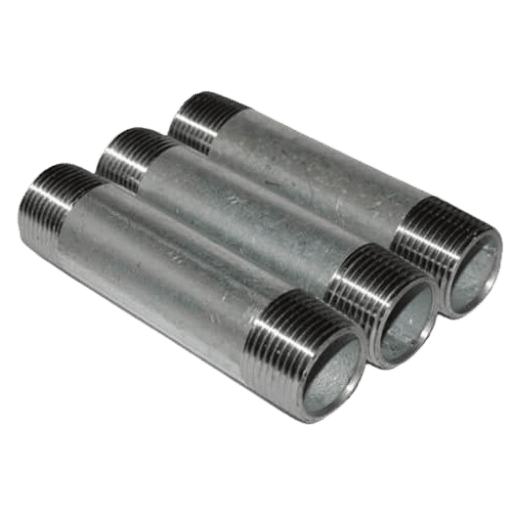
A106 is supplied to the dimensions in ASME B36.10M, the same nominal pipe size (NPS) and schedule system used across carbon-steel pipe. Wall thickness is driven by the schedule number, not the standard, so an A106 pipe and an A53 pipe of the same NPS and schedule have the same wall. Selected sizes below cover the most common diameters.
| NPS | OD (in) | Sch 40 wall (in) | Sch 80 wall (in) | Sch 40 wt (lb/ft) |
|---|---|---|---|---|
| 1/2 | 0.840 | 0.109 | 0.147 | 0.85 |
| 1 | 1.315 | 0.133 | 0.179 | 1.68 |
| 2 | 2.375 | 0.154 | 0.218 | 3.65 |
| 3 | 3.500 | 0.216 | 0.300 | 7.58 |
| 4 | 4.500 | 0.237 | 0.337 | 10.79 |
| 6 | 6.625 | 0.280 | 0.432 | 18.97 |
| 8 | 8.625 | 0.322 | 0.500 | 28.55 |
| 12 | 12.750 | 0.406 | 0.687 | 53.52 |
What Is Schedule 40 Thickness for A106?
There’s no single Schedule 40 thickness; the wall change with diameter. For A106, Schedule 40 runs from 0.109″ on NPS 1/2 up to 0.406″ on NPS 12, as the table shows. That’s the most common source of confusion among buyers who expect “Sch 40” to be one number. Schedule numbers form a thickness series, and the actual wall depend on the NPS you order. For the full range across every size, see our reference on pipe weight per foot and the complete chart of steel pipe sizes.
On tolerances, A106 allows the minimum wall at any point to fall no more than 12.5% under the nominal wall (a rule it inherits from the general-requirements standard). Weight may vary +10% / −3.5% for sizes NPS 12 and under, and +10% / −5% for larger sizes. Plan your weight budgets against those bands, not against the nominal alone.
Seamless Manufacturing: Why It Matters for A106
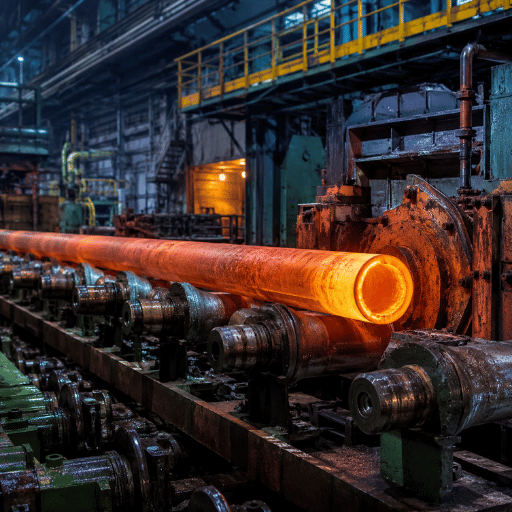
A106 is produced as seamless pipe only, never welded. That isn’t a marketing preference; it’s written into the standard. Mills pierce and elongate a solid round billet, then either hot-finish or cold-draw it to final size. What you get has no longitudinal weld line, so there’s no heat-affected zone running the length of the pipe to act as a stress concentrator under pressure and thermal cycling.
Why does that matter on hot service? Any weld seam is the part of a welded pipe most likely to open up under repeated thermal expansion and contraction. Removing it means the wall behaves uniformly all the way around, which is exactly what you want on a steam header that heats and cool every startup. That uniformity is the core reason a seamless carbon steel pipe commands a premium over welded product for pressure duty. For general low-pressure lines, a welded black steel pipe is often adequate and cheaper.
Treating “seamless” and “ERW welded” as interchangeable for high-temperature lines. They are not. An electric-resistance-welded pipe can be the right call for ambient water or air service, but it does not carry the A106 high-temperature pedigree.
ASTM A106 vs A53 vs API 5L: Which to Choose?
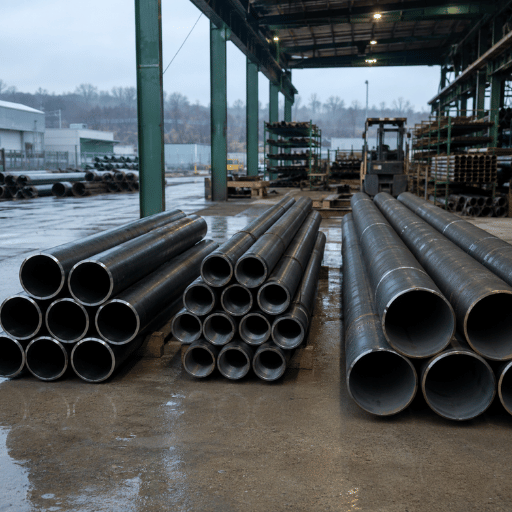
This is the question most buyers actually arrive with. A106, A53, and API 5L overlap in chemistry and even share identical strength numbers in some grades, but they’re built for different jobs. The table sorts them out.
| Attribute | ASTM A106 | ASTM A53 | API 5L |
|---|---|---|---|
| Form | Seamless only | Seamless (S) or welded (E/F) | Seamless or welded |
| Primary service | High-temperature pressure | General fluid / structural | Oil & gas pipeline transmission |
| Silicon requirement | 0.10% min (killed steel) | None | Grade-dependent |
| Grade B tensile / yield | 60 / 35 ksi | 60 / 35 ksi | 60.2 / 35 ksi |
| Governing code | ASME B31.1 / B31.3 | B31.1 / B31.9 / structural | ASME B31.4 / B31.8 |
By far the biggest technical difference between A106 and A53 Grade B pipe is silicon. A106 mandates 0.10% minimum silicon and is a killed steel; A53 has no silicon requirement. Silicon improves heat resistance, which is precisely why A106 carries a high-temperature rating and A53 doesn’t. Strip away the heat duty and the two are mechanically twins. For pipeline transmission, neither fits, and you want API 5L Grade B line pipe instead.
The interchangeability trap. Here’s the part that trips people up: most mills no longer make plain A53 Grade B Type S as its own commodity. Nearly all seamless carbon pipe today is dual- or triple-certified, stamped to A53-B, A106-B, and API 5L-B at once. So when you order “A106-B,” the physical pipe usually also meets A53-B. The danger isn’t that triple-stamped product; it’s accidentally accepting a welded A53 Type E (ERW) pipe on a job that needs A106’s high-temperature pedigree. A stencil matter, but the form and the certification matter more.
| High-temp / high-pressure steam or hot process (>350°C, critical service) | A106 Grade B or C |
| Ambient-to-moderate water, air, gas, steam; structural | A53 (Type S/E/F by budget) |
| Cross-country oil & gas transmission | API 5L (PSL1 / PSL2) |
| Low-temperature / cryogenic toughness needed | A333 (impact-tested), not A106 |
| Sustained service above ~425°C (creep range) | Cr-Mo alloy (A335 P11/P22) |
One scenario make the trap concrete. Picture a contractor building a 250-psi saturated-steam header who orders “A53 Grade B” because the strength numbers match A106-B and it’s cheaper on paper. This first delivery arrives as triple-stamped pipe and passes inspection fine. A second lot, ordered the same way, ships as A53 Type E electric-resistance-welded pipe, which is technically A53 Grade B but carries a longitudinal weld and no high-temperature silicon control. On a cycling steam line, that welded lot is the wrong material even though the purchase order said “Grade B.” The fix was never about strength; it was about specifying A106 by name and reading the form on the certificate.
ASME SA106 and Code Compliance
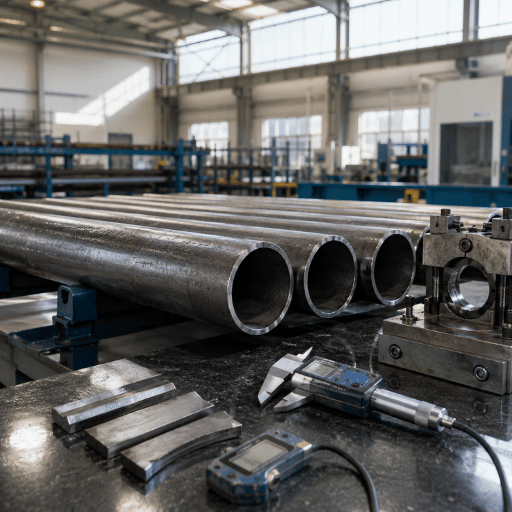
A106 has an ASME twin called SA106. The two are the same material specification in practice; SA106 is the version adopted into the ASME Boiler and Pressure Vessel Code so the pipe can be used in code-stamped vessels and boilers. When a drawing calls for SA106 Grade B, a conforming A106 Grade B pipe with the matching certification satisfies it in nearly all cases, the main caveat being the slightly different manganese cap noted earlier.
What Does ASTM Mean in Piping?
ASTM stands for the standards body (formerly the American Society for Testing and Materials) that publishes material specifications like A106. In piping, an ASTM number tells you the material’s chemistry, strength, dimensions, and test requirements, but it does not by itself tell you the pressure rating of a system. That comes from the design code, ASME B31.1 for power piping or B31.3 for process piping, which combines the material’s allowable stress with the wall thickness and temperature to size the line. In short: ASTM defines the pipe; ASME B31 governs how you use it. Always confirm the certificate references both the ASTM material grade and the edition you ordered.
Applications and High-Temperature Service
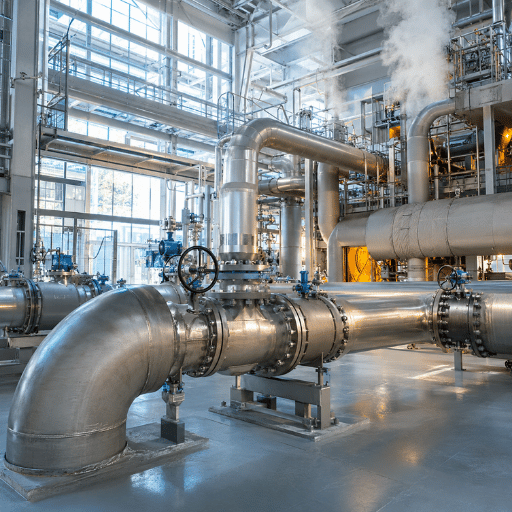
A106 is the carbon-steel workhorse wherever heat and pressure meet: power-plant steam lines, refinery and petrochemical hot-process piping, boiler external piping, and increasingly the mechanical and steam systems inside large data centers. Anywhere a fluid run hot under pressure and the budget rules out stainless, A106 is usually the default. One nearby cousin in these plants is the boiler tube, which follows its own heat-service standards.
The practical ceiling is where this gets actionable. Under ASME codes, A106 carbon steel is generally applied up to about 750°F (400°C). Push past roughly 425°C (800°F) for sustained service and plain carbon steel starts to suffer accelerated oxidation and creep, the slow permanent deformation that eventually leads to failure. That’s the signal to move up to a chromium-molybdenum alloy such as A335 P22 chrome-moly alloy pipe, which holds strength far hotter. Picture a refinery hydrocarbon line running near 430°C: it sits right at the edge of A106’s envelope, and a prudent engineer specifies P11 or P22 alloy rather than asking carbon steel to do an alloy’s job.
Buying ASTM A106: Specs to Confirm and MTC Checks
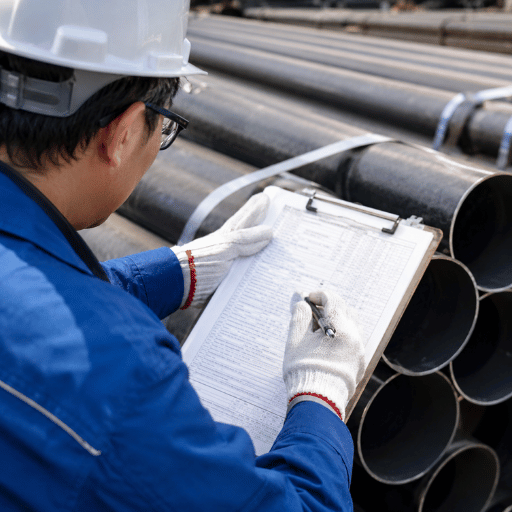
Once you’ve settled on grade and size, the purchase come down to verification. A106 is a pressure material, so the paperwork is as important as the pipe. Run this checklist before you accept a shipment.
- ✔ Confirm the grade (A, B, or C) and that the heat analysis on the certificate meet the chemistry limits, especially silicon at 0.10% minimum.
- ✔ Check that the heat number on the Mill Test Certificate traces to the stencil painted or stamped on the pipe body.
- ✔ Verify the form read “seamless” (SMLS), not ERW or welded.
- ✔ Confirm hydrostatic testing was performed (60% of specified minimum yield, held at least 5 seconds) or that NDE was substituted per agreement.
- ✔ Match the certificate’s standard edition to your purchase order.
“The heat number is the thread that ties everything together. If the number on the certificate does not match the stencil on the pipe, we stop and re-trace the lot before anything goes into a pressure system. A clean A106 certificate with silicon at or above 0.10% and a traceable heat number is worth more than the lowest quote.”
On price, A106 Grade B trades at a premium over welded carbon pipe because it’s seamless and tested, and the cost move with hot-rolled coil and billet markets rather than sitting at a fixed number. Its biggest price drivers are diameter and wall (schedule), order quantity, and required testing or third-party inspection. When you compare quotes, normalize them against the same NPS, schedule, length, and certification level, and always request the material test certificate up front. For a broader view of carbon steel pipe options across grades, compare the seamless premium against your actual service needs before paying for it.
Industry Outlook: The A106 Standard in 2026
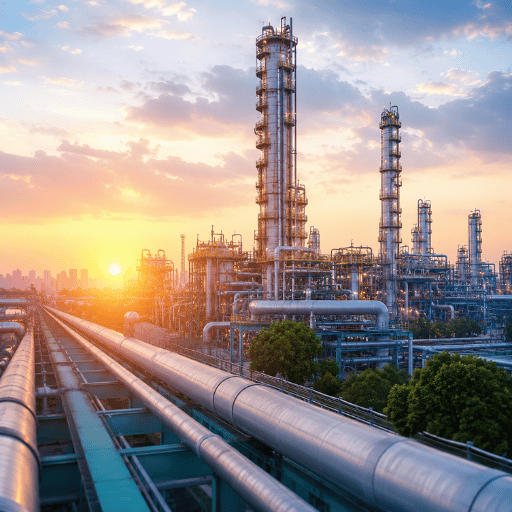
A106 is a mature, stable standard, and that stability is a feature, not a sign of stagnation. Demand tracks the same drivers it always has: power generation, refining and petrochemical maintenance and expansion, and a newer pull from the steam and mechanical systems inside large data centers. None of those are going away, which is why A106 remains a default carbon-steel pressure spec rather than a declining one.
Two things are worth watching in 2026. First, the standard itself is periodically revised; the 2019 edition (A106/A106M-19a) is the one most widely cited, but a 2026 revision is in circulation, so confirm the current edition with ASTM and make sure your Mill Test Certificate references the edition you actually ordered. Second, the boundary with alloy steel is where material decisions are shifting at the margins: as plants push operating temperatures, more hot-service lines that once defaulted to carbon steel are being specified in Cr-Mo alloy to buy creep margin. If you are planning a 2026 project near A106’s 400°C ceiling, price the alloy upgrade now rather than discovering the limit during commissioning.
Frequently Asked Questions
Q: Is ASTM A106 the same as ASME SA106?
View Answer
Q: Is A106 seamless or welded?
View Answer
Q: What is the maximum temperature for A106 pipe?
View Answer
Q: Can A106 pipe be galvanized?
View Answer
Q: What is the difference between A106 Grade A and Grade B?
View Answer
Q: Does A106 require impact testing?
View Answer
Baling Steel supplies A106/SA106 seamless carbon steel pipe with traceable heat numbers and full material test certification.
About This A106 Guide
The chemistry, mechanical, and dimensional figures here were cross-checked against two independent published A106 spec tables and the ASME B36.10M size system, then framed by what we see daily supplying A106 pipe: the silicon-and-heat-number checks that separate a conforming A106 lot from a near-miss, and the triple-certification reality that confuses A106-versus-A53 buyers. Always confirm the current ASTM A106/A106M edition for your purchase order.
References & Sources
- ASTM A106/A106M Standard Specification for Seamless Carbon Steel Pipe for High-Temperature ServiceASTM International
- ASTM A53/A53M Standard Specification for Pipe, Steel, Black and Hot-Dipped, Zinc-Coated, Welded and SeamlessASTM International
- ASME B31.1 Power PipingThe American Society of Mechanical Engineers
- ASME B31.3 Process PipingThe American Society of Mechanical Engineers
- ASME B36.10M Welded and Seamless Wrought Steel PipeThe American Society of Mechanical Engineers
- API Specification 5L Line PipeAmerican Petroleum Institute