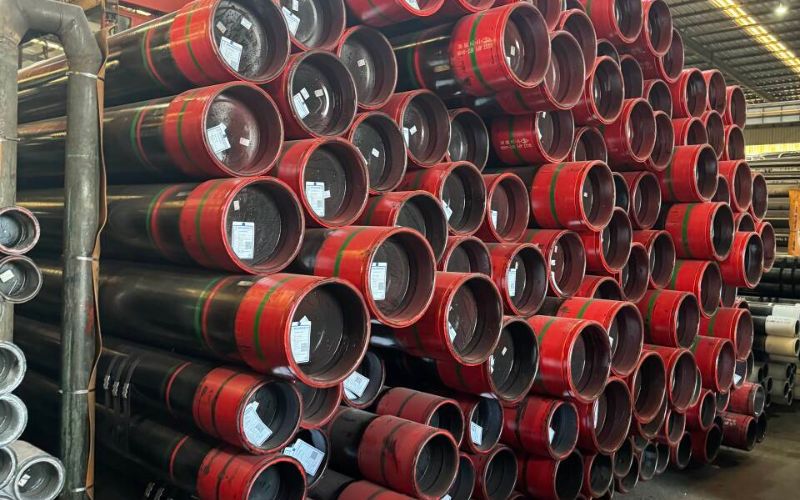
A carbon pipe almost always means a carbon steel pipe, a pressure-rated tube made from iron alloyed with up to about 0.30% carbon, used to move oil, gas, steam, and water. The word “carbon” causes real confusion online, because search results mix carbon steel pipe with carbon fiber tube, two materials with nothing in common except a name. This guide settles that confusion first, then walks through grades, sizes, cost, and how to verify what you actually receive.
Quick Specs: Carbon Steel Pipe
| Common standards | ASTM A106, ASTM A53, API 5L |
| Carbon content | ≤ 0.30% (A106 Grade B max) |
| Manufacture | Seamless (SMLS) or welded (ERW) |
| Common schedules | SCH 40, SCH 80, SCH 160, XXS |
| Size range (NPS) | 1/8″ – 48″+ (ASME B36.10M to 60″) |
| Min tensile (A106 Gr B) | 60,000 psi (415 MPa) |
| Max continuous temp | ≈ 425°C / 800°F (ASME B31.1 limit) |
What Is Carbon Pipe? (Carbon Steel vs Carbon Fiber)
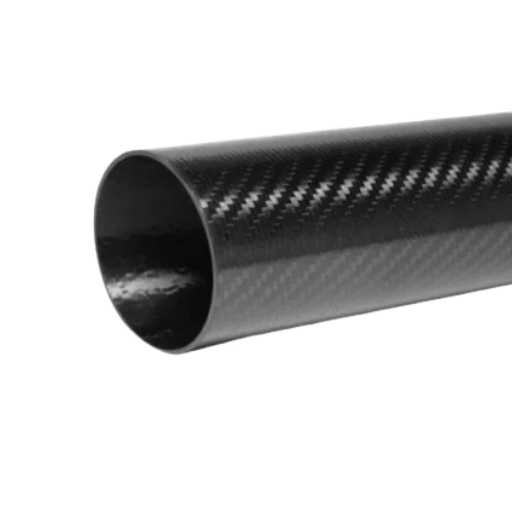
Carbon pipe is the everyday name for carbon steel pipe: a steel tube whose main alloying element is carbon, with no significant chromium, nickel, or molybdenum added. Low-carbon versions are commonly called mild steel. It’s the workhorse of industrial piping because it’s strong, weldable, and inexpensive relative to alloy or stainless grades.
Here’s where buyers get tripped up. Type “carbon pipe” into a search engine and half the results are carbon fiber tubes, a polymer-composite product used in drones, bicycles, and aerospace. They aren’t interchangeable, and confusing them on a purchase order is a costly mistake.
| Property | Carbon Steel Pipe | Carbon Fiber Tube |
|---|---|---|
| Base material | Iron + ≤0.30% carbon | Carbon-fiber-reinforced polymer |
| Density | ~7.85 g/cm³ | ~1.6 g/cm³ (≈1/5 the weight) |
| Typical use | Oil, gas, steam, water, structural | Aerospace, drones, sports gear |
| Pressure piping? | Yes — ASME-rated | No |
If you are sourcing pipe for process, utility, or structural service, you want carbon steel, specifically a grade such as ASTM A106 carbon steel pipe. The rest of this guide deals exclusively with the steel product.
When a spec or drawing says “CS pipe,” it means carbon steel. Carbon fiber is never specified by a pipe schedule or an ASTM A-number.
Carbon Steel Pipe Grades & Standards: A106, A53 & API 5L
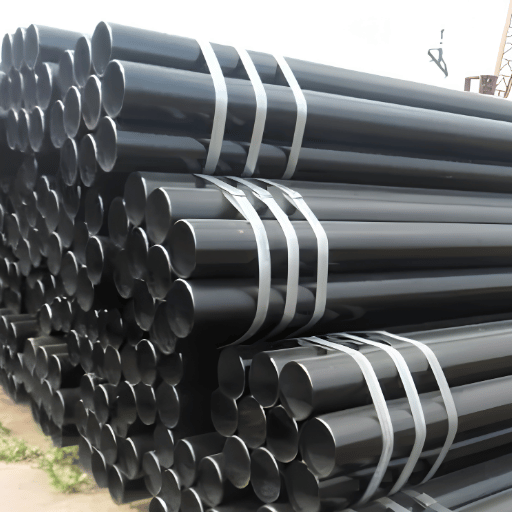
Three standards cover the great majority of carbon steel pipe. Picking the right one is the single most important spec decision, because it controls allowable temperature, pressure, and how the pipe may be made.
| Standard | Made by | Best for | Grade B min tensile / yield |
|---|---|---|---|
| ASTM A106 | SMLS only | High-temperature process & steam service | 60,000 / 35,000 psi (415 / 240 MPa) |
| ASTM A53 | SMLS or ERW | General/low-pressure conveyance, structural, fire lines | 60,000 / 35,000 psi (415 / 240 MPa) |
| API 5L | SMLS or welded | Oil & gas pipeline transport (line pipe) | Grade-dependent (e.g. X42–X70) |
Notice that ASTM A106 Grade B and ASTM A53 Grade B share the same minimum strength, 60,000 psi tensile and 35,000 psi yield. So why pay more for A106? Because A106 is verified for elevated-temperature service and is always made without a weld seam, which matters when the line carries steam or high-pressure process media. A53 delivers better value for water, low-pressure gas, sprinkler, and structural work. For long-distance hydrocarbon transport, API Spec 5L line pipe is the governing standard.
- High temperature or steam (>205°C / 400°F)? → A106 Grade B (or C for higher strength).
- General water, air, low-pressure gas, structural, fire protection? → A53 Grade B.
- Cross-country oil or gas pipeline? → API 5L line pipe.
Grades also scale within a standard. A106 comes in Grade A (48,000 psi tensile), Grade B (60,000 psi), and Grade C (70,000 psi); higher grades trade a little ductility for strength. Whatever you specify, match it with compatible fittingsforged fittings and flanges under ASTM A182 for alloy work, and A234 WPB butt-weld fittings for standard carbon lines.
Seamless vs Welded (ERW) — and Black vs Galvanized
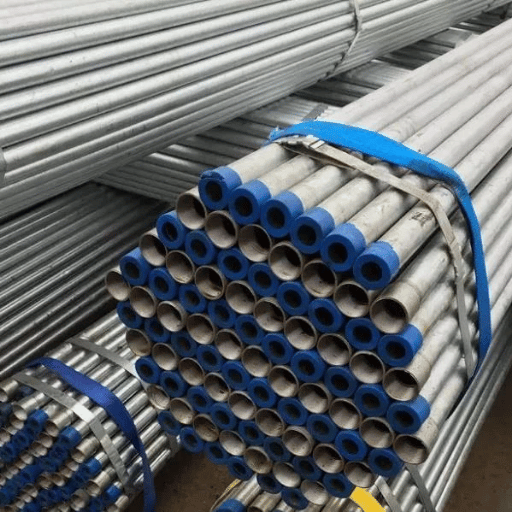
Two manufacturing choices sit underneath every carbon pipe order: how the tube is formed, and how its surface is finished.
Seamless pipe is pierced and drawn from a solid billet, so it has no weld line and a uniform grain structure. That makes it the default for high-pressure, high-temperature, and cyclic-load service. ERW (electric-resistance-welded) pipe is rolled from strip and fused along one longitudinal seam. Modern ERW is sound and cost-effective for low-to-medium-pressure water, oil, gas, and structural use, the old assumption that “welded equals weak” no longer holds for quality mill product, though the solid-wall product still wins where a weld line is a liability.
- No weld line to fail under pressure or fatigue
- Preferred for steam, high-temp, sour/cyclic service
- Uniform wall and grain structure
- Longitudinal seam is a defined inspection point
- Usually 15–30% cheaper than seamless
- Fine for water, low-pressure gas, structural, fire lines
Finish is the second choice. Black pipe is bare steel with a dark mill-scale surface. Galvanized pipe carries a zinc coating for corrosion resistance. Galvanizing helps outdoors and in wet water lines, but zinc is a poor choice above roughly 200°C and is restricted in some fuel-gas applications, so black pipe stays standard for gas and high-temperature runs. We’ll come back to the corrosion trade-off below.
Carbon Steel Pipe Sizes, Schedules & Weight
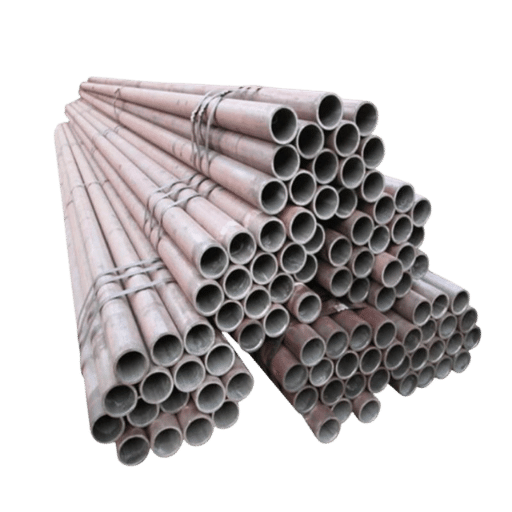
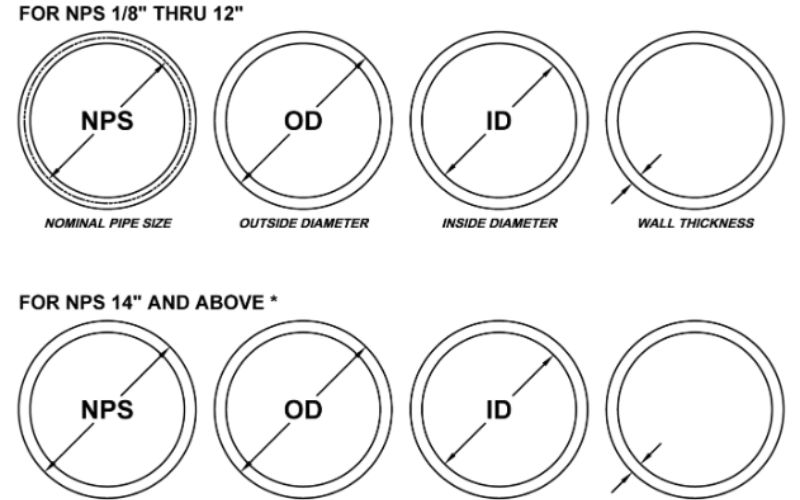
Carbon steel pipe is sized by two numbers: NPS (Nominal Pipe Size) and schedule. NPS sets the outside diameter; schedule sets the wall thickness. The dimensions are standardized in ASME B36.10M, which covers wrought steel pipe from NPS 1/8″ to 60″.
How do you read carbon steel pipe schedule?
Schedule is a wall-thickness index, not a direct measurement. For a given NPS, a higher schedule means a thicker wall and a higher pressure rating, while the outside diameter stays the same. So an NPS 2″ SCH 80 pipe has the same OD as an NPS 2″ SCH 40 pipe but a thicker wall and a smaller bore. That’s why fittings made for one NPS fit any schedule of that size, the OD never changes.
| NPS | OD (in / mm) | SCH 40 wall (in) | SCH 40 weight (lb/ft) |
|---|---|---|---|
| 1″ | 1.315 / 33.4 | 0.133 | 1.68 |
| 2″ | 2.375 / 60.3 | 0.154 | 3.65 |
| 4″ | 4.500 / 114.3 | 0.237 | 10.79 |
| 6″ | 6.625 / 168.3 | 0.280 | 18.97 |
Dimensions per ASME B36.10M; representative values via The Engineering ToolBox.
Below NPS 14″, the nominal size isn’t the actual outside diameter, an NPS 2″ pipe is 2.375″ OD, not 2″. From NPS 14″ up, NPS equals the OD in inches. Always confirm the OD from the B36.10M table before ordering flanges or clamps, and size pressure capacity off the wall thickness, not the NPS.
What Is Carbon Pipe Used For?
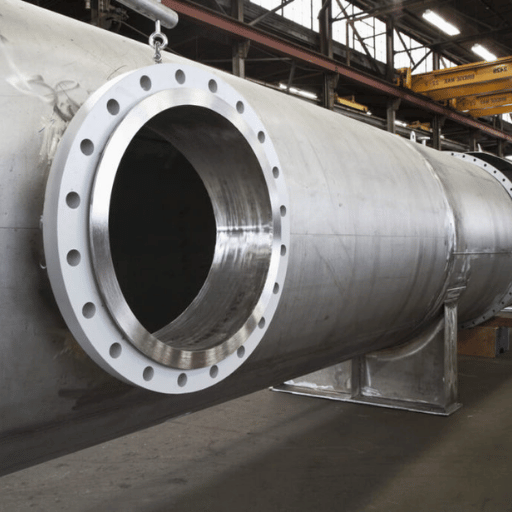
What is carbon pipe used for?
Across nearly every heavy industry, carbon steel pipe carries pressurized and non-pressurized fluids. Its strength-to-cost ratio is why it dominates where stainless or alloy would be overkill.
- ✔Oil & gas: crude, natural gas, LPG, and diesel transport (API 5L line pipe, A106 in refineries)
- ✔Power & process: steam and high-temperature lines (A106 Grade B/C)
- ✔Water & HVAC: chilled/hot water, condenser and utility lines (A53)
- ✔Fire protection: sprinkler mains and risers under NFPA rules (A53 black or galvanized)
- ✔Structural: columns, piling, scaffolding, and handrails
The mapping is consistent: temperature and pressure push you toward A106, transport distance toward API 5L, and everything general lands on A53. Match the grade to the service, not the other way around.
Carbon Steel vs Stainless Steel Pipe: Which Should You Choose?
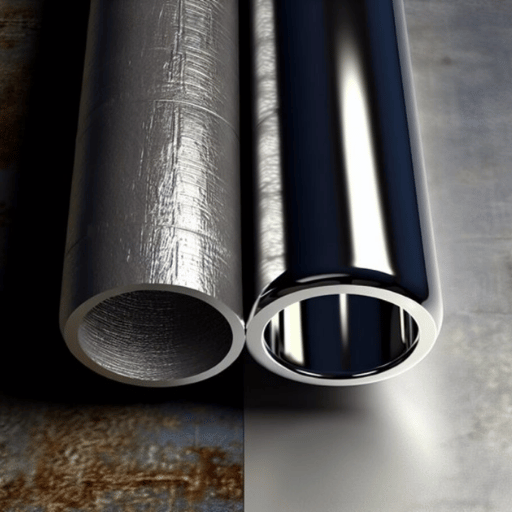
This is the most common cross-material question, and the answer come down to corrosion exposure versus budget. Stainless steel contains at least 10.5% chromium, which forms a self-healing passive oxide layer; carbon steel has none, so it relies on coatings or a controlled environment to resist rust.
Is carbon steel pipe cheaper than stainless?
Yes, by a wide margin. An equivalent 304 or 316 stainless line usually costs two to three times as much, because chromium and nickel are expensive alloying elements. For a clean, dry, or coated service, that price gap is hard to justify spending. For wet, corrosive, hygienic, or chemical service, stainless usually wins on total lifecycle cost despite the higher purchase price.
| Factor | Carbon Steel Pipe | Stainless (304/316) |
|---|---|---|
| Corrosion resistance | Low — needs coating | High — passive layer |
| Relative material cost | Baseline (lowest) | ~2–3× carbon steel |
| Strength / hardness | Higher hardness, strong | Tough, more ductile |
| Typical fit | Oil, gas, steam, structural | Food, pharma, chemical, marine |
- Dry, coated, or non-corrosive media → carbon steel (best value).
- Wet, hygienic, chemical, or coastal service → stainless (lower lifecycle cost).
- High temperature but non-corrosive → carbon steel A106, not stainless.
Carbon Steel Pipe Cost: What Drives the Price?
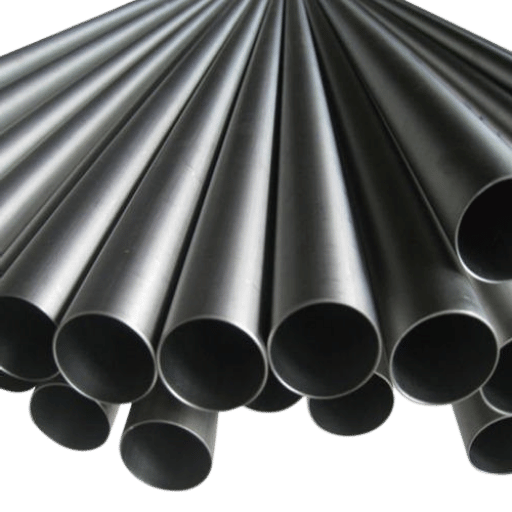
How much does carbon steel pipe cost per foot?
There’s no single honest answer, because carbon steel pipe is a commodity priced off hot-rolled coil (HRC), which moves daily. As of Q1 2026, the most useful approach is to understand the cost drivers and request a current quote rather than rely on a published per-foot figure. ⚠ Any fixed price you see online may not reflect the current market.
Five factors move the number:
- ✔Grade: A106 seamless costs more than A53 for the same size.
- ✔Manufacture: seamless runs 15–30% above ERW.
- ✔Schedule & size: thicker walls and larger diameters use more steel per foot.
- ✔Coating: galvanizing or 3LPE/FBE adds cost but saves on maintenance.
- ✔Order quantity: mill-direct truckload pricing beats small distributor cuts.
Because weight drives material cost, the size/weight table above is also your budgeting tool: multiply weight per foot by length and by the prevailing steel price to estimate spend. For a firm number on a specific grade and schedule, it’s faster to request a quote on A106 Grade B seamless pipe with your size list.
Disadvantages of Carbon Steel Pipe (and How to Manage Corrosion)
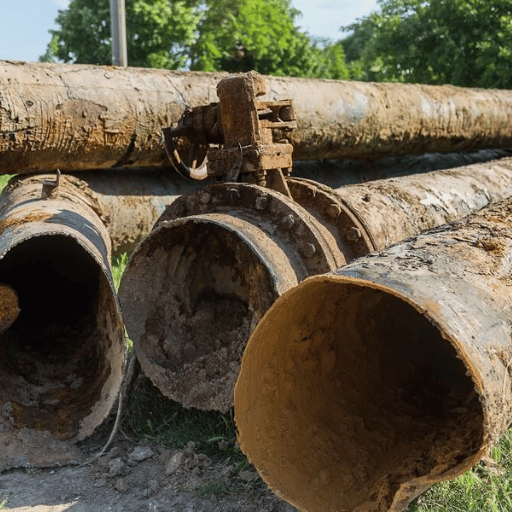
What are the disadvantages of carbon steel pipe?
The main drawback is corrosion. With no chromium to form a passive layer, bare carbon steel rusts whenever it meets moisture and oxygen. Field experience is blunt about it, practitioners report that carbon steel “rusts through” quickly once a line get wet from the outside and stays wet. Even enclosed systems aren’t immune: sprinkler fitters note that dry-pipe systems built with black SCH 40 develop internal rust buildup long before any pinhole leak appears.
“B31.1 rules will not permit carbon steel to be used above 800°F, above that, creep and graphitization take over.”
Temperature is the second limit. Carbon steel is rated for continuous service up to roughly 425°C (800°F); beyond that, allowable stress falls sharply and code prohibits its use. A third, less obvious risk is galvanic corrosion: thread black pipe directly to a stainless component and the carbon steel side corrodes faster than it would alone, a pairing that catches many installers off guard.
None of this rules carbon steel out; it just means corrosion has to be designed for:
- ✔External coatings: 3LPE or FBE for buried/exposed pipelines.
- ✔Galvanizing: zinc for wet water lines (not for hot or fuel-gas service).
- ✔Internal lining + cathodic protection: for buried and immersed lines.
- ✔Dielectric unions: isolate carbon steel from dissimilar metals to stop galvanic attack.
How to Verify Carbon Pipe Quality: Mill Test Certificates & Inspection
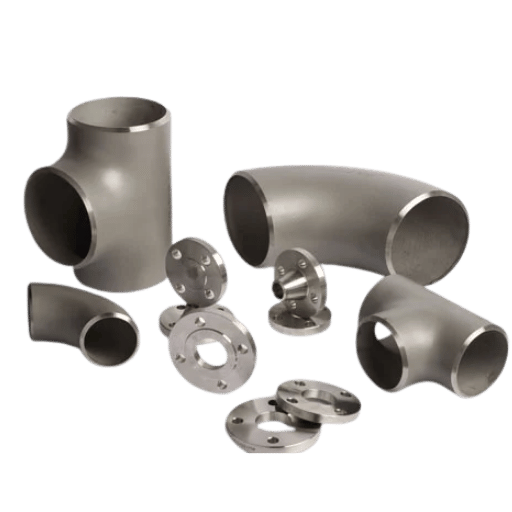
Two pipes can both say “A106 Grade B” on the bundle tag and be very different products. The way to confirm what you’re actually buying is the Mill Test Certificate (MTC), an EN 10204 document that ties a specific heat of steel to its test results.
When reviewing a mill test certificate, four fields matter most:
- ✔Heat number: traces the pipe to a specific steel melt, it must match the pipe stamping.
- ✔Chemical analysis: carbon, manganese, and residuals within the A106/A53 limits.
- ✔Mechanical results: actual tensile and yield meeting the 60,000 / 35,000 psi minimums.
- ✔Hydrostatic / NDE: proof of pressure or ultrasonic testing.
For critical orders, back the paperwork with physical checks, dimensional and visual professional pipe inspection, and where the budget allow, a third-party inspection report from an agency such as SGS or BV. A certificate you can’t trace to the physical pipe is just paper.
Carbon Steel Pipe Market Outlook 2026
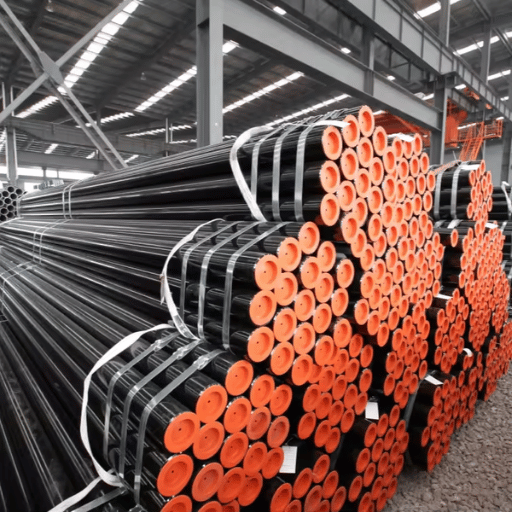
Demand for carbon steel pipe is tied to the same forces that drive heavy industry: energy, construction, and water infrastructure. The direction through the rest of the decade is steady growth rather than disruption.
According to Grand View Research, the global steel pipes and tubes market was valued at USD 137.62 billion in 2025 and is projected to reach USD 209.89 billion by 2033, a 6.0% compound annual growth rate from 2026 to 2033. Energy transport, water-network renewal, and construction in developing economies are the named drivers.
Two practical signals for buyers planning 2026 projects: first, seamless and line-pipe demand stays firm on the back of oil, gas, and power work, so lead times on heavy-wall A106 and API 5L can stretch in peak quarters, order early. Second, because pricing rides hot-rolled coil, locking volume against a known steel-price window protects budgets better than chasing spot dips. The material itself is mature; the variable that move most is supply timing and steel-price volatility, not the pipe technology.
Frequently Asked Questions
Q: Is carbon pipe the same as carbon steel pipe?
View Answer
Q: What is the difference between A53 and A106 pipe?
View Answer
Q: How much is 1 pound of carbon steel?
View Answer
Q: Does carbon steel pipe rust?
View Answer
Q: What is the maximum temperature for carbon steel pipe?
View Answer
Q: Can carbon steel pipe be used for drinking water?
View Answer
Baling Steel manufactures A106, A53, and API 5L carbon steel pipe with full Mill Test Certificates and third-party inspection on request.
About This Guide
We wrote this carbon pipe guide because search results conflate carbon steel pipe with carbon fiber, leaving buyers without a clear path from grade to schedule to purchase. The grade data here is drawn from ASTM A106/A53 and dimensions from ASME B36.10M; the corrosion and temperature notes reflect field reports and ASME B31.1 limits. Reviewed by the Baling Steel engineering team.
References & Sources
- ASTM A106/A106M, Seamless Carbon Steel Pipe for High-Temperature Service — ASTM International
- ASTM A53/A53M, Pipe, Steel, Black and Hot-Dipped, Zinc-Coated, Welded and Seamless — ASTM International
- ASME B36.10M, Welded and Seamless Wrought Steel Pipe — ASME
- API Specification 5L, Line Pipe — American Petroleum Institute
- ASME/ANSI B36.10/19 Steel Pipe Dimensions — The Engineering ToolBox
- Process Pipes, Allowable Stress vs. Temperature — The Engineering ToolBox
- Steel Pipes and Tubes Market Size, 2033 — Grand View Research