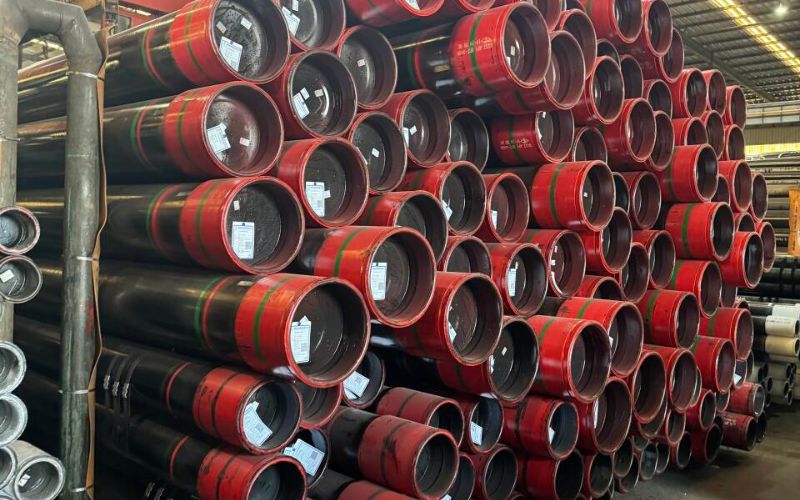
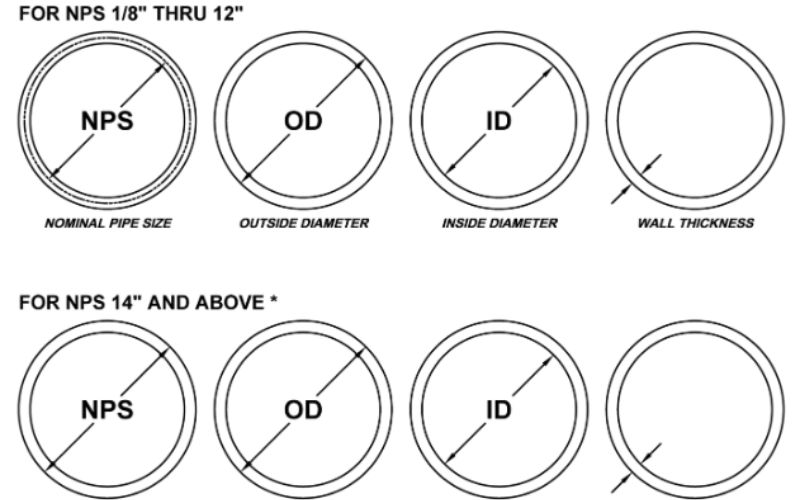
Why would you prefer seamless pipe over welded pipe? Specify seamless when the order requires it and verify that the offered seamless pipe meets the design and inspection requirements. A seamless length has no longitudinal mill weld. If both routes are approved by the engineer, compare their testing, delivery and cost per accepted foot.
In a seamless vs welded pipe comparison, two quotes with the same grade and schedule can still offer different product forms. Check the purchase specification first.
What are the key differences between welded and seamless pipes?
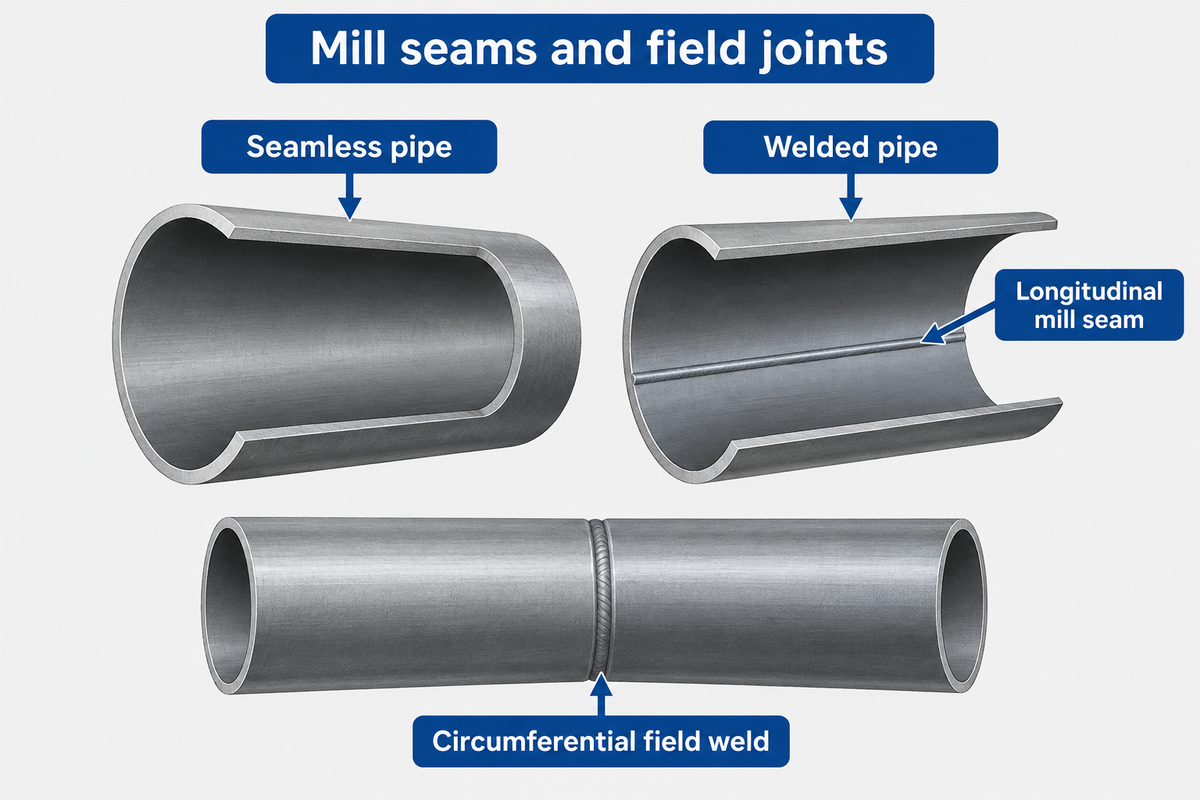
Seamless pipe is manufactured without a longitudinal weld seam. Welded pipes are manufactured by shaping strip or plate into a cylinder and joining its edges to form a tube. Either route results in a pipe that can be joined end to end in the field with circumferential welds.
In the typical manufacturing process of seamless pipes, a solid piece of steel called a billet is heated and then pierced. In a hot finished route, seamless pipe is made by working that hollow to size while hot. Making seamless pipe from a solid steel billet avoids a longitudinal mill weld.
The PHMSA manufacturing fact sheet describes electric resistance welded pipe and double submerged arc welded pipe as different processes. With electric resistance welding, current heats the edges and rollers press them together. Submerged arc welding uses an arc beneath a layer of flux to create the seam. ERW pipes are produced by bonding the formed edges along the seam under pressure. A supplier can offer more than one manufacturing method for a large diameter order. When comparing seamless with different welded pipe types, record the mill process and the extent of inspection for each offer.
How does the manufacturing process (seamless vs. welded) affect the strength and durability of steel pipes?
Welding the seam creates a weld joint and a heat-affected zone that can affect strength or durability, depending on the material, geometry and service. Compared to welded pipes, a seamless mill length has no seam to examine, but it can still have variation in wall thickness and manufacturing discontinuities.
For example, a production study of three-roll tube hollows examined wall thickness eccentricity in a particular seamless manufacturing process. Its results indicate why a buyer should examine actual wall thickness and tolerances. Seamless pipes are known for the absence of a mill seam. This feature says little about a uniform structure or the uniformity of the wall. Before comparing the two offers, use the drawing to identify the minimum wall and the inspection criteria for any uniform wall thickness requirement. For terminology relating to routes and grades, refer to the SMLS pipe grades and manufacturing guide. PHMSA identifies mill and girth welds in their fact sheet on material and weld failures.
Which type of pipe is better for your service?
Seamless is the correct purchase when the line item specifies a seamless-only product such as ASTM A106. Welded pipe can be an alternative when the specification permits the route and engineering accepts the proposed grade, dimensions and examination.
Route Eligibility Table
Screen a pipe offer against its ordered product form, service requirements and approval status before comparing prices.
| Offer category | Decision | What happens next |
|---|---|---|
| An A106 line item and an alternative quoted as A53 Type E | The alternative changes the product specification. | Keep the specified seamless base quote. Submit the other route as a deviation for engineering review. |
| A line specification that permits the proposed seamless and welded product forms | Both can enter technical comparison. | Confirm design conditions, minimum wall, required examination and approval for each offer. |
| A line pipe quote with no manufacturing route or required inspection scope | The offer is incomplete. | Get the route and test commitments in writing before an award. |
| Product edition omitted or changed | The quoted basis is unclear. | Get the supplier to state the project edition and flag any proposed substitution. |
| Grade and schedule match but minimum wall is unclear | The design check remains open. | Request the ordered wall and tolerance, then send the minimum available wall to engineering. |
| Alternate route changes a specified service condition | Technical review is required. | Send the deviation to the project engineer before comparing bids, especially for cyclic or corrosive duty. |
| A welded offer lists a test but omits seam coverage | The proposed examination scope is incomplete. | Request the method, body and seam coverage, and acceptance criteria required by the order. |
| A delivery promise omits the date of a required witness point | The release forecast is incomplete. | Carry the last agreed witness point into the delivery date. |
| Heat identification differs between marking and report | Receiving cannot release the affected lot. | Hold and reconcile the lot with the named mill and the project quality team. |
It makes a difference on a hot process line where an A106 order has already defined the product route and on a pipeline project where the specified line pipe grade and manufacturing method may allow more than one offer. To make the right choice for your project, start with the combination of high pressure and temperature the line must handle, then check the ordered product form. In industries like refining and power generation, piping can serve very different fluids and pressure and temperature combinations within the same site. Chemical plants and power plants can both use process piping, but the line specification and material group determine whether a carbon, stainless or alloy steel option fits.
Can welded pipe meet the same design pressure?
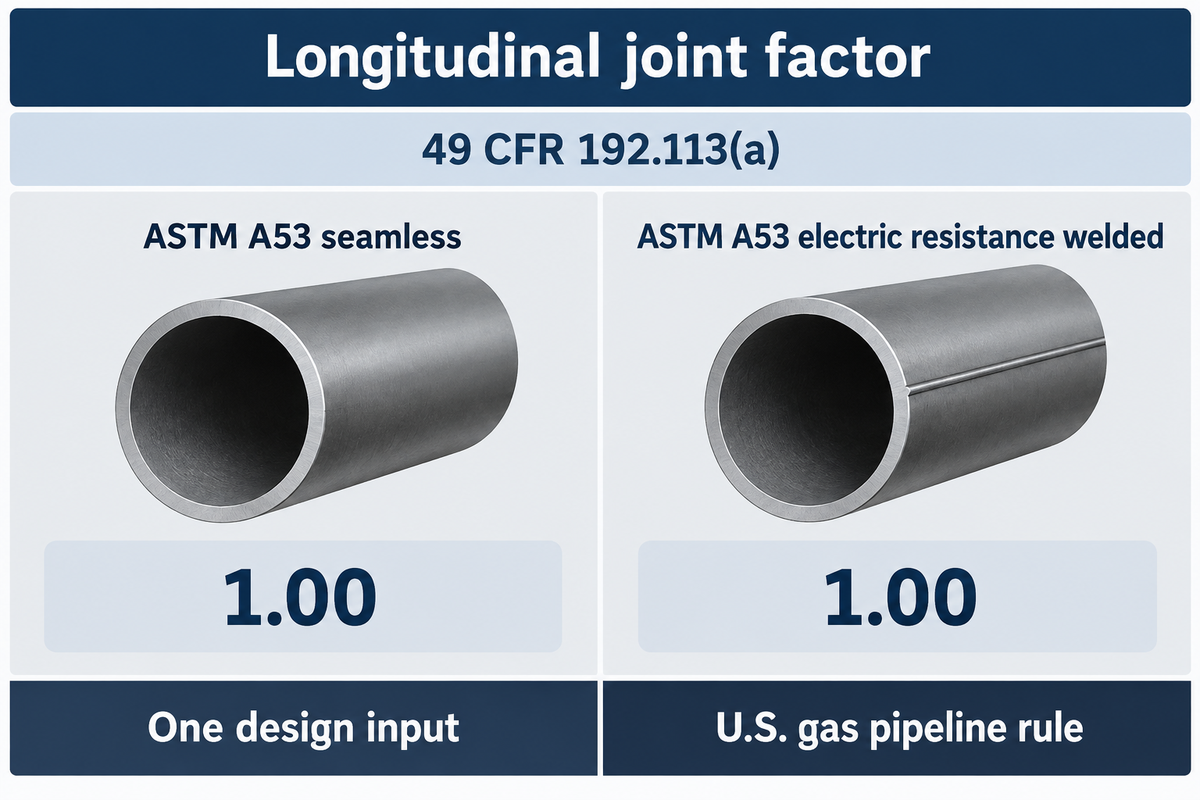
Yes, welded pipe can meet the same design pressure as seamless pipe if the governing calculation supports the proposed product. To decide whether to use seamless pipes or welded pipes, give engineering the applicable edition, coincident pressure and temperature, material allowable stress, minimum available wall and treatment of the longitudinal joint.
For process piping, ASME B31.3 covers materials, design, fabrication, examination, inspection and testing. Wall tolerance describes what the mill may supply relative to the nominal wall, while a corrosion allowance is a design input for the service, so record both when you check whether the offered pipe supplies enough wall.
US gas pipeline regulations provide an example. Table 1 of 49 CFR 192.113(a) shows a longitudinal joint factor of 1.00 for both its ASTM A53 seamless and electric resistance welded classes. The pre-update incorporation provision lists ASTM A53/A53M-22 for this use. The example is applicable to those entries in that gas pipeline rule. The factor is one design input. It cannot be used as a finished pressure rating or carried over to a process line. In high-pressure service, verify the pipe’s ability to withstand the required conditions using the governing design basis. A vendor may describe welded pipes as strong as seamless pipes, or claim superior strength for one offer. Compare the available wall, applicable longitudinal joint factor and allowable stress before determining if the two offers satisfy the same design pressure.
Are welded pipes safe?
Welded pipe is allowable for services where the specific product is permitted, and the design and acceptance requirements have been satisfied. For cyclic loading, corrosive media or hydrogen, the engineer must evaluate the relevant service mechanisms, as well as static pressure. A claim that the weld is always the weak point skips that evaluation. Greater strength in a tensile test doesn’t by itself establish better corrosion resistance, toughness, or fatigue behavior, and a claim that a product is suitable for critical applications is incomplete without naming the service and acceptance requirements.
In its research on hydrogen environments, the National Institute of Standards and Technology models fatigue using factors such as operating pressure, load frequency and the size of existing flaws. Use the applicable project assessment when a proposed change could impact fatigue life. The hydrogen-service pipe selection guide addresses service-related questions to be resolved prior to purchase. For a quote decision, a route with an unresolved technical question is placed on hold, even if the unit price for that route is lower.
What the product standard allows you to order
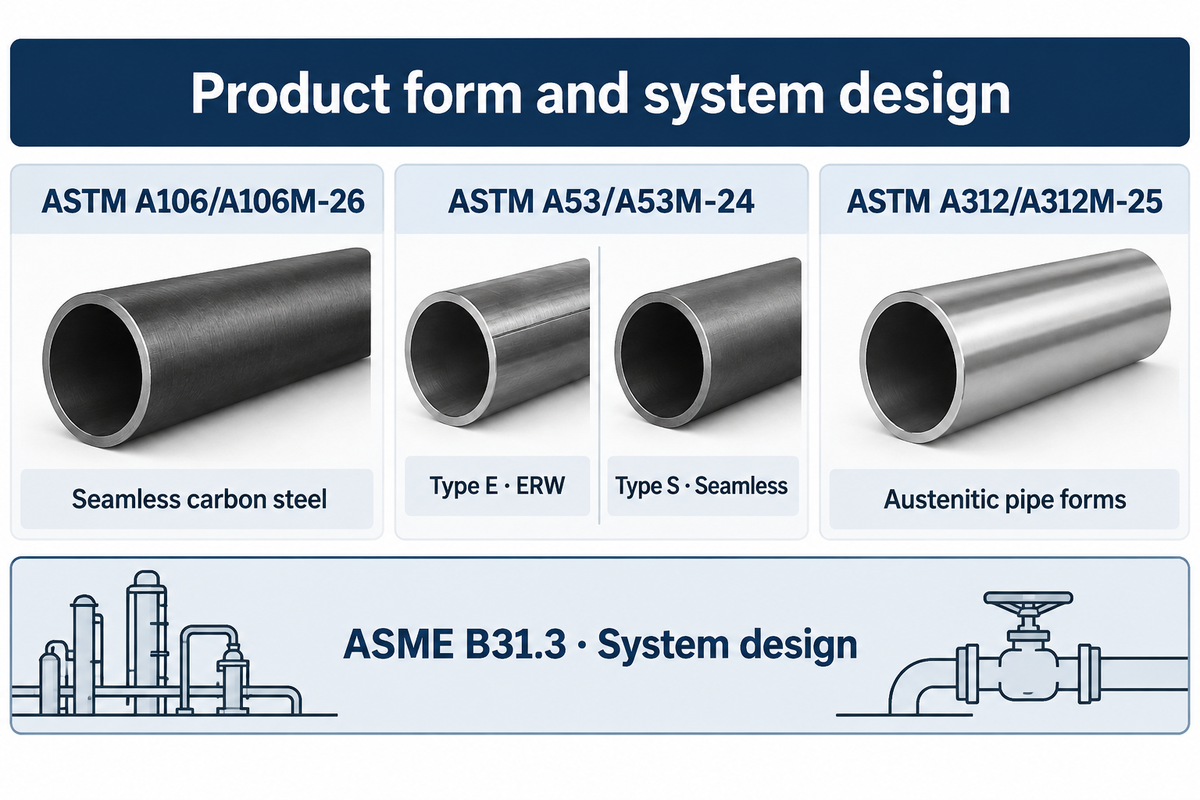
Start with the product specification and route named on the line item. ASTM A106/A106M-26 covers seamless carbon steel pipe for high-temperature service. ASTM A53/A53M-24 lists electric resistance welded Type E and seamless Type S, each available under the specification in Grades A and B. Those scopes are different, even when the dimensions on the two quotes look similar.
ASTM A312/A312M-25 covers seamless, straight-seam welded and heavily cold worked welded austenitic stainless steel pipe within its stated service scope. The A312 pipe specification guide covers grade and product form for austenitic pipe orders. API Specification 5L covers seamless and welded steel line pipe. Welded pipes are widely used in various industries, with specifications allowing the relevant welded route. For an order to this standard, use the API 5L Grade B designation guide to identify the fields to discuss with the supplier. Name the adopted edition and ordered form on the quote.
| Specification or rule | What it covers | Decision it informs |
|---|---|---|
| ASTM A106/A106M-26 | Seamless carbon steel pipe in its high-temperature product scope. | Reject a welded substitution unless engineering changes the ordered specification. |
| ASTM A53/A53M-24, Type E | Electric resistance welded pipe in Grades A and B. | Ask for Type E on the offer if it is the permitted welded form. |
| ASTM A53/A53M-24, Type S | Seamless pipe in Grades A and B. | Check that both Type S and the ordered grade appear on the offer. |
| ASTM A312/A312M-25 | Seamless, straight-seam welded and heavily cold worked welded austenitic pipe. | Match the proposed form to the project requirements. |
| ASME B31.3 | Process piping system design, examination, inspection and testing. | Use it where adopted to check the installed system. |
| 49 CFR 192.113(a), Table 1 | Longitudinal joint factor of 1.00 for the listed ASTM A53 seamless and ERW entries. | Use that input only for the applicable U.S. gas pipeline calculation. |
| 49 CFR 192.7 | ASTM A53/A53M-22 is incorporated in the pre-update rule for the stated uses, including § 192.113. | Separate the regulatory edition from the newer publisher edition. |
| API Specification 5L | Seamless and welded steel line pipe. | State the manufacturing route and grade required by the line specification. |
| API Specification 5L, 47th edition | The announcement identifies changes to weld quality, examination and sour-service requirements. | Check whether the project adopted the new edition before changing order documents. |
How are steel pipes given specifications?
A purchasing line normally consists of a material specification and grade, manufacturing route, dimensions and required tests. The project design documents establish which piping rules apply. A pipe designation can indicate what the mill made while leaving engineering acceptance of the installed line as a separate decision for the project team. Product standards covering different material families, including carbon steel and stainless steel, use their own requirements for grade, route and tests. A high strength grade and a higher tensile strength are material properties to check in the applicable product and design documents.
Prepare the product specification and adopted edition, grade, nominal size or outside diameter, ordered wall, end finish and length and add heat treatment, nondestructive examination and document requirements when the order calls for them. Avoid the phrase “same size, same grade” if the vendor proposes a different specification.
How to compare seamless and welded pipe quotes
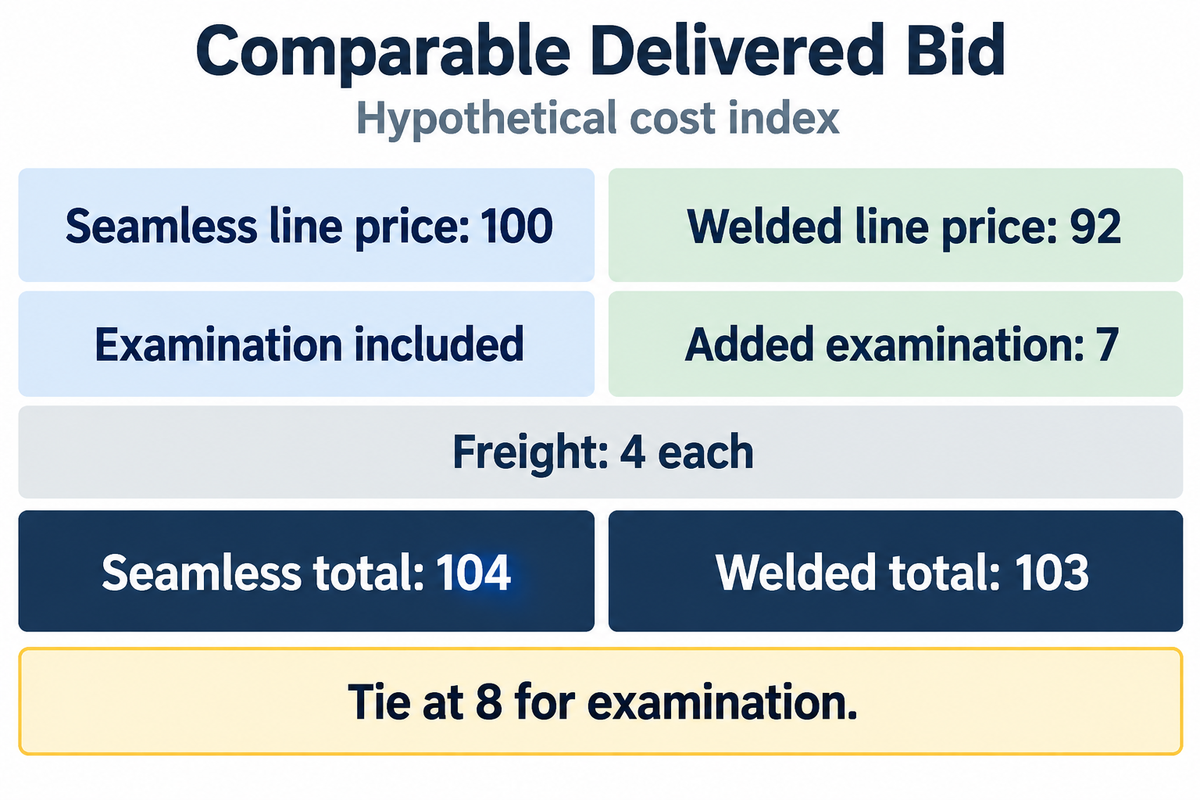
Compare delivered cost per accepted foot once both routes are eligible. Bring offers to the same delivery point, quantity, unit, and quote date. Have the line price, added examinations and freight broken out as separate entries. An absent charge shouldn’t dictate the award.
If the complete and approved quote gives the buyer a better delivered cost, welded pipes are cost-effective. A low line price can lose the advantage when the vendor factors in required tests.
The Federal Acquisition Regulation (FAR) gives an example of adjusting historical prices for differences in quantities, terms and market conditions. You can find this in the FAR section on price analysis. The comparison principle is also useful when preparing to review a private solicitation. However, the FAR is written to reflect the procedures used by the federal government in acquisitions.
| Cost on equal scope | Seamless offer | Welded offer |
|---|---|---|
| Quoted pipe line price | 100 | 92 |
| Additional charge for required examination | Included in line price | 7 |
| Freight to same point | 4 | 4 |
| Total delivered | 104 | 103 |
In this hypothetical example, the 8-point line-price gap narrows to a 1-point delivered-cost gap after the additional examination charge. At 8 points for that examination, both delivered bids would tie. For actual quotes, list the charges and divide each total by the accepted footage on that bid. If an examination charge is required, mark an offer with that charge still open as incomplete. Consider that offer for comparison when the supplier includes the charge and the agreed scope on the same quote.
What to verify before the pipe is released
Require the records described in the purchase order and inspection plan before releasing the pipe. Start with matching the physical marking and mill test report to the heat or lot and the exact product designation. Review any specified body and seam examination separately, so a generic test line doesn’t mask differences in what was inspected.
Set a date for any hold or witness point before promising dispatch, so the buyer can see whether the inspection window and the time needed to reconcile documents fit the delivery date for the shutdown. A mill hydrostatic test record is concerned with the pipe being supplied. The installed system has its own acceptance and testing requirements under the project documents governing the work.
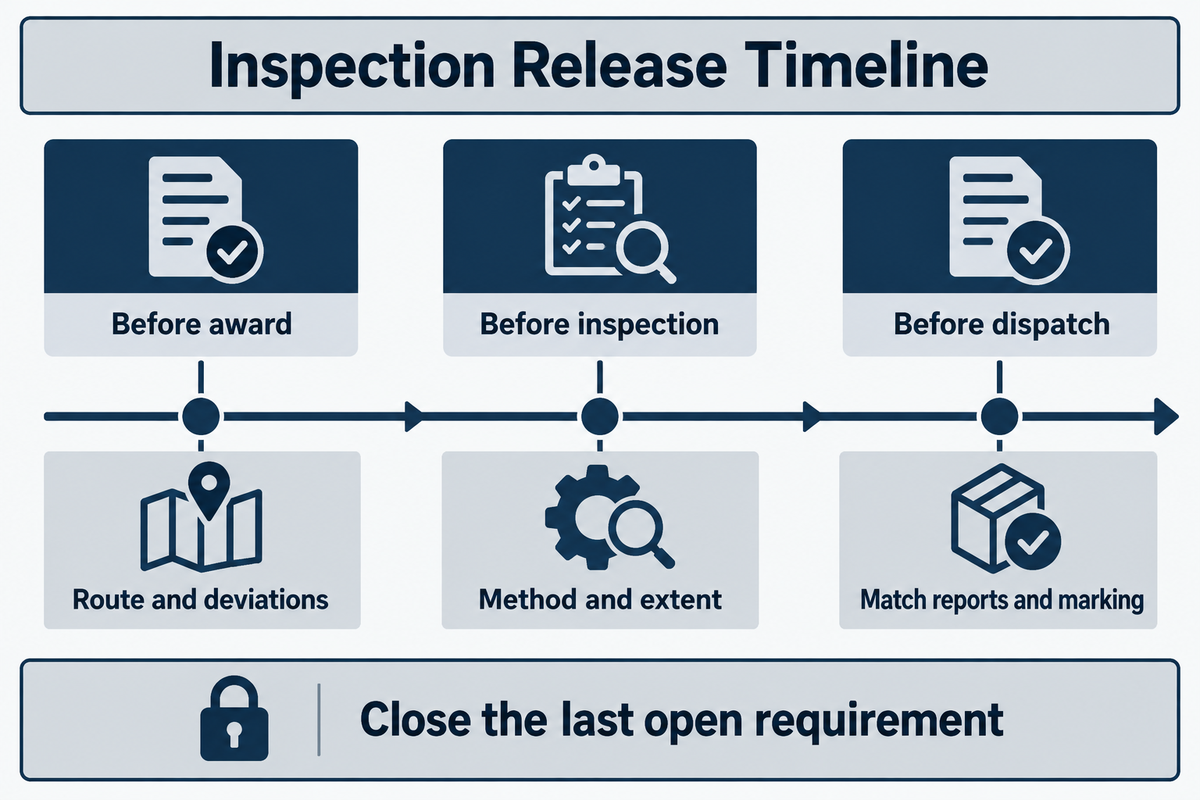
Inspection Release Timeline
Assign the route approval, test scope and paperwork checks to separate milestones before dispatch.
The release date follows the last open requirement in the agreed inspection plan. If the inspection plan requires the witness to attend and they cannot attend on time, use the later inspection date as the earliest possible release date. Actual release still waits for the required records and signatures. Any modification of a hold or witness point requires the disposition of the party designated in the inspection plan.
- Prior to award, confirm the offered route, mill, approved deviations and inspection plan.
- Prior to inspection, identify the parts examined, method, extent and acceptance criteria stipulated in the order.
- Prior to dispatch, reconcile heat/lot, reports and marking. Close all specified witness and hold points, then obtain the required release records.
Joseph Baldauff of testing-equipment supplier Magnetic Analysis Corp. explains how different examination methods target different indications in his article on tubular product testing. Pipes need examination records that match the scope, agreed method and coverage of the order, regardless of whether a seam is present.
How to request a compliant bid and an alternate
When choosing the right pipe for your project, keep the specified pipe as the base bid and ask the supplier to price the alternate separately. The alternate should stipulate the mill, route, standard edition, grade, wall, and scope of inspection. The supplier should mark every deviation explicitly so engineering can approve or decline it before procurement compares prices. For pipe manufacturers or distributors quoting a replacement, a full match to the approved line specification is of prime importance over a generic label.
Baling Steel lists A106 Grade B seamless carbon steel pipe and ERW steel pipe options. Send the project specification and acceptance documents in a single request. If both routes are eligible, request separate line items and written confirmation of the supplying mill, adopted standard edition, examination scope and shipment date for each.
What to check before repeating the same order
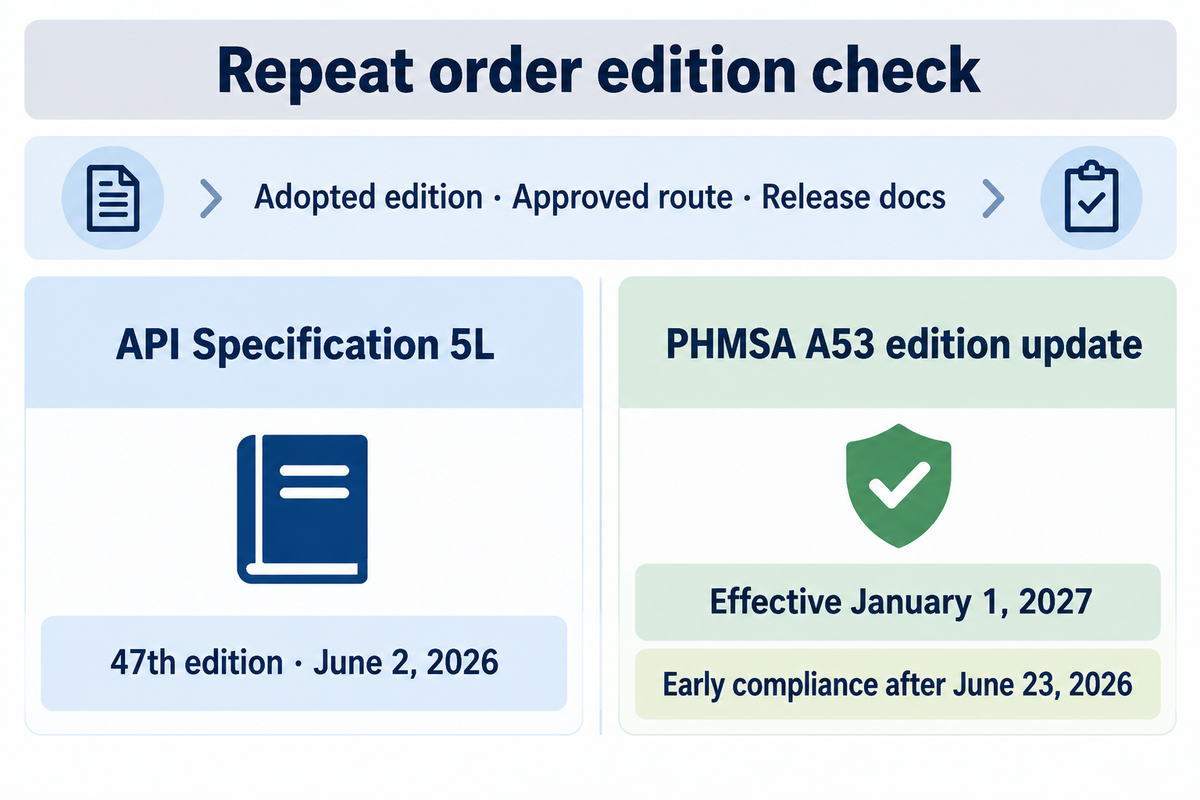
Verify the adopted standard edition, approved manufacturing route and release documents when repeating an order. A newly published edition doesn’t automatically replace editions specified in contracts or referenced in controlling documents.
For example, API announced the 47th edition of Specification 5L on June 2, 2026. The announcement identifies changes to high-frequency weld quality, nondestructive examination and sour-service requirements.
The PHMSA update to § 192.113 replaces the ASTM A53/A53M-22 reference with the 2024 edition effective January 1, 2027. The agency authorized early compliance after June 23, 2026. Direct final rule and effective-date confirmation.
Frequently Asked Questions
Where are seamless pipes used?
Seamless pipes are used in high temperature service under specifications such as ASTM A106 and on lines that require a mill length without a seam. Seamless products are also used for some process and pipeline duties when the grade and dimensions meet the line’s design requirements.
Are seamless pipes always better?
No. When both offers pass technical review, choose the better delivered cost. Choose the offer that meets the release date and gives the better delivered cost per accepted foot.
Are welded pipes allowed in oil and gas projects?
Yes. Certain oil and gas projects allow the use of welded steel pipe, under their applicable specs. API Specification 5L covers the manufacture of both seamless and welded line pipe. For an individual order, check the governing pipeline rules, ordered edition and grade, permitted manufacturing route and any requirements for the conveyed fluid, examination or records.
Can seamless steel pipe be welded during installation?
Yes. Seamless pipes are often joined end to end with circumferential welds. Use the welding procedure, inspection and acceptance requirements that apply to the grade, service and project. The manufacturing designation identifies the route used to make the mill-supplied pipe.
What if the mill test report and pipe marking disagree?
Hold affected material and record the mismatch before it’s cut, installed or mixed with accepted stock. Compare the marking, packing list and mill test report against the actual purchase line and delivery lot. Have the supplier reconcile the identifiers and obtain the disposition required by the project quality plan. If the paperwork came from a distributor, trace the corrected records back to the named mill. Release the pipe only after the receiving or quality team can match the documents to the physical material.
What if the job needs custom dimensions or rare alloys?
Keep the requested grade, outside diameter and minimum wall in the base request. If the mill can meet the grade but needs a different wall tolerance, route that offer to engineering as a written deviation. Price the substitute as an alternate only after the project team approves it.
References & Sources
- Public scope pages for A106/A106M, A53/A53M, and A312/A312M from ASTM International.
- ASME. B31.3 process piping scope.
- Longitudinal joint factor table and incorporated editions from the Electronic Code of Federal Regulations.
- PHMSA direct final rule and effective-date confirmation.
- American Petroleum Institute. Specification 5L, 47th edition announcement.
- Pipe manufacturing process and material and weld failures from PHMSA.
- Study of wall thickness eccentricity in three-roll tube hollows published in Iron & Steel.
- NIST. Materials testing in extreme environments.
- Federal Acquisition Regulation. Price analysis guidance.
- Joseph Baldauff, Magnetic Analysis Corp. Examination methods for energy-related tubular products, originally published in The Tube & Pipe Journal.