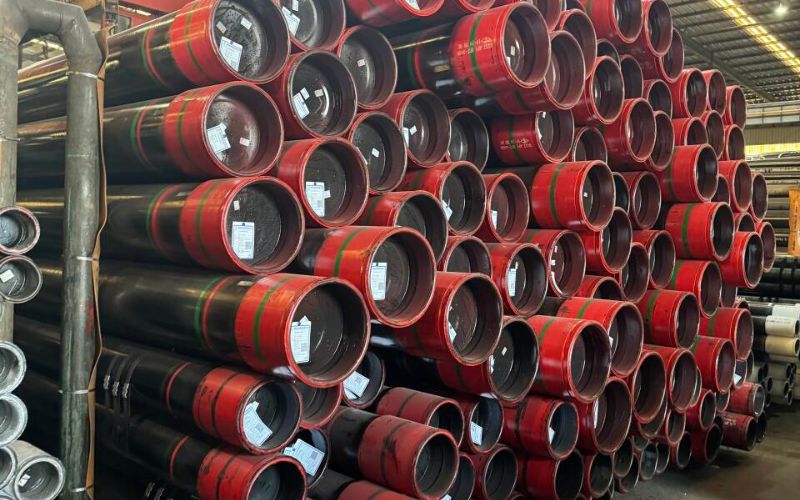
Selecting steel pipe for hydrogen service begins with the operating conditions and the design basis. Cryogenic service can involve a temperature difference of 300° F or more from ambient, so thermal contraction belongs in the design basis. Only select a material family after hydrogen phase, composition, pressure, temperature and loading history have been defined. Verify then that the evidence supports the pipe that was purchased, its welds, and the service it’s being used for.
A well-known grade, a high tensile strength or a mill test certificate won’t be able to answer that, either. Hydrogen is capable of altering ductility, fracture toughness, and fatigue properties without always modifying all of them equally. So the real buying question should be: what’s it about this material – in this fabrication state – that would make it a plausible candidate for this task?
Define the hydrogen-service envelope
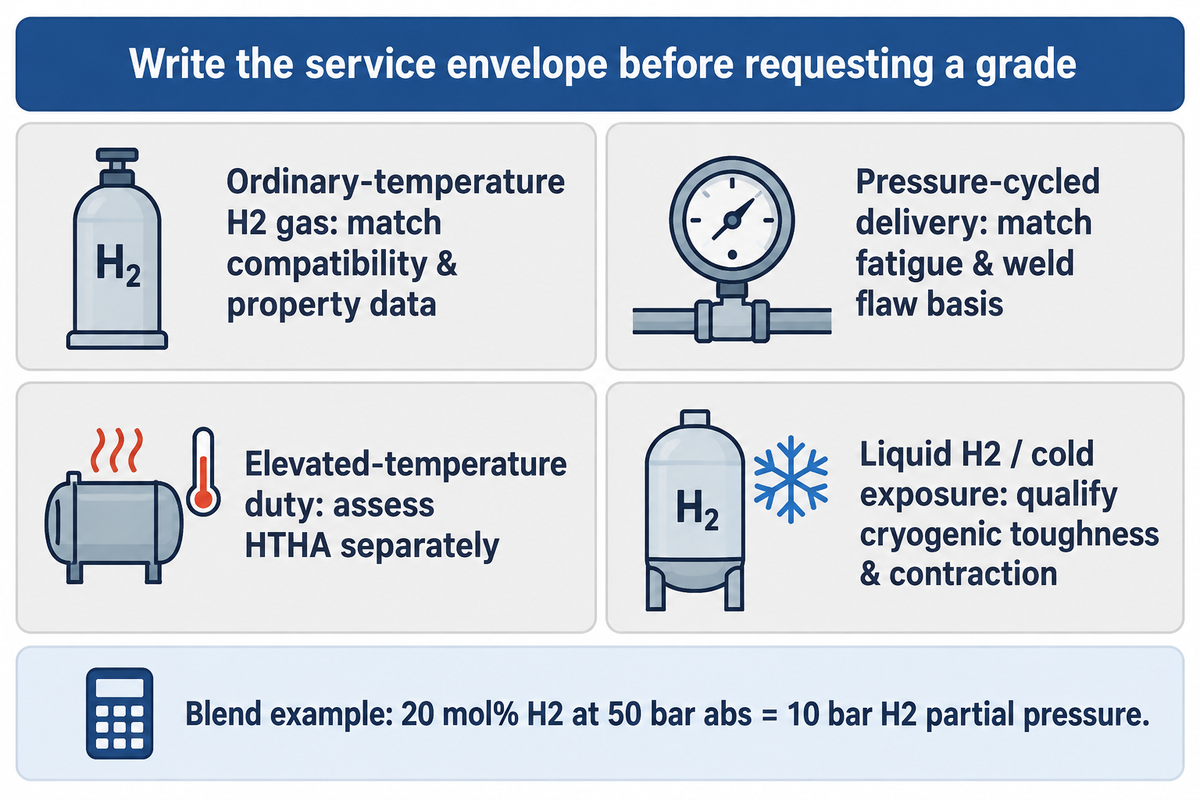
Before you ask for a grade recommendation, be sure to write the service envelope. Include normal operation, startup, shutdown and credible excursions, with the expected loading history. Gaseous hydrogen, a hydrogen blend, hot process gas and liquid hydrogen generate distinct material issues.
One pressure-and-temperature line on an inquiry rarely covers all of them.
Sandia’s hydrogen materials compatibility program explains why materials must be evaluated for hydrogen exposure. Tensile ductility, fracture toughness and fatigue properties each answer another part of that question. That distinction matters when one supplier submits tensile data while another offers hydrogen fracture or fatigue evidence: those reports answer different parts of the selection problem.
| Service situation | What the buyer must describe | Evidence question before shortlisting |
|---|---|---|
| Ordinary-temperature hydrogen gas | Composition; absolute pressure; metal temperature; stress and operating history | Do compatibility and mechanical-property data cover this material condition and environment? |
| Pressure-cycled hydrogen delivery | Pressure range, cycle history, loading timescale and design life | Do fatigue and flaw assumptions represent the actual duty and weld condition? |
| Elevated-temperature process duty | Temperature, hydrogen partial pressure, excursions and exposure history | Has high-temperature hydrogen attack been assessed separately from ambient-temperature embrittlement? |
| Liquid hydrogen or cold exposure | Minimum metal temperature, cooldown, warmup and contraction | Are the material and joints qualified for cryogenic mechanical behavior and thermal movement? |
Sources: Sandia compatibility research, H2Tools cryogenic material guidance and the HSE high-temperature hydrogen attack bulletin. Use the table to identify the assessment needed for each duty before comparing grades; it doesn’t establish material suitability for a specific installation.
The 4-Step Envelope-to-Evidence Selector
First define the duty and its damage mechanisms. Next fix the governing design route. Then compare candidate materials in the supplied and welded condition. Finally match the qualification and inspection scope before comparing price. A missing service input returns the decision to step one; a mismatched specimen returns it to the material comparison.
How should a buyer describe a hydrogen blend?
Give the hydrogen concentration and total absolute pressure. Use an ideal-gas calculation with 20 mol% hydrogen at 50 bar absolute as an example – it has a hydrogen partial pressure of 0.20 × 50 = 10 bar. That arithmetic illustrates the hydrogen environment; safe pressure and permissible blend percentage require separate design assessment.
The same percentage at a different total pressure produces a different hydrogen partial pressure. Identify gauge versus absolute pressure on the inquiry. For a real design, the engineer may also need to account for nonideal behavior using fugacity.
Hydrogen partial pressure is shown as one factor in measured fatigue crack growth in Sandia’s 2024 fatigue-rule research abstract, and no more general safe-pressure cutoff is presented.
For an existing natural gas pipeline network being considered for conversion, the operator should provide actual records rather than an intended blend percentage alone. Material identity, earlier service, known flaws, repairs and pressure histories help the assessment team decide what additional work is needed. Green hydrogen describes a production route; it does not by itself qualify the downstream piping systems.
Start with the governing code and damage mechanism
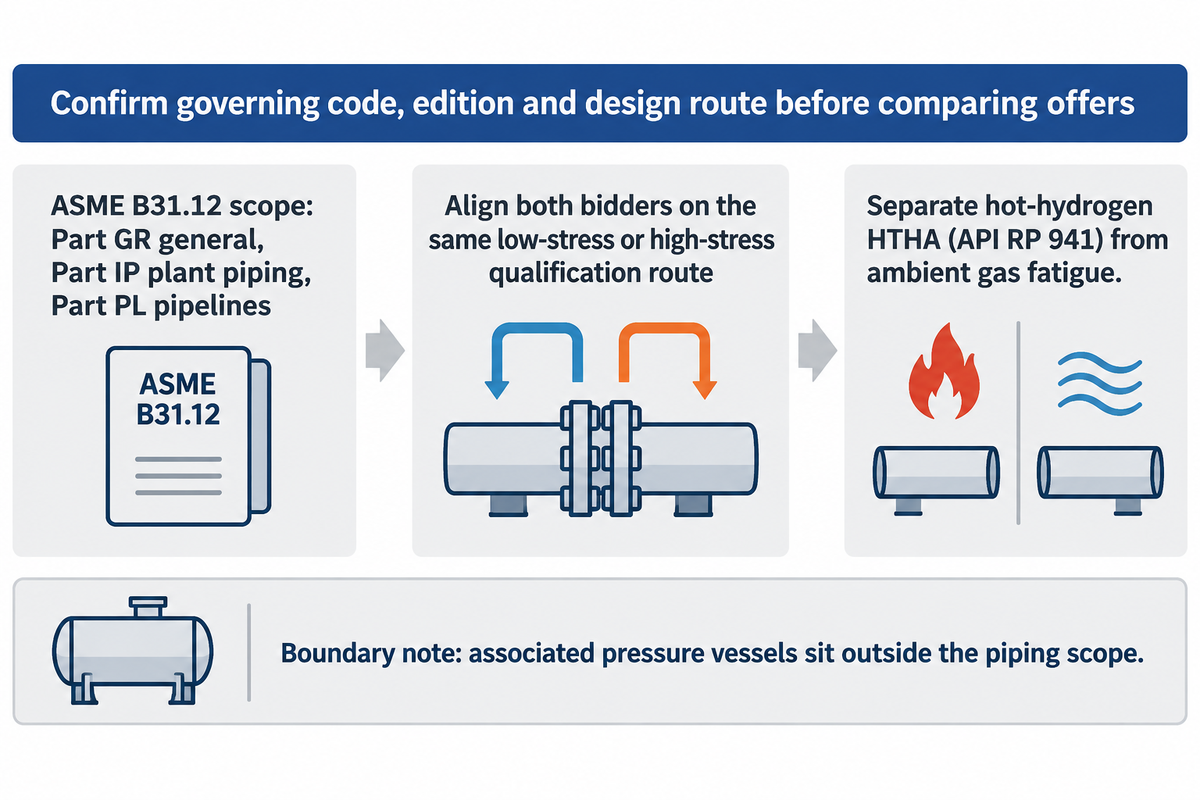
Confirm the governing code, adopted edition and design route before comparing pipe offers. The system boundary matters: hydrogen plants, industrial piping, hydrogen transport pipeline systems, pressure equipment and cryogenic connections do not become the same design problem because they contain hydrogen. Read product specifications and component catalogues within this project basis.
The public ASME B31.12 Hydrogen Piping and Pipelines page displays the 2023 edition. Its scope includes piping and pipelines handling gaseous hydrogen and gaseous hydrogen mixtures, and piping in liquid hydrogen service. It identifies Part GR for general requirements, Part IP for industrial piping and Part PL for pipelines. Associated pressure vessels themselves are outside the stated piping boundary.
Have the design engineer identify applicable requirements, allowable design assumptions and acceptance criteria from the project’s adopted documents. Don’t treat a supplier’s reference to API 5L, alloy-pipe product specifications or a catalogue pressure table as a complete statement of hydrogen-service compliance.
Which design basis should both offers use?
Both suppliers should quote against the same design route adopted by the project, and state the evidence included for that route. An Energy Networks Association hydrogen pipeline project distinguishes low-stress and high-stress approaches and describes more detailed fracture-mechanics qualification for the latter. The purchaser should carry the selected route into both inquiries so that the included qualification work can be compared.
Two offers can be called by the same grade name and yet have quite different technical scope. Before discussing a thicker wall, stronger steel or extra testing, establish whether the suppliers are solving the same design problem. The responsible engineer should resolve that difference before procurement compares the totals.
Keep high-temperature attack separate from gas embrittlement
The choice of chromium-molybdenum alloy for hot hydrogen duty raises a question different from the fatigue performance of standard-temperature hydrogen gas transport. The HSE’s 2018 safety bulletin discusses temperature, hydrogen partial pressure, exposure and material metallurgy in high-temperature hydrogen attack. It warns against allowing Nelson curves to be regarded as an exact dividing line between safe and unsafe service.
“Time of exposure is an additional variable not currently taken in to account in the curves.”
Apply that bulletin for its mechanism and operating-envelope lessons. For the high-temperature hydrogen attack assessment, define the project-adopted API RP 941 edition. The engineer must check the applicable current documents and the specific metallurgy.
A Cr-Mo grade selected for hot process duty still needs an appropriate assessment if gaseous-hydrogen fatigue or another mechanism is also relevant.
Compare carbon, low-alloy and austenitic stainless steels
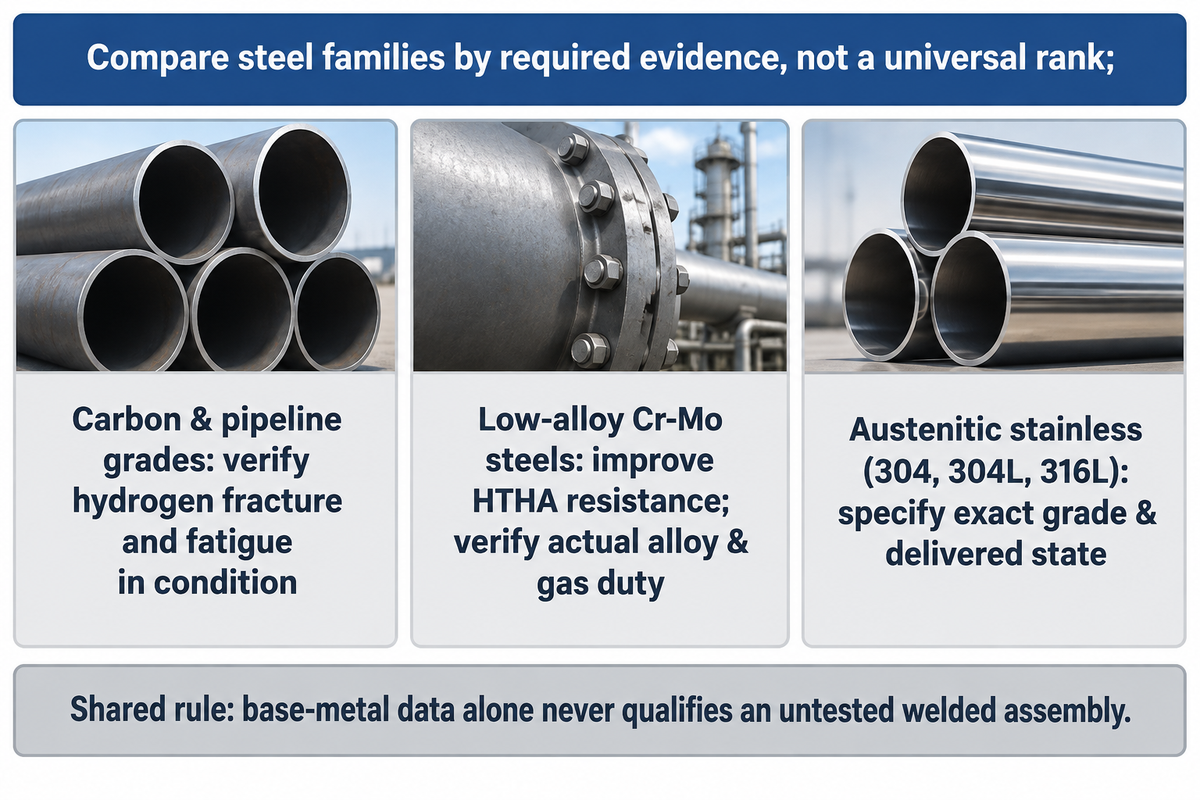
Compare steel families as candidates with different evidence needs, rather than arranging them in a universal best-to-worst list. Strength, toughness, microstructure, heat treatment, welding and environment all affect the decision. A higher purchase price or a more highly alloyed grade does not by itself make the material a better fit for the duty.
| Selection category | Carbon steel and pipeline grades | Low-alloy / Cr-Mo steels | Austenitic stainless steels |
|---|---|---|---|
| Primary screening question | Hydrogen fracture/fatigue behavior in the proposed condition | Which damage mechanism and metallurgy govern the duty? | Does evidence cover the precise grade and fabricated state? |
| Ordinary-temperature gas | Investigate under the selected gas-service design route | A hot-service reputation does not settle gas fatigue behavior | Use condition-specific gas compatibility evidence |
| Elevated-temperature duty | Assess HTHA where temperature and hydrogen partial pressure make it relevant | Cr-Mo metallurgy can improve HTHA resistance; assess the actual alloy | Do not transfer a tubing gas experiment into hot-process qualification |
| Cryogenic exposure | Check brittle behavior at the minimum metal temperature | Hot-service alloy selection does not establish cryogenic toughness | Verify low-temperature mechanical behavior and thermal movement |
| Strength and microstructure | Grade strength alone does not establish fatigue response | Include heat treatment and delivered condition | Include chemistry, strain hardening and material condition |
| Weld location | Separate body, seam, girth weld and heat-affected zone | Include actual welding and heat-treatment condition | Orbital-weld parameters can affect measured ductility loss |
| Cyclic loading | Match pressure, timescale, stress ratio and flaw basis | Match the same variables when cyclic gas service applies | A tensile result alone does not assess cyclic duty |
| Evidence to request | Applicable hydrogen fracture/fatigue basis and material identity | Mechanism-specific assessment plus relevant material/weld records | Condition-specific compatibility data and weld evidence |
| Purchase decision | Compare against the engineer’s acceptance route | Price the scope required by the actual duty | Compare equivalent grade, form, condition and qualification scope |
Basis: NIST pipeline-steel fatigue research, the Sandia study of austenitic stainless tubing and orbital welds, and the HSE bulletin. These are conditional comparisons, not interchangeable design limits.
Why does the same grade give different test results?
A grade describes a particular material class, not all of the characteristics of the microstructure as received. Manufacturing route, heat treatment, cold work and welding can change the condition being evaluated. In the tubing experiment at Sandia, the stainless composition and strength were factors in hydrogen-assisted fracture; various orbital-welding conditions caused varying reductions in tensile ductility.
Product forms also differ: Baling Steel’s stainless pipe and tube catalogue provides product context, while service evidence must match the actual supplied condition. Use evidence covering the relevant annealed or strain-hardened material condition, weld procedure and temperature.
A favourable base-metal result does not qualify an untested welded assembly. Descriptions such as fine-grained or hydrogen-ready also need a measurable definition and a connection to the project’s acceptance criteria. Record the entire grade designation, such as 304, 304L or 316L, and the supplied condition in the inquiry; SS alone is an incomplete identifier.
Selecting the lowest grade at all times is not a complete methodology. NIST studied X52 and X70 steels and reported hydrogen-assisted fatigue crack growth in the tested materials. In that experiment, X70 fatigue results were not significantly different from X52 within experimental uncertainty.
This is justification for analyzing the real property and condition, not for allowing any X70 heat to replace any X52 order.
Support documentation relates to annealed base material; the proposed assembly presents cold-worked tubing and orbital welds. Grade names are identical; the evidence boundary isn’t.
The materials and welding engineers first identify the condition differences, then decide which existing data remain applicable and what further qualification is needed. If the supplier can provide suitable evidence for the proposed assembly, that offer can return to the comparison. If it cannot, the purchaser asks for a different condition, procedure or candidate material.
This illustration is for comparison and does not set an operating pressure.
Check pipe form, welds, hardness and defect tolerance
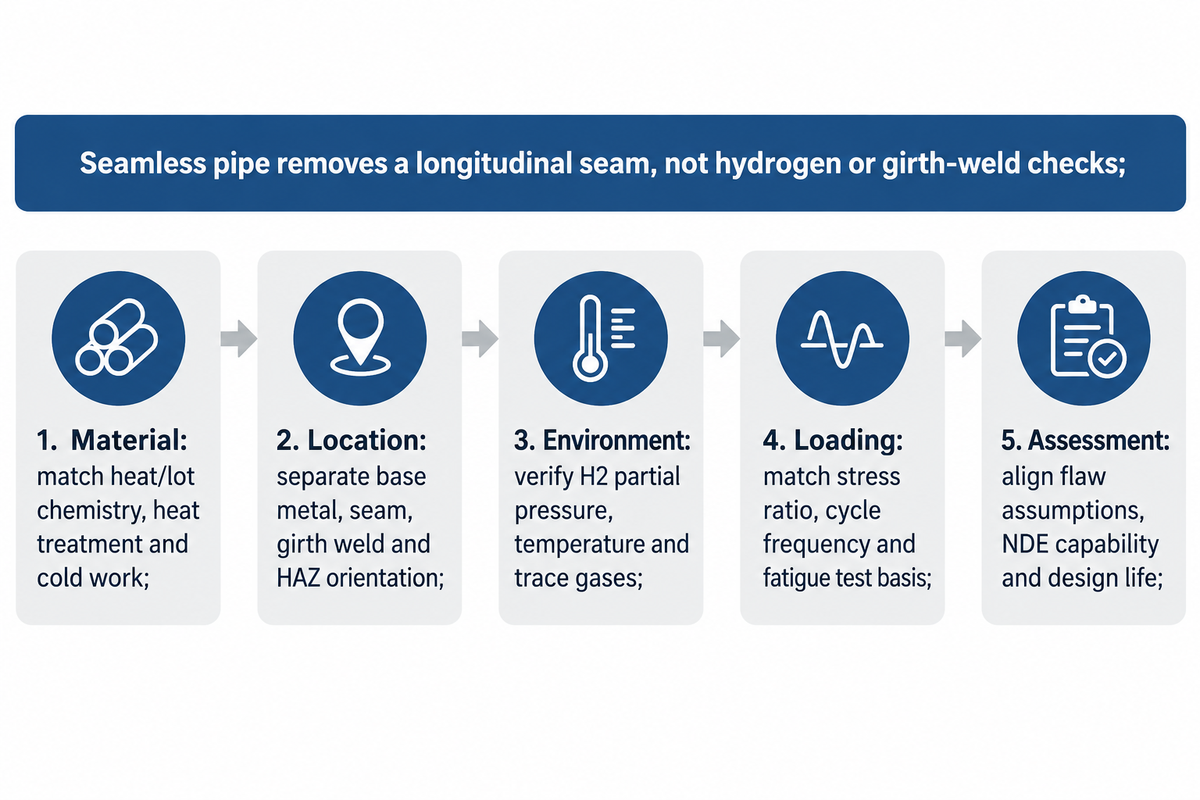
Evaluate the pipe body, longitudinal seam where present, site girth welds and heat-affected zones within the qualification boundary. Seamless pipe removes a longitudinal seam; it does not remove hydrogen interaction with the steel or the need to assess joining. A hydrostatic test and an ordinary tensile certificate answer different questions from hydrogen fracture and fatigue tests.
Hydrogen diffusion and its interaction with the metal help explain why a familiar air-test result does not establish performance in high-pressure hydrogen. For pipelines in operation, inspect the relationship between the reported specimens and the actual material condition before transferring evidence.
A published X70 pipe study compared specific samples in 10 MPa hydrogen and nitrogen. The reported changes in tensile strength were modest relative to the losses of ductility and fatigue performance, and the weld metal responded differently from the base metal. Match the pipe and weld condition to the experimental evidence before using it in a project assessment.
The public abstract of a 2024 fracture-and-fatigue study includes selected X60 and X65 pipe microstructures, parent material and weld locations. Keep those material and weld locations separate in the purchasing review.
What makes a hydrogen test report transferable?
Match your material identity and manufactured condition first, then check the environment and loading. Your report should specify what was sampled and how it was prepared and which areas were tested. The materials engineer should explain any difference between those specimens and the supplied pipe or proposed welding procedure.
- Material: heat or lot relationship, chemistry, heat treatment, cold work and relevant mechanical properties.
- Location: base metal, seam, girth weld or heat-affected zone, with the sampling orientation identified.
- Environment: hydrogen pressure or partial pressure, temperature and purity and composition of trace gases.
- Loading: test method, stress ratio, frequency or loading timescale, and the conditions applied for fatigue crack growth.
- Assessment: flaw assumptions, inspection capability, design-life basis and the applicable acceptance route.
Frequency deserves attention because pressure cycling isn’t merely a yes-or-no input. The NIST experiment reported that decreasing test frequency had an effect similar to increasing hydrogen test pressure within its conditions. A test at one timescale can’t be transferred to a different operating history without an engineering justification.
Gas chemistry can also change a laboratory result. A Kyushu University research-team summary describes an oxygen effect on hydrogen-assisted fatigue in its experiment. For a buyer, the useful lesson is to request the test-gas composition and verify comparability. This isn’t a recommendation to add oxygen to a hydrogen system.
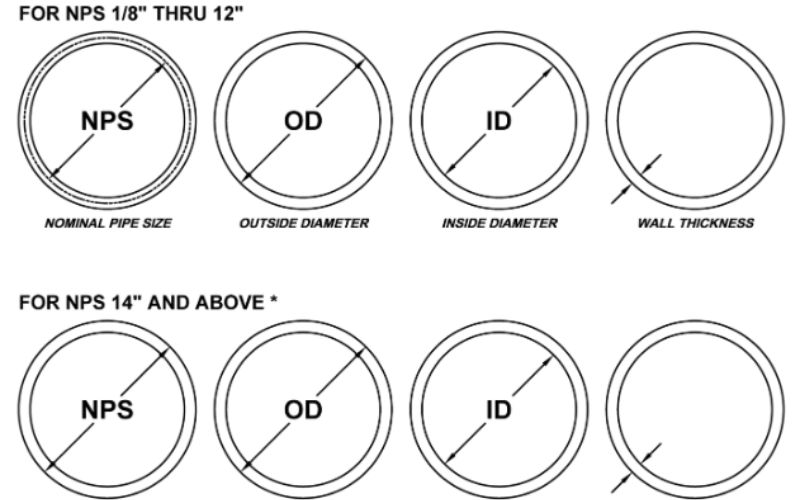
A designer’s Eng-Tips question about a 500 barg hydrogen line captures a common purchasing difficulty: the fitting catalogue and the preliminary project calculation appeared to give different wall requirements. The discussion also raised nominal pipe size versus tube outside diameter. Treat the question as a real example of scope confusion, not a validated design. On a purchase inquiry, identify whether a dimension is NPS, DN or actual OD in mm, and identify the fitting or flange series. The original question concerned Swagelok tube fittings; no manufacturer’s pressure rating is established here. Compression fittings, welded connections and other mechanical joints require their own applicable evidence; a matching diameter alone doesn’t settle compatibility or rating.
Build the RFQ and supplier evidence package
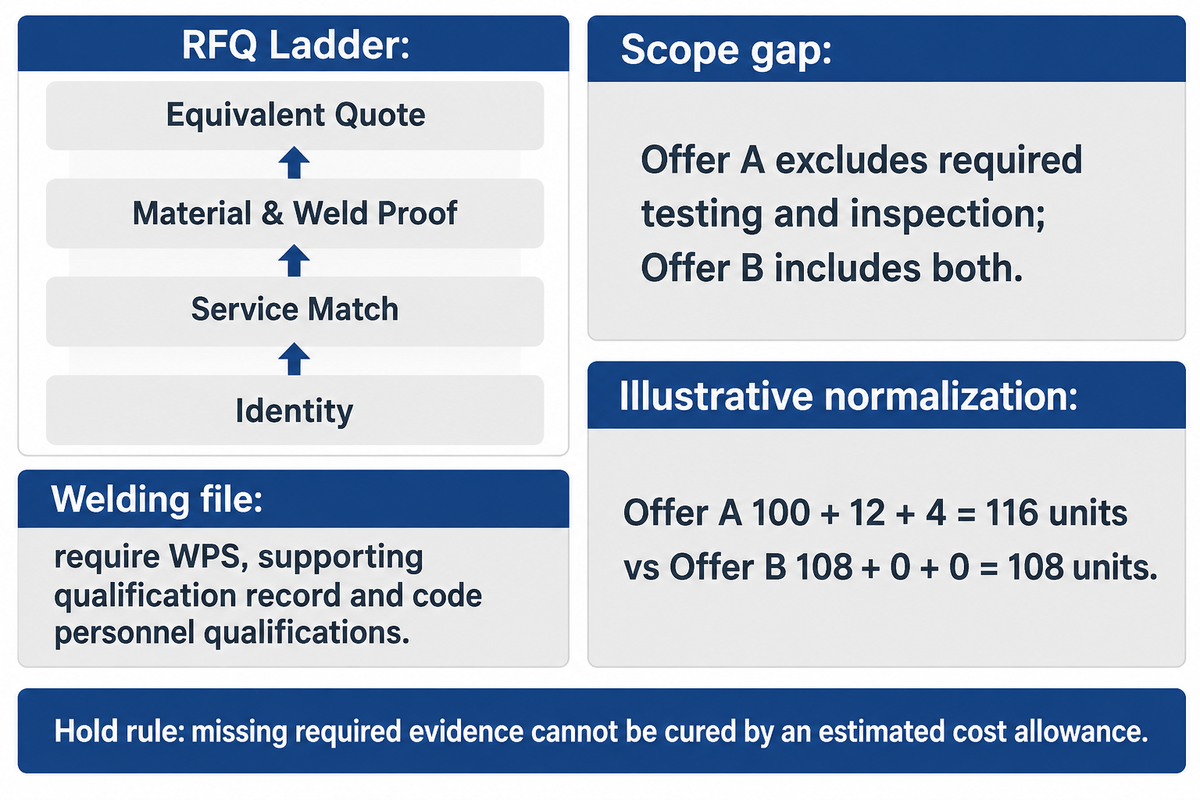
Ask for an estimate against a known scope of work, then compare only against the same scope of work. Separate product identity, service qualification, fabrication and inspection requirements. Procurement can collect and compare the evidence, while design and materials engineers decide whether it is applicable.
More documents don’t necessarily mean that the bid is technically equivalent.
The H2Tools materials-compatibility incident compilation describes failed valve stems in equipment rated by its manufacturer for hydrogen service. It also states that metallurgical analysis did not confirm material failure in that incident. The lesson is to examine the whole component and the completeness of the operating information, rather than treating a hydrogen-service label as the final answer.
For pipelines for hydrogen and smaller plant connections alike, ask what makes the proposed product suitable for hydrogen under the stated conditions. Get agreement on material acceptance. Match material acceptance to the system’s leak detection, containment, and connection design.
Tasks are separate, and a material certificate doesn’t complete them.
Hydrogen-Service RFQ Evidence Ladder
Move from product identity to matching service conditions, then to the required material and weld evidence, and finally to an equivalent-scope quotation. A complete identity record does not replace a design route matched to the service. Send an unresolved scope difference back for clarification before award.
The welding file should identify the welding procedure specification, its supporting qualification record and personnel qualifications required by the adopted code. For the inspection plan, describe the examination methods, scope, acceptance criteria, and reports. The exact qualification and examination standards must be specified by the project engineer; the service description alone cannot select one universal set for all pipe and pipeline systems.
| Published source reference | Evaluated scope and boundary | Supplier verification check before award |
|---|---|---|
| ASME hydrogen piping and pipeline scope listing | Gaseous hydrogen, gas mixtures and liquid hydrogen piping parts | Confirm adopted code edition and Part IP or Part PL boundary |
| Sandia hydrogen materials compatibility program | Tensile ductility, fracture toughness and fatigue property testing | Request property reports matching the actual loading mode |
| NIST high-pressure gaseous hydrogen pipeline study | Fatigue crack growth in tested pipeline steels and loading frequencies | Verify cycle frequency and pressure basis instead of strength alone |
| Sandia austenitic stainless tubing and weld paper | Precharged stainless tubing, nickel content, cold work and orbital welds | Match annealed or strain-hardened delivery state and weld parameters |
| HSE high-temperature hydrogen attack bulletin | Hot hydrogen temperature, partial pressure, exposure time and alloy metallurgy | Separate hot hydrogen attack review from ambient gas embrittlement |
| Hydrogen Tools cryogenic liquid material guidance | Low-temperature toughness, brittle transition and thermal contraction | Check minimum metal temperature and contraction movement at joints |
| Energy Networks Association girth-weld project | Low-stress versus high-stress pipeline routes and weld qualification | Align both bidders on the same fracture-mechanics qualification route |
| Kyushu University gas-impurity fatigue summary | Trace oxygen influence on hydrogen-assisted fatigue under laboratory conditions | Require laboratory gas purity and trace-impurity disclosure on test records |
| TWI aqueous stress-corrosion cracking guidance | Cathodic corrosion hydrogen uptake under tensile stress in wet media | Keep wet sour hardness rules separate from dry hydrogen gas specifications |
- Design basis: system boundary, governing code and edition, selected design route and engineer-defined acceptance criteria.
- Operating inputs: phase, gas composition and impurities, pressure basis, metal-temperature range, transients, cycles and design life.
- Product identity: applicable ASTM or API product specification and grade, dimensions and tolerances, seamless or welded route, heat treatment and lot traceability.
- Material and weld evidence: chemistry, including sulfur where specified, carbon equivalent where relevant, tensile and toughness data, hardness requirements, welding procedure and service-specific test scope.
- Inspection and delivery: examinations, sampling, reporting, witness points, marking, document schedule and treatment of substitutions.
When is a lower pipe price actually the better offer?
It’s more desirable when the offers are within the same accepted scope and the overall required cost is less. In the following filled example, the simple numbers are used as arbitrary cost units and aren’t the market prices or the Baling Steel quotations. The engineers have already defined matching design and acceptance requirements.
Offer A doesn’t include the required testing and inspection; Offer B does.
| Equivalent-scope cost item | Offer A: initially lower | Offer B: included scope |
|---|---|---|
| Quoted pipe and included work | 100 units | 108 units |
| Required testing excluded from quote | 12 units | 0 additional units |
| Required inspection excluded from quote | 4 units | 0 additional units |
| Comparable subtotal for the stated items | 116 units | 108 units |
The calculation is 100 + 12 + 4 = 116 for A and 108 + 0 + 0 = 108 for B. B is lower for the above specified items. If the required evidence is unavailable, assigning an estimated cost does not make the offer acceptable: return it for technical clarification.
Don’t make an automatic payment for tests that the chosen design path doesn’t need.
The design engineer is responsible for the basis and load assumptions. The materials or welding engineer checks whether the evidence transfers to the delivered condition. The operator provides information on actual transients and inspection history.
The purchaser documents inclusions, exclusions, schedule and traceability for a meaningful price comparison.
For catalogue-level product discussion, use Baling Steel’s alloy steel pipe selection guidance. The alloy-pipe grades are listed on the catalogue. Provide the service specification and the scope of evidence requested with a submitted inquiry, and check the supplier context on the Baling Steel company page before proceeding with the technical and commercial negotiations.
Frequently asked questions
How do you prevent hydrogen embrittlement?
Reduce risk by using a qualified material condition, controlling fabrication changes and keeping operation within the assessed service envelope.
For a hydrogen pipe, specify the accepted material condition and welding requirements before fabrication. Review unapproved cold work or heat-treatment changes rather than treating the grade name as unchanged evidence. Record actual pressure cycles and excursions so they remain consistent with the fatigue and operating-envelope assessment. Verify the pipe body and relevant weld regions against the project’s acceptance criteria. A coating, a higher alloy content or a lower grade alone doesn’t establish protection. The appropriate measures depend on the damage mechanism; high-temperature attack and cryogenic brittle behavior require their own assessments.
What causes hydrogen-induced cracking?
Hydrogen can reduce a susceptible metal’s resistance to cracking when the material, hydrogen exposure and stress conditions act together.
The source of hydrogen and the relevant mechanism matter. Gas exposure, fabrication-related hydrogen and wet corrosive environments aren’t interchangeable qualification conditions. In pipe selection, identify the actual environment before transferring a test result or hardness rule. Ask which property was measured, where the specimen came from, and whether the test conditions represent the proposed pipe and welds. A failure label alone isn’t a material specification.
What is hydrogen-assisted stress corrosion cracking?
It involves cracking where corrosion-generated hydrogen enters a susceptible material under tensile stress.
TWI describes hydrogen-induced stress corrosion cracking in aqueous media, connecting hydrogen from a cathodic corrosion reaction with tensile stress. For procurement, identify the actual environment and mechanism. Don’t assume that every hydrogen-related crack is the same form of damage or that wet-service controls automatically qualify dry gaseous-hydrogen piping. The assessment should connect the process chemistry, material condition, stresses and applicable evidence. Have the responsible materials engineer resolve ambiguous terminology before it becomes an acceptance requirement or a claimed supplier capability.
Is 316L automatically approved for hydrogen service?
No: a 316L designation identifies a material grade, while suitability depends on the operating envelope, delivered condition, fabrication and applicable design requirements.
Sandia’s tubing and orbital-weld research shows why the distinction matters. Composition, strength, material condition and welding parameters affected the measured response in hydrogen-precharged specimens. Favorable results for those specimens don’t establish a universal pressure rating for every 316L tube, pipe, fitting or welded assembly. Compare the proposed product with the tested condition and identify any differences. Then have the engineering team determine whether the available evidence is sufficient for the selected route. A supplier should state exactly what its documents cover instead of offering an unbounded hydrogen-compatible claim.
Does seamless pipe remove the need for hydrogen qualification?
No. Seamless pipe still needs an applicable material assessment.
It has no longitudinal seam, but the pipe body remains exposed to the service environment. Site girth welds, fittings and other components also need appropriate consideration. Pipe form alone doesn’t establish acceptable fracture, fatigue or cryogenic performance.
References & Sources
- ASME B31.12 public scope and edition listing scope only; detailed paid clauses weren’t reproduced.
- Sandia Hydrogen Materials Compatibility property and research context.
- Hughes and colleagues, hydrogen compatibility of austenitic stainless tubing and orbital welds laboratory material-condition evidence.
- NIST, Performance Evaluation of High-Strength Steel Pipelines for High-Pressure Gaseous Hydrogen Transportation, 2013 scoped fatigue-test evidence.
- HSE, High Temperature Hydrogen Attack, 2018 mechanism and operating-envelope guidance.
- H2Tools, cryogenic material selection liquid-hydrogen context.