Selecting a stainless pipe supplier looks simple on paper – get a quote, compare $, order. In reality, two quotes for the same equivalent 316L 14″ schedule 10 pipe regularly vary 30% or more, and the cheapest quote is almost always the one that has no documentation to make the order safe. Here is your simple guide to the grades, the standards, the docs, and the 10 questions that make the difference between a supplier that delivers usable pipe and one that ships pipe you cannot accept.
📐 Quick Specs — Common Stainless Steel Pipe at a Glance
- Common austenitic grades: 304, 304L, 316, 316L, 321, 310/310S
- Form: SMLS (drawn from billet) or welded (ERW, EFW)
- Size range: 1/8″ up to 24″ NPS (Nominal Pipe Size), more is available on request
- Schedules: 5S, 10S, 40, 40S, 80, 80S, 160, XXS
- Governing standards: ASTM A312 (austenitic SMLS & welded pipe), A269 (SMLS & welded tubing), A554 (mechanical tubing), A790 (duplex)
- Wall tolerance (A312): +unlimited / −12.5% (the wall must never be thinner than 87.5% of nominal)
- OD tolerance (A312): ±0.5% or ±0.76 mm, whichever is greater, for sizes ≤4″ NPS
- Finishes: mill, annealed & pickled, bright annealed (BA), 2B, polished (180/240/320 grit)
- Required documents: Mill Test Certificate (MTC) per EN 10204 3.1 or 3.2, Certificate of Conformance, packing list
What Stainless Steel Pipe Suppliers Actually Sell: Forms, Grades, NPS & Schedules
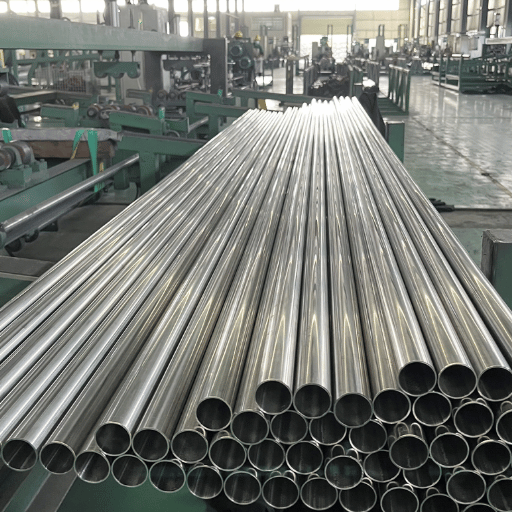
Knowing the product taxonomy that a real stainless steel pipe supplier operates within is helpful before glancing at a quote. Stainless pipe is traded along four axes – form, grade, size, and finish – and each axis has its own price and lead-time impacts.
Form: SMLS vs welded. A SMLS pipe is pierced from a solid billet in a mandrel mill; welded stainless pipe is formed from strip and longitudinally welded (ERW) or electric-fusion welded (EFW). SMLS pipe is more expensive per foot but it removes the weld line as a failure point for corrosion and pressure; that is why refineries and high pressure hydrocarbon applications typically order it. Welded stainless is the right option for sanitary lines, structural applications, or most water/chemical service below ~ASME B31.3 class 300, where the weld is checked using x-ray or eddy-current tests. More on this is available in What is a Seamless Pipe? and our product pages for seamless stainless steel pipe in 304/316 and welded stainless steel pipe options.
What’s the difference between 304 and 316 stainless steel pipe?
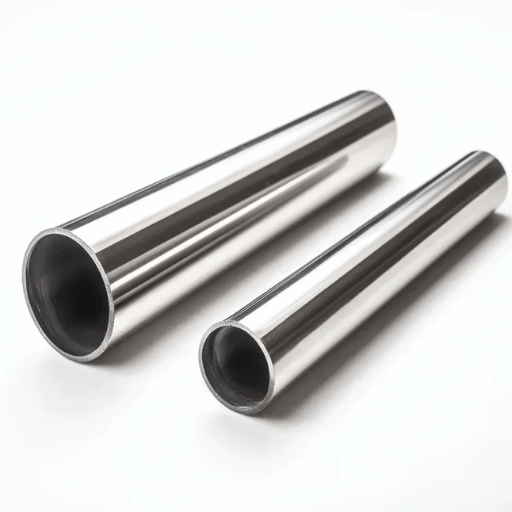
304 and 316 are both austenitic chromium-nickel grades, but 316 has 2-3% molybdenum added to the alloy. That may sound like a trivial difference until you put that pipe in chloride service. Here is the comparison directly from one senior engineer on r/AskEngineers: “the molybdenum imparts a corrosion resistant improvement to the 316 in chloride environments, especially with regard to higher resistance to both pitting and crevice corrosion”. That is the why behind the cost difference [Why]: a 304 in a coastal seawater application will pit through a 3 mm wall in 18-36 months, a 316 in the same service will last a decade [So What]. Use 304/304L in the general purpose fabrication, food contact, architectural, and dry indoor process lines. Use 316/316L in the marine, chloride, pharmaceutical, and any other lines which will experience process upsets at temperature. “L” marking on 304L or 316L marks a low-carbon (0.030% C) material used where post-weld containment of a differentgrade is often critical – for a number-by-number guide, see 316 stainless steel yield strength and 304 stainless steel properties.
Should I buy SMLS or welded stainless steel pipe?
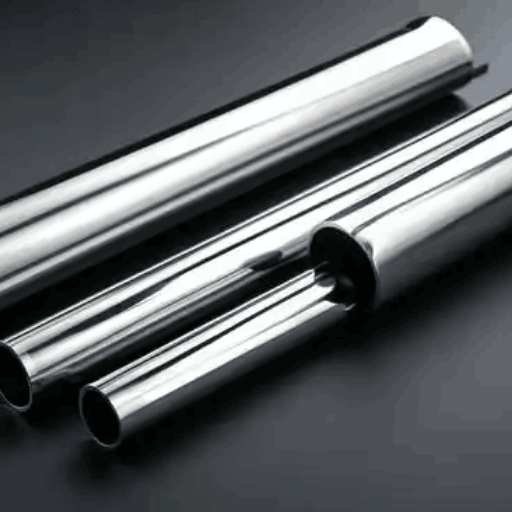
Default to welded if your line is below 300 psi at room temperature, the medium is benign, and code allows it – you’ll pay 20-35% less for the same OD and wall. Default to SMLS if any of these are true: pressure exceeds B31.3 Class 300, the medium is hydrogen / live steam / sour service, the pipe will be radiographed end-to-end in any case (the SMLS premium pays back in fewer NDE callouts), or end client’s piping spec dictates “SMLS only”. Buying SMLS out of habit when the code would have cleared the fit-up is a common error – that one decision accounts for 8-12% of avoidable procurement cost on bulk orders.
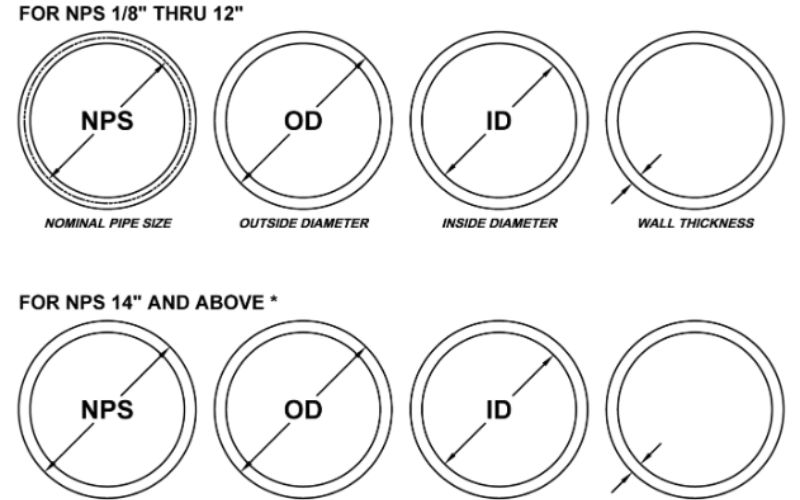
Size: NPS and schedule. Stainless pipe is sized in Nominal Pipe Size (NPS) – a label, not a measurement. A 2″ NPS pipe has an OD of 60.3 mm whatever the wall thickness, and the schedule (5S through XXS) sets the wall. That relationship is non-linear at small NPS – see our pipe schedule chart and the pipe vs tube comparison for the distinction between pipe (NPS) and tube (precise OD/wall).
How to Evaluate a Stainless Steel Pipe Supplier: A 10-Point Audit Checklist
Supplier evaluation boils down to just one test: can they prove what they shipped is in the package? Here are the 10-point audit our engineering team conducts on every new stainless pipe supplier, in order. Complete points are not optional on piping with safety-critical applications.
- Mill source disclosure – ask whom they suppose rolled the heat. Reliable suppliers include the name in writing (Outokumpu, POSCO, Tsingshan, Baosteel, Tisco, Jindal, etc.). “Imported from China” is not a mill name.
- EN 10204 3.1 or 3.2 MTC literature before dispatch. Certs must be issued by the mill, traceable to heat number, and supplied before you release payment – not after the truck arrives. Material test certification we issue adheres to this rule by default.
- Heat number traceability. Each pipe length should carry the heat emboss at the bevel edge. Cross reference the emboss against the MTC chemistry row.
- Third-party inspection acceptance. Will the seller accept SGS, Bureau Veritas, TÜV, or a buyer-nominated inspector at the works for hydro / PMI / dimensional verification? A A clear red flag is failing to allow third-party witness. See third-party inspection reports for a sample report scope.
- PMI testing on demand. Positive Material Identification (XRF gun takes 30 seconds on every pipe) is the cheapest way to catch grade substitution. Suppliers should quote PMI line-item, not refuse it.
- Truth in inventory transparency. Ask for date-stamped photo of the actual inventory that shows heat numbers. Catalog photos and “we have it” emails are not inventory documentation.
- Dimension call out. An MTC should list dimensional inspection against ASTM A312 limits – not “passes inspection.” If the wall is at 10%, it is still compliant but only has 2.5 percentage points before the 12.5% reject limit.
- Transparent lead times. Stock ships in 7-14 days. Mill rolled. 45-90 days. Quotes listed as 10 days “from China” for non-stock spec are quotes that will slip.
- Completeness of documentation. Whole package should consist of: MTC, Certificate of Conformance, packing list, heat list, fumigation cert (export), CO, bill of lading. Missing any one of these stops the container at customs.
- Recourse on failed MTC. Ask for supplier policy before you issue the PO. If an MTC does not pass your QA review on arrival, who pays for restock and shipping?
“In our pre-shipment inspection, we find more than 50% of the issues are not metallurgical; they are paperwork. A heat number on the wrong invoice line, a 3.1 certificate stamped as 3.2, a packing list that doesn’t match the actual pipe. Metallurgy is not a concern. Paperwork is.”
💡 Decision rule: If a supplier refuses any of points 1, 2, 4, or 6 in the checklist above, end the discussion. Other six are negotiable; those four are not.
Standards & MTRs — ASTM A312, A269, A554, A790 Decoded
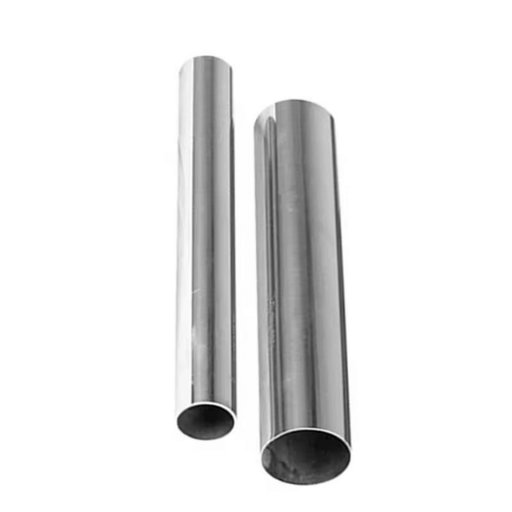
Stainless steel standards look complicated at first; yet only four regulate 90% of what you will purchase. Here are how they actually apply – and how to interpret the Mill Test Report (MTR) provided by the seller.
| Standard | Scope | Grades covered | Typical use |
|---|---|---|---|
| ASTM A312 | SMLS & welded austenitic pipe, NPS 1/8″–30″ | 304, 304L, 316, 316L, 321, 347, 310/310S | Process piping, chemical, oil & gas |
| ASTM A269 | SMLS & welded tubing, precise OD & wall | Same austenitic family | Instrumentation, hydraulic, light service |
| ASTM A554 | Welded mechanical tubing, decorative or structural | 304, 316, 430 | Architecture, handrails, cosmetic |
| ASTM A790 | Duplex & super-duplex pipe | 2205, 2507, 2304 | Chloride-laden brines, FPSO, desalination |
A typical pitfall: confusing A312 with A269. These two are not interchangeable. A312 is a pipe specification – measured in NPS with broad mill tolerances. A269 is tubing specification- measured in OD and wall with tolerances roughly ten times tighter. A 1.5″ A269 fitting will not go over 1.5″ NPS A312 pipe, the OD dimensions are different.
How do I read a stainless steel pipe MTR (Material Test Report)?
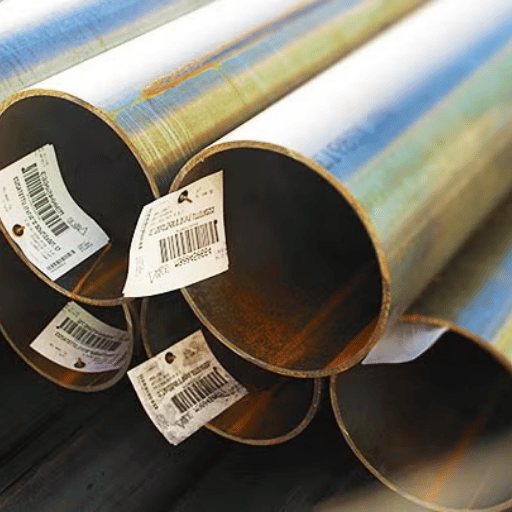
An MTR (or MTC, Mill Test Certificate) is the pipe’s birth certificate. ASTM International‘s published rules for chemistry and mechanical-testings in ASTM A312 require a proper MTR for stainless pipe to show six things, and you should confirm each one against the heat stamp on the piece: (1) heat number – must match the bevel-end stamp; (2) chemistry in weight percent (Cr, Ni, Mo for 316; C content for L grades); (3) mechanical properties – yield, ultimate tensile, elongation, hardness; (4) corrosion test result where required (e.g., ASTM A262 intergranular for L grades in pharma); (5) hydrostatic or eddy-current test result; (6) the EN 10204 certification level – 2.1, 2.2, 3.1, or 3.2.
The 3.1 vs 3.2 distinction matters more than buyers realize. EN 10204 3.1 is signed by the mill’s own QA department; 3.2 requires an independent third-party inspector – a buyer’s representative or an authorized body – to witness the testing at the mill. The British Stainless Steel Association has flagged industry-wide misuse of these certificates: some traders represent a 3.1 as a 3.2 by adding their own letterhead without ever sending an inspector. If your end client requires 3.2, ask for the inspector’s company name and credentials, not just the certificate.
📐 Engineering Note: ASTM A312 wall thickness tolerance is asymmetric. Under-tolerance is fixed at −12.5% with no over-tolerance limit. A 5.49 mm nominal wall (Sch 40, 4″ NPS) is acceptable down to 4.80 mm. Pipe that fails this test is scrap, not “B-grade” – you cannot legally accept it on an A312 PO. OD tolerance for sizes through 4″ NPS is the greater of 0.5% or 0.76 mm. For flange mating per ASTM A182 flange specifications, this OD tolerance defines the gasket-seating envelope.
Pricing Drivers — Why Two Quotes for the Same 316L Pipe Can Differ 30%+
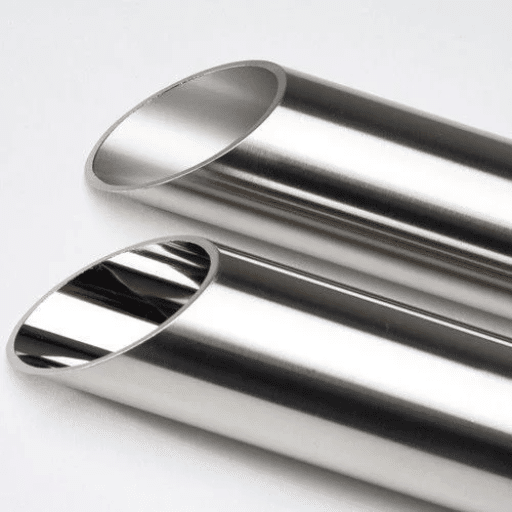
Procurement teams who line up three quotes for the same nominal 316L pipe regularly see a 30% spread. That spread is not a sign of dishonesty – it is the visible result of five mostly-hidden cost line items that the cheapest quote almost always omits. Decompose any two quotes against this list and most of the gap closes.
- Mill tier and surcharge. Tier-1 mills (Outokumpu, POSCO, Acerinox, Tsingshan stainless) command a 15-25% premium over Tier-3 producers for the same nominal grade. On top of that, every stainless mill publishes a monthly raw-material surcharge tied to LME nickel, ferrochrome, and molybdenum costs. As MetalMiner reported in October 2025, the Allegheny Ludlum 316L cold-rolled surcharge moved up 2.45% in a single month to $1.53 per pound. That surcharge alone explains 5-10% of any month-over-month quote variance.
- Surplus vs prime. Surplus or “secondary” stainless is genuine prime metal that failed a single dimensional or cosmetic check at the original mill – perfectly serviceable but sold at a 10-18% discount. Suppliers who never disclose surplus in their quotes are billing prime price for secondary metal, or mixing the two without telling you which length is which.
- Test-pack scope. A cheap quote always sounds “MTC included”, never lists 3.1 vs 3.2, never PMIs, never hydro-witnessed. Add a 3.2 cert (+1.5-3%) and PMI on every length (+.5-1.5%) and full hydro at 1.5 DP (+1-2%) and the cheap price suddenly isn’t.
- Export packing. Bundle and strap packing is acceptable for a Chinese-to-Chinese truck delivery and adds nothing to FOB. Export-grade crates with VCI paper and edge protection adds 1.5-4% but protects the stainless pipe from the two-month sea-freight seawater corrosion that ruins uncrated pipe in 30 days.
- INCOTERM and freight. An EXW quotation versus a CIF quotation for the same pipe are not comparable. Sea freight for bulky stainless pipe is 8-15% of FOB value depending on lane and container packing. Buyers quoting EXW are seemingly cheap until you add in freight, insurance and brokerage.
“Stainless surcharges are not a marketing tool – they are a contractual pass-through of LME nickel and ferrochrome movements. Buyers who treat them as ‘negotiation room’ end up either denied the order or paying a back-charging when the metal arrives.”
A short story from a genuine second-tier procurement breakdown: a fabricator obtained three CIF offers on 8t of 4″ Sch 40S 316L A312 SMLS – $9,800/ton $11,400/ton $13,100/ton. The $9,800 offer excluded 3.2 cert (+$280/ton), PMI (+$120/ton), used bundle packing (+$320/ton for export crating) and was EXW Tianjin (+$680/ton sea freight to USG). Adding back the four line items brought the corrected tender to $11,200/ton – within $200 of the middle bid, using a Tier-3 mill instead of the middle bid Tier-2 mill. That “30% spread” vanished once each bid was normalized.
Application Matrix — Which Grade and Form for Which Industry
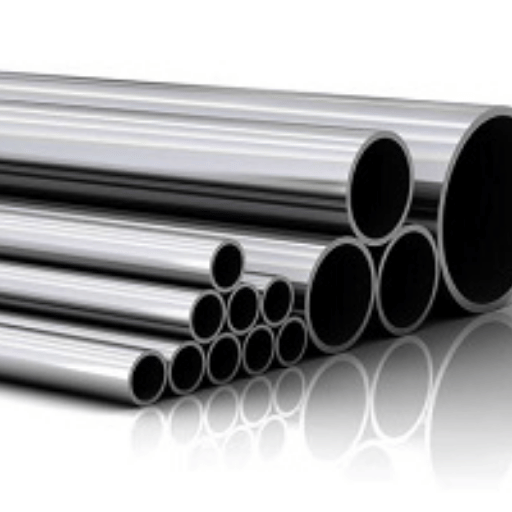
Grade and form rarely answer in a one-size fits all fashion. Industry codes, end-user specifications and chemistry of the medium all narrow down the choices. Each row in the following matrix shows the default starting point for that industry-segment – your engineer review and applicable code will nuance it.
| Industry / application | Default grade | Default form | Driving spec |
|---|---|---|---|
| Chemical & petrochemical process | 316L (304L for non-chloride streams) | SMLS | ASME B31.3 + ASTM A312 |
| Pharmaceutical & bioprocess | 316L (electropolished) | SMLS or EFW + bead-rolled | ASME BPE |
| Food & beverage / dairy | 304/304L (316L for whey, brine) | Welded sanitary tube (A270) | 3-A Sanitary Standards |
| Oil & gas — sour service | 316L, 825, or duplex 2205 | SMLS | NACE MR0175 / ISO 15156 |
| Marine / desalination / FPSO | Duplex 2205 or super-duplex 2507 | SMLS or LSAW | ASTM A790 |
| Pulp & paper | 304L (316L for bleach plants) | Welded | ASTM A312 |
| Architectural / handrail | 304 (316 in coastal) | Welded mechanical tube | ASTM A554 |
| High-temperature service | 310/310S, 321, or alloy P22 | SMLS | ASTM A312 / A335 |
Two factors which consistently trip first time buyers. First, pharma is not simply “use 316L” – ASME BPE adds surface finish and ferrite content requirements to what will not pass from an ordinary A312 316L. Second, high temperature service (above 540 C / 1000 F) is the domain in which ordinary 316 begins to weaken beyond expectation; 321, 347 or low chrome creep resistant steels (see our alloy pipe for high-temperature service page) tend to win that race.
Five Procurement Mistakes That Burn First-Time Buyers
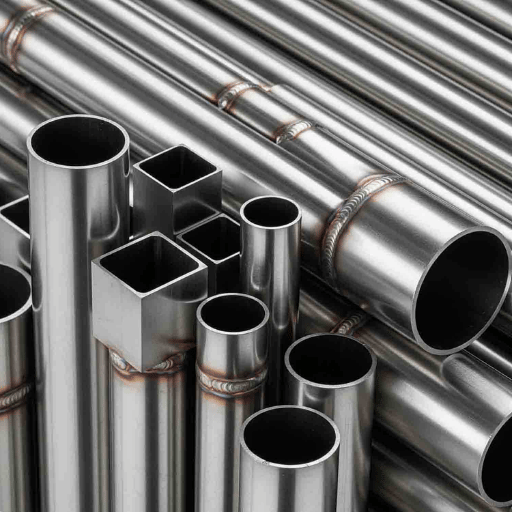
These five themes cover almost all procurement wastage we observe from first time buyers exploring the stainless market. Each has a counter-measure.
- Specifying 304 for chloride service to save 12% on metal cost. A 304 line in coastal seawater can pit through in 18 months, replacement and downtime typically costs 8-15 the extra 316 price.
- Taking an MTR on delivery, rather than prior to payment. Once the container is received on your dock and you have signed off a check, your ability to bargain hard diminishes immediately. Set your demand now, insist on receiving the MTR before releasing the bill of lading.
- Down side of PMI on substitution-heavy supply chain. Cost of a 30 second XRF per length checks nothing versus cost of putting the wrong grade into building a process line. PMI is hands-down highest-yield QA spend when buying stainless from a warehouse or distributor.
- Ordering based on “schedule 40″ without checking actual wall. Schedule numbers vary through NPS. Sch 40 1″ NPS is 3.38 mm wall. Sch 40 12” NPS is 9.53 mm wall. Always specify and order stock based on an explicit wall in mm or inches.
- Allowing polish-specification creep on order. “Polished” without the grit number that you specified in the purchase order will end up arriving as 180 grit when you specified 320, and rework cost exceeds original quote difference. Specify grit and Ra in writing.
Buying off a vetted shortlist diminishes risk before it occurs. Our directory of vetted stainless steel pipe manufacturers addresses each of the 10 audit criteria by default and provides mill traceability on all orders.
Frequently Asked Questions
Where can I find stainless steel pipe suppliers near me?
Quick answer
For stock distribution in North America and Europe, the top regional brands are Ferguson, TW Metals, Penn Stainless, Stainless Tubular, and Atlantic Stainless. For mill-direct supply at project quantities (typically >1 tonne per size), the vast majority of projects source from China, India or South Korea – Baling Steel ships worldwide from its inventory in Hebei to 60+ countries.
What’s the minimum order quantity from most stainless steel pipe suppliers?
Quick answer
For stock distributors selling cut lengths, minimum order quantity is typically a single 6 m length (roughly 18-25 kg for 2″ Sch 40 316L). For mill-direct or container load order, the practical minimum order quantity is more like 3-5 tonnes of mixed size and grade, as dictated by cost of producing a unique heat for an export customer rather than any internal rule. Any supplier who refuses to give a quote unless you guarantee full container load has demanded they shift their project cash-flow burden onto yours.
Do all stainless steel pipe suppliers provide ASTM A312 certification?
Quick answer
Decent mill-aligned suppliers do always. Pipe with no ASTM A312 mill test report should be treated as having no provenance and not installed on a code process line. Always insist on the MTR before part payment, with the EN 10204 certificate level (2.1, 2.2, 3.1, 3.2) written on the face of the certificate.
How long does a stainless steel pipe order typically take from China?
Quick answer
Stock items in the 304/304L/316/316L A312 series ship 7-14 days from order release. Mill-rolled spec non-stock production is roughly 35-60 days plus 25-35 days transit time to North America or Europe – a genuine total of 2.5 to 4 months from order to door. Add 7-14 days in the destination port for customs clearance and inland trucking. Suppliers quoting “10 days China to USA” on non-stock spec aren’t quoting a delivered value from the factory.
What grade of stainless steel pipe do I need for a chlorinated environment?
Quick answer
For low-chloride process water and indoor chlorinated cleaning, 316L is generally enough. For seawater or brackish water, or any process line that will be exposed to free chlorine beyond 1 ppm at process temperature, upgrade to duplex 2205 or super-duplex 2507 as recommended by our seamless stainless steel pipe guide – the nitrogen and molybdenum alloy chemistry will prevent pitting where 316L would succumb.
About This Guide
This article was authored and proofed by the Baling Steel engineering department. This is the same department who apply our pre-shipment QC system upon our every container. Since 2009 we have shipped ASTM A312, A335, and API 5L piping to over 60 countries and the above audit checklist, MTR guidelines, and 10-point ruling schedule are protocols we apply internally prior to visual inspection at time of export..
Transparency notice: The numerals tolerances referenced in this article are cited verbatim from the ASTM A312/A312M published by ASTM International. Mill surcharge data is referenced directly from the articles posted in the October 2025 edition of MetalMiners Allegheny Ludlum surcharge. Forum quotes are rephrased from free articles posted on the R/AskEngineers and R/cookware communities, respectively, used to give examples of engineering consensus on chloride corrosion resistance.
References & Sources
- ASTM A312/A312M-22 – Standard Specification for Seamless and Welded Austenitic Stainless Steel Pipes- ASTM International
- ASME BPE is the part of the American Society of Mechanical Engineers standards series for ASME BPE — Bioprocessing Equipment Standard.
- Abuse of EN 10204 material test certificates- British Stainless Steel Association (BSSA)
- Stainless steel and its applications St.2—applications of stainless steel—Section A (mechanical properties).Sterner St37Stainless steel in order to suppliers selection application.
- Nickel Prices: Stainless Mills Keeps Prices to October 2025 Pre-Contracting (MetalMiner)
Related Articles
- The Complete Guide to Selecting Stainless Steel Pipe
- Are you ready to learn all about stainless steel welded pipe? You’re in the right place.
- Pipe vs Tube — What’s the Difference?
- Pipe Schedule Chart for NPS Sizing
- 304 Stainless Steel Properties