


GI Pipe — Technical Guide to Galvanized Iron Pipe Types, Sizes, and Selection
A GI pipe is a steel pipe coated with zinc through hot-dip galvanization. Widely used in water distribution, construction, and industrial piping systems, GI pipe remains one of the most specified steel products for corrosion-prone applications.
In the guide, we will discuss three IS 1239 grades, the size chart, manufacturing process, a comparison of materials and basic practical use for the engineer, contractor and buyer to consider.
Quick Specs: GI Pipe
- Material: Low carbon steel + zinc coating
- Standard: IS 1239 / ASTM A53 / BS 1387
- NB Range: 15 mm (1/2″) to 150 mm (6″)
- Grades: Light (A), Mediμm (B), Heavy (C)
- Galvanization: Hot-dip per ASTM A53 Section 17
- Lifespan: 20-50 years (environment dependent)
What Is a GI Pipe? Definition, Full Form, and Grades
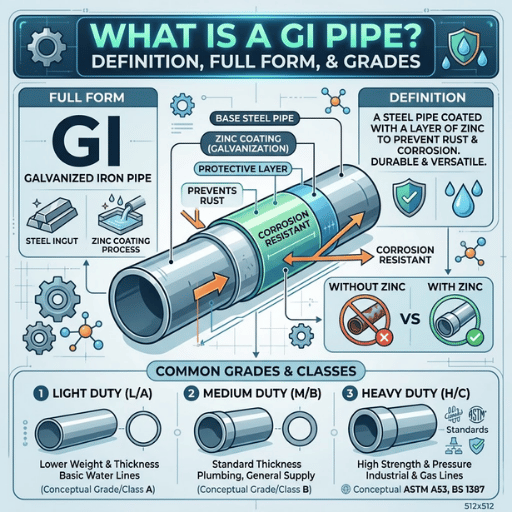
GI pipe full form is Galvanized Iron Pipe — a low carbon steel pipe coated with a layer of zinc through hot-dip galvanization. Zinc acts as both a physical barrier and a sacrificial anode, giving the pipe dual corrosion protection that uncoated steel cannot match.
This is the reason why galvanized steel pipe has been widely used for over 100 years in plumbing, construction and industrial piping.
Galvanized iron pipes’ grade or wall thickness standard classification is defined in IS 1239, Indian Standards, and categorized as below tables. It is ranges of application for different pipe features, neither to use inappropriate grade, is the most common mistake during procurement.
| Grade | Class | Typical Wall Thickness Range | Best For |
|---|---|---|---|
| Light | A | ~2.0-2.6 mm | Indoor low-pressure lines, cable conduit |
| Medium | B | ~2.6-3.2 mm | General purpose water supply, irrigation |
| Heavy | C | ~3.2-4.0 mm | High-pressure systems, structural, outdoor/underground |
Longevity greatly depends on environment. Under rural conditions with good quality air and humidity below 70 percent, the life of a well laid GI pipe is 40-50 years. However in case of industrial and urban areas where acid rain, wet or chemical atmospheres are present, the life of GI pipe gets halved.
This is because zinc gets woken out quickly and effective life becomes 20-30 years. Coastal situation is the worst as salt water tends to eat out zinc even faster.
Somewhere that this something that has had the benefit of time is one of the water mains in Melbourne, Australia, which was installed in 1921 and remained in working order until it was replaced as part of the maintenance of the city’s infrastructure in 2025. It was said to be in good working order in 2025, as a result of the dry climate, alkaline soil and low flow velocity which meant it would not suffer from internal erosion. Although that is a very unique example, it is a measure of how good the pipe can be in the best of circumstances.
What Are the Three Types of GI Pipes?
Within IS 1239 there are three types of GI pipes classified by wall thickness class. Light(Class A) has the thinnest walls and is used for mild pressures, interior work, light plumbing for example, gi electrical conduit runs. Medium(Class B) is the most widely specified grade-broadly paints for water supplies, irrigation mains and general mild industrial and commercial piping.
Heavy(Class C) has the thickest wall, needed generally for high-pressure systems above 1.0 MPa, underground work (ground loading applies external stress on the pipe soil loading), or even structural work(used for weight bearing). The alloy is constant through all classes, but the weight per meter of the pipe varies.
How GI Pipes Are Made: The Galvanization Manufacturing Process
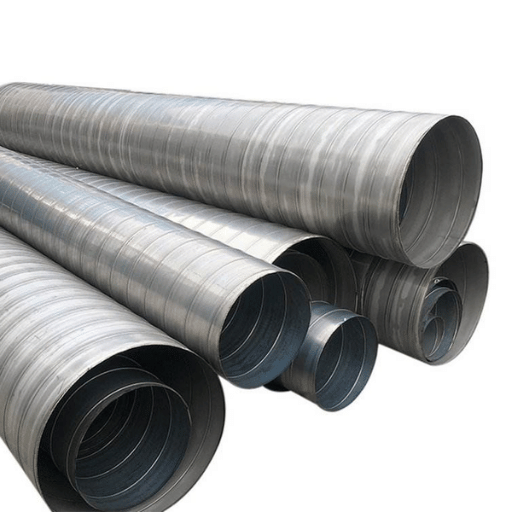
However, the hot dip galvanizing process converts a normal steel pipe into corrosion resistant gi steel pipe by means of a metallurgical bond formed between the zinc metal and the steel base material. The coating of zinc on the steel surface from hot dip galvanization is not merely left on the surface like most paint or epoxy coatings; but it is compounded with the steel base resulting into an inter metallic layer which is far more durable than a mechanical bond. The manufacturing process of hot dip galvanization is as follows:
- Surface Preparation — The steel pipe is degreased to remove oils and any mill scale present, then pickled in a hydrochloric or sulphuric acid bath to strip surface oxides. This step is critical: if the surface is contaminated, the zinc will not adhere properly.
- Fluxing — The cleaned pipe passes through an ammonium chloride solution (flux) that inhibits re-oxidation before immersion and promotes proper wetting of the steel surface by the molten zinc.
- Hot-Dip Immersion — The pipe is submerged in a molten zinc bath maintained at approximately 449 °C (840 °F). Immersion time depends on pipe wall thickness but typically ranges from 3 to 6 minutes for standard sizes.
- Zinc-Iron Alloy Layer Formation — During immersion, zinc diffuses into the steel surface, forming a series of zinc-iron alloy layers (gamma, delta, and zeta phases). These intermetallic layers are actually harder than the base steel itself. The outermost layer is pure zinc (eta phase), which provides the initial corrosion barrier.
- Cooling and Inspection — The galvanized pipe is withdrawn, allowed to cool (either in open air or a quench tank), and inspected for coating uniformity, thickness compliance, and surface defects such as bare spots or flux inclusions.
Why does this matter? The zinc coating protects the steel in two ways. First, it provides a physical barrier — as long as the zinc layer is intact, moisture and oxygen cannot reach the steel. Second, it provides sacrificial anode (cathodic) protection. Even where the coating is scratched or damaged, the surrounding zinc corrodes preferentially, directing the corrosive reaction away from the exposed steel. This is why galvanized pipe continues to resist rust even after surface damage that would cause immediate corrosion on uncoated mild steel.
💡 Pro Tip: ASTM A53 Section 17 specifies galvanized pipe requirements, but ASTM A123 is the more rigorous coating standard. If your project demands verified coating quality, specify A123 compliance. ASTM A123 requires a minimum coating thickness based on material thickness and includes mandatory adhesion testing — details that A53 leaves largely to the manufacturer’s discretion.
GI Pipe Sizes, Weight Chart, and Specifications
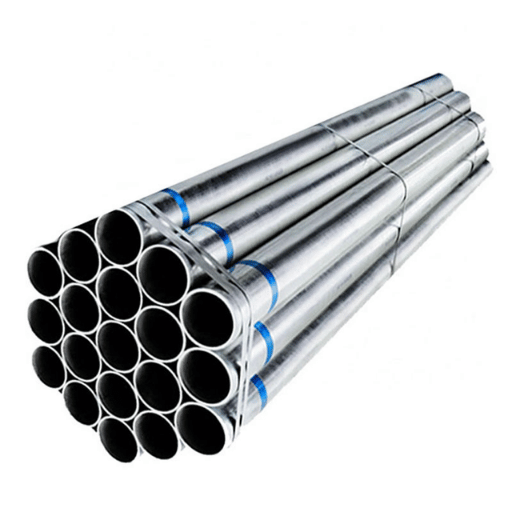
Pro Tip: ASTM A53 section 17 lists requirements and tolerances for galvanization of mild steel tube and pipe but ASTM A123 represents a more demanding coating grade (kote). For critical projects requiring Certified Coating it is recommended to specify A123 ability. A123 calls for a coating thickness based on material thickness and also requires adhesion testing (among other requirements that had been relaxed by A53).
| NB (mm) | NB (inch) | OD (mm) | Light WT (mm) | Medium WT (mm) | Heavy WT (mm) |
|---|---|---|---|---|---|
| 15 | 1/2 | 21.3 | 2.0 | 2.65 | 3.25 |
| 20 | 3/4 | 26.9 | 2.35 | 2.65 | 3.25 |
| 25 | 1 | 33.7 | 2.65 | 3.25 | 4.05 |
| 32 | 1 1/4 | 42.4 | 2.65 | 3.25 | 4.05 |
| 40 | 1 1/2 | 48.3 | 2.90 | 3.25 | 4.05 |
| 50 | 2 | 60.3 | 2.90 | 3.65 | 4.50 |
| 65 | 2 1/2 | 76.1 | 3.25 | 3.65 | 4.50 |
| 80 | 3 | 88.9 | 3.25 | 4.05 | 4.85 |
| 100 | 4 | 114.3 | 3.65 | 4.50 | 5.40 |
| 150 | 6 | 168.3 | 4.05 | 4.85 | 5.40 |
Below is a reference table of official gi pipe sizes per IS 1239-1 (2004), with wall thickness values for Light, Medium, and Heavy grades. Sizes range from 15 mm (½ inch) nominal bore to 150 mm (6 inch). These dimensions align closely with BS 1387, making them applicable across Asian, Middle Eastern, and African piping specifications. For ASTM equivalents, refer to our pipe sizes guide.
These dimensions cover the most common sizes of steel pipe used in plumbing, structural and industrial piping applications. For projects that specify ERW manufacturing process, the weld does not influence the OD or WT dimensions listed. The weld seam is normalized during manufacturing to match the parent material. Welded or continuous-cast GI piping should follow the same dimensional tolerancing.
Engineering Note: IS 1239 allows -12.5% wall thickness tolerance. When determining burst pressure or structural strength, always use the minimum value (nominal/12.5%) not the nominal value. For example, for a Medium grade 50 mm NB pipe that is nominal 3.65 mm WT, determine pressure ratings at 3.19 mm WT.
Is GI Pipe Safe for Drinking Water?
Yes – galvanized iron pipe is acceptable for cold water distribution in the majority of local plumbing codes around the world, has a proven history in both municipal and residential water supply systems. GI pipe should not be used for hot water lines over 60 C however, as these higher temperatures increase the rate at which zinc leaches into the water. Water in old GI plumbing in a house or building built prior to 1960 should be tested for lead, since older zinc alloys occasionally contain trace amounts of lead. When transporting potable water, consult local code requirements for GI pipe use in your region and for compatible fittings approval.
GI Pipe vs MS Pipe vs PVC: Which Material Should You Choose?
Achieving the right material choice is challenging. Every pipe available has distinct advantages and corresponding disadvantages. Use the comparison below of technical data to help make informed and effective decisions. Although the typical GI pipe cost is between mild steel and stainless steel options, the long-term value for outdoor and underground use is in the corrosion resistant GI pipe.
| Property | GI Pipe | MS Pipe | PVC Pipe | SS Pipe |
|---|---|---|---|---|
| Tensile Strength | ~330 MPa | ~370 MPa | ~50 MPa | ~515 MPa |
| Corrosion Resistance | Good (zinc barrier) | Poor (requires coating) | Excellent (non-metallic) | Excellent |
| Max Service Temp | ~200 °C | ~400 °C | ~60 °C | ~800 °C |
| Lifespan (outdoor) | 20-50 yr | 5-15 yr (uncoated) | 25-50 yr | 50+ yr |
| Relative Cost | $$ | $ | $ | $$$$ |
| Weldable | Yes (with precautions) | Yes | No (solvent weld) | Yes |
While you can see that material selection will depend on specific needs and selection criteria, here is a straightforward comparison to help you make an educated choice. In general GI pipe is less costly than stainless steel yet more expensive than mild steel. Its overall corrosion resistance results in the best long-term value application.
| Your Scenario | Best Choice | Why |
|---|---|---|
| Outdoor water supply line | GI Pipe | Zinc protection against moisture and soil exposure |
| Indoor structural (dry environment) | MS Pipe | Lower cost, adequate corrosion resistance indoors |
| Non-pressure drainage / chemical waste | PVC | Chemical resistance, light weight, zero corrosion |
| High-temperature steam / process line | SMLS Steel | No coating degradation above 200 °C |
| High-purity / food-grade application | Stainless Steel | Superior hygiene and chemical resistance |
Is GI Pipe Stronger Than PVC?
Despite the lower cost, chemical resistance, and the low weight per linear meter of PVC, an order of magnitude greater tensile strength of GI pipe allows it to withstand far higher tensile and working pressures in applications such as pressurized fluid transport. To decide whether chemical resistance, or tensile strength is the most important factor for your application, compare the material example data notes below.
Common Mistake: exposing bare mild steel pipe without cathodic protection outdoors or underground leads to corrosion so rapid that it can often be noticed within 2-3 years. An example reported by a Riyadh contractor required some 70 year old MS pipe sections to be hauled out of the ground after erosion of around 40% of the interior wall was observed in a 5 year period. If GI pipe is financially impossible make sure that a epoxy lining and cathodic protection are provided for an outdoor or below-grade installation.
One pattern plumbers operating in other-than-new neighborhoods notice regularly: when galvanized pipe in a building begins to fail, it’s not just a handful of spots of corrosion one year after installation, rather several runs begin to fail in the same period. The zinc coating is depleted at about the same pace for all pipes installed simultaneously, so once you begin to see one part of the system degrading, you might want to be prepared to re-pipe the whole thing since the rest will almost certainly be a little while behind as well. It’s this phenomenon of concurrent failure that drives the economics of a total re-piping as often being cheaper than patch repairs even when galvanized systems are already aging.
GI Pipe vs GP Pipe: Understanding the Difference
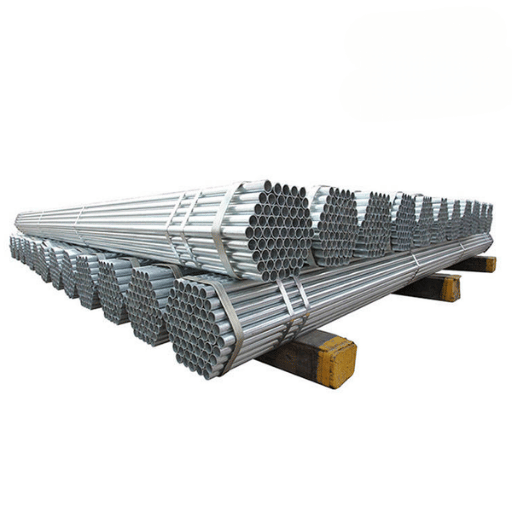
Buyers often confuse GI and GP pipes because the abbreviations sound similar, and both fall under the galvanized piping category. GP stands for Galvanized Plain — a lighter-duty pipe with a considerably thinner zinc coating, intended primarily for protected indoor environments. Where these two products differ most is coating thickness and the service life that results from it.
| Parameter | GI Pipe | GP Pipe |
|---|---|---|
| Zinc Coating Thickness | 60-85 μm | 15-25 μm |
| Corrosion Resistance | High — outdoor / underground | Low-Medium — indoor only |
| Typical Lifespan | 20-50 years | 5-15 years |
| Working Pressure | Higher | Lower |
| Cost per Meter | Higher | Lower |
| Best Applications | Water supply, fire sprinkler, fencing | Indoor conduit, light framework, cable protection |
Keep this in mind: if the piping will be exposed to water or other forces present in outdoor work, specify GI pipe with its heavier coating thickness. GP pipe is fine for any dry indoor scenario in which mechanical protection is the only goal, such as tho-in type conduit pipe used for electrical cables within an indoor factory or office building. The fewer is always better, so make sure the factor of safety is larger on its test certificates than on the product labelling, always.
Look on the field: a full-dip galvanized pipe of any kind will show a bold pattern of crystalized zinc sprawling over the surface, with a textured appearance. Weather-resistant plain pipe is much smoother, even-toned, and without visible zinc crystals as the lighter coating can’t even form them. Experienced tradesmen can distinguish by feel.
Applications of GI Pipes Across Industries
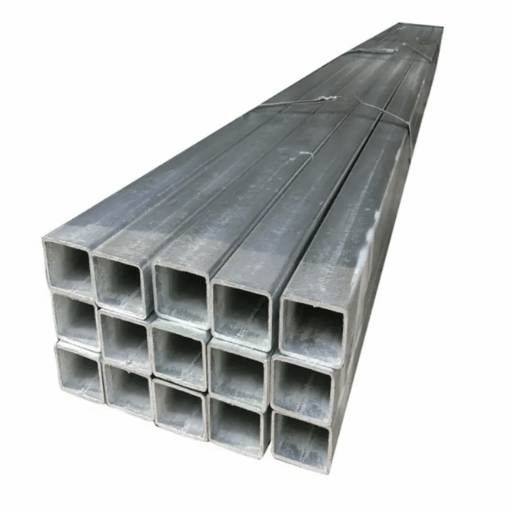
On many jobsites across a large variety of industries, galvanil is one of the most generally-useful accessories for any pipe work that must withstand rather harsh weather or salty/acidic soils. In general, it offers a good mix of durability, performance, and low cost. Six of the most common uses and important things to note are listed below.
💧 Water Supply and Plumbing
Galvanised pipe still remains the workhorse throughout any municipal system, be it a raw water main, a CWS main, or a building riser. Class B pressure pipes with threaded fittings have maintained the standards for urban plumbing infrastructure across the big cities of South East Asia for decades. Ensure that the listed zinc-galvanising composition complies with regulations if used for drinking water; do not use the pipes in a hot- recirculation system if the water temperature regularly exceeds 60 C.
🌾 Agricultural Irrigation
Used to make up irrigation systems, field watering lines, sprinkling systems, header lines for drip methods and the water arks that feed livestock, the corrosion and weather resistant properties mean that GI piping is the ideal category for exposed areas in the country. In general Class C is used for pipe that is laid directly into a pre-excavated mudbottom but Class B is more than suitable for installing a general, above ground sprinkler infrastructure. Laying the piping in rocky soil or in areas with constant traffic from large machinery makes using GI pipe instead of PVC well worth the occasional dent and deformation.
🏗️ Construction Scaffolding and Structural Applications
GI pipe is one of construction industry best sellable raw materials which have been used for a long time for temporary operating scaffolding, handrails, supporting columns, structure& other structural uses. The zinc coating help a lot in extending the life time of the material for outside usages, as bare steel will corrode within a single monsoon season but this one can do for years. The production of guagne pipe’s variants got used for the structures of frames, support supports of canopies& modular building products. When usedas structure structure, we always check the pipe grade & wall depth conforms to the structureengineer’s specification- a pipe that has been cut into pieces for plumbing may not be designed for load carrying!
🔥 Fire Protection and Sprinkler Systems
A lot of wet fire sprinkler systems makes use of a GI pipe, as the water full pipe controls& provides best conditions inside for corrosion. Its garlicash is an added safety factor with the existence of tiny leaks (pinhole leaks) that will rob its fire protection. But one thing to notice is the difference between a wet& dry systems…
Important:however research done by corrosion engineers has shown that by using galvanized pipe production gets even more corrosion than black steel pipe, due to moisture build-up at low points it gets trapped. The galvanic cell, caused by the zinc& any standing moisture gets increased the localized corrosion; this is an outrider corrosion is not this a way of countering a corrosion[]..Wet systems continue to be an excellent method& the best feasible way to provide fire protection. They can be used with uncoated iron pipe for dry systems; experts advise on the nitrogen purged systems.
⚡ Electrical Conduit and Cable Protection
GI conduit pipe is used to protect electrical wiring at factories, warehouses, & in outdoor locations where cable requires mechanical protection from impacts, the weather components or small animal pests. In some cases, as an earth& pipe supports, it is additionally used as part of a procedure to making electrical installations smoother by this- the earth of electrode installations. Metal conduit supplier is an electromagnetic& physical buffer; when compared with plastic conduit it’s worth in heavy electronic/ industrial loading areas& other lightening protection field.
🏠 Fencing, Railing, and Outdoor Structures
Fence posts, playground equipment, road signage supports, and outdoor railing systems all rely on GI pipe for its weather resistance. A galvanized fence post will typically outlast a painted mild steel post by a factor of three to five in the same outdoor environment. Heavy-duty GI pipe in 40 mm and 50 mm NB sizes is the standard for chain-link fence frameworks in industrial and agricultural settings across the pipeline of outdoor applications.
Can GI Pipe Be Welded?
Yes, but with important safety precautions. Grind or burn the zinc coating at least 25 mm (1 inch) from the weld zone before starting. When heated, zinc produces toxic fumes that cause “metal fume fever” — a condition with flu-like symptoms including chills, fever, and muscle aches that typically onset 4-10 hours after exposure. OSHA requires adequate ventilation when welding zinc-bearing metals (29 CFR 1926.353). After welding, apply a cold galvanizing spray compound to restore corrosion protection at the joint. Professional welders on trade forums consistently advise the same sequence: strip the zinc, weld clean metal, then re-coat. Skipping the zinc removal step not only creates health hazards but also produces poor-quality welds due to zinc contamination in the weld pool.
The zinc coating on the galvanized pipe provides a sacrificial anode, which is corroding preferentially to the pipe steel. This cathodic protection remains effective even if the coating is scratched or compromised.
— American Galvanizers Association, Technical Resource
How to Select the Right GI Pipe Supplier and Grade
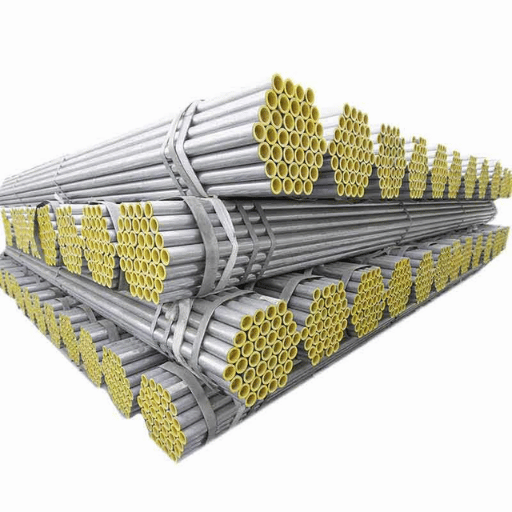
Selecting the appropriate galvanized pipe goes beyond simply comparing euros per meter. Investing in the wrong grade, coating quality or supplier may result in unexpected early failures, delays to your project schedule and liability issues. Use the three factor framework to shortlist your options prior to accepting quotes from any pipe sources.
The 3-Factor GI Pipe Selection Rule
Factors 1: Class-Match wall thickness to working pressure. Light (Class A) is the ideal choice for pressure of less than 0.5 MPa (79 ft water). Medium (Class B) is ideal for general purpose water supply up to 1.0 MPa (164 ft water).
Heavy (Class C) is ideal for pressure over 1.0 MPa (164 ft water) or external load of soil introduces a mechanical load.
Factor 2: Application – Indoor or outdoor. if it is an indoor dry environment the minimum coating of zinc would be acceptable using lighter coatings. Any pipe that is subject to exposure to damp conditions or aggressive weather conditions will require full hot-dip galvanization and coating thickness checked on the mill test certificate.
3. Environment- Soil pH, humidity levels and chemical exposure define the life span of the material. GI Pipe life in alkaline soils (pH 7-9) is said to last over 40 years.
And in acidic soils (pH below 5) may require extra cathodic protection or alternative material options. Regions near coasts or industrial areas prone to high levels of Chloride or sulphur dioxide have also a short coating life span.
Buyer’s Checklist
- Check for BS 1387 / ASTM A53 / IS 1239 certification on the mill test certificate
- Verify zinc coating thickness (minimum 45 m for general outside use)
- Please double check the type of the thread and the (2) socket before you confirm your piping system.
- Request a sample—check for even zinc coverage, no bare patches or bubbles
- Assess suppliers, order quantity(MOQ), delivery schedule and export packing quality.
⚠️ 3 Procurement Mistakes to Avoid:
- Accepting pipe without mill test certificate – you are unable to identify grade or zinc thickness
- Light grade pipe for outdoor/underground use-maybe use for intended application but too weak with regard to wall thickness for soil loading and pressure ratings
- Combining IS 1239 threads and BS 1387 sockets – thread pitch variations at the threaded joint are the source of leaks particularly when subjected to pressure cycling
Your reliable supplier should be able to supply a mill test certificate for each lot produced, supply cut to length service in case of non-standard length requirements, and apply additional service life support via technical documentation and manufacturing quality control reports. When choosing a new pipe supplier, always ask for references taken from installations carried out in similar environments to yours. For instance, a Middle Eastern desert specialist may not have the right coating specs for a tropical coast installation, and so on.
For heavy-duty project requirements, explore Baling Steel GI pipe products with full IS 1239 and ASTM A53 compliance, mill test certification, and export-grade packaging.
Frequently Asked Questions About GI Pipe
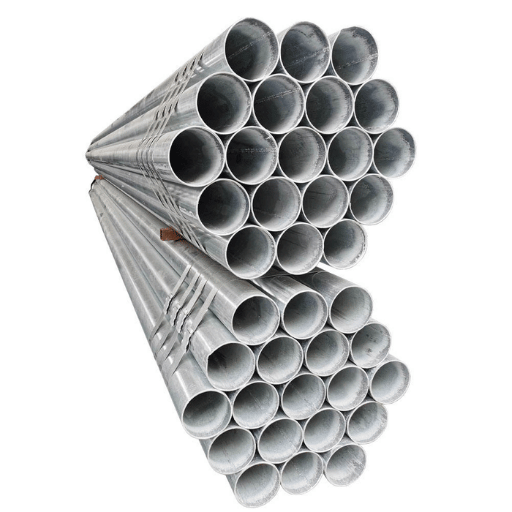
What does GI mean in pipes?
View Answer
GI stands for Galvanized Iron. A GI pipe is a steel pipe coated with zinc through hot-dip galvanization to prevent rust and corrosion. In most markets, the terms “GI pipe” and “galvanized pipe” are used interchangeably. The abbreviation “GI” is particularly common in South Asian, Southeast Asian, and Middle Eastern trade, while “galvanized pipe” is the standard term in North American specifications such as ASTM A53.
Does GI pipe rust?
View Answer
Galvanized pipe is much more resistant to corrosion than plain steel, as the sacrificial zinc plays an important role in corrosion prevention. This problem is not very significant since the zinc coating slowly loses its integrity and after the usual lifetime of twenty to fifty years the pipe will rust given optimal circumstances. Often the worst case scenario where the life of zinc is exceeded may be relevant.
What is the difference between GI pipe and galvanized pipe?
View Answer
No practical difference. Both terms refer to steel pipe with a zinc coating. “GI” is shorthand common in Asian and Middle Eastern markets.
Which is more expensive, GI or stainless steel?
View Answer
Steel piping costs 3-5 times more than its GI equivalent of the same size. However most service conditions in water supply and structural work do not justify STAINLESS STEEL usage, which costs this proportion more than GI. Only where chemical corrosion resistance or a food/medical environment demands ease of purest cleanliness over the cost should stainless steel be used.
What are the disadvantages of GI pipes?
View Answer
The apparent weight of GI pipe is very much higher than alternatives such as PVC. It is unable to carry acid waste or other corrosive chemicals (as zinc dissolves with acid). It is thus unsuitable for hot water supplies over 60 C. The zinc coating often makes welding problematic so special attention should be paid to grinding and ventilation. It is especially vulnerable in very acid soils (pH below five) as far a life expectancy is concerned.
Is GI pipe good for earthing?
View Answer
Indeed. The steel GI pipe is often used as the earth electrode terminal for connection to the earth grid under the building. The zinc coated section prevents early corrosion and the properties of steel ensure that good electrical conductivity is maintained over the expected life-time. IS 3043 have recognized these properties in their specification for GI as an alternative material for use as a primary/earth and potential reference electrode.
Can GI pipe be painted?
View Answer
Yes, but certain surface preparation must be applied. The smooth, slick zinc surface is abraded initially or treated with a special zinc-phosphate primer in order to enable a subsequent paint or powder finish to adhere. Without surface preparation the coating will peel before long. Allow new galvanized pipework to weather comfortably for between 6 and 12 months before painting, preferably using a primer formulated for galvanized metal.
Do you need specifications for your project using GI pipe? Call our technical sales team now for a detailed specification sheet and competitive pricing.
Contact us for a quote on GI pipe
About This Technical Guide
This information was prepared by the technical team at Baling Steel and is based around IS 1239 (IS:1239), ASTM A 53 (A53) and on site experience in the construction industry over some twenty years across South East Asia as well as the Middle East and Africa. To be a manufacturer and exporter of GI pipe we are able to collect all mill test data and run through the galvanizing process details referenced in the course of this guide. In cases where third-party information is used, it is hyperlinked and will open in a new window.
References and Sources
- IS 1239-1 (2004): Steel Tubes, Tubulars and Other Wrought Steel Fittings — Bureau of Indian Standards
- ASTM A53: Standard Specification for Pipe, Steel, Black and Hot-Dipped, Zinc-Coated — ASTM International (via American Galvanizers Association)
- OSHA 29 CFR 1926.353: Ventilation and Protection in Welding, Cutting, and Heating — U.S. Department of Labor
- AWS Safety and Health Fact Sheet No. 25: Metal Fume Fever — American Welding Society
- Galvanized Iron Pipes Market Outlook 2025-2034 — Research and Markets