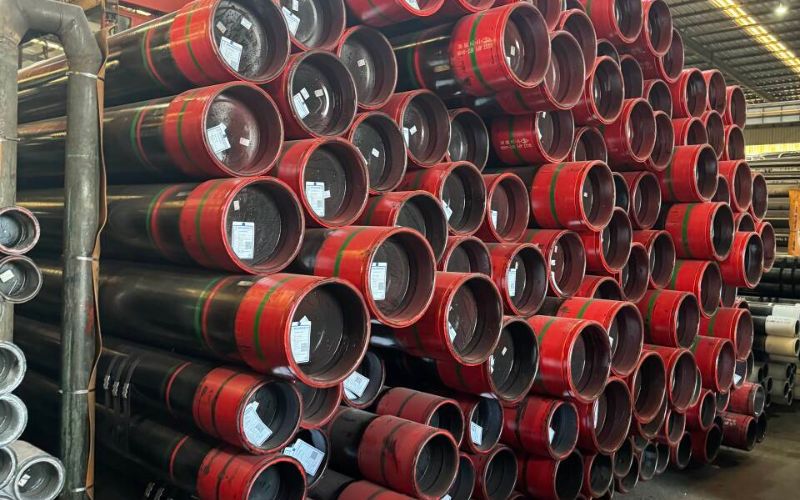
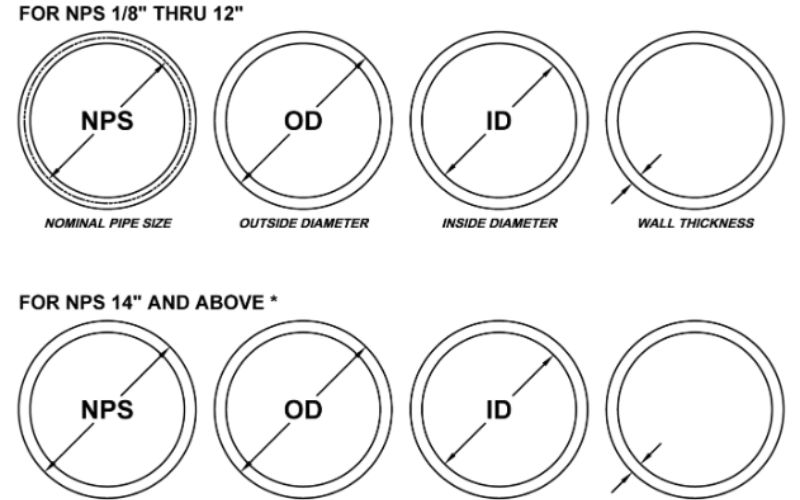
Pup joints are short length tubing sections that address one of the most common issues during well construction—obtaining an accurate string length. Each casing and tubing string needs to land at a specific elevation, and normal Range 2 joints (28-32 ft) generally do not sum to the correct amount. Pup joints bridge the physical distance between the final full length casing or tubing joint and the most appropriate landing area.
Quick Specs
| Standard Lengths | 2, 3, 4, 6, 8, 10, 12 ft |
| OD Range (Tubing) | 2-3/8″ to 4-1/2″ |
| OD Range (Casing) | 4-1/2″ to 20″ |
| Common Grades | J-55, N-80, L-80, P-110 |
| Governing Standard | API 5CT / ISO 11960 (11th Ed, 2023) |
| Thread Types | EUE, NUE, STC, LTC, BTC, Premium |
| Manufacturing | Non-welded pipe (API 5CT mandated) |
What Is a Pup Joint and Why Does Every Well Program Need One?
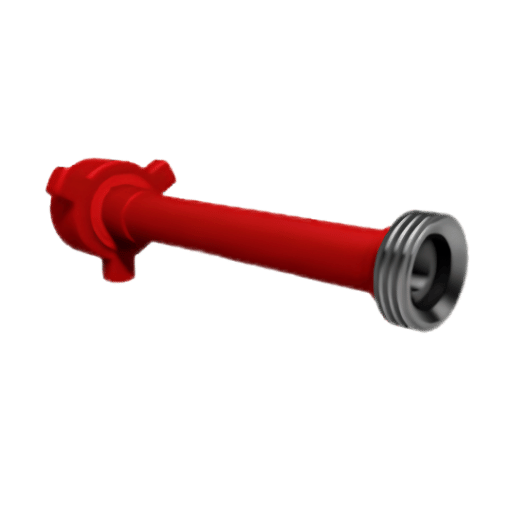
Pup joint – is a short piece of casing, tubing, or drill pipe- normally in the range of 2-12feet long- which is used to fine tune the total length of the tubular string to be the right length for the wellbore desired. These short pieces of pipe serve as accurate spacers within the assembly. They are manufactured in the same way as the normal tubing they are replacing.
At the end of pipes, while getting out of the hole, without pup joints would result in wrong elevation at the end of the well head and wrong pipe elevation resulting in tool face positions at incorrect depth and dimensions.
Three scenarios where pup joints are indispensable:
- Well head spacing – How far along from the wellhead is the tubing hanger lands and is relative to the well head flange.
- BOP stack components-Outside ram closure zone positioning couplings on the pipe body, rather than on the ram.
- Downhole tool placement – position the production string to land the gas lift mandrels, chemical injection points or logging tools at the required depth.
📐 Engineering Note
Standard API pup lengths Table C.27 of API 5CT: 2, 3, 4, 6, 8, 10 or 12 ft. (Custom lengths of up to 20 ft are available upon request).69 Lengths are representative of typical distances encountered in wellbore design.
Why Is It Called a Pup Joint?
Industry folklore claims that it was named after the shortness (like a puppy, not a dog) of the Line Pipe, as opposed to it being a commonly used shortened version of the word ‘pipeline’. The usual length of a tubing joint is 28-32 ft (Range 2) and a 2-12 ft section is called the ‘pup’ of the string. There is no formal API documentation for the origin and meaning of the petcoke pricing term, but it is obvious that it existed in oilfields across North America decades ago.
Pup joint vs pipe nipple – Pipe nipple is a small threaded adapter for plumbing and process piping (NPT threads, commonly less than ½ inch). Pup joint is an OCTG product specifically for oil and gas wells (API threads, 2-12 ft). Different products, different standards, different applications.
Never cross reference these two items in procurement systems.
To get a more detailed and technical description, view the entire pup joint guide.
Types of Pup Joints — Casing, Tubing, Drill Pipe & Specialty
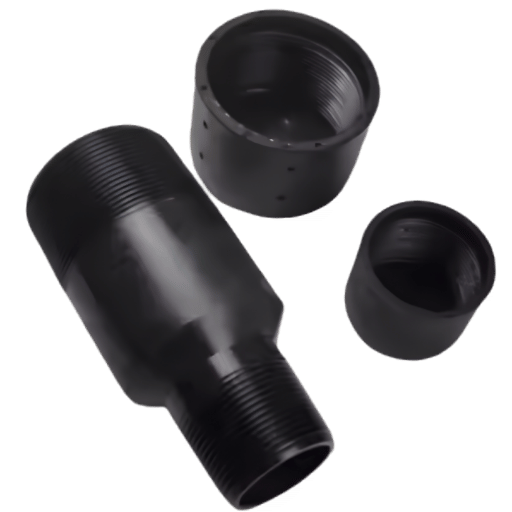
Pup joints are categorized by what parent tubular string they are created from; casing and tubing pup joints constitute the majority of on-field demand at over 90% but drill pipe and various specialty types are still important to fulfill specific requirements.
| Type | OD Range | Grades | Connections | Primary Application |
|---|---|---|---|---|
| Tubing Pup Joint | 2-3/8″ – 4-1/2″ | J-55, N-80, L-80, P-110 | EUE, NUE | Production string spacing |
| Casing Pup Joint | 4-1/2″ – 20″ | H-40, J-55, K-55, N-80, L-80, P-110 | STC, LTC, BTC | Casing string adjustment |
| Drill Pipe Pup Joint | 2-3/8″ – 6-5/8″ | S-135, X-95, G-105 | NC, IF, FH | BHA spacing |
| Integral Pup Joint | Various | J-55 – P-110 | Flush/semi-flush integral | Clearance-critical wells |
| Perforated Pup Joint | 2-3/8″ – 4-1/2″ | J-55, N-80 | EUE | Gas lift, flow control |
Most common mis-specification mistake: close out the ordering of tubing pup joints for casing use! The connections on tubing (EUE/NUE) do not match the connections on casing (STC/LTC/BTC). “Field” guys are quick to list this as one of the “non-productive” time “dinosaurs” in the shoebox. Especially on multiple-well pads, inventory control and compatibility can be a bear.
Always check the string connection and match before delivery.
Compared to casing and tubing, the drill pipe pup joints have a replaceable rotary-shouldered connections (NC, IF, FH) and fatigue cycling requirements. Within the BHA string, drill collars needs to be spaced by the pup joints.
Related reading:casing and tubing products| drill pipe applications
Pup Joint Sizes, Dimensions & Weight Reference
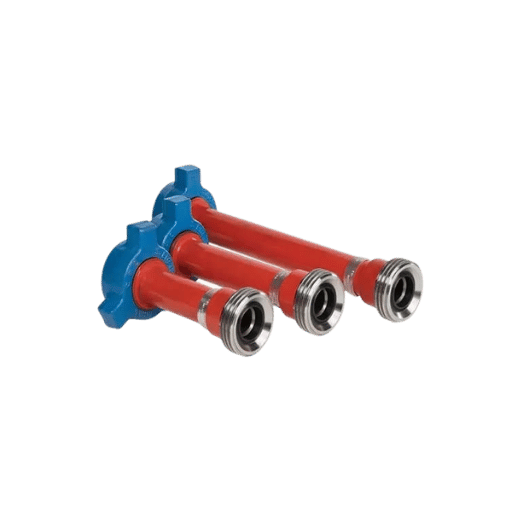
Standard dimensions for the most frequently specified tubing and casing pup joints are shown in the tables below. All figures are for nominal outside diameter, wall thickness, and approximate weight per foot. A wide variety of sizes are available from API-certified producers.
Tubing Pup Joint Dimensions
| OD (in) | Wall (in) | Weight (lb/ft) | Drift ID (in) | Grade Options |
|---|---|---|---|---|
| 2-3/8 | 0.190 | 4.70 | 1.901 | J-55, N-80, L-80, P-110 |
| 2-7/8 | 0.217 | 6.50 | 2.347 | J-55, N-80, L-80, P-110 |
| 3-1/2 | 0.254 | 9.30 | 2.867 | J-55, N-80, L-80, P-110 |
| 4-1/2 | 0.271 | 12.75 | 3.833 | J-55, N-80, L-80, P-110 |
Casing Pup Joint Dimensions
| OD (in) | Wall (in) | Weight (lb/ft) | Common Grades |
|---|---|---|---|
| 4-1/2 | 0.290 | 13.50 | J-55, N-80 |
| 5-1/2 | 0.304 | 17.00 | J-55, N-80, P-110 |
| 7 | 0.317 | 23.00 | J-55, N-80, L-80 |
| 9-5/8 | 0.395 | 40.00 | J-55, N-80 |
| 13-3/8 | 0.380 | 54.50 | J-55, K-55 |
📐 Engineering Note
Dimensions all according to API 5CT Table C.27 / ISO 11960. Wall thickness permitances -12.5% (API 5CT Clause 7.3). Weight permitances +6.5% / -3.5% for any given length.
Always check the exact dimension against the manufacturer’s mill certificate. Large diameter casing pup joints (9 5/8″ and up) could take sometimes also longituded lead times due to lack of stock.
Stocked lengths are from 2 ft, (24 in), up to 12 ft in length. The longest regular stocked item is 10 ft (feet). Item longer than 12 ft are not standard stocked items but are considered special-orders.
See standard pipe sizes for the wider OCTG dimension reference or go to pup joint product specs for order details.
API 5CT Material Grades — J-55 Through P-110
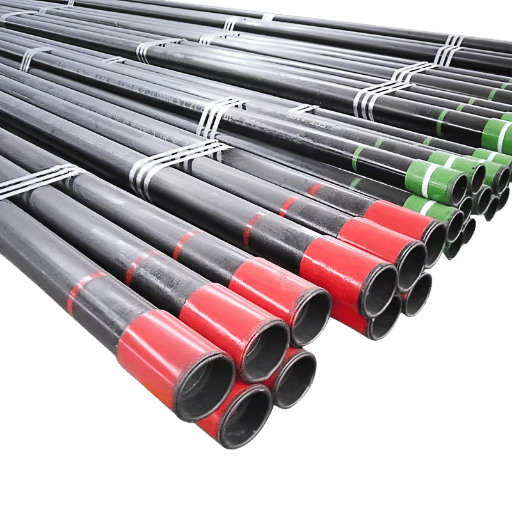
Material grade: The grade of the pup must be able to tolerate both the mechanical and chemical conditions present in the well. API 5 CT specifies the grade of the pipe by its minimum yield strength, and specifies further criteria for heat treatment, maximum hardness, and sour service qualification. Pup joints made to API Spec 5 CT shall be required to meet the same mechanical limits as the pipe of full length.
| Grade | Min Yield (ksi) | Max Yield (ksi) | Min Tensile (ksi) | Heat Treatment | H₂S Service | Typical Depth |
|---|---|---|---|---|---|---|
| H-40 | 40 | 80 | 60 | As-rolled | No | <5,000 ft |
| J-55 | 55 | 80 | 75 | Normalized | No | 5,000–8,000 ft |
| K-55 | 55 | 80 | 95 | Normalized | No | 5,000–8,000 ft |
| N-80 | 80 | 110 | 100 | N&T or Q&T | No | 8,000–12,000 ft |
| L-80 | 80 | 95 | 95 | Q&T | Yes (NACE) | 8,000–12,000 ft |
| P-110 | 110 | 140 | 125 | Q&T | No | >12,000 ft |
Grade Selection Decision Framework
Grade selection revolves around three parameters: well depth (hanging weight), corrosive gases (H₂S and CO₂) in the production stream, and bottom-hole pressure.
- Well depth < 8,000 ft AND no H₂S → J-55 (lowest cost, carbon steel, normalized)
- Well depth 8,000–12,000 ft AND no H₂S → N-80 (alloy steel, quenched and tempered)
- Well depth 8,000–12,000 ft AND H₂S present → L-80 (NACE MR0175 compliant, hardness-restricted)
- Well depth > 12,000 ft OR internal pressure > 10,000 psi → P-110
- Sour service with high mechanical stress → Consider C-90 or T-95 (not standard pup joint stock)
L-80 versus N-80 L-80 and N-80 both define a minimum yield strength of 80 ksi. L-80 defines a maximum hardness of 23 HRC required to be in agreement to NACE MR0175/Sojetiv Kdenid sour service. Using N-80 in HS environments canresult in sulfide stress cracking (SSC).
This is not really a substitute-and it is a safety critical spec difference.
For Pup joints made from a length of Grades L80, C90, T95, C110, C125, or Q125 pipe, a separate tension test doesn’t have to be done if the parent pipe passed all the tests needed to be done.
— API Specification 5CT, 11th Edition, Addendum 1 (2025)
For grade-specific product pages: N-80 tubing | J-55 and K-55 casing
Thread Connections — EUE, NUE, Premium & Buttress
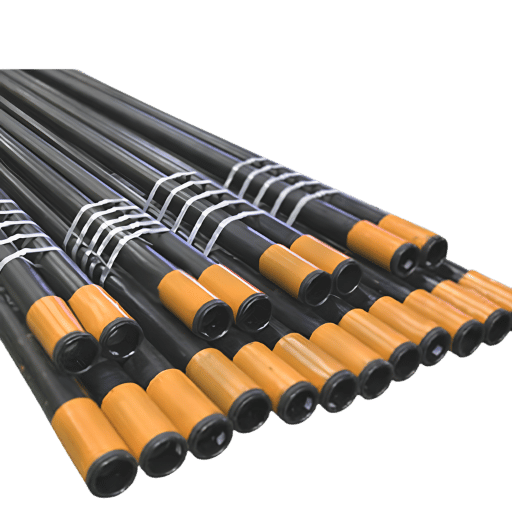
Connection type determines pressure integrity, tensile capacity, and interchangeability. API pup joints offer EUE as the most common tubing connection, while casing pup joints are available with STC, LTC, or BTC. Both ends are threaded to matching specifications, and crossover configurations allow mixed-string applications.
| Connection | Type | Seal Mechanism | Pipe Body Efficiency | Best For |
|---|---|---|---|---|
| EUE | Tubing, coupled | Thread dope + interference | ~95% | Standard production wells |
| NUE | Tubing, coupled | Thread dope + interference | ~80% | Low-pressure, shallow wells |
| STC | Casing, coupled | Thread dope | 60–80% | Standard onshore casing |
| LTC | Casing, coupled | Thread dope | 70–85% | Moderate-depth casing |
| BTC | Casing, coupled | None (not gas-tight) | ~95% tension | High-collapse, non-sealing |
| Premium (VAM, Wedge, etc.) | Both, proprietary | Metal-to-metal seal | 100% | HPHT, sour, deepwater |
Standard API connections (STC/LTC/BTC and NUE/EUE) do not include the metal-to-metal pressure seals. They rely on thread interference coupled with a sealant compound (dope) to maintain pressure containment. An STC connection can only provide 60-80% pipe body tensile strength so it is by definition unsuitable for high load requirements.
Gas tight integrity ( >5,000 psi internal pressure below packer, or any HS exposure) should be established using premium threads with the proven metal-to-metal seal as a minimum specification. Premium threads from Vallourec (VAM), Tenaris (Wedge), and Hunting (SEAL-LOK) will provide 100% pipe body efficiency with proven gas seals.
What Thread Connections Are Available for API Pup Joints?
API pup joints are available with all standard OCTG thread types as defined in API 5B and API 5CT. For tubing pup joints in 2-3/8″ through 4-1/2″ OD, EUE (External Upset End) is the most common connection, with NUE (Non-Upset End) used in lower-pressure applications. For casing pup joints from 4-1/2″ to 20″ API 5B standard S, LTC, and BTC thread types are standard. Premium proprietary connection-including Vallourec VAM, Tenaris Wedge, Hunting SEAL-LOK-are available by licensed threading. Crossover pup joints that provide a pair of different threads types from each end (e.g., EUE pin x BTC box) enable tubing string-to-string connection across dissimilar strings without requiring additional crossover subs. The type of coupling must match that of the parent string exactly to preserve pressure integrity and tensile integrity.
Where Pup Joints Are Used — Drilling, Completion & Production
Pup joints show up in nearly every phase of well construction. Their role almost always remains the same: balance string length to individual depth requirements-but their application context can range from drilling and production operations, through to final abandonment.
1. Wellhead Spacing
Hanger landing at precise elevation. Cementing operation cannot move hanger out of the hole. Pump depths on cue. Run pups to keep the string at specific depths. Backoffs on cue. Most prevalent usage for tubing pup joints.
2. BOP Stack Components
Ensure blowout preventor rams close on pipe body-not couplings. Calculate ram to ram distance in the field, and specify pup joints to position couplings outside the zone the rams can close. A coupling in the ram closure area ensures compromised seal on the rams, and a potential well control event during drilling operations.
3. Downhole Tool Placement
Precise landing for production logging tools, chemical injection mandrels and gas lift valves. Pup joints enable such tools to be installed at specific depths without requiring full length tubing cuts. Both drill pipe and casing string applications benefit from precise placement of downhole equipment in narrow depth windows.
4. Casing Landing
Ensure shoe lands at planned tubing landing point/total string length matches weighted depth plus or minus coupling makeup length. When measured depth exceeds planned depth, pup joints adapt the casing string to land the shoe within 1 ft of weighted depth. This avoids costly alternative-trimming a full joint on the rig floor.
A completion engineer designing a Permian horizontal well spotted a 7-foot gap between the last Range 2 tubing joint and the tubing hanger landing elevation. Instead of cutting and splicing a full joint—which would cost him $800 worth of pipe and leave him with an odd-length tubing string that would need to be rethreaded—I purchased a standard 6-ft EUE pup joint and a 2-ft pup joint and coupled them together. Total additional cost: $340. The string landed 0.3 ft off of TD, and every gas lift mandrel was within spec.
📐 Engineering Note
Spacing calculation: Total pup length required=MD (joint lengths + couplings + tool lengths). Include thread makeup losses:~0.5″ per EUE connection, ~1.0″ per BTC connection. A saver sub at top of string adds additional length that must be accounted for in the calculation.
Context for tubular selection: casing vs tubing | steel casing pipe guide | conductor pipe
How Pup Joints Are Manufactured — From Raw Tube to Finished Product
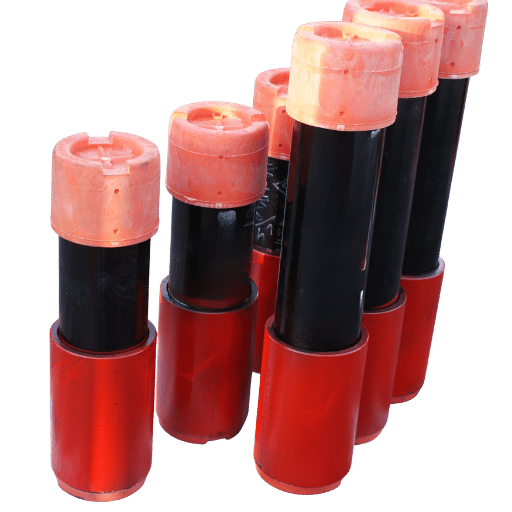
Pup joints use the same three-step process as full-length OCTG from the same raw material. The joint is produced as a single continuous coil of material, made up from the same raw material as all OCTG and subjected to the same heat treatment procedures, proper threading and inspection. API 5 CT spec requires PETG pup joints produced to API spec meet the same mechanical properties as the parent pipe.
Manufacturing Process Flow
- Raw material selection: Non-welded OCTG-grade steel pipe from certified mills, with verified chemical composition per API 5 CT requirements for the target grade
- Cutting to length: Precision cutting to 1/16″ tolerance using cold-saw or band-saw equipment
- Heat treatment: Q&T (quench and temper) for N-80, L-80, P-110; normalize for J-55. The machine and heat treatment process must match grade-specific requirements exactly
- Straightening: Precision straighten after tempering to meet API runout tolerances for proper thread engagement
- Threading: CNC precision threading to API 5B specifications on both ends
- Inspection & testing: Full-body UT, hydrostatic test (up to 20,000 psi), and dimensional verification
Quality Assurance Checklist
- ✔ Raw material: Mill certificate with heat number + chemical analysis
- ✔ Heat treatment: Verify grade-specific process (Q&T vs Normalize)
- ✔ Threading: API 5B gauge verification (standoff, taper, thread form)
- ✔ Hydrostatic test: Per API 5CT Table C.44 pressure requirements
- ✔ Ultrasonic inspection: Full-body UT for wall integrity
- ✔ Marking: Per API 5CT Clause 11 (grade, OD, weight, heat number, manufacturer)
“The update strengthens the requirements for the manufacture of steel casing and tubing used in oil and gas drilling and production operations.”
— API Standards Department, API 5CT 11th Edition Addendum 1 Announcement (2025)
Learn more about the parent material: non-welded pipe production process
How to Select the Right Pup Joint — The 5-Variable Specification Matrix
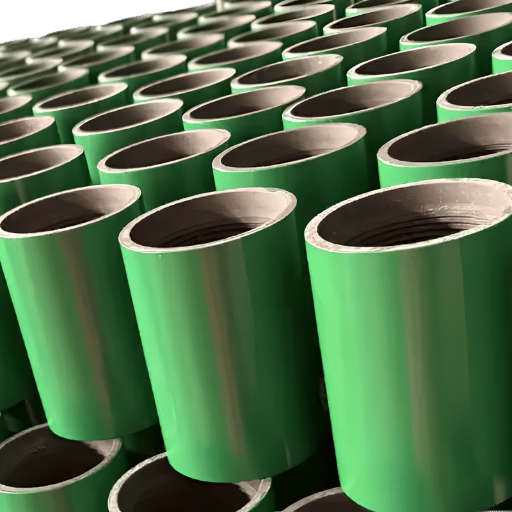
Specifying API pup joints correctly requires matching five variables simultaneously. Missing one causes compatibility problems that may not show up until the tubular string is being run into hole. At this point, the cost of non-productive time far surpasses the pup joint’s purchase price.
The 5-Variable Pup Joint Specification Matrix
- GRADE – Match to well conditions using the decision framework in the grade section above. The pup joint grade must equal or exceed the parent string grade. Never downgrade.
- SIZE – Match OD and weight to the parent string exactly. Never mix weights in a single string—a 6.50 lb/ft pup joint in a 4.70 lb/ft string causes a discontinuity in wall thickness that would lead to a concentration of stress.
- THREAD – Match the current string connection EUE, NUE, BTC, or premium. Confirm thread form, not just diameter. A 2-7/8″ EUE pup joint will not match with a 2-7/8″ premium connection.
- LENGTH use the following equation to compute from your spacing requirement> and order shortest standard lengths combination that meet requirement
- QUANTITY Standard convention orders is 2-3 spare pup joints per well (On average 1x2ft, 1x4ft, 1x6ft addition to (x 2) 10 lengths meets most spacing need experienced during completion).
📐 Engineering Note
Example specification notation for purchase orders and data sheet line items “Pup Joint, 2-7/8″ OD, 6.50 lb/ft, L-80, EUE 8rd, 6 ft, Qty 4” provides all five variables in a notation convention format specified in any oil & gas supplier
When in doubt, order a combination of 2ft + 3ft + 4ft + 6ft. Using these 4 lengths, any 1 ft to 15 ft spacing can be obtained in 1 ft increments.
Thus you have the potential to meet nearly every common well head spacing requirement without ordering custom mills
Pup Joint Market Outlook — Growth Drivers for 2025–2034
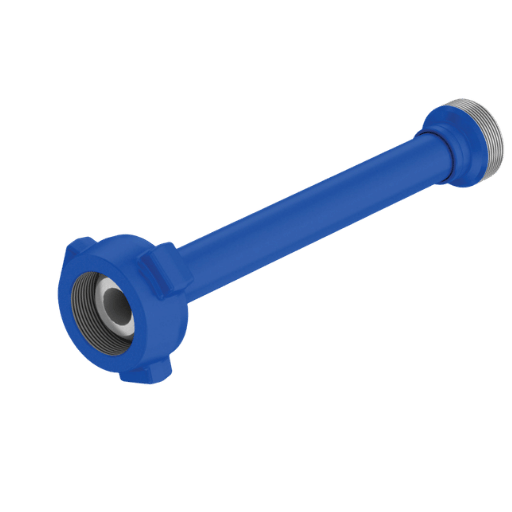
Pup joint demand closely tracks the broader OCTG market. Three main events are fueling growth through the outlying forecast period:
- North America shale activity- Heavy drilling and completion activity within Permian, Eagle Ford, Bakken basins. The North American OCTG market is forecast at $17.9B in 2025 (47.43% of global) and expected to grow to $19.15B in 2026 (Fortune Business Insights).
- Deepwater exploration- Complex completions in deepwater environment require higher degree of spacing component variables.The result- appropriate quantity of pup joints per well is higher than conventional open land programs.
- Middle east capacity expansion- Multi year drilling programs for Saudi Aramco, ADNOC and QatarEnergy are expanding OCTG consumption regionally.
API 5CT 11th Edition Addendum 1 (2025) manufacturers requirements for steel pipe used in oil & gas applications have tightened, potentially stabilizing supply within qualified manufacturers having sufficient capital to meet said know standards.
Procurement teams planning 2026-2027 well programs should investigate entering long term supply contracts with API certified pup joint manufacturers. Demand growth and tightening quality standards may prolong lead times above current 4-6 week order horizons for standard sizes.
Frequently Asked Questions
Q: What is the difference between a pup joint and a pipe nipple?
View Answer
Q: What standard lengths are pup joints available in?
View Answer
Q: Can pup joints be custom-manufactured to non-standard lengths?
View Answer
Yes. Most API registered or certified manufacturers can make pup joints any length from 12 inches to 20 ft. Custom lengths go through the same manufacturing steps—heat treatment, threading, inspection—as stock items.
Lead time for non-stock is usually 2-4 weeks longer. Minimum order quantities may also apply.
Q: What is a valve pup piece?
View Answer
Q: How do I verify pup joint quality on delivery?
View Answer
Q: What is an integral pup joint?
View Answer
Q: Do pup joints require special handling or storage?
View Answer
Need pup joints manufactured to API 5CT specifications?
Get a quote with your size, grade, thread, and length specs.
About This Specification Guide
This gathers pup joint spec information from API 5CT specs, manufacturer data catalogs, and publicly-accessible OCTG market references. Dimensional info lists typical API values-individual mill data may demonstrate slight anomalies within listed tolerance ranges. Grade information reflects typical industry engineering selection for most wellbore conditions. Cross-reference to your well program for unique conditions.
References & Sources
- API Specification 5CT, Casing and Tubing, 11th Edition (2023) – American Petroleum Institute
- API 5CT 11th Edition Addendum 1 (2025) – American Petroleum Institute
- IOGP JIP33 Supplementary Specification to API 5CT – International Association of Oil & Gas Producers
- Pup Joint Market Size, Share & Trends (2025) – ReAnIn Research
- Oil Country Tubular Goods Market Report (2034) – Fortune Business Insights
- API 5CT Casing and Tubing Connections Guide – Energy Steel
Related Articles
- Casing & Tubing: Complete Specification Guide
- Drill Pipe: Grades, Sizes & Selection
- Sucker Rods in Oil Well Operations
- Pipe Schedule & Wall Thickness Reference Chart