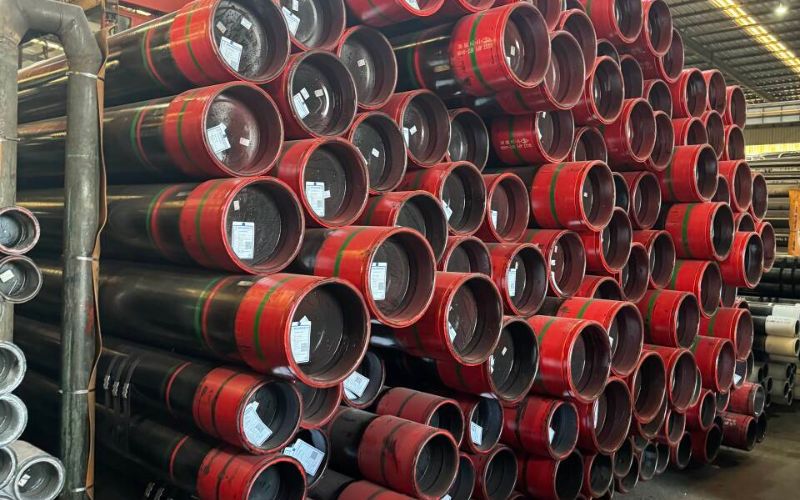
ASTM A269 is the boiler-to-embossed-tube specification for austenitic stainless steel. No matter what application you source TP304 instrument lines for, TP316L chemical process tubing or TP321 heat exchanger tubes – if you are working from a single spec, you are working from ASTM A269. (The ASME twin is SA-269, for use under the ASME boiler and pressure vessel code.) This single document always stipulates permissible chemical contents, mechanical properties, mandatory nondestructive testing, and dimensional tolerances that every mill, every batch, every time must meet (not simply pass) before it ships.
A269 is a general specification: it covers corrosion resistance, service temperature, and pressure alongside its primary function, defining the product for purchase. Once selected, the specification has a series of standard comparisons your procurement team can use for comparison or listing on a quote, and a handy list of the main questions to ask when requesting a quote.
What Is ASTM A269? Standard Scope in Plain Terms
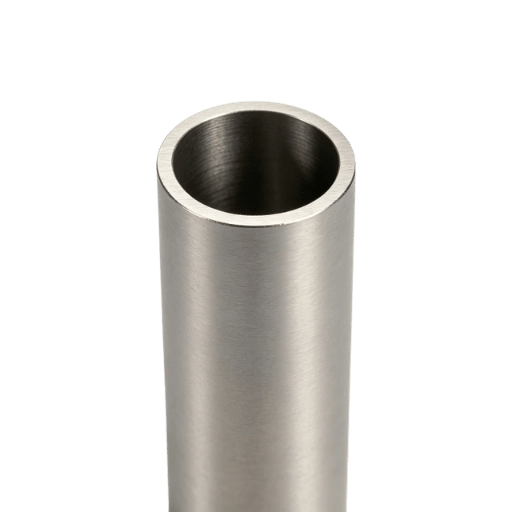
0. ASTM A269 is published by ASTM International as Standard Specification for Seamless and Welded Austenitic Stainless Steel Tubing for General Service. The current, most up to date revision is Number A269/A269M-24 (2024). Its corresponding ASME designation is SA-269 when items are under the jurisdiction of the ASME boiler or pressure vessel code.
Quick Specs: ASTM A269 at a Glance
| Parameter | Value |
|---|---|
| Standard designation | ASTM A269 / ASME SA-269 |
| Full title | Seamless and Welded Austenitic Stainless Steel Tubing for General Service |
| Latest revision | A269/A269M-24 (2024) |
| Material family | Austenitic stainless steel (chromium-nickel alloys, non-magnetic) |
| Forms covered | Seamless AND welded tubing |
| Grades covered | TP304, TP304L, TP316, TP316L, TP317, TP321, TP347, TP348, and others |
| Primary applications | General corrosion-resisting, low-temperature, and high-temperature service |
| Required condition | Heat-treated (solution-annealed) + water quench or rapid cool |
1. Per the standard’s own scope statement: “This specification covers seamless and welded austenitic stainless steel tubing for general corrosion-resisting and low- or high-temperature service.” That open scope makes A269 a first choice across industries from instrumentation to heat exchange.
Seamless vs. Welded Tubing Under ASTM A269
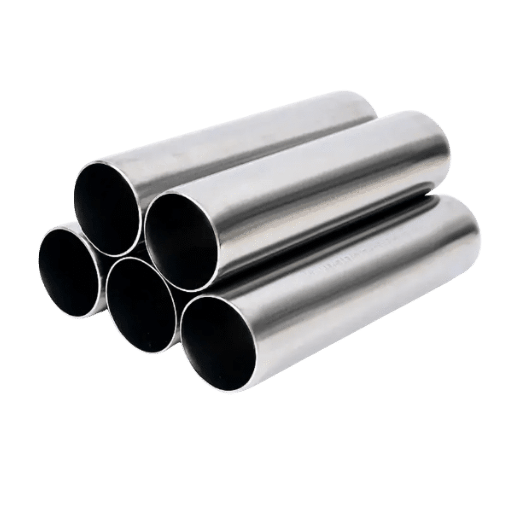
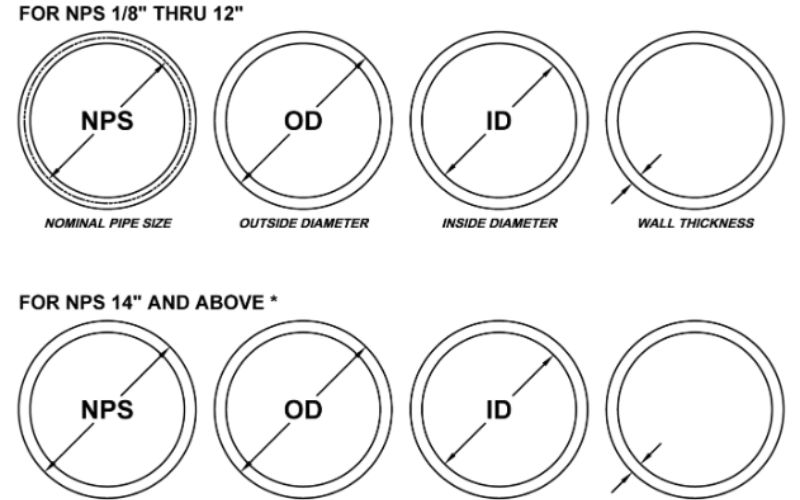
2.To clarify a couple of points before we go deeper. First, A269 covers only austenitic qualities – steel with a face-centered cubic micro-structure. Outside the scope are duplex stainless tubes (such as 2205 and 2507), which are covered under ASTM A789 and ASTM A790. Specifying “A269 TP2205” is an invalid material designation. Second, A269 is a specifications standard for tubing, not pipe. Tubing is manufactured to actual outside diameter and actual wall thickness, which makes it different from a series of nominal pipe size and wall thickness schedules. Please see out guide to pipe vs tube for comparison.
Seamless Tubing
Both manufacturing methods are included in the ASTM 269 Cover, and both are specified differently in the standard as follows:
How made: : Ex-truded or pierced from solid billet. No weld seam at any point
Required tests: Hardness, flaring, NDE or hydrostatic. No reverse flattening test required.
Best for: High-pressure service, high-cycle fatigue, critical corrosive applications, ASME code sections excluding welded.
Welded Austenitic Stainless Steel Tubing
Cost: generally 15–25% higher than equivalent welded. Note: ASME B31.3 applies a ~15% derating to welded allowable stress vs. seamless; welded tubing pressure rating is approximately 80% of comparable seamless for the same OD and wall.
How made: Strip or sheet formed and seam-welded, then solution-annealed.
Other test: reverse flattening test required bending the tube 180 so the weld seam is on the outside, testing for cracks, lack of penetration, and seam integrity.
Best for: Instrument tubing programs, low-pressure utility lines, general process service with NDE verification.
Cost: less expensive per foot; additional cost for eddy current NDE on welded tube.
For most instrument programs, welded ASTM A269 TP316L (1/4″ and 3/8″ OD) is the de-facto standard: most operators of significant equipment, be they Gulf of Mexico based or North Sea operators, will accept welded material for their instrument lines and can feel assured, based on the NDE and a successful reverse flattening test, that weld integrity at normal operating pressures is not going to be an issue. Where pressure above 3,000 psi is anticipated or fatigue is an issue; or indeed the specification just says to use seamless – that is of course what is typically required.
Either product also must receive a solution annealing operation to at least 1900 F (1040 C) and be subsequently water-quenched or quickly cooled – a procedure to put dissolved chromium carbides back into solution, fully restoring all corrosion resistance capabilities to the newly manufactured and welded part. View our seamless stainless steel pipe page to learn more about our manufacturing processes.
ASTM A269 Grade Guide: TP304, TP316, TP316L and Key Variants
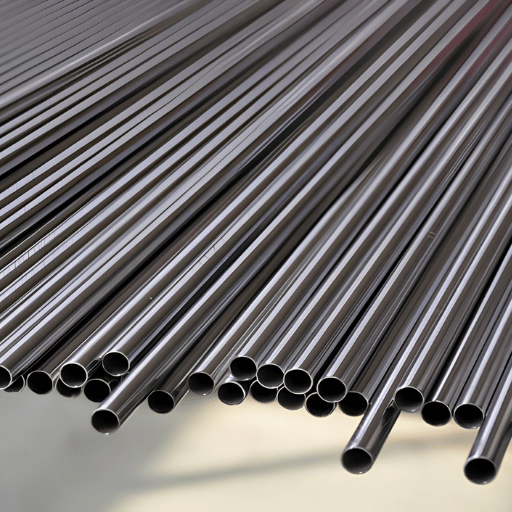
ASTM A269 covers the full austenitic steel 300-series grade range. The “TP” prefix in grade designations (TP304, TP316L, TP321, etc.) stands for “tube product” — distinguishing the tubular product form from bar, plate, or pipe specifications under the same alloy system. Carbon content is a key differentiator between standard and low-carbon L-grades: standard TP304 and TP316 permit carbon up to 0.08% max, while TP304L and TP316L restrict carbon to 0.035% max for enhanced weld sensitization resistance. Chemical composition requirements and room-temperature mechanical properties are set by ASTM A269 requirements; the tables below reproduce published limits from the specification.
Chemical Composition Requirements (wt%, max unless range shown)
| Grade | C% max | Cr% | Ni% | Mo% | Mn% max | Si% max |
|---|---|---|---|---|---|---|
| TP304 | 0.08 | 18.0–20.0 | 8.0–11.0 | — | 2.00 | 0.75 |
| TP304L | 0.035 | 18.0–20.0 | 8.0–13.0 | — | 2.00 | 0.75 |
| TP316 | 0.08 | 16.0–18.0 | 10.0–14.0 | 2.0–3.0 | 2.00 | 0.75 |
| TP316L | 0.035 | 16.0–18.0 | 10.0–14.0 | 2.0–3.0 | 2.00 | 0.75 |
| TP321 | 0.08 | 17.0–19.0 | 9.0–12.0 | — | 2.00 | 0.75 |
| TP347 | 0.08 | 17.0–19.0 | 9.0–13.0 | — | 2.00 | 0.75 |
Minimum Tensile & Yield Strength (Room Temperature)
| Grade | Tensile min (psi / MPa) | Yield min (psi / MPa) |
|---|---|---|
| TP304 | 75,000 / 517 | 30,000 / 207 |
| TP304L | 70,000 / 485 | 25,000 / 170 |
| TP316 | 75,000 / 517 | 30,000 / 207 |
| TP316L | 70,000 / 485 | 25,000 / 170 |
Simple explanation on how to choose grades: TP304 will cover most general service (all those basic temperature atmospheric pressure environments as well as those exposed to weak chemicals and if it comes in at less of a price point then the 316. Select TP316 or TP316L if there is a presence of chloride. This typically means cooling water, brines, marine atmosphere, or chlorinated detergents (hypochlorite).
TP316 contains 2 to 3 % of Moly that will provide increased pitting resistance. Lgrades(304L and 316L) would be for heavy field welding with no available practical hot forming or post weld heat treatment capabilities. For severe conditions such as temperatures sustained in excess of 800 °F TP321(Titanium stabilized will resist sensitization of basic 304).
Please check out 304 Stainless Steel property page to learn more about base 304 material.
What is the difference between TP304 and TP316 in ASTM A269 tubing?
TP316 introduces between 2.0 and 3.0% of molybdenum into the standard TP304 18 / 8 CrNi formulation . This Mo content pushes the PREN (pitting resistance equivalent number) up from ~18 for TP304 to ~25 for TP316 which results in significant resistance to chloride pitting and crevice corrosion. So what does this mean in practice: specify TP316 or TP316L wherever significant chloride content might occur: seawater, brine, chlorine compounds, cleaning chemicals with hypochlorite For service in freshwater, mild chemicals, and atmospheric service, however, cost is saved by using the performance which matches that of TP304 for the ASTM A269 requirements.
Size Range, Wall Thickness & OD Tolerances Under A269
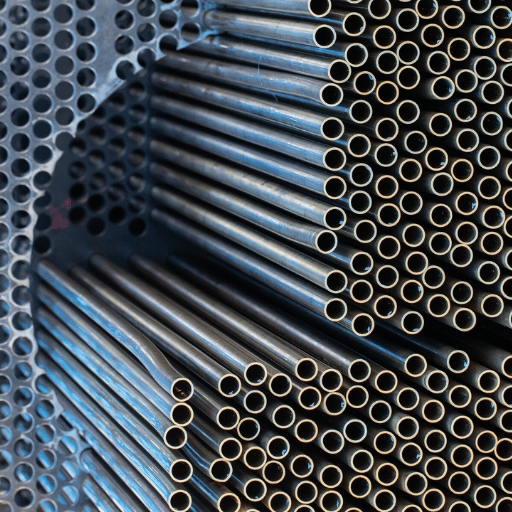
ASTM A269 covers tubing from 1/8” (3.2mm) OD up to large-diameter sizes. Instrument tubing programs typically fall in the ¼” through 1” OD range. Seamless tube is commonly produced by hot piercing followed by cold drawing to final dimensions; cold drawing achieves tighter OD and wall tolerances than hot-finished tube. For 3/8-inch inside diameter and larger sizes, the standard specifies distinct OD tolerance bands. The following tables show common tubing ODs and wall thicknesses with their tolerances per the standard.
OD Tolerances — ASTM A269
| OD Size | OD Tolerance | Wall Thickness Tolerance |
|---|---|---|
| Under 0.50″ (13mm) | ±0.005″ (0.13mm) | ±10% |
| 0.50″–under 1.50″ (13–38mm) | ±0.005″ (0.13mm) | ±10% |
| 1.50″–under 3.50″ (38–89mm) | ±0.010″ (0.25mm) | ±10% |
| 3.50″–under 5.50″ (89–140mm) | ±0.015″ (0.38mm) | ±10% |
Common Instrument Tubing Sizes (per ASTM A269)
| OD | Typical Wall Thicknesses | Common Application |
|---|---|---|
| 1/4″ (6.35mm) | 0.035″, 0.049″, 0.065″ | Instrument impulse lines |
| 3/8″ (9.53mm) | 0.035″, 0.049″, 0.065″ | Instrument tubing, sample lines |
| 1/2″ (12.7mm) | 0.049″, 0.065″, 0.083″ | Process connections, chemical injection |
| 3/4″ (19.05mm) | 0.065″, 0.083″, 0.109″ | Heat exchanger connections, utility |
| 1″ (25.4mm) | 0.065″, 0.083″, 0.120″ | Process tubing, heat exchangers |
📐 Engineering Note: Average Wall vs. Minimum Wall
ASTM A269 is average wall thickness-the +/− 10% tolerance allows for the wall to be ( nominal * 0.90 ) thick at some locations. ASTM A213 specifies minimum wall(0%/+20%) -it cannot be thinner than ordered. For high-pressured service with awall-thickness critical basis of design, determine how the specification accountsfor wall thickness allowance and what standard (if either) is referenced in your sourcing specs prior to determining maximum allowable working pressure.
Mandatory Testing & Mill Certificate Requirements Under ASTM A269
Tests That Each ASTM A269 Tubing Lot must pass to be released, which includes a documented set of results contained on the Mill Test Certificate (MTC). Compare this to your vendor’s release package prior to delivery.
Required Tests — ASTM A269 Compliance Checklist
- Chemical composition analysis — check Cr%, Ni%, Mo%, C% (carbon) and Mn% against grade limits
- Tensile and yield test values per grade (example: TP316L — min 70,000 psi tensile / min 25,000 psi yield)
- Hardness test result — maximum HRB 90 for standard austenitic steel grades per ASTM A269
- Flaring test – in seamless tubing; tube end expanded over conical mandrel to test ductility
- Flange test for welded tubes and hollow bars with outward flared tube ends to verify the weld quality and ductility.
- Reverse flattening – for welded tube only – with 180 degree bend weld in tension – check for laps or tears
- Non-destructive Electric Test (NDE/Eddy Current) OR Hydrostatic Pressure Test – Manufacturers’ choice unless purchaser’s choice. Tube shall be stamped “E” for non-destructive test or “H” for hydrostatic test.
Mill Test Certificate: EN 10204 Type 3.1 or 2.2
If you place an order from overseas mills. You will be supplied with one of two types of common MTC according to European standard EN 10204.
| Certificate Type | Who Issues It | What It Confirms | Required For |
|---|---|---|---|
| Type 2.2 | Manufacturer (self-certified) | General compliance — non-specific tests | Low-criticality, general service |
| Type 3.1 | Manufacturer’s authorized inspector (independent from production) | Specific test results for the actual heat/lot supplied — includes heat number, actual chemistry, actual tensile results | Oil & gas, chemical process, ASME code, pressure vessel applications |
| Type 3.2 | Manufacturer’s QA rep + independent third-party inspector (SGS, Bureau Veritas, Lloyd’s, DNV) | All Type 3.1 data + independent co-signature and stamp. Adds 2–4 weeks lead time. | Subsea pipelines, nuclear piping (ASME Sec. III), HP/HT service, lethal-fluid applications (ASME B31.3 Cat. M) |
⚠️ Common Procurement Mistake
This will happen if you take a 2.2 certificate when your specification called for a 3.1. When you have material in your stock yard it will be documentted with a 2.2 MTC, and it will be impossible to go back to change that to a 3.1 because the specific heat values do not exist anymore, the only alternatives would be expensive testing or to send the material back, put in to you PO’s at the time of issue if the MTC required is a 3.1.
ASTM A269 vs. A213 vs. A270 vs. A554 — The A269 Standard Selection Matrix
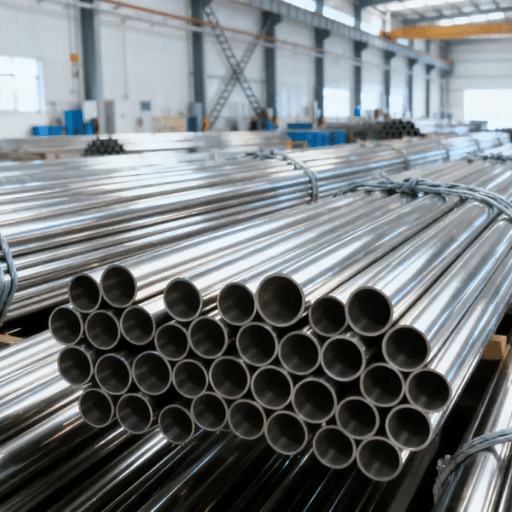
There are 4 ASTM standards for stainless steel tubing that consistently find their way into purchasing specifications and they each satisfy an objective that the others don’t meet. Choosing the incorrect specification results in an “underbuilt” ( unsafe) and expensive installation. The table here is intended to give the appropriate choice in one look up.
The A269 Standard Selection Matrix
| Standard | Scope | Forms Covered | Key Test Difference | Primary Application |
|---|---|---|---|---|
| ASTM A269 | General corrosion-resisting, low- or high-temperature service | Seamless + Welded | NDE or hydro (either); reverse flattening (welded); hardness required | Instrument tubing, process service, heat exchangers (general) |
| ASTM A213 | Boiler, superheater, heat exchanger tubes — ASME code applications | Seamless only | Mandatory hydrostatic test; minimum wall (not average); grain size may be required | ASME boiler & pressure vessel code, power generation, fired heaters |
| ASTM A270 | Sanitary tubing — dairy, food, pharmaceutical, bioprocessing | Seamless + Welded | Polished ID/OD (Ra ≤ 20 µin); S2 pharma grade: 100% bore-scoped; sulfur range restricted (316/316L) | 3A Sanitary, ASME BPE, food/dairy/pharma piping systems |
| ASTM A554 | Mechanical / structural / ornamental tubing; covers austenitic, ferritic, and duplex grades (not austenitic-only like A269) | Welded only | Supplied as-welded — no solution annealing required; no mandatory pressure or NDT testing; not rated for pressure service | Architecture, handrails, furniture, structural frames — NOT corrosion or pressure service |
What is the difference between ASTM A269 and ASTM A213?
A213 defines seamlessly drawn tubing of ferritic and austenitic alloy steel for use in boilers and other pressure vessels and in heat exchangers operating under pressure conditions, according to the ASME code. Key A213 specs The three essential things you need to know about the A213 steel tubes are: Only seamless tubing is defined in the specification Minimum tube wall thickness specification (Never thinner than ordered but will allow up to 20% additional wall) Hydrostatic pressure test is required of every tube on the order! Compare to ASTM A269 A213 specifies seamlessly and welded tubing, using an average wall (10%) specification, and allows for non-destructive testing (NDE) to replace the hydrostatic test.
Use A213 if the job falls under the ASME Boiler and Pressure Vessel Code. A269 would be an under-specified tube in that case. Read more about our Boiler Tube.
What is the difference between A269 and A270?
A270 is used for austenitic stainless steel sanitary tubing, the product is governed by surface condition rather than physical properties. A269 is only required to have a “workmanlike finish”. Surface imperfections are allowed and the ID of the tubing is not tested. ForA270 the tube is required to be electropolished with the inside of the tube have a ra 20 microndeter. If the A270 tubing is going to be used in a food, Dairy or a Pharmaceutical application the OD must be electropolished to reduce the risk of bacteria adhering. The standard A270 is referenced by 3A Sanitary standards as well as by the ASME BPE Bioprocessing Equipment standard. A269 is used in the ASME B31.3 Process Piping standard. If you are designing for an application that involves product contact, clean ability and that’s an important element for you product select ASTM A270 tubing. If it is a general industrial application use astm A269 tubing.
Industrial Applications of ASTM A269 Tubing
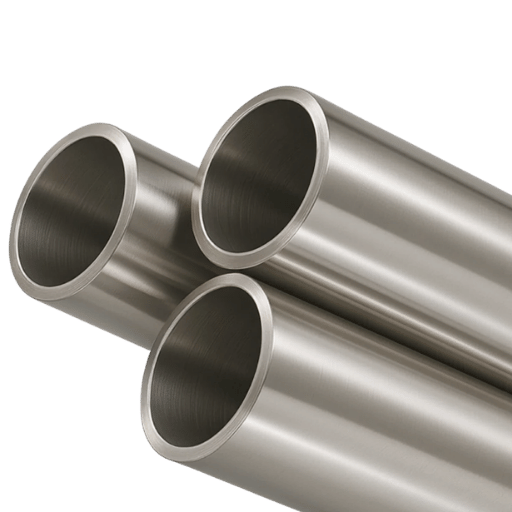
A269 generally covers stainless steel instrument tube and for applications where ASME code is not critical applications includingheat exchanger tubing for industrial (not power) and for general service applications. The standard is the preferred specification for the oil and gas industry, power and for chemical processing.
| Industry | Typical Application |
|---|---|
| Oil & gas | Instrument tubing, sample lines, chemical injection, hydraulic control |
| Chemical processing | Heat exchanger bundles, condenser tubes, process connections |
| Pharmaceutical | Utility lines, cooling water; A270 required for product-contact surfaces |
| Power generation | Condenser tubing, instrument lines (A213 for steam boilers) |
| Semiconductor | High-purity process gas and chemical distribution lines (often A269 base + EP finish) |
| Food & beverage | Utility cooling lines (A270 for product-contact, A269 for utilities) |
Field Scenario: Gulf Coast Refinery Instrumentation
This 3/8″ O.D. 0.049″ wall ASTM A269 TP316L, seam welded tubing has been sourced from an established overseas supplier. We stock this product in random length. Our supplier provided all necessary test certification includingEN 10204 Type 3.1 material test certificates indicating the chemical composition of the 316L material for high HS resistance as well as ultrasonic testing to verify weld integrity for high pressure and HS applications.
Parker Hannifin’s Instrumentation Products Division catalog specifies ASTM A269 TP316L (UNS S31603, C max 0.035%, HRB ≤ 95) as the base material for its compression-fit instrument tubing product lines — citing its dimensional consistency, surface smoothness, and low-carbon formulation for reliable field-welded connections.
Avoid A269 in heat exchanger and boiler applications Governed by an ASME code The other area where a lot of users will incorrectly select ASTM A269 is heat exchanger tube, or similar heat transfer applications governed by ASME BPV (Boiler & Pressure Vessel) Code Section I (Power Boilers) or Section VIII (Pressure Vessels). In these cases, ASTM A213 is mandated – ASTM A269 does not suffice. For related products, see alloy steel pipe for higher-alloy applications and stainless steel water pipe for utility water service.
Procurement Checklist — How to Specify and Order A269 Tubing Correctly
Ordering checklist astm A269 section 16 contains the following elements that should be included in any order description to help eliminate receiving nonconforming or underspecified material. A poorly formed Request for Quote (RFQ) is by far the most common reason we receive orders for material we cannot fill, or which is at risk of failing inspection by your receiving or quality department.Use this checklist to formulate your request.
A269 Tubing RFQ Checklist (per A269 §16)
- ASTM designation and revision year – e.g. “ASTM A269/A269M-24”
- Grade designation – e.g. “TP316L” (just “316” is inadequate)
- ☐ Form — seamless or welded (specify explicitly)
- OD and wall thickness – e.g. “0.375 in (9.5mm) OD x 0.049 in (1.2mm) wall”
- Form and length — e.g. “seamless, random lengths” or “welded, cut-to-length”; small-OD tubing can also be supplied in coil form (specify “coil” or “straight lengths”)
- Surface finish -e.g. “bright annealed” or “pickled”, or “polished” if specified
- End condition — e.g. “plain ends”, “cutting and deburring” (specify if square or bevel cut), “capped”
- Nondestructive examination – e.g. “eddy current examination (E)” or “hydrostatic examination (H)”
- Material Test Report type – e.g. “EN10204 Type 3.1 Mill Test Certificates to be provided”
- Special tests – e.g. “IGC (Intergranular Corrosion Test) according to S2”, “Grain Size per S5”, if required.
Do not make the assumption that by only requesting the MTC or the NDE that all will be covered, not specifying the type of material you’ll be purchasing, whether it is seamless or welded, means the supplier gets to choose those items for you, and they makechoices that aren’t best for you. You can shop our extensive line of seamless pipe specifications including ASTM A269 tubing online.
2025–2026 Industry Outlook: What’s Changing for Stainless Steel Tubing
Key Market Indicators
- 304 stainless steel tubing search demand: RISING 136% YoY (DataForSEO SV data, avg recent 3 months ~1,700 vs prior 3 months ~720)
- Global stainless steel pipes & tube market: est. USD 40.95 billion (2026), projected USD 62.45 billion by 2035 – CAGR 4.8%
- High-purity tube & fitting segment: USD 2.0 billion (2024) USD 4.5 billion (2035) – CAGR 7.6%, led by pharmaceutical and semiconductor demand
The surge in 304 tubing demand is being driven by dual tailwinds. First, we’re seeing a proliferation of new semiconductor fab projects in North America and Asia which will require a substantial build-out of high-purity stainless distribution systems. Second, a wave of post-2022 capital investment into the pharmaceutical and biotech industries is expanding production capacity. Both industries rely on ASTM A269 as their baseline specification – the requirement may additionally include BA (bright-annealed) finish and tighter tolerances.
On raw material: nickel, the primary cost driver for both 304 and 316 grades, remains volatile since 2023 due to supply constraints from Indonesia and the Philippines. Molybdenum — the alloying element that gives TP316L its chloride resistance — is trading at approximately $58,000/ton, directly feeding into 316L alloy surcharges vs. 304. Seamless tubing accounts for roughly 55% of global austenitic stainless demand; welded makes up the remaining 45%. Procurement teams planning 2025/2026 instrument tubing programs may consider fixing pricing now, particularly for TP316L, and carrying safety stock to buffer supply disruptions. the 2024 revision to ASTM A269 (ASTM A269/A269M-24) consists of mostly editorial modifications that does not impose any changes to material composition or test methods which require re-qualifying existing approved suppliers.
Frequently Asked Questions About ASTM A269
What is ASTM A269 material?
What is the difference between ASTM A269 and ASTM A213?
What is the difference between ASTM A269 and ASTM A554?
What is the difference between A269 and A270?
What is the difference between seamless and welded ASTM A269 tubing?
Related Articles
- Seamless Pipe — Grades, Standards & Specifications
- Stainless Steel Welded Pipe — Complete Guide
- Pipe vs Tube: Key Differences Explained
- 304 Stainless Steel Properties & Specifications
- Boiler Tube – Specification of ASTM A213 and A335
This guide covers ASTM A269 austenitic stainless steel tubing based on published ASTM specification data, competitor analysis, and procurement experience with seamless and welded stainless tube programs. Chemical composition and mechanical property data are taken from the ASTM A269 standard as reproduced in verified supplier documentation. Market trend data (DFS search volume) and market size figures (third-party industry reports) are cited as directional indicators with appropriate qualification. This content is updated for A269/A269M-24 (2024 revision).