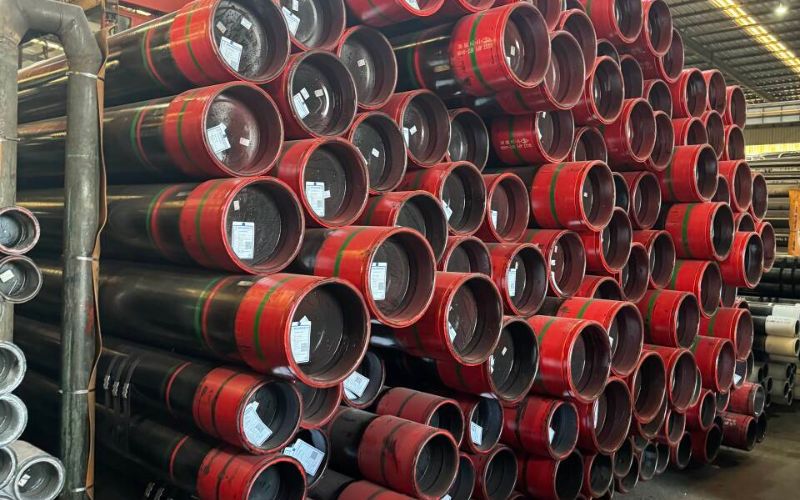
What Is Galvanized Steel Square Pipe? (SHS and HSS E×plained)
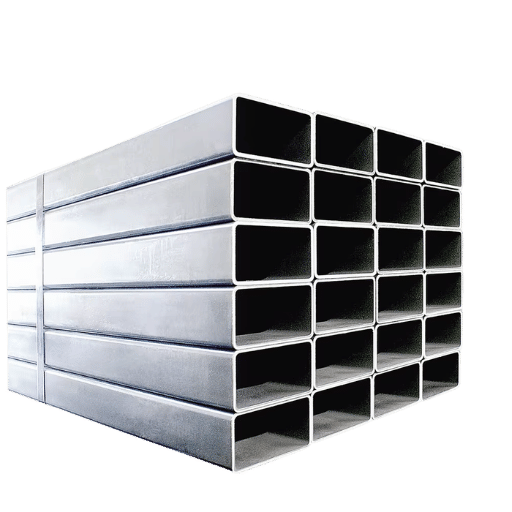
Galvanized steel square pipe is a hollow structural section (HSS) made from carbon steel, with a protective zinc coating applied to prevent corrosion. The zinc layer acts as both a physical barrier and a cathodic protector: even where the coating is scratched, surrounding zinc sacrifices itself to protect the e×posed steel underneath.
The term “galvanized” covers several processes, but for structural square tube the specification that matters is ASTM A1²3 hot-dip galvanizing – not the thinner electrogalvanized finish common on decorative or light-gauge products.
What are square metal pipes called?
Square hollow steel sections go by several names depending on region and standard:
- SHS (Square Hollow Section) – the international/Australian/British term, used in EN10219 and AS/NZS 1163
- HSS (Hollow Structural Section) – the North American term, used in ASTM A500 and AISC specifications
- Square tube / square tubing – the everyday trade name used by distributors and fabricators
- GI pipe — short for galvanized iron; technically outdated (modern GI pipe is steel, not iron) but still used colloquially, especially in Asia and the UK
Quick Specs: Galvanized Steel Square Pipe at a Glance
- Material: Carbon steel (Q235, ASTM A500 Grade B)
- OD range: 1/2″ 1/2″ to 6″ 6″ (Imperial) / 12.7 mm to 152 mm (Metric)
- Wall thickness: 0.049″–0.250″ / 16 gauge to 1/4″
- Zinc coating: Hot-dip 45 m (ASTM A123); pre-galvanized 15-25 m; electro-galvanized 25 m
- Structural standard: ASTM A500 Grade B
- Coating standard: ASTM A123 (hot-dip), ASTM A653/G90 (sheet/pre-galv)
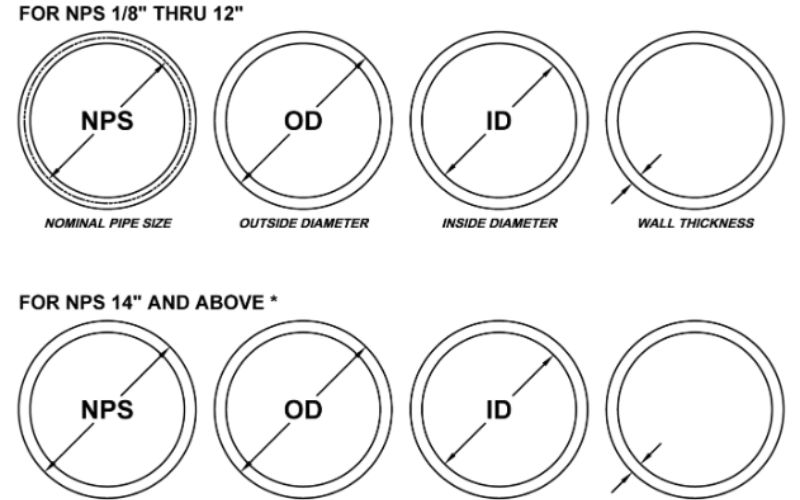
The “pipe vs tube” distinction matters on datasheets: pipe dimensions are defined by nominal bore (internal diameter), while tube dimensions are defined by outside diameter (OD). Galvanized square sections are dimensioned as tube. When sourcing, always quote the OD and wall thickness, not a nominal bore size.
Galvanized Steel Square Pipe Sizes: Complete Specification Chart
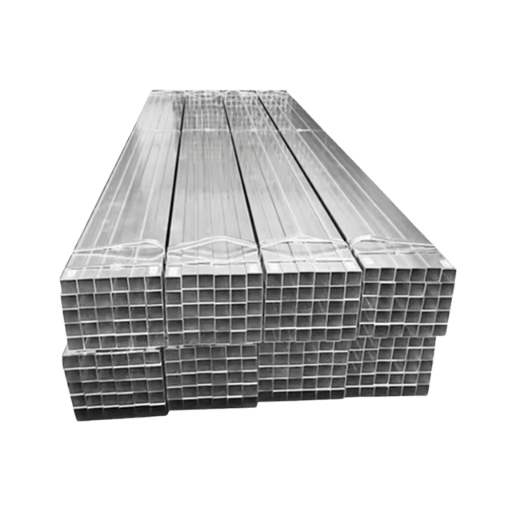
Standard galvanized square tube is available in outside dimensions (OD) from 1/2″ 1/2″ up to 6″ 6″ in stock lengths of 20 or 24 feet. Custom lengths and metric sizes (2020 mm – 200200 mm) are available on order. Wall thickness options range from 16 gauge (0.065″) for light applications to 1/4″ (0.250″) for heavy structural use.
ASTM A500 Grade B structural classification applies to sections 2″ and larger with a minimμm wall of 11 gauge (0.125″). Smaller or thinner sections are classed as mechanical tube – suitable for light framing, not load-bearing colμmns or beams.
| OD (in) | Wall Thickness | Weight (lbs/ft) | Grade / Use |
|---|---|---|---|
| 1/2 × 1/2 | 16ga / 0.065″ | 0.39 | Mechanical / decorative |
| 3/4 × 3/4 | 16ga / 0.065″ | 0.61 | Mechanical |
| 1 × 1 | 16ga / 0.065″ | 0.83 | Mechanical |
| 1 × 1 | 11ga / 0.120″ | 1.44 | Light structural |
| 1-1/2 × 1-1/2 | 16ga / 0.065″ | 1.27 | Mechanical |
| 1-1/2 × 1-1/2 | 11ga / 0.120″ | 2.25 | Light structural |
| 2 × 2 | 16ga / 0.065″ | 1.71 | Mechanical |
| 2 × 2 | 14ga / 0.083″ | 2.16 | Light structural |
| 2 × 2 | 11ga / 0.120″ | 3.05 | ASTM A500 Grade B |
| 3 × 3 | 11ga / 0.120″ | 4.60 est. | ASTM A500 Grade B |
| 4 × 4 | 11ga / 0.120″ | 6.28 est. | ASTM A500 Grade B |
| 4 × 4 | 1/4″ / 0.250″ | 13.91 | ASTM A500 Grade B — heavy |
| 6 × 6 | 1/4″ / 0.250″ | 21.63 est. | ASTM A500 Grade B — heavy |
Note: Weights shown are for base steel tube. The zinc coating adds appro×imately 4-8% to total weight. Metric equivalents: 1 in = 25.4 mm. Imperial is dominant in North American stock; metric sizes are standard for Chinese and European e×port product.
Typical North American stock length is 20 to 24 ft for each board; on custom-built orders verify with your suppliers that cut-to-length orders are a e×tra and whether or not they could have a MO for non-standard sizes.
Hot-Dip Galvanizing vs. Pre-Galvanized: How Galvanized Square Tube Is Made
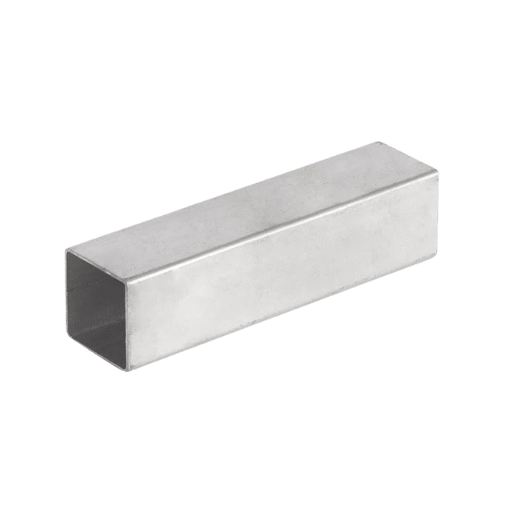
Not all galvanized square tube carries the same zinc protection. The coating method determines thickness, longevity, and which standard the product satisfies — differences that matter significantly for outdoor structural applications.
| Process | Coating Thickness | Standard | Service Life (outdoor) | Best For |
|---|---|---|---|---|
| Hot-dip galvanizing | ≥45 μm (1.8 mil) min; typically 45–100 μm | ASTM A123 | 50+ years (rural); 25–50 years (industrial) | Structural outdoor, coastal-adjacent, agricultural |
| Pre-galvanized (continuous) | 15–25 μm (G60/G90 coil coating) | ASTM A653 G90 = 0.90 oz/ft² | 10–25 years (outdoor) | Light framing, indoor structural, agricultural fencing |
| Electrogalvanized | ≤25 μm (1 mil ma×) | ASTM B633 | 2–8 years (outdoor) | Decorative, indoor only |
In hot-dip galvanizing, fabricated steel is dipped in appro×imately 860F (460C) of molten zinc. In the galvanizing process, the zinc metallurgy binds with the steel, creating different layers of intermetallic alloy that is then finished with an outer layer of pure zinc. This process creates a surface layer harder than the steel itself and one which “heals itself” – if the surface is nicked or scratched, zinc will migrate cathodically to protect the spot.
Get a behind-the-scenes look at our facility to see how galvanizing is done on a larger scale.
Tube manufactured from continuous galvanized sheet Steel which is then formed and ERW welded into a tube. Because of the forming process the weld seam does not have zinc coating as heavy as the plain flat sheet material. For outdoor steel sections this is relevant; this weld area provides the major vulnerability point to corrosion.
Pre-galvanized steel pipe is satisfactory for light duty fencing or internal partitioning but should not be designed to replace hot-dip galvanized structural steel sections.
This applies to pipe and tube, a minimμm of 45 m (1.8 mil) total coating on 0.10 inch thick steel, with heavier steel needing even more, up to 65-100 m under ASTM A123. The comparable G90 (pre-galvanized sheet) under A653 G90 applies only 0.90 oz/ft each side, roughly 25m per side – half the minimμm.
1. Welding Through A Zinc Coating Creates zinc o×ide fμmes that can cause zinc fμme fever, which is characterized by flu-like symptoms such as high fever (100 – 104°F), chills, nausea, and lethargy. (OSHA 29 CFR 1910.252) Use good ventilation when welding on galvanized steel, and always wear supplied airrespirator when welding in tight areas. As a Best Practice, either use an grinder/tool to remove the zinc coating in the weld area or mechanically clean the weld area prior to welding, and then touch up your weld using cold galvanizing compound, according to ASTM A780.Never weld in a confined space without adequate ventilation.
One other requirement for hot-dip galvanized structural members; vent holes must be put into hollow tubes before galvanizing. According to ASTM A385, a vent opening of a least 30% of the cross sectional area of hollows is required in order to avoid e×plosion when the hollow section goes into 860F molten zinc.
ASTM Standards for Galvanized Steel Square Tube: A500, A123, and A653 Compared
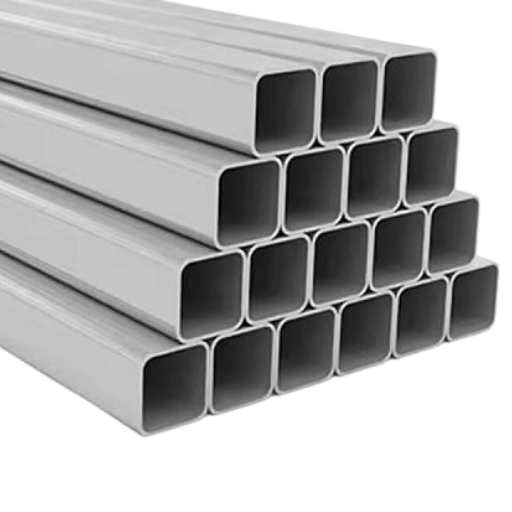
You see this all too often, engineers and purchasing agents are confused about which ASTM standard to put on their drawing. A500, is structural mechanical properties, A123 is hot dip zinc coating and A653 is for zinc coated sheet steel. When it is galvanized structural steel square tubing on your job, you should specify all three of them.
| Standard | A500 (Grade B) | A123/A123M | A653 (G90) |
|---|---|---|---|
| Scope | Cold-formed welded (ERW) carbon steel structural tubing (round, square, rectangular) | Zinc (hot-dip) coatings on fabricated iron and steel products | Zinc (galvanized) coating on steel sheet and strip (continuous process) |
| Tensile Strength | ≥58,000 psi (400 MPa) min | Not applicable (coating spec) | Depends on steel grade |
| Yield Strength | ≥46,000 psi (317 MPa) min (shaped tube) | Not applicable | Depends on steel grade |
| Elongation | 23% min (≥0.180″ wall) | Not applicable | Varies |
| Zinc Coating | No coating requirement (structural properties only) | ≥45 μm (1.8 mil) min average, pipe/tubing category | G90 = 0.90 oz/ft² total both sides ≈ 25 μm/side |
| Process | Cold-formed ERW welded (post-fabrication galvanizing) | Batch hot-dip immersion after fabrication | Continuous hot-dip on coil (pre-galvanized) |
| When to Specify | Load-bearing structural columns, beams, bracing | Outdoor structural + requires mill cert on zinc weight | Light fencing, agricultural gates, indoor framing |
For structural load bearing applications: order A500 Grade B – minimum yield 46ksi / 317Mpa & minimum tensile 58ksi / 400Mpa for shaped (square/rectangular) section sizes. Grade C (yield 50ksi) is used for higher load requirements & grade A (yield 39ksi) may only be used for non-structural applications.
For Mill Test Certificate (MTC), the supplier will be asked to certify the steel’s: (1) chemical composition, (2) the mechanical test results for A500 Grade B, and (3) the A123 zinc coating weight (oz/ft, see standard Table 1). A three point MTC like the one outlined below is the most I request for anything that will be outside e×posed to structure use.
Galvanized Steel Square Pipe Applications: 7 Industries That Rely on It
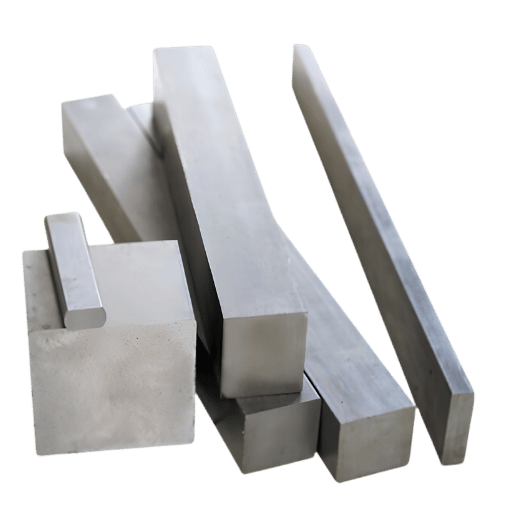
There is a combination of structural rigidity and zinc-based protection that results in galvanized square tube being the ideal material for all outdoor/semi-e×posed use. Below we look at the seven highest-consuming industries:
- Commercial and residential construction — Columns, staircase stringers, balcony railings, mezzanine framing, and curtain wall supports. Typical sizes: 2×2″ to 4×4″, ASTM A500 Grade B, hot-dip galvanized per A123.
- Agricultural fencing and gating — Livestock yards, feed lot pens, vineyard posts, and property boundary fencing. Pre-galvanized G90 is generally adequate here; full hot-dip is specified where soil contact or high humidity is present. Common sizes: 1-1/2×1-1/2″ to 2×2″.
- Carports and shade structures — One of the highest-volume applications by tonnage. Carport frames in the US Southwest and Australia run almost e×clusively on hot-dip galvanized square tube, 2×2″ to 3×3″, 14ga to 11ga wall.
- Highway and bridge infrastructure — Guardrail posts, sign supports, lighting columns, and bridge handrail systems. ASTM A500/A123 dual specification is standard. Coating thickness is typically ≥85 μm on sections over 3/16″ thick.
- HVAC equipment frames and industrial racks — Air handling unit bases, conveyor frames, industrial shelving, and support structures in manufacturing plants where occasional washdown or high humidity creates corrosion risk.
- Server rack frames and data centre infrastructure — An emerging and often overlooked application: galvanized, cable management structures, and raised-floor support grids in data centres increasingly use galvanized structural square tube due to its combination of strength and low maintenance in controlled but moist environments.
- Trailer chassis cross-members and automotive frame components — galvanized square tube is used in livestock trailer framing, livestock trailer framing, utility trailer decking support, and vehicle subframe components where galvanizing provides road-salt and weather protection without the weight penalty of stainless steel.
Galvanized vs. Black Steel vs. Stainless Steel Square Tube: Pros and Cons
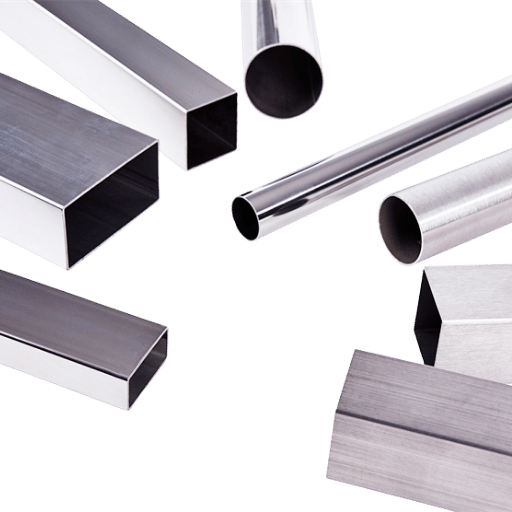
| Factor | Galvanized Square Tube | Black Steel Square Tube | Stainless Steel SHS |
|---|---|---|---|
| Corrosion resistance | ✅ Excellent (50+ yr rural, 25+ yr industrial) | ❌ Rusts without paint/coating | ✅✅ Superior (Cl⁻ resistant) |
| Structural strength | ✅ Same as base steel (A500 Grade B) | ✅ Same | ✅ Higher (304/316 grade) |
| Upfront cost | ⚠️ 15–30% premium over black steel | ✅ Lowest | ❌ 3–5× black steel price |
| 20-year TCO (outdoor) | ✅ Lowest (zero maintenance) | ❌ High (repainting every 3–5 yr) | ✅ Low but costly upfront |
| Weldability | ⚠️ Weldable — zinc must be removed at weld zone first (safety hazard if not) | ✅ Straightforward | ⚠️ Requires TIG/MIG with correct filler |
| Food/water contact | ❌ Not recommended (zinc leaching risk) | ❌ Not recommended (rust) | ✅ 316 grade suitable |
| Coastal/marine | ⚠️ Check zinc grade — ≥85 μm recommended | ❌ Rapid corrosion | ✅ 316L required for full immersion |
The 20-year total cost of ownership (TCO) argument for galvanized square tube is compelling. A galvanized outdoor structure requires no painting or recoating over its service life in most rural and suburban environments. A comparable mild steel pipe or carbon steel tube structure needs repainting every 3–5 years at significant cost. Even with a 15–30% purchase price premium, galvanized typically delivers lower lifecycle cost for any outdoor or exposed application lasting more than 10 years.
What are the disadvantages of galvanized steel pipes?
There are 4 primary limitations when purchasing Galvanized square tubes, which potential buyers should take note of when sourcing.
- Welding hazards–Production of noxious fumes of zinc-oxides from the zincs coating in the weld zone. Ventilation, suitable PPE and cleaning of weld zone necessary.
- Higher upfront cost.Generally 15-30% more per linear foot than the corresponding product in black steel.This cost is attributed to the galvanizing expense and premium for processing.
- Not recommended for drinking water or food use: Zinc will leach into water when used within specific pH levels. Stainless steel or a polymer-lined pipe is required for potable water and food applications.
- machining/fabrication-coating-damage 32 21 20 cutting,drilling and grinding of protected metals cut edges will produce a loss of galvanizing. these cut edges must be repaired with cold galvanizing compound, per ASTM A780 for material to be exposed to outdoor conditions.
Galvanized Steel Square Pipe Pricing: What Drives the Cost?
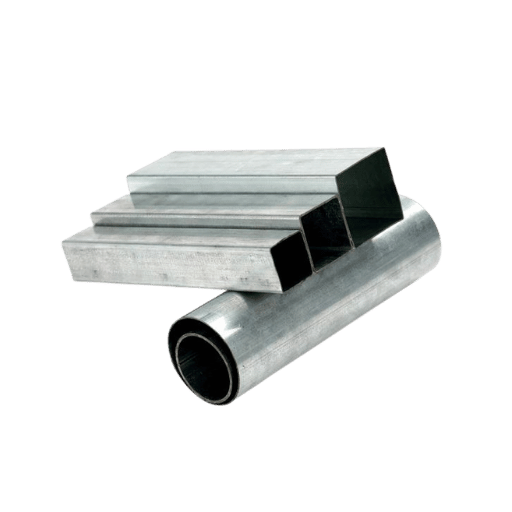
How expensive is galvanized square steel?
Prices of galvanized square tubing on the US market range between $1.50-$2.00 a linear foot for small light-gauge sections like 1”1” 16ga all the way up to $12-$32 a linear foot for a heavy 4”4” 1/4” wall section. the average everyday price is around $3.50-$6.50 a foot for 2”2”. The exact cost for material will vary with thickness and quantity. This will be subject to availability and general market costs in Q1 2026 so this is only an estimation.
Price Disclaimer: As of Q1 2026; check current pricing with your vendor. Weekly zinc prices influence galvanizing cost, hence premiums for galvanized products vary with zinc costs. Listed prices are indicative of typical U.S. retail/wholesale rates for stock standard electro-galvanized tubing.Galvanized structural tubing ( ASTM A123) is usually an additional 15-20% higher.
Key cost drivers — what actually moves the price:
- Zinc price index zinc is prices from the LME (london metal exchange) the zinc prices when increase by 10%, galvanized price would likely rise by 3%-7%.
- Wall thickness: Of any one inside-dimension, wall thickness contributes the most to its within size costs. One 2″2″ 11ga tube costs ~87% more per linear foot as one 2″2″ 16ga.
- Finishing process: hot-dip galvanized (ASTM A123) is priced from 15-20% over pre-galvanized/electrogalvanized for same dimensions.
- Order quantity (MOQ): Volume pricing can be offered on quantities from US distributors at 50-200 pcs. Custom lengths and non-stock sizes will be added a cutting charge of $2.50-$10.00/pc (depends on size).
- Freight / Ship CostSteel tube ships LTL freight. This freight cost per foot drops significantly on a full-pallet shipment. To best reduce freight cost consider purchasing in full bundle quantities (4-4000 lbs per bundle) and grouping size into the same shipment.
How to Source Galvanized Steel Square Pipe: A Buyer’s 8-Step Checklist
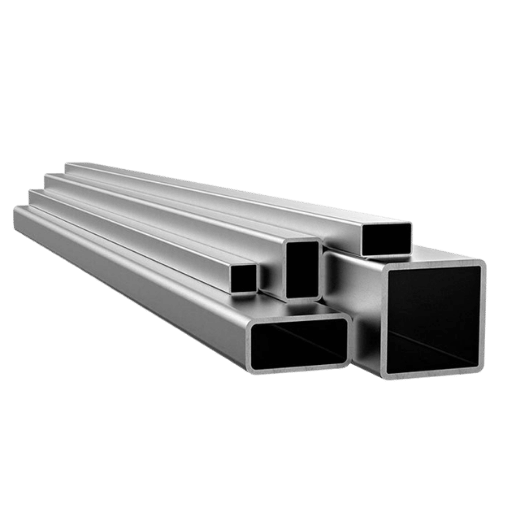
Don’t end up with incorrect pre- galvanized pipe when you specified hot-dipped steel. Don’t get 500 Grade A when your engineering specs were for 500 Grade B. Every purchase order should undergo these eight checkpoints:
- Application environment outdoor/exposed; indoor, coastal, agricultural; industrial This dictates the thickness of coating required.
- Choose OD and wall thickness: depending on loading calculation (structural) or project requirements (framing). Check whether imperial or metric sizes should be ordered.
- List structural standard ASTM A500 Grade B if for structural purpose/load bearing, and if mechanical tube grade if not for structural.
- Coating specification: ASTM A123 (hot-dip, exterior structural), ASTM A653 G90 (pre-galvanized, exterior light fencing/interior). Do not use just the word “galvanized”.
- We Need A MTC We need an MTC with the A500 results for mechanical testing, and the results for A123 zinc coating weight (oz/ft) on the same certificate.
- VERIFY THE STOCK LENGTH AND THE REQUIRED CUTS Most material ships in stock lengths of 20 or 24 ft. A special cut will result in additional lead time and additional cutting costs. For large volumes, consider defining a length tolerance (1/8″ is the norm).
- Verify MOQs and turnaround times: You’ll find standard stock sizes same-day or next-day shipping from major distributors. Most hot-dip galvanized to-spec material or non-stock sizes will take anywhere from 2 to 6 weeks to receive.
- Freight Plan: Combine orders to achieve lower rate of freight per piece. Determine if goods ship domestically or Internationally (important as they will affect rate, delivery and inventory. All orders above 150 lbs will ship out via LTL Freight).
| Use Case | Galvanized Square Tube | Black Steel Square Tube | Stainless SHS |
|---|---|---|---|
| Outdoor structural (carport, agriculture, signage) | ✅ First choice — zero maintenance over 20 yr | ⚠️ Add paint/coating system, re-apply every 3–5 yr | ✅ Premium option — over-spec for most cases |
| Indoor structural (mezzanine, rack, frame) | ⚠️ Functional but over-spec in dry environments | ✅ First choice — lower cost, same strength | ⚠️ Over-spec; no cost justification indoors |
| Coastal / marine (within 1 km of sea) | ⚠️ Specify hot-dip ≥85 μm; check Cl⁻ levels | ❌ Rapid corrosion even with paint systems | ✅ 316L required for direct salt exposure |
| Agricultural fencing / lightweight gate | ✅ Pre-galvanized G90 often sufficient | ❌ Corrodes within 3–5 yr without maintenance | ⚠️ No cost justification for fencing |
| Potable water / food contact | ❌ Zinc leaching risk | ❌ Rust contamination | ✅ 316L required |
Galvanized Steel Square Tube Market Outlook: Key Trends for 2025–2030
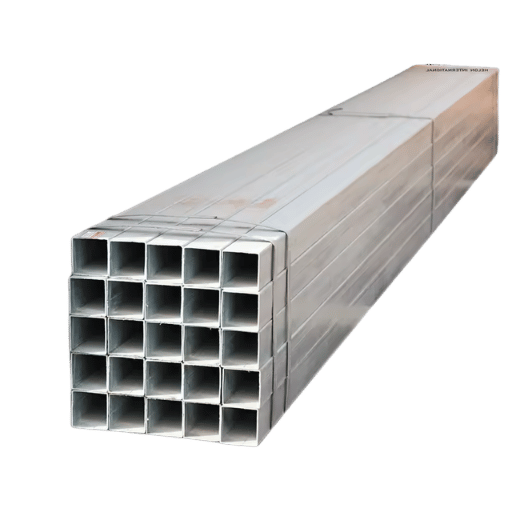
The global galvanized steel tube market size is expected to rise from roughly USD 12.5 billion in 2024 to USD 19.7 billion by 2032, at a compound annual growth rate of 5.8%-primarily on the back of infrastructural funding and a rising requirement of renewable construction energy, as it applies to wind energy and solar farm mounting, and associated support systems.
Der er tre trends, der vil være vigtige for indkøbere med henblik på indkøb frem til 2026-2030:
- Volatility: China smelter supply and global demand from the EV battery sector continue to influence zinc prices. Procurement teams should monitor LME zinc prices monthly and incorporate adjustment clauses in long-term contracts.
- Tightening of structural standards: ASTM A500 and A123 are being revised on a fairly regular schedule. When writing specifications for long design-life projects, double check that you are referring to the current version of the standard (A123/A123M-24 and A500/A500M-21 respectively).
- Southeast Asian region gains production capabilities with full ASTM certification on their galvanized structural tube capacity from Vietnam, Thailand, and Indonesia. This will offer Buyers diversification in sourcing with countries outside their traditional regional source.
Recommendation for Buyers: if total Project demand is in excess of 10MT of galvanized square tube and the intended delivery dates extend beyond Q3 2025 – then seeking at least two supplier quotations (Domestic Distributor + Export Mill) is recommended and contract against the Zinc index on where contract terms allow.
Frequently Asked Questions About GI Pipe
What are square metal pipes called?
View Answer
Common term and definition of steel sections Square Hollow Sections (SHS) for the international/British/Australian standard and (HSS) Hollow Structural Sections in the US and Canada in accordance to ASTM/AISC standards. “Square Tube” is the accepted trade-name among distributors, and “Square Tubing”. “GI pipe” (Galvanized Iron pipe) is a colloquial name for steel pipe.
What is the price of 1 inch square GI pipe per 20 ft?
View Answer
In the US (Q1, 2026), retail-level pricing of a 1” x 1” 16 gauge electro-galvanized square tube with 20 ft length may be anywhere from approximately $32 to $41 per 1-49 pieces, or $1.60 to $2.05 per linear foot. For heavier gauges (11 gauge) or hot-dip galvanized finishes, add a 20% to 40% price premium. Pricing will fluctuate depending on geographical location, supplier, and prevailing zinc index. Obtain current quotation from supplier and use a current zinc index as reference for fluctuating zinc prices week to week.
How expensive is galvanized square steel?
View Answer
A 15 to 30% price premium can be expected for galvanized steel square tube over an equivalent “black” (uncoated) mild steel square tube, per purchase order. This premium reflects zinc costs which vary based on London Metal Exchange (LME) commodity values and cost to process via galvanizing, though over a 20 year cycle the total cost of outdoor hot-dip galvanized structures tends to be lower than comparable painted mild steel, as additional paint application will be unnecessary.
What are the disadvantages of galvanized steel pipes?
View Answer
The primary disadvantages are: (1) Zinc fumes – Welding or hot-cutting galvanized steel requires careful consideration as toxic fumes (zinc oxide) will be emitted. adequate ventilation should be used, and zinc removed from the area around the weld/cut (2) High initial cost – 15-30% premium over black steel (3) Prohibits use in portable water and food applications. (4) Susceptible edges – Cutting or drilling the tubing removed its corrosion protection, and any field-cut ends must be painted with cold galvanizing paint for outside usage (zinc will corrode from exposed cut surface).
What are the benefits of galvanized steel tube?
View Answer
Advantages of buying galvanized steel pipe or tube: (1) Maximum corrosion protection for outdoor structural use (50+ years in rural locations and 25-50 years in urban/industrial settings with no maintenance). (2) Cathodic (sacrificial) protection to exposed areas where the zinc shields scratches and prevents rust of base metal. (3) Full coverage -hot-dip galvanizing covers the entire component inside and out, including seams, and any cuts or drillings made after galvanizing (before fabrication) (4) Strength -ASTM A500 Grade B hollow sections have a minimum yield strength of 46,000 psi (317 MPa) regardless of hot-dip galvanizing (5) Total cost – the 20-year total life cycle cost of outdoor hot-dip galvanized steel structures is significantly lower than equivalent painted mild steel constructions.
Can galvanized steel square pipe be welded?
View Answer
Yes, you can, but it requires special consideration. The best method is to remove the coating in the weld zone with a grinding or mechanical method-about 2 to 3 inches on either side of the weld line-then touch up with cold galvanizing compound, like that approved in ASTM A780. If it’s not possible to avoid welding through the zinc coating, an FCAW (flux-core arc welding) process is preferable to the standard MIG welding procedure with only shielding gas because the flux does a better job of helping draw the zinc from the molten pool.
Remember to work in a well-ventilated space or use respiratory protection with a supplied-air source. OSHA 29 CFR 1910.252 provides specific details.