Sourcing stainless steel tubing appears straightforward until a grade substitution occurs six months into a project resulting in corrosion failures or delivery does not include a Mill Test Certificate traceable to source. Procurement engineers and purchasing managers know the weak link between specification field acceptance and rejections are often the three buy decisions: selecting the correct grade, quoting the relevant ASTM standard on the purchase order and selecting a supplier with the ability to trace material from melt to receipt.
What Is Stainless Steel Tubing? Types and Key Specifications
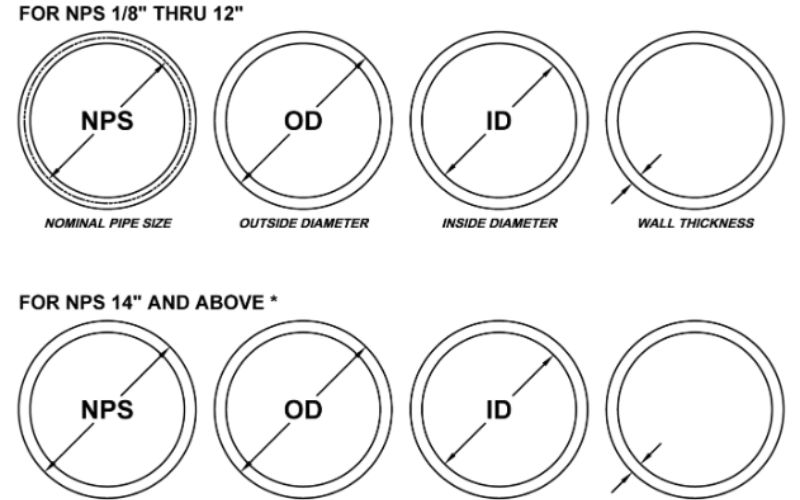
Stainless steel tubing is a precision metal product manufactured to precise outside diameter (OD) and wall thickness tolerances as a pipe-equivalent. Specifications differ from that of pipe – NPS dimensioned by nominal diameter, factor of time in the field for schedules – with tube specified by actual OD and wall thickness. As a result, stainless tubular products are the material of choice wherever precise dimensional tolerances are required: instrumentation lines, heat exchangers, sterile transfer lines and structural assemblies requiring OD fit.
Quick Reference: Stainless Steel Tube Key Specifications
| Dimension | Typical Range | Notes |
|---|---|---|
| Outside Diameter (OD) | 1/8″ to 12″+ (3mm–300mm+) | Key ordering dimension for tube |
| Wall Thickness | 0.016″ to 0.500″+ (0.4mm–12mm+) | ASTM standard determines tolerance spec |
| Standard Lengths | 6m, 12m, 20ft, or random (mill run) | Custom cut-to-length available from distributors |
| Common Grade Families | 300-series, duplex, nickel alloy | 304 and 316 cover 80%+ of industrial volume |
| Surface Condition | Annealed/pickled; bright annealed; mill finish; polished | Specify finish in PO for regulated industries |
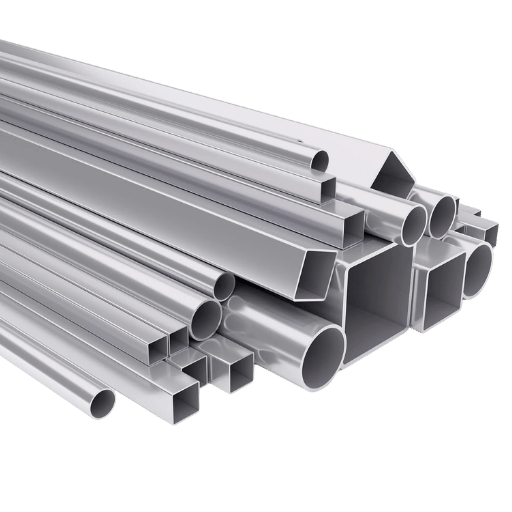
Product forms for stainless steel tubing include: round (instrumentation, heat exchanger bundle, hydraulics), square and rectangular (architecture, structural), small dimensioned (instrumentation, analytical), coiled (instrumentation, analytical) and thick wall (housings, machined components, valve bodies).
Tube versus pipe: has implications for criteria, test reports and specifications. Tube is dimensioned by the actual OD/ID and wall; pipe by the NPS nominal diameter, schedule reference. Tube is required for exact fit applications including instrument connections, fitting and heat exchanger tube sheets. Use pipe specifications in fluid transfer systems based on Schedule and NPS rating.
Stainless steel tubing is manufactured from each of the major ferritic, austenitic, martensitic and duplex alloys. Austenitic 300-series grades (304, 316, 321, 347) cover the great majority of instrumentation, flow control and structural components, duplex 2205 and 2507 are used when corrosion resistance and strength need to be combined with robustness. Nickel alloys (Inconel 625, 825, Alloy 800), are used for extreme corrosion service or high temperature corrosion resistance.
Seamless vs Welded Stainless Steel Tubing: Which Should You Specify?
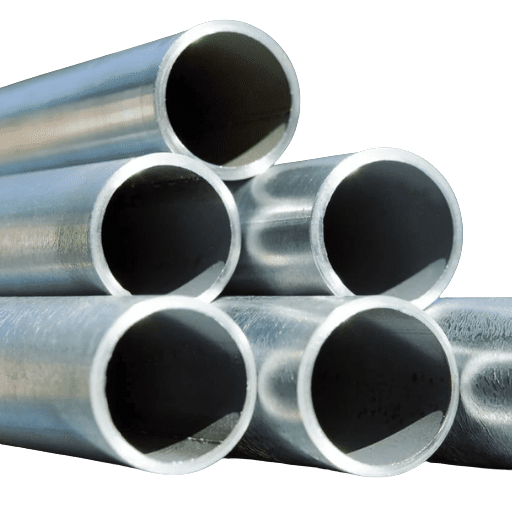
Welded or seamless stainless steel tubing: has a significant effect on pressure rating, lead-times and price, it can effect whether the finally specified grade appears on the Mill Test Certificate. Both grades are produced to ASTM standards and able to pass that supplier qualification testing but perform to different standards when subjected to demanding service.
Manufacturing method: seamless stainless steel tubing is made from a solid billet; pierced, extruded and then cold-drawn through multiple passes with intermediate annealing steps to produce a tube with no long seam weld. Welded stainless steel tubing is either welded from strip stock by rolling and high temperature fusion on a TIG, plasma or laser unit, and followed by annealing and inspection.
| Factor | Seamless | Welded |
|---|---|---|
| Pressure Rating | 100% — no seam stress concentration | ~80% of equivalent seamless rating |
| Wall Uniformity | Moderate (ASTM A213: minimum wall spec) | Tighter (formed from precision cold-rolled strip) |
| Cost Premium | 25–67% higher than welded equivalent | Base reference cost |
| Typical Lead Time | 30–45 days (non-stock items) | 15–25 days |
| Surface Finish | Bright annealed or pickled | Bright annealed; tighter ID finish achievable |
| Primary ASTM Standards | A213, A269, A511 | A269, A249, A554, A270 |
| Best For | High-pressure, oil & gas, hydraulics, instrumentation | Structural, sanitary, general process, cost-driven applications |
Specification Decision: Seamless or Welded?
- Specify seamless if: operating pressure is more than 80% of design rating, the application involves hydraulic or pneumatic instrumentation, the ASTM standard is A213 (heat exchanger/boiler service), or the end-use code is such that if no weld seam
- Choose welded if: structural or architectural use, sanitary (A270) service, cost and lead time limitation, or wall sameness more important than pressure rating
- Either acceptable: general process piping (up to moderate working pressure) ASTM A269 dual certified (seamless or welded).
Seamless tubing is the standard specification for all high pressure oil and gas instrumentation lines. Welded and drawn to ASTM A270 is the expected specification for food-grade transfer and sanitary service. Where dual certification is allowable, a quality distributor is often able to supply seamless stainless steel pipe from stock in less time than a mill order (see our seamless stainless pipe guide for dimensional and grade specifications).
What is the advantage of seamless stainless steel tubing over welded?
Its primary advantage is the absence of a longitudinal weld seam. A weld seam acts as a stress raiser so the pressure ratings for welded tubings are around 80% of the same seamless tubing (same OD, wall and grade). In hydraulic, instrument, and high-pressure gas service, this gap determines if the property is suitable for the design pressure.Seamless tubing generally has a better interior surface finish with less pits thus reducing potential for corrosion attack, especially in services containing chlorides where the weld zone in welded tubing is a preferential attack location.
Stainless Steel Tubing Grades: 304, 316, 321, Duplex and Specialty Alloys
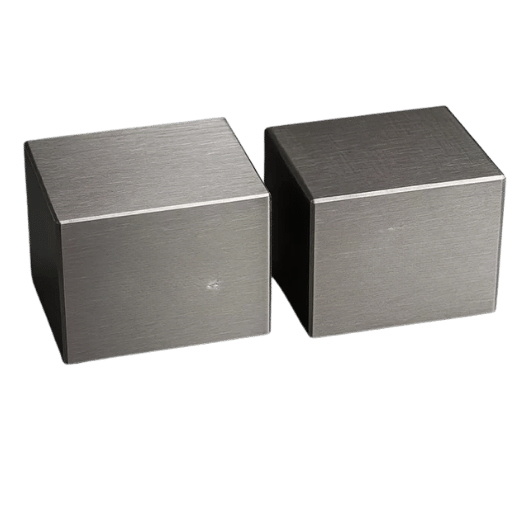
Grade selection. There are several grades of stainless steel used in tubing, and selecting the correct one is quantitatively the most important design decision. Use the wrong grade — 304 in chloride or marine conditions when 316 is appropriate, for example — and pitting can occur at the weld zone after 12 to 18 months. Getting grade selection right covers 95%+ of industrial procurement decisions.
| Grade | Composition | Max Service Temp | Key Property | Cost Tier | Primary Standard |
|---|---|---|---|---|---|
| 304 / 304L | 18% Cr, 8% Ni | 870°C (continuous) | General corrosion resistance; most widely available | Base | ASTM A269, A213 |
| 316 / 316L | 18% Cr, 10–14% Ni, 2–3% Mo | 870°C (continuous) | Superior chloride/pitting resistance; molybdenum addition | +10–20% vs 304 | ASTM A269, A213 |
| 321 | 18% Cr, 9% Ni, Ti-stabilized | 900°C (continuous) | Sensitization-resistant at elevated temp; power/exhaust | +15–25% vs 304 | ASTM A213, AMS |
| Duplex 2205 | 22% Cr, 5% Ni, 3% Mo | 315°C (max) | ~2× yield strength vs 304; SCC resistance; offshore/chemical | +50–80% vs 304 | ASTM A789, A790 |
| Alloy 625 (Inconel) | 58% Ni, 22% Cr, 9% Mo | 980°C (continuous) | Extreme corrosion + heat; subsea, sour gas environments | 4–6× vs 304 | ASTM B444 |
What is the difference between 304 and 316 stainless steel tubing?
Molybdenum content (2–3%) is the critical differentiator in 316. Mo boost up resistance to pitting and crevice corrosion atmospheres containing chlorides seawater, salt atmospheres, chlorinated cleaning agents, many chemical process streams. In practice, 304 is the standard specification for general industrial service. Specify 316 or 316L when the application involves elevated chloride concentrations, saltwater, or marine atmospheres. At 10–20% over the 304 price, 316L is far less costly than corrosion-related rework or replacement.
Erreur courante:-La magnétoscopie n’est pas une technique de contrôle de niveau.
The easiest way to test a one off material at the site would be to test the stainless with a magnet and see if it is attracted, this however is not a valid test. The ferritic steels (such as 430) are still stainless steels although they are attracted by a magnet. Cold worked 304 will also be slightly magnetic due to work martensite.
Hence the material must be verified by PMI test or Mill Test Certificate.
For detailed mechanical properties, refer to our page on 304 stainless steel properties and 316 stainless steel yield strength. For a more detailed explanation of the chromium oxide passivation layer that is responsible for stainless steels corrosion resistance, read our guide to why stainless steel resists corrosion.
ASTM Standards for Stainless Steel Tubing: A269, A213, A554 and A270 Explained
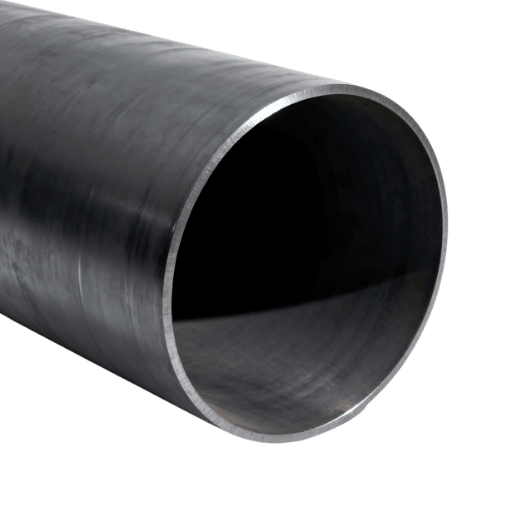
Absence of the specification of the correct ASTM standard on the purchase order is not just a formality – it actually stipulates the testing regime, tolerances and surface condition of tube the supplier is required to produce. A mill certificate marked ASTM A269 has different requirements to a similar certificate marked A213, Grade 316, OD 76.2mm wall 3mm. The following four ASTM standards (with the most common to the least) are used more frequently than most in B2B stainless tube supply.
| ASTM Standard | Type | Wall Method | Surface | Primary Application |
|---|---|---|---|---|
| ASTM A269 | Seamless or welded austenitic | Average wall; –10% to –15% tolerance | Bright annealed or pickled | General purpose; instrumentation; pharma; food |
| ASTM A213 | Seamless ferritic/austenitic alloy | Minimum wall; ±20% to ±22% tolerance | Dull (annealed finish) | Boilers; heat exchangers; power generation; refinery |
| ASTM A554 | Welded mechanical tubing | As-specified; OD-controlled | Mill finish, polished, or electropolished | Structural; architectural; general mechanical |
| ASTM A270 | Welded and seamless sanitary | Average wall | Internal surface finish requirement (ID specified) | Food & beverage; dairy; pharmaceutical CIP lines |
| ASTM A511 | Seamless mechanical | Average wall | Bright drawn finish | Machined components; valve bodies; hollow bar stock |
Engineering Note: Wall Tolerance and Its Significance to Your Specification
A213 indicates minimum thickness—is what you order will never be thinner but can be thicker. This is correct for pressure vessels where thickness below those specified would present a failure risk.
A269 calls out average wall as -10 to -15 percent depending on diameter. For instrumentation tubing that has a compression fitting designed for the OD (Swagelok, Parker), average wall is OK since the grip depends upon OD.
For ASTM A269 tubing in the “-” OD range, OD tolerance is generally 0.005″. Verify tolerance class with vendor before ordering for precision instrument connections.
A predictable sourcing problem with ASTM specifications is to order A213 instrumentation tubing for bores and A269 boiler circuits. Use the wall tolerance approach for the decision signal: minimum wall = high-pressure/thermal service (A213); average wall = general-purpose/instrumentation (A269). Structural framing and architectural tubing can use A554, which allows welded construction, cutting material cost substantially.
Sanitary food and pharma lines are supplied by A270, which is the only specification that addresses the internal surface finish of CIP systems.
Refer to our pipe schedule and wall thickness guide for pipe schedule and wall thickness references. Refer to our ASTM structural tube standards overview for structural tube specifications.
Stainless Steel Tubing Applications by Industry
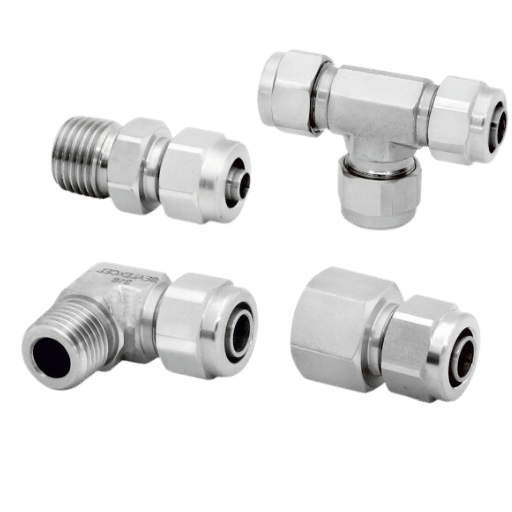
Grade and standard choices vary widely by end-use sector. As the matrix below shows, industry demands drive specific material and documentation choices.
| Industry | Typical Grade | Key Standard | Critical Requirement |
|---|---|---|---|
| Oil & Gas | 316L, Duplex 2205, 625 | ASTM A213, A269 | High pressure; sour gas; heat tracing; offshore corrosion resistance |
| Food & Beverage | 316L (preferred), 304 | ASTM A270 | Internal surface finish (Ra ≤ 0.8 µm for CIP); weld bead flush-ground |
| Pharmaceutical / Biotech | 316L, electropolished | ASTM A270 + ASME BPE | Electropolished ID; low-sulfur steel for passivation; USP Class VI |
| Chemical Processing | 316L, Duplex 2205, 625 | ASTM A213, A269 | Corrosion resistance to specific media; pressure rating; traceability |
| Aerospace | 321, 347, 17-4 PH | AMS 5570 / AMS 5645 | High-temp stability; AS9100 quality system; full lot traceability |
| Power Generation | 304, 316, 321 | ASTM A213 | Minimum wall specification; hydrostatic test certification; boiler code |
| Instrumentation / Hydraulics | 304, 316 | ASTM A269 | Tight OD tolerance (±0.005″); consistent wall for compression fitting grip |
Energy and power accounts for an estimated 35% of the world’s end use for stainless steel tube. Roughly 30% of the global stainless market in terms of volume is for oil & gas. In instrumentation, the ASTM A269 in 316 dominates the industry because it is two certifications in one, a ISO 9001 and can come from typical distributor inventory.
In aerospace and pharma it must also have the necessary industry-specific certification, AS9100 and ASME BPE respectively, which greatly limits the pool of qualified suppliers in those sectors.
How to Qualify a Stainless Steel Tubing Supplier: The 6-Point Scorecard
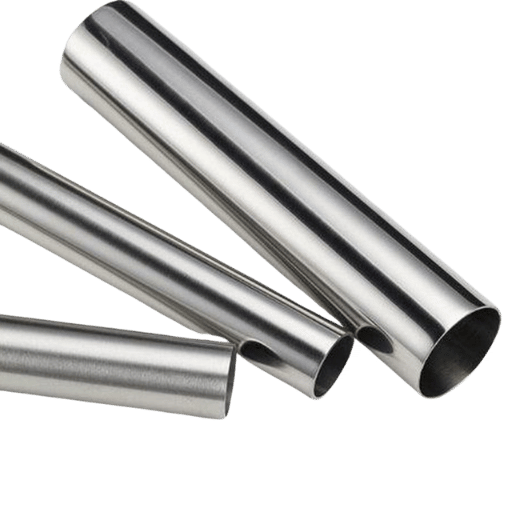
Although a supplier listing stainless steel tubing may say they can supply to a regulated spec with traceability it doesn’t mean that they always can. The distinction between a spec stainless steel supplier qualified to the general industrial grade or the pharma/oil and gas spec is an accessible one – the shortfalls are printed in the various genowad criteria not in a price quotation without question.
Each criterion is scored 0–2 points. A total of 8 or more (out of 12) indicates a supplier with the ability to satisfy B2B demanding industrial of application. Score 5-7 is conditional – good for non-regulated, general industrial service only.
Less than 5 indicates a sourcing risk which there must be additional discussion before qualifying for regulated or critical application.
| # | Criterion | Score 0 — Red Flag | Score 1 — Meets Baseline | Score 2 — Fully Qualified |
|---|---|---|---|---|
| 1 | Quality Certifications | No ISO 9001 or equivalent; no documented quality system | ISO 9001 certified; current certificate verified | ISO 9001 + sector-specific certifications: EN 10204 3.1, AS9100, or FDA registration as applicable |
| 2 | Mill Test Certificate (MTC) | No MTC provided; only Certificate of Compliance (COC) | EN 10204 2.2 (works test) MTC provided | EN 10204 3.1 MTC — independent third-party inspection; heat-specific chemical + mechanical data |
| 3 | Heat Lot Traceability | No heat number on shipping documents; mixed-lot shipments without segregation | Heat number recorded on shipping documentation | Heat number on tube (die-stamp or label); lot segregation confirmed in warehouse management system |
| 4 | Stock Depth & Lead Time | No in-stock inventory; all items are mill order; cannot confirm lead time | Standard grades (304/316) in-stock; lead time confirmed in writing | Confirmed stock for standard sizes; specialty grades with documented lead times; multi-certified inventory |
| 5 | Custom-Cut Capability | Full lengths only; no cut-to-length service | Cut-to-length available; tolerance ±6mm | Precision cutting (±1mm or better); face finish (deburr, chamfer); square-cut verification on request |
| 6 | ASTM Compliance Record | Cannot confirm compliance with stated ASTM standard; no testing documentation | Single ASTM certification per product; hydrostatic test records on file | Multi-certified inventory (e.g., A269 + A213 dual cert); eddy current or ultrasonic test records available on request |
10–12: Fully Qualified
8–9: Qualified
5–7: Conditional (non-regulated service only)
<5: Disqualify
What certifications should a stainless steel tubing supplier have?
ISO 9001: the baseline spec in the general industrial EPC is ISO 9001. It provides for quality-control assurance provided to the buyer by certification and external audit. It does not demonstrate for the buyer the chemistry or mechanical properties of the material the supplier has delivered. Responsibility for that testing rests with the Mill Test Certificate (MTC). Buyers in regulated industries should specify EN 10204 3.1 (not 2.2), which requires an independent third-party inspection body to verify test results. FDA registration from the material supplier is additionally required for pharmaceutical applications. In aerospace supply chains, most OEM specs (e.g. Boeing 007-4, Airbus 320-250) specify AS9100 (aviation quality system).
⚠ Industry Note: MTR Authenticity Concerns for Overseas Supply
A noted concern on technical procurement discussion groups(Eng-Tips, Dec 2023), is the veracity of Mill Test Reports from offshore suppliers, particularly when that report is routed through several intermediaries. Stock may be “cleaned” of falsified heat results or of test reports for unrelated heats. Provenance mitigators include EN 10204 3.1, heat-number cross-referenced to shipper inventory tracking, PMI spot-checks upon receipt, etc.
Collection of approved stainless steel pipe sellers, manufacturers, and distributors, see our vendors page. To request a vendor qualification spec sheet, contact our procurement team.
Ready to Qualify a Supplier?
Request a vendor qualification spec sheet – a simplified RFQ worksheet consistent with this 6 point rating guide.
Practical Procurement: Lengths, Heat Lots, Lead Times and Custom Cutting
How stainless steel pipe is marketed- lot sizes, lot combinations, buying habits- prevents critical supplier mistakes- ordering more or less than the specified quantity, producing non-traceable material, or unwittingly adding procurement charges.
Distributor Inventory and Stock Depth
| Length Type | Nominal Length | Context |
|---|---|---|
| Single random | 4–7m / 13–24ft | Standard mill run; most economical; variable cut lengths in each bundle |
| Double random | 7–12m / 24–40ft | Heavy industrial piping runs; fewer joints |
| 6m (metric standard) | 6,000mm ±50mm | European standard stock length; most common distributor inventory |
| 20ft (US standard) | 6,096mm | US domestic inventory; equivalent to metric 6m for most purposes |
| Cut-to-length (custom) | Any specified length | Adds cost; ±1–6mm typical tolerance; supplier-dependent; reduces fabrication scrap |
Pro Tip: Calculating Order Quantity for Precision Fabrication
Add 5-8% safely for any tube used in bending or welding. Bend-radius “consumption” and end preparation (cut face debris) may account for 3-5% of ordered length. For cut-to-length orders, select a face finish standard and specify deburing, chamfering, surface squaring in your PO.
⚠ Heat Lot Warning: Mixed-Lot Shipments Invalidate Traceability
A heat may be identified by heat lot or heat number. A single heat produces every tube, and mechanical and chemical specification data. Multiple heats can be packed into one shipment-heat. To eliminate traceability uncertainty, specify “single heat number/lots” in the purchase order, verify heat on MTC against heat on the shipping label.
Mill bulk-order minimums minimum lot sizes can be 500-2,000kg per shape, size, and alloy combination. Stock distributors typically have no MOQs as they sell from inventory shelves with bar-code packs. Non-standard size, exotic alloy, or heavy-wall tubes may lead to additional mill lead time (30-45 days, seamless; 15-25 days welded-from-in-stock strip).
Stainless Steel Tubing Market Outlook: 2025–2026 Trends
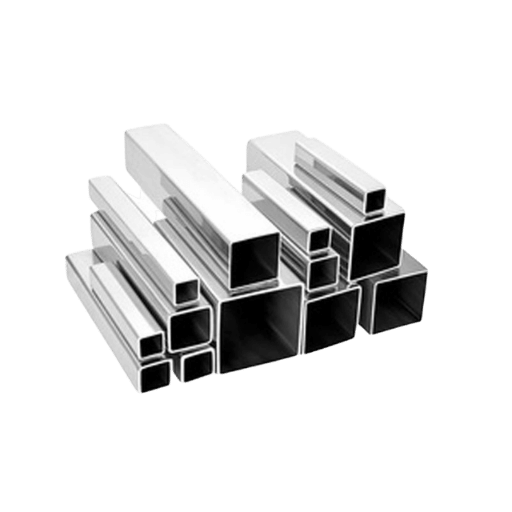
Global demand for stainless steel tube and pipe is on a sustained growth trajectory, driven by energy infrastructure investment, food and beverage expansion in Asia, and ongoing life sciences capital spending. Understanding 2025–2026 market conditions helps procurement teams plan supply agreements and anticipate alloy surcharge movements.
$38.9B
Global SS Pipe & Tube Market Size (2025)
4.6%
Market CAGR 2025–2034
$15K–15.5K
Nickel LME Range /ton (Sep 2025)
$58K
Ferromolybdenum /ton (tight supply, Sep 2025)
Nickel and Ferromolybdenum: Raw Material Price Signals
Raw material signals (2025): Nickel – the main alloying element for 300-series stainless – generally trades sideways in the $15,000–$15,500/ton range due to abundant supply and subdued demand, broadly supporting 304 and 316 base pricing. Nonetheless, ferromolybdenum (FeMo), a key additive for 316L and duplex 2205, reached $58,000/ton in September 2025 amid tight availability as a result of Asian processing interruption. Buyers specifying molybdenum grades: 316L, 317L, duplex should closely track FeMo pricing when formulating alloy surcharge budgets for 2025-2026.
Supply chain dynamics: The post-pandemic transition from just-in-time to just-in-case procurement – accelerated by recent supply chain shocks and still-volatile tariffs – is resultingly driving demand for suppliers with significant in-stock inventory. Italian seamless tube mills are highlighting elevated stock availability in late 2025 providing an opportunity for buyers to lock in long-term supply arrangements at stabilized prices ahead of demand normalization-driven stock reductions. The EU’s proposed Carbon Border Adjustment Mechanism (CBAM) is expected to add 70-120/ton to incoming stainless imports, potentially encouraging a corresponding rise in domestic mill-based procurement.
Procurement implications:
- Considering FeMo price concerns, 316L and duplex 2205 alloy surcharge forward contracts should be secured now for procurement through 2026.
- Plentiful Western mills’ inventory and the stable nickel outlook should facilitate favorable spot purchasing conditions for general 304 tube requirements through mid 2026.
Sourcing Stainless Steel Tubing for Your Project?
Baling Steel’s selection of seamless stainless tube includes dimensions from OD 1/4″ through 10″ and grades 304/316/321/duplex 2205, A213, A269 certified, featuring multi-heat inventory and EN 10204 3.1 documentation available upon request.
Frequently Asked Questions
What is the difference between stainless steel tube and stainless steel pipe?
View Answer
Which ASTM standard covers seamless stainless steel tubing for general service?
View Answer
How do I verify a Mill Test Certificate from a stainless steel tubing supplier?
View Answer
What is a standard length for stainless steel tubing?
View Answer
Why are heat lots important when sourcing stainless steel tubing?
View Answer
Can stainless steel tubing be used for food-grade or pharmaceutical applications?
View Answer
Related Articles
- Seamless Stainless Steel Tube – Chart & specifications
- → Specialty Alloy Pipe Guide
- → Stainless Steel Pipe Specifications & Grades
- → Stainless Steel Pipe Sizes Reference
This information is based on the purchasing trends seen for B2B industrial SS tube. Specifications for grade and standard are only recommendations; check with an engineer or qualified solution provider to tailor the specs for your situation. Market data cited here for 2025–2026 is based on available distributor industry intelligence; check with your supply partners to determine current prices and delivery.