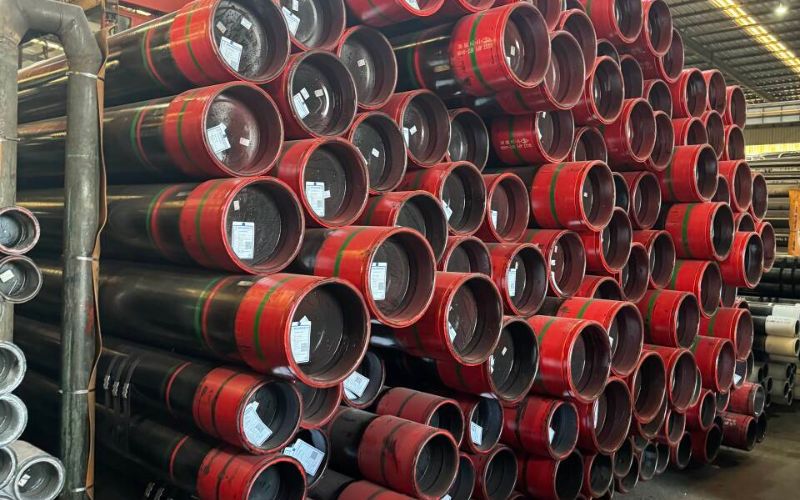
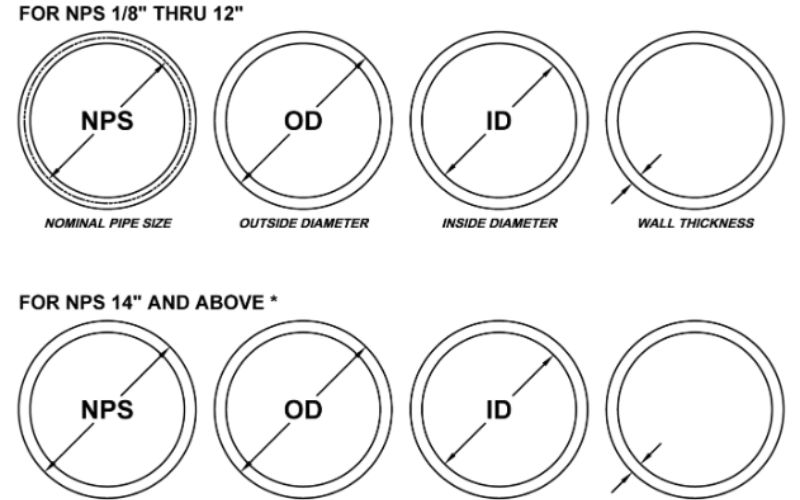
Low-carbon steel (0.25% C max)
ASTM A53, A106, A500 Grade B
ASME B36.10M
35,000 psi (min)
60,000 psi (min)
What Is Schedule 40 Carbon Steel Pipe?
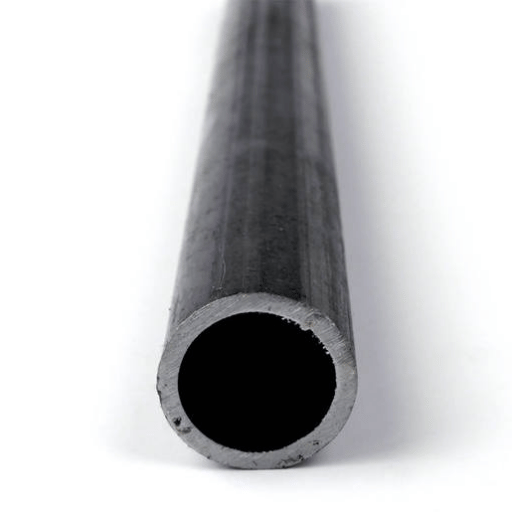
A pipe schedule is a non-dimensional index of the ratio of wall thickness to pressure capability at a given allowable stress. Variation of the ratio can be followed from a crude form of the Barlow formula and perceived as a series of numbers assigned by ASME to arrange pipe specs.
Behind every schedule number sits a governing formula:
SCH = 1,000 × (P / S)
Where P is the working pressure in PSI and S the allowable stress of the pipe wall material in PSI, then a Schedule 40 designation equates to a given wall thickness for each Nominal Pipe Size – not a fixed dimension. For example, a NPS 2 Schedule 40 pipe has a wall thickness of 0.154 inches, whereas a NPS 6 pipe is 0.280.
– B36.10M defines 14 schedules for carbon and alloy steel pipe: 5, 5S, 10, 10S, 20, 30, 40, 40S, 60, 80, 80S, 100, 120, 140, 160. Pipe Nominal Pipe Size (NPS) 1/8 to NPS 10 compare Schedule 40 to Standard Weight (STD) and may be indistinguishable. For larger diameters Schedule 40 differs from STD and that can be a source of frustration with specifiers from time to time. Use our pipe schedule chart to compare the pair.
– Your confusion is probably due to comparing pipe to tube. Pipe uses a Nominal Pipe Size (NPS) designation for diameters, where the number refers to an approximate outside dimension below NPS 14. Tube is specified by actual outside measurements in gauge, decimal inches or other constant references.
Why Is It Called Schedule 40 Pipe?
– The nomenclature “Schedule 40” originates from ASME B36.10M, which refers to a non-dimensional wall thickness designation. The number 40 designates the pressure over stress ratio times 1,000, but does not directly indicate a measure of pressure, weight or thickness. Factoring away the naming conventions used by fabricators to reference “Standard Weight,” “Extra-Strong” and “Double Extra-Strong” categories is as simple as converting to a formula.
– Schedule number should not be used alone to prevent calculations. As Min Pipe Calculations dictate, run the minimum thickness calculations according to ASME Codes B31.3 or B31.1, take proper account of corrosion allowance, mill tolerance, thread depth if relevant and prove your specification at the end of it – ensure that the schedule number is adequate.
— A senior piping engineer, Eng-Tips Forum
Schedule 40 Pipe Dimensions and Wall Thickness Chart
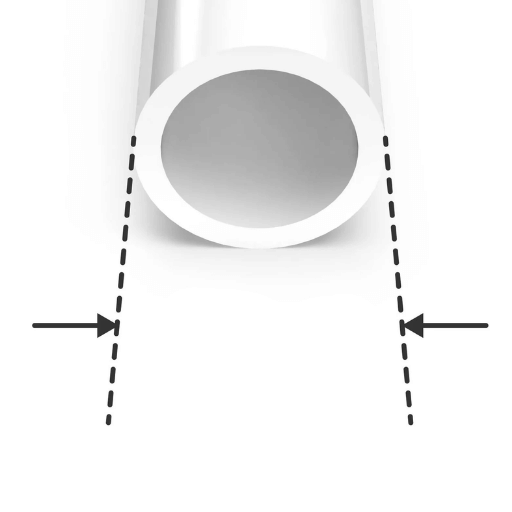
Every dimension in the table below is taken directly from ASME B36.10M and checked against three separate engineering handbooks. Outer diameter stays constant for each nominal size regardless of schedule — only the wall thickness changes, which in turn determines the inside diameter and standard length.
| NPS | OD (in) | OD (mm) | Wall (in) | Wall (mm) | ID (in) | Weight (lb/ft) | Weight (kg/m) |
|---|---|---|---|---|---|---|---|
| 1/8″ | 0.405 | 10.3 | 0.068 | 1.73 | 0.269 | 0.24 | 0.37 |
| 1/4″ | 0.540 | 13.7 | 0.088 | 2.24 | 0.364 | 0.42 | 0.63 |
| 1/2″ | 0.840 | 21.3 | 0.109 | 2.77 | 0.622 | 0.85 | 1.27 |
| 3/4″ | 1.050 | 26.7 | 0.113 | 2.87 | 0.824 | 1.13 | 1.69 |
| 1″ | 1.315 | 33.4 | 0.133 | 3.38 | 1.049 | 1.68 | 2.50 |
| 1-1/4″ | 1.660 | 42.2 | 0.140 | 3.56 | 1.380 | 2.27 | 3.39 |
| 1-1/2″ | 1.900 | 48.3 | 0.145 | 3.68 | 1.610 | 2.72 | 4.05 |
| 2″ | 2.375 | 60.3 | 0.154 | 3.91 | 2.067 | 3.65 | 5.44 |
| 2-1/2″ | 2.875 | 73.0 | 0.203 | 5.16 | 2.469 | 5.79 | 8.63 |
| 3″ | 3.500 | 88.9 | 0.216 | 5.49 | 3.068 | 7.58 | 11.29 |
| 4″ | 4.500 | 114.3 | 0.237 | 6.02 | 4.026 | 10.79 | 16.07 |
| 5″ | 5.563 | 141.3 | 0.258 | 6.55 | 5.047 | 14.62 | 21.77 |
| 6″ | 6.625 | 168.3 | 0.280 | 7.11 | 6.065 | 18.97 | 28.26 |
| 8″ | 8.625 | 219.1 | 0.322 | 8.18 | 7.981 | 28.55 | 42.55 |
| 10″ | 10.750 | 273.1 | 0.365 | 9.27 | 10.020 | 40.48 | 60.31 |
| 12″ | 12.750 | 323.9 | 0.406 | 10.31 | 11.938 | 53.52 | 79.73 |
| 14″ | 14.000 | 355.6 | 0.437 | 11.10 | 13.126 | 63.37 | 94.39 |
| 16″ | 16.000 | 406.4 | 0.500 | 12.70 | 15.000 | 82.77 | 123.30 |
| 20″ | 20.000 | 508.0 | 0.593 | 15.06 | 18.814 | 122.91 | 183.11 |
| 24″ | 24.000 | 609.6 | 0.687 | 17.45 | 22.626 | 171.29 | 255.16 |
What Is the Wall Thickness of Schedule 40 Pipe?
“Wall thickness – is a uniform value for a given size and pressure, although it may vary for different nominal pipe sizes . A 1/2″ Schedule 40 pipe has a wall 0.109″ (2.77mm) thick while a 4″ Schedule 40 pipe has a wall 0.237″ (6.02mm) thick and a 12″ pipe measures 0.406″ (10.31mm) thick… As sizes increase they should do so in proportion to the increase in pressure the pipe is designed to withstand, with a proportional relationship between pressure capacity and diameter.”
Sch 40 Pipe Weight Per Foot
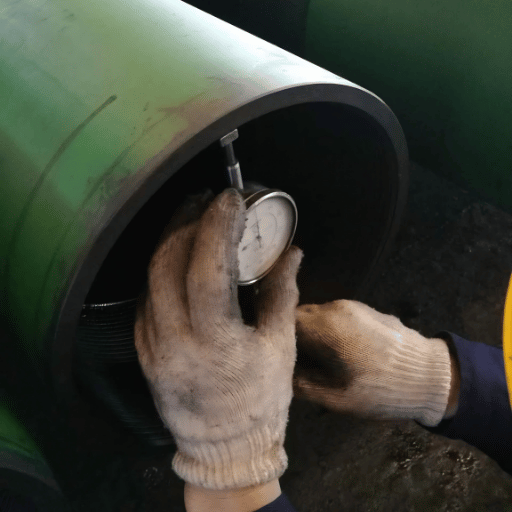
Weight/linear ft is important for engineering calculations, shipping, and crane lifts. Here are the weight of the most popular sizes, for quick reference:
| NPS | OD (in) | Weight (lb/ft) | Weight (kg/m) | Weight per 20 ft Joint (lbs) |
|---|---|---|---|---|
| 1/2″ | 0.840 | 0.85 | 1.27 | 17 |
| 1″ | 1.315 | 1.68 | 2.50 | 34 |
| 2″ | 2.375 | 3.65 | 5.44 | 73 |
| 3″ | 3.500 | 7.58 | 11.29 | 152 |
| 4″ | 4.500 | 10.79 | 16.07 | 216 |
| 6″ | 6.625 | 18.97 | 28.26 | 379 |
| 8″ | 8.625 | 28.55 | 42.55 | 571 |
| 10″ | 10.750 | 40.48 | 60.31 | 810 |
| 12″ | 12.750 | 53.52 | 79.73 | 1,070 |
A full weight reference for all schedules, nominal sizes, and standard lengths is available on our pipe weight per foot page.
Pressure Ratings and Temperature Limits
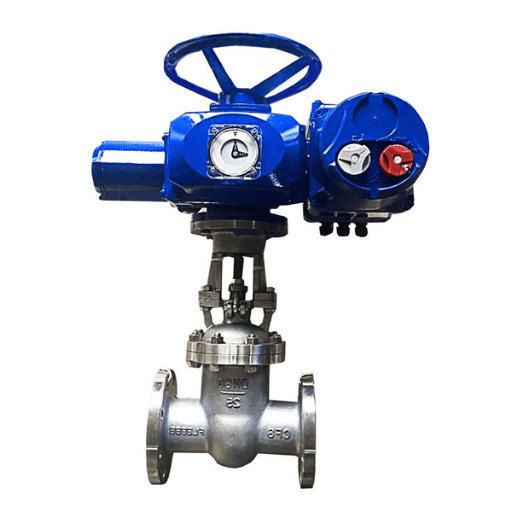
For Schedule 40 (SCH40) carbon steel pipe, pressure ratings are based on pipe size, material grade and operating temperature. Maximum permissible working pressure at ambient temperature for A106 Grade B pipe, based on calculation per ASME B31.3, without consideration of corrosion allowance and quality factor of 1.0 for hot-finished pipe are:
| NPS | OD (in) | Wall (in) | Max Pressure at Ambient (psi) |
|---|---|---|---|
| 1/2″ | 0.840 | 0.109 | 6,358 |
| 1″ | 1.315 | 0.133 | 4,956 |
| 2″ | 2.375 | 0.154 | 3,177 |
| 4″ | 4.500 | 0.237 | 2,581 |
| 6″ | 6.625 | 0.280 | 2,071 |
| 8″ | 8.625 | 0.322 | 1,829 |
| 12″ | 12.750 | 0.406 | 1,560 |
These temperature ratings are valid up to about 100F (38C). As the temperature rises, the allowable stress of a carbon steel pipe decreases, and the pressure rating need to be derated. According to ASME B31.3, the allowable stress for the A106 Grade B pipe is 20,000 psi (138 MPa) up to 400 F (204 C), but it is derated to around 17,100 psi (118 MPa) at 500 F (260 C) and 8,700 psi (60 MPa) at 600 F (316 C).
This means that a pipe with a pressure rating of 2,581 psi (17.8 MPa) when used at ambient temperature could only sustain about 1,123 psi (7.74 MPa) at 600 F (316 C).
Manufacturing tolerances will also have an effect on pressure capacity in practice. ASTM A106 allows a wall thickness tolerance of -12.5%, therefore a pipe specified as 0.237″ thick could measure as thin as 0.207″ off the mill. Take this into consideration for all pressure calculations, along with any service condition corrosion allowance.
Schedule 40 vs Schedule 80: When to Use Each
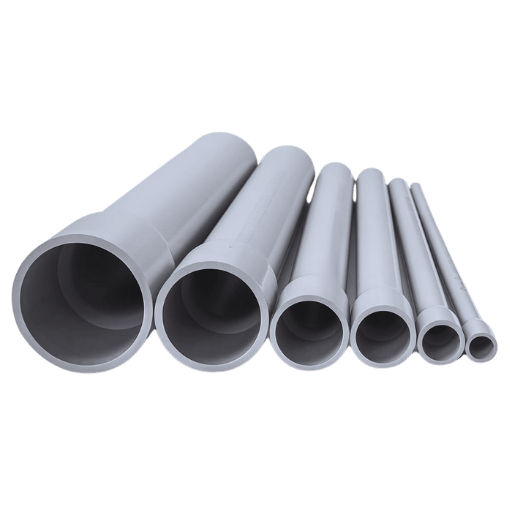
Even between Schedule 40 and Schedule 80, specification choices are one of the most common in the piping design field. The outside diameter of both schedules is the same for a specific NPS – the difference between them is wall thickness. The Schedule 80 pipe has more metal within the same OD envelope, so a larger thickness wall and a smaller bore/dia. and weigh more and can take more pressure.
| Property (4″ NPS) | Schedule 40 | Schedule 80 |
|---|---|---|
| Wall Thickness | 0.237″ | 0.337″ |
| Inside Diameter | 4.026″ | 3.826″ |
| Weight per Foot | 10.79 lb/ft | 14.98 lb/ft |
| Max Pressure at Ambient | 2,581 psi | 3,672 psi |
| Typical Cost Premium | Baseline | +30–50% |
What Is the Difference Between Schedule 40 and 80 Carbon Steel?
Wall thickness, weight, internal diameter, and pressure capacity all change between these two schedules. For a 4″ pipe, Schedule 80 increases wall thickness by 0.100″ over Schedule 40, increasing maximum working pressure capacity by an estimated 1,100psi, but decreasing bore by 0.200″ and adding about 39% more weight per foot. Cost varies from 30% to 50% more, based on size and quantity.
Decision Framework — Schedule Selection by Service Condition:
| Service Condition | Recommendation |
|---|---|
| System pressure <1,000 PSI at ambient | Schedule 40 (A53/A106 Grade B) |
| System pressure 1,000–2,500 PSI | Schedule 80 |
| Temperature >400°F (204°C) | Schedule 80+ with A106 Grade B |
| Structural / non-pressure use | Schedule 40 (A500 Grade B) |
| Fire sprinkler / water distribution | Schedule 40 (A53 Grade B, galvanized) |
| Corrosive environment | Schedule 40 + FBE or galvanized coating |
Here is a quick rule of thumb: when maximum operating pressure stays below 60% of the allowable stress per ASME B31.3 at your maximum service temperature, Schedule 40 is sufficient. This “rule of thumb” easily saves many an over-designed and over-specified project.
On several occasions we had a project manager specify Schedule 80 for a 110 psig glycol loop at 50 C. The tmin calculation indicated the Schedule 40 had 4:1 margin at those conditions. Over specification added an extra $14,000 dollars worth of material for the project, and two days’ worth of welding labor, with absolutely no benefit to the system’s integrity.
— Piping engineer, Eng-Tips Forum discussion on pipe scheduling
Fuel gas pipeline standards are defined in 49 CFR Part 192. This federal regulation defines minimum wall thickness requirements based on location class, design factor, and maximum operating pressure (MAOP). For distribution mains operating less than 60 psig, Schedule 40 2″ and 3″ pipes generally satisfy Class 1 and Class 2 locations.
ASTM Standards and Material Grades
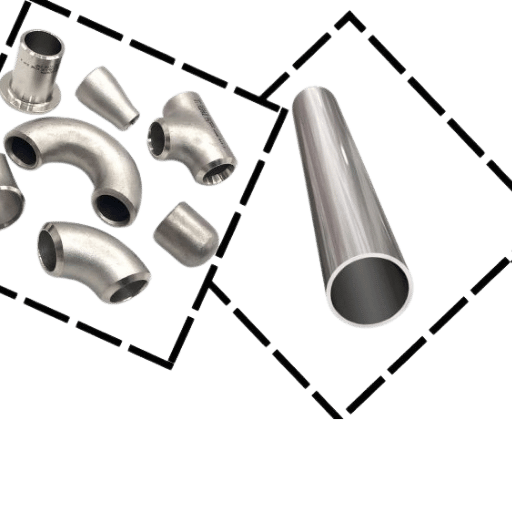
Not all Schedule 40 carbon pipe makes an acceptable pressure vessel. There are three main pipe manufacturing standards, and each has its own procedural and testing requirements. Achieving the wrong combined pressure rating and spec code puts code compliance at risk.
| Property | ASTM A53 Grade B | ASTM A106 Grade B | ASTM A500 Grade B |
|---|---|---|---|
| Manufacturing | Seamless or ERW | Seamless only | Cold-formed, welded |
| Primary Use | General fluid transport | High-temperature service | Structural applications |
| Yield Strength (min) | 35,000 psi | 35,000 psi | 42,000 psi |
| Tensile Strength (min) | 60,000 psi | 60,000 psi | 58,000 psi |
| Pressure Service | Yes | Yes (to 800°F) | No — NOT for pressure |
| Galvanized Option | Yes (Type F) | No | No |
Here’s a surprising fact – A500 Grade B pipe has a higher yield point than the A53 Grade B pipe spec (42ksi vs 35ksi), but is not approved for pressure service. The reason for this is manufacturing and testing techniques. A500 can be cold-formed and tested only for structural load capacity, (it receives no hydrostatic pressure testing or flattening tests selected to simulate process pressure service, and no mandatory testing per ASME B31.3). Steel Tube Institute presents an excellent comparison of the differences in testing.
Deciding between A53 and A106 grade is a temperature issue. If the temperature stays below approximately 400 F, either will work – many Mills dual-certify pipe to both A53 and A106, since the chemical and mechanical profiles are similar enough at lower temperatures. If the operating temperature exceeds 400 F, the more rigorous testing specification of A106 is available.
Manufacturing type is important too. ERW pipe has a longitudinal weld “seam” that sometimes inhibits its fatigue life, especially with heavy duty cycling or severe corrosion. Seamless pipe has no longitudinal weld, and it is often selected for critical process piping. Baling Steel supplies both in A106 Grade B for high temperature and high pressure.
Common Applications of Schedule 40 Carbon Steel Pipe
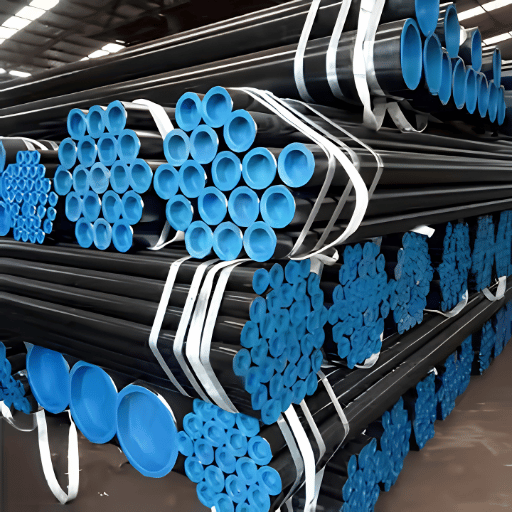
Schedule 40 carbon steel pipe occurs in just about every branch of manufacturing and construction. Here are some common applications and their most suitable ASTM grade and code.
| Application | Recommended Grade | Key Standard |
|---|---|---|
| Natural gas pipelines | A53 / A106 Grade B | 49 CFR Part 192 / API 5L |
| Steam / hot water systems | A106 Grade B | ASME B31.1 |
| Plumbing / water distribution | A53 Grade B (galvanized) | ASME B31.9 |
| Structural support / columns | A500 Grade B | AISC / IBC |
| Fire sprinkler systems | A53 Grade B (galvanized) | NFPA 13 |
| Oil / chemical transport | A106 Grade B | ASME B31.3 |
Imagine a plumbing sub proposing to build the water main in a remodeled 1960s commercial building using the following pipe:
2x Schedule 40 A53 Grade B pipe Hot-dip galvanized
Since his usual plumber partner will not be doing the break, he figures he can play the hot-dipped game, and maybe slip his margin by a dollar or two. The galvanized coating will last at least 40-60 years in a potable water loop, providing vastly superior corrosion protection to uncoated carbon steel pipe that will most probably fail within 25-30 years.
In structural applications such as fence posts, hand rails, bollards and building columns, A500 Grade B black steel pipe is the standard choice. It has the advantage of a much higher yield strength (42,000 psi vs. 24,000 psi) than that of A53, making it more appropriate for bearing loads, and is also the cheaper choice in non-pressure containment situations.
Frequently Asked Questions
Is schedule 40 pipe carbon steel?
View Answer
Typically, yes. Schedule 40 describes the thickness of the wall, not the material. The default material designation for Schedule 40 pipe is low-carbon steel (ASTM A53/A106), although other materials, such as stainless steel and PVC also meet this standard.
What are the common problems with carbon steel pipe?
View Answer
Corrosion—External/ Internal—is the primary concern. Galvanic attack takes place at connections to different metals also. Coatings and cathodic protection are solutions to most occurrences.
How much weight can schedule 40 steel pipe hold?
View Answer
That depends pretty much on span, support condition, and orientation. A ballpark: 1″ A53 Grade B pipe spans 4′ and can support a 300 lb load at midspan before deflecting permanently. Check the AISC tables for exact ratings.
What is a carbon steel pipe?
View Answer
Carbon steel pipe steel with 0.05% to 0.25% carbon, either hot-finished or electrically resistance welded. (pressure service, led) for pressure service (boilers, pipelines, process piping) following the specifications of ASTM A53 or ASTM A106, and for structural service (handrails, bollards, columns) following ASTM A500. Schedules from 5 up to 160, with Schedule 40 representing the most common stock thickness. The use of carbon steel pipes is possible from cryogenic service, (A333 Grade 6,) to 425C before graphitization becomes a problem.
Can schedule 40 carbon steel pipe be threaded?
View Answer
Yes, for NPS 1/2″ thru 4″ per ASME B1.20.1 (NPT standard). Above 4″ nominal size, welded connections replace threading because cutting threads into the larger outer diameter removes too much wall metal and drops the pressure rating below acceptable levels.
What is the difference between steel pipe and steel tube?
View Answer
The two most common industry conventions are: 1. pipe uses a Nominal Pipe Size (NPS) designation with standardized schedules for wall thickness; 2. tube uses a specification for the actual measured outside diameter with wall designations in gauge or decimal inches. Pipe is utilized in a pressure rated application with fluids, whereas tube is suitable for structural loads, complex mechanically assembled products and heat exchangers where dimensional accuracy is more important than maximum rated pressure. Practicality differences between the two include: pipe threads adhere to NPT standards, ‘tube’ refers to the resulting connection such as the compression fitting, flare fitting, the orbital weld; while a product purchased as a ‘4-inch tube’ is entirely different than a product labeled as “4-inch pipe”, in that the tube will have an OD of 4.000″ and the pipe will have an OD of 4.500″ (124.1 mm).
Need Schedule 40 Carbon Steel Pipe for Your Project?
Baling Steel offers all standard sizes of all common grades ASTMA53, A106 and A500 Grade B pipes with mill test certificates. Please call us for delivery of any quantity, from one bundle to a whole project’s order, at factory direct prices with quick delivery.
About This Analysis
Data in this specification guide was derived from the dimension standards of ASME B36.10M, pressure-temperature ratings of ASME B31.3, and ASTM material specifications. This pressure data cites the tables of the Engineering ToolBox’s ASME B31.3 data file, and all dimensions have been checked to three different sources. Please always reference the relevant piping code and professional engineer on staff for project-specific calculations.
References & Sources
- ASTM B31.3 Guía para Tuberías de Procesos – Argonne Nacional Laboratory: engstandards.lanl.gov
- Title 49, Part 192, Transportation of Natural Gas. U.S. Electronic Code of Federal Regulations. ecfr.gov
- United States Department of State – Pipeline Safety Standards Update 2024 – federalregister.gov
- Substituting A53 for A106 Aluminum and Stainless Steel Pipe – American Piping Products: amerpipe.com
- Carbon Steel Pipes: Pressure and Temp Ratings – Engineering Tool Box: engineeringtoolbox.com
- A500 Versus A53: Different From the Inside Out – Steel Tube Institute: steeltubeinstitute.org
- Compare common steel pipe: A106 vs. A53 – North American Piping Products: northernpiping.com
Related Articles
- The Ultimate Guide to ERW Pipe
- Understanding Seamless Pipe
- Pipe Schedule Chart: Complete Reference
- A106 Pipe Technical Bulletin PI-01 – CorrView International: corrview.comZegbrk_0005.
- Black Steel Pipe: Properties and Applications