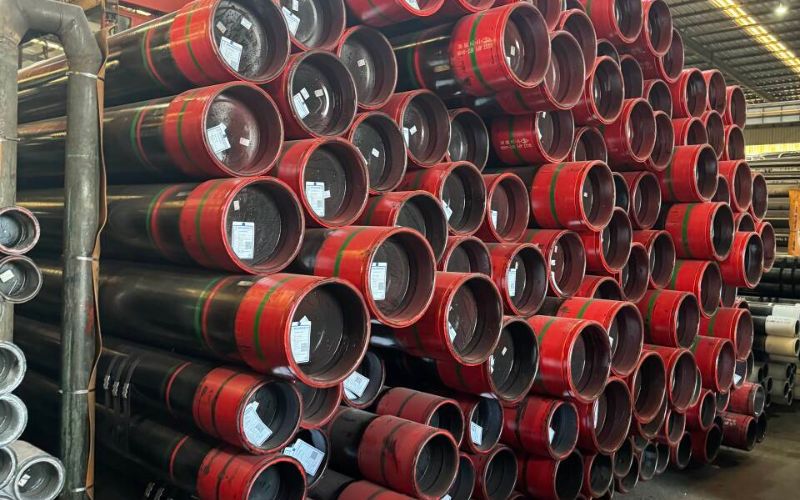
Steel tube suppliers vary enormously — from ISO-certified manufacturers with in-house third-party inspection programs to unverified traders offering below-market pricing. For B2B procurement teams, selecting the wrong supplier doesn’t just mean a disputed invoice; it can mean failed hydrostatic tests, regulatory non-compliance, and costly project delays. This guide covers the seven-point supplier verification framework, a full ASTM standards reference, MTC fraud detection, and 2025 pricing intelligence that experienced industrial buyers use to evaluate any steel tube or pipe supplier with confidence.
Steel Tube Quick Reference – 5 Types in a Nutshell
| Type | OD Range | Wall Schedule | ASTM Standard | Primary Use |
|---|---|---|---|---|
| Carbon Seamless | ⅛”–26″ | SCH 10–XXH | ASTM A106 Gr.B | High-temp / high-pressure piping |
| Carbon ERW | ⅛”–26″ | SCH 10–160 | ASTM A53 Gr.B | General / structural piping |
| Stainless Seamless | ⅛”–24″ | SCH 5S–80S | ASTM A312 TP316L | Corrosive media / chemical |
| Structural HSS | Round/SQ/RECT | 0.1875″–0.625″ wall | ASTM A500 Gr.C | Load-bearing, construction |
| Mechanical / DOM | ¼”–12.75″ | Custom wall / OD | ASTM A519 | Hydraulic, precision mechanical |
Why Most B2B Buyers Choose the Wrong Steel Tube Supplier
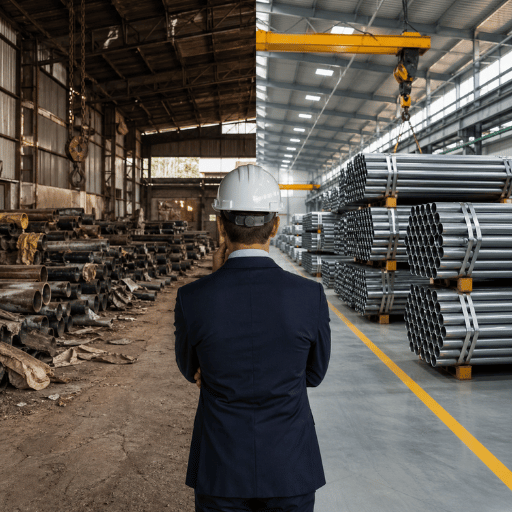
The majority of procurement errors are not made after going to the shop floor but during evaluation. Steel Available reports that 84% of the counterfeit steel found in the supply chain originate in construction and industrial use – where material substitution often goes unnoticed until failure.
The implications go far beyond civil construction projects. In a case documented by the US Department of Justice, an aerospace contractor was convicted for substitution of Chinese steel on space-flight parts using ISO9001/AS9120 certification. The actual certificate was valid; the material was not.
Three procurement mistakes make buyers vulnerable:
- Price first, grade second. Ordering “SCH 40 carbon pipe” FOB at low bid without a grade listing A106 or A53 leaves room for grade substitution – or far worse, a hijack from seamless to ERW tubing.
- Paper chasing mill test certificates. MTCs are not difficult to change. Without heat-number write back, and a 3-minute call to the production mill, it is nothing but a sheet of paper.
- ISO certification, not material assurance. ISO 9001 leaves the system with a system certificate, not a material one. An ISO corporation reaps the benefit of a genuine system certificate, while sourcing sub-standard products made using secondary mills every time that organization isn’t checked at the material level.
How it works. Learning to identify what is happening is the first step toward a purchase process that eliminates it.
Manufacturer, Distributor, or Trader — Which Steel Tube Supplier Type Is Right for You?
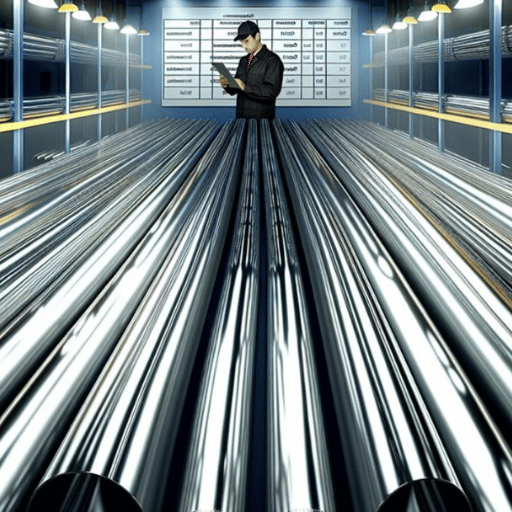
Before quoting; what kind of supplier is a buyer buying from? Different means of supplier operation come with different costs, inventories, lead times, and ability to certify.
| Supplier Type | Cost Level | Inventory Depth | Certification Capability | Best For |
|---|---|---|---|---|
| Manufacturer | Lowest (ex-mill) | High — mill inventory | Full MTCs, heat records, third-party inspection access | Large volume orders, custom specs, traceability-critical projects |
| Authorized Distributor | Moderate (10–25% premium) | High — multi-grade stocking | Mill MTCs passed through; fabrication capability | Mixed-grade orders, cut-to-length, faster local delivery |
| Trading Company | Variable (10–40% margin) | Low — relies on spot inventory | Certificates sourced from third parties — highest fraud risk | Small spot orders only; require enhanced MTC verification |
The sourcing type fundamentally changes your risk exposure. A manufacturer documents the full heat number traceability from billet to final shipment; a trader cannot, by definition, provide that chain for material it did not produce. For projects where ready to ship timelines are the primary driver, authorized distributors maintain in-stock inventory of the most common ASTM grades — carbon steel tubing and stainless steel tubing alike — with cut-to-length processing available. For critical applications requiring full traceability, source from a manufacturer or authorized distributor that can validate a direct mill relationship.
Who Are the Best Steel Tube Suppliers in the USA?
Well established distributors such as Totten Tubes, TW Metals, and Ryerson provide extensive stocks in many ASTM grades with domestically-sourced processing such as laser cutting and sawcut. For overseas purchase, particularly seamless carbon tube from Chinese suppliers, direct mill relationships that have third-party inspection (SGS, BV, TUV) allow the surest way to high quality at ex-mill prices.
5 Types of Steel Tubing — Specifications and When to Use Each
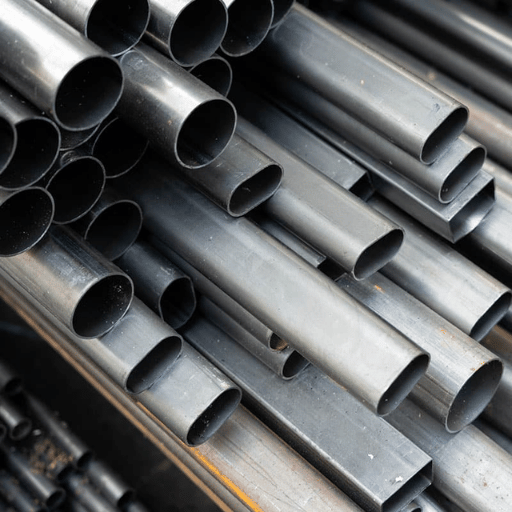
Not all steels tubes are created equal. Select the wrong one and safety, code compliance or cost may all be affected. This table is application dependent and shows the ASTM standards that are appropriate for each application.
Carbon steel tubing covers the broadest range of pressure and temperature classes and makes up the majority of industrial B2B volume. Stainless steel tubing — most often ASTM A312 TP304 or TP316L — is the standard choice for corrosive environments, heat exchanger service, pharmaceutical processing, and marine exposure. Precision mechanical and pressure-critical applications — hydraulic tubing, cylinder barrel stock, aerospace components — call for ASTM A519, produced by cold drawn or hot finished routes with tighter OD and wall tolerances than standard pipe grades. Matching the right production method to your specification requirements at the PO stage eliminates costly material substitutions during fabrication.
If-Then Selection Matrix
| IF Application Is… | THEN Specify… | ASTM Standard |
|---|---|---|
| High-temperature service (>300°F) or steam | Carbon Steel Seamless | ASTM A106 Grade B |
| High-pressure hydraulic (>2,500 psi) | Seamless only (no ERW) | ASTM A106 Grade B |
| Corrosive media, saltwater, chemical process | Stainless Steel Seamless | ASTM A312 TP316L |
| Precision hydraulic or mechanical application | DOM or Cold-Drawn Seamless | ASTM A519 Grade 4130 |
| Structural load-bearing (columns, frames) | Structural HSS (square/rect) | ASTM A500 Grade C |
| General low/medium-pressure piping, HVAC | Carbon Steel ERW | ASTM A53 Grade B |
When Should I Use Seamless Tubing Instead of Welded?
The main difference is the way it is made: seamless pipe is extruded without a weld seam. It is the only product available for high-temperature or high-pressure situations. According to ASTM A106 seamless pipe, Grade B manufactured has a minimum tensile strength of 60ksi and minimum yield strength of 35ksi, suitable for 750F service. ERW pipe sawn from ASTM A53 has equivalent minimum yield strength, but the electric resistance weld zone must be annealed to a minimum of 1000F (540C) to destroy any untempered martensite, and is not recommended for continuous high-temperature use, see ERW pipe specifications and uses . For alloy grades, reference alloy pipe specs and applications .
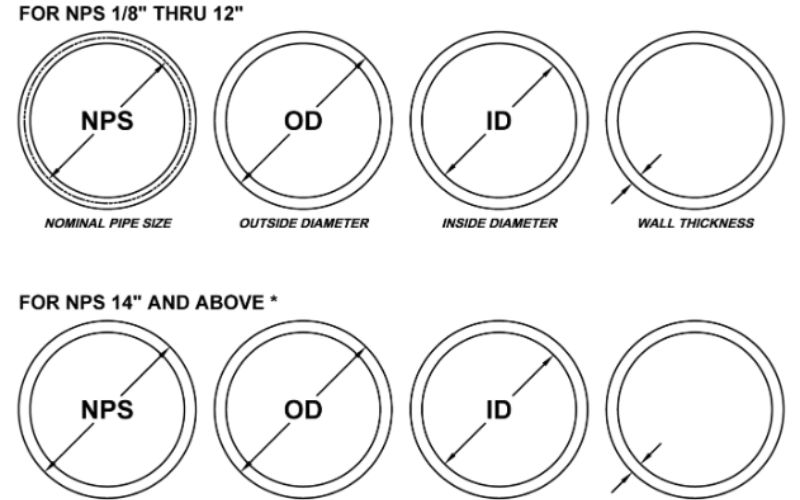
Please see the included diagram comparing detailed specs for seamless steel pipe and ERW pipe. If your application uses alloy grades (4130, 4140, Alloy 625), refer to our alloy pipe grades and applications PDF.
The 7-Point Steel Tube Supplier Verification Checklist
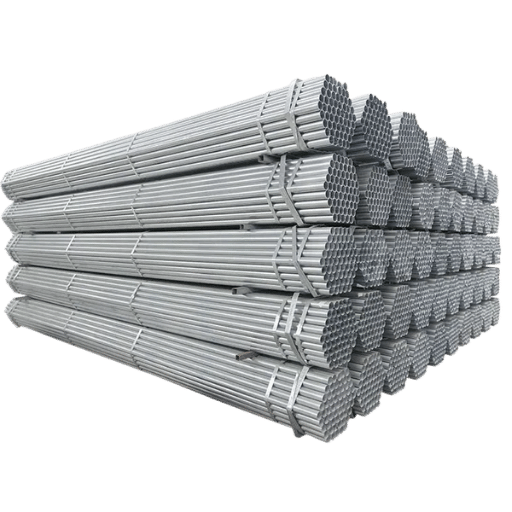
Before you order any length of seamless or ERW tube, whether for a quote or because they say they have it – test each potential supplier with these seven questions. Each one can be done in less than 5 minutes and addresses the most common reasons why steel tube orders are either lost, delayed or failed.
- ISO 9001:2015 – get the certification scope. Confirm the intended scope of certification by requesting the current certificate. Take the scope at face value, repeat it to the certification body and cross-check with claimed manufacturing expertise. A certification scope referencing “service provision” does not certify a manufacturing facility. Check the accrediting body (UKAS, DAkkS or ANAB).
- Ask for an order-specific Mill Test Certificate (not a generic sample) from the provider. Only a true mill can provide a heat-specific MTC that lists your particular heat number. If the supplier only offers you generic voided MTC forms, you’re dealing with paperwork, not proof. See the MTC section below for instructions.
- Specify the version date for ASTM you require in the purchase order. Be precise and include the year and revision date for ASTM A53/A53M-22 (effective as of January 1, 2026). Providing vague references like “ASTM A53” allows the spectral substitution of expired revisions.
- Examine inventory capability and production resources. Where possible, request confirmation of rolling mills, quality records for furnaces, machine tooling, or inspection equipment. When a mill claims the capacity for high-production, in-house processing, factor in machinery through-put before making heavy buys.
- Get the final lead times in writing. Typical international seamless pipe production takes six months from order to ready-to-ship (domestic dealers can generally fill orders in 12-14 weeks for common grades). Any claim of instant stock turnarounds requires warehouse documentation before a purchase.
Tube Cutting Tolerances and Specification Requirements
- Confirm your ability to receive cut-to-length or tube cut to precision tolerances before you buy. If your project requires tube cutting to a tight OD tolerance, confirm the annealing or welding equipment the shop will use first, and the tolerances they can produce in advance. All too often, dimensional non-conformance with the bill-of-materials design specifications occurs during final project assembly, not at the goods-inpection point.
- Arrange third-party inspection accreditation before ever committing to the sale. Every serious and traceable manufacturer or recognized dealer will allow the most reliable third-party builder inspector (SGS, BV, Intertek, etc.) to do a pre-shipment onsite visit and quality check on your order at the buyer’s expense. If a supplier refuses, discard the supplier like the hot potato they are.
Pro Tip
Use this checklist before negotiations, not afterward. Suppliers who can conform to all 7 points are okay to negotiate with. Suppliers who are failing any one or several of these are none cost reduction promising targets, whatever FOB quotations they provide.
See our professional third-party inspection and independent third-party testing reports for inspection-ready suppliers.
Download the MTC Verification Checklist
Printable PDF form for scheduling on-site supplier audits and incoming material inspections.
How to Read a Mill Test Certificate — And Spot a Fake
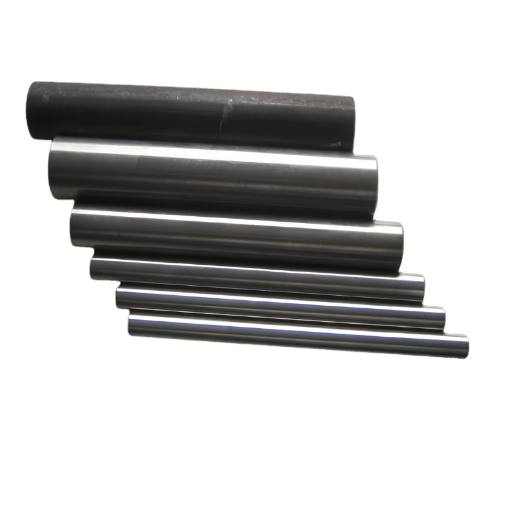
A Mill Test Certificate (MTC), known as a Material Test Report (MTR), is the point of departure for efficiently connecting an actual piece of steel to its approved alloy chemistry, mechanical properties, and dimensional tolerances. Forgeries of MTCs are well know fraud entrants into the steel process flow. Here is how to verify it in less than ten minutes.
How Do I Verify a Mill Test Certificate Is Genuine?
Step 1 – Find and write down the heat number. The authentic MTC will have a heat number associated with it (this is also known as a cast number or charge number). Note the number as it will be required for every other verification step.
2. Confirm chemical analysis against the stated grade. Compare the actual percentage of C, Mn, S, P, Si with the ASTM maximum/ minimum values for the stated grade.
ASTM A106 Grade B 0.30%C, 0.29-1.06%Mn, 0.10%Si (any published value outside published scope is not the same grade or altered certificate)
Step 3- Confirm mechanical properties meet specified minimums (ASTM A106 grade B, yields minimum 60000 psi or 415 MPa tensile strength and 35000 psi or 240 MPa yield strength. Much higher values (perfectly reasonable values from suspect certificates) are likely faked.
Step 4—Audit test items against batch sizes. Actual production runs consist of many tests for large quantities. A counterfeit pattern exists in the practice of applying a single test report to an extraordinary shipment in the form of a one-time test for the entire shipment.
This isn’t always correct since several tests may be insufficient, and samples from each set may be combined into a single test.
Step 5 – Contact the originating mill using the phone number from the MTC and give them the heat number. – Have them confirm (a) that the heat number is there, (b) the chemical composition is what is on the certificate and (c) the order’s customer was an actual customer. There were documented cases of at least 2 frauds reported where the MTC certificates were for a customer name that didn’t exist.
Step 6 – Treat PMI testing as the final proof. PMI testing (via X-ray fluorescence or optical emission spectroscopy) provides a physical proof of the composition of the received tube, far more conclusive than a certificate, as highlighted by steel fraud specialists who state that—absent original production records, it is nigh on impossible for a counterfeitter to accurately synthesise an alloy composition matching certificate.”
Engineering Note-6 fields to check on every MTC
- Heat number (unique production batch ID)
- Chemical composition C, Mn, Si, P, S, Cr, Ni, Mo (include the limits for astm grades).
- Mechanical properties (tensile strength, yield strength, elongation %)
- Dimensional data (OD, nominal wall thickness, length tolerances)
- Methods of testing used (hydrostatic, NDT, OES -id as testing, for results)
- Authorized mill signatory (name + title + issuing date)
Counterfeiters of certificates not only destroy confidence in the steel supply chain – they sometimes directly cause failures and errors in a project. The most conclusive verification is PMI testing, for it is very difficult to predict the exact composition of a product without the original heat data.
For purchasers in need of documented material traceability on file, our material test certification and independent third-party testing reports also offer heat-level traceability from mill to shipment. Complete seamless pipe overview with MTC documentation available upon request.
7 Red Flags That Signal an Unreliable Steel Tube Supplier
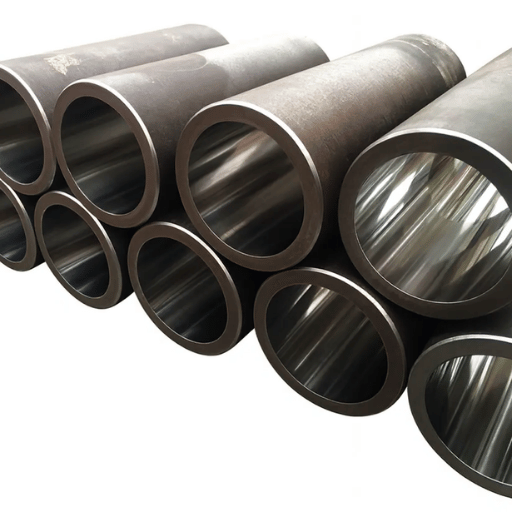
All these are red flags that there are actual documented fraud incidents occuring in the steel supply chain; “a single red flag should trigger immediate investigation while two or more is grounds for disqualification:”
- No heat number on the MTC. All valid mill certificates should have a heat number available that can be traced to a specific batch of production. An MTC which does not, is a mock up or fabrication – bin it.
- One test applied to an absurdly high batch quantity. Actual steel production batches have many independent tests on each large batch. Cheaters often take old test results for a small batch and apply them to a new large order, this observation is common in supply chain fraud cases.
- The mill indicated of origin does not make that product type. Double check which mill is indicated on the certificate then compare to the tube type & size range they indicate they make. That given certificate of 24″ seamless pipe from mill indicates 2″-8″ mechanical tubing size range is unbelievable.
- A customer shown on the certificate that appears to be invalid. Certificates should have been issued for a specific customer order A customer name that can’t be confirmed as a real company – or has a signifi cant inconsistent link to the indicated product geography.
- Refused permission to go in when it came time for pre-shipment inspection. Contract, high quality manufacturers always agree to independent pre-shipment inspection. Anything else is a red flag that the paperwork being submitted does not reconcile to the physical product.
- Beat the HRC market floor cost. In beginning of 2025, prices for hot-rolled coil ranged at $719-$800/ton from most of key US producers. No suppliers would provide which marks the cost at below current HRC market prices for the same grade.
- Chemical composition values that are oddly “bit perfect”. Actual mill heats will possess natural variation of chemical composition within a “band” established by ASTM tolerances. A certificate with every element in “dead mid” of the chartered tolerances ex: Ti 0.2244 (not 0.2240) is an aberration.PMI test order prior to Accept shipment.
⚠ Documented Case — Aerospace Steel Fraud
A U.S. Department of Justice prosecution convicted a NASA contractor for improper substitution of Chinese Steel for aerospace and space-use applications, and for falsification of records submitted during inspection. The contractor had both current ISO9001 and AS9120 certification status during the time of the fraud.
This case highlights how supplier certification status does not provide for omission of material verification on critical orders.
Ready to Verify Your Current Supplier?
Balingsteel supplies full MTC documentation and third party inspection on all seamless and ERW steel tube orders together with heat level traceability.
ASTM Standards Quick Reference for Steel Tube Buyers
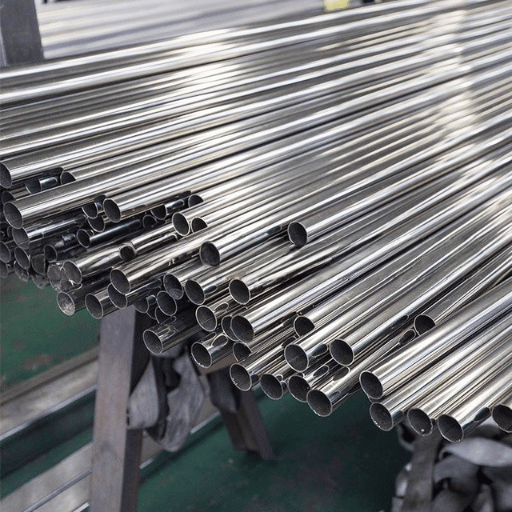
The correct ASTM standard on a purchase order is not just a detail. It establishes the grade of the material, the production route, the mechanical characteristics and testing requirements of which the seller is contractually responsible for providing. The table below summarizes the five standards most frequently cited in B2B steel tube purchasing.
| Standard | Production Method | Application | Temp Range | Key Requirement |
|---|---|---|---|---|
| ASTM A53 Gr.B | Seamless or ERW | General piping, structural, low/medium pressure | Ambient–general | ERW weld must be heat-treated ≥ 1,000°F (540°C) |
| ASTM A106 Gr.B | Seamless only | High-temp pressure piping, power generation, refinery | Up to 750°F | Min tensile 60,000 psi; Min yield 35,000 psi; Si ≥ 0.10% |
| ASTM A312 TP316L | Seamless or welded | Corrosive service, chemical, marine, pharmaceutical | Cryogenic–1,650°F | 316L: Max C 0.03% for weld corrosion resistance |
| ASTM A500 Gr.C | Cold-formed ERW | Structural applications — columns, frames, bracing | Ambient structural | Min yield 50,000 psi; rectangular, square, round HSS |
| API 5L Gr.B | Seamless or ERW | Oil & gas transmission pipelines | Per application | Stricter PSL2 option available; DFARS compliant options |
Alloy Grade Certification Requirements
Each standard imposes distinct alloy chemistry limits that the mill’s certification must document in full. Carbon grades (A53 Gr.B, A106 Gr.B) require the MTC to record carbon, manganese, phosphorus, sulfur, and silicon percentages within grade ceilings. Stainless steel tube grades under A312 require the certificate to confirm chromium, nickel, and molybdenum content against TP304 or TP316L alloy chemistry limits. Precision grades under A519 — used for hydraulic tubing, cylinder barrel, and high-pressure mechanical applications — require dimensional certification including OD tolerance, wall thickness, and straightness per the cold drawn or hot finished production route. When ordering in-stock material from an authorized distributor, confirm that the originating mill MTC accompanies every shipment and that the heat number is traceable to the certificate on file before material is ready to ship.
Standards Update — ASTM A53/A53M-22 Compliance Deadline
The United States Pipeline and Hazardous Materials Safety Administration (PHMSA) adopted ASTM A53/A53M-22 into 49 CFR 192.113, 195.106(e) through a Final Rule, published in the Federal Register, 21 August 2025 (Docket No. PHMSA-2020-0013). The rule took effect 1 January 2026.
Purchase documents for products used in pipeline regulated applications referencing ASTM A53 must reference the 2022 revision (A53/A53M-22) as of that date. Failure to reference a specific version may cause uncertainty in regulatory inspection.
For specification-level detail, see ASTM A106 Grade B pipe specs, API 5L Grade B line pipe, pipe size reference chart, and our standard reference guide.
What Drives Steel Tube Pricing — And How to Negotiate Effectively
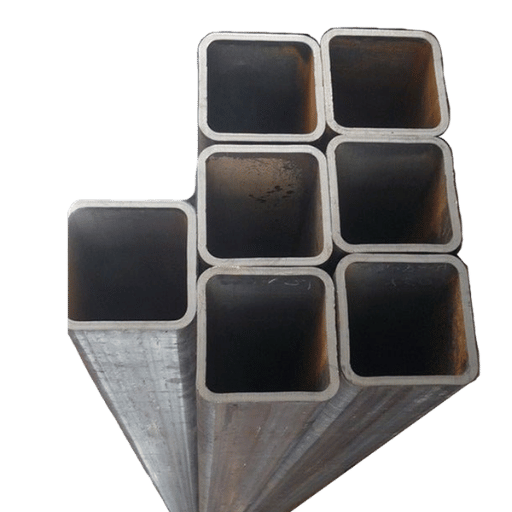
Steel tube prices are not as simple as “what the market will bear”. They are sensitive to raw material indicators, trade policy, mill capacity and order-level input factors. Understanding these five price drivers helps procurement teams time purchases well and structure RFQs for maximum cost efficiency.
1. Hot-Rolled Coil (HRC) Index.
Cost input The HRC price is the key input cost for ERW and cold-formed structural tubing. As of February 2025, HRC was averaging from $719-$800/short ton at the principal U. S. mills (Cleveland-Cliffs, Nucor and U.
S. Steel) with structural tubing mills then set to allow a surcharge of $60/short ton. The monthly Fastmarkets AMM or SteelOrbis pricing indices provides a lead on mill list price trends of 4 to 6 weeks.
2. Import Tariff Environment.
U.S. Section 232 tariff on steel was reinstated to 25% effective March 2025 on most countries and was further increased to 50% effective June 2025, BCG analysis found (no country-based exemptions remain). The tariff is applicable to most classifications of pipe and tube, and is added directly to Landed Cost of any material of China origin or import origin.
3. Schedule Premium.
Steel price/feet can be much more significant if wall thickness is increased. Generally, SCH 80 can be 15-25% more expensive than the same nominal pipe size as SCH 40, because of the additional tonnage of steel needed per foot. Telling minimum schedule you need can save money.
4. Lead Time and MOQ as Pricing Tools.
Sourcing seamless tube from Chinese mills runs 5–6 months from order to shipment; domestic distributors can deliver cut-to-length inventory in 2–4 weeks at a higher per-unit cost. Committing to longer lead times or larger MOQs directly improves ex-mill pricing power. Fixed-rate contracts signed during off-peak mill capacity periods — Q4 is typically when mill utilization is lowest — lock in favorable rates before Q2 project-season demand peaks.
5. Total Landed Cost vs. FOB Price.
A $50/ton disparity in FOB price can be overcome by freight charges, delays at port, tariff reclassification, or fees for third-party inspection. Compare suppliers on the price they actually pay – landed cost, including freight, insurance, duties, banking fees, inspection, not just the unit cost.
Negotiation Priorities — Quick Summary
- Volume commitment also lowers ex-mill price. Confirm by writing contractual, fixed rate established;
- Flexible lead time strongest single lever for seamless carbon and alloy tube
- Multi-grade bundling single shipment across A53/A106/A312 reduces per-unit freight
- Avoid spot buying during Q2 infrastructure project season – highest mill utilization
- Request duty-paid (DDP) quotations to compare total landed cost across suppliers
Steel Tube Market Outlook 2025–2026: What Every Buyer Should Know
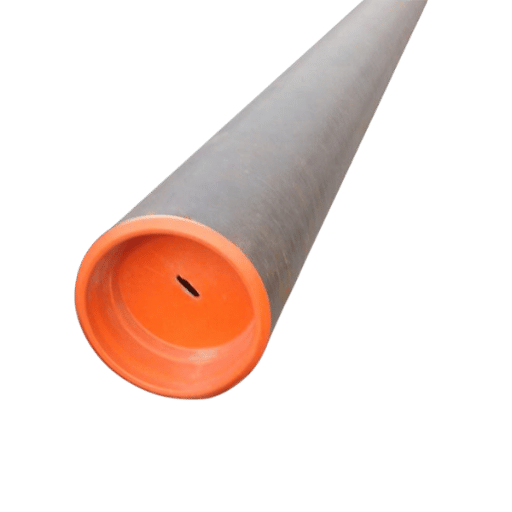
The global steel pipes and tubes market comprises one of the most stable demand industrial material segments.
Market estimates value the world steel pipes sector at circa $168 billion by 2025, growing to over $227 billion by 2033 – a CAGR of 4.9%, based on data compiled by ResearchNester and openpr.com.
Three structural trends are shaping procurement decisions for 2025–2026:
Infrastructure investment cycle. Power generation builds (both conventional and renewable), water-system upgrades, and transportation infrastructure projects across the North America and Asia-Pacific regions are underway that are sustaining continuous consumption of both seamless pressure pipe (A106) and structural tubing (A500). Renewable energy, combined heat and power sector applications are among the fastest-growing end-markets segments.
Tariff-motivated supply chain realignment. With U.S. import tariffs currently at 50% on steel products from most sources, sourcing teams accounting for critical pressure pipe (A106 Grade B, API 5L PSL2) need to calculate total landed costs against domestic sources. In practice, technical specification parameters – together with lead-time requirements – expose priority Chinese sources with validated quality processes for budget-conscious volumetric projects, assuming full MTC and third-party verification.
Standards specification regulation. PHMSA’s part 1937 adoption of ASTM A53/A53M-22 indicates the universe of voluntary consensus standards incorporated by federal reference regulation in U.S. safety legislation is expanding. Agile purchasing departments should regularly audit their relevant standards against the latest ASTM and API publications to minimize inadvertent referencing of superseded revisions in long-term contract agreements.
Frequently Asked Questions
What is the difference between a steel tube and a steel pipe?
Semantics are synonyms in many contexts, both refer to a hollow cylinder. “Pipe” is dimensioned by nominal pipe size (NPS) and schedule numbers; “tube” or “tubing” is dimensioned by actual OD and wall thickness, with tighter tolerances for precision applications. Always specify the ASTM standard — not just the category label.
What certifications should I require from any steel tube supplier?
Procurement minimum standard for B2B steel tube: ISO 9001:2015 (ISO 9000 quality management system, confirmation of scope covers manufacturing), heat-specific Mill Test Certifications per ASTM/EN 10204 Type 3.1, and third party inspection access (e.g. SGS, Bureau Veritas, Intertek). For pipeline: confirm supplier meeting ASTM current edition (eg: A53/A53M-22 since January 1, 2026). For EEDS in oil / gas: API Q1 and dual certification (ASTM + API 5L). For Aerospace or defense: DFARS / FAR material traceability requirements and AS9120.
How do I verify a Mill Test Certificate (MTC) is genuine?
Follow six steps: 1) Find the heat number- the unique heat designation key tying the certificate to the production. Jot it down first, then proceed to 2. 2) Check the reported chemical composition percentages against published ASTM limits: ASTM A106 Grade B follows the same standards as A53 Grade B pipe except 0.10% silicon (ASTM A106 Grade B, silicon 0.10%). Out-of-limits numbers or less obvious round 0.15% or 0.20% numbers is a good reason to make an independent call to the mill. 3) Make sure mechanical properties (tensile 60,000 psi; yield 35,000 psi for A106 Grade B, etc.) match the published minimums. 4) Make sure test frequency is correct for batch size. A single test record claiming tens of thousands of linear feet is the classic fraudulent scam- duplicitous actors are copy-pasting older batch records from smaller batches to inflate reputation to lure more orders. 5) Call the originating mill directly using the heat number. Have them repeat the compositional data and the customer on the test certificate. 6) For mission-critical material, require tube delivered to the jobsite to be PMI tested (XRF, OES). This is the only form of verification that cannot be compromised using manipulated paperwork. See our entire MTC verification guide.
What is the typical lead time when ordering steel tubes from overseas?
Lead times depend on product type and origin: domestic distributor in-stock, cut to length: 2-4 weeks; domestic mill seamless production, 10-14 weeks; international seamless production 5-6 months for special order diameters and wall thickness. ERW, structural and for seamless tubes that will be heat treated, faster. Factor in inspection (3-4 days), ship time by boat or rail (3-6 weeks), customes (1-3 days) and domestic freight (1-4 days) to determine project delivery schedule. Any firm quoting in-stock seamed, international seamless tube on a special order dimension should be able to produce a shipping dock inventory list.
When should I choose seamless over ERW welded steel tubing?
Use seamless when the application involves sustained elevated temperature (above 300°F), high pressure above approximately 2,500 psi, bending or forming operations that stress the weld zone, or any service where a weld seam creates unacceptable failure risk. ASTM A106 Grade B (seamless only) is the standard for high-temperature pressure piping. ASTM A53 Grade B ERW is fully acceptable for general piping, HVAC, fire sprinkler, structural, and low/medium pressure service where the weld zone heat treatment requirement is met. See our ERW vs seamless comparison for detailed application mapping.
Which ASTM standard applies to carbon steel tube for high-temperature service?
ASTM A106 Grade B is the go-to seamless standard for high temperature service pipe up to 750F. Derivations (including ASME SA-106) have the same composition requirements and the same temperature and pressure ratings. The silicon minimum content (Si 0.10%) allows for increased heat stability beyond that of A53. For superheaters and boiler applications, the referencing standard is ASME SA-106 (which is identical to ASTM A106). See ASTM A106 Grade B pipe specs for details.
How does tube schedule (SCH 40 vs SCH 80) affect pressure rating and cost?
Schedule Number- establishes wall thickness in relation to OD. Higher schedule- a thicker wall, higher pressure, higher cost of pipe/ foot. ExampleFor a 4″ NPS pipe,1070 Carbon steel SCH 40 has a wall thickness of 0.237″ while SCH 80 has a wall thickness of 0.337″- roughly 42% more steel per linear foot.
Likewise pressure rating is roughly proportional to wall thickness. As sch number increases, cost premium of pipe rises by 15-25% for a given wall thickness. What to order- Always order minimum schedule wall thickness that provides your design pressure class- over specifying sch number is a not uncommon and unneeded cost driving factor.
For a schedule to wall thickness reference chart, see our pipe size reference chart.
Related Resources
About This Analysis
The guide was developed by Balingsteel technical team from the published ASTM standard samples, PHMSA regulatory filings, Steel industry market research, documented fraud case studies and analysis. Data points are obtained from publication in the Federal Register, T1, the Steel industry fraud case studies, and the 2025 market price indices. All ASTM reference standards listed are as current as of the date of publication (April 2026).
For application specific procurement recommendations, contact the Balingsteel engineering team.
Need Steel Tube Specifications for Your Project?
Send us an OD, wall thickness, ASTM grade & qty via WhatsApp for a quick documented quotation with MTC confirmation.