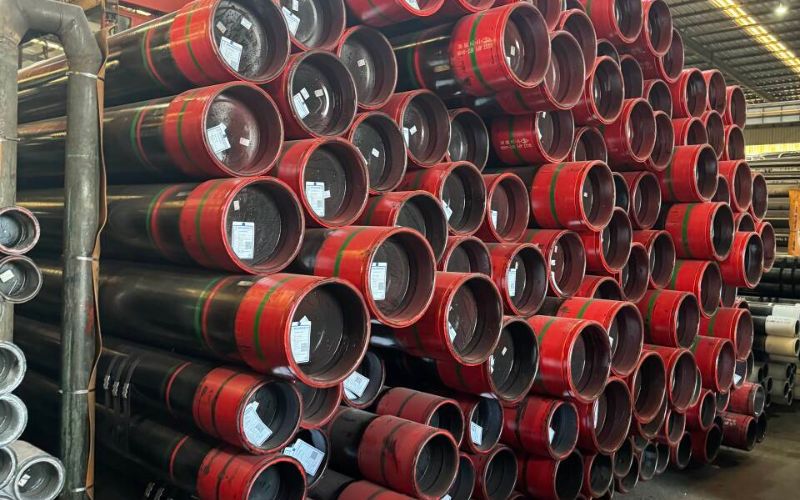
A 316 stainless steel pipe is the grade buyers reach for when 304 stops being enough, when chlorides, acids, or salt air would pit a lesser alloy. That difference is roughly 2–3% molybdenum, and that single addition reshapes where the pipe can safely go. This guide covers what 316 actually is, how it compares to 316L and 304, the ASTM A312 specifications behind a real mill certificate, sizes and schedules, seamless versus welded construction, honest corrosion limits, price drivers, and how to verify you received the grade you paid for.
Most pages ranking for this term are buy-now product listings with spec tables and no context. We built this as a decision guide instead: every number here’s cross-checked against a published standard or a Tier-1 source, and we flag the places where “marine grade” marketing and field reality part ways.
Quick Specs: 316 Stainless Steel Pipe
| Grade designation | 316 (UNS S31600) / 316L (UNS S31603); EN 1.4401 / 1.4404; JIS SUS316 |
| Primary standard | ASTM A312 / ASME SA312 (seamless & welded austenitic pipe) |
| Key chemistry | 16–18% Cr, 10–14% Ni, 2–3% Mo (the molybdenum is the point) |
| Tensile / yield (TP316) | ≥515 MPa (75 ksi) / ≥205 MPa (30 ksi) |
| Size & schedule range | NPS 1/8″–24″ (seamless to 16″); Sch 5S/10S/40S/80S/160 per ASME B36.19M |
| Chloride SCC caution | Rare below ~60°C (150°F) immersed; not seawater-immersion rated |
| PREN (pitting index) | ~24–25 (vs ~18–19 for 304) |
What Is 316 Stainless Steel Pipe?
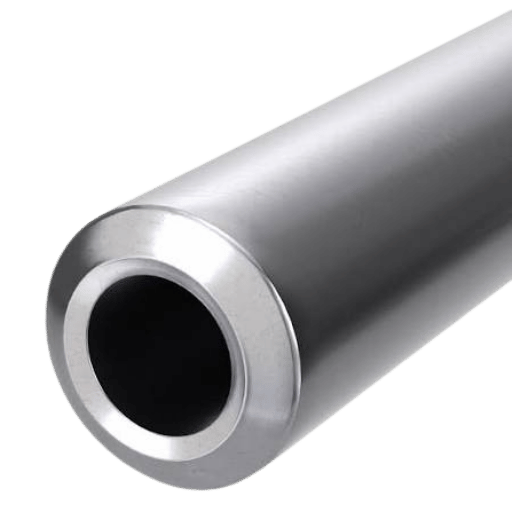
A 316 stainless steel pipe is a hollow section made from Type 316 austenitic stainless steel, an iron alloy containing 16–18% chromium, 10–14% nickel, and, the defining feature — 2–3% molybdenum. Chromium forms the passive oxide film that makes any stainless “stainless.” Nickel stabilizes the austenitic (face-centered cubic) structure, giving the pipe its toughness, formability, and near-non-magnetic behavior. Molybdenum is what separates 316 from cheaper grades: it strengthens the passive film specifically against chloride attack.
Why does that matter? Chloride ions are the single most common cause of stainless pitting and crevice corrosion, they punch through the chromium oxide layer at weak spots. Molybdenum repairs and reinforces those weak spots, which is why the International Molybdenum Association reports it’s roughly 3.3 times more effective than chromium at improving pitting resistance. The payoff is practical: a 316 pipe survives in coastal air, swimming-pool plant rooms, food and pharmaceutical lines, and chemical service where a 304 pipe would freckle with rust within a season.
Is a 316 Pipe the Same as 316 Tubing?
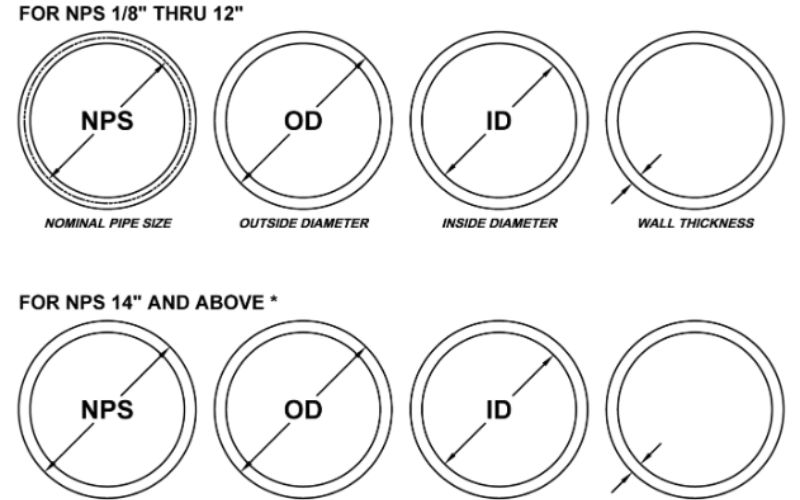
No, and ordering the wrong one is a common purchasing mistake. Pipe is sized by Nominal Pipe Size (NPS) and a schedule that set the wall thickness; it’s specified for pressure-carrying fluid systems under codes like ASME B31.3. Tubing is sized by its actual outside diameter and a stated wall, and it’s used for mechanical, instrumentation, and heat-exchanger duty where dimensional precision matters more than a pressure class. A 1″ NPS pipe has a 1.315″ OD; a 1″ tube is exactly 1.000″ OD. If your drawing calls for one, the other won’t thread, fit, or rate the same. For mechanical and instrument runs, see our guide to the seamless steel tube range instead.
316 vs 316L vs 304: Which Grade Do You Actually Need?
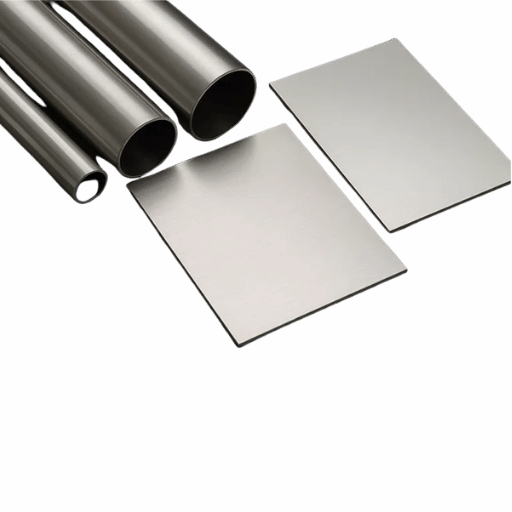
This is the decision most buyers get wrong in both directions, paying for 316 where 304 is plenty, or saving on 304 where chlorides will eat it. These three grades sit on a clear ladder. 304 is the baseline 18/8 austenitic. 316 adds molybdenum for chloride resistance. 316L is 316 with the carbon capped low to protect welds. Here’s the side-by-side, with numbers rather than vague “good/better/best” labels.
| Property | 304 / 304L | 316 | 316L |
|---|---|---|---|
| Molybdenum | ~0% | 2.0–3.0% | 2.0–3.0% |
| Max carbon | 0.08% (0.03% for 304L) | 0.08% | 0.03% |
| PREN (pitting index) | ~18–19 | ~24–25 | ~24–25 |
| Min yield (0.2%) | 205 MPa (30 ksi) | 205 MPa (30 ksi) | 170 MPa (25 ksi) |
| Chloride resistance | Baseline | High | High |
| Relative cost | Lowest | ~20–40% above 304 | Similar to 316 |
Notice the surprise in that table: the “L” isn’t free. Dropping carbon to 0.03% lowers the minimum yield strength from 205 MPa to 170 MPa, about 17% less. That’s a real penalty in thin-wall, high-pressure design, and it contradicts the common shorthand that “316L is just 316 with a tweak.” What you buy with that 17% is weld-zone immunity: low carbon prevents chromium carbides from precipitating at grain boundaries during welding (sensitization), which would otherwise leave the heat-affected zone vulnerable to corrosion.
The Chloride Threshold Rule (grade-selection shortcut)
- No meaningful chlorides, dry or indoor service → 304/304L. Molybdenum is wasted spend.
- Chlorides present, coastal air, pools, food/brewing, mild chemicals → 316.
- Welded fabrication with any corrosion duty → 316L (skip sensitization).
- Warm seawater immersion, brine, or service above ~60°C with chlorides → step up to duplex (2205) or a 6-Mo super-austenitic. 316 is out of its depth here (see corrosion section).
“The grade question we field most often is whether 316L is ‘weaker’ than 316. It is, on paper, about 25 ksi minimum yield versus 30. But for any welded assembly that sees chlorides, that trade buys you a corrosion-proof weld zone, and that is almost always the better deal. We dual-certify most stock as 316/316L so buyers get both the strength floor and the low carbon.”
Is Stainless Steel 304 or 316 Better?
Neither is universally “better” — they answer different questions. 304 is better when the environment is benign and budget matters, which covers most architectural, indoor, and dry-process work. 316 is better whenever chlorides enter the picture, because its molybdenum keeps the passive film intact where 304 would pit. One useful field test: if the part will ever see salt, seawater spray, pool chemistry, de-icing salt, or food brines, specify 316. If it lives indoors carrying clean water or dry product, 304 will serve for decades at lower cost. Paying for 316 indoors is the most common over-specification we see; using 304 outdoors near the coast is the most common under-specification.
ASTM A312 / ASME SA312 TP316 Specifications
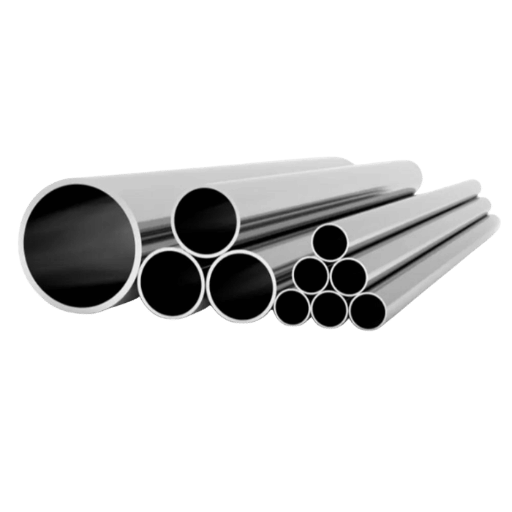
ASTM A312 (and its ASME twin, SA312) is the specification that governs seamless and welded austenitic stainless steel pipe for high-temperature and general corrosive service. When a mill certificate says “TP316,” these are the chemistry and mechanical minimums it must meet. Knowing them lets you read a certificate instead of trusting a stamp.
Chemical Composition (Type 316)
| Element | 316 (wt %) | 316L (wt %) |
|---|---|---|
| Carbon (C) | 0.08 max | 0.03 max |
| Chromium (Cr) | 16.0–18.0 | 16.0–18.0 |
| Nickel (Ni) | 10.0–14.0 | 10.0–14.0 |
| Molybdenum (Mo) | 2.0–3.0 | 2.0–3.0 |
| Manganese (Mn) | 2.0 max | 2.0 max |
| Silicon (Si) | 0.75 max | 0.75 max |
| Phosphorus / Sulfur | 0.045 / 0.030 max | 0.045 / 0.030 max |
| Nitrogen (N) | 0.10 max | 0.10 max |
Mechanical Properties
| Property (minimum) | TP316 | TP316L |
|---|---|---|
| Tensile strength | 515 MPa (75 ksi) | 485 MPa (70 ksi) |
| Yield strength (0.2%) | 205 MPa (30 ksi) | 170 MPa (25 ksi) |
| Elongation | 35% min | 35% min |
| Hardness | ≤95 HRB / ≤217 HB | ≤95 HRB / ≤217 HB |
These figures are cross-validated across multiple published reproductions of the ASTM A312 tensile requirements, so they are safe to design against as code minimums. One housekeeping note: standards carry a year suffix (for example A312/A312M), and revisions happen, always confirm the edition referenced on your purchase order matches the certificate. If your interest is the strength side specifically, our deeper write-up on 316 stainless steel yield strength breaks down 316 versus 316L behavior at temperature.
316 Pipe Sizes, Schedules & Weights
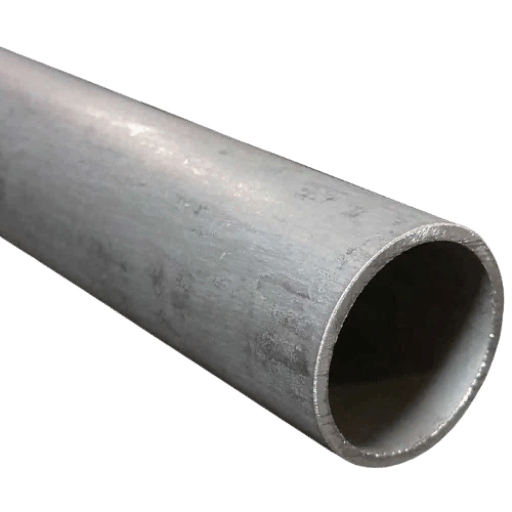
Stainless pipe uses the same NPS framework as carbon steel, but the wall thicknesses live in their own “S” schedule series, 5S, 10S, 40S, 80S, defined by ASME B36.19M. For the common sizes, 40S matches Schedule 40 / STD and 80S matches Schedule 80 / XS, but the thinner 5S and 10S walls exist only in stainless because the alloy’s corrosion resistance lets designers run thinner. Outside diameter and Schedule 40S weight for the most-ordered sizes appear below.
| NPS | OD (in / mm) | Sch 40S wall (mm) | Weight 40S (lb/ft) |
|---|---|---|---|
| 1/2″ | 0.840 / 21.3 | 2.77 | 0.85 |
| 3/4″ | 1.050 / 26.7 | 2.87 | 1.13 |
| 1″ | 1.315 / 33.4 | 3.38 | 1.68 |
| 1-1/2″ | 1.900 / 48.3 | 3.68 | 2.72 |
| 2″ | 2.375 / 60.3 | 3.91 | 3.65 |
| 3″ | 3.500 / 88.9 | 5.49 | 7.58 |
| 4″ | 4.500 / 114.3 | 6.02 | 10.79 |
| 6″ | 6.625 / 168.3 | 7.11 | 18.97 |
| 8″ | 8.625 / 219.1 | 8.18 | 28.55 |
📐 Engineering Note
When estimating shipping weight, don’t reuse carbon-steel pipe weights blindly. Austenitic stainless is slightly denser (~8.0 g/cm³ vs ~7.85 for carbon steel), so a given dimension runs roughly 1.5% heavier, trivial per foot, but it adds up on a container of large-bore pipe. For full wall-thickness data across every schedule, our pipe schedule chart lists Sch 5 through XXS, and the dedicated stainless steel Schedule 40 pipe reference covers pressure ratings.
What Is the Wall Thickness of Schedule 40 316 Pipe?
For 316 pipe, Schedule 40S wall thickness scales with diameter: 2.77 mm (0.109″) at 1/2″ NPS, 3.38 mm (0.133″) at 1″, 3.91 mm (0.154″) at 2″, 5.49 mm (0.216″) at 3″, and 7.11 mm (0.280″) at 6″. Because OD is fixed by NPS, a heavier schedule eats into the bore rather than growing the pipe, a 2″ Sch 80S pipe keeps the 2.375″ OD but narrows the inside diameter. If you need a thinner, lighter wall for low-pressure or sanitary runs, the Schedule 10 stainless steel pipe option is roughly half the 40S wall.
Seamless vs Welded 316 Pipe
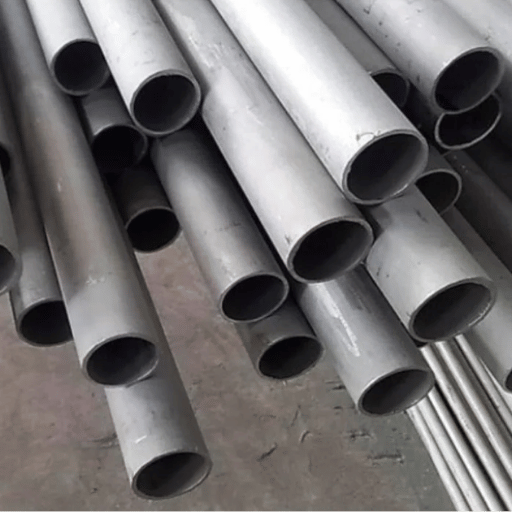
316 pipe comes in two constructions, and the right choice is a balance of pressure, budget, and surface requirements rather than a quality verdict. Seamless pipe is pierced and drawn from a solid billet, so it has no longitudinal weld line; welded (ERW/EFW) pipe is rolled from strip and seam-welded. Modern welded stainless pipe to A312 is fully pressure-rated and weld-efficiency-factored, so “welded” doesn’t mean “weak.”
✔ Seamless 316 Pipe
- No weld seam, preferred for the highest pressures and cyclic service
- Uniform structure, no seam to track in corrosion-critical lines
- Available NPS 1/8″–16″ in 316
- Higher cost; longer lead on large bore
⚠ Welded 316 Pipe
- Lower cost, faster availability, tighter OD tolerance
- Made to larger diameters (ERW to 24″, EFW far beyond)
- Weld zone benefits from 316L low carbon in corrosive duty
- Seam is a stress and inspection focus; specify weld testing
In practice, choose seamless for high-pressure process lines, hydraulic service, and anywhere a code or client mandates it; choose welded for lower-pressure transport, large-diameter structural water lines, and budget-sensitive bulk runs. For the full construction comparison, see our pages on seamless stainless steel pipe and stainless steel welded pipe, or the broader seamless pipe overview across alloys.
Corrosion Resistance & Best Applications
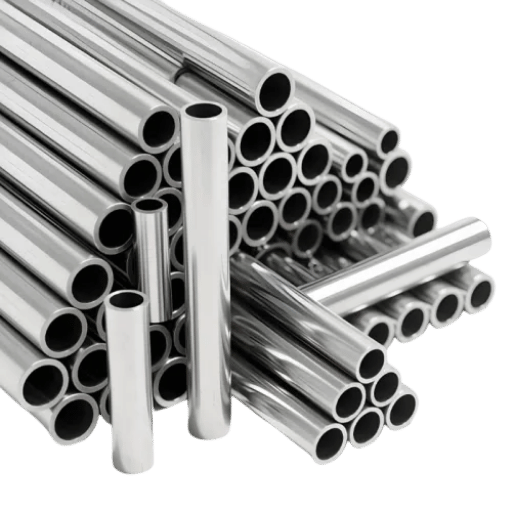
316 earns its premium in chloride-bearing and mildly acidic environments. Its molybdenum-strengthened passive film resists pitting and crevice corrosion far better than 304, which is why the grade dominates marine hardware, coastal architecture, swimming-pool plant, food and beverage processing, pharmaceutical and biotech lines, pulp-and-paper, and many chemical-process streams. The Nickel Institute documents how the nickel-austenitic structure also delivers the formability and weldability these fabrications demand.
But here’s the honest limit that product pages skip: 316 isn’t seawater-proof. The British Stainless Steel Association is blunt that 316’s corrosion resistance in seawater is “limited” and that it can’t be considered seawater-resistant, in warm, stagnant seawater it will pit and crevice-corrode. “Marine grade 316” is a coastal-air and splash rating, not a full-immersion guarantee. For genuine seawater immersion, the right answer is duplex 2205, a 6-Mo super-austenitic, or a copper-nickel alloy.
Temperature is the trigger. The Specialty Steel Industry of North America notes it’s rare to see chloride stress corrosion cracking (SCC) on immersed stainless below 60°C (150°F). Research indexed by the U.S. National Library of Medicine confirms austenitic grades like 304 and 316L become susceptible to chloride-induced SCC above roughly 50–60°C, or when sensitized. Above that threshold with chlorides and tensile stress present, 316 can crack with little warning.
Why this matters show up in the field. One processor ran a hot brine line at about 75°C in 316 because the spec sheet said “excellent chloride resistance.” Within roughly eighteen months, fine cracks appeared at pipe-support contact points where residual stress was highest. Nothing in the room-temperature data predicted it, the failure lived entirely in the temperature-plus-chloride-plus-stress overlap. Re-piping in duplex fixed it. Lesson: 316’s corrosion numbers are quoted at ambient, so raising the temperature with chlorides present means you’ve left the safe envelope. If your selection question is simply “which metal pipe won’t rust,” our overview of corrosion-resistant pipe options compares grades by environment.
Why Is Stainless Steel Not Used in Plumbing?
It’s a cost-and-labor answer, not a performance one. 316 would last generations in a potable-water system, it’s simply overkill and expensive next to copper, PEX, and CPVC, which are cheaper per foot and far quicker to join with sweat, crimp, or solvent fittings. Stainless usually needs welding or stainless press fittings, raising installed cost. So residential plumbing reaches for cheaper materials while stainless is reserved for high-purity, sanitary, high-temperature, or aggressive-water situations where copper and plastic fall short. This grade isn’t failing in plumbing; it’s priced out of routine use.
Disadvantages & Limitations of 316 Pipe
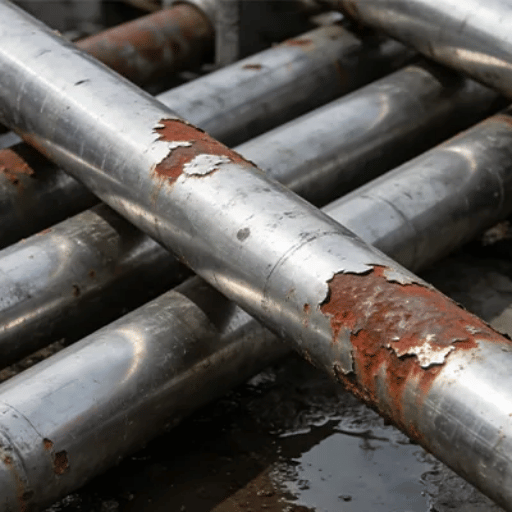
No alloy is universal, and buyers make better decisions when they know where 316 struggles. Four limitations come up repeatedly in real service.
- ⚠Hot chloride service is 316’s classic failure mode, as covered above. One process engineer on Eng-Tips put the working rule plainly: keep applied-plus-residual stress under about 10 ksi and temperature under ~125°F and it won’t crack, but no chloride level is low enough to call it immune once it’s hot.
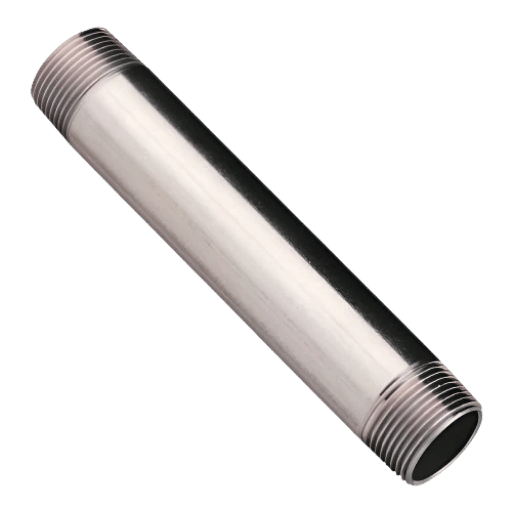
- ⚠Galling on threaded joints. Austenitic stainless cold-welds to itself. Thread a 316 fitting onto a 316 nipple without anti-seize and the two faces can seize and tear out on assembly. Standard field practice is a nickel- or PTFE-based anti-seize, or pairing dissimilar grades.
- ⚠Cost and work-hardening. 316 runs ~20–40% above 304, and it work-hardens fast during machining and threading, sharp tooling, slow speeds, and firm feeds are needed or the surface hardens ahead of the cut.
- ⚠Not for strong reducing acids or true seawater immersion. Hydrochloric acid and warm stagnant seawater both exceed 316’s envelope; specify duplex, super-austenitic, or nickel alloys instead.
Galling is just as concrete a risk. One crew assembling a 316 handrail system ran the threaded couplings up dry on a warm afternoon; three of them seized partway and had to be cut off and rethreaded, a half-day lost to a one-cent dab of anti-seize skipped. None of this makes 316 a poor choice; it makes 316 a choice that rewards knowing its quirks.
316 Stainless Steel Pipe Price: What Drives Cost
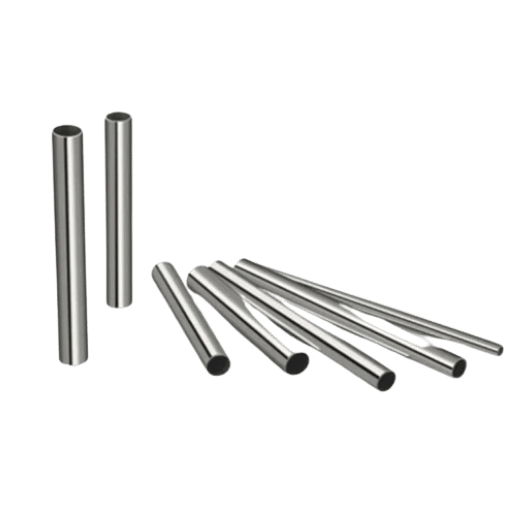
316 pipe pricing is mostly a raw-material story, and it moves month to month. Mills publish an “alloy surcharge” on top of a base price to pass through the volatile cost of nickel, molybdenum, and chromium, the three elements that make 316 what it’s. Understanding the levers help you time orders and read a quote.
What moves a 316 pipe quote
| Alloy surcharge | Tracks LME nickel + molybdenum + ferrochrome; the largest swing factor |
| Grade premium | 316 typically ~20–40% above 304 for the molybdenum and extra nickel |
| Construction | Seamless carries a premium over welded, widening with diameter |
| Schedule / wall | Heavier walls = more alloy per foot = higher price |
| Trade policy | Tariffs and CBAM-type carbon costs increasingly shift regional pricing |
As a market anchor, industry tracker MetalMiner reported LME nickel near $1,272 per tonne in early October 2025, with mills holding 316L surcharges relatively steady. Because nickel and molybdenum are the swing factors, ask any quote-holder to break out base price versus surcharge, and request the surcharge month, a number quoted against last quarter’s surcharge may not reflect the current market. (Pricing context here’s dated to late 2025 / early 2026 and will move.)
How to Verify You Received Real 316 Pipe
Grade substitution is the quiet risk in stainless procurement, 304 stenciled as 316, or off-spec heats sold on a borrowed certificate. Because the molybdenum that defines 316 is invisible, verification has to be documentary and instrumental, not visual. In practice, incoming inspection comes down to four checks.
Incoming-inspection checklist for 316 pipe
- Read the Mill Test Certificate (EN 10204 3.1). Confirm heat number, the full chemistry with Mo at 2–3%, mechanical results meeting TP316, and the A312/SA312 reference with edition year.
- Run a PMI (Positive Material Identification) scan. Handheld XRF guns read molybdenum in seconds, the fastest way to separate 316 from 304 on the rack.
- Match heat numbers to the pipe stencil. Certification means nothing unless its heat number traces physically to the pipe in front of you.
- Check surface finish and condition. Annealed-and-pickled or bright-annealed per order; no embedded iron, scale, or skip-passivation.
“A mill certificate is a claim, not a guarantee, the heat number has to tie back to the pipe on the rack, and a thirty-second PMI scan settles any doubt about the molybdenum. We pair the 3.1 certificate with PMI and, when a buyer wants it, an independent third-party check before the pipe leaves the yard.”
This is where documentation earns its keep. Baling Steel supplies every 316 order with material test certification, offers professional inspection on request, and can arrange a third-party inspection report for buyers who need fully independent verification. That same discipline apply whether you’re buying stainless, alloy, or carbon pipe.
2026 Outlook: 316 Pipe Market & Alloy Surcharge Trends
Two forces shape what 316 buyers will pay and choose in 2026. First, surcharge volatility. After a 2025 in which nickel moved largely sideways with a slight downward drift, early-2026 commentary points to rising 316L alloy surcharges, pushed by higher ferrochrome costs and, in Europe, carbon-border (CBAM) compliance adding to mill costs, European 316L surcharges were reported climbing through Q1–Q2 2026. In the U.S., Section 232 tariff activity adds another regional layer. For a 2026 project, lock surcharge terms early, and ask whether a quote is held against a current or a stale surcharge month.
Grade substitution is the second force, pressing from below and above. Lean-duplex grades (2101, 2304) keep nibbling at 316’s territory wherever a buyer needs more strength or more chloride headroom at comparable nickel exposure, while standard 316/316L remains the default for general chloride service. Your decision is not “is 316 still good” — it is “is 316 still the most economical grade that clears my corrosion and strength requirement.” If your service sits near 316’s chloride-temperature ceiling, 2026 is a good year to price a duplex alternative alongside it before committing. On the carbon-steel side of high-temperature service, our guide to ASTM A106 pipe covers the equivalent ground.
Frequently Asked Questions
What is a 316 stainless steel pipe?
View Answer
What are the disadvantages of 316 stainless steel?
View Answer
Is 316 stainless steel magnetic?
View Answer
What is the difference between TP316 and TP316L?
View Answer
Can 316 stainless steel pipe be welded?
View Answer
What is the maximum temperature for 316 stainless steel pipe?
View Answer
Need 316 pipe with verified mill certs?
Baling Steel supplies ASTM A312 TP316/316L seamless and welded pipe with EN 10204 3.1 certification, PMI, and optional third-party inspection, cut to your sizes.
About This 316 Pipe Guide
We wrote this because the search results for 316 stainless steel pipe are dominated by product listings that quote chemistry tables without explaining the chloride-temperature limits or the 316-versus-316L strength trade. Every specification here, the ASTM A312 mechanical minimums, the PREN figures, the seawater and SCC caveats, is tied to a published standard or a named industry/research source, and we flagged where “marine grade” marketing overstates real seawater performance.
References & Sources
- Stress Corrosion Cracking: Mechanisms, Materials Challenges — U.S. National Library of Medicine (PMC)
- Chloride Stress Corrosion Cracking — Specialty Steel Industry of North America (SSINA)
- Selection of 316, 304 and 303 Stainless Steels for Seawater — British Stainless Steel Association
- Stainless Steel: The Role of Nickel — Nickel Institute
- Molybdenum-Grade Stainless Steels & PREN — International Molybdenum Association (IMOA)
- Nickel Prices: Stainless Mills Hold Prices — MetalMiner (Oct 2025)
Related Articles
- Seamless Stainless Steel Pipe — SS304 and SS316 product range, ASTM A312/SA312
- Stainless Seamless Pipe: Grade & Size Guide — 304 vs 316 selection and schedules
- 316 Stainless Steel Yield Strength — 316 and 316L strength explained
- Stainless Steel Schedule 40 Pipe — dimensions and pressure ratings
- 316 Steel Elbow Fittings — matching 45° and 90° fittings
- Which Metal Pipe Doesn’t Rust? — corrosion-resistant pipe by environment