Quick Specs
| Parameter | Value |
|---|---|
| Manufacturing | Hot Rolling (HFS) or Cold Drawing (CDS) per ASTM A519 |
| Common Grades | 1018, 1026 (carbon) · 4130, 4140 (alloy) · 304, 316 (stainless) |
| OD Range | 0.125″–26″ (CDS) · up to 660 mm (HFS) |
| Key Standards | ASTM A519 · A106 · A53 · A269 · A312 |
| Pressure Rating | Up to 3,420 PSI (SAE J524 hydraulic tubing) |
| Surface Finish | CDS: smooth, tight tolerances · HFS: rough, machinable |
A simple steel tube has no weld joint—the fact that it is one piece of steel is its paramount feature it makes it the go-to choice for high-pressure, high-temperature and safety-critical duties in dozens of sectors. This reference details the seamless tube manufacturing process, the ASTM standards that apply for your intended service environment, how to interpret size and schedule tables, and the when to choose seamless over welded. From hydraulic cylinders to boilers, frames to catalysts, you might order tube for any number of duties so use these notes to specify the correct grade and size without over spending on unwarranted selections.
For a complete look at seamless products, visit our seamless-pipe”>seamless pipe products page.
What Is a Seamless Steel Tube?
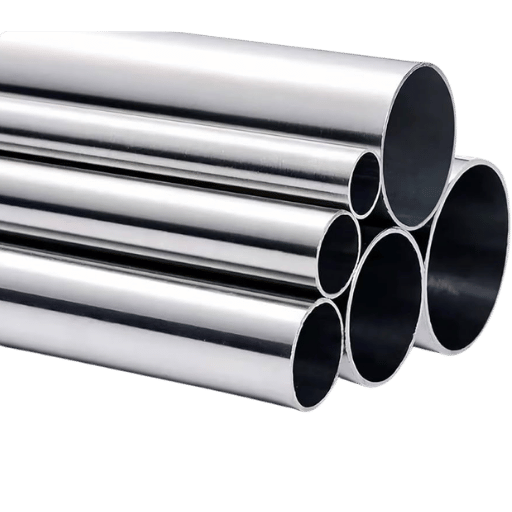
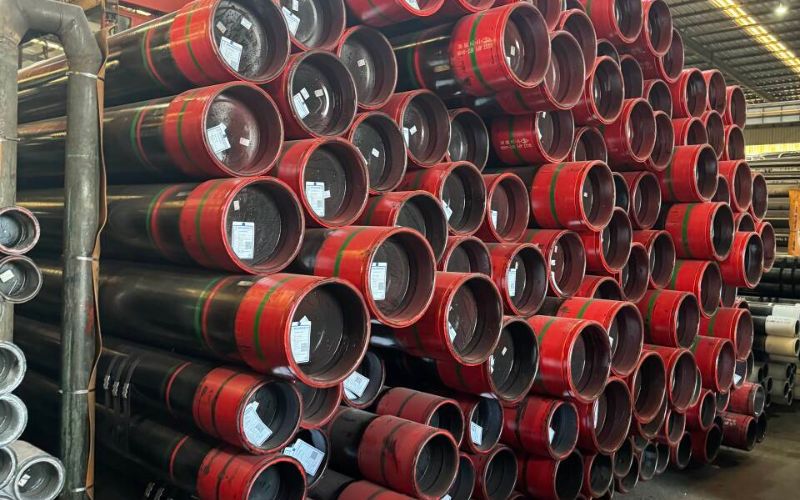
A hollow steel tube is produced by heating a solid round billet of steel to the correct forging temperature, and then piercing it through the centre with a special tool. The shape that is produced is a hollow shell of steel, devoid of longitudinal weld seam all around the tube, from the fact that it was originally made from a single piece of metal. SMLS is commonly used on manufacturers’ documentation and engineering drawings to indicate the steel is of seamless construction.
Having no weld seam is more than just a ‘nice to have’ feature – it also has significant implications for the pressure load of the tube. Under ASME Boiler and Pressure Vessel Code, Section VIII, Division 1, a weld joint efficiency factor E= 1.0 for ‘seamless pipe and tubes’. Longitudinally weld pipe (E.g., ERW) is rated E= 0.85, which means a 15% reduction in allowable stress (in the weld joint).
This might be represented thus:theres no weld seam and 100% stress is distributed around entire tube circumference – thus higher allowable working pressure…
Actually, I think that is the actual document!
This is also the reason why designs use seamless tubes for Hydraulic lines, Boiler tubes, Downhole tubing for Oil and Gas production, and pressure vessel components. When a failure of a weld seam might lead to safety issues, engineers removes the weld seam altogether by specifying SMLS. To see our full range of seamless products, visit Seamless Pipe Products.
What Is Seamless Steel?
“Seamless steel” is the name given to steel that is formed into a tubular shape without having to undergo any welding or other joining process. starting out as a solid cylindrical section or billet, the tube is heated up before being pierced by a rotary piercing mill. Seamless steel tube and pipe is therefore a single long container with no metallurgical discontinuities, beginning and ending with a singular metal structure. It is specified where the pressure integrity, fatigue resistance and the properties throughout the tube’s entirety can be assured, i.e. in power station piping, aerospace hydraulic systems, and semi sub oil production tubing.
It is important to note that “seamless” does not refer to the make-up of the steel itself, but rather, the processes through which it is made. All manner of steel, including carbon, alloy and stainless can be regarded as “seamless”.
How Seamless Steel Tubes Are Made: Hot Rolling vs Cold Drawing
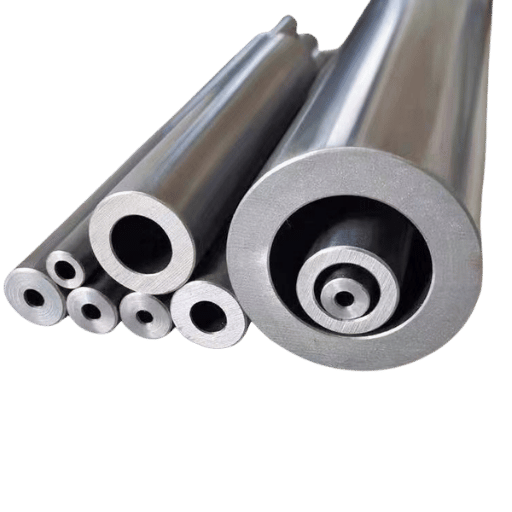
Every plain, seamless steel tube begins the same way: with a solid round billet heated to over 1200C, and compressed in a rotary piercing mill. This process, commonly known as the Mannesmann process, pairs a set of pairs of barrel shaped rolls which rotate the billet while simultaneously pressing it over a stationary mandrel. Ultimately the combination of the rolling pressure and the rotation forces the creation of a hole in the center of the billet, resulting in a hollow shell with thick walls. Every tube produced subsequently will follow one of two last-steps to arrive at its final mechanical properties.
Hot Finished Seamless (HFS)
During hot finishing, the seamless tube passes through a series of hot reducings and ring mills until it reaches standard room temperature. After rolling, tubes can be air cooled or normalized. Hot finished seamless tubes are commonly produced from SAE 1026 grade stock to ASTM A519 standards. When hot working, tubes will have a roughed scaled surface and tolerances will be moderately loose. Wall thickness will be fairly even, but not very precise. Hot finished carbon steel seamless tubes cost significantly less than cold-drawn, and are the typical tubing specification for structural use, thick walled sleeves, and machined parts.
Cold Drawn Seamless (CDS)
In cold drawing, the hot finished shell and pulls it through a die at room temperature, which sometimes is preceded by pulling over a mandrel. This alternate stage of work hardens and stretches the tube reducing its OD and wall thickness simultaneously. It will have a bright, smooth surface and very tight dimensional tolerances. Cold drawing produces a significant increase in yield strength due to the strain hardening effects of cold working, although it induces no significant change in ductility. ASTM A519 is the most common specification for cold-drawn carbon steel seamless tubing, usually between SAE 1018 and 1026 grade material. CDS specifications are used when the dimensional tolerances are highest priority, such as precision blanking dies, hydraulic ram barrels, and machine components where the tube will be machined.
| Parameter | HFS | CDS |
|---|---|---|
| Process Temp | >1,200°C | Room temperature |
| Steel Grade | SAE 1026 | SAE 1018/1026 |
| OD Tolerance | ±1% (typical) | ±0.005″ (typical) |
| Surface Finish | Rough, scaled | Smooth, bright |
| Wall Uniformity | Moderate | High |
| Relative Cost | Lower | Higher |
| Best For | Heavy structural, thick-wall | Hydraulic, precision mechanical |
📐 Engineering Note
ASTM A519 standard specification establishes acceptable material grades and dimensional tolerances for cold finished and hot finished alloy and carbon steel seamless mechanical tubing. The dimensional tolerances by ASTM Table X2.1: OD tolerances for a CDS tube under 1″ in diameter is 0.005″. For larger dimensional sizes, the tolerance gap proportionally increases. Any purchase order specificate should reference the appropriate table.
“For hydraulic applications, this is where the tight tolerances matter, but for bushings and wheels where the part will be machined away by post-processing, hot finished provides the greatest value.”
— Senior Piping Engineer, Eng-Tips Forum
Seamless Tube Materials: Carbon Steel, Alloy, and Stainless Steel Grades
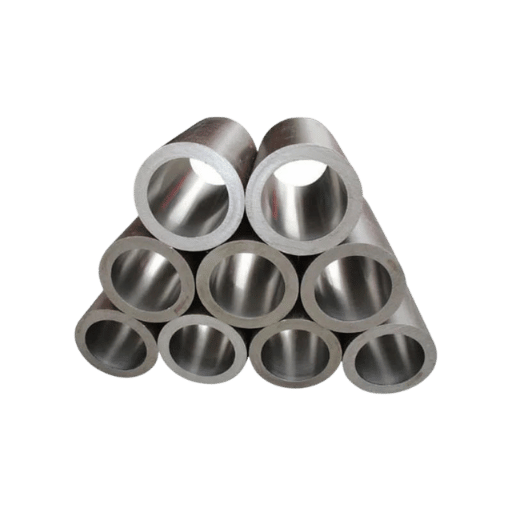
For a seamless tube to have the desired set of physical properties, the specification of the material used is equally important as the process by which it was manufactured. Carbon steel, alloy steel, and stainless steel each have very different strength levels, resistance to deformation in high temperatures, corrosion tendencies, and e×trinsic costs. The table below compares some of the most common grades for each family side-by-side.
| Property | Carbon Steel (1018/1026) | Alloy Steel (4130/4140) | Stainless Steel (304/316) |
|---|---|---|---|
| Yield Strength | 250–350 MPa | 460–690 MPa | 205–290 MPa |
| Tensile Strength | 410–520 MPa | 560–900 MPa | 515–690 MPa |
| Max Service Temp | ~425°C (A106) | ~540°C (A335 P11) | ~815°C (304) |
| Corrosion Resistance | Low (needs coating) | Moderate | Excellent |
| Typical Standards | A519, A106, A53 | A519 (4130/4140) | A269, A312 |
| Common Applications | General structural, plumbing, oil transport | Hydraulic cylinders, aerospace, high-stress | Chemical processing, food/pharma, marine |
Carbon Steel: The Workhorse Grades
SAE 1018, SAE 1026 carbon steels are the two most popular choices for ASTM A519 grade material specification. For high pressure application under standard piping conditions, ASTM A 106, Grade B (240 MPa minimum yield, 415 MPa minimum tensile strength) is the specification. Most high temperature service piping and general industrial structural work uses plain carbon steel seamless tubes, top out at 425 C, and does not require the corrosion protection of stainless or alloy compositions.
A detail that catches many buyers: A 106 and 53 are both carbon steel pipe standards, but while A 106 contains silicon as part of the chemistry and thereby increases graphitization resistance at high temperature, A 53 calls for no silicon. A 106 is A value in application with steam lines and refinery piping.
Alloy Steel: When Carbon Is Not Enough
Chromium-molybdenum alloy grades such as 4130 and 4140 are specified when higher yield strength, fatigue strength, or creep performance at high temperature is required, beyond what carbon steels will provide. These grades are found under ASTM A 519 for mechanical tubing 4130 (as dissolved or normalized, minimum 460 MPa yield). It is standard for both hydraulic cylinder barrels and aircraft landing gear components. 4140 (as quenched and tempered up to 690 MPa yield) is used in heavy shafting, drill collars, and high load rotating equipment. Both alloy grades must be supplied with a controlled heat treatment cycle, increasing lead time and cost. See our alloy pipe grades page for in stock sizes.
Stainless Steel: Corrosion-First Applications
304 and 316 stainless seamless tube grades are listed under ASTM A 269 (instrumentation tubing) and ASTM A312 (high temperature or hostile environment pipe). 304 provides better all-around corrosion resistance and can accommodate continuous service up to about 815 C. Molybdenum addition to 316 improves resistant to chloride pitting, so that it is the default choice in chemical plants and on ships. Stainless seamless tube costs several times more than carbon steel equivalents so must be used judiciously. See our stainless seamless pipe inventory for current in-stock sizes.
A true case study shows why steel selection is important: an oil and chemical plant in Texas designed and built a heat exchanger couple for dilute sulfuric acid at 150 C with seamless 304 stainless tubes. After 3 years of operation, a parallel unit, supplied with coated and welded 304 tubes, had developed corrosion pits adjacnet to the welding heat affected zone. The original unit’s seamless tubes showed no signs of corrosion. The different microstructure at the weld/heat-affected zone provided an ideal site for localized corrosion to initiate, which the seamless material could not support.
ASTM Standards for Seamless Steel Tubes: A519, A106, A53, and More
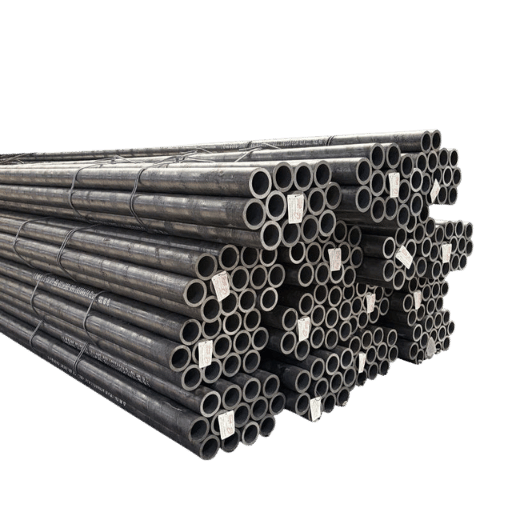
1. Knowing the ASTM standard on your PO establishes the chemical makeup, mechanical testing regime, dimensional tolerances, and inspection procedure that the tube mill must adhere to.It’s easy to make a specification error here. Out of spec material may meet the PO but not your application, so picking the right standard can be critical. The following table summarizes the application purpose for the six most popular seamless tube and pipe standards.
| Standard | Scope | Seamless Only? | Key Application | Max Temp |
|---|---|---|---|---|
| ASTM A519 | Mechanical tubing | Yes | Structural, hydraulic, automotive | Ambient to moderate |
| ASTM A106 | Pressure pipe | Yes (seamless only) | High-temp, high-pressure service | 425°C |
| ASTM A53 | Pipe | No (Type S=seamless, Type E=ERW) | Low-to-medium pressure, structural | Moderate |
| ASTM A269 | SS tubing | No (seamless or welded) | Instrumentation, food/pharma | Varies by grade |
| ASTM A312 | SS pipe | No (seamless or welded) | Chemical, high-temp SS service | Up to 815°C |
| ASTM A179 | Heat exchanger tubes | Yes | Boiler/condenser tubes | ~540°C |
2. A519, A 106, and A 179 are all seamless standards. A 53, A 269, and A 312 allow welded production so specifying “Seamless” or “Type S” on the PO is essential if that is what is desired. If done incorrectly, the customer is at risk of receiving welded material that meets the specification but does not conform to his design.
The 3-Question Seamless Tube Selection Rule
- Operating temp? Ambient: A519 | Elevated (425C): A106 | High (>425C): A335
- Is this for pressure service? Yes: A106 or A53 | No: A519
- Carbon or stainless? → Carbon: A53/A106 | Stainless: A269/A312
Answer these three questions in sequence and you will land on the correct specification at least 90% of the time. Typical edge cases (duplex stainless, nickel alloy, cryogenic service) will need more engineering review.
What Is the Difference Between ASTM A53 and A106 Pipe?
A106 is purely seamless pipe standard and also requires a silicon element in steel chemistry, which is proven to reduce tendency to graphitize or weaken at temp because of carbon diffusion into graphiteflake.s. A53 allows both seamless(Type S) and ERW(Type E) manufacturing as well as not forcing the silicon element into chemistry. Both are carbon-steel pipe, A106 stricter chemistry controls and the seamless requirement is what you want for power gen, refinery piping and any service above approximately 370C.. A53 is a good choice for structural columns, potable water and gas distribution and general plumbing where the temperature stays below 200C.. If you need not-critical 200C or below A53 Type S will get you a seamless spec at often a cost savings over A106 B grade. For elevated temp or pressure critical service use A106 Grade B. Internal links: ASTM A106 Grade B pipe, API 5L Grade B pipe, ASTM A53 pipe.
Seamless Steel Tube Sizes, Schedules, and Weight Charts
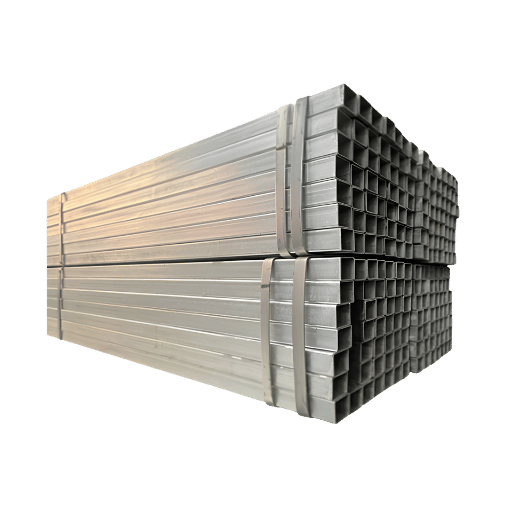
Selecting the right sized seamless tube involves specifying three dimensions; type (nominal pipe size), wall thickness (schedule number) and length. The chart below shows the 10 most common NPS sizes ordered with Schedule 40 and 80 wall thicknesses and weights per foot (from ASME B36.10M)..
| NPS | OD (in) | OD (mm) | SCH 40 Wall (in) | SCH 40 Wt/ft (lb) | SCH 80 Wall (in) | SCH 80 Wt/ft (lb) |
|---|---|---|---|---|---|---|
| 1/2″ | 0.840 | 21.3 | 0.109 | 0.85 | 0.147 | 1.09 |
| 3/4″ | 1.050 | 26.7 | 0.113 | 1.13 | 0.154 | 1.47 |
| 1″ | 1.315 | 33.4 | 0.133 | 1.68 | 0.179 | 2.17 |
| 1-1/2″ | 1.900 | 48.3 | 0.145 | 2.72 | 0.200 | 3.63 |
| 2″ | 2.375 | 60.3 | 0.154 | 3.65 | 0.218 | 5.02 |
| 3″ | 3.500 | 88.9 | 0.216 | 7.58 | 0.300 | 10.25 |
| 4″ | 4.500 | 114.3 | 0.237 | 10.79 | 0.337 | 14.98 |
| 6″ | 6.625 | 168.3 | 0.280 | 18.97 | 0.432 | 28.57 |
| 8″ | 8.625 | 219.1 | 0.322 | 28.55 | 0.500 | 43.39 |
| 12″ | 12.750 | 323.9 | 0.375 | 49.56 | 0.500 | 65.42 |
📐 Engineering Note
ASTM A519 specifies 0.005″ tolerances on the OD of CDS tubes of less than 2″ diameter. HFS are special furnace-heated rolled seamless tubes and often have 1% OD tolerance. 10% wall thickness tolerance typically applies to most seamless tubes. Make sure you specify tolerances in your purchase order in accordance with the ASTM standards.
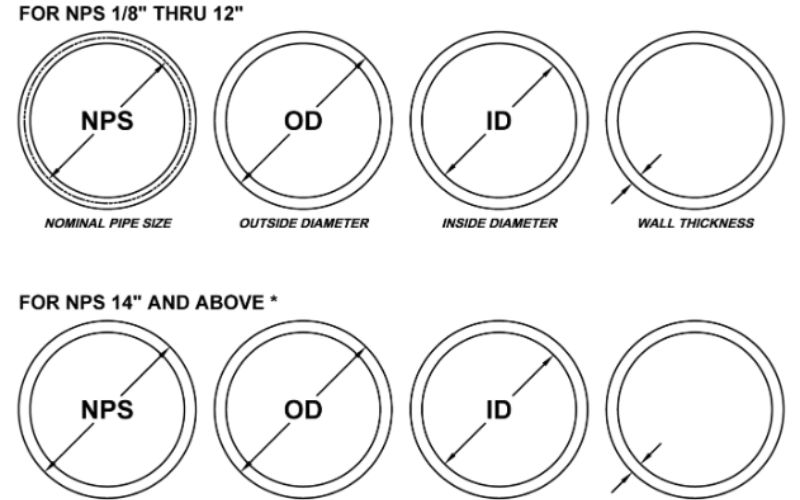
NPS does not equal actual OD on sizes 12″ and below for once. 1″ NPS has a 1.315″ actual OD. This has caught many first-time buyers out who didn’t think to compare NPS to size. Past NPS 14″ the NPS number is equal to the OD in inches. Know which to use when calculating fit-up and gap. Use the OD column, not the NPS label. Use our pipe sizing and weight per foot calculator for additional sizes and schedules.
Seamless Tube vs Welded Tube: How to Choose
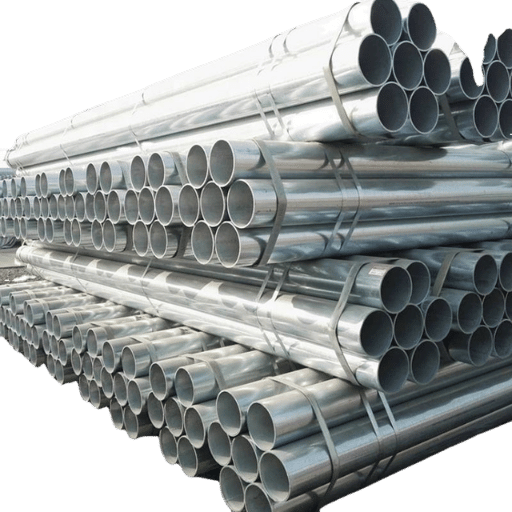
Choosing seamless vs. welded tubing can be decided on basis of four variables: pressure requirement, dimensional accuracy, budget constraints and product availability. There are clear reasons why each manufacturing method has advantages and disadvantages; experienced engineers make the best decisions when they are choosing the right product for the application rather than the most expensive choice.
✔ Seamless Advantages
- No weld seam-weld efficiency factor E =1.0
- Uniform wall thickness around full circumference
- Higher allowable working pressure at same wall thickness
- Better fatigue resistance under cyclic loading
- No heat-affected zone (HAZ) microstructure changes
⚠ Limitations
- 20-40% more expensive than equivalent ERW
- Longer lead times, especially for alloy and stainless grades
- Limited maximum OD (typically 24-26″ for most mills)
- HFS surface finish is rough and inconsistent
- Wall thickness eccentricity can occur in larger sizes
| Factor | Seamless (SMLS) | ERW (Welded) | DOM |
|---|---|---|---|
| Weld Efficiency (E) | 1.00 | 0.85 factor applied | ~1.00 (weld drawn out) |
| Relative Cost | 100% (baseline) | 60-80% of seamless | 70-85% of seamless |
| Max OD Commonly Available | ~26″ | 24″+ | ~12″ |
| Pressure Rating | Highest | Lower (E = 0.85) | High (weld removed) |
| Surface Finish | CDS smooth / HFS rough | Consistent | Very smooth |
| Lead Time | Longer | Shorter | Moderate |
What Is the Difference Between ERW and Seamless Steel Pipe?
ERW (Electric Resistance Welded) pipe is produced from a flat strip of steel that is formed into a cylindrical shape and then welded along the longitudinal seam using resistance heating. The weld seam itself is the key difference between the products. ASME pressure vessel codes call for a weld efficiency factor of 0.85 for ERW, requiring the value of the walls (s) to be increased to account for the reduced strength of the weld.
This results in a 15% reduction in E factor, and requires a designer to specify a proportionally thicker wall than for seamless pipe. For general structural, fencing, low pressure fluid, and mechanical framing uses, ERW saves the project 20-40% in cost (albeit with a performance penalty), where seamless is the obvious choice for pressure vessels, boiler tubes, or down hole oil and gas service. DOM (Drawn Over Mandrel) tubing offers an intermediate step: it is produced from welded tube initially, then drawn in a drawing process over a mandrel which virtually eliminates the weld seam and produces a tube of properties approaching seamless.
DOM is very popular for hydraulic cylinders and automotive drive shafts. See our ERW pipe page for more details of welded options and our pipe-vs-tube page for a comparison of the products.
The industry also states that the most common procurement errors include over-specifying seamless pipe—adding anywhere from 20-40% to material cost with no engineering gain for structural or low-pressure applications. Before opting for seamless consider the question: does this require E=1.0 weld efficiency?
If the answer is no ERW or DOM might be a better decision.
How to Inspect Seamless Steel Tube Quality
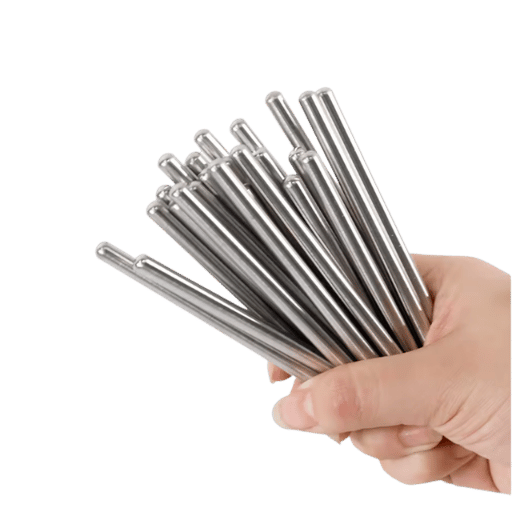
Imagine you get a shipment of seamless tubes. No weld seam exists, but that alone means nothing! Seamless can still be delivered with size, shape or surface flaws or metallurgical issues that could harm the function of your structure.
A well-conceived incoming inspection finds out these issues here in your fabrication shop or even before.
- Check MTC of mill: heat number, combination of chemical (C, Mn, P, S, Si) and mechanical (yield, tensile, elongation) tests, hydrostatic pressure test or NDE results. Check that the MTC indicates a proper ASTM standard and grade.
- Visual inspection: The entire length of every tube should be examined for surface blemishes, such as pitting, laminations, seams, cracks and/or excess scale. The tube should be rolled on a flat surface to permit the detection of serious bends.
- Dimensional check: Use a calibrated micrometer to take OD readings at three different locations along the length (0, 90, 45). Use an ultrasonic wall thickness gauge to check wall thickness at each location.
- Ovality check: Calculate (max OD- min OD) / nominal OD 100. Should be 1% for most ASTMS standards.
- Straightness, 1/8″ for every 3′ maximum, for CDS tubes. Use a long and straight edge and rest the tube on it. use a ruler and measure the distance between the straight edge and tube at middle point.
- End condition: check square cut to have angular tolerance- within (some value),check for any burrs on ID or OD,check on bevel angle if bevelled ends were specified on PO.
What Are the Common Problems with Seamless Pipe?
Trained manufacturers, constantly inspect the rolled product, but are still finding dimensional abnormalities such as ovality and non-concentric wall thickness on high quality seamless tube. The process of piercing can create eccentricity, which is refer to one side of the tube wall thick than the other, measurable variation. Surface defects like pitting and inclusions, often form during the casting and rolling process, are often found on the inside surface of the final tube, not visible externally.
Metals may look fine from the outside, but has internal microplastic structural problems due to mishandling of the material during the heat-treat process, which can cause a bend causing a lead to a put brittle fracture condition once subjected to long-term cyclic tension or impact loading. Hydrogen embrittlement is a phenomenon difficult to detect which may not reared its head at means time for many weeks after being fitted.
Getting rid of the weld seam does not mean of dimensional or metallurgical perfection. Immediate inspection of incoming shipments of seamless tube is critical – especially when used for pressure service, safety critical structural work or facilities handling alloy grades needing particular heat treatment conditions.
📐 Engineering Note
In the case of pressure service tubes ASTM A106 stipulate due to hydrostatic testing a minimum of 60% the specified minimum yield strength. Other required non-destructive examinations (by ultrasound or eddy current) are approved through ASTM A106 on an agreement between buyer and seller. Determine what method was used by inspecting the MTC look in the test results area and see “HYDRO” or “NDE/UT”.
Contact our testers for our material test certification services and professional inspection services.
Seamless Steel Tube Pricing: Cost Drivers and Procurement Tips
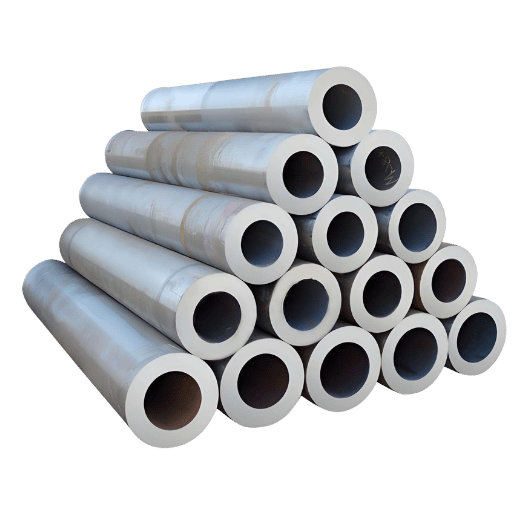
Seamless pricing is not one number; it is a function of at least five factors that can move in different directions. To make apples to apples comparisons and see through the invoice, this knowledge will help you understand what figures to compare:
- Raw material (40-50% of total): Steel billets and scrap prices establish price floor for seamless tube. Worldwide average billet price sat around $525/tonne in 2025. Carbon steel tube prices are based on a following HRC futures price; for stainless grades a surcharge for nickel and chromium is added separately.
- Manufacturing process (20-30%): the higher pricing for CDS tube versus HFS tube is due to the greater number of cold drawing steps involved, enhanced annealing cycles, and stricter QA. Alloy grades 6.2-2.4, add further cost of heat treatment (normalizing, quenching, tempering); for stainless grades the steps of pickling and passivation are economic additions.
- Size and wall thickness (10-15%): Larger OD/thicker wall results in more raw material per foot, heavier handling equipment and in some cases fewer mills that can produce the size. Unusual OD/wall combinations outside a straight line trend incur a premium.
- Order quantity/MOQ (5-10%). 1-5 tonnes/size/grade is widely available minimum for S.Q. Orders that do not meet these criteria have (a 10-25%) small lot surcharge. Combine several sizes in one PO to reach MOQ, lower already per tonne price.
- Market timing (5-10%): Steel prices track many commodity markets. According to the U.S. Bureau of Labor Statistics, PPI for iron and steel pipe manufacturing rose from 486.4 to 501.1 (Index, Jun 1982 = 100) during Q1 2026–a 3% rise over three months. Lock in pricing early in an up cycle and you could save thousands on a large purchase.
When reviewing quotes from multiple suppliers, all terms should be adjusted to $/tonne delivered so comparisons are apples to apples. An initially lower $/ tonne EXW price can easily flip-flop after freight, import duties, and third-party inspection are factored innot minimum five percent of overseas mills are subject to anti-dumping duties. Have each supplier provide a delivered-to-site number so you can compare apples to apples.
Price note: Indicates current market prices ($/tonne) in Q1 2026. Steel pipe prices are based on a range of global scrap and HRC futures data. Price data older than 6 months may not be representative of current market values.
Selecting the wrong schedule number is one of the most costly procurement mistakes in the pipe and tube business. Because the package you are sent technically complies with your order it will be hard to return or take exception to it. Make sure you verify the schedule number against your engineering standards before releasing your purchase order five minutes of effort can save weeks of delays and thousands of dollars in restocking or re-rolling costs.
Seamless Steel Tube Market Outlook: What’s Changing Through 2030
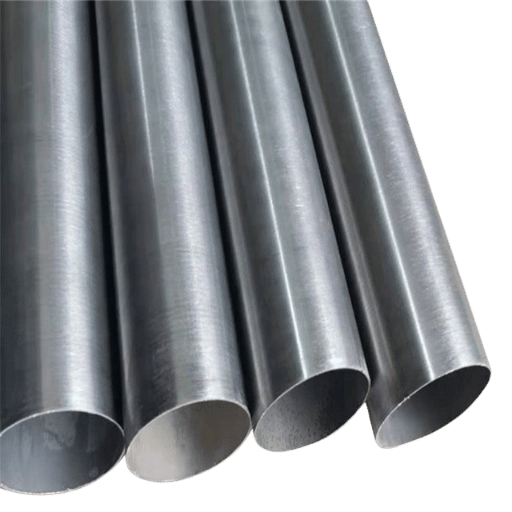
Demand for seamless steel tube is currently being driven by three prevailing demand factors unlikely to reverse by 2030.
Offshore oil/gas: Asia-Pacific, West Africa, and Gulf of Mexico are experiencing new offshore drilling investments. Deepwater and ultra-deepwater projects mandate the use of seamless tubes for downhole tubing, casing, and subsea flowlines because the corrosion and pressure conditions preclude their welded homologues. Duplex and super duplex stainless alloys are in particularly high-growth mode in this segment as their corrosion resistance properties allows investment in premium CRA seamless tubes.
Infrastructure: Cross-border investment in water transfer and treatment infrastructure, along with natural gas distribution and district heating network projects across Asia-Pacific, Middle East and Africa are serving to sustain strong demand for seamless pipe (carbon steel) in the NPS 2″ through NPS 12″ sector. Discrete projects, such as the Jal Jeevan Mission in India, have been and continue to be a significant demand driver for A106 and A53 seamless pipe procurement from 2023 onward.
Automotive lightweighting: Thinner-walled, higher strength seamless tube is replacing solid steel components in vehicle chassis, drive shafts and stabilizer bars, allowing engineers to cut component weights 15-25% while actually improving strength and stiffness. Alloy steel grades (4130, 4140) manufactured to tighter CDS tolerances are fine-tuned in automotive manufacturing to improve component weight-to-stiffness ratios.
On the supply side, the rise of electric arc furnace (EAF) steelmaking is occupying a much bigger percentage of world steel fabrication than traditional blast furnace operations which mean a larger carbon footprint. Know this: new mills in Turkey, India, and Southeast Asia are planning largescale capacity additions based on EAF–which will shape pricing and purchasing regions in the next five years.
Another important governance issue: anti dumping and countervailing duties on Chinese seamless pipe imports to the US are still in place, and duty rate levels significantly scale up the landed price of Chinese-origin material. Please consider these duties when calculating the overall landed cost of Chinese supply to US projects.
“Based on IndustryARC’s 2024 trend, the seamless pipes market is projected to attain a value of US$279.4 billion by 2030, progressing at a compound annual growth rate of 6.1% due to oil, gas and other energy sector requirements and surging investments in infrastructure development in Asia-Pacific regions.”
— IndustryARC, Seamless Pipes Market Forecast 2024-2030
Action recommendation: Plan ahead when constructing projects slated for 2026-2027. Copper and nickel alloy grades are trending up the PPI ladder, and lead times for specialty pipe grades (alloy, stainless) are lengthening as mills place more focus on higher-margin energy projects.
Frequently Asked Questions About Seamless Steel Tubes
Q: What is the maximum operating temperature for carbon steel seamless tubes?
View Answer
Q: Can seamless steel tubes be bent or formed after purchase?
View Answer
Q: What is the difference between NPS and actual OD in pipe sizing?
View Answer
Q: How long do seamless steel tubes last in outdoor applications without coating?
View Answer
Q: What certifications should I look for when buying seamless tubes from overseas?
View Answer
Q: Are seamless tubes available in custom OD and wall thickness?
View Answer
About This Guide
This information has been collected, written and summarized by the Baling Steel engineering staff based on ASTM, ASME specifications, government trade data and practitioner’s advice from online forums and blogs. The seamless steel tube specifications, and ASTM comparison standards used in the text are accurate as of early 2026 (or date of publication). Consult a licensed piping or mechanical engineer for assistance selecting the best tube for your project.
Need Seamless Steel Tubes for Your Project?
Tell us your specs- grade, size, quantity and delivery destination and we will do our best to get you a quote within 24 hours.
References & Sources
- ASME Boiler and Pressure Vessel Code, Section VIII, Division 1 – Weld Joint Efficiency Factors – ASME
- ASTM A519 Standard Specification for Seamless Carbon and Alloy Steel Mechanical Tubing – ASTM International
- ASTM A106/A106M Standard Specification for Seamless Carbon Steel Pipe – ASTM International
- Comparing Common Steel Pipe: A106 vs. A53 – American Piping Products
- ASME B36.10M Welded and Seamless Wrought Steel Pipe – ASME
- Producer Price Index: Iron and Steel Pipe and Tube Manufacturing – U.S. Bureau of Labor Statistics
- Seamless Steel Tube Cost Model – SteelOnTheNet
- Seamless Pipes Market Forecast 2024-2030 – IndustryARC
- Cold-Drawn Mechanical Tubing Investigation – U.S. International Trade Commission
Related Articles
Verified by Baling Steel engineering team – specializing in seamless tube manufacturing and global steel trade since 2010.