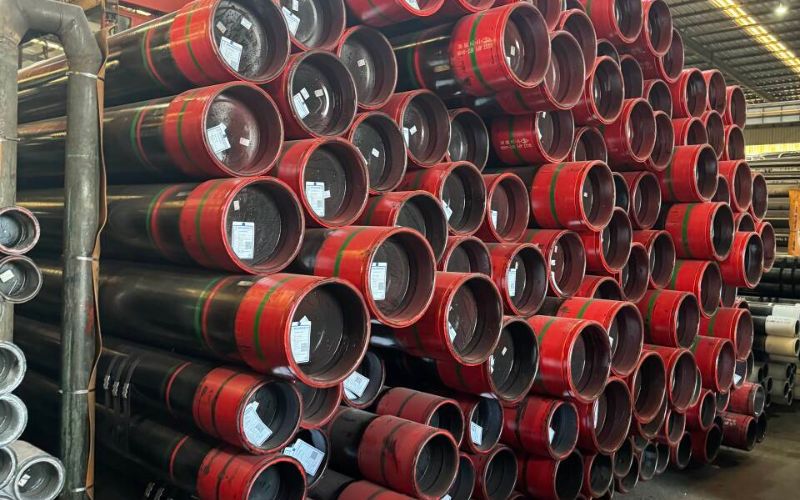
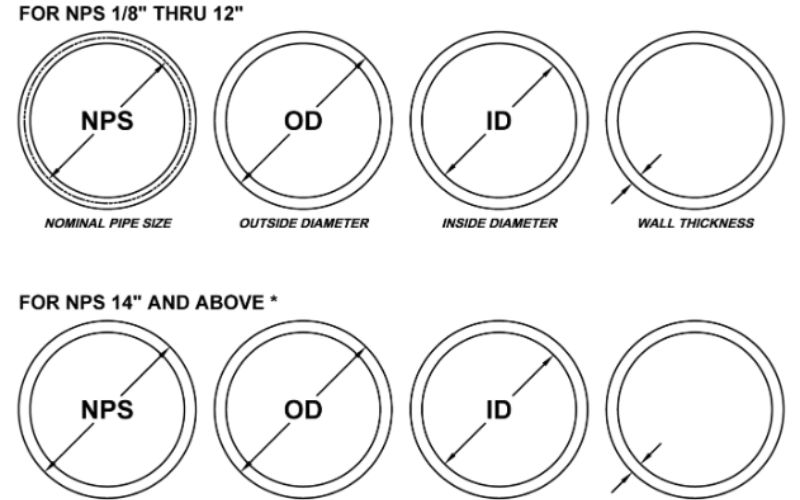
OCTG meaning is simple: Oil Country Tubular Goods is the generic term given to all steel tubulars products—casing, tubing and drill pipe—designed for use in the construction of oil and gas wells. OCTG products are regulated by API Specification 5 CT, the worldwide standard for downhole tubular specification quality.
Quick Specs: OCTG at a Glance
| Full Name | Oil Country Tubular Goods |
| Governing Standard | API 5CT (11th Edition, December 2023) / ISO 11960 |
| Product Categories | Casing, Tubing, Drill Pipe |
| Global Market (2025) | ~$37.82 billion |
| Key Alloying Elements | Chromium (Cr), Manganese (Mn), Molybdenum (Mo) |
What Does OCTG Stand For?
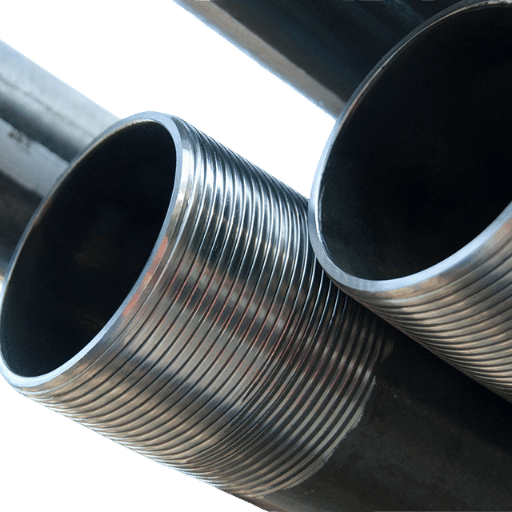
OCTG – stands for Oil Country Tubular Goods – a generic term for tube shaped steel products which are designed and manufactured specifically for use in the construction and production of oil and gas wells. There are three main types of OCTG product: casing designed to line and support the borehole, tubing designed to bring hydrocarbons from the reservoir to the surface and drill pipe which drives the drill bit and moves the circulating drilling fluid. All OCTG is manufactured to API Specification 5CT (equivalent to ISO 11960), the specification which sets out the chemical, mechanical, dimensional and testing requirements for OCTG.
In 2025 the estimated OCTG market was $37.82 billion due to rebounding rig count, growth in deepwater projects, and aggressive API 5 CT compliance standards that are creating a need for the premium, higher grade products.
The API introduced the first 5CT specification as a means of bringing some standardization to an ungeneralized market of OEM tubular products. Once used to represent a mountain of variations in quality, API 5CT—then[11th Ed. (Dec 2023)].
OCTG meaning is important for reasons other than nomenclature: it is the fact that the designation sets the particular specification, the inspection method and the connection types needed for a particular well design. The use of a non-OCTG tubular in the same downhole service—even if it is dimensionally similar—can encounter failure mechanisms that cannot be field repaired.
Three Types of OCTG: Casing, Tubing, and Drill Pipe
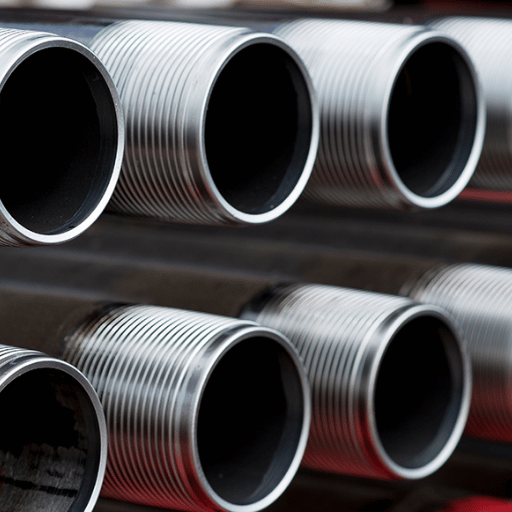
OCTG is not a single product – it is a family. All three product types perform separate functions in the construction and production of wells, each with varying size ranges, connections systems, steel grades and load requirements. The key parameters are summarized in the table below for side-by-side comparison.
| Parameter | Casing | Tubing | Drill Pipe |
|---|---|---|---|
| Primary Function | Lines and stabilizes borehole; isolates geological zones | Transports produced hydrocarbons from reservoir to surface | Rotates drill bit; circulates drilling mud |
| Typical OD Range | 4-1/2″ to 20″ | 1.050″ to 4-1/2″ | 2-3/8″ to 6-5/8″ |
| Standard Length | R3 (~40 ft / 12 m) | R2 (~30 ft / 9 m) | R2 or R3 (27–31 ft / 8.2–9.4 m) |
| Connection Type | BTC, LTC, STC, premium threads | EUE, NUE, BTC, premium threads | Tool joints (NC, IF, FH series) |
| Common Grades | J55, K55, N80, L80, P110 | N80, J55, L80, P110 | G-105, S-135, E75 |
| Position in Well | Permanent — cemented in place against borehole wall | Retrievable — run inside production casing string | Temporary — retrieved between drilling intervals |
What is the difference between casing and tubing?
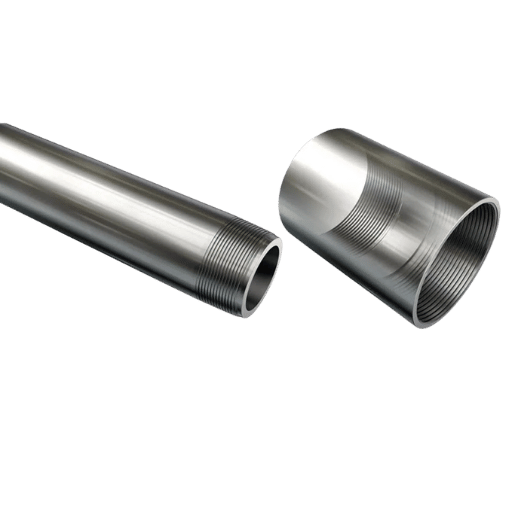
Casing and tubing are both casing and tubing OCTG products, but are used in very different stages of well life. Casing is run during drilling and cemented in place in the completed wellbore for structural support, borehole stability to prevent collapse, isolation of freshwater zones from producing zones, and keeping in wellbore pressures. Completed casing remains in place permanently.
Tubing is run inside of the completed casing after drilling and is the primary vertical conduit for produced oil and gas to flow to the surface. It may be reclaimed from the wellbore and run in another wellbore in a re-worked well (more typical) whereas the common practice is to leave CAS in the wellbore. The fundamental engineering difference: casing must simultaneously withstand collapse (external pressure), burst (internal pressure), and axial tension (its own weight suspended in the well).
Tubing is designed primarily to withstand the external burst pressure of formation fluids and wells due to the temperature of high temperature hot reservoir fluids flowing upward.
Both products conform to API 5 CT but at different dimensional series, coupling design and weight-per-foot; signifying the different function each plays in the well.
API 5CT Steel Grades: From J55 to P110
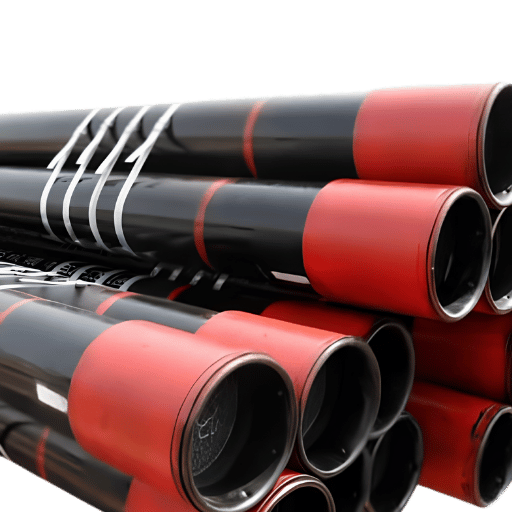
The API 5 CT specification includes eight basic different OCTG casing and tubing steel grades with each documented with a minimum yield strength, maximum yield strength, minimum tensile strength, maximum and minimum heat treatment requirements and essential sour-service qualification. The importance selecting the proper actual grade chosen to procure cannot be understated – procure too low strength and the pipe will fail; procure a superiour excessive strength that adds unnecessary cost to a project for no downhole benefit.
| Grade | Min Yield (MPa/ksi) | Max Yield (MPa/ksi) | Min Tensile (MPa/ksi) | Heat Treatment | Sour Service |
|---|---|---|---|---|---|
| J55 | 379 / 55 | 552 / 80 | 517 / 75 | None or N&T | No |
| K55 | 379 / 55 | 552 / 80 | 655 / 95 | None or N&T | No |
| N80 Type 1 | 552 / 80 | 758 / 110 | 689 / 100 | N&T or Q&T | No |
| L80 Type 1 | 552 / 80 | 655 / 95 | 655 / 95 | Q&T | Yes (NACE MR0175) |
| C90 | 621 / 90 | 724 / 105 | 689 / 100 | Q&T | Yes (NACE MR0175) |
| T95 | 655 / 95 | 758 / 110 | 724 / 105 | Q&T | Yes (NACE MR0175) |
| P110 | 758 / 110 | 965 / 140 | 862 / 125 | Q&T | No |
| Q125 | 862 / 125 | 1034 / 150 | 931 / 135 | Q&T | No |
📐 Engineering Note: Sour-Service Grade Requirements
L80, C90 and T95 are the three designated sour-service OCTG grades available under NACE MR0175 / ISO 15156. They each require a certain hardness limitation to be respected, in the case of L80 the its maximum hardness is 22 HRC, whereas for C90 and T95 it is 25.4 HRC. These limitation are established because hardness above these levels generally leads to early sulfide stress cracking in an HS environment. N80 Type 1 shares with L80 the same minimum yield strength however it has the hardness limitation removed and doesn’t receive the quench-and-temper heat treatment so is not compatible with sour service.
The heat treatment notations – N&T (normalize and temper) and Q&T (quench and temper) – continue to reflect different types of microstructural conditioning. Q&T has a tempered martensite structure which in turn creates a better ambient toughness, tighter and more controllable hardness batch limits and ultimately better resiliency to hydrogen embrittlement is for these reasons all sour-service grades are formulated to Q&T standards.
In order to go from a J55/K55 minimum yield strength to that of a 725 MPa (105 ksi) minimum tensile, the answer lies in K55, which has the same minimum J55 K55 yield ascribed and its minimum tensile is increased to 655 MPa (95 ksi). For applications which cap the collapse design by the wellbore collapse design (a consideration when selecting product for surf casing), K55 offers a solution. Collectively there are possibly the most popular grades purchased on a global basis as they offer a cheap alternative to the more expensive grades on shallow, non sour wells.
How OCTG Is Manufactured: Seamless vs ERW
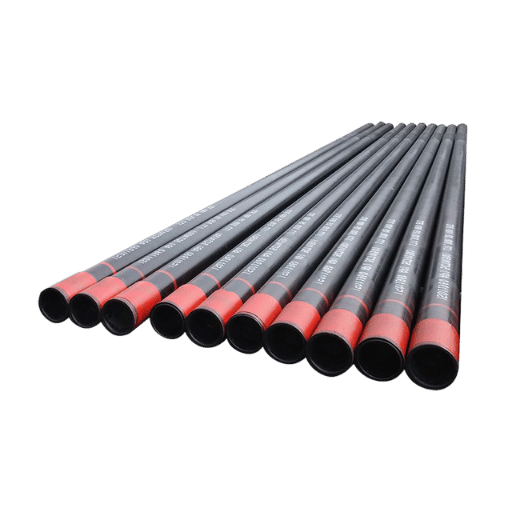
OCTG casing and tubing are rolled by a number of processes (seamless or electric resistance welded (ERW)). Again these decision are not simply cost driven, they can have an effect on downhole performance, especially at high pressure and sour-service conditions.
Advantages
- No weld seam — uniform circumferential strength throughout wall
- Handles higher collapse and burst pressures
- Mandatory for sour-service (H₂S) applications
- Preferred by operators for deep, high-pressure wells
- Better resistance to sulfide stress cracking
Limitations
- Higher raw material cost (solid billet vs. strip)
- Longer lead times from steel mills
- Wall thickness tolerance slightly wider than ERW
Advantages
- Lower production cost — formed from flat strip stock
- Faster production cycles and shorter lead times
- Tighter dimensional tolerances (wall thickness, OD)
- Acceptable for low-pressure, non-sour surface casing applications
Limitations
- Weld seam is a potential weak point in cyclic loading
- Weld zone more susceptible to sulfide stress cracking
- Not permitted for sour-service or high-pressure deep wells
- Weld seam integrity depends heavily on inspection thoroughness
Seamless Manufacturing Routes by Outside Diameter Range (from IMOA):
| OD Range | Process |
|---|---|
| 21–178 mm (0.83″–7.0″) | Continuous mandrel rolling / Push bench process |
| 140–406 mm (5.5″–16.0″) | Plug mill rolling |
| 250–660 mm (9.8″–26.0″) | Cross-roll piercing + pilger rolling |
💡 Common Procurement Mistake
Another common OCTG related mistake. Choosing ERW casing in high pressure or sour zone situations. The weld seam has a highly different microstructure to that of the bulk parent metal, even after post weld heat treatment (PWHT), the weld zone cannot resist hydrogen as effectively as the parent material leading to embrittlement and will fail catastrophically. This failure mode could be rapid and catastrophic. The increase in initial material cost of seamless for sour- service is far outweighed by the inevitable well integrity problems that would ensue.
OCTG in Oil and Gas Operations: From Spud to Production
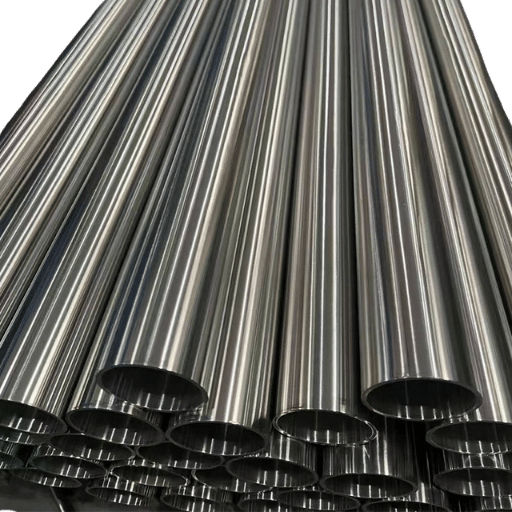
All oil or gas wells require a number of String producing various depths and using increasingly demanding grades of OCTG as the well depths increase. An understanding of this ordering process is necessary when selecting a product to match a specific well section.
- Conductor pipe (30-20 OD) – The outermost string which is driven or cemented to 50-150 ft (15-45 m) depth. Its function is to prevent surface collapse of unconsolidated materials near the wellhead and to act as a support base for the blow out preventer (BOP) stack. As it is exposed to relatively low pressures and is subject to inspection, J55 or K55 grade should suffice.
- Surface casing (13-3/8-20 OD) – Cemented from surface to 1,000-3,000 ft (300-900 m). The surface casing provides a regulatory and safety purpose by plumbing freshwater aquifers from the rest of the potentiated formation mass below. Depth is controlled by regulations, but most authorities specify a minimum 100 ft (30 m) of separation from the deepest source of fresh water. Steel pipe grade for surface strings is often J55 or K55 grade.
- Intermediate casing (9-5/8-13-3/8 OD) – Installed up to 3,000-12,000 ft (900-3,600 m) to isolate zones of abnormal formation pressurization, lost circulation channels, and stability/strength issues associated with shale formations. Intermediate casing must be equipped to handle both collapse loads (exerted by the formation) and burst loads (imposed by gas if encountered). Common grades include N80 and L80.
- Production casing (5-1/2-9-5/8 OD) – Cemented across the perforated zone that delineates the targeted formation, and designed to contain reservoir pressure during the life times of the well. Reservoir depth, HS content, temperature, and long term corrosive properties all factor into grade selection, with P110 often specified for deep wells and L80 or T95 specified in sour environments.
- Production tubing (2-3/8-4-1/2 OD) – Inserted down the wellbore once cementing is complete; the production conduit through which the oil/gas flows to the surface. Unlike casing, the tubing string can be unearthed and replaced via workover activities. Selecting the tubing/annulus combination requires proper assessment of flow assurance issues and the character of the produced fluid.
- Drill pipe (2-3/8-6-5/8 OD) – The diameter of the pipe used during the early phase of the well’s life; it is removed before installation of the production casing string. Drill pipe transmits rotational force and axial load to the drill bit through variable torque while pumping mud and cuttings down the center of the pipe. It is common to see pipe grades G-105 or S-135 appearing in the industry today for deep wells with ‘high angle’ deviations.
What is OCTG in oil exploration?
When considering the oilfield, OCTG is a term used to describe the tubular steel items that make entry and production a reality. In the exploration stages, drill pipe reaches the target zone; during appraisal it carries the casing that allows a less compromised analysis; during development it carries the full string set of conductor, surface, and intermediate casing; in the production phases it carries oil and gas to the surface while the casing maintains formation pressures. In not one of these stages is the product divorced into a single piece; ultimately, the OCTG is the foundation of every process that begins at the wellhead and ends with decommissioning. Without API 5CT-compliant OCTG it would be difficult to make oil exploration happen; it would be impossible to produce ever-deeper, hotter reservoirs at the pressure extremes of the 21st century.
💡 Load Combination Note
The ultimate strength of every casing string is tested when subjected to three types of loading conditions simultaneously.. axial tension force: dead weight of suspended string, Collapse pressure: formation fluid plus overburden pressure, Burst pressure: gas influx or kick to inside of pipe via, formation fluid pressure. Engineering always considers these three loading conditions in the worst cases. If however, engineering does not consider one load case and the remaining two are over designed but within limits the consequence may be a complete well failure, through-bore blow-out from the flow path, and a full blown surface blow-out.
OCTG vs Line Pipe: Standards, Threads, and Applications
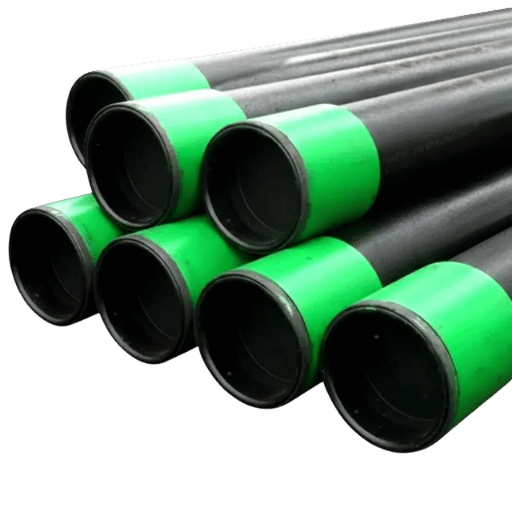
One of the more often misunderstood aspects of tubulars for procurement purposes is differentiating between OCTG (drilled to API 5 CT) and line pipe (drilled to API 5L) even when it is not obvious from the outside. They look enough alike that they may be taken for each other, but they are totally not interchangeable from a load perspective.
| Parameter | OCTG (API 5CT) | Line Pipe (API 5L) |
|---|---|---|
| Application | Downhole (inside the wellbore) | Surface (transmission between facilities) |
| Standard | API 5CT / ISO 11960 | API 5L / ISO 3183 |
| End Connection | Threaded (BTC, EUE, premium — gas-tight seal) | Beveled ends for field welding |
| Design Criteria | Collapse + Burst + Axial tension (triaxial) | Internal pressure (hoop stress dominant) |
| Grade System | J55, K55, N80, L80, P110, Q125… | X42, X52, X60, X70, X80… |
| Manufacturing | Primarily seamless (ERW for limited surface casing) | Seamless, ERW, LSAW, SSAW |
| Thread Requirement | Mandatory — mechanical gas-tight seal underground | None — joined by field welding at surface |
What is the difference between line pipe and OCTG pipe?
The essential difference between them is where the pipe is working and what loads it has to withstand. OCTG has been engineered for downhole use—it is used within a pipeline of the earth’s formations where is must simultaneously withstand collapse from the pressure of the formation, burst from that of the circulating fluid and support the axial load of its own weight 10,000 ft or more in the air. It must have threaded connections which will withstand the high pressure sealant gas without leaking over several decades.
Line pipe has been engineered for surface running into transport through the pipeline structure of the earth, so it must withstand the high hoop pressure of the fluid product that it is conducting, in the form of line pressure. It has welded joints and is made to a whole different set of standards (API 5CT compared to API 5L). Their grades are not compatible—a J55 casing may have similar dimensions to a X52 line pipe but can hardly be expected to behave similarly under both circumstances.
📐 Decision Framework: OCTG vs Line Pipe
Use OCTG (API 5 CT) when your pipe is going down-hole and needs to be colgapse, tensile, and burst resistant or when you need a gas tight threaded connection. Use line pipe (API 5 L) when you are using it to transport fluids at the surface between facilities under primarily internal pressure and when you are using it with a field weld. If you combine the products in the wrong application you will void the design basis of the standard and can lead to unquantified liability.
OCTG Inspection: Standards, NDT Methods, and Acceptance Criteria
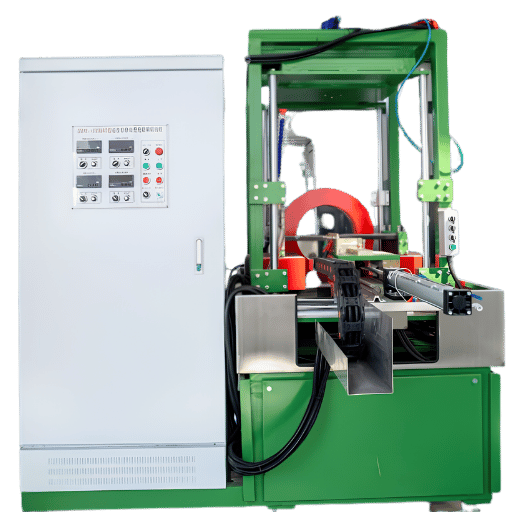
API 5 CT Section 10 specifies the required inspection regime for OCTG products. You have no choice – inspection failures are one of the leading causes for OCTG rejection either at receiving inspection or, more costly, after the pipe is already in the hole.
OCTG Inspection Checklist (API 5CT Section 10)
Dimensional confirmation: OD, wall thickness, length and weight per foot checked according to table C.24 API 5CT tolerances
Hydrostatic testing – every pipe body was tested to the API 5 CT minimum test pressure, for the specified pipe weight and grade
The ultrasonic testing (UT) – n80 and above – repaid the wall thickness variations, the longitudinal and transverse flaws.
Electromagnetic inspection (EMI) – full length inspection of the pipe body for surface and near surface defects within the pipe body.
Magnetic particle inspection (MPI) – undertaken in end areas, thread zone, where maximum stress concentration occurs.
Visual inspection—s surface condition, thread profile geometry, make-up of coupling, verifying drift gaps.
Hardness testing – all sour service grades L80 ( max 22 HRC), C90 ( max 25.4 HRC) T95 (max 25.4 HRC) standard.
📐 Engineering Note: API 5CT Addendum 1 (2025)
Section 10 of API 5 CT specifies the testing requirements for all N80 and above grades to be full-length UT. For sour-service grades (L80, C90 and T95), the testing requirement is 100% hardness testing—test shall not be more than 22 HRC for L80 and 25.4 HRC for C90 and T95. The Addendum 1 to 11 th Edition of API 5 CT came into effect on 1 May 2025 further refine the manufacturing requirement for casing and tubing in drilling and production operations and especially for the dimensional tolerances, the dimensional precision and the mechanical property verifications at the pipe end areas where the connections are turned into shape.
“Field Experience: The Prevailing Cause of Rejections is Thread Damage”
Industry practitioners consistently state that thread damage during shipment and storage is responsible for more OCTG rejections at the rig site than manufacturing defect in the pipe body. As much as a million dollar failure in gas-tight seal at cementing can occur with only one damaged thread of a production casing joint. Correct use of thread protectors, pipes handling procedures and thread inspection prior to run is not any optional add-on improvement but part of OCTG quality management programs to be ordered and confirmed on receipt.
How to Select OCTG for Your Downhole Environment
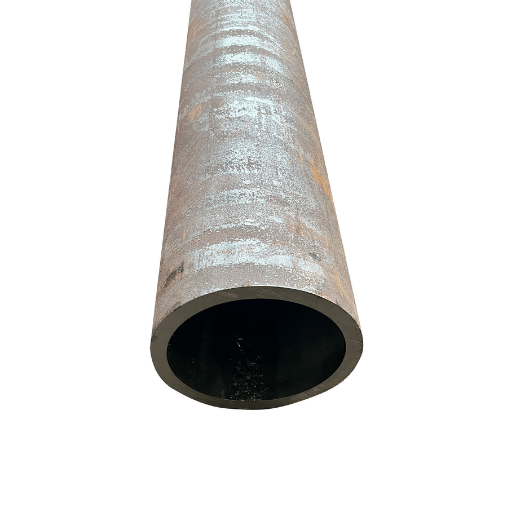
OCTG selection involves ensuring the five critical well parameters are suitable for the grade, wall thickness and connection type. The following is a guide line – the complete wellbore load analysis should be completed by a competent drilling engineer before final string design.
| Factor | Condition | OCTG Requirement |
|---|---|---|
| Well Depth | < 5,000 ft (< 1,500 m) | J55 / K55 typically adequate for non-sour, non-HP wells |
| Well Depth | 5,000–12,000 ft (1,500–3,600 m) | N80 / L80 minimum for production string |
| Well Depth | > 12,000 ft (> 3,600 m) | P110 / Q125 — high tensile strength for dead-weight load |
| H₂S Presence | Any detectable H₂S concentration | L80 / C90 / T95 only — NACE MR0175 / ISO 15156 mandatory |
| Temperature | > 150°C (302°F) | CRA alloy or high-alloy grade — consult materials engineer |
| Collapse Load | High external pressure (deep wells, depleted formations) | Higher wall thickness (heavier weight/ft) in same grade |
| Budget Constraint | Cost-sensitive, non-sour application | N80 Type 1 over L80 — same minimum yield, lower cost (no hardness control premium) |
⚠️ Important: Sour Service Grade Requirements Are Non-Negotiable
Choosing a non-sour-service grade (J55, N80 Type 1, or P110) in a well with HS exposure violates NACE MR0175 / ISO 15156, and causes an immediate hazard in the form of sulfide stress cracking. High-strength steels that are not hardness-mapped will not succeed under sour conditions, and not necessarily with warning. No cost saving is involved here; there is a safety consequence that could lead to catastrophic loss of well-control, environmental damage, and criminal liability.
API 5CT only has L80, C90, and T95 grades qualified for down-hole sour-service.
OCTG Market Outlook: Industry Trends Shaping 2025–2026
Global OCTG Market Size
$37.82B → $40.38B
2025 to 2026 | CAGR ~6.8% | Source: Fortune Business Insights
Three key structural factors are fueling OCTG consumption growth through 2026: (i) oil-directed global rig count recovery in the wake of the 2020-2022 downturn is flowing through directly into consumable demand – each well drilled creates a need for a set of casing, tubing and drill pipe; (ii) deepwater and ultra-deepwater fields are continually being developed in the Gulf of Mexico, Brazil’s pre-salt, and West Africa, demanding enhanced-performance API P110 and Q125 level OCTG and gas-tight premium connections, both of which are priced on significantly higher margins vs API standard thread product; (iii) ameliorating API 5CT full compliance mandates – including the June 2025 Addendum 1 updates – are raising the quality floor/stranding out non compliant product from lower cost providers.
It enhances the Standard for the manufacture of steel casing and tubing for use in oil and gas drilling and production operations.
– American Petroleum Institute, de API 5CT Addendum 1 (29 may 2025)
On the materials side, Mo levels in premium OCTG grades are increasing – from circa 0.4% Mo to 0.75% Mo content – in response to higher percentage of deep, hot, sour wells in new field developments. Molybdenum improves hardenability and pitting corrosion resistance for chloride environments. it is also becoming an increasingly important design parameter for sour-service OCTG metallurgy.
💡 Procurement Planning Note for 2026
For procurement teams developing 2026 well programmes, step up planning of supply contracts. Increasing rig count and more restrictive API 5CT conformance rules are constraining available supply of fully conformant, certified OCTG – especially for sour-service grades (L80, C90, T95) and premium couplings /connections. Spot market availability of conformance-satisfied product in H2 2026 is likely to be more limited than it is today. Operators with identified well programmes should issue RFQ’s 6-9 months in advance of critical path OCTG needs.
Frequently Asked Questions: OCTG
What is the meaning of OCTG?
View Answer
OCTG (Oil Country Tubular Goods) is the umbrella term for both seamless and welded tubular steel products supplied for oil and gas well construction under API Specification 5CT. The classification refers to three types of product – casing (which lines the borehole), tubing (which carries the produced fluid to surface), and drill pipe (which rotates the drill bit). All three must conform to API 5CT to be considered OCTG.
What is the difference between line pipe and OCTG pipe?
View Answer
OCTG (API 5CT) is designed for downhole operation in a wellbore (vs. API 5L for transmission of fluids in a pipeline). OCTG must resist collapse, burst and axial tension simultaneously, and its joints are threaded for gas-tight sealing underground. API 5L is designed for surface operation where internal hoop stress is the dominant load; joints are field-welded rather than threaded. The respective grade designations are different (J55/N80/P110 for OCTG vs. X42/X60/X70 for line pipe); the products are not interchangeable.
What is an OCTG inspection?
View Answer
OCTG inspection is the quality control suite of tests prescribed by API 5CT Section 10. It includes inspection of diameter and wall thickness, hydrostatic pressure test, ultrasonic inspection (UT) of internal and wall defects, electromagnetic inspection (EMI) of surface flaws, Magnetic Particle Inspection (MPI) of welded ends and threads, visual examination of surface and thread profiles, and hardness test as appropriate to octg quality. All hardening and normalized wall thickness grades (N80 and above) require full-length UT examination. The aim of the inspection is to verify the integrity of each joint prior to installation, when a failure would be expensive and hard to recover.
What is the difference between ERW and seamless OCTG pipe?
View Answer
Seamless OCTG pipe is made from a solid steel billet that is hot-pierced and hot-rolled, meaning there is no weld seam and the pipe wall features a consistent strength and microstructure around its circumference. ERW pipe is made from flat steel strip that is roll-formed and resistance welded along a longitudinal seam, creating a weld zone with a microstructure different than the parent metal, and considerably more vulnerable to sulfide stress cracking in HS environments. Seamless is favored in high-pressure wells, sour-service wells, and anywhere else weld integrity cannot be assured. ERW is favored for low-pressure, non-sour surface casing situations at the lowest-cost. API 5CT allows either manufacturing process, but the sour-service grades (L80, C90, T95) are normally made seamless.
How can I reduce my OCTG costs?
View Answer
While the major cost-saving measures will relate to the technical (or high-value) elements of OCTG package design, the largest bore-hole specific cost reductions are best achieved through improving the economics of the OCTG supply chain. Cost reduction options are: (1) Specifying the lowest both technically suitable grade – L80 Type 1 is the most affordable grade that will perform just as well as T80 in non-sour wells, and costing significantly lower. (2) Combining orders with other owners to improve the mill-order pricing (i.e. not diverting to spot supply) – buys cheaper. (3) Creating long-term OCTG plan and scheduling procurement well in advance – avoids spot premium. (4) Achieving bulk order discounts by standardizing connections (premium threads are a costly premium – use only where required by well profile). (5) Inspections-on-delivery instead of-on-hole – avoids rejected tubing slashed by the cost of the inspection.
What is OCTG in oil exploration?
View Answer
The physical capability of reaching, setting, and testing subsurface hydrocarbons is unquestionably dependent on the physical availability, dimensionally specification, manufacture, and supply of oil-tool steel. During oil exploration, drill pipe is used to physically set, and get past, exploration wells; casing is run and set sequentially to drill deeper; cemented casing strings are also established to preserve wellbore geology during appraisal well discharge. As times, pressures, and volumes increase, these physical pieces in turn assure compatibility with formation integrity, bottom hole pressure control, and safety.
Ready to Source OCTG for Your Next Well Program?
We bale machine steels and tubing to meet API 5 CT specification, offering every grade from J55 to P110, with certified mill documents, third-party testing, competitive turn-around times, and min-max requirements for both spot and large-volume orders. Our of oil-tool stock include the entire API 5 CT smooth-wall and ERW sizes and grades range.
About This Technical Guide
This article was compiled by the Baling Steel technical team with reference to API Specification 5 CT (11 th Edition, December 2023 edition), API 5 CT Addendum 1 announcement (May 2025 edition) and OCTG metallurgy and manufacturing technology published by the International Molybdenum Association. Market size data is from industry reports published by Fortune Business Insights. All values of mechanical properties within the API 5 CT grade table are cross checked with the published specification – use the current edition of API 5 CT for engineering design.
This article covers all the Oil Country Tubular Goods (OCTG) products including casing, tubing and drill pipe as published under API 5 CT / ISO 11960.
References & Sources
- American Petroleum Institute (API specification 5 CT, 11 th edition, December 2023) API specification 5 CT can be found on the American Petroleum Institute (api.org).
- Molibdeno negli OCTG (Oil Country Tubular Goods) International Molybdenum Association (imoa.info)
- Oil country tubular product market size, share and industry analysis The Fortune Business Insights
- API 5CT is the specification for casing and tubing that are used in the oil and gas industry. This particular document is Addendum 1 to the 11 th edition (May 2025) by the American Petroleum Institute
- Oil Country Tubular Goods: Copy of Measures in Force – Canada Border Services Agency (cbsa-asfc.gc.ca)
Related Articles
- The Ultimate Guide to Casing and Tubing
Complete technical reference for API 5CT casing and tubing products, grades and well design considerations.
- The Ultimate Guide to Drill Pipe
A full reference on grade of drill pipe, tool joints, inspection and selection of the drill pipe for rotary drilling.
- Difference Between Casing and Tubing
Side by side comparison of 2 major OCTG product groups–function, dimensions, grades and application in wells.
- Sucker Rods: Backbone of Oil Well Operations
Technical report of various types, grades and performance of the sucker rod system used in artificially lift Well Production System.
- The Ultimate Guide to Steel Casing Pipe
Steel Casing Pipe specification, dimensional ranges & application engineering. Full technical reference for the complete specifications on any size or thickness of steel casing pipe used in well construction.