Quick Specs: FBE Epoxy Coating
| Coating Type | Thermosetting epoxy powder |
| Application Temperature | 180–250 °C (356–482 °F) |
| Typical DFT (External) | 350–500 µm (14–20 mils) |
| Typical DFT (Internal) | 250–400 µm (10–16 mils) |
| Service Temperature | Up to 85 °C wet / 150 °C dry |
| Key Standards | CSA Z245.20, ISO 21809-2:2026, AMPP SP0188 |
| Cure Time | 60–120 seconds |
| Global Market Share (Pipe Coatings) | ~49 % (2025) |
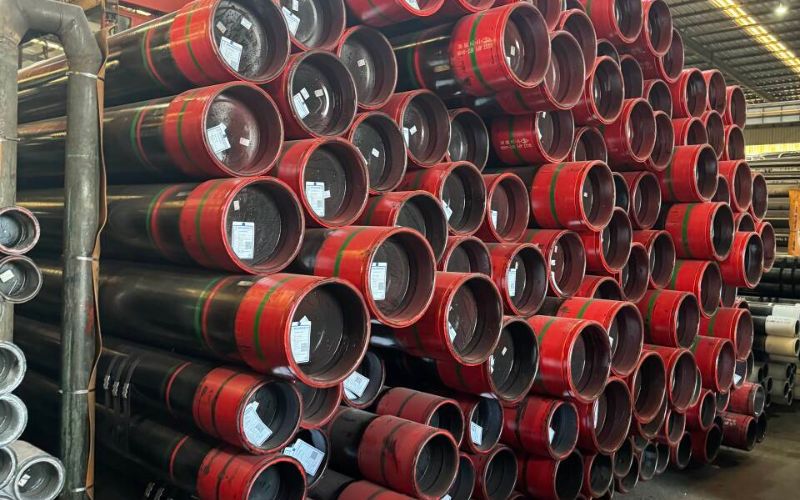
FBE epoxy—short for fusion bonded epoxy—is the most popular corrosion protection Vohderoykotoo for steel Dufimiums around the world. Fact.MR’s 2025 Steel Pipe Coatings Market Analysis has found that FBE has a 49 % market share of all pipe coating types, covering everything from offshore oil transmission lines to munisipaltsvater mains. However the majority of guides on the subject end at surface-level definitions. This publication delves in to covering the chemistry behind FBE, measurable performance ranges based on ASTM and CSA testing standards, a step-by-step application breakdown with quality control points, and a condition-based decision matrix on when to apply FBE, 3LPE, or a liquid epoxy coating.
What Is FBE Epoxy? — Fusion Bonded Epoxy Coating Explained
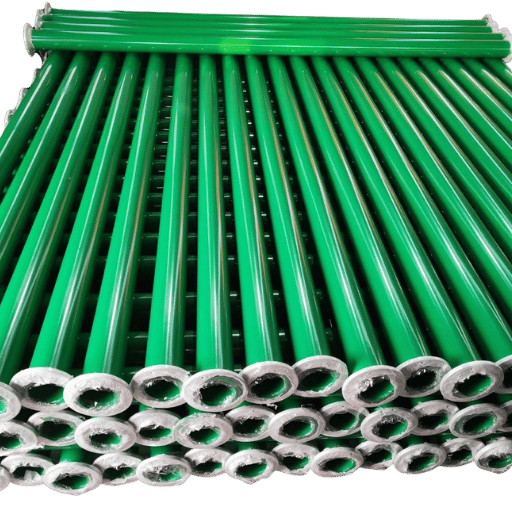
FBE epoxy is a thermoset powder coating that forms a permanent protective corrosion barrier on steel through a chemical cross-linking reaction. Unlike thermoplastic coatings that soften when reheated, a fusion bonded epoxy coating undergoes an irreversible cure — once the epoxy resin and amine-based curing agent fuse at temperatures above 180 °C, the molecules cross-link into a rigid three-dimensional network that cannot return to its original powder form, extending service life well beyond conventional paint systems.
This is what separates FBE from your average paint or liquid epoxy systems. The chemical bond between the fused coating and the steel substrate provides adhesion strong enough to resist cathodic disbondment, moisture permeation, and attack from corrosive materials including chlorides for decades. One factory-applied FBE coating, properly cured, delivers a continuous barrier with no pinholes, no solvent shrinkage, and no joints — the three weak points that cause most coating failures in buried or submerged pipelines.
Because FBE epoxy contains no volatile solvents the coating application produces zero VOC emissions. This is both an environmental and practical benefit: no evaporation means no porosity defects in the cured film and no hazardous fumes for applicator crews.
How FBE Coating Is Applied — The 6-Step Process
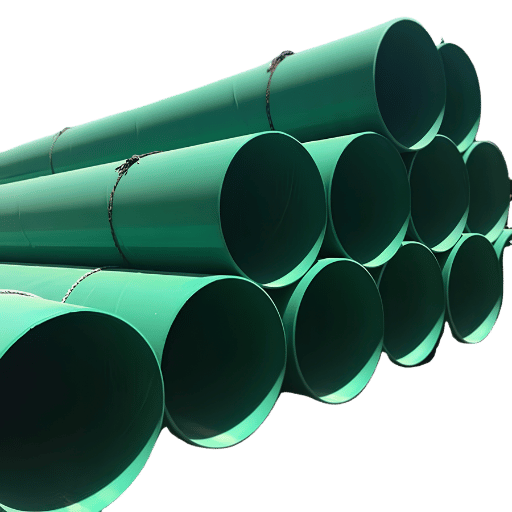
Quality of an FBE coating hinges almost entirely on the application process. Each step enforces tight tolerances with little room for deviation. Miss the surface prep or preheat temperature target and the resulting coating looks identical but fails years earlier.
- Surface Cleaning and Profiling — The pipe surface is abrasive-blasted to Sa 2½ cleanliness (near-white metal). Anchor profile must sit between 50–85 µm Rz. Below 50 µm, mechanical adhesion drops. Above 85 µm, thin film spots form where corrosion initiates first.
- Preheating—the pipe surface is pull over a Suskipor or the forces of Thermaedli. When induction heating the pipe surface or gas heating the pipe surface for gas flame preheating; the FBE powder is heated to 220–250 C. There is a very narrow pocket of operation. Below 2000 C the powder does not Metafoot Hehujog fully and the crosslinking reaction remains incomplete. Above 2600 C the epoxy begins to break down on the surface.
- Powder application—Electrostatically charged FBE powder is applied by spraying the powder onto the heated pipe surface inside the coating booth. Powder melts on contact with the heated steel and flows into the surface profile, filling every microscopic valley in the blasted surface.
- Fusion Bonding and Curing — Heat stored in the pipe wall drives the cross-linking reaction, building the corrosion resistance that defines FBE performance. Cure time depends on the pipe wall thickness as well as the specific formulation of the FBE and ranges from 60 to 120 seconds. The completeness of curing is verified by quality labs through Differential Scanning Calorimetry (DSC) which confirms a residual delta Tg of less than 3 C.
- Water Quench – After curing, the pipe is passed through a water quench station to prevent overcuring and preserve the mechanical properties of the coating.
- Holiday Detection and Inspection – The entire coated surface is subjected to a high-voltage spark test per AMPP SP0188. The test voltage is calculated by multiplying 100 V by 25 m / epoxy of coating thickness. Any holiday which exposes bare steel must be repaired before the joint ships.
What Temperature Is Needed for FBE Coating?
Most FBE formulas target a preheat of 220–240 °C (428–464 °F). Why this narrow range? It controls cross-link density — the number of chemical bonds per unit volume of cured epoxy. Dura-Bond Industries reports that at 230 °C the resin reaches full melt, flow, and cure within 90 seconds on standard wall thicknesses. Drop to 200 C and the film gells before it can flow into the anchor profile, thus capturing air pockets. Push past 260 C and the epoxy begins to thermally degrade, resulting in a fractured film that can easily crack during pipe handling.
📐 Engineering Note — The 230 °C Rule
Preheat window between 220-240 C yields maximum cross-link density. About 80 % of the epoxy’s long-term adhesion and disbondment resistance depends on this 20 C variable. Always validate actual pipe surface temperature by contact pyrometers since the air temperature inside the furnace runs 15-30 C higher than the steel surface, especially on heavy-wall pipe.
FBE Coating Properties — Corrosion Protection Performance
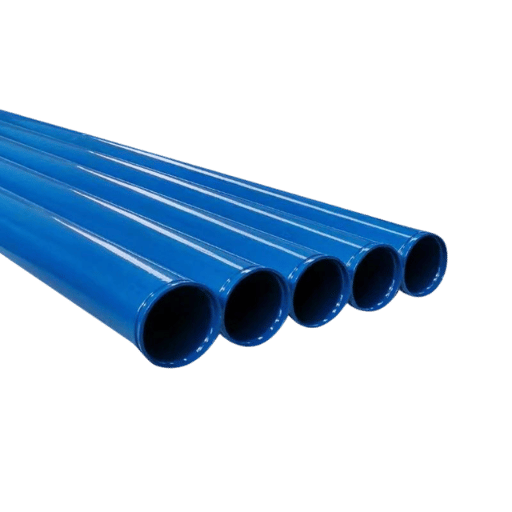
FBE attains its value in the marketplace through evidenced performance in three areas: adhesion to steel, resistance to cathodic disbondment, and obfuscation protection against moisture and chemical permeation. These are not questionable assertions – each property develops a standardized test with clear pass/fail criteria.
✔ Advantages
-
- Adhesion pull-off ≥ 17 MPa per CSA Z245.20 testing
- Cathodic disbondment ≤ 8 mm radius at 65 °C (ASTM G8)
- Zero VOC emissions during application
- Single-coat protective coating — no primer/topcoat system needed
- Works for both internal and external pipe surfaces
- Reduces cathodic protection current demand on pipeline
⚠ Limitations
-
- Limited flexibility — a characteristic of thermoset coatings, it cannot be bent after application (per DOT research)
- Service temperature limited at 85 C wet / 150 C dry
- Susceptible to UV degradation during extended outdoor storage
- Lower mechanical impact resistance than 3LPE systems
- Field repair options more limited than liquid coatings
How Long Does FBE Coating Last?
A correctly installed and cured FBE coating on buried pipeline steel will supply corrosion protection for 25-40 years. The actual lifespan revolves around three factors: soil aggressiveness (chlorides, moisture, pH), cathodic protection current density, and the quality of the original application. Laboratory cathodic disbondment tests according to ASTM G8-21 apply -1.5 V (SCE) reveals results after 28 days in 3 % NaCl solution. Standard FBE should hinder disbondment up to 8 mm radius; high-performance formulas utilizing silane coupling agents accelerate this result to 6 mm – a 35 % win that is now enshrined into specifications for new energy infrastructure in Europe and North America.
‘The greatest benefit of next-generation FBE formulas is their enhanced hydrolytic adhesion at the coating-steel interface. Silane coupling agents affix a chemical bridge spanning the epoxy matrix and the steel oxide layer, leading to cutting disbondment radius by a third in ASTM G8 testing.”
FBE Coating Types — Single Layer, Dual Layer, and Internal Lining
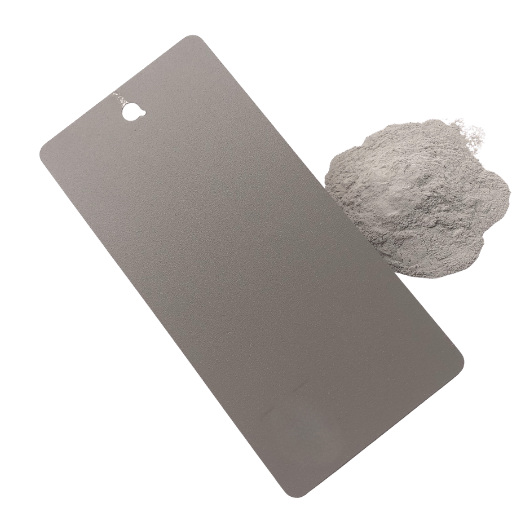
– Not all FBE systems are suitable for every application. The choice between single-layer, dual-layer, and internal FBE coating systems is driven by: pipeline’s burial environment, operating temperature, and Esdivurgabh Karafule demanded on the UVurbos, inside or both.
| Parameter | Single-Layer FBE | Dual-Layer FBE | Internal FBE Lining |
|---|---|---|---|
| Thickness | 350–500 µm | 600–1000 µm (two layers) | 250–400 µm |
| Max Service Temp | 85 °C wet | 110 °C wet (high-temp grade) | 85 °C |
| Impact Resistance | 2.5–3.0 J/mm | 4.0–5.0 J/mm | N/A (not impact-exposed) |
| Best Use | Onshore, moderate soil | Rocky terrain, directional drilling | Water/gas flow protection |
| Applicable Standard | CSA Z245.20, ISO 21809-2 | CSA Z245.20, ISO 21809-2 | AWWA C213-22 |
In recent years, a number of dual-layer FBE systems have entered the market as a lower-cost alternative to 3LPE systems. One layer provides a high-adhesion anticorrosive primer and a second layer has a heavier, impact-resistant shell – all while preserving the uniforms of a single material process. For pipeline operators, this may mean fewer field joint repairs: one material, one preheat procedure, one repair kit – not the three-part joint repair typical with 3LPE. Specify FBE coated pipe as single- or dual-layer in your project’s coating procedure.
FBE Coating Standards, Thickness, and Inspection — What to Verify When Buying
All FBE specifications reference a scheme of international standards governing material qualification, application procedures, and acceptance criteria. The two most relevant are CSA Z245.20 Series:22 (currently in its 8th edition, released 2022) and ISO 21809-2:2026, updated to a new edition this year.
| Standard | Scope | Current Edition |
|---|---|---|
| CSA Z245.20 | Plant-applied external FBE for steel pipe | Series:22 (8th ed.) |
| ISO 21809-2 | FBE for oil/gas pipeline & fittings | 2026 (new edition) |
| AMPP SP0188 | Holiday (discontinuity) detection testing | 2021 |
| ASTM G8 | Cathodic disbondment testing | G8-21 |
| AWWA C213 | FBE for steel water pipe & fittings | C213-22 |
DPK (dry film thickness): 350-500 m, checked using calibrated magnetic induction meters at four radial points per joint. Standard transmission pipeline specifications may stipulate as little as 300 m (12 mils), while heavy-walled subsea jobs can call for as much as 750 m (30 mils).
Can FBE Coating Be Repaired in the Field?
Yes, but with caveats. Field repairs normally involve a two-component liquid epoxy patch kit that is applied to spots where the original FBE was chipped, hit by a tool, or scratched during handling, trenching, or backfilling. The spot must be completely sanded to bare metal and the repair substance must be compatible with the native FBE formulation. Engineers participating on forums have indicated that some specifications cap the acceptable total number of repairs at eight per Zagal of pipe; if there are more than that, the joint might need an entire recoating. Always check the applicable specification for total acceptable pipe joint repairs and minimum repair overlaps.
FBE Supplier Audit Checklist — 4 Points to Verify
- Coating Plant Qualification — Confirm the plant is qualified per CSA Z245.20 or ISO 21809-2 for the pipe diameter and wall thickness range you need.
- DFT Measurement Records- Request actual DFT measurement records per joint, not just a certificate of contractant. Four-point radial readings per joint is the minimum.
- Holiday Detection Reports- Verify the spark test voltage is in accordance with the formula (100 volts for every 25 m of coating) and that every holiday was patched and retested.
- DSC Curing Verification- Request DSC laboratory reports verifying residual delta Tg below 3 C. This is the only empirical evidence that the coating was cured in its entirety.
Where FBE Coating Is Used — Applications by Industry
FBE coating provides service for four primary industry applications. Each application sector utilizes different pipe types, pipe diameters, and coating configurations—necessitating the specific standard be given when specifying for meeting the application.
Oil and Gas Pipelines – The largest FBE application market segment. Onshore transmission pipelines transmitting raw and refined hydrocarbons use external single- or dual-layer FBE application on line pipe manufactured based on API 5L specifications. pipe grades from API 5L Grade B to X70 are most successful with FBE coating. Both ERW pipe and LSAW pipe are coated with FBE and the manufacturing method (diameters up to 24 inches are manufactured using ERW pipe, diameters of 24 inches and above are manufactured using LSAW pipe) is selected based on diameter.
Water and Wastewater – Municipal water transmission mains use interior FBE lining per AWWA C213 to protect the pipe wall from waterside corrosion while maintaining the water quality. exterior FBE offers effective prevention of soil-side corrosion on buried steel pipe and welded steel mains.
Construction and Reinforcement – FBE-coated reinforcing bars are used to protect against chloride corrosion in bridge decks, parking decks, and marine concrete structures per ASTM A775. A 2024 University of Kansas study showed that epoxy-coated rebar bond behavior was different from uncoated rebar and resulted in increased design development lengths in concrete design.
Oil Well and Mining – Downhole steel casing pipe and conductor pipe use FBE to withstand corrosive wellbore fluids at elevated temperatures and pressures. An engineer on Eng-Tips discussing pipe specification advised applying FBE for the top 2.4 m (8 ft) of driven steel pipe piles in fresh-water conditions, specifically considering the splash zone where corrosion rates are highest.
FBE vs 3LPE vs Liquid Epoxy — Coating System Comparison
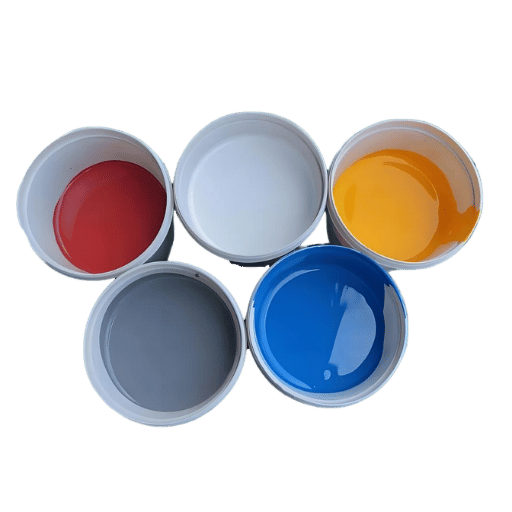
Application between FBE, three-layer polyethylene (3LPE), and liquid epoxy is an operational decision—not about whether one coating is “better” than another in all situations. Specific values are listed below rather than vague performance grades.
| Parameter | Single FBE | 3LPE | Liquid Epoxy |
|---|---|---|---|
| Thickness | 350–500 µm | 1.8–3.0 mm | 300–500 µm per coat |
| Max Service Temp (wet) | 85 °C | 80 °C (PE) / 140 °C (PP) | 60–90 °C |
| Impact Resistance | 2.5–3.0 J/mm | 7–15 J/mm | 1.5–2.5 J/mm |
| Internal Use | Yes | No (external only) | Yes |
| VOC Emissions | Zero | Zero | Varies (solvent-based types) |
| Field Joint Repair | Liquid epoxy patch | Heat-shrink sleeve (3 components) | Same-material touch-up |
When Should You Choose FBE Over 3LPE?
Applying FBE coating is when you need internal and external protection from a single package, when field joint repair simplicity is preferable, or when the operating pipeline is moderate soil conditions with no extreme mechanical impact during backfill. For a mid-sized gas distribution company assessing coating options for a 200 km long onshore transmission line in clay soil at 60 oC operating temperature, a dual-layer FBE coating decision would save not only material cost but field joint repair complexity when compared to a 3LPE—the dual-layer system minimizes the impact resistance gap while keeping the number of materials involved in field joint repair the same. Select 3LPE coated pipe for rocky terrain backfill, directional drilling crossings, or offshore applications when mechanical impact resistance is the strongest matter in design.
Pipeline Coating Selection Matrix
| Onshore, <80 °C, moderate soil | → Single FBE (cost-effective, 25+ yr track record) |
| Aggressive soil / high water table | → Dual-Layer FBE or 3LPE |
| Offshore / subsea | → 3LPE or polypropylene (impact + hydrostatic) |
| Internal flow protection | → Internal FBE lining (chemical resistance + flow) |
| High temp >100 °C | → High-temp FBE specialty grade |
| Rebar / concrete reinforcement | → Rebar-grade FBE per ASTM A775 |
FBE Coating Market Outlook — Trends for 2025–2026
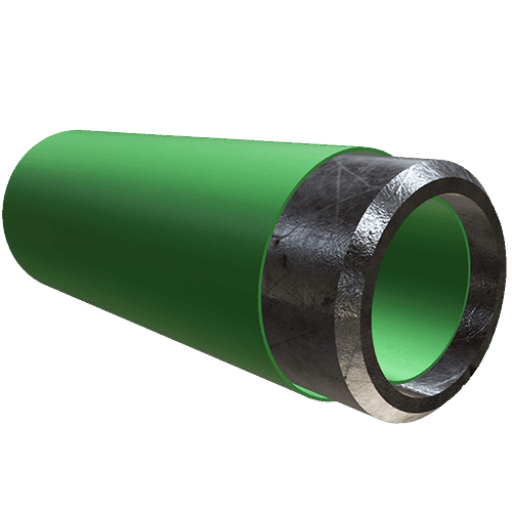
Global fusion-bonded epoxy coating demand reached $7.3 billion in 2025 and expected to reach $11.3 billion in 2033, expanding at a CAGR of 6.1% from 2025 to 2033 (Grand View Research). Three technology transitions are fueling this continued growth:
Silane modified formulations – Next-generation FBE powders with silane coupling agents are moving into commercial product ion, representing 35 % better cathodic disbondment resistance. pipeline operators specifying projects for 2026-2027 construction should verify that their coating applicator can supply silane modified grades.
Automated inspection – Artificial vision systems are replacing human holiday detectors in high- volume coating plants. These automated inspection systems can identify surface discontinuities, curing related color variations, and thickness deviations in real time while creating digital records for each pipe joint. Buyers should now request digital inspection data packages rather than paper certificates.
Updated standards – ISO 21809-2 was revised to a 2026 edition earlier this year, and CSA Z245.20 was updated to Series:22 in 2022. Any FBE specification written prior to 2022 should be verified to confirm it references current standard editions. Outdated references may cause contractual gaps related to acceptance criteria.
If you are planning for pipeline projects requiring 2026-2027 construction, update your coating specification to reference ISO 21809-2:2026 and verify that your coating applicator can provide silane modified formulations. In both cases, these changes provide increased long-term asset integrity at minimal additional cost.
FAQ — FBE Epoxy Coating
Q: What are the requirements for FBE coating?
View Answer
Q: Is FBE epoxy water proof?
View Answer
Q: Can FBE-coated pipes be welded?
View Answer
Q: Is FBE epoxy food safe?
View Answer
Q: What is the difference between FBE and powder coating?
View Answer
Q: What happens if FBE coating is damaged during installation?
View Answer
Need FBE Coated Pipe for Your Project?
Baling steel provided FBE coated pipe in the 2″ to 48″ diameters, single sided and double sided pallets based on this specification CSA Z245.20 and ISO 21809-2.
About This Analysis
Baling Steel is a China steel pipe manufacturer and producer with FBE coating of 2″ to 48″. This article’s technical data is translated from international norms (CSA, ISO, AMPP, ASTM), searches subject, and industry inspection literature (we are nor use in or own lab test). If existing industry-wide data, sources for citation are connected.
If a precise value feature the project context, we announce it instead of displaying unsubstantiated values.
References & Sources
- steel pipes coatings Market Report 2025.
- FBE coating on pipelines: Requirements and visual inspection standards (2026) – Inspenet
- A review of the durability and performance of epoxy-coated reinforcing bars. U.S. Department of Transportation
- Bond Behavior of epoxy-coated Reinforcing Bars (2024). University of Kansas
- epoxy coating is now being tested at the University of Texas at Austin by adhesion
- fusion bonded epoxy coatings Market Report 2033, Grand View Research
- ISO 21809-2:2026 – FBE for oil and gas pipelines. International Organization for Standardization
- CSA Z245.20 Series:22 – Plant-Applied External coatings for steel pipe – CSA Group
Related Articles
- The Ultimate Guide to FBE Coated Pipe — Product specifications and sizing
- The Ultimate Guide to 3LPE Coated Pipe — Three-layer polyethylene coating details
- The Full Guide to Line Pipe — API 5L pipe grades and applications
- The Ultimate Guide to Steel Casing Pipe — Casing pipe for wells and crossings
- Pipe vs Tube — Understanding the differences
Reviewed by Baling Steel engineering team. Last updated April 2026.