Whether you are sourcing material for structural frames, mechanical assemblies, or agricultural equipment, the same five factors govern what you pay per foot — and understanding them can shift your total spend by 20–30% without changing a single dimension.
Steel Tubing Price at a Glance
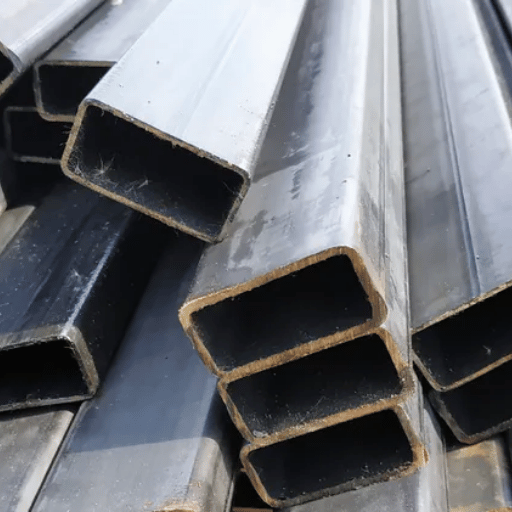
The graph below shows 2025 U.S. service-center retail pricing for A500/A513 carbon steel square tubing as a function of standard stock lengths (20-40 ft). Long custom cuts generate price premiums (see Section 5 for details).
| Size (Square Tube) | Wall Thickness | Grade | Approx. $/ft (Stock Length) |
|---|---|---|---|
| 1″ × 1″ | 16 ga (.065″) | A513 | $1.11 – $1.57 |
| 1″ × 1″ | 11 ga (.120″) | A500/A513 | $1.90 – $2.30 |
| 2″ × 2″ | 16 ga (.065″) | A513 | $2.32 – $2.84 |
| 2″ × 2″ | 1/4″ (.250″) | A500 | $8.67 – $9.25 |
| 3″ × 3″ | 3/16″ (.188″) | A500 | $11.07 – $11.53 |
| 4″ × 4″ | 1/4″ (.250″) | A500 | $19.38 – $20.25 |
| 6″ × 6″ | 1/4″ (.250″) | A500 | $29.98 – $30.23 |
Prices are approximate U.S. service-center retail for ERW carbon steel square tube at stock lengths. Pricing fluctuates with the HRC index, freight, and shipping costs. Mill-direct and international sourcing can reduce per-ton cost with longer lead times. Each product line may carry supplier-specific processing charges.
5 Factors That Determine the Price of Steel Tubing
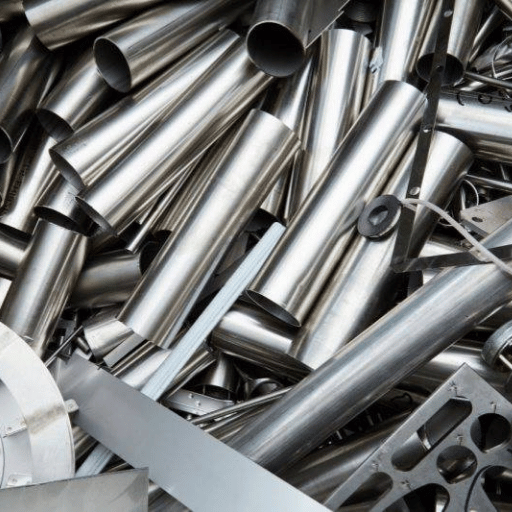
Every tubing price reflects five stacked decisions: what the steel is made of, how it is manufactured, what shape and wall you specify, how much you order, and where it ships from. The first two are often taken for granted — and that is where excess spend tends to hide.
The 3 Hidden Cost Drivers Most Buyers Ignore
- Raw material surcharges: Hot rolled coil prices feed directly into tubing cost. When HRC moves, tubing mills respond with base surcharges — often within 30–60 days. In early 2025, structural tubing mills announced a +$60/ton surcharge as HRC climbed from $719/ton in February to over $900/ton by May. Buyers who don’t track the HRC index absorb those increases passively.
- Grade over-specification is another silent cost driver. A500 Grade C structural tubing (UTS: 62,000 psi) costs more per ton than A513 mechanical tubing — yet many procurement teams default to “structural” without checking whether A513 meets their load requirements. The right grade for the application saves 8–15% without reducing safety margin.
- Short-cut charges from your own service center add up faster than most buyers expect. A single 12-inch cut from an online service center can price at $19.99–$37.99 per foot — versus $2.32–$3.05/ft for the same section ordered in 24-ft sticks. The cut charge is not the issue; the quantity logic is.
Scenario: A construction firm sourcing 500 linear feet of 2″×2″×11ga for a framing project had specified seamless tubing based on a decade-old internal standard. Switching to ERW A500 — which meets the same structural loading requirement — dropped their per-foot cost from ~$5.80 to ~$4.96, saving roughly $420 on that single line item. The spec change took one engineering sign-off.
The other two influences (wall/physical dimension and size order volume) are considered in individual sections below due to the precise level of data available.
Tubing Grade: ERW vs. Seamless vs. DOM
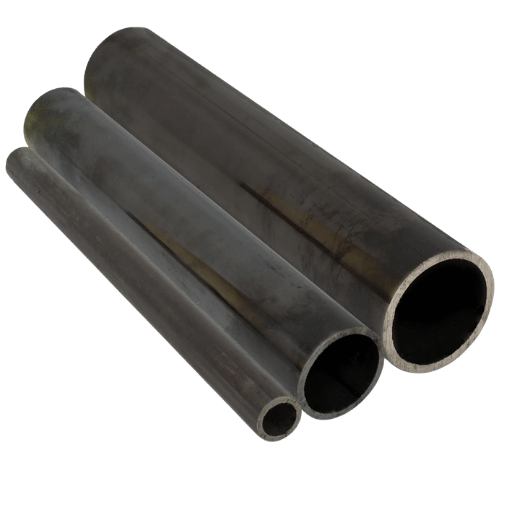
The manufacturing process is by far the largest lever that differentiates ERW pipe from seamless steel tubing and DOM — and it explains more of the price delta than most buyers realize. For a detailed technical comparison, see our ERW pipe guide and the pipe vs tube difference explainer.
| Grade / Process | Key Standards | Typical Applications | Relative Cost |
|---|---|---|---|
| ERW (A500 / A513) | ASTM A500 Gr B/C, ASTM A513 | Structural framing, trailers, agricultural equipment, solar racking, automotive components | Baseline (lowest) |
| DOM (Drawn Over Mandrel) | ASTM A513 Type 5 | Hydraulic cylinders, precision shafts, roll cages, mechanical applications requiring tight OD/ID tolerances | +15–25% vs ERW |
| Seamless (CDS / HRS) | ASTM A106, A519, API 5L | High-pressure hydraulics, oil & gas OCTG, high-temp service, corrosive environments | +20–30% total cost vs ERW |
The so-called ‘twice the cost’ argument for seamless tubing overstates the delta. Cost studies in the pipe industry estimate material margins at 15-20% on raw material, with lifecycle costs approximately 20-30% higher for equivalent specifications. Seamless justifies the difference through wall thickness consistency, lack of weld seam weakness, and reliable ratings over 4.0 MPa working pressure—attributable to the fact that ERW can not (under most piping specifications) legally qualify for these conditions.
For structural, mechanical, and construction tubing requirements, ERW A500/A513 suffices. When superior bore accuracy is a requirement, DOM bridges the cost gap. For service requirements exceeding 4.0 MPa working pressure or involving corrosive media, consult our seamless pipe and carbon steel tube datasheets for the right specification.
How Wall Thickness and Dimensions Affect Price Per Foot
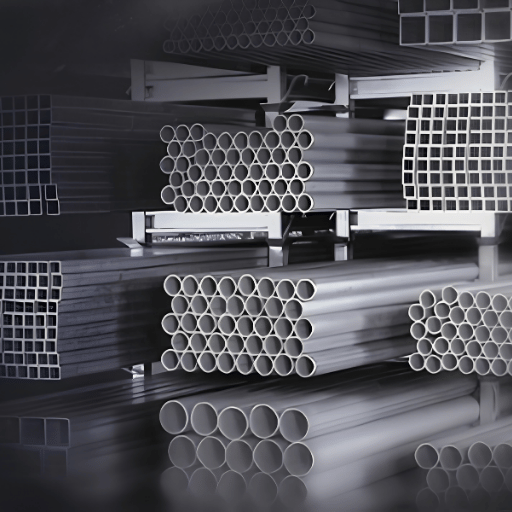
Steel tubing is sold by weight. The price per foot you see on a quote is simply: weight per foot × steel price per pound, plus processing margin. That means wall thickness — not outer dimension — is the dominant driver of cost per linear foot.
What is the price of steel pipe per foot?
For standard A500/A513 pipe weight per foot reference: a 2″×2″ square tube in 16-gauge wall (0.065″) weighs 1.71 lb/ft and prices around $2.32–$2.84/ft at a U.S. service center. Move to a 0.250″ wall on the same 2″×2″ section — now 5.41 lb/ft — and you are at $8.67–$9.25/ft. Same outer size, 216% more steel per foot, proportionally higher cost.
The ASTM A500 tolerance on wall thickness is ±10%, which means a nominally 0.120″ wall can be delivered anywhere from 0.108″ to 0.132″ and still be in spec. For structural applications this is usually acceptable. For precision mechanical or hydraulic work, DOM’s tighter tolerances (typically ±0.010″ on OD, ±0.005″ on wall) justify the premium.
How much does 2 square tubing cost?
A 2″×2″ A500 square tube at a full 24-ft stock length runs approximately $2.32/ft (16ga) to $9.25/ft (1/4″ wall) at U.S. service-center retail. A 20-ft stick at the mid-range — 2″×2″×11ga — typically falls around $95–$120 depending on your supplier’s current HRC-based pricing and location.
For pipe sizes outside the square tube range, the same weight-per-foot logic applies. Refer to our sizing reference for round, rectangular, and structural sections.
Order Quantity, Custom Cuts, and Freight
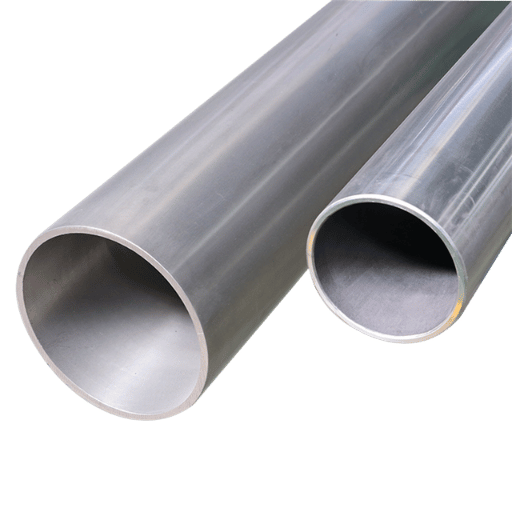
quantity and transportation is the most easily controlled component of the price arc for a buying team, yet it is often left unexploited. Consider this simple decision model:
| Scenario | Best Approach | Cost Impact |
|---|---|---|
| 1–50 ft, one-time | Online service center, custom cut | High $/ft; expect 2–4× stock-length rate + $2.50–$5.00/cut fee |
| 100–500 ft, recurring | Buy full-length sticks, self-cut or local saw service | Stock-length $/ft; saw service ~$10–$20/cut is still cheaper than short-cut premium |
| 500+ ft, project-basis | Blanket PO with service center or direct mill quote | Volume tier discounts; freight consolidation; possible fixed-price contract |
| Mill-direct (≥20 tons) | International mill or domestic EAF mill, 8–16 week lead | 10–20% below service-center pricing; requires storage capacity and lead-time tolerance |
Freight matters more than most budgets show. Under 150 lbs, a shipment typically moves via parcel carrier. Above that threshold — a single 20-ft stick of 2″×2″×1/4″ A500 weighs around 108 lbs — the order often shifts to LTL freight, and a $50–$80 freight surcharge can erase per-foot savings entirely on small orders.
Scenario: A fabrication shop sourcing 50 linear feet of 2″×2″×11ga at short cuts paid ~$5.37/ft plus a $65 LTL freight charge — effective cost: $5.37 + $1.30 freight allocation = ~$6.67/ft. The same shop ordering 500 ft in full sticks paid $4.96/ft with freight spread across a larger base — effective cost: $4.96 + $0.18 freight allocation = ~$5.14/ft. A 23% difference on an apples-to-apples product.
For companies evaluating steel tube suppliers internationally, be aware: as of May 2025, domestic lead times for structural ERW run 6–8 weeks; seamless runs 9–12 weeks domestic and 5–7 months from international mills.
Steel Tubing Prices in 2025: Market Trends
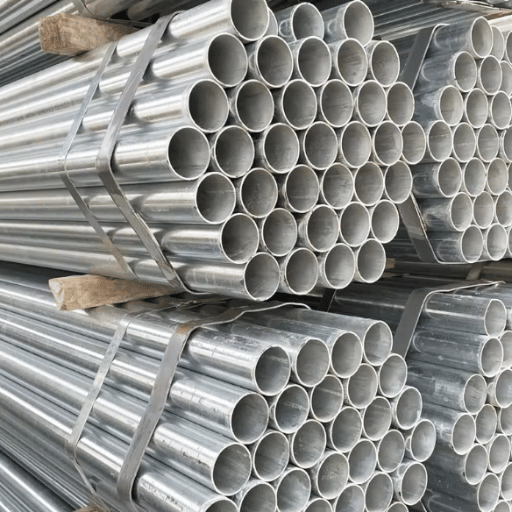
How much is a steel tube in 2025?
2025 opened with an aggressive price run. Hot rolled coil (HRC) — the primary feedstock for ERW tubing — climbed from approximately $719/ton in February to a spot range of $885–$938/ton by May, with Nucor announcing a CSP base price of $900/ton and Cleveland-Cliffs holding at $975/ton.
The catalyst: “demand was almost flat,” with buyers “wait-and-see,” but “anticipation by some [of a] 25% tariff on all [U.S. and foreign] imports [of steel and Aluminum]” that went into effect March 12, 2025. China received tariffs of as high as 145% in April before reaching a 90-day agreement to lower them to 30% in May. Impact: with current domestic markets subject to US-China tariffs of 25-30%, international tubing commands an effective 25-30% cost penalty over and above the base price. Lead times from Asian mills are 5-7 months.
Structural tubing prices stabilized in May — “very flat for 3 weeks” per Industrial Tube & Steel — while seamless experienced localized tightening as imports slowed. The HRC forecast for the remainder of 2025 from Metal Center News targets an average of $750–$800/ton, suggesting some softening from Q1 peaks but elevated relative to the 2022–2024 baseline.
Scenario: A procurement manager at a mid-size fabricator had watched HRC climb from $719 to over $900 between February and May. With the May stabilization signal and the 90-day US–China tariff pause in hand, she locked a fixed-price blanket order for Q3 structural tubing requirements at current service-center rates — avoiding the uncertainty of a further HRC spike if the tariff pause collapses.
How to Get the Best Price: Sourcing Strategies
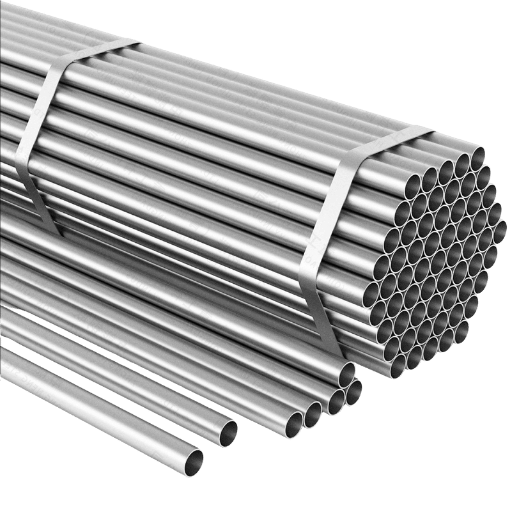
The top bottom: there is no best way to buy. Match your volume, lead-time requirements, and whether you buy standard stock or require made-to-order specifications to the optimal combination below.
| Channel | Price Level | Lead Time | Best For |
|---|---|---|---|
| Local service center | Retail + 15–25% | Days | Urgent, small qty, standard stock sizes |
| National service center (online) | Retail market rate | 1–2 weeks | Custom cuts, wide size selection, no minimum |
| Domestic mill / EAF | Wholesale (–10–15%) | 6–8 weeks | High volume, standard sizes, no tariff risk |
| Mill-direct international | Lowest (–20–30% before tariff) | 5–7 months | Large-volume projects with long planning cycles; requires tariff management |
In all channels, three practices consistently deliver improvements in performance, efficiency, and cost: 1) monitor the HRC weekly index before submitting an RFQ—an ascendant market is no time to lock in long-term prices, 2) require mill test reports (MTR) for every order, particularly pressure or structural applications, and 3) qualify at least two suppliers per size family so a single mill outage won’t shut down your production.
For projects that may demand atypical dimensions, alloy grades, or casing and tubing specifications, procuring directly from the mill often accomplishes the best combination of price and technical support.
Contact our team to review your volume and lead-time considerations.FAQ: Steel Tubing Pricing
The following questions are the most common buyer inquiries related to steel tubing cost and specifications.
How much is a steel tube?
Service-center retail for standard ERW square tube starts around $1.11/ft (1″×1″, thin wall) and climbs past $30/ft for large heavy-wall sections. Mill-direct pricing runs 10–20% lower. Exact cost depends on size, wall, grade, and HRC at time of order.
How much does 2 square tubing cost?
A 2″×2″ A500 square tube at stock length ranges from approximately $2.32/ft (16ga) to $9.25/ft (1/4″ wall) at U.S. service-center retail in 2025. A full 20-ft stick in the popular 11-gauge wall typically runs $95–$120 depending on the supplier and current market. Single short cuts through online retailers command a significant premium — often $21–$38 for a 12-inch piece.
What is the price of steel pipe per foot?
Price per foot is a direct function of weight per foot. Heavier wall = more steel = higher cost. Structural ERW runs $1.11–$20+/ft at retail; non-welded tube adds roughly 20–30% on total cost. See our pipe weight per foot table for data by nominal size.
How much is 6×6 square tubing 20 feet?
A 6″×6″ A500 square tube in standard 1/4″ (0.250″) wall weighs 19.02 lb/ft and retails at roughly $29.98–$30.23/ft at U.S. service centers. That puts a full 20-ft stick at approximately $600–$610 before freight. Note: at ~380 lbs per stick, this size almost always ships LTL — budget $80–$150 for freight depending on distance and carrier. Heavier-wall options (3/8″, 22.37 lb/ft) push the per-foot price to ~$43/ft, or roughly $860 per 20-ft stick before freight. Pricing changes with HRC; always request a live quote before committing to a project budget based on these estimates.
Related Articles
- The Ultimate Guide to ERW Pipe – manufacturing process, standards, and application selection for electric resistance welded steel pipe.
- Seamless Steel Tubing — Grades, tolerances, and the rationale for distinguishing between required and optional seamless specification.
- Pipe vs. Tube: What’s the Difference? — How the two vary in specification and what it means for your purchase order.
- Steel Pipe Sizes Reference Chart — OD, ID, wall, and weight/ft data for standard and schedule pipe sizes.