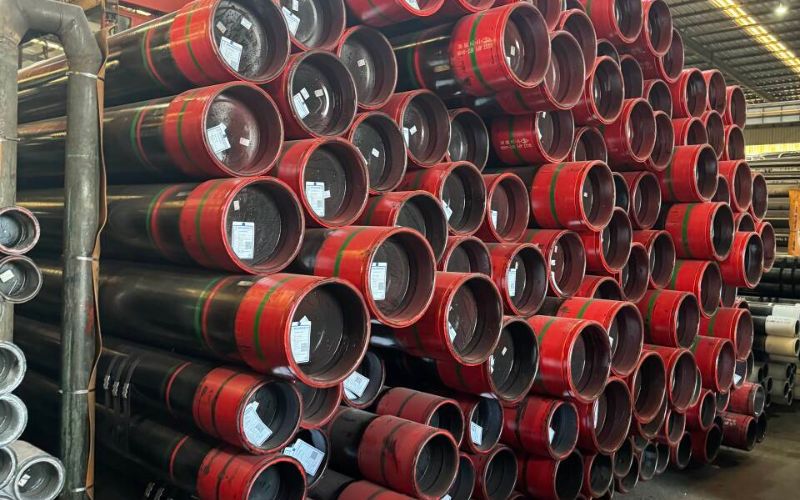
| Pipe Types Covered | 8 |
| Most Common Residential | PEX and Copper |
| Best for Underground | HDPE (DR11) |
| Hot Water Capable | PEX / Copper / CPVC / Steel |
| Cold Water Only | PVC / HDPE |
| Longest Lifespan | Copper 50–70 yr / Ductile Iron 100+ yr |
| Key Standards | ASTM F876 / B88 / D1785 / AWWA C901 |
Deciding between the different types of water line pipe impacts everything from pressure & flow rate to maintenance costs over the long run. Eight pipe materials dominate the residential & commercial plumbing installations in 2026-each with unique pressure ratings, temperature limits, joining protocols & code criteria. This guide makes apples-to-apples comparisons of all eight incorporating real engineering specs, ASTM / AWWA ASTM standards, & a decision variables rubric to help you identify the right pipe for the application.
The water line piping you’d use for replacing aging galvanized lines in a 1960s ranch home varies dramatically from the pipe you’d specify for a new shower, tub & laundry, or from a vet clinic remodel. The material choices impact installation labor & material cost, expected service durability, & ability to meet code. The material fact sheet sections below make tangible numbers can save you money on a bid or permit.
What Are Water Line Pipes and Why Does Pipe Material Matter?
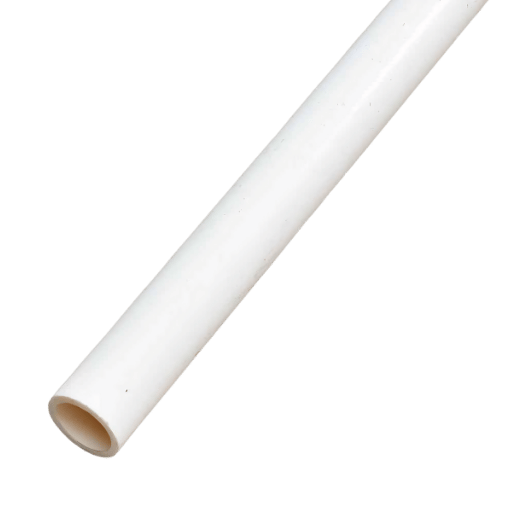
A water line pipe delivers pressurized potable water from a private well or municipal mainline inside a building. All residential or commercial plumbing system uses one of two types of piping: pressurized supply or gravity drain. Water line pipe is fundamentally different from drain, waste & vent (DWV) pipe, which are gravity-flow to a sewer and not pressurized. Pressurized water systems run 40-80 psi-actually more than you expect in a modern city system. This was never a job for flexible or temporary pipe or low pressure rated components. They won’t last.
Material choice also impacts water quality directly. Corrosion products from aging metal pipes can leach into drinking water, while certain plastics must meet NSF/ANSI 61 certification to confirm they do not contaminate the supply. The table below provides a side-by-side comparison of all eight materials covered in this guide.
| Material | Max Temp | Pressure Rating (73°F) | Lifespan | Cost Tier | Joining Method | Key Standard |
|---|---|---|---|---|---|---|
| PEX | 200°F | 160 psi (SDR 9) | 40–50 yr | $ | Crimp / Expansion | ASTM F876 |
| Copper | 400°F+ | 285 psi (Type L 1/2″) | 50–70 yr | $$$ | Solder | ASTM B88 |
| PVC | 140°F | 450 psi (SCH 40 1/2″) | 50–100 yr | $ | Solvent Cement | ASTM D1785 |
| CPVC | 200°F | 400 psi (SCH 40 1/2″) | 50–75 yr | $$ | Solvent Cement | ASTM D2846 |
| Galvanized Steel | 400°F+ | 150 psi (SCH 40) | 20–50 yr | $$ | Threaded | ASTM A53 |
| HDPE | 140°F | 200 psi (PC200) | 50–100 yr | $$ | Heat Fusion | AWWA C901 |
| Ductile Iron | 400°F+ | 350 psi (Class 350) | 100+ yr | $$$ | Mechanical Joint | AWWA C151 |
| Cast Iron | 400°F+ | Varies by class | 75–100 yr | $$ | Hub & Spigot | ASTM A74 |
Drinking water quality also relates directly to pipe material. The EPA’s Lead & Copper Rule Revisions (LCRR) require service line replacements of all lead pipes & fixtures by 2037, affecting 9.2M+ pipes nationwide. More corrosion data available. PVC pipes see 11 breaks/100 miles/year; metallic pipes 25/100 miles per year- you will have to lay out the repairs in a capital budget.
PEX Pipe (Cross-Linked Polyethylene)
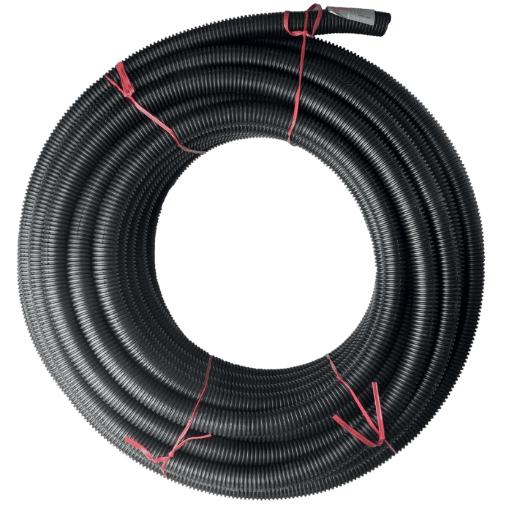
What is PEX? What is cpvc? Seven of the 8 most popular water line materials in 2026 are plastics. PEX stands for cross-linked polyethylene. This process cross bonds the polyethylene molecules into a network of interlocking strips by following the placement of the molecules in a 3D space. It’s the interconnected network of citrate that series the temperature for tolerance. PVC or polyethylene pipes naturally soften if exposed to operating conditions at 140 of the material, cross linking pushes the rating up to 200 F at the heat loss rate. Suffice to say that PEX remains good for both hot & cold water supply lines as one continuous pipe.
| Type | Cross-linking Method | Flexibility | Connection | Typical Cost/ft | Best For |
|---|---|---|---|---|---|
| PEX-A | Engel (peroxide) | Most flexible | Expansion fitting | $0.50–$0.80 | Whole-house repipe |
| PEX-B | Silane (moisture) | Moderate | Crimp ring | $0.30–$0.50 | New construction |
| PEX-C | E-beam (radiation) | Least flexible | Clamp | $0.25–$0.40 | Spot repairs |
📐 Engineering Note: ASTM F876 Pressure Ratings
SDR 9 PEX pipe is rated at 160 psi at 73F and 100 psi at 180 F per ASTM F876. PPI Technical Report TR-56, published September 2025, bundled ASTM F877 fitting specifications into F876 to unite the reference standard for PEX tubing and fittings.
✔ Advantages
- Lowest installed cost per foot among hot-water-rated materials
- Flexible—routes through walls with fewer fittings and elbows
- Freeze-resistant: PEX expands up to 1.5x diameter before bursting
- Corrosion-proof; no scale buildup in hard water areas
- Color-coded (red/blue) for easy hot/cold identification
Limitations
- UV degradation: cannot be exposed to sunlight(no outdoor runs)
- Not recyclable—cross-linking prevents re-melting
- Rodent damage is possible in crawl spaces(rare but documented)
- Expansion noise in hot-water lines is a common homeowner complaint
- Some jurisdictions still restrict PEX (check local code)
Why Don’t Plumbers Like PEX?
The technical and cultural resistance is part of what makes this plumbing pipe such a challenge. UV degradation has proved a real concern-PEX pipe cannot be run outdoors or in any location with direct sunlight exposure. Rodent damage has been reported, though field data from post-2000 installations reports very low failure rates. Expansion noise in hot-water lines has been another problem: the tube expands slightly longer when hot water circulates, and if it touches the framing it squeaks audibly. From the standpoint of performance, ASTM F876 testing can confirm that PEX is good for 100 psi at 180F consistently and continuously, which is sufficient for all residential hot water situations. The greater obstacle is inertia on the part of the plumbing trade: plumbers, after all, who have spent years honing mastery of copper soldering might find it inherently dubious to work with a material that uses different tools and a different conceptual framework for flow sizing.
A plastics engineer mentions that PEX is designed so the fitting compresses around the outside of the pipe-unlike copper which goes inside. This reversed geometry acts as a confusing cue for technicians who are switching over from copper, since now the fitting is actually smaller than the pipe ID, generating a slight flow restriction at each connection point.
Think of a typical homeowner in Minnesota repiping a 1,800 sq ft split-level which was originally plumbed with galvanized steel in 1974. Its runs go through finished drywall walls on the lower level and open ceiling joist bays on the upper. A copper re-pipe would require multiple drywall cuts to facilitate soldering-by a plumbing company representing $14,500. The company’s competitive bid with PEX-A revealed that it could install a continuous length of 1/2″ tubing through the same spaces, using the pipe’s bendability to fish through the joist spaces and walls, terminating each fixture back to a central manifold in the utility room, in just two days instead of five-and the increased materials cost was offset by 57% lower rates for materials and labor. The owner chose PEX-A and has had no problems after 18 months.
Copper Pipe for Water Lines
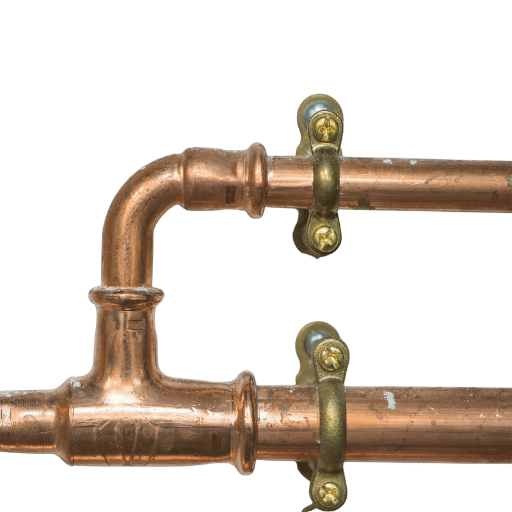
Copper, having served as the default water supply pipe in North America for a little over 80 years, has a 50-70 year documented service life, and its natural antimicrobial nature and success within fire rated assemblies make this material the benchmark against which other piping options are measured. Three types are available for water supply, based on wall thickness per ASTM B88.
📐 Engineering Note: ASTM B88 Wall Thickness by Type
| Nominal Size | Type K (wall) | Type L (wall) | Type M (wall) |
|---|---|---|---|
| 1/2″ | 0.049″ | 0.040″ | 0.028″ |
| 3/4″ | 0.065″ | 0.045″ | 0.032″ |
Pressure ratings 100F: Type L 1/2″ = 285 psi Type L 3/4″ = 210 psi. Type K used for underground service; Type L used for interior service; Type M used for residential lower pressure branch lines.
Copper is $2.00-$8.00/ lineal foot depending on type of diameter, on the high end of the range. It has the advantage of being 100% recyclable with no performance loss. Scrapped copper from a demolition job has a significant commodity value that balances to some degree the material premium it pays when compared to other materials over the course of a whole building lifecycle.
“Copper remains the gold standard for water supply in high-rise buildings where code requires fire-rated piping. In a 50-year lifecycle analysis, copper’s upfront premium often balances against zero corrosion maintenance—unlike galvanized steel, which starts costing money for repairs within 20 years.” — Senior plumbing engineer perspective
✔ Advantages
- Proven 50–70 year service life in millions of installations
- Naturally bacteriostatic—inhibits biofilm growth
- Fire-rated: does not burn, emit toxic fumes or melt in structure fires
- 100% recyclable with retained material value
- Universal code acceptance—approved in every jurisdiction
Limitations
- Highest material cost per foot among common residential options
- Require skilled work to solders (torch work near framing = fire hazard)
- Pinhole corrosion in aggressive water chemistries such as low pH-
- Rigid—requires fittings at every direction change
- theft on job sites due to high worth scrap copper.
PVC Pipe (Polyvinyl Chloride)
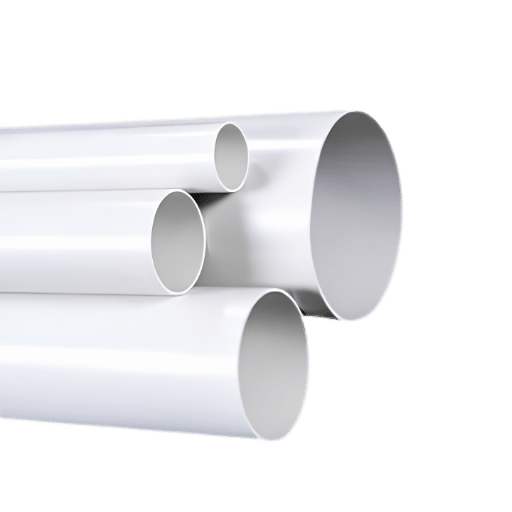
PVC is the most prevalent pipe material used in municipal water distribution systems throughout the US, and also the lowest first cost cold-water supply pipe material. To carry potable water, it must be certified to NSF/ANSI 61. This standard assesses the ability of a raw material or finished pipe product to leach chemicals at levels below federal drinking water standards for all water uses in which a substance is present. To identify if the pipe has this certification, look for the marking (NSF-PW or NSF-61) printed on the pipe. If this marking is absent, the pipe is only approved for DWV or for irrigation uses.
| Nominal Size | SCH 40 (psi) | SCH 80 (psi) |
|---|---|---|
| 1/2″ | 450 psi | 640 psi |
| 3/4″ | 370 psi | 510 psi |
| 1″ | 300 psi | 420 psi |
| 1-1/2″ | 220 psi | 300 psi |
for pressure ratings based on ASTM D1785 at 73F.
⚠️ Temperature Warning
PVC cannot handle potable water hotter than 140F. Never hook PVC piping to hot water ranges or water sources and supplies. Also, code changes may restrict PVC use for indoor potable water distribution systems due to Vinyl Chloride Monomer leaching issues seen in some states. Check your local code.
Pro Tip: Always check for either the NSF-61 or NSF-PW mark on the PVC pipe before installing for potable water. Pipes found labeled as for Gray Water or Under Lawn Irrigation use may be identical in appearance but do not meet the standards of the NSF-61 mark. Installation requires two steps- first apply a purple primer, then apply the solvent cement. Joint must be undisturbed for allotted time printed on the cement can- generally 15 minutes to 2 hours- depending on pipe diameter size and back pressure.
CPVC Pipe (Chlorinated Polyvinyl Chloride)
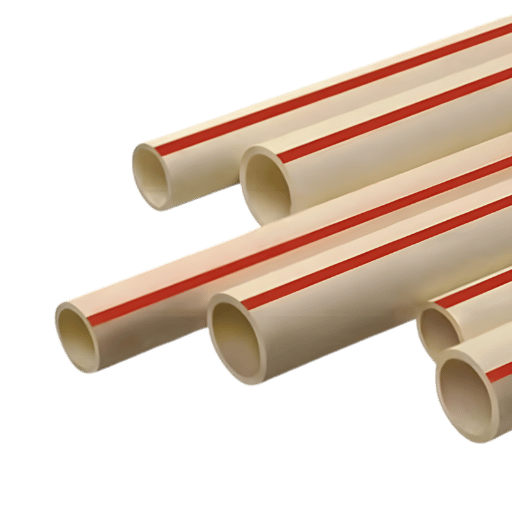
CPVC has introduced additional chlorine atoms by inserting extra benzene ring building block into the PVC polymer chain. This increase the temperature maximum to 200F. This single addition makes the second chemical adhesive possible and results in a pipe suitable for use for hot water supply lines which can be installed in the same manner as PEX.
| Property | CPVC | PVC |
|---|---|---|
| Max Service Temp | 200°F | 140°F |
| Pressure at 73°F (SCH 40 1/2″) | 400 psi | 450 psi |
| Pressure at 140°F | 200+ psi | Not rated |
| Hot Water Use | Yes | No |
| Cost per ft | $0.50–$1.50 | $0.20–$0.80 |
| Key Standard | ASTM D2846 | ASTM D1785 |
Some practitioners in the hot climate states report that CPVC can become brittle after 15-20 years of sitting in attic installations where temperature cycles from hot to cold. The use of additional chlorine atoms imparts thermal resistant properties onto the material, but also results in a stiffer, less ductile material that would be more likely to crack or chip upon impact or in an extreme thermal situation.
⚠️ Critical Installation Warning
Use special CPVC solvent adhesive, do NOT interchange it for PVC solvent cement. They are chemical different recipes and using a PVC based solvent cement on CPVC will result in a weak bond that will not withstand course pressure. Match according to the ring stamp labeled on the pipe- orange/yellow for CPVC or white/clear/gray for PVC.
Galvanized Steel Pipe for Water Supply
⚠️ Lead Exposure Warning
Homes constructed prior to 1986 are likely to have galvanised supply pipe connected with lead-based solder. The EPA Lead and Copper Rule recognizes this as a potential leaching source into drinking water. If your home was built prior to 1986 and has galvanised water supply pipe, get a water sample tested before assuming the water source is safe.
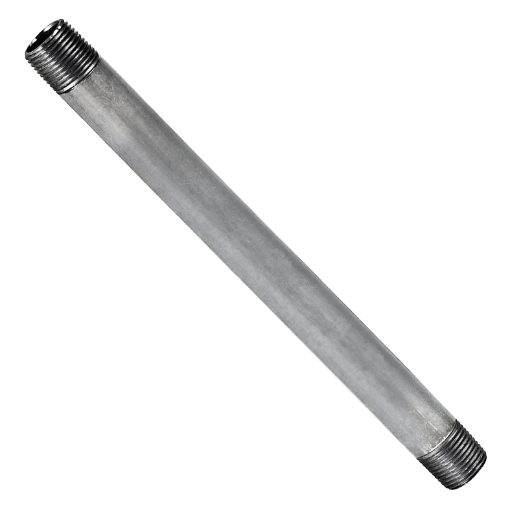
Galvanised steel pipe is carbon steel pipe coated with a layer of zinc; it prevents corrosion by acting as a sacrificial anode-it corrodes in the place of the steel pipe. The trouble is that the zinc eventually wears out and then you experience the following failure progression: internal corrosion deposits rust scale, the rust scale deposits build up and reduce the bore of the pipe, water flow through the pipe is restricted, the water pressure at the source tap drops while fixture pressures drop off and in homes built before 1986 there is oxygen introduction from the supply supply becomes aggressive and leaches out lead from solder and fittings into the reduced-flow, reduced-pressure water.
Typical life of galvanised water pipe is anywhere from 20 to 50 years, water chemistry being key to its performance. Hard mineral-rich water (very high TDS) in many instances will quickly develop internal scale build up; aggressive acidic water (pH<6.5) will rapidly attack the sacrificial zinc layer. In aggressive water situations, you will sometimes observe internal restriction in as little as 15 years with flow rates dropping to 2GPM at the tap.
Inspection Checklist for Galvanized Pipe:
- Water color test: Run 30 seconds of cold water from a fixture after it has stood. Brown or orange coloration indicates active internal corrosion.
- Magnet test: A magnet will stick to galvanised steel pipe but not to copper or plastic pipe. Confirms pipe material in accessible sections.
- Construction date: Homes built prior to 1960s are most likely to have both lead solder and highest zinc depletion levels.
- Flow rate test: Measure flow rate at your kitchen faucet. Less than 2.0 GPM at a 1/2″ supply line suggests internal restriction.
Replacement options: PEX is the easiest retrofit material for replacing galvanised steel because it is flexible enough to negotiate the wall cavity without large-scale demolition. Copper pipe offers most proven track record but demands more invasive installation. Either pipe does away with internal restrictions and the threat of lead leaching.
See our galvanised iron pipe, carbon steel pipe and black-steel-pipe”>black steel pipe guides for more detail of different steel pipe types. Note that black steel pipe is not rated for potable water use-its sole function is for gas lines and fire sprinkler systems.
A Cleveland property manager in Cleveland inherited a 1958 fourplex with original galvanised supply pipe throughout all four units. Periodic complaints of low pressure and discolored water had been occurring for three years. A plumber scoped the 3/4″ main supply and determined that internal dimensions of the pipe had constricted from 0.824″ to around 0.40″-a 53% decrease in crosssectional area due to rust and mineral scale accumulation. Water test results confirmed 22ppb lead levels (the EPA action level is 15ppb). The property manager authorized a complete PEX repipe of all four units which took six days. After tests showed less than 2ppb lead in the water, fixture pressure increased from 28 psi to 55 psi.
HDPE Pipe (High-Density Polyethylene)
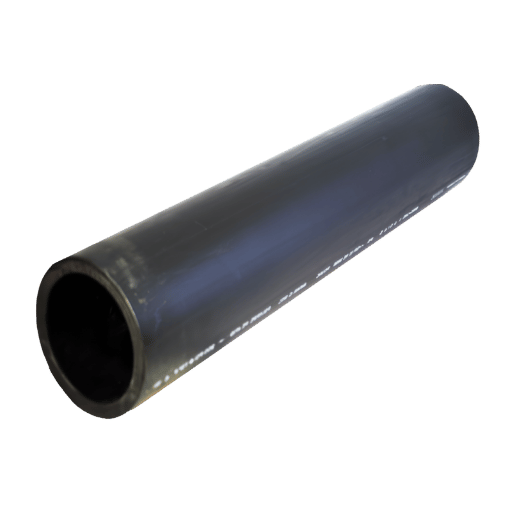
HDPE has been used as an underground water service line and, increasingly, for municipal water mains. The material’s flexibility, immunity to corrosion, and integrally fused heat-fused joints make it ideal for subterranean installations, where soil movement, frost heave, and the potential for corrosive soil chemistry would cause damage to more rigid pipe materials. The 1990s re-issue of the AWWA C901-25 standard now provides the fittings specifications along with pipe specifications, easing supply procurement for municipal water system managers.
📐 Engineering Note: HDPE DR Ratings and Pressure Classes
| DR Rating | Pressure Rating | Common Application |
|---|---|---|
| DR 11 | 160 psi | Most common residential service line |
| DR 9 | 200 psi | Higher pressure applications |
| DR 7 | 250+ psi | Industrial / municipal |
Pressure classifications available according to AWWA C 901 are PC80 through PC200.
Although both methods are qualified to provide a monolithic, gasket free, and clamp free connection that is often actually stronger than the pipe itself, butt fusion is used for open-trench projects where available equipment volume is not an issue, while electrofusion is favored in constrained excavations and tie-ins to existing mains.
For projects comparing HDPE in acid/alkaline erosive soils to steel alternatives, see our section on FBE coated pipe, or steel pipe: ERW.
Cast Iron, Ductile Iron, and Legacy Pipe Types
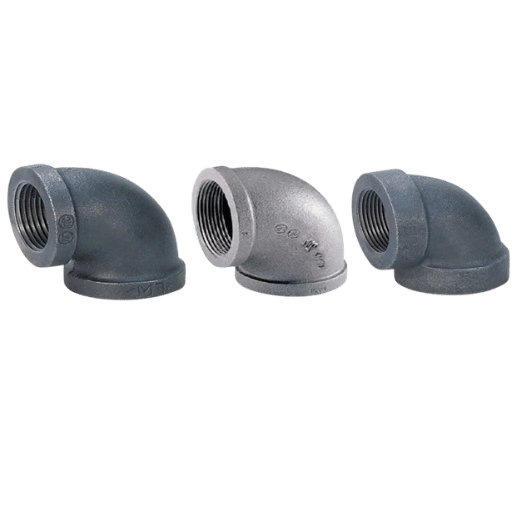
Cast Iron: Cast iron pipe was the standard drain, waste, and vent plumbing for new construction pre-1970s, and was also used by some communities in conduit for their city water extensions. Cast iron to ASTM A74 specifications depended on a hub and spigot joint sealed with lead and oakum, and typically achieved a service life of 75-100 years. The interior extent of tuberculation (rust particle buildup) inevitably reduced flow capacity over time. Most remaining cast-iron city water mains in residential areas are being replaced with ductile iron or PVC C900 as they reach the end of life.
Ductile Iron: Larger diameter (6″ and above) city water mains remain the province of ductile iron pipe as the highest performing choice; manufactured to AWWA C 151 specifications it incorporates a spoon-on or mechanical joint connection, and provides a 350 psi Class 350 rating. The material quality of magnesium-injected, molten-ironed produces both the high steel-like strength and corrosion resistance associated with cast iron. Life expectancy exceeds 100 years.
⚠️ Polybutylene (PB) Pipe Warning
Polybutylene pipe was used in approximately 10 million buildings constructed for American residences between the late 70s and mid-90s. The material is subject to microfractures caused by chlorinated-system pressurized water, leading to sudden, catastrophic failure. PB is marked with the code “PB2110”, and is typically gray or blue. The class-action settlement Cox, et al. v Shell Oil acknowledged the defect. If polybutylene exists in your building, catastrophic failure is likely if the material has not been completely replaced, as patching individual leaks is point less when the piping suffers at a systemic level.
Lead: U.S. construction used lead water service lines prior to the 1930s, and regulation prior to the 1986 amendments to the Safe Drinking Water Act. By October 2037, the EPA’s Lead and Copper Rule Reduction (LCRR) requires all water systems operating with new or replacement lead services to establish funding and plans for their replacement. If your building was built prior to 1940, consult your utility as to the composition of your service line from meter to main.
How to Choose the Right Water Line Pipe
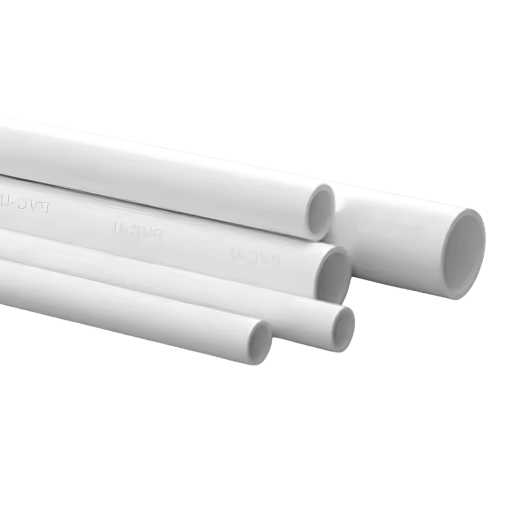
With 8 available options the decision reduces to four factors—operating temperature, installed environment, cost, and local building code. The table below correlates typical plumbing instances to material selections.
The 4-Factor Water Pipe Selection Framework
| Application | Temperature | Budget | Code Context | Recommendation |
|---|---|---|---|---|
| Indoor residential | Hot + Cold | Low | IPC / UPC | PEX-B with crimp |
| Indoor residential | Hot + Cold | High | Premium spec | Copper Type L |
| Indoor supply | Hot + Cold | Mid | Regional | CPVC |
| Underground service | Cold | Low–Mid | Burial rated | HDPE DR11 |
| Underground main | Cold | Mid | Municipal | PVC C900 or Ductile Iron |
| Fire sprinkler | Hot + Cold | Per code | NFPA 13 | Steel or CPVC |
| Irrigation | Cold | Lowest | Less regulated | PVC Schedule 40 |
| Replace galvanized | Hot + Cold | Varies | Retrofit | PEX (easiest) or Copper |
4 Questions to Answer Before Choosing Pipe Material:
- WD? pipe runs heated water(could be 140F+?). If so, then no PVC or HDPE.
- Will it be buried in the ground?Use the following if buried in the ground: HDPE or PVC C900 — corrosion and joint strength.
- Your local code—what are its parameters?Some authorities will not permit PEX or PVC within the home serving drinking water.
- Who’s doing the install?PEX push-fit & PVC cement can be used by a DIYer. Copper soldering and HDPE fusion take special, expensive equipment, and training.
What Is the Best Pipe for Underground Water Lines?
For the residential service line (meter to house), the standard material is most often a 160 psi HDPE DR11 pipe. It is flexible enough to take up any ground movement without cracking and the heat fused joints do not produce potential leak sites that older rigid pipe systems could experience with glued joints. For the mains, 6″ or greater PVC C900 or ductile iron are most often used.
While PVC is cheaper, lighter, easier to install, not susceptible to corrosion in any type of soil , ductile iron is designed to withstand higher pressures and traffic loads when it runs under roads. The engineering design standards for your water utility’s water mains will guide you to which material you may use in your district.
For other types of steel pipe, refer to our steel line pipe page and our fire sprinkler pipe page.
Ease of installation notice: PEX push-fit joints and PVC solvent cement joints are DIY accessible for the average homeowner familiar with basic plumbing. Copper can be soldered by a homeowner with a torch and leak-testing abilities. HDPE with butt fusion can be done using specially designed and purchased equipment ($3,000-$15,000 is approximately $200 purchase or $150-$300 rental/day – professional use only)
A general contractor in Phoenix was bidding a 24-unit apartment complex, and needed to Select CPVC or PEX for hot/cold water in the apartments themselves. Phoenix summer attic temps just top 150F, while CPVC values range-though projecting over 40 years of service. The design mechanical engineer checked FCIs from two Phoenix-area 15-year-old CPVC installations-inside, reported hairline cracks at hangers in attic runs.
The design mechanical engineer specified PEX-A with expansion fittings every where in the apartments, and HDPE DR11 for the service line from the 2″ meter into the building. Cost savings compared to copper value-just over $31,000 across all 24 units, over a 40-year baseline of service life for the materials.
Water Pipe Sizing and Pressure Ratings
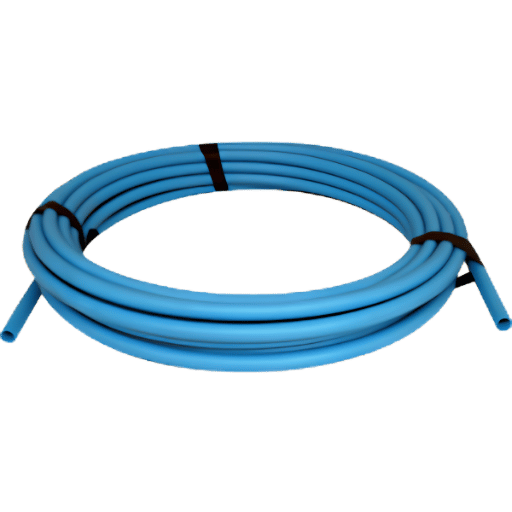
Proper pipe sizing on any system provides enough flow and pressure for fixtures that are far from the source. Incorrect sizing of pipes could lead to noise, pressure drop and deliver less flow out of fixtures, or an unnecessary use of pipe which may increase water temperature lag time.
Residential sizing baseline: 3/4″ is typical single-family house supply line size from the meter, 1/2″ is typical branch line size to fixtures, and 1″ is typical when the design will serve three or more simultaneously fixtures (such as a master bath with shower, twin vanities, and toilet on the same line). All are minimum sizes per the International Plumbing Code-local amendments may require larger diameters.
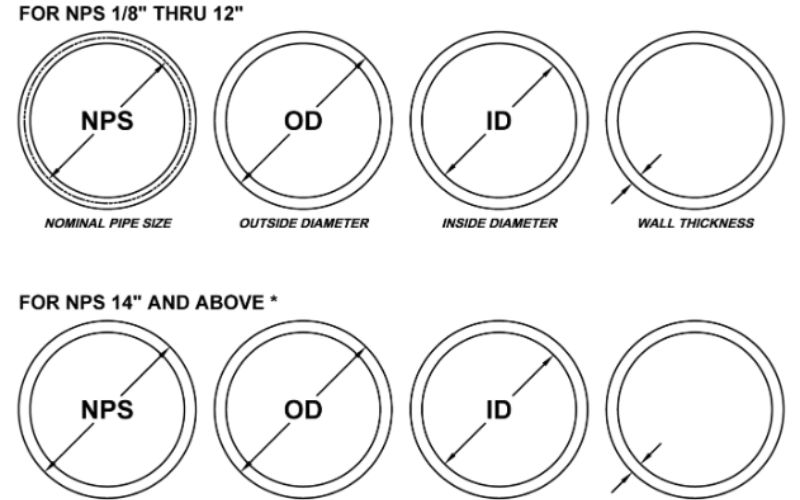
NPS (Nominal Pipe Size) indicates a standard size, not an actual measurement. A 1/2″ NPS copper pipe has an outside diameter of 0.625″, a 1/2″ NPS PEX tube has an outside diameter of roughly 0.625″-the nominal size allows different materials to take fittings and transitions. Diameter varies by material and wall thickness (schedule or SDR).
Schedule 40 vs. Schedule 80: The schedule references wall thickness. Schedule 80 pipe has a thicker wall than Schedule 40 which increases the pressure rating but decreases the internal diameter. For a 1″ PVC pipe Schedule 40 pipe has 300 psi rating at 73F and internal diameter 1.049″ while Schedule 80 pipe has 420 psi rating and internal diameter of 0.957″. That 9% reduction in bore diameter can matter in flow calculations for long runs.
What Is the Standard Water Pipe Size for Residential Plumbing?
Standard is 3/4″ NPS mains feed to house and 1/2″ NPS branch feed to fixtures. Houses with over 3.5 bathrooms, high-flow fixtures (e.g., 2.5 GPM rain shower heads) or far from the utility (more than 100′ from the meter) may need a 1″ line. always use a fixture-unit count according to IPC Table 604.3 rather than rules of thumb.
For steel pipe sizing references, see our guides on API 5L Grade B pipe and SMLS steel pipe.
Water Line Pipe Trends and Industry Outlook (2025–2026)
Several changes are shaping pipe material choices preparing towards 2026 and 2027. Each has project planning implications.
EPA LCRR Lead Pipe Replacement Calendar: The October 2037 deadline means water utilities must have a 12-year plan to be able to inventory, locate and replace all lead services. Residents connected to water utilities should ask their service line inventory results. If your service line’s material is “unknown”, plan to have an inspector take a look-utilities are required to notify you if your service line’s material is “unknown”.
PPI TR-56 (September 2025): The Plastics Pipe Institute issued a Technical Report, TR-56, bringing together ANSI/ASTM F876 (tubing) and F877 (fittings) specs into one reference. It is a boon for civil engineers writing specs and for contractors and inspectors on site trying to determine if tubing and fittings go together.
AWWA C901-25: AWWA’s revision of this HDPE pipe standard has absorbed fitting guides previously in multiple documents. HDPE service line pipe and fittings from 1/2″ to 3″ can be found in one standard.
Bored or “Trenchless” CIPP Lining: Cured-in-place pipe CIPP lining enables reuse of unreliable water mains without excavation. This accounts for 30%50% savings over total re-piping in urban markets with substantial road cut and traffice control requirements which jack up costs.
Forward Looking Performance-Based Code Framework:”National Association of Home Builders NAHB ” reports an accelerating build-up of focus in future plumbing code revisions on hydraulically driven performance outcomes, rather-than prescriptive material specifications. This opens up a wide spectrum of plumbing system performance minimums including flow rates, pressure maintenance and drinking water quality performance goals regardless of pipe material.
Action Proposal:”For any plumbing project you seek to offer, in 2026 or 2027, inquire about your jurisdiction’s adoption of the 2024 IPC amendments” and review how your jurisdiction may not be up-to-date with the latest model code by as much as 2-3 editions delaying materials and joining methods for permits and inspections.
Frequently Asked Questions
What are the 5 types of plumbing pipes?
View Answer
5 latest pipe materials are PEX, copper, PVC, CPVC and ABS. PEX and copper are rated for hot and cold water service. PVC and ABS are rated for dry side waste, vent and sanitation lines. CPVC is rated for hot and cold water service, as hot as 200F, where PEX is not code-approved.
Can I use black pipe for a water line?
View Answer
Should you use black steel pipe? The interior paint on black pipe is not intended for contact with potable water and the material or coating are not protected against corrosion and rusting while contaminating the water delivery with iron sediments. Black pipe is sanctioned only as a pressure rated conduit for natural gas lines, propane gas lines, and fire suppression sprinkler systems shown under fire codes like NFPA 13. For water supply use copper, PEX, PVC, CPVC or HDPE depending on the use.
Is PEX better than PVC for water lines?
View Answer
What is the application? PEX-a can be used for both hot & cold water, up to 200F, since its flexibility allows it to be snaked around through interior partitions when mounting with PEX clamps. PVC is effective hot and cold up to 140F. Subsequently it has a far higher pressure rating while costing less in cost per distance than PEX (17 to 1 ratio). For a typical single-family residential supply, PEX-a is more flexible. For a farm or commercial cold water underground service line, PVC is a proven bargain.
What type of pipe is used for main water lines?
View Answer
When supplying utility scale potable water mains, Ductile iron (AWWA C151) or C900 PVC are the materials of choice. Ductile iron pipe is more impact resistant when installed under roadways for utility trucks and booms. PVC C900 is less expensive per diameter and resists corrosion without coatings; new materials such as HDPE have been showing up more widely.
How long do different water pipes last?
View Answer
The life expectancy of pipe materials is highly variable. Copper can last anywhere from 50 to 70 years. PEX has an even shorter marketed track record, but is believed to be 40-50 years old. PVC and HDPE are the longest lived with confirmed performance to 50, 60+ years respectively. Ductile iron has been for more than a century in water lines, cast iron closer to 75, steel the shortest averaging 20 to 50 depending on water chemistry.
Can you use the same pipe for water supply and drain lines?
View Answer
Are some other applications not “building or cooling” related. Drain lines are not subject to pressure and do not need a potable water contact grade of material. Supply lines do have different pressures and slope requirements and need a material tested accordingly. PVC is available as both, but not with the same color or code layer thickness. Even if available in model code, “two grades” of a material are not interchangeable within any system.
Seeking steel pipe for water supply, fire protection or industrial process uses?
About This Pipe Material Guide
This is a publication of Baling Steel (Baling), the manufacturer and wholesaler of steel pipe products. Apart from Baling’s business of steel (steel pipe), we provide engineering analysis of all 8 commonly used water line pipe materials-PEX, PVC, copper, and HDPE-as good as any other raw materials. We link to the applicable steel pipe pages where appropriate (galvanized, fire sprinkler, structural), and tell it like it is when steel pipe is not the best fit.
References & Sources
- U.S. EPA – Lead and Copper Rule Revisions (LCRR) Implementation Tools
- Uni-Bell PVC Pipe Association – Comparison of Water Pipe Failure Rates in USA and Canada
- NSF International – NSF/ANSI/CAN Standard 61: Drinking Water System Components
- Plastics Pipe Institute – PPI TR-56: PEX Tubing and Fitting Requirements (Sept 2025)
- AWWA – AWWA C901-25: Updated HDPE Pipe Standard
- Plastic Pipe and Fittings Association – PE Pipe Specifications and Pressure Classes
- InterNACHI – Polybutylene Pipe: Identification and Risks
- NAHB – The Future of Plumbing Codes and Design (Jan 2026)
Related Articles
Baling Steel’s engineering team has reviewed this. For technical questions about steel water pipe specs, talk to our product specialists.