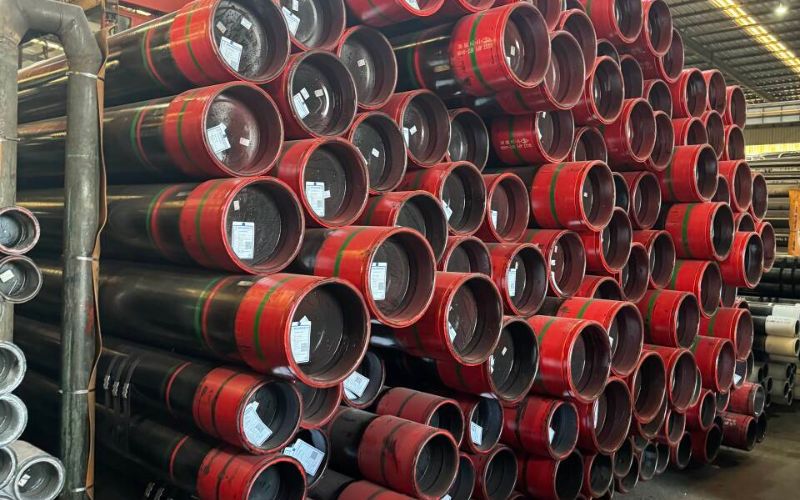
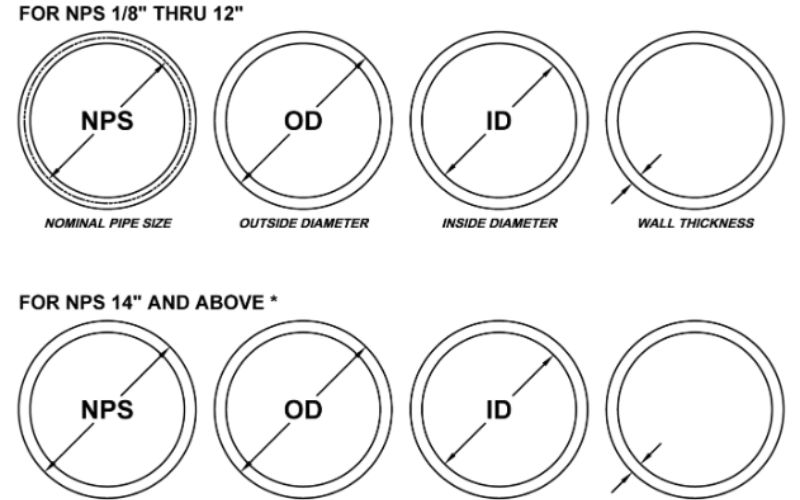
Yes – you can bury black iron gas pipe, but only if it has a factory-applied electrically insulating coating (or a working cathodic protection system) and your Authority Having Jurisdiction approves. Bare black iron — and zinc-galvanized steel pipe — is not permitted to be direct-buried under the 2021 IFGC and NFPA 54, regardless of which metal pipe or plastic pipe sits next to it in the trench. Nuance matters here, because the correct answer to “can you bury black iron gas pipe” isn’t the blanket no you see on Reddit, nor the casual “sure, just paint it” you get from the lumber yard. This post walks through the exact code language, the failure modes that lead to it, and the situations where polyethylene (PE) or pre-sleeved CSST is the better choice.
📐 Quick Specs — Burying Black Iron Gas Pipe
- Direct burial of bare black iron: not recognized by the code — IFGC 404.11.1 / NFPA 54:7.1.3.1
- Burial of factory-coated black steel: allowed with AHJ approval — IFGC 404.11.2 (factory FBE/3LPE coating or cathodic protection)
- Galvanized (zinc) coating alone: not considered sufficient protection
- Minimum cover (residential): 12 in (305 mm); 8 in exception for individual outdoor appliance lines — IFGC 404.12
- Tracer wire (over non-metallic pipe): ≥18 AWG yellow-insulated copper, accessible at both ends — IFGC 404.17.3
- Plastic pipe (PE) pressure ceiling: ≤100 psig natural gas; ≤30 psig LP-gas; never under building slabs
- Sign-off: local AHJ and utility inspector before backfill
Can You Bury Black Iron Gas Pipe? The Short Answer
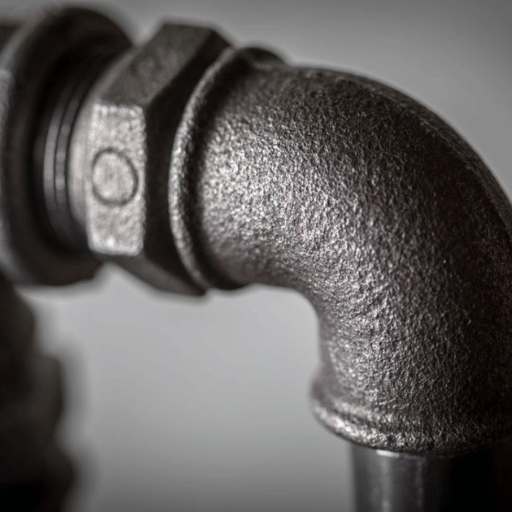
Black iron pipe (also called black steel) is malleable steel pipe finished with a mill-applied dark oxide coating, traditionally used for gas distribution inside buildings for both natural gas and propane service. That coating is a by-product of the manufacturing process, not intended as a corrosion barrier, which is why all model gas codes in the United States consider bare black iron to be unsuitable for direct burial. Three legal pathways exist for setting a steel gas line in the ground under the 2021 International Fuel Gas Code (IFGC), and the National Fuel Gas Code (NFPA 54) mirrors them word for word.
You can use a corrosion-resistant material (typically polyethylene). You can use steel pipe with a factory-applied, electrically insulating coating such as fusion-bonded epoxy (FBE) or three-layer polyethylene (3LPE). Or you can install a cathodic protection system that gets monitored under an approved program. Anything else — including spraying the pipe with primer in your driveway and wrapping it in tape from the hardware store — is a code violation in most jurisdictions and a corrosion claim waiting to happen.
Engineering Note: the “do not bury black iron” advice circulating on Reddit is a useful safety heuristic, not the actual code. Code allows buried steel — it just demands a verifiable coating system or cathodic protection, plus AHJ sign-off [IFGC 404.11.2]. Its blanket “no” exists because most homeowners cannot meet either condition.
What the Codes Actually Say: NFPA 54, IFGC and Your AHJ
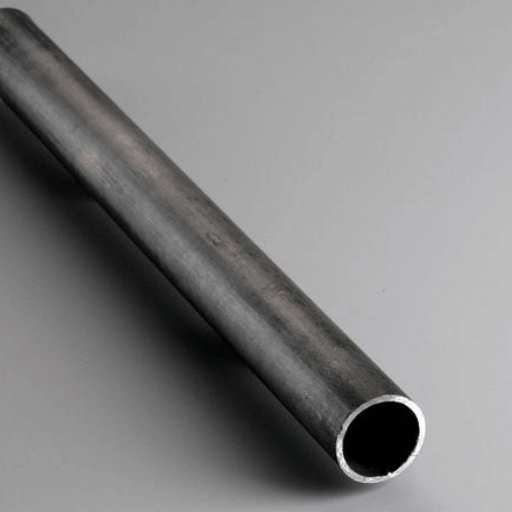
Three documents govern residential and light-commercial fuel gas piping in the United States. They overlap intentionally, and your local jurisdiction picks one (or amends a hybrid) as the enforceable code.
NFPA 54 — National Fuel Gas Code
NFPA 54 §7.1.3.1 states that zinc coating (galvanizing) is not adequate protection for underground gas piping. Section 7.1.2 requires buried piping to be protected from physical damage. That same code is published word-for-word as Chapter 4 of the IFGC, so a contractor who knows one knows both. First Circuit’s US Courts library hosts an NFPA 54 FAQ document that walks through driveway crossings and depth allowances in plain English.
IFGC 404 — International Fuel Gas Code
IFGC 404.11.2 is the operative section. It states that any underground steel pipe must be protected by one of three methods: a corrosion-resistant material, a factory-applied electrically insulating coating, or a cathodic protection system. ICC’s CodeNotes summary reads, in the authors’ own words: “The (IRC) and (IFGC) do not recognize zinc coatings (galvanizing) as adequate protection for steel gas piping below grade.” That is about as straightforward a statement on the issue as exists in any official text.
Your Local AHJ — The Real Final Word
Your Authority Having Jurisdiction (AHJ) is whoever your city, county, or state inspector happens to be. Model codes are floors, not ceilings. A jurisdiction can require buried pipe deeper than the code minimum when crossing a driveway, prohibit field-coated steel even when NFPA 54 permits it, or mandate a specific pre-installation pressure test. First Circuit’s FAQ states explicitly that driveways may carry buried gas piping only when “protected from load imposed on (them).” Your AHJ decides what that means in your soil.
Is it proper per national code to bury epoxy-coated black steel?
Per IFGC 404.11.2(2), yes — as long as the coating is factory-applied (not field-painted), electrically isolating, and the fittings and joints follow the coating manufacturer’s directions. That last clause matters: each FBE or 3LPE pipe maker publishes a field-joint procedure covering cleaning, primer, and over-wrap. Omitting the joint coating leaves a holiday — a coating defect that becomes the corrosion initiation site within months. Always pair factory-coated pipe with the matched joint kit.
The Corrosion Problem: Why Bare Black Iron Fails Underground
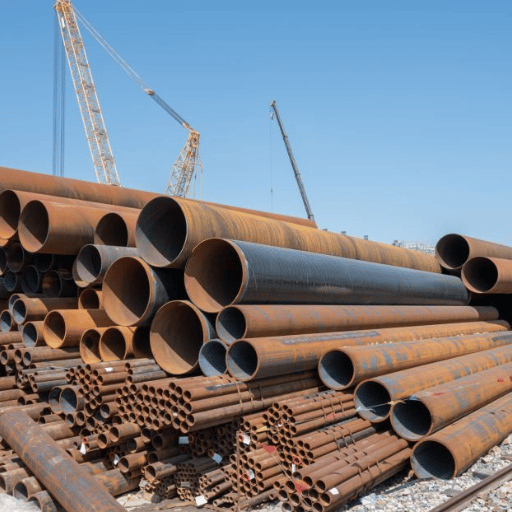
Steel rusts in the presence of water and oxygen. Bury it, and you get both — plus a third accelerator the air side does not have: soil ions acting as an electrolyte. End result: a galvanic cell that strips iron from the pipe wall and deposits iron oxide into the surrounding clay. NACE SP0169 (Control of External Corrosion on Underground Piping Systems) — now an AMPP standard — classifies soil corrosivity by resistivity. Below 2,000 Ω·cm, soil is rated severely corrosive, and a bare steel pipe can lose meaningful wall thickness in a single irrigation season.
What catches most installers off guard is not the slow general wastage you see on a coupon. It is pinhole pitting under disbonded coating, often accelerated by Microbially Influenced Corrosion (MIC). Sulfate-reducing bacteria colonize the gap between a poorly bonded wrap and the pipe surface, drop the local pH, and chew through the wall in a few years rather than a few decades. NACE has documented MIC as the dominant failure mode in cases where a pipe was “protected” by field-applied tape that lifted at the seam.
Does a wrap significantly extend the life of buried black iron?
Factory coating does. Field applied wrap usually does not, because the bond is the weak link – and inspectors have no reliable method for non-destructive verification of a tape job performed by hand after backfill. A jeep test (high-voltage holiday detector at approx 5 V per micron of nominal coating thickness) can spot pinholes in a piece of factory-coated stock; it cannot recover a poorly applied field wrap. An honest answer that contractors give over a beer and inspectors give in writing matches: if the pipe came out of the trench with a wrap and is still leak-free at year ten, it had factory coating, professional joint compound, or a working cathodic system — not field tape. Black steel does rust, and underground it rusts faster than you think it should.
Approved Coating Systems for Direct Burial: FBE, 3LPE and the Hand-Wrapped Truth
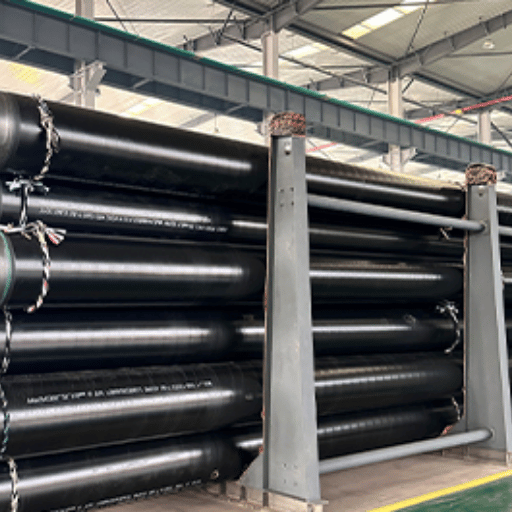
IFGC 404.11.2 calls for “factory-applied” insulating coatings. Three systems dominate the market of underground steel gas service, and they are not interchangeable.
Fusion Bonded Epoxy (FBE) — single layer
DFT range 305–1,270 µm (12–50 mils); typical nominal 406 µm (16 mils) per the 3M Scotchkote field-joint guide. Salt-spray (ASTM B117) acceptance for utility-grade FBE is commonly 1,500 hours with no more than 1/64-in creepage at scribe (Star Pipe Products spec). Standard reference: ANSI/AWWA C213. Best fit: dry to moderately corrosive soils; lower cost than 3LPE.
Three-Layer Polyethylene (3LPE)
FBE primer + adhesive + extruded PE topcoat, total 1.8–3.7 mm. Standard reference: DIN 30670. Best fit: aggressive soils, rocky backfill, longer service life targets. Premium price. Our 3LPE coated steel pipe ships with matched heat-shrink joint sleeves.
Field-applied tape or coal-tar wrap
Permitted by some AHJs as a splice-repair or as a supplement to factory coating, never as a stand-alone system on a new installation. Spiral seam at the lap is the documented failure point of any field-applied pipe wrap. If the spec sheet doesn’t state “factory-coated,” the system does not satisfy IFGC 404.11.2(2).
FBE has led buried gas service for 30 years because it can be readily inspected. A holiday detector run just after factory cure identifies every coating defect down to 25 µm; the pipe is rejected or repaired before leaving the plant. You buy a known-good barrier rather than a hoped-for-good one. For additional coating chemistry and application detail, see our ultimate guide to FBE coated pipe, or compare with the underlying black steel pipe substrate to which the coating adheres.
Depth, Tracer Wire and Cathodic Protection: The Buried-Line Spec Sheet
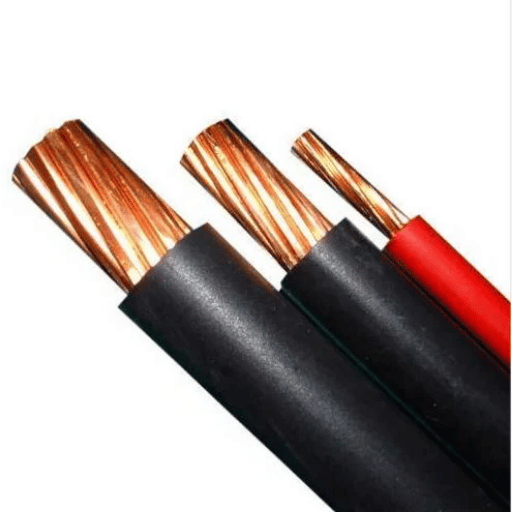
Once you have the right pipe, the trench has its own rules. Most installers know the headline number — 12 inches of cover — but miss two of the three ancillary requirements that will fail an inspection.
How Deep Should Gas Pipe Be Buried?
IFGC 404.12 sets a minimum cover of 12 inches over the top of the pipe for general residential and light-commercial work. Section 404.12.1 carves out an exception: supply lines that serve an individual outdoor appliance — for example, a gas grill at the far end of a yard — may be buried as shallow as 8 inches when the AHJ approves and the route is not subject to physical damage. Driveways, pads under vehicle traffic, and any location with frost-heave concern push the spec the other direction. A 24-inch cover under a paved drive is a common AHJ override, even though the model code does not require it. Always document the depth at inspection, in the trench, before backfill.
What Is the Purpose of Tracer Wire for Buried Gas Pipe?
Non-metallic pipe (PE) is invisible to a standard cable locator. Tracer wire is the workaround: a continuous insulated copper conductor laid alongside the pipe in the same trench, brought to grade in a valve box or riser cap so a locator can later energize it and find the line. IFGC 404.17.3 and IRC G2415.17.3 set the floor at 18 AWG, yellow insulation, suitable for direct burial, with access at both ends of the run. Many utility companies require heavier 12 AWG copper-clad steel for added pull strength when locating across long runs, so confirm with your gas utility before ordering. Tracer wire is not optional — it is what keeps a future excavator from cutting your line with a backhoe.
Cathodic Protection and Anode Risers
Where a project transitions from steel pipe to plastic underground, IFGC 404.11.4 requires the steel risers to be cathodically protected with a welded magnesium anode — unless they are factory-built anodeless risers. Anode sizing follows NACE SP0169; a 5- to 9-pound packaged magnesium anode covers a small residential transition for 15 to 20 years in average soil, longer in well-drained sandy fill and shorter in heavy clay. Anode leads are welded (thermite or pin-brazed), not clamped, because a corroded clamp is no protection at all.
Black Iron vs Polyethylene (PE) vs CSST: The Underground Decision Matrix
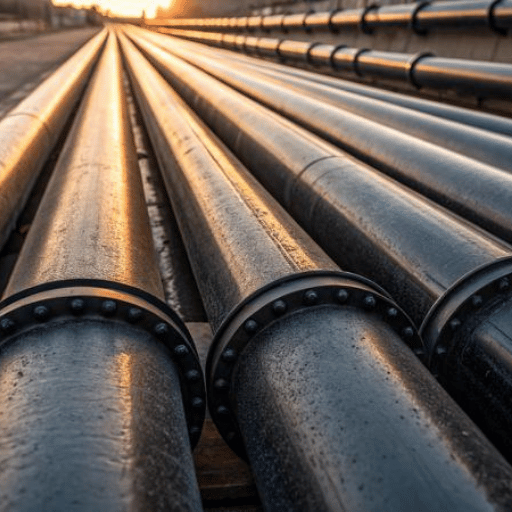
For most residential burial jobs in the United States, factory-coated steel is the second-best answer. Polyethylene gas pipe rated PE 2406 or PE 2708 is what the natural gas utility itself runs from the street to the meter, and what installers put on the customer side when given the choice. The reason is not glamour — it is corrosion immunity, faster install, and a price point that holds up over 50 feet of trench.
| Criterion | Coated Black Steel | Polyethylene (PE 2406/2708) | Pre-Sleeved CSST (LC-1023) |
|---|---|---|---|
| Direct burial allowed | Yes, factory-coated only | Yes | Yes, pre-sleeved type |
| Max pressure (NG) | No code cap | 100 psig (IFGC limit) | 5 psig typical residential |
| Allowed under building slab | Yes, in conduit per 404.14 | No | Yes, pre-sleeved listed type |
| Tracer wire required | No (metallic, locatable) | Yes, ≥18 AWG yellow | No (jacketed metallic) |
| Joint method | Threaded or welded + coating | Heat fusion or compression | Mechanical fittings |
| Skill level needed | High (jeep test, joint kits) | Medium (fusion tool training) | Low to medium |
| Best when | High pressure, exposed risers, slabs in conduit | Long residential runs to outbuildings | Short outdoor kitchen drops |
💡 The 3-Layer Burial Test — a field gate to decide if coated black steel is the right call on your job:
- Code Layer: will your AHJ accept factory-coated steel for direct burial in writing, including the joint procedure?
- Soil Layer: is your soil resistivity above 2,000 Ω·cm (mildly corrosive or better per NACE SP0169)?
- Path Layer: does the route avoid building slabs, planters, and freeze-thaw zones, and stay clear of any future excavation corridor?
If any answer is no, switch to PE 2708 with proper tracer wire. The decision is rarely close.
For a deeper material trade-off discussion, our piece on galvanized vs black steel pipe covers above-grade applications, and our guide to which metal pipes resist rust walks through the full corrosion-resistance ladder.
Pro Installation Protocol: If You Must Bury Coated Black Iron
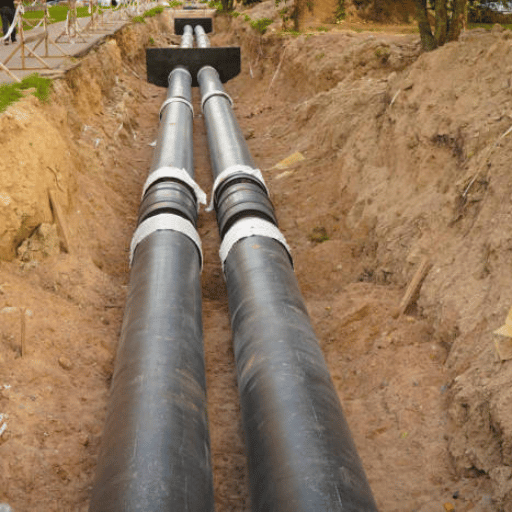
Picture a 60-foot trench from a basement utility room to a detached garage that will house a 75,000 BTU radiant heater. Owner wants steel because the run includes a 6-foot crossing under a poured concrete walkway, and he is not running plastic under that slab. Here is the protocol that passes inspection and survives the next 30 winters.
- Spec the pipe at the supplier. Order Schedule 40 black steel with factory FBE coating to ANSI/AWWA C213, nominal DFT 406 µm. Confirm the supplier ships matched joint kits. Reference our A106 Grade B black pipe spec sheet for the substrate, and use the pipe schedule chart to confirm wall thickness for your design pressure.
- Pull a permit and submit your plan to the AHJ. Include the slab-crossing detail, conduit material, and depth stamp. Get the AHJ’s coating approval in writing — verbal goes nowhere when the inspector at backfill is a different person than the one who took the application.
- Excavate to depth plus 6 in for bedding. Twelve inches of cover means a trench bottom at 18 in for a 4-in-diameter pipe with 2 in of sand bedding. Under the slab, increase to whatever your AHJ specifies — 24 in is typical.
- Lay 6 in of clean sand bedding. No rock, no construction debris. Sharp edges break the FBE coating during settlement and create the holiday that will eventually corrode through.
- Make up joints with the matched joint kit, then field-coat each joint. Most FBE pipe ships with a heat-shrink sleeve or a two-part liquid epoxy designed for field cure. Follow the manufacturer’s surface-prep step (typically SSPC-SP 11 hand tool to bare metal) — skipping it is the most common failure point. For threaded transitions, use a pipe dope rated for fuel gas on the pipe thread, then over-coat with the same liquid epoxy.
- Holiday-test the run before backfill. A field jeep tester at 5 V per micron of nominal coating thickness — roughly 2 kV for a 406 µm FBE — sweeps the pipe and the joint sleeves. Mark every spark, patch with the matched repair stick, retest.
- Pressure-test to the AHJ requirement. Most jurisdictions require 1.5× operating pressure for at least 30 minutes with a calibrated test gauge. Document the readings.
- Cover with 6 in of clean sand, then native backfill in lifts. Compact each lift. Photograph the trench, the test gauge reading, and the AHJ’s signed inspection card before the final cover.
For threaded transitions to manifolds and risers, pair the run with a code-compliant Welded Neck Flange connection at the above-grade interface — it is the cleanest way to terminate a buried steel run inside the building envelope.
Inspection Red Flags and Common Failure Modes
Inspectors and gas utility crews see the same five mistakes over and over. If your project shows any of them, the pipe is coming back out of the ground before the meter goes on.
- ⚠️ Field-painted black iron passed off as “coated.” Primer and tape from the hardware store are not factory coating, and inspectors who carry pipe sample reference cards can spot the difference in ten seconds.
- ⚠️ Mixed galvanized and black pipe in the same buried run. Galvanizing is not legal underground for fuel gas (NFPA 54:7.1.3.1), and the dissimilar-metal junction creates an aggressive galvanic cell at the threaded connection.
- ⚠️ Tracer wire missing or terminated below grade. Both ends of the wire must come up to a valve box or riser cap. Buried tracer wire ends are functionally invisible and fail the IFGC 404.17.3 access requirement.
- ⚠️ No holiday test record. If the contractor cannot show a jeep test log for FBE pipe, assume the coating has defects. A jeep test takes 15 minutes per 100 ft and costs nothing once the tester is on site.
- ⚠️ Anode lead clamped instead of welded. A clamp corrodes loose in 3 to 5 years; a thermite weld lasts the life of the anode. IFGC does not specify the connection method, but every utility standard does.
- ⚠️ Backfilled with native rocky soil directly against the pipe. Sharp rock tears coatings during freeze-thaw cycles. Sand bedding is cheap insurance.
“Roughly nine out of ten buried gas pipe call-backs we see in the first decade trace back to a coating defect at a field joint, not the pipe wall itself. If the joint coating procedure was skipped or rushed, the rest of the install hardly matters.”
Frequently Asked Questions
Can you direct bury a black iron gas pipe?
View Answer
Can you install black iron pipe underground in a conduit?
View Answer
Can a gas pipe be buried in concrete?
View Answer
Can you mix galvanized and black pipe for a gas line?
View Answer
Does black iron gas pipe need to be grounded?
View Answer
What size pipe can I bury?
View Answer
Sourcing factory-coated steel for a buried gas project?
BalingSteel ships FBE and 3LPE coated carbon steel pipe to ANSI/AWWA C213 and DIN 30670, with matched joint sleeves and mill test certificates.
Transparency note: this guide draws on the 2021 International Fuel Gas Code, NFPA 54, and AMPP/NACE SP0169 as primary sources, supplemented by published manufacturer technical data for FBE and 3LPE coatings. Burial depth and inspection requirements vary by jurisdiction — the AHJ listing in your municipal code is the binding authority for any specific project. Reviewed by the BalingSteel engineering team.
References & Sources
- CodeNotes: Underground Gas Piping System Requirements in the I-Codes — International Code Council, 2024 (based on 2021 IRC/IFGC)
- NFPA 54 FAQs (PDF) — United States Court of Appeals for the First Circuit document library
- NFPA 54 Tentative Interim Amendment §7.1.2 (PDF) — National Fire Protection Association
- Code Spotlight 1210.1.3 — Protection Against Corrosion — IAPMO
- Scotchkote Fusion Bonded Epoxy (FBE) Field Joint Application Guide (PDF) — 3M
- NACE SP0169 / AMPP — Control of External Corrosion on Underground or Submerged Metallic Piping Systems
- ASTM B117 — Standard Practice for Operating Salt Spray (Fog) Apparatus
- ANSI/AWWA C213 — Fusion-Bonded Epoxy Coatings for Steel Water Pipe and Fittings
- DIN 30670 — Polyethylene Coatings for Steel Pipes and Fittings (3LPE)