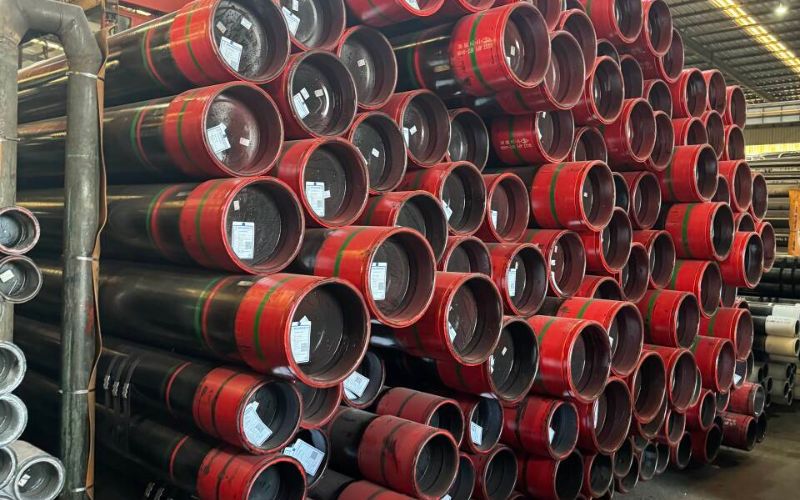
Quick Specs
| Material | Carbon and iron (0.05–2.0% C by weight) |
| Key Standards | ASTM A106 Gr B · ASTM A53 Gr B · API 5L Gr B–X70 |
| Tensile / Yield (Gr B) | 60,000 psi (415 MPa) / 35,000 psi (240 MPa) |
| Size Range | NPS 1/8″ to 48″ · SCH 5 to SCH 160 / XXS |
| Max Service Temp (A106 Gr B) | 750 °F (400 °C) |
| Manufacturing | Seamless (hot-rolled / cold-drawn) · Precision carbon steel welded (ERW / LSAW / SSAW) |
Carbon steel pipework continues to be the foundation of industrial piping systems in oil and gas, power generation, construction, and water infrastructure. From selecting pipe for high-temperature boiler loops to structural support frames, the engineer or specifier must pick the grade, schedule, and manufacturing process that delivers acceptable service life at the lowest installed cost. This manual walks through every step — from choosing the right carbon content classification and ASTM or API grade, to reading a schedule chart, preventing corrosion, and selecting compatible fittings — so you can write a purchase order with confidence.
What Is Carbon Steel Pipework and How Is It Made?
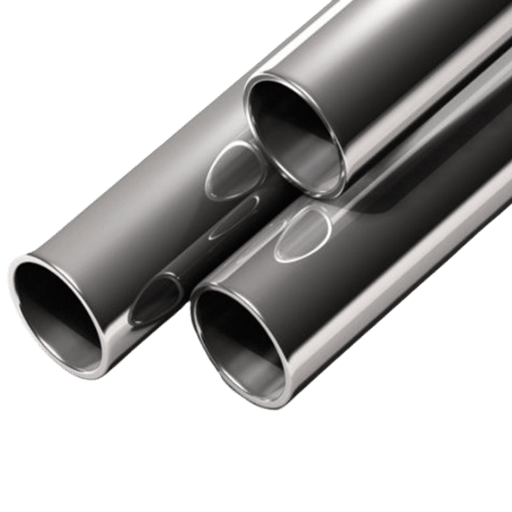
Carbon steel pipe is a hollow steel section made from an alloy of iron and carbon, where the carbon content sits between 0.05% and 2.0% by weight. That carbon percentage has a direct effect on how the pipe behaves mechanically — push the carbon higher and you get more tensile strength and hardness, but ductility drops off and weldability suffers. Unlike stainless steel, carbon steel carries no meaningful chromium addition, which is exactly why corrosion protection turns into a serious design consideration on every project.
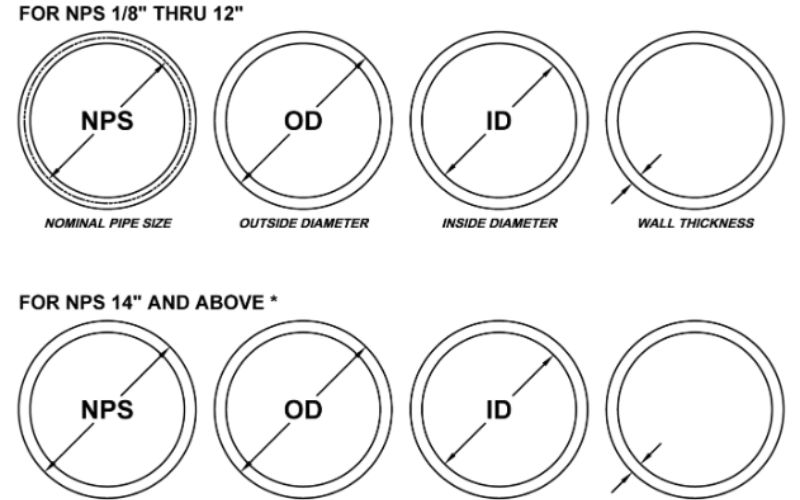
A basic confusion that trips up procurement: pipe and tube are not synonyms. Pipe is referenced by Nominal Pipe Size NPS and pipe schedule (which defines wall thickness ). tubing is referenced by actual outside diameter and wall thickness.
A 2-inch pipe is 2.375 inches OD, but a 2-inch tube is 2.000 inches OD. Think you bought a 2-inch pipe?
Think again.
Two main routes to pipe manufacturing are: solid-formed (no weld seam) – piercing a solid billet to produce a hollow shell, and rolling this to the required final dimensions; or welded production (forming the flat steel into a cylinder and welding the seam using either electric resistance welding or submerged arc welding). The performance characteristics of the materials produced by each method differ and are discussed in the next section.
What Are the 4 Types of Carbon Steel?
Based on the carbon content, carbon steel is divided into 4 types suitable for different piping application:
- Low carbon steel (mild steel): 0.25% C . Very good weldability and ductility. Base most of the carbon steel pipework (A53, A106 Gr A/B).Workhorse of industrial piping.
- Medium-carbon steel: 0.25-0.60% C – Increased strength and hardness at the expense of lower weldability. Found in specialized mechanical tubing and some high strength fittings.
- High carbon steel: 0.60-1.0% C – Very hard and resistant to wear; weldability causes it to be unsuitable for most piping. Applied as springs and in cutters.
- Ultra-high-carbon steel: 1.0–2.0% C — Extremely hard and brittle. Not used in piping systems.
For 90% of industrial piping projects, you are working with low-carbon steel in the 0.20–0.30% C range. If someone hands you a spec sheet with carbon above 0.35%, double-check — that is unusual for pipe and may indicate a tubing or mechanical component specification.
Seamless vs Welded Carbon Steel Pipe: Manufacturing and Selection
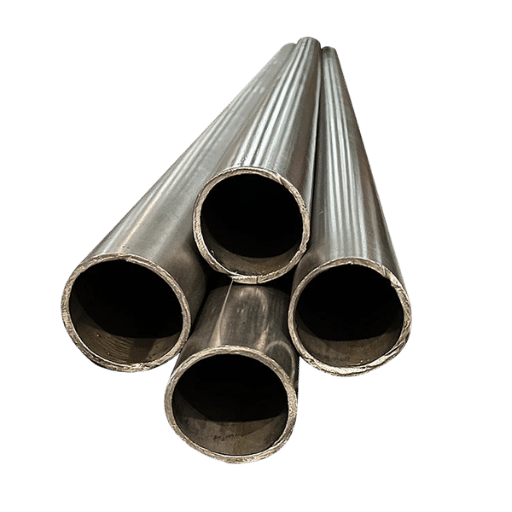
How a pipe is made defines what use limits can be placed on its performance. Seamless pipe begins as a solid billet that gets pierced into a hollow shell – avoiding any possible weak point running through the length and delivering more uniform wall thickness across the cross-section. Welded steel pipes begin as a steel plate or coil that is formed into a cylinder and welded by electric resistance welding (ERW), longitudinal submerged arc welding (LSAW) or spiral submerged arc welding (SSAW).
| Property | Seamless | Welded (ERW) |
|---|---|---|
| Wall Uniformity | ±12.5% tolerance (ASME B36.10) | ±10% tolerance (tighter from coil control) |
| Weld Seam | None — full circumferential integrity | Longitudinal seam — requires NDT inspection |
| Max Practical Size | Up to 26″ OD (hot-rolling limits) | Up to 60″+ OD (LSAW/SSAW) |
| Relative Cost | 1.3–1.8× welded (same size/grade) | 1.0× baseline |
| Typical Standards | ASTM A106, ASTM A333 | ASTM A53 Type E, API 5L (ERW) |
| Best For | High-pressure, high-temp, critical service | Structural applications, general fluid, cost-sensitive |
The 80/20 Rule for carbon steel pipe Selection: Auto carbon steel pipe use 80% of batch pipe-welded – it is more affordable, available in larger diameters and suitable for general structural and moderate pressure applications. The other 20% that cannot compromise may require flawless manufacture include high-pressure steam lines (ASME B31.1), NACE-certified sour service (MR0175) or any program that stipulates outright seamless manufacture. When one is unsure, a welded ERW pipe is said to provide the same service in 30-40% less cost.
Carbon Steel Pipe Grades and ASTM Standards — A106, A53, and API 5L
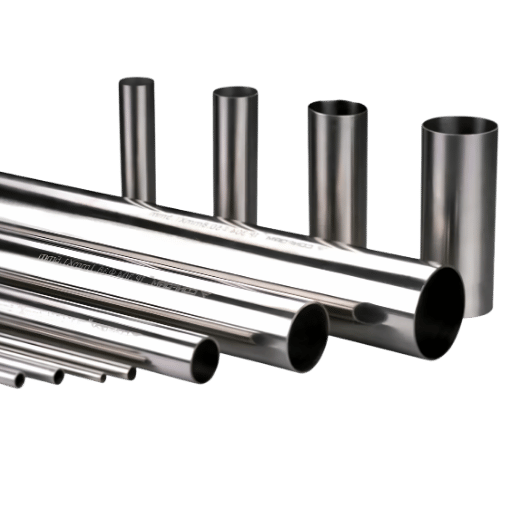
Although each steel grade specified on a purchase order has legal ramifications governing which service that pipe. The three standards that dominates the carbon steel pipework and the differences among them are explained below.
| Property | ASTM A106 Gr B | ASTM A53 Gr B | API 5L Gr B (PSL1) |
|---|---|---|---|
| Tensile Strength (min) | 60,000 psi (415 MPa) | 60,000 psi (415 MPa) | 60,200 psi (415 MPa) |
| Yield Strength (min) | 35,000 psi (240 MPa) | 35,000 psi (240 MPa) | 35,500 psi (245 MPa) |
| Max Carbon (%) | 0.30 | 0.30 | 0.26 |
| Manufacturing | Seamless only | Seamless (Type S) or Welded (Type E/F) | Seamless or Welded |
| High-Temp Testing | Required (up to 750 °F / 400 °C) | Not required | Not required |
| Primary Application | Steam, boiler, high-temp service | Structural, general fluid, fire protection | Oil & gas pipeline transmission |
“The most common specification error I see is treating A106 and A53 as interchangeable because their Grade B mechanical properties look identical on paper. The critical difference is that A106 mandates seamless manufacture and includes elevated-temperature testing – which is exactly what you need for steam service above 400 F. Using A53 Type E in that application is a code violation under ASME B31.1.”
— Senior piping engineer, Eng-Tips Forum (paraphrased from multiple threads)
Is ASTM A106 Grade B the Same as A53 Grade B?
Nope, that is actually a common mistake. Both have the same ambient tensile strength (60 ksi) and yield strength (35 ksi), but the manufacturing and testing method differs. ASTM A106 Grade B pipe is seamless and must pass heat treatment and high-temperature testing; this makes it the required choice under ASME B31.1 for high-temperature service. ASTM A53 pipe can be seamless or welded and does not require high-temperature verification; it is typically 10-15% lower in cost at ambient temperature for structural applications.
Grade Selection Decision Framework
- Steam/boiler use above 400 F ASTM A106 Gr B (seamless, high-temp tested)
- Structural/General fluid at ambient temperature ASTM A53 Gr B (welded Type E for cost savings)
- Oil and gas transmission API 5L pipe Gr B (X42-X70 for long-distance, high-pressure pipelines)
- Fire sprinklers ASTM A53 Gr B Type E (per NFPA 13)
- Low-temperature use below -20 F ASTM A333 Gr 6 (impact tested)
📐 Engineering Note
Many producers stamp pipe with combinations or triples (e.g., “A53/A106/API 5L”). This is if the pipe fulfills all three specifications and should be checked through copies of Mill Testing Certificate for each specification. A combination pipe that has never been tested to A106 high-temperature specification used directly in a high-temperature service may not be declared to be of A106 classification.
Carbon Steel Pipe Sizes, Schedules, and Weight per Foot
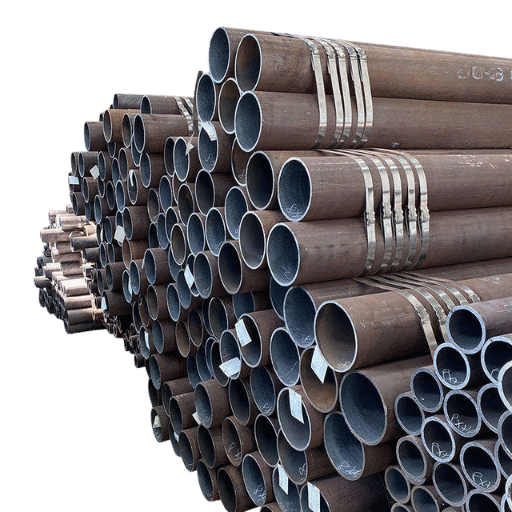
Pipe is sized by the NPS system defined in ASME B36.10M. The schedule number specifies wall thickness’ – pressure rating and weight, where strength and pressure requirements dictate the minimum wall. In Western stocking practice Schedule 40 wall thickness’ for carbon steel pipe up to 10in is universally available.
| NPS | OD (in) | SCH 40 WT (in) | SCH 40 Wt (lb/ft) | SCH 80 WT (in) | SCH 80 Wt (lb/ft) |
|---|---|---|---|---|---|
| 1/2″ | 0.840 | 0.109 | 0.85 | 0.147 | 1.09 |
| 1″ | 1.315 | 0.133 | 1.68 | 0.179 | 2.17 |
| 2″ | 2.375 | 0.154 | 3.65 | 0.218 | 5.02 |
| 4″ | 4.500 | 0.237 | 10.79 | 0.337 | 14.98 |
| 6″ | 6.625 | 0.280 | 18.97 | 0.432 | 28.57 |
| 8″ | 8.625 | 0.322 | 28.55 | 0.500 | 43.39 |
| 12″ | 12.750 | 0.406 | 53.60 | 0.500 | 65.42 |
| 24″ | 24.000 | 0.687 | 171.00 | 0.968 | 238.35 |
Source: Engineering Tool Box based on ASTM A53 / ASME B36.10M. To view a complete pipe size reference chart, visit our sizing page. Full pipe weight per foot.
📐 Engineering Note
ASME B36.10M allows a wall thickness tolerance of 12.5% for seamless pipe. A 4 SCH 40 pipe with nominal WT of 0.237 could measure as little as 0.207 depending on the real tolerance. In a designer level calculation, the minimum wall (nominal minus tolerance) must be used to determine the allowable working pressure per ASME B31.3 304.1.2. pipe tolerance stacking under sizing is the most common cause of – and hiding place for – specification errors.
Carbon Steel Pipe vs Stainless Steel vs Black Steel Pipe
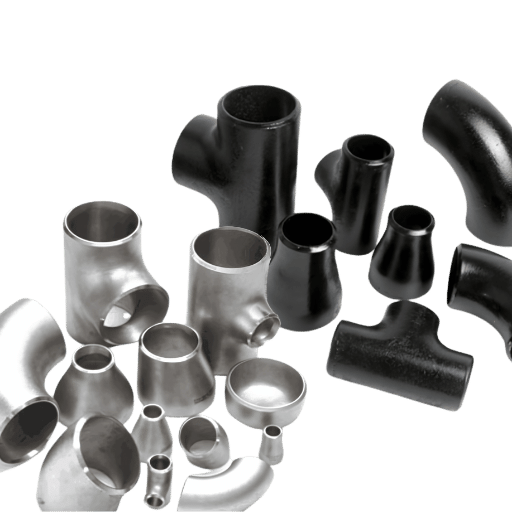
Material selection comes down to a compromise between corrosion resiliency, temp range, and price. Here is how the three most common pipe species compare in a 2 Schedule 40 offering:
| Factor | Carbon Steel (A53/A106) | Stainless Steel (304/316) | Black Steel Pipe |
|---|---|---|---|
| Composition | Fe + 0.05–0.30% C | Alloy steel: Fe + ≥10.5% Cr + Ni/Mo | Fe + 0.05–0.30% C (same as CS) |
| Corrosion Resistance | Poor without coating | Excellent, primarily due to the chromium in stainless steel forming a passive Cr₂O₃ layer | Poor — same as CS, iron oxide layer only |
| Cost Index (2″ SCH 40) | 1.0× (baseline) | 3–4× carbon steel | 1.0× (identical to CS) |
| Max Service Temp | 750 °F / 400 °C (A106) | 1500 °F / 816 °C (304) | 750 °F / 400 °C |
| Weldability | Excellent (SMAW, GTAW, GMAW) | Good (requires inert gas shielding) | Excellent (same as CS) |
What Is the Difference Between Carbon Steel Pipe and Black Steel Pipe?
One of the most common bidding errors: black steel pipe is not a different pipe material than carbon steel pipe. The above colour is the functional signifier for the mill scale – a durable, petrified layer of mill scale that blooms on the pipe surface during the hot rolling process. This pipe was originally uncoated carbon steel. Black steel pipe is the default pipe in the natural gas, fire sprinkler, and steam lines industry where the mill scale creates a tenth of a millimeter thick, long-lasting protective barrier with no coating needed in indoor, dry applications. In cold, exposed environments additional coating is required.
Industrial Applications for Carbon Steel Piping Systems
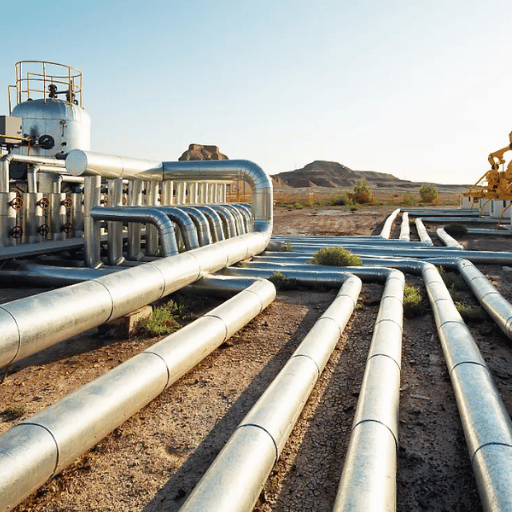
carbon steel pipedustry applications and grades are a matter of coding. Choosing the wrong one wastes money and can shut down a project if violations of ASME B31.3 in ASME B31.1 code occur:
| Industry | Application | Grade | Governing Code |
|---|---|---|---|
| Oil & Gas | Pipeline transmission | API 5L Gr B–X70 | ASME B31.4 / DOT 49 CFR 192 |
| Power Generation | Steam & boiler piping | A106 Gr B / SA-106 | ASME B31.1 Power Piping |
| Construction | Structural steel columns, piling | A53 Gr B / A500 Gr C | AISC 360 / local building codes |
| Chemical Processing | Process piping | A106 Gr B (non-corrosive media) | ASME B31.3 Process Piping |
| Fire Protection | Sprinkler systems | A53 Gr B Type E (ERW) | NFPA 13 |
| Water Infrastructure | Water transmission mains | AWWA C200 | AWWA M11 |
A Southeast Asia refiner specified the non-code compliant A53 pipe with 12% cheaper A106 grade on a 450° F steam header. During the final inspection, the third-party auditing agent flagged the incompatible pipe, which were to be tested for severe service at that temperature according to ASME B31.1. The pipe had to be removed, and the 340 meter run replaced at a cost over eight times the original pipe order. The moral of the story: the grade on the MTC is not advisory.
Pipework Corrosion Prevention and Inspection for Carbon Steel
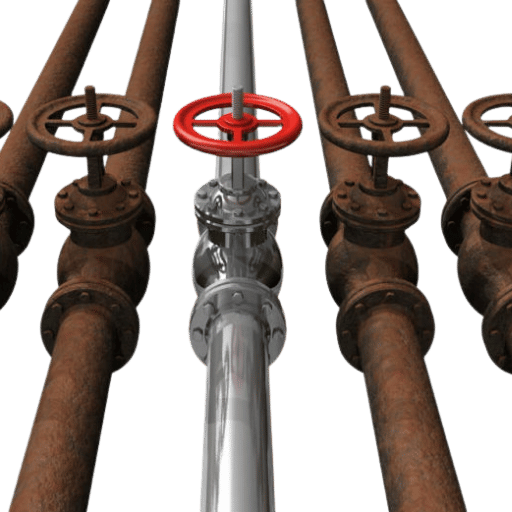
carbon steel corrodes. This should not be seen as a flaw – it is a property of the material and operationally acceptable. The question is not “will it corrode?” but “how do you prevent corrosion economically for your operating environment?” A 2023 NIH/PMC publication defined the ten most significant degradation mechanisms of steel pipelines as selective corrosion and erosion, with peaking of pitting corrosion rate at 30 days of exposure to CO rich environment.
| Protection Method | Mechanism | Best Environment | Relative Cost |
|---|---|---|---|
| 3LPE Coating | Three-layer polyethylene barrier | Buried pipeline, wet soil | Medium-High |
| FBE Coating | Fusion-bonded epoxy film | Moderate soil, directional drilling | Medium |
| Hot-Dip Galvanizing | Sacrificial zinc anode layer | Atmospheric, light industrial | Low-Medium |
| Cathodic Protection | Impressed current or sacrificial anode | Buried/submerged pipe, long runs | Medium (ongoing) |
| Internal Lining (cement/epoxy) | Barrier coating inside pipe bore | Potable water, chemical service | Medium-High |
Galvanic corrosion at dissimilar metal joints is one of the most overlooked failure modes in mixed piping systems. When carbon steel pipe connects directly to stainless steel fittings or equipment, the carbon steel becomes the sacrificial anode and the risk of corrosion accelerates dramatically. Industry practitioners commonly report wall thinning of 2–3× the normal rate at unprotected CS-to-SS transitions. The fix: install a dielectric union or insulating gasket at every dissimilar metal junction, and specify cathodic protection coatings on the carbon steel side.
- ✔ 5-Point Carbon Steel Corrosion Audit:
- Ultrasonic thickness (UT) test at elbows and tees every 2-5 years, confirmed through ultrasonic thickness tests per API 570
- Visual survey of all exposed joints for rust staining or weeping
- Check cathodic protection system readings (if installed) – annual minimum
- Confirm coating is in place on buried sections following any excavation activity
- Record all dissimilar metal connections and confirm insulation is still present
Carbon Steel Pipe Fittings and Connection Methods
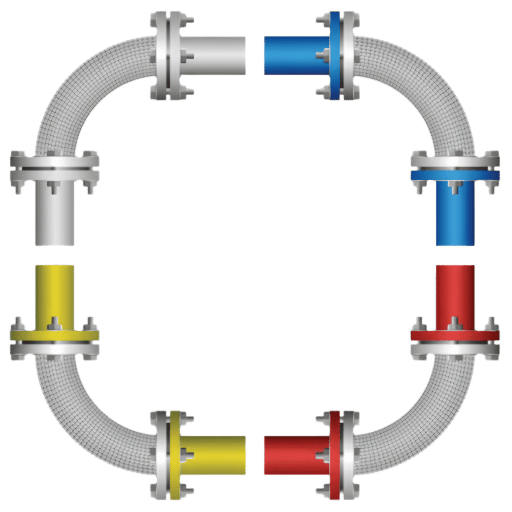
No pipe is more secure than its joints. carbon steel pipe fittings must be compatible with the pipe grade and schedule to preserve system security. The prevalent fitting property standard is ASTM A234 WPB, which calls for forged carbon steel fittings with the appropriate mechanical properties to match A106 Gr B pipe (TS 60,000 psi / YS 35,000 psi).
Four connection types cover nearly all carbon steel piping applications:
- Butt weld: Full-welded penetration for NPS 2 and greater. Most secure connection, necessary for high-temp or high pressure services. fittings: elbows, tees, reducers, caps.
- Socket weld: pipe entered into an embedded fitting, and filed Zujoshihed. Used for NPS 2 and below where full-headed accessibility is restricted.
- Threaded (NPT): male / female weld. Ready to assemble, no welding required. Suitable for utility lowpressure service (generally 300 psi small-bore).
- Flanged: Bolted flange weld connections using weld neck flanges, blind flanges or slip-on flanges per ASME B16.5. Critical at machinery connections and where disassembly requirements are anticipated.
Placing welds before full-root fit-up, misalignment, incorrectly sized root gaps, accounts for significantly higher field weld rejections for RT and UT inspection. Industry specialists have observed 10-15 minutes extra time on each joint for fit-up validation will lower rework levels by 30-40% for large pipework jobs.
Carbon Steel Pipe Market Trends: What’s Changing in 2025–2026
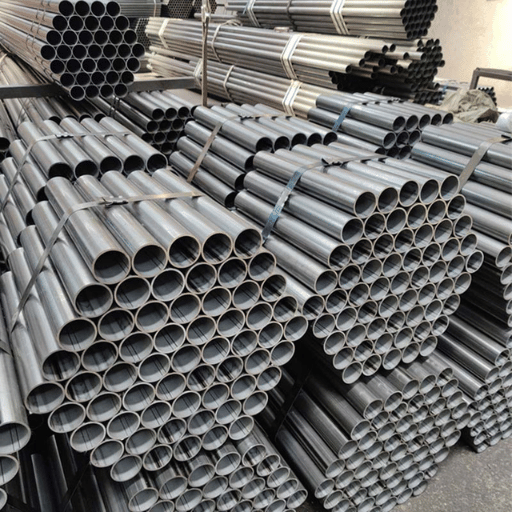
Global carbon steel pipe market valuation reached roughly $11.39 billion in 2025, with projections indicating an annual CAGR of 5.5% to 7.9% over the course of the next ten years as measured across various dimensions. Three changes are now impacting the seek for weld procurements:
1. Chinese welded pipe trade policy restrictions. In February 2026, the U.S. Department of Commerce issued a final affirmative anti-dumping verdict to circular welded carbon grade steel pipe originating in China. Purchasers exporting Chinese welded pipe to the United States should include on their analysis of FOB pricing against domestic or other-origin suppliers any duties anticipated to arise.
2. PHMSA standards revision. The U.S. Pipeline and Hazardous Materials Safety Administration has adopted ASTM A381/A381M-23 as an incorporated-by-reference standard for metal-arc-welded pipe in high-pressure transmission service. Standardizing the specifications brings pipeline safety codes in line with the most recent ASTM manufacturing and testing techniques.
3. Limited overall steel demand expansion. Global steel consumption will expand by 0.7% annually through 2027. Stable, not exploding, carbon steel pipe sourcing conditions benefit pipe buyers looking to secure pricing on seamless pipe inventory, since production lead times are two to three times longer than welded-equivalent models.
If your carbon steel pipe 2026/7 project is just starting, obtain pricing before year-end from buyers across geographies – not only China. With the restructuring of Millie Snatta steels into these industries, an anti-dumping activity appears to be brewing in a trial stage. Lead times for ASEAN seamless pipe have reduced to four to six weeks on standard sizes. A diversified steel supply chain reduces tariff risk and concentrate risk.
Frequently Asked Questions
Q: Does carbon steel pipe rust?
View Answer
Q: Can carbon steel pipe be used for potable water?
View Answer
Q: Is carbon steel the same as black pipe?
View Answer
Q: Should carbon steel pipework be welded or threaded?
View Answer
Q: What is the maximum temperature for carbon steel pipe?
View Answer
Q: How long does carbon steel pipework last?
View Answer
Need Carbon Steel Pipe for Your Project?
As your trusted pipe supplier, BalingSteel has 7–30 day lead time on A106, A53, and API 5L pipe from NPS 1/8″ to 48″ and can be cut to length per project specifications. Every quote includes a Mill Test Certificate.
Request a Free Quote →
Download Size Chart
WhatsApp Quick Inquiry
About This Analysis
All material for this guide was sourced from ASTM/ASME/API standard texts, peer reviewed corrosion research, safety data from U.S. federal pipeline documents and on the ground feedback from piping specialists. BalingSteel produces carbon steel pipe across ASTM A106 Gr B, ASTM A53, and API 5L standards from our production facility near Tianjin Port, China. Any quoting or lead time we list is what we are currently experiencing — yours may vary depending on quantity, coating requirements, and destination port. BalingSteel engineers review this material yearly, completed April 2025.
References & Sources
- ASTM Steel Standards — American Society for Testing and Materials
- ASME B36.10M — Welded and Seamless Wrought Steel Pipe — American Society of Mechanical Engineers
- 2025 IBR Standards Update Fact Sheet — U.S. Pipeline and Hazardous Materials Safety Administration (PHMSA)
- Anti-Dumping Determination: Circular Welded Carbon Steel Pipe from China — U.S. Federal Register
- Failure and Degradation Mechanisms of Steel Pipelines — National Institutes of Health / PMC
- ANSI Schedule 40 Steel Pipe Dimensions and Weights — Engineering ToolBox