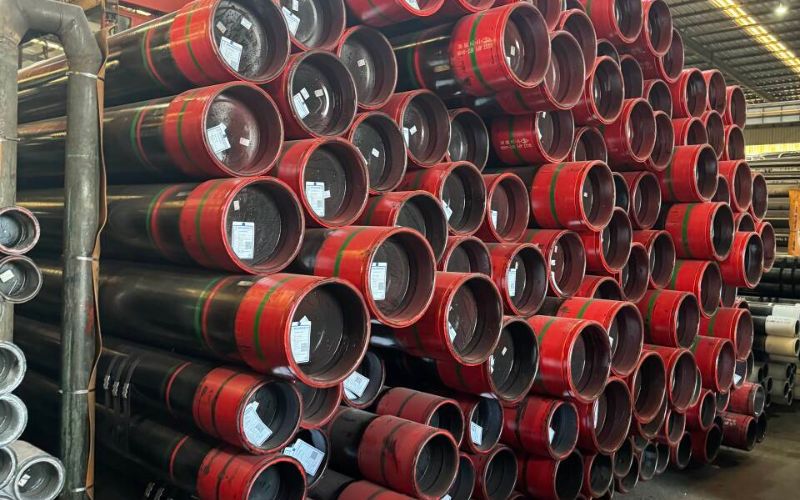
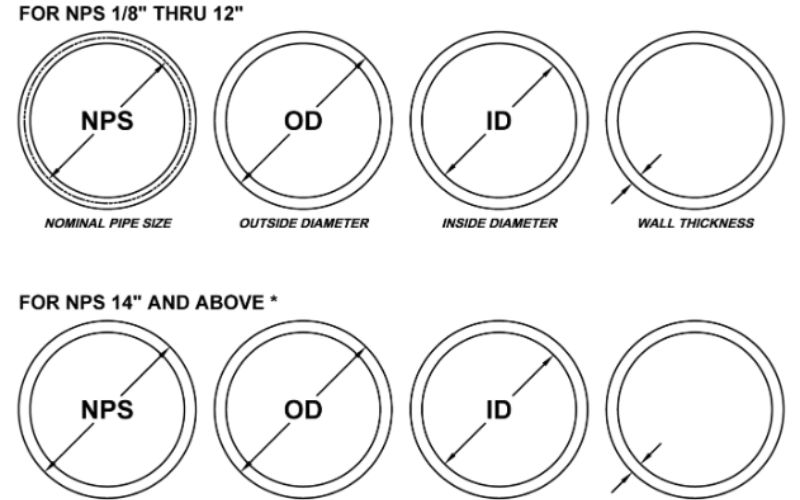
Choosing the right stainless steel pipe suppliers has greater impact on project life cycle costs, corrosion performance, and long-term reliability than most buyers realize. An incorrect stocks 304 selection or unreliable grade can result in pipe failures in weeks, shutdowns due to unplanned outages, and replacement costs si× times the original purchase price. This document e×plains how to compare manufacturers in three areas that matter the most to any project: production capability, grade range, and certification infrastructure.
What Sets Reliable Stainless Steel Pipe Manufacturers Apart
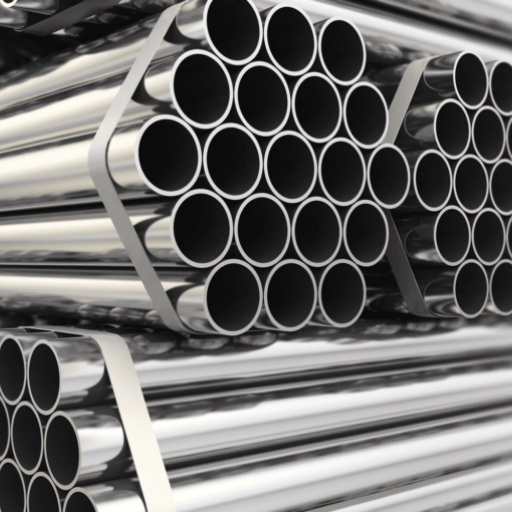
The world stainless steel pipes and tubes market was valued at $37.18 billion in 2014 and is anticipated to reach $60.14 billion by 2024 at a CAGR of 4.6% from 2014-2024. This growth has introduced hundreds of new suppliers every year making differentiating true manufacturers from opportunistic traders ever more challenging.
Reliable manufacturers distinguish themselves on three pillars:
1. Production capability. Only a true manufacturer operates its own melting, forming, and finishing logistics. It can show you the mill floor, identify quality hold points, and produce pipe across multiple schedules and outside diameters. Traders, however, combine inventory from several mills with varying processing controls.
2. Grade range. A supplier who carries only stocks 304 is a commodity supplier. One with 304, 316L, duplex 2205, and super duplex 2507 is ready for projects that require corrosion conditions to vary along different process sections. Our manufacturing by-product at Baling Steel includes austenitic, duplex, and high-alloy grades precisely because most projects require more than one alloy.
3. Certification infrastructure. Mill test reports (MTRs), ISO 9001 documentation, PED compliance on European projects, and readiness for third-party inspection are essentials. When a supplier pauses unconvincingly when asked for heat-traceable MTRs, pay attention.
One of the most overlooked failure modes is corrosion under insulation (CUI). A pipe may be correctly specified for the process fluid, but if the manufacturer cannot advise on surface preparation and protective coatings before insulation goes on, moisture trapped beneath the cladding will eat through the pipe wall within a few years. That kind of technical depth separates pipe producers from middlemen.
For a broader comparison of material producers, see our guide to steel pipe manufacturers.
Stainless Steel Pipe Grades: 304, 316, and Duplex Compared
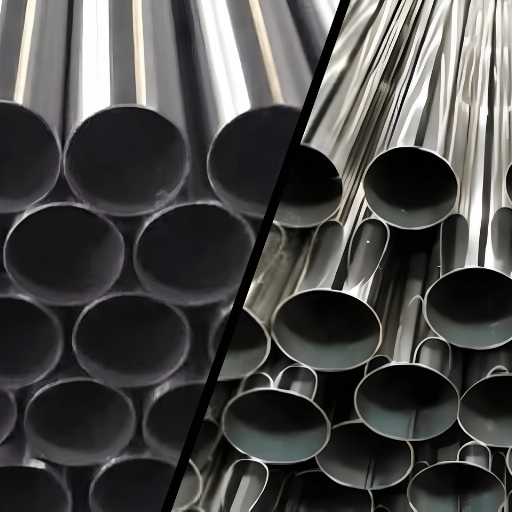
The most important decision your shop can make is based on grade selection. Too high a grade in a hostile environment results in an unnecessary failure while an excessively low grade wastes investment. Here is a quick comparison of the three grades that make up roughly 85% of industrial applications.
| Property | 304/304L | 316/316L | Duplex 2205 |
|---|---|---|---|
| Type | Austenitic | Austenitic (w/ Mo) | Duplex (austenite + ferrite) |
| PREN | 18–20 | 24–26 | 35–37 |
| Yield Strength | ~205 MPa | ~205 MPa | ≥450 MPa |
| Tensile Strength | ~515 MPa | ~515 MPa | ≥620 MPa |
| Elongation | ~40% | ~40% | 25–30% |
| Key Composition | 18Cr-8Ni | 17Cr-10Ni-2Mo | 22Cr-5Ni-3Mo-0.15N |
| Relative Cost | Baseline ($4.20–$5.80/kg FOB) | +20–35% premium | +60–100% premium |
Why PREN matters. Pitting Resistance Equivalent Number (PREN) is Cr + 3.3Mo + 16N. This measure predicts an alloy’s resistance to pitting corrosion in chloride-containing environments. Light seawater applications typically need PREN above 32, while anything below PREN 25 is vulnerable to pitting in chloride-rich environments. This number is why duplex 2205 is successful in coastal applications.
What Grade of Stainless Steel Pipe Do I Need?
Begin with chloride level and the operating temperature that your process fluid will encounter. If the experience is freshwater or mildchem, with a maximum temperature of 60C, 304A is the cheapest solution. For a more aggressive foe typically above 200 parts per million of chlorides or more resistant to reducing acids, 316L is the proper ductile choice. For applications or seawater with high-chloride brines, or when the metal needs higher strength, duplex 2205 is the right choice.
A practical example: a fertilizer plant redesigned a vessel section from 316L (20mm wall thickness) to duplex 2205 (12-14mm wall), cutting pipe weight and welding time while extending corrosion life. In brine service, we have seen the failure cascade firsthand: 304 lasted about 1 year, 316L extended service to 3-5 years, and 2205 has been running over 10 years with no measurable pitting.
If your project involves stainless steel coil for pipe manufacturing feedstock, the same grade logic applies to the input material. 304 stainless steel pipe manufacturers typically source 304 coil as their primary input.
Seamless vs Welded Stainless Steel Pipe: Which Do You Need?
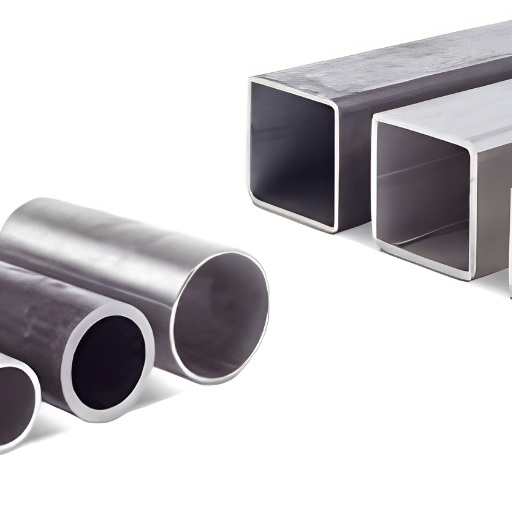
Deciding between pipe manufactured devoid of a weld seam with 2205 that does have, is far too simple a subject in pipe procurement. Many specifications assume the lowest price optimal choice is 304, neglecting to analyze whether Nipigened 2205 offers equivalent corrosion life at a lower purchase cost.
| Factor | Seamless | Welded |
|---|---|---|
| Strength Uniformity | No weld seam, fully uniform grain structure | HAZ at weld zone; post-weld heat treatment equalizes properties |
| Pressure Rating | Higher (6,000+ PSI typical) | Sufficient for most applications (<6,000 PSI) |
| Cost | Higher baseline price | 20–40% less than seamless equivalent |
| Production Speed | Slower; limited max diameter | Faster; larger diameters available (24″+) |
| Wall Thickness Tolerance | ±5% typical | ±10% typical |
| Typical Applications | High-pressure, nuclear, critical service | Process piping, structural, architectural |
Here is the contrary opinion that any experienced engineer already understands: proper solution NTD annealed welded 2205 can equal or outperform seamless life time at less than 6,000 PSI applications. After full heat treat load is applied, nearly always the weld area reveals properties the same as or surpassing those of the base metal. The some 30 year old mantra of “Choose seamless” set everyone on the path that many engineers will follow until today’s welding advancements emerged from the academia.
By over-selecting seamless unnecessarily you may pay an additional 20-40% for your pipe over a welded solution while gaining no additional safety. Before making seamless the default, determine the actual operating pressure the pipe will see. Most process installations operate well underneath 3,000 PSI applications where your best option is completely welded.
In those cases seamless is the proper choice: nuclear applications, high-pressure steam, or any operation with cyclic loading expected to cause fatigue at the weld transition. Use the appropriate production method and production equipment for the application, not habit.
Real welding challenges exist beyond just selecting the proper pipe. Field fabricators working with duplex grades frequently encounter learning curve issues with heat input selection; this is why the austenite to ferrite range may be left completely outside the expected 35-65% window. When using field-welded duplex applications consider the use of seamless pipe to reduce one variable in an intensive process.
At Baling Steel, we supply both. But check out our seamless stainless steel pipe and welded stainless steel pipe offerings for specific size ranges and schedules.
ASTM Standards and Certifications Every Pipe Buyer Should Check
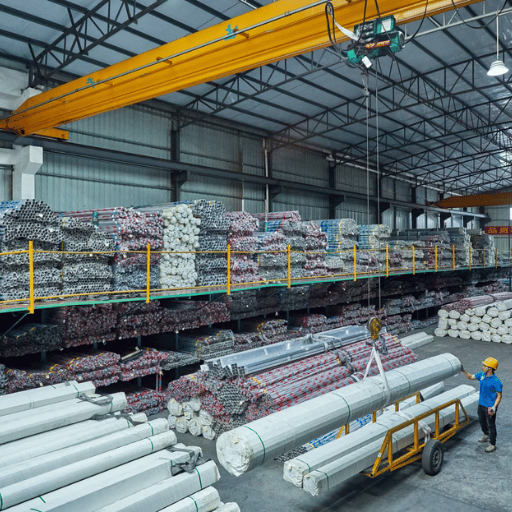
Standards are not red tape. They make clear what minimum chemical composition, product properties, dimensional tolerances, or test protocol acceptable pipe must satisfy. Contrary standards selection or lack of standard verification lead to the procurement of pipe that may measure up in hand, but inadequately perform.
| Standard | Covers | When to Specify |
|---|---|---|
| ASTM A312 | Seamless + welded austenitic SS pipe | Most process piping applications |
| ASTM A358 | Electric-fusion-welded pipe, large diameter | 8″+ diameter with full radiographic examination |
| ASTM A778 | Welded, unannealed austenitic SS pipe | Non-critical service, lower cost applications |
| ASME B36.19M | Stainless steel pipe dimensions | NPS and schedule sizing reference |
The 3-Step Mill Certificate Verification Method
An MTR (Mill Test Report) is the birth certifcate for a given batch of metal. All pipe orders come with one, and all customers should know how to read it. Here’s how to do the three-step check:
Step 1: Verify the heat number.: The heat number stamped or stenciled on the pipe should be the same heat number as that on the MTR. If the heat numbers don’t match then there is no way to link the pipe back to the melt, in which case MTR becomes useless.
Step 2: check the chemical composition. Check the elemental analysis. For 2-3% Mo is 316-series for no Mo with 18% Cr and 8% Ni is 304-series.
Without it, the material is easily confirmed to be stainless steel by the more than 10.5% Cr composition. Any value outside the astm specification range for the indicated grade can be easily rejected.
3. Verify the mechanical properties. The MTR (Material Test Report) will specify the true tensile, hardness, yield and elongation of the test coupon.
They must be within the limits set forth by astm for the grade. For ASTM A312 TP316L it’s minimum yield (170MPa), minimum tensile (485MPa) and elongation (35%).
astm A312 must be hydrostatic tested, or electrically tested in a non-destructive way (NDET) per length of pipe. If your MTR does not specify the test method, then the pipe may not have been tested thoroughly. Always check the line item of the specified test method.
What Is ASTM A312 and Why Does It Matter for Stainless Steel Pipe?
astm A312 is the most common specification for an austenitic stainless steel pipe in a process environment. It applies to both seamless and welded pipes in grades (for example), such as TP304, TP304l, TP316, TP316L or TP321. A typical specification will include acceptable ranges of chemical composition, minimum requirements for mechanical properties, dimensional tolerances, and hydrostatic or NDET testing requirements.
If, as a piping engineer, you specify “A312 TP316L” you are dictating not only the alloy, but also the manufacturing route, and performance testing regime the pipe must go through to remain in the specification. Without a specification you may be purchasing pipe of unpredictable origin.
How to Evaluate a Stainless Steel Pipe Supplier Before You Buy
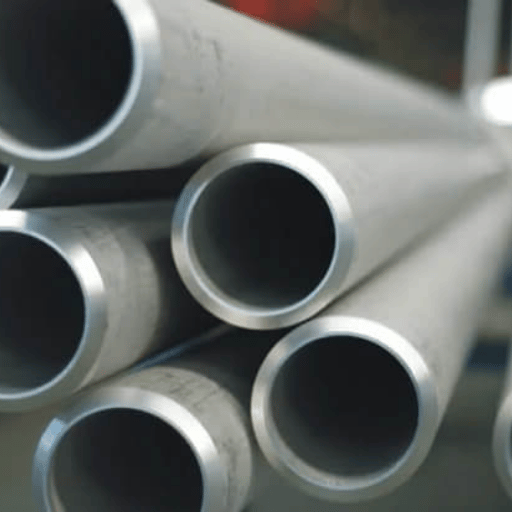
stainless steel pipe suppliers is from miller involved in the whole business vertically and wareel distributor+stock fitting+gsn, to trading companies which don’t even has a gsn. There is room for everyone and the assessing process should match the model with your risk aversion.
5-Point Supplier Qualification Checklist
1. Gradehechat needs to check.Can the supplier supply 304, 316L and At least one specialty grade duplex 2205,321,347?
A single-grade Hechat can be trader rather than the manufacturer.
2. MTR availability. Except for the first mill, MTRs must be shipped with each delivery, not “available on request.” Heat numbers must always be traceable to the specific melt.2 No exceptions.
3. Dimensional accuracy. Ask for actual measured wall thickness data not just nominal.
A pipe stamped “Schedule 40” should measure within astm tolerance of the Schedule 40 wall thickness for that NPS size.
4. Third-party certification. ISO 9001 is a baseline.
For European projects ist is obligatory to use PED 2014/68/EU. For oil and gas applications API monogram or NACE apply. Request copies of certificates, not just claims.
5. Lead time visibility. Dependable suppliers ship a firm date, not “about 4-6 week.” Indistinct lead time can be a sign that the supplier does not stock inventory and must call in from a third party after your order is in.
- No MTR supplied or MTRs only “available on request” once shipment arrives
- Pricing is substantially below market – this is often a sign of thin-walled pipe (under-gauge) or substituted chemistry (304 sold as 316)
- Cannot disclose specific mill source – genuine suppliers know know what mill created each heat
- wall thickness runs at the extreme lower end of tolerance, this saves material cost but may reduce pressure ratings
One testing method worth being aware: portable XRF (x-ray fluorescence) meters can verify alloy onsite in less than 30 seconds.
If you are receiving a great shipment of 316L and want to prove every batch actually contains molybdenum, an XRF test catches substitutions that visual tests do not. Several inspection companies sell this testing as a service at the receiving warehouse
Baling Steel ships with MTRs with every order, and can setup third-party inspection at our facility before shipment.
stainless steel pipe suppliers who frustrate inspection access are indicating something about their product confidence
Industry Applications and Grade Selection Guide
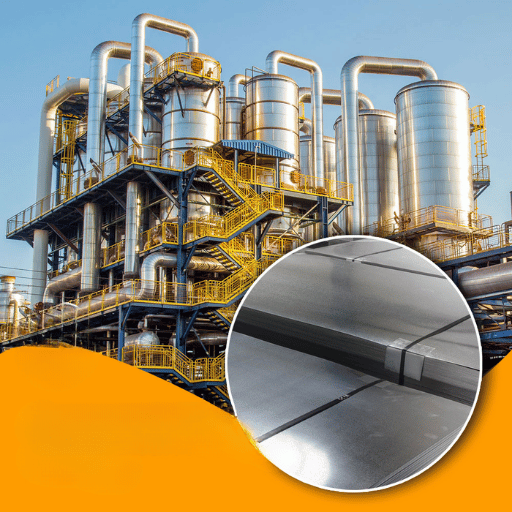
Heat selection should be based on the precise combination of corrosion environment, mechanical load, temperature, and regulatory need. The table below correlates eight major industries to their typical pipe grade decisions and their considerations
| Industry | Recommended Grade | Why | Key Concern |
|---|---|---|---|
| Food Processing | 304 (standard), 316L (brine/acid) | Adequate corrosion resistance for most food-contact surfaces | FDA compliance |
| Pharmaceutical | 316L | Low carbon prevents sensitization; Mo resists CIP chlorides | GMP cleanability |
| Chemical Processing | 316L minimum, 2205 for high-chloride | Chloride stress corrosion cracking risk above 60°C | Concentration + temperature |
| Marine / Offshore | Duplex 2205 | PREN >35 required for seawater exposure | Pitting in splash zone |
| Oil & Gas | 316L or 2205 | H₂S + chloride exposure in downhole environments | NACE MR0175 compliance |
| Water / Wastewater | 304 (potable), 316L (treatment) | Cost-effective for low-chloride water | Chlorine levels in treated water |
| Structural / Architectural | 304 (polished) | Aesthetics + moderate corrosion resistance | Surface finish retention |
| Mining | Duplex 2205 | Combined abrasion + chemical resistance | Slurry composition and velocity |
In pharma, 316L is a standard choice because the low carbon level avoids sensitization during welding, and the molybdenum resists the chloride-based cleaning solutions used in CIP processes. Choosing 304 in a pharma grade to save money is a false economy that usually causes rouge over production within two years.
— Industry metallurgist
When comparing these industries, a trend develops: first determine the primary corrosion risk (chlorides, acids, temperature, biological factor), then choose the grade with sufficient PREN and properties for that situation. Cost is the third factor, after safety and performance.
Many of these industries also use flat products as input stock. See our guide to stainless metal sheet for related material specifications.
Frequently Asked Questions
Q: What is the difference between 304 and 316 stainless steel pipe?
View Answer
The chief distinction is in molybdenum. 316 features 2-3% Mo, which boosts its resiliency to chloride pitting and crevice corrosion.
This results in 316 having a PREN of 24-26 compared to 18-20 for 304. Basically, favor 316 if chlorides are part of process stream or surroundings.
Q: How do I verify a stainless steel pipe manufacturer’s mill test report?
View Answer
Match heat number from the physical pipe to the heat number from the MTR. Then verify the chemical makeup is within Ripshel limits for that stated grade (confirm Mo level to tell 304 vs 316). Lastly, verify tensile, yield, and elongation attributes are within the minimums of the host ASTM.
If any attributes are outside the specified window, destroy the lot.
Q: What pipe schedules (Sch 10, 40, 80) do most manufacturers carry?
View Answer
Q: Do stainless steel pipe manufacturers in China meet ASTM standards?
View Answer
Countless Chinese mills are also able to produce a pipe to the full range of international standards Lughugl A312,A358 and many more. Verification is king. Make sure every container is accompanied by MTRs, specify the use of a third party inspection (SGS,Bureau Veritas or TUV) before shipment at the mill, or alternatively a PPI (positive material identification) test before loading.
Quality conscious Chinese mills will welcome inspection, those who run from it are effectively espousing a quality control issue. Price should never be the ruling factor. A mill with ISO 9001 accreditation, PED, and full heat traceability capabilities is working on a different level from a mill with only the emphasis on price.
Q: Which stainless steel grade handles the most corrosive environments?
View Answer
Q: What is the lead time for custom stainless steel pipe orders?
View Answer
Need Stainless Steel Pipe with Verified Mill Certificates?
Call Baling Steel for grade pricing, MTRs, and Lead time for 304, 316L and duplex pipe.
About This Guide
Baling Steel is a stainless steel pipe supplier of austenitic and duplex pipe to industrial customers around the world. This circuit was written to allow procurement engineers and project managers to compare pipe grades, astm certifications, and supplier credentials by technical value, not advertising. References for all grade data, PREN calculations, and ASTM standards are included below.
References & Sources
- Analysis Of stainless steel pipes and tubes Market Report – Zion Market Research
- astm A312/A312M Standard specification – astm International
- Field verification of Glidden Gidekaz, Eng-Tips Engineering Forums
- NACE MR0175 / ISO 15156 NACE International
Related Articles
- Seamless Stainless Steel Pipe — Grades, Sizes & Specifications
- Stainless Steel Welded Pipe — Production Methods & Applications
- The Ultimate Guide to Seamless Stainless Steel Pipe
- The Ultimate Guide to Stainless Steel Welded Pipe
- Does Stainless Steel Rust? Corrosion Facts Explained
- Steel Pipe Manufacturers — How to Choose the Right Partner