Stainless 316 pipe orders are most often placed when the customer needs molybdenum content for chloride resistance in austenitic stainless, requires certs, and wants the dimension in print before it leaves the factory.
Quick Specs Before You Quote
Pipe order: Usually defined by ASTM A312 / ASME SA312 for austenitic.
Standard material grades: Either TP316 or TP316L, where 316L is typically preferred if welding, heat-affected-zones or pickling-and-passivating are concerns for loss of weld metal corrosion resistance.
Piping dimensions must be defined on RFQ; they can include outside diameter, wall thickness, size, pipe schedule and length.
Requirements for RFQ must include the material standard, grade, dimensions, quantity and documentation.
When you are sourcing for a chloride-bearing line, marine equipment, chemical handling, water treatment, or food-processing pipework, the quote is only as good as the specification behind it. Start with Baling Steel’s Baling Steel pipe range, then use this guide to lock the grade, pipe schedule, wall thickness, length, and document checks before price comparison.
Price comes late. Before a buyer asks for a final number, the supplier should know whether the order is for TP316 or TP316L, which ASTM or ASME language the project uses, whether the pipe is NPS-based or tube-based, whether SCH 10S, 40S, or 80S applies, how many 6 m or 12 m lengths are needed, and which documents must ship with the material. A short RFQ can still be precise.
Advantages
- Higher grade of molybdenum, providing superior performance vs 304 in many chloride environments and to cleaning chemicals.
- Available either with or without a weld under the standard pipe sizes.
- Material is best suited for when the buyer requires control over material test certifications, end prep, OD’s and MTC information before shipment.
Limitations
- In a chloride application, the stress may exceed the capability of the grade; there remains potential for stress corrosion cracking.
- A generic order for “316 pipe” will come with a much higher quotation than the correct level of detailed material specification.
- In instances of welded joints in the line, other materials may be more corrosion resistant and may need consideration if not project mandated that you use plain 316.
What Stainless 316 Pipe Means In A Buying Spec
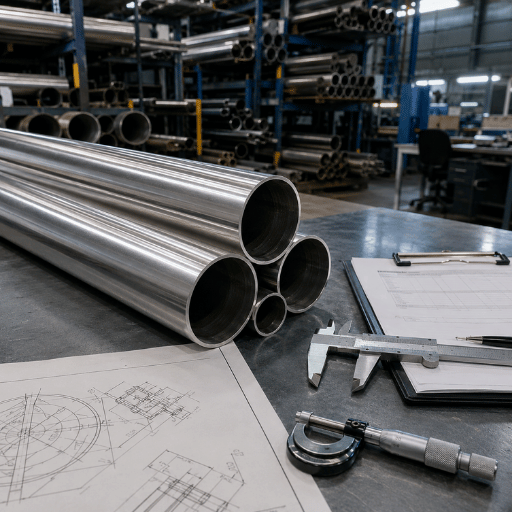
Stainless 316 pipe is a molybdenum-bearing austenitic stainless steel pipe. SSINA lists Type 316 with 16-18% chromium, 10-14% nickel, and 2-3% molybdenum. Molybdenum is the reason buyers often move from 304 to 316 when chlorides, cleaning chemicals, marine exposure, or process fluids raise corrosion risk.
That does not make the phrase “316 stainless” a finished specification. It only identifies the material family. A buyer still has to define the pipe form, standard, nominal pipe size, schedule, wall thickness, cut length, end finish, inspection level, and material test certificate requirement. Baling Steel’s related 316 and 316L stainless pipe options page lists 316 and 316L among available grades and gives an OD range of 6 mm to 600 mm.
Pipe, Tube, Or Tubing: Do Not Mix The Dimensional Language
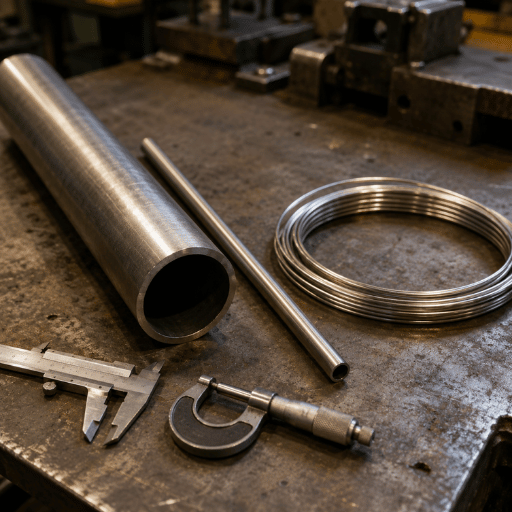
Pipe and tube are sometimes grouped together in searches, but are not ordered in the same manner. Pipe is conventionally ordered by NPS and schedule. Tube is usual ordered by actual outside diameter and wall thickness. A purchaser who sends “2 inch 316 stainless tubing” to one supplier and “NPS 2 SCH 40S 316 pipe” to another may receive quotes for different parts.
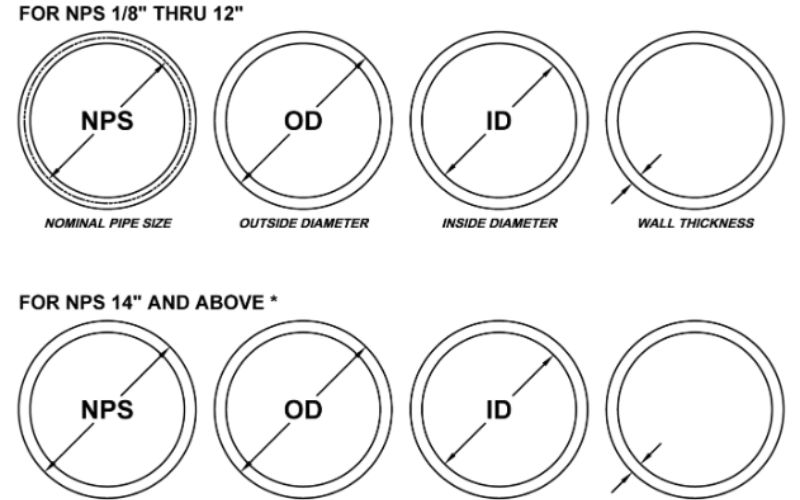
Baling Steel’s pipe size reference explains the key terms: OD, ID, wall thickness, NPS, and schedule. It also gives examples such as NPS 2 with 2.375 in OD and different internal diameters by schedule. Use that language in the RFQ instead of relying on a free-form diameter phrase.
Most questions from buyers: Is 316 pipe the same as 316 stainless steel tubing?
No. Although they could be in the same stainless family, the dimensional system, factor of safety and intended use are different. Tubing drawings should state outside diameter and wall. Pipe specifications governed by NPS and schedule should state the pipe standard and schedule.
ASTM A312, ASME SA312, And B36.19 Stainless Steel Pipe Dimension Rules
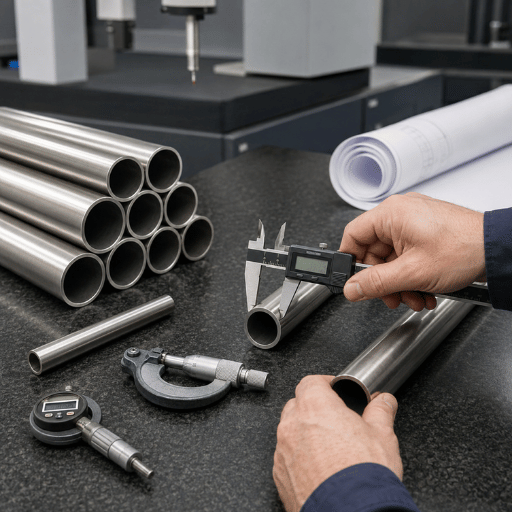
ASTM A312/A312M is the common starting point for austenitic stainless steel pipe. ASTM describes the specification as covering weld-free, straight-seam welded, and heavily cold worked welded austenitic stainless steel pipe for high-temperature and general corrosive service. ASME B36.19M controls dimensions for welded and weld-free wrought stainless steel pipe used at high or low temperatures and pressures.
Many purchase orders also reference ASME SA312 when the project documentation uses ASME material specifications. Treat that as a project-document issue, not a shortcut. Buyers should confirm the exact edition, grade designation, size, schedule, heat treatment condition, testing need, ASME language, and ASME reference with the supplier before release.
316 Stainless Pipe Schedule, OD, Wall Thickness, And Length: Spec-Lock Checklist
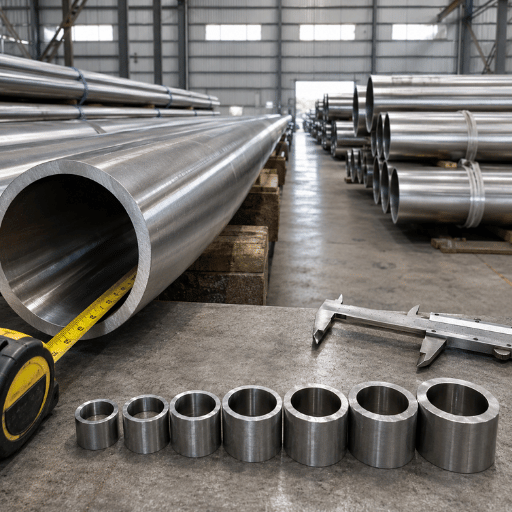
A stainless 316 pipe quote can appear uncompetitive because a field is not cited. Use a spec-lock table to spot that in a fast way before comparing quotes.
| RFQ Field | Example Entry | Why It Matters |
|---|---|---|
| Grade | TP316 or TP316L | Controls chemistry, weld risk, and document review. |
| Standard | ASTM A312 / ASME SA312 | Defines the manufacturing and test basis. |
| NPS or OD | NPS 2, OD 2.375 in | Prevents pipe and tube language from crossing. |
| Schedule | SCH 10S, 40S, or 80S | Changes wall thickness and weight per foot. |
| Wall thickness | 0.154 in for a sample NPS 2 SCH 40 listing | Useful when drawings call wall directly. |
| Length | 6 m, 12 m, or cut length | Affects packing, container loading, and waste. |
| End finish | Plain, beveled, threaded, or prepared for fitting | Controls field work and welding prep. |
| Quantity | 120 pieces or 2,400 m | Affects price, heat-lot planning, and shipment. |
| MTC need | EN 10204 3.1 style document or project format | Defines traceability and acceptance evidence. |
| Inspection | Dimensional, visual, PMI, third-party witness | Reduces shipment disputes before release. |
Maintain the same unit system checklist all through quoting comparison. Starting a quote with both inches and millimeters or just nominal and actual, then mixing that into mock-up production, bundling, tagging, quizzing inspection and shipping, invites small errors with a potentially large cost. It’s acceptable for a buyer to specify metric and inch dimensions together, but the purchase order should specify which dimension set is accepted.
Common RFQ shorthand includes schedule 10, schedule 40S, SCH 10, and SCH 80S, but the buyer should still spell out the 316 schedule, OD, and wall thickness. Use SS 316 shorthand only after the purchase order also names TP316 or TP316L.
Baling’s size examples show why the schedule field matters: NPS 1/8 has 10.3 mm OD, with SCH 40 ID at 6.83 mm and SCH 80 ID at 5.46 mm; NPS 2 has 60.3 mm OD, 52.5 mm SCH 40 ID, and 49.25 mm SCH 80 ID; NPS 6 has 168.3 mm OD, 154.07 mm SCH 40 ID, and 146.36 mm SCH 80 ID.
316, 316L, And 304: Where The Extra Alloy Cost Makes Sense
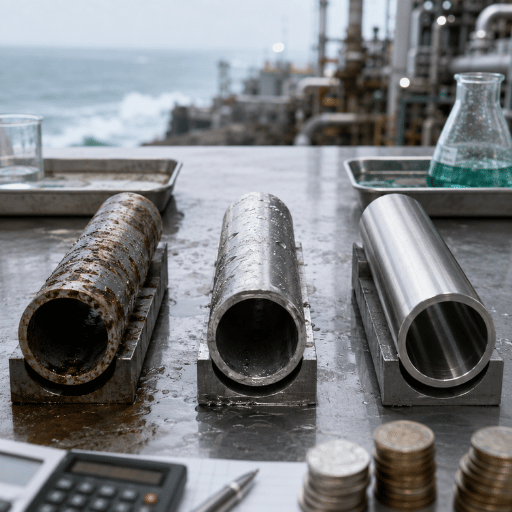
304 is often enough for dry, mild, indoor service. 316 stainless steel is chosen when chloride exposure, cleaning chemicals, marine air, or process fluids make pitting and crevice corrosion more likely. SSINA notes that pitting and crevice corrosion generally occur in the presence of halide ions, typically chloride. SSINA also lists Type 316 as a chromium-nickel-molybdenum grade and ties molybdenum to improved chloride resistance.
Choose 316L when welding is part of the job or when the project wants lower carbon risk. SSINA explains that low-carbon grades such as 316L resist sensitization during typical welding operations. Baling’s 316 stainless steel yield strength guide gives supporting property context for strength questions.
| Material Condition | Likely Shortlist | Check Before Ordering |
|---|---|---|
| Indoor dry utility line | 304 or 316 | Do not overpay if chloride risk is low. |
| Coastal air exposure | 316 or 316L | Check crevices and cleaning plan. |
| Welded pipe spool | 316L | Confirm weld procedure and MTC carbon value. |
| Hot chloride service | Project engineer review | 316 may not be enough for SCC risk. |
| Food or washdown area | 316L | Check surface finish and cleaning chemicals. |
| Chemical transfer | 316L or higher alloy | Match fluid, concentration, and temperature. |
| Marine hardware line | 316L | Avoid crevices and stagnant salt deposits. |
| High-pressure service | Project-approved grade and schedule | Confirm pressure design, not only grade. |
| Budget replacement | 304 only if conditions allow | Do not swap from 316 to 304 without approval. |
Welded Or Weld-Free 316 Pipe: Selection Rules By Pressure And Lead Time
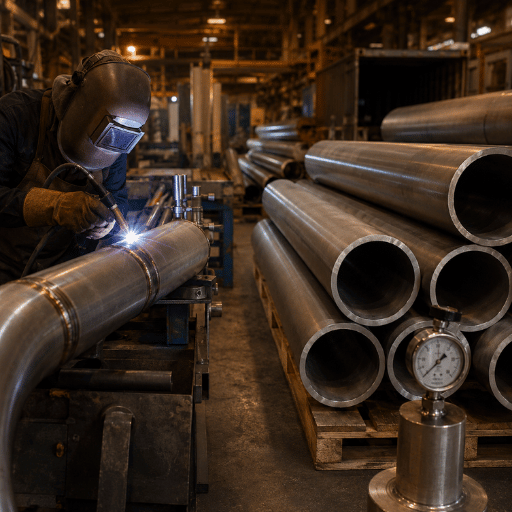
ASTM A312 covers more than one manufacturing route, including welded and weld-free austenitic stainless steel pipe. That means the buyer should not treat product form as a guess. Many utility, process, and structural pipe runs can use welded stainless steel pipe when the project permits it. Some high-pressure, high-temperature, or inspection-sensitive services may require a weld-free product by project documents.
Baling’s stainless steel welded pipe page lists 304 and 316 grades and ASTM A312 among product standards. Buyers comparing weld forms can also review Baling’s weld-free stainless pipe guide and welded stainless pipe guide for background.
- Use welded pipe when the standard, pressure class, and project approval allow it.
- Ask for weld-free pipe when the drawing, service risk, or inspection plan requires it.
- Ask whether the quote includes PMI, dimensional check, hydrostatic or other project-required testing.
- Do not compare welded and weld-free pipe quotes as equal if the purchase order does not allow both.
Application Details: Fittings, Ends, And Fabrication Must Match The Pipe
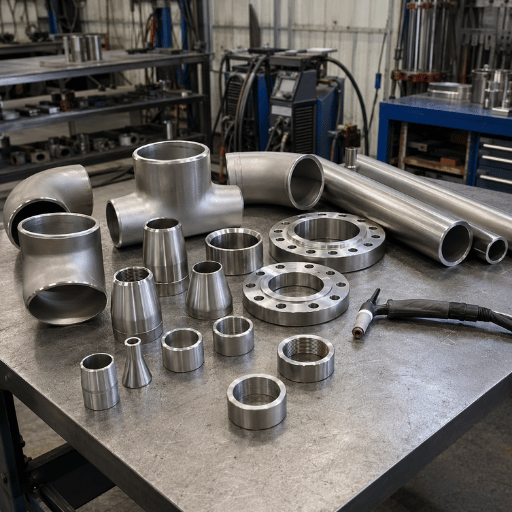
The correct pipe grade can still fail procurement review when the connected details are vague. Fittings, end preparation, flange class, cut length, surface condition, and packaging all affect whether the pipe arrives ready for the job. This is where a low price can become expensive after rework.
Each application should confirm whether the matching fitting package must use the same metal grade, the same low-carbon variant, and the same inspection document format as the pipe.
A complete RFQ should state whether the pipe will be plain-end, beveled, threaded, grooved, or prepared for welding. State whether fittings should match 316 or 316L. Export shipments should align cut lengths with packing and unloading. Baling’s shipping service page gives logistics context for ocean freight, loading, unloading, and shipment updates.
Industrial and marine applications may also need custom cut lengths, ISO 9001 documentation, or a project-specific packing list before production release.
Price And Supplier Checks: Why Two 316 Pipe Quotes Differ
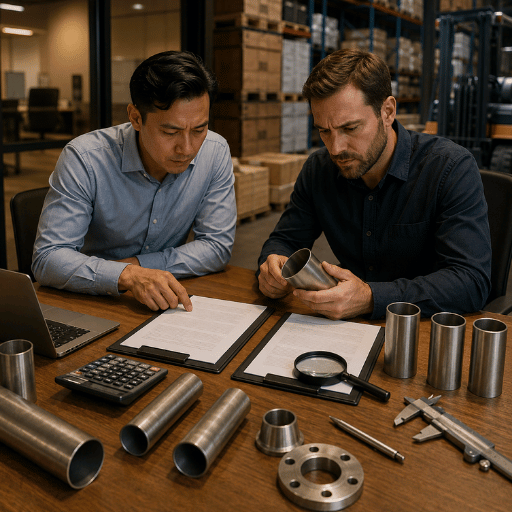
Two stainless 316 pipe quotes may be substantially different for good reasons: grade, schedule, OD tolerance, wall tolerance, cut length, mill, heat-lot grouping, inspection, MTC format, packing, scope of freight. A lower quote that has not been verified by the same acceptance evidence available means it is different offer.
| Quote Difference | Buyer Question |
|---|---|
| 316 vs 316L | Does the project accept both, or is low carbon required? |
| SCH 10S vs 40S vs 80S | Is the wall thickness equal to the drawing? |
| 6 m vs 12 m vs cut length | How much cutting waste and freight space changes? |
| MTC included vs on request | Will the MTC show heat number, chemistry, mechanical data, and standard? |
| Inspection included vs excluded | Who pays for third-party inspection or witness checks? |
| Domestic stock vs import mill | What lead time, document format, and packing method apply? |
Buyer question: How does an incremental step of shorter lengths reduce transportation costs?
You may be able to reduce shipping costs by ordering shorter cut lengths, but that may increase handling and cutting cost, increase piece count, and introduce handling hazard. Consider delivered cost, not simply unit price.
5-Field MTC Gate For Stainless 316 Pipe Inspection
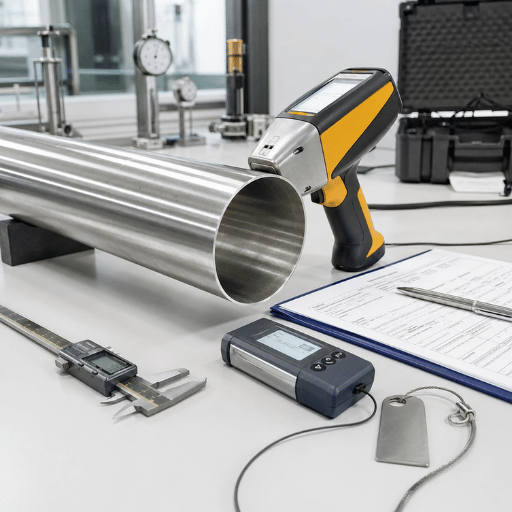
This 5-Field MTC Gate is a quick review method for buyers who do not want document problems discovered at installation. Baling’s material test certification process mentions MTC documents, furnace-number traceability, and stored chemistry/testing data. Baling’s professional pipe inspection page also lists third-party inspection, acceptance inspection, production witnessing, and loading/unloading witnessing.
| Gate Field | What To Match | Risk If Missing |
|---|---|---|
| 1. Heat number | Pipe marking, bundle tag, and MTC | Traceability break. |
| 2. Grade | TP316 or TP316L on PO and MTC | Wrong alloy or wrong carbon limit. |
| 3. Standard | ASTM A312 / ASME SA312 edition | Acceptance dispute. |
| 4. Size | NPS, schedule, OD, wall thickness, length | Field fit or pressure-design issue. |
| 5. Mechanical data | Yield, tensile, elongation, and required tests | Document cannot support acceptance. |
Critical shipments may need PMI or third-party witness terms before production. Baling’s third-party report page is the right internal path when the order needs outside inspection records.
This gate is intentionally small. Five fields are enough to catch many order-level failures before a buyer reviews secondary items such as packing photos, loading witness records, or freight documents, and the same gate can be used again when replacement pieces or spare lengths are ordered months later.
2026 Outlook: Traceability Is Becoming A 316 Pipe Buying Requirement

For 2026 stainless steel pipe purchasing, the safer assumption is that documentation will matter more, not less. Buyers are asking for clearer heat-lot evidence, grade confirmation, MTC fields, dimensional records, inspection photos, and shipment records before release. That does not require a hard market forecast; it follows from the acceptance risk tied to alloy pipe shipments.
Projects evaluating stainless 316 pipe this year should ask for the quote package before comparing price: grade, ASTM or ASME reference, NPS, schedule, wall thickness, length, end finish, MTC, inspection level, and delivery terms. Then compare suppliers on the same evidence set.
FAQ
What is the difference between 304 and 316 SS pipe?
316 includes molybdenum which enhances corrosion resistance from pitting at a higher level in numerous chloride-containing environments. 304 still offers acceptable performance for mild applications, for example, dry indoor services, in the presence of minimal levels of chlorides, but cannot substitute for 316 where the order requires that material. Also buyers need to be mindful of whether the purchase consists of only pipe, tubing, fittings, or a mixture, as the match in grade by itself is inadequate assurance the entire order is equivalent.
Is 316 or 316L better for welded pipe?
316L is often preferred for welded pipe because its lower carbon level reduces sensitization risk during typical welding. Project code still controls final selection.
What are the disadvantages of 316 stainless steel?
It costs more than 304. It is also not immune to chloride SCC.
What is ASTM A312 TP316 pipe?
It is a TP316 austenitic stainless steel pipe ordered under ASTM A312/A312M. Order still needs size, schedule, length, end finish, testing, and MTC requirements. A buyer should not send only “ASTM A312 TP316” and expect every supplier to infer the same wall thickness, length, surface condition, marking, and inspection scope.
What schedule is common for 316 stainless pipe?
Common buying references include SCH 10S, 40S, and 80S.
Why are heat lots important on a pipe MTC?
Heat lot connects the delivered pipe to the chemistry and mechanical data on the MTC. When heat numbers do not match the bundle marking, pipe marking, packing list, and certificate, the document trail weakens. That matters for maintenance teams, import review, third-party inspection, and later warranty discussions because the buyer may need to prove that a specific installed length came from a specific furnace lot.
References
Related Baling Steel Guides