Update as of June 2026 Reviewed by the Baling Steel team
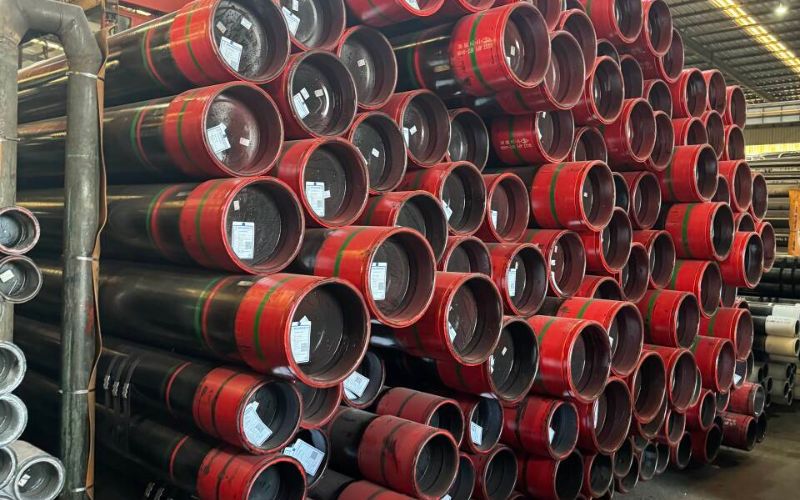
Alloy piping products are low-alloy chrome-moly pressure pipe, the ASTM A335 P-grade family (P11, P22, P91 and relatives) built for higher temperature and pressure than carbon steel. When anyone mentions to us alloy piping products either in a specification or in casual conversation with a vendor, they nearly always mean low alloy chrome-moly pipe – the family of ferritic alloy steel pipes categorized in ASTM A335 (P11, P22, P91 and associates) that handle higher operating temperature and pressure than its carbon steel relative. This guidance covers the basics of that family, the selection of grade as a function of temperature, why some selections become “install-critical”, and how to ensure you have indeed received the grade you ordered.
Quick Specs, Chrome-Moly Alloy Pipe (ASTM A335)
| Governing spec (non-welded) | ASTM A335 / ASME SA335 |
| Common grades | P11, P22, P5, P9, P91, P92 |
| Chromium range | 1.0% (P11) to 9.5% (P91/P92) |
| Service temperature | ~552 °C (P11) up to ~650 °C (P91/P92) |
| Size range | OD 50.8–860 mm, wall 2.77–100 mm |
| Typical service | Power boilers, superheaters, refinery, petrochem |
Quick answer. Alloy piping products means chrome-moly alloy steel pipe rated under ASTM A335; this family has between roughly 1 percent chromium (P11) and nine percent chromium (P91/P92), plus near one percent molybdenum.
You select grade by operating temperature: the 1 percent chromium P11 tolerates around 552 °C; grade P22 up to around 580 °C, while nine percent chromium (P91/P92) will stand up to 600-650 °C for the high-pressure steam cycle of fossil or nuclear fired plants.
What “Alloy Piping Products” Actually Means (and What It Doesn’t)
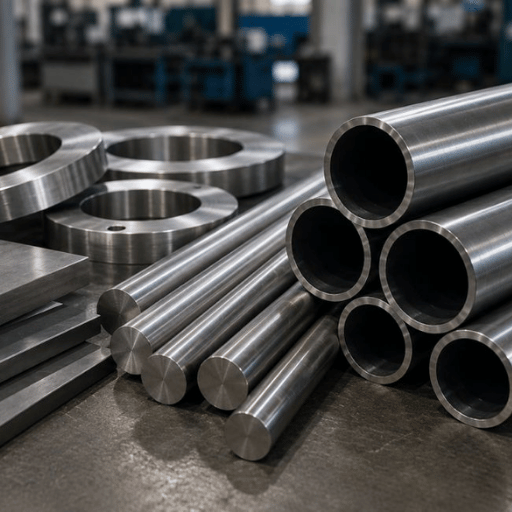
In industrial procurement, an alloy steel pipe is a low- to intermediate-alloy steel that gets its mechanical properties from deliberate alloying elements, chiefly chromium and molybdenum, with controlled manganese and silicon. These elements lift tensile strength, notch toughness, yield strength, durability and, above all, creep-rupture strength over plain carbon steel.
Low-alloy grades hold the combined alloy content (beyond carbon) to roughly 5%, which is what separates this carbon-and-alloy-steel family from heavily alloyed stainless. The same chemistry is rolled into both pipe and matching alloy steel tube, with pipe sized by NPS and schedule while a steel tube is called out by exact OD and wall. In short, it’s a type of steel engineered as a high temperature pipe material. Metallurgical composition limits for these alloys are documented in alloy-steel pipe patents (US Patent 4,564,392).
In practice, for high-temperature, high-pressure pipe this means chromium plus molybdenum, with some manganese and silicon. Chromium gives oxidation and corrosion resistance plus creep strength; molybdenum raises strength at temperature and resists hydrogen attack. Per ASTM A335/A335M, the P-grades hold 10% chromium or less. U.S. National Bureau of Standards creep research shows chromium-molybdenum steels lose structural stability above roughly 650 C.
That definition rules out the families often confused with low-alloy pipe. A stainless steel pipe (12%+ Cr, austenitic) offers stronger corrosion resistance but lower creep-rupture strength than P22. A nickel alloy pipe such as Alloy C-276 or Alloy 625 sits in a different price tier for more exotic, resistant-to-corrosion service. And A519 4130 or 4140 mechanical tubing is closer to a structural steel hollow section or an aerospace grade, not pressure pipe.
Using an A519 4130 pipe where an A335 P-grade was required has caused costly field failures, the two are governed by different specs for different duties. Beyond chrome-moly, the wider alloy-steel world also spans titanium alloy, plain titanium and aluminium grades chosen for a high strength-to-weight ratio in automotive and aerospace work, plus grades with high wear resistance and good resistance to corrosion for mining and drilling; useful context, but outside the high-temperature piping covered here.
What is alloy steel pipe?
Alloy steel pipe is a pipe that has been alloyed with certain elements, predominantly chromium and molybdenum, that create increased toughness, elevated tensile and yield strengths, improved resistance to temperature, and increased corrosion/oxidation resistance compared to carbon steels. In the high temperature and high-pressure pipe world, the general term for this is understood to refer to one of the various ASTM A335 chrome-moly grade pipes.
Each of these ASTM A335 grades comprises a defined percentage range for each of two elements, chromium and molybdenum, paired together along with an estimated highest operating temperature.
Alloy vs Carbon vs Stainless vs 4130 Chromoly: When Chrome-Moly Wins
What is the difference between carbon steel pipe and alloy steel pipe?
Plain carbon steel pipe (ASTM A106) is cheap and easy to weld, but has no business going much beyond about 425 °C (797 °F) or 454 °C (850 °F), where temperatures and the creep effect can seriously degrade strength, a limit consistent with U.S. DOE creep data for 2.25Cr-1Mo steel.
That’s what chrome-moly alloy steel pipe is for: that add-on of chromium and molybdenum maintains the strength of the metal at much higher temperatures and in oxidizing environments. Therefore, the decision is all about temperature and pressure, not some broad assumption that alloy is superior. The honest comparison is alloy steel pipe vs carbon steel pipe, decided by service temperature rather than reputation. Comparative creep tests across five steels quantify why chrome-moly outlasts plain carbon at elevated temperature (NIST).
| Family | Key element | Max useful temp | Relative cost | Typical use |
|---|---|---|---|---|
| Carbon steel (A106) | Fe–C | ~454 °C (850 °F) | 1.0× | Water, moderate-temp steam |
| C–½Mo (A209) | 0.5% Mo | ~482 °C (900 °F) | ~1.3× | Low-temp steam lines |
| 1¼Cr–½Mo (P11) | 1.25% Cr | ~552 °C (1025 °F) | ~2× | Superheaters, mild refinery |
| 2¼Cr–1Mo (P22) | 2.25% Cr | ~580 °C (1075 °F) | ~2.5× | Reheaters, hydrocrackers, hydrogen service |
| 9Cr (P91 / P92) | 9% Cr + V, Nb | ~600–650 °C | ~3–4× | Ultra-supercritical steam headers |
| 304H stainless | 18Cr–10Ni | ~816 °C (1500 °F) | ~5×+ | Very high temperature |
Temperature ladder cross-checked against U.S. National Bureau of Standards creep data and industry service tables.
✔ When chrome-moly wins
- Metal temperature above ~454 °C
- Long-term creep or steam-pressure duty
- Hydrogen or sulfidic refinery service
⚠ When it is overkill
- Ambient or moderate-temp water/steam (use A106)
- Structural or mechanical loads (use A519 4130)
- Chloride corrosion (use stainless instead)
Across the range these grades combine strength and resistance to creep and stay resistant to corrosion and oxidation at high temperatures, which is why carbon and alloy steel are specified so differently from one duty to the next. A519 4130 chromoly, by contrast, is mechanical tubing used in structural applications and drill collars, valued for its strength-to-weight property rather than any pressure rating.
The Chrome-Moly Grade Ladder: P5, P9, P11, P22, P91, P92
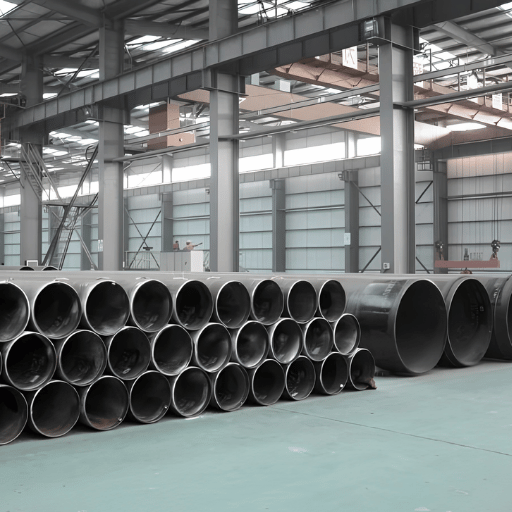
By far the most useful reference for buying chrome-moly alloy steel pipe is a grade-to-temperature map. We call it the P-Grade Service Window: it lines up each ASTM A335 grade by chromium content, molybdenum content and the temperature band where it earns its premium. These chrome moly pipe specifications matter because climbing the ladder means more chromium and more creep strength, and, from P91 up, far stricter welding rules.
| Grade | Class | Cr % | Mo % (+other) | ~Max service temp | Typical service |
|---|---|---|---|---|---|
| P11 (1¼Cr–½Mo) | Conventional Cr–Mo | 1.0–1.5 | 0.44–0.65 | ~552 °C | Low-temp superheaters, steam lines |
| P12 (1Cr–½Mo) | Conventional Cr–Mo | 0.8–1.25 | 0.44–0.65 | ~540 °C | Boiler tubing, mild steam |
| P22 (2¼Cr–1Mo) | Conventional Cr–Mo | 1.9–2.6 | 0.87–1.13 | ~580 °C | Reheater headers, hydrocrackers |
| P23 (2¼Cr–W) | CSEF (bainitic) | 1.9–2.6 | 0.05–0.3 +W | ~565 °C | Thin-wall waterwalls, headers |
| P5 (5Cr–½Mo) | Conventional Cr–Mo | 4.0–6.0 | 0.45–0.65 | ~600 °C | Refinery, sulfidic service |
| P9 (9Cr–1Mo) | Conventional Cr–Mo | 8.0–10.0 | 0.9–1.1 | ~650 °C | High-temp refinery, oxidation |
| P91 (9Cr–1Mo–V–Nb–N) | CSEF (martensitic) | 8.0–9.5 | 0.85–1.05 +V,Nb,N | ~600–650 °C | Main steam / hot reheat headers |
| P92 (9Cr–½Mo–2W) | CSEF (martensitic) | 8.5–9.5 | 0.3–0.6 +W,B | ~620–650 °C | Thick-section USC headers |
| P122 (11Cr–W) | CSEF (martensitic) | 10.0–11.5 | 0.25–0.6 +W | ~620–650 °C | Advanced USC headers |
Chemistry per ASTM A335 composition tables; service bands per refinery/power industry practice and Oak Ridge National Laboratory creep-rupture comparisons.
What are the main types of chrome-moly alloy steel?
In practical terms, most needs fall into four families: the 1¼Cr group (P11/P12) for moderate superheat; the 2¼Cr group (P22) for main and reheat lines; the 5–9% Cr straight Cr-Mo group (P5/P9) for high-temperature refinery and process service; and the 9% Cr creep-strength-enhanced ferritic group (P91/P92) for ultra-supercritical steam. The honest trade-off sits between P22 and P91: the jump roughly doubles to triples creep-rupture strength, but it comes with a very narrow heat-treatment window, covered below.
Standards That Govern Alloy Pipe: A335, A213, A691, A234, A182
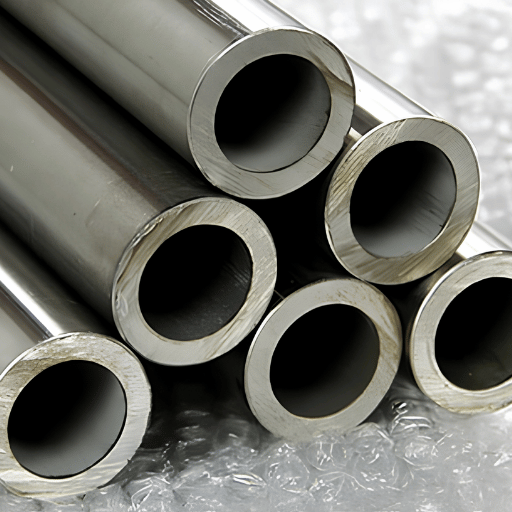
It’s not as simple as a single specification for all chrome-moly alloy steel products. Purchasing using the appropriate document assures the material is fabricated to the required form. The chrome-moly chemistry is the same across many of them; only the product form and manufacturing method differ.
| Spec | Product form | Route |
|---|---|---|
| ASTM A335 / SA335 | Pipe (P-grades) | Non-welded, high-temp |
| ASTM A213 / SA213 | Tube (T-grades: T11, T22, T91) | Non-welded boiler/HX tube |
| ASTM A691 | Large-diameter pipe | Welded (fusion), high-temp |
| ASTM A234 | Fittings (WP11, WP22, WP91) | Wrought fittings |
| ASTM A182 | Flanges & forgings (F11, F22, F91) | Forged |
| ASTM A519 | 4130/4140 mechanical tubing | Not a pressure-pipe spec |
So a “P22 pipe” is the same ASTM A335 material as a “T22” tube, the matching elbow is A234 WP22, and the flange is A182 F22, same chemistry, four specs. For a pipe used at high temperature and pressure where carbon steel can’t meet the strength demand, the route is hot-finished A335 or welded A691; lower-temperature, lower-criticality lines can use ERW (electric resistance welded) pipe instead of creep-rated chrome-moly. Cite the wrong spec, though, and the wrong product form arrives, order A335 pipe when the job needed A234 fittings and a refinery turnaround can stall for days. Use a pipe schedule chart for wall thickness, and check grade chemistry against A106 Grade B carbon pipe when carbon steel is marginal.
Where Alloy Piping Is Used: Boilers, Superheaters, Refinery, Petrochem
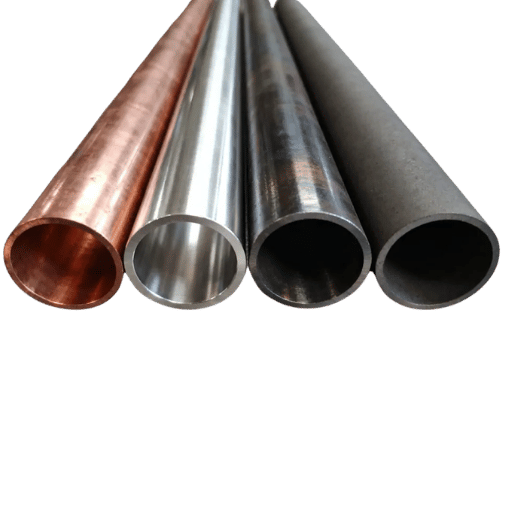
Chrome-moly pipe earns its place at elevated temperature and pressure. In fossil and combined-cycle power generation it carries high-temperature steam to the turbines, P11 and P22 at moderate superheat, P91 and P92 in ultra-supercritical main-steam and reheat lines. In refinery and petrochemical service, 2¼Cr P22 gives the high-temperature hydrogen resistance hydrocrackers and cracking furnaces need, while 5–9% Cr grades (P5, P9) protect against sulfidic corrosion in refining and chemical processing.
Oak Ridge National Laboratory creep studies map these grades to service temperature. These same grades serve high-pressure hydraulic and steam lines, offshore and oil and gas pipeline duty, and OCTG-adjacent high-temperature service where heat rules out ordinary carbon steel, the common thread across these steel products is high-temperature, high-pressure reliability. Elevated-temperature tensile and creep properties relevant to boiler and superheater service are detailed in DOE/OSTI test data (OSTI).
One common pitfall on site is to specify P91 where P22 is more than adequate. Take a 540 °C reheater header: P22 carries it comfortably, yet many crews reach for P91 “to be safe.” In the real world of costly material and a demanding weld and heat-treatment programme, with no service advantage to show for it, that’s a real cost penalty. Field engineers report P91 work running well above the equivalent P22 job once the extra welding and PWHT are counted, which is why grade should follow the application, not the reputation.
The 6 Service Bands That Pick Your Grade
A quick way to translate duty into grade:
- Below 454 C (850 F) with no hydrogen service: the heat isn’t severe enough to need an alloy, so plain carbon A106 (no alloy, no extra cost) is enough
- ~454–540 °C steam → P11
- ~540–580 °C, reheater / hydrogen service → P22
- Sulfidic refinery, ~550–600 °C → P5 or P9
- ~580–620 °C main steam → P91
- ~620–650 °C, thick-section header → P92
Sizes, Schedules, Dimensions and Weight
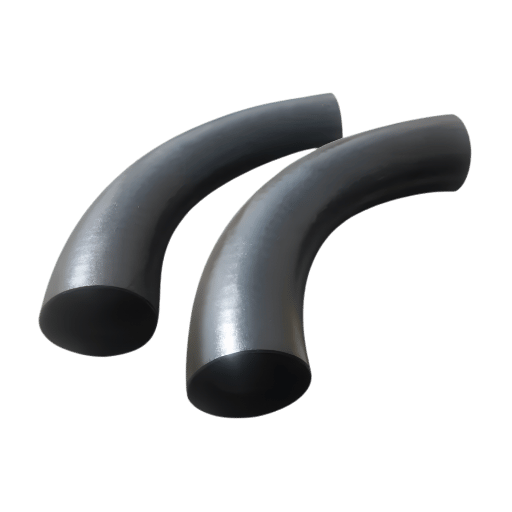
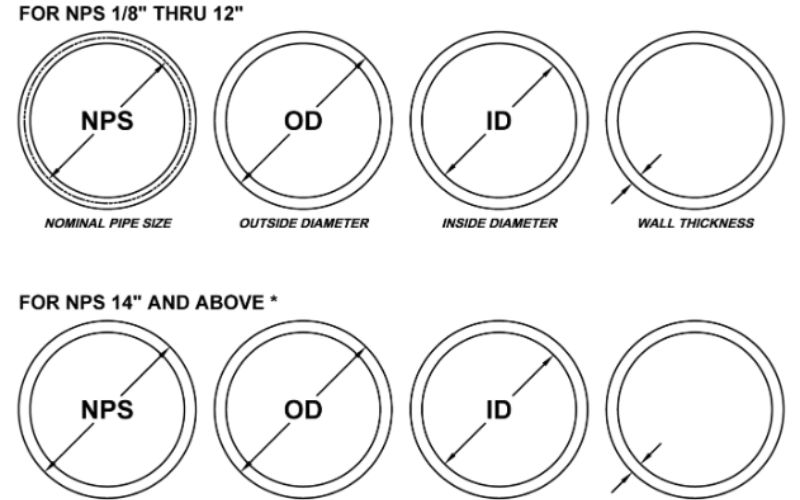
ASTM A335 alloy steel pipes can range anywhere from OD 50.8 (2 in) to 860 mm (33.86 in) , wall thicknesses of 2.77 mm (0.109 in) to 100 mm (3.94 in). They may be ordered by NPS, but are typically specified by outside diameter (OD) and a particular wall. Undersize the wall and the line can fail its hydrostatic test; oversize it and you pay for steel and freight you don’t need. A buyer ordering a 6-inch Sch 80 P22 spool, for instance, should confirm OD and wall against the mill tolerance before fabrication.
ODs are held to much finer tolerances, at approximately +/‐ 0.79 mm (+/‐ 0.031 in) for NPS 4 (OD 114.3 mm [4.5 in]) and lower, up to around +/‐ 1% for larger sizes. Hot‐finished tubes typically have a wall thickness tolerance of +20%/0%. Wall thickness is ultimately set by allowable stress, verified for Grade 91 in U.S. DOE ASME Section II-D stress data. Achievable wall and diameter ranges trace back to mandrel-mill pipe production methods (EP Patent 1,805,340).
📐 Engineering Note — weight per metre
Unit weight for any alloy steel pipe (7.85 kg/dm [0.284 lb/in ]) can be estimated using M=(OD X wall) X wall X 0.0246615. For instance a 6 Schedule 80 pipe (OD = 168.3 mm [6.626 in] , wall thickness 10.97 mm [0.432 in]) calculates out to M = (168.3 mm X 10.97 mm) X 10.97 mm X 0.0246615 kg/m = 42.6 kg/m [28.6 lb/ft]. Use this for ordering with total weight.
Most ASTM A335 chrome-moly is supplied as non-welded steel pipe formed by piercing or extrusion, while larger welded grades are rolled by LSAW or SSAW from plate or coil. A buyer comparing routes weighs the mechanical and chemical properties stated on the mill certificate, because the non-welded route carries no weld seam to qualify.
Welding, Preheat and PWHT: Why Alloy Pipe Is Install-Critical
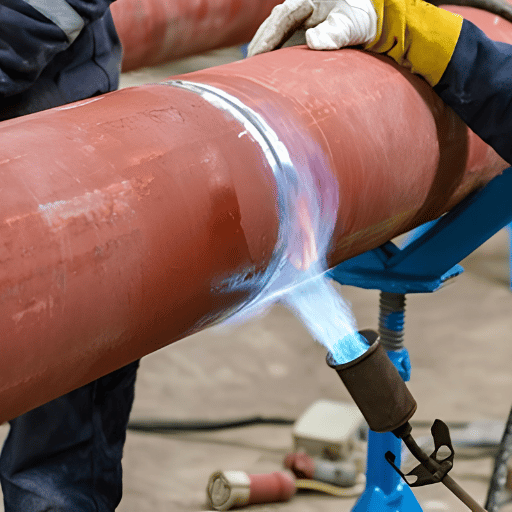
It’s in this temperature zone that we begin to see alloy pipe products behaving differently from conventional carbon steels. The low-chrome grades, such as P11 and P22, are quite forgiving. Moderate Preheat and post-weld sub-critical temper (around 650-675 C) may be sufficient for many repair jobs. Not so for the higher grades of alloys; P91 and P92 must be normalized near 1040 C, then tempered, and after welding, require Postweld Heat Treatment (PWHT) in the relatively narrow window of roughly 730-800 C. Below that window the weld can be too hard and brittle; too far above it, the weld lose creep resistance. Metallurgical challenges that make Grade 91 install-critical are reviewed in NRC technical documentation (NRC).
Under-tempered P91 left in the “soft” condition, hardness below about 190 HB, can fail early. One documented Grade 91 soft pipe bend leaked steam to atmosphere after fewer than 35,000 operating hours. Type IV creep cracking is also common in the fine-grained heat-affected zone of attachment and stub welds on 9Cr steels, a failure mode documented in U.S. NRC/EPRI metallurgical reviews of Grade 91. So P91 isn’t “better in every respect” — it’s stronger only when the heat treatment is correct.
A rule of thumb for PWHT times; generally apply one hour per inch of wall thickness (approx. 25 mm) , though a minimum holding period of approximately 30 min may be applicable on lower walls. Hence for a 30 mm wall P91, estimate around 1.2 hours holding at ~745-775 C after a maintained preheat near ~200-250 C, with the whole assembly supported from start-up to shutdown. Be aware, too, that ASME reclassified P91 from P-No 5B to P-No 15E Group 1, which changes the welding-procedure and PWHT rules that apply.
“The recent reduction in the Grade 91 steel stress allowable values increases the attractiveness of Grade 92 for similar types of applications.”
What Drives Alloy Pipe Pricing and How to Buy
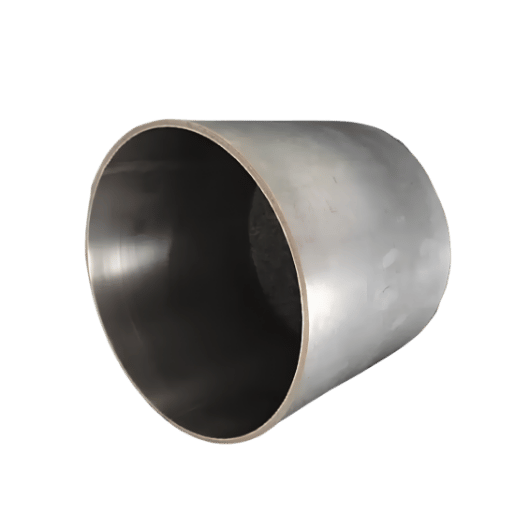
Alloy pipe is priced above carbon steel for sound reasons. Four cost drivers dominate: alloy content (9% Cr P91 and P92 cost more than 1.25% Cr P11), manufacturing route (non-welded pipe from piercing or extrusion runs dearer than welded or ERW pipe), grade and size, and the heat treatment and testing high grades demand.
Plain carbon steel stays the economical default until temperatures climb to the point that forces a move up the alloy-steel chain. All this sits on top of raw-material market shifts, so any quote is best read as a general range, date it, then weigh it against long-term supplier reliability. In practice, an industrial buyer comparing a welded A691 quote against non-welded A335 should weigh lifetime reliability, not just the upfront saving; Baling Steel quotes both routes with the mill test certificate and tolerance called out so the comparison is like-for-like.
Buying checklist for alloy piping products
- What state spec, what grade and what product are you need? e.g. A335 P22 pipe, A234 WP22 fittings
- Tell us NPS and schedule, or outside dimension and wall thickness, and whether the lengths is standard.
- Require EN 10204 3.1 (or 3.2) mill test certificate
- Specify PWHT/heat-treat condition for 9Cr grades
- Confirm non-welded (A335) vs welded (A691) route
If there’s a need for long-term high-temperature creep, get non-welded A335 P-grade pipe. Otherwise, for larger diameters but not critical applications, a welded A691 line made from steel coil should reduce costs. Our suite of non-welded alloy pipe and chrome-moly alloy steel pipe contains the more frequently specified P-grades.
Inspection and Verification: Mill Test Cert, PMI, Counterfeit Defense
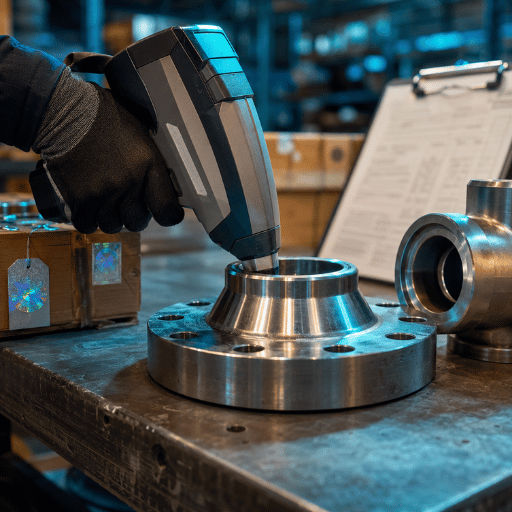
Because the precise quantity of alloy grade in steel can’t be seen, an honest supply depends on quality control before the pipe ship. Those mechanical properties and chemistry can’t be verified once the line is installed, so confirm strength, corrosion resistance and heat-treatment condition on paper first. Verify any heat using the “Four-Field Mill-Cert Read” before the pipe leave the premises.
- A mill production lot (or heat number) – which can be identified back to the manufacturer’s report and has been stamping the pipe surface.
- Chemical analysis vs spec, both the chromium and molybdenum content must sit inside the grade band for your product (for example, P91 must hold 8.0–9.5% Cr).
- Whether the metal underwent heat treatment and how the hardness compares – confirm normalized and tempered status, then ensure hardness is correct(max ~25 HRC; soft below ~190 HB must be treated as suspicious).
- Markings on pipe – match all information against the certificate, including the specification, grade, heat # and size.
Add positive material identification (PMI) on the imported pipes for verifying actual levels of chromium, instead of relying solely on manufacturer reports. Baling Steel can readily source you alloy pipes with EN 10204 mill test certificates under an ISO 9001 quality system; our facilities and team are available for professional inspection of the materials we manufacture, see our third-party report service.
Industry Outlook: Grade-Creep Toward P91/P92
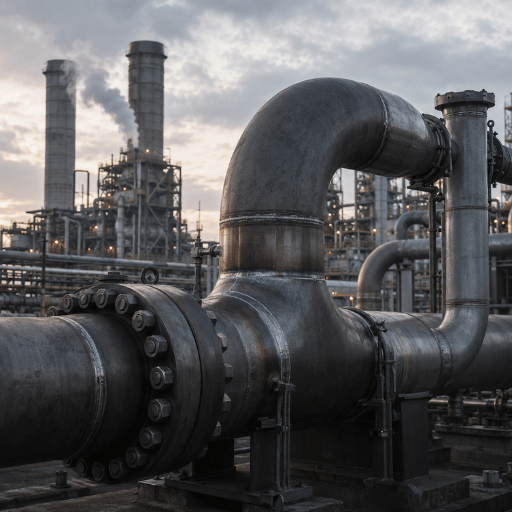
The biggest and foremost change in requirements for the pipeline is that the quality of the most popular, premium grade materials will now be subjected to much tighter regulation-instead of just a larger market. ASME has revised its assessment of high-temperature creep service strength downward (compared with 2015 figures), while publishing a statement explaining lower P91 allowable stress values. Alongside supercritical buildouts, replacing worn plant, and hydrogen and CO2 Capture (CCUS) installations driving operating temperatures up, the spec center of gravity has been shifting from P11/P22 towards the creep-resisting P91 and P92 pipes. For a plant operator replacing aging P22 headers in an ultra-supercritical unit, the risk is concrete: specify the wrong heat treatment for the new 9Cr grade and a weld can crack in service, while qualified P91/P92 fabrication adds weeks of lead time. Baling Steel sees it in current export demand, more buyers asking for P91 and P92 where P22 sufficed five years ago, driven by the tighter creep rules rather than by a bigger market. Development pathways for next-generation ferritic grades are documented by Oak Ridge National Laboratory (ORNL).
This translates to three things for procurement, between now and 2026: budget for tighter PWHT scrutiny and hardness checks on 9Cr work, allow longer lead times if P91/P92 welding is involved, and ensure your fabricator is working to the current ASME B31.1-2024 edition and P-No 15E rules. Active patent filings on 9-12% Cr creep-resistant ferritic steels confirm the direction of travel. Market-wide, the steel pipe market is growing at roughly 3.9% CAGR (directional, market context only); the grade mix shift is the thing changing your specification.
Frequently Asked Questions
Q: Is alloy steel pipe better quality than ordinary carbon steel pipe?
View Answer
Q: Which ASTM standard covers alloy steel pipe?
View Answer
Q: What factors affect alloy steel pipe pricing?
View Answer
Q: Which industries use alloy steel pipes?
View Answer
Q: Does alloy steel pipe always need PWHT after welding?
View Answer
Q: How do I verify the grade of an alloy steel pipe?
View Answer
Q: Is ASTM A335 the same as A519 4130 chromoly?
View Answer
No. ASTM A335 is high-temperature chrome-moly pressure pipe, while ASTM A519 4130 is mechanical tubing for structural and aerospace use. They differ in chemistry, heat treatment, and testing, so they are not interchangeable; specifying A519 where A335 is required is a code violation.
Need chrome-moly pipe matched to your service temperature and code?
About This Analysis
This guide compiles ASTM A335 grade chemistry, U.S. national-laboratory creep data, and ASME/EPRI position papers into one P-Grade Service Window and selector that buyers can apply directly. As a steel pipe manufacturer and exporter supplying chrome-moly grades with mill test certificates and third-party inspection, Baling Steel sees first-hand how often P91 is over-specified where P22 suffices, the failure cases and the grade-creep trend in this article reflect that procurement reality. Reviewed by the Baling Steel technical team.
References & Sources
- Creep in Five Steels at Different TemperaturesU.S. National Bureau of Standards (NIST)
- Elevated-Temperature Tensile and Creep Properties of 2¼Cr-1Mo SteelU.S. DOE OSTI
- Development of Fe-3Cr-W(V) Ferritic Steels for High TemperatureOak Ridge National Laboratory
- Metallurgical Challenges of Using Grade 91 SteelsU.S. NRC / EPRI
- An Informed Perspective on the Reduction in Grade 91 Allowable StressEPRI
- ASME B31.1-2024 Power Piping: ChangesANSI
- Molybdenum in Power GenerationInternational Molybdenum Association