What is Aluminium?
It’s a silver-white, lightweight metallic element — and one of the most widely used metals on Earth. Aluminium is the world’s most abundant metallic element in the Earth’s crust, and one of the most popularly used industrial materials on the planet. Its chemical element symbol is Al, and its atomic number is 13.
Few metals rival its combination of low density, excellent natural corrosion resistance, and near-infinite recyclability. In this guide we consider the properties of aluminium, all about alloy grades, the industrial uses of aluminium, how it’s made, the comparison with steel, and the complex factors behind aluminium prices in 2025–2026.
Aluminium Quick Specs
| Chemical Symbol | Al |
| Atomic Number | 13 |
| Density | 2.70 g/cm³ (vs. steel 7.85 g/cm³) |
| Melting Point | 660.3°C (1,220.5°F) |
| Tensile Strength (pure Al) | 40–70 MPa |
| Tensile Strength (6061-T6 alloy) | 310 MPa (45,000 psi) |
| Young’s Modulus | 68.3 GPa |
| Thermal Conductivity | 237 W/(m·K) |
| Electrical Conductivity | ~37.7 MS/m (≈61% of copper) |
| Earth’s Crust Abundance | ~8% by weight (third most abundant element overall) |
| Primary Ore | Bauxite |
| Recyclability | Infinite; recycling uses only 5% of primary production energy |
Aluminium Definition: What Exactly Is This Metal?
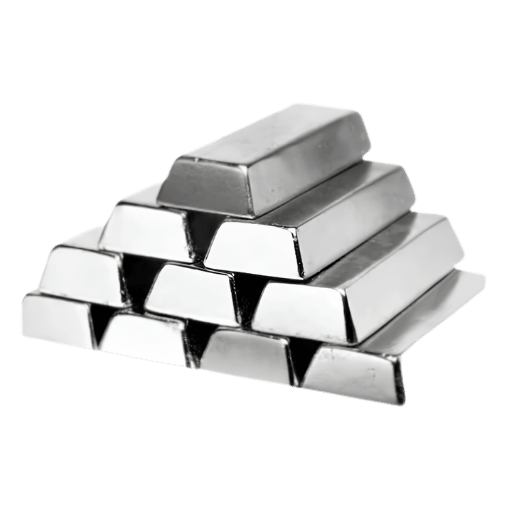
Aluminium; symbol Al; atomic number 13. Aluminium is located on the periodic table in Group 13(boron group) in Period 3 between magnesium and silicon. It is considered to be a post transition metal – soft enough to be sawn with a knife in its uncombined form of aluminium, but when combined can produce breathtaking strength.
Aluminum is the most abundant metal in Earth’s crust — an abundant metal that also ranks as the third most common element overall (after oxygen and silicon), accounting for nearly 8% by weight. Despite this, aluminum used to be considered precious and rare, more valuable than silver through most of recorded history. That changed in 1886 when Charles Martin Hall and Paul Héroult independently developed the electrolytic process that made commercial aluminium production viable.
It is worth noting, however, that pure aluminum metal in its native form is never found in nature. Aluminium readily forms compounds with oxygen, producing Al₂O₃ (aluminium oxide). It also forms compounds with other elements, making up clays, feldspars, and hundreds of minerals.
This must be refined to produce usable metal, at high energy costs, which explains why aluminium costs twice as much per kilogram as steel, in spite of the fact that it is far more abundant in the Earth’s crust.
How Does Aluminium Compare to Other Common Metals?
| Property | Aluminium (Al) | Copper (Cu) | Iron (Fe) |
|---|---|---|---|
| Density (g/cm³) | 2.70 | 8.96 | 7.87 |
| Melting Point (°C) | 660 | 1,085 | 1,538 |
| Electrical Conductivity (MS/m) | 37.7 | 59.6 | 10.0 |
| Relative Cost | Medium | High | Low |
| Corrosion Resistance | Excellent (native oxide) | Good (patina) | Poor (rusts) |
Of course, the ultimate selling point is that aluminium is so extremely low in weight, while still being a good electrical conductor and reasonably corrosion resistant at a fraction of the price of copper. It’s not the strongest of metals but for density-as-it-provides performance, it’s untouchable.
Physical and Chemical Properties of Aluminium
What Are the Physical Properties of Aluminium?
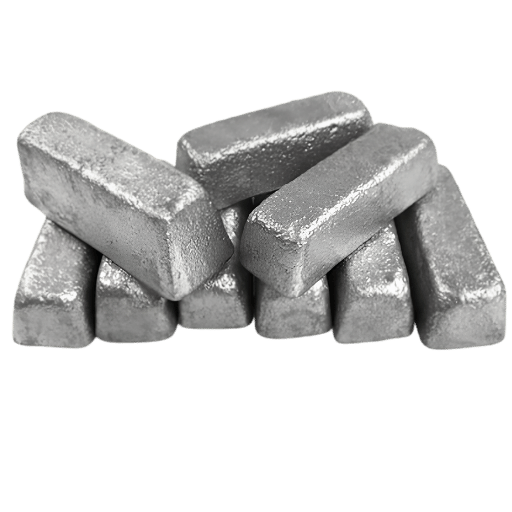
The physical characteristics of aluminium are primarily defined by its face-centred cubic crystal structure. As a result it is highly ductile and formable at room temperature and at low temperature. In addition to this it has a very low density of just 2.70 g/cm – just one third that of steel, and is therefore the material of choice where weight reduction is a criteria.
Its melting point of 660.3 C is very significantly lower than steel (1370-1510C), further easing the casting and limiting its use at high temperature applications. The complete physical and mechanical data is as follows;
| Property | Pure Aluminium Value | Unit |
|---|---|---|
| Density | 2.70 | g/cm³ |
| Melting Point | 660.3 | °C |
| Young’s Modulus (Elasticity) | 68.3 | GPa |
| Tensile Strength (pure) | 40–70 | MPa |
| Thermal Conductivity | 237 | W/(m·K) |
| Electrical Conductivity | ~37.7 (≈61% of copper) | MS/m |
| Coefficient of Thermal Expansion | 23.1 | µm/(m·°C) |
| Reflectivity (polished) | ~85–90 | % |
Aluminium’s high thermal conductivity – almost 5× that of carbon steel- is a double-edged sword. It serves us well in the manufacture of heat exchangers, cookware, electronics heat sinks. But in welding applications its electrical conductivity rapidly pulls heat out of the weld zone so that many welding defects will be created without the correct pre-heat prescription. As the cautious fabricator learns the hard way, welding aluminium is just plain different from welding steel: choosing the wrong wire feed speed is a classic mistake. Picking the wrong shielding gas may be fatal.
The Chemistry of Aluminium’s Corrosion Resistance
Aluminium’s superior corrosion resistance is not inherent to the bare metal – it is due to a flexible self-forming aluminium oxide layer that grows whenever that surface is raised to atmospheric oxygen. That passive oxide film is 4-10 nanometers thick, intimately adherent to the surface, and redeposits itself within a second of any surface disruption. The chemistry is simple: aluminium reacts with air to yield aluminium oxide (Al₂O₃), which forms a very stable compound and acts as an oxygen barrier.
In order to prevent the bare aluminium from “rusting” like iron does, aluminum oxide forms on the surfaces. Iron oxide is flaky and porous; aluminium oxide (or Al₂O₃ – same compound, different spelling convention) is a dense membrane that seals the surface from further oxidation. Anodising – in this case an electrochemical process – artificially thickens this oxide to 5-25m for protective or decorative purposes; certain anodising and surface modification techniques use aluminum sulfate as an electrolyte component.
⚙ Engineering Note — ASTM B209 & AS&D 2024
The set norm for wrought aluminium alloy sheet and plate is ASTM B209. In 2024, the Aluminum Association released Aluminum Standards & Data 2024 — the first major revision of the document since 2017. Where the 2024 edition introduces new temper designations (such as 6060-T51 and 6061-T61), old publications may reference standards or material properties that have since been superseded.
✔ Advantages
- One-third the weight of steel at equivalent volume
- Self-healing oxide membrane – effective in most natural environments without the need for coating
- Excellent electrical and thermal conductivity
- Highly formable — extrudable, rollable, castable
- Near-infinite recyclability (no degradation in properties)
- Non-magnetic and non-sparking
⚠ Limitations
- Young’s modulus is 3× less than steel – structures will deflect more under equivalent load.
- Operational above 200C can compromise the alloy due to its low melting temperature.
- Elevated tensile strength is not inherent to pure aluminium – alloying element addition (such as copper, magnesium, silicon, zinc, manganese) is necessary to attain structural performance levels.
- In direct contact with steel or copper fittings, galvanic corrosion can occur in aluminium.
- Difficult to weld without inert gas shielding (TIG/MIG required)
- Higher cost per kg than carbon steel
Aluminium Alloys: Types, Grades, and How to Choose
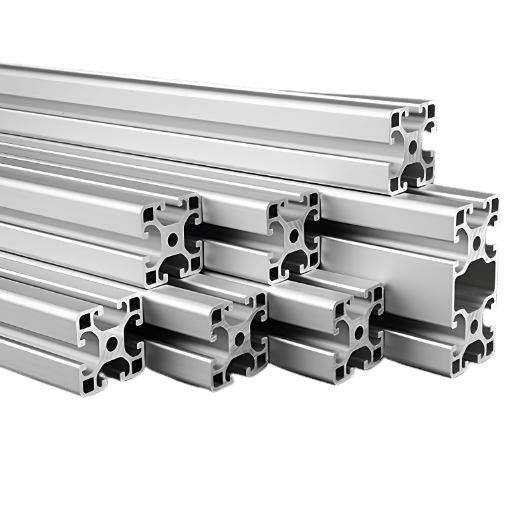
Basal aluminium (also identified as pure aluminum in American norms – 99%+Al, 1xxx series) possesses insufficient tensile performance for most infrastructure projects with tensile strengths below 70 MPa. Ablating small quantities of copper, magnesium, silicon, zinc, or manganese in the synthesis of an alloyed material enables 310-600 MPa tensile to be attained. The eight primary aluminium series – collectively referenced as aluminum alloys in North American standards – each offer a different combination of attributes.
| Series | Main Alloying Element | UTS Range (MPa) | Weldability | Primary Applications |
|---|---|---|---|---|
| 1xxx (e.g., 1100) | None (≥99% Al) | 70–95 | Excellent | Packaging foil, electrical conductors, chemical equipment |
| 5xxx (e.g., 5052, 5083) | Magnesium | 170–320 | Excellent | Marine structures, pressure vessels, automotive panels |
| 6xxx (e.g., 6061-T6) | Magnesium + Silicon | 150–310 | Good | Structural beams, tubes, extrusions, bicycle frames, bridges |
| 7xxx (e.g., 7075-T6) | Zinc | 460–570 | Poor | Aerospace airframes, high-stress tooling, defence |
| 2xxx (e.g., 2024-T3) | Copper | 430–480 | Poor | Aircraft skins, fatigue-critical structures |
The most frequently specified grade of ‘general engineering’ is 6061-T6. Data from the ASM Materials Information database indicates 6061-T6 provides: 310 MPa ult. tensile strength (45,000 psi); 276 MPa yield strength (40,000 psi); 12% elongation at break; 96.5 MPa fatigue strength. ‘T6’ designates the alloy is: solution heat-treated; artificially aged the precipitates arising from which hinder dislocation movement, specializing strengths greatly above the annealed (O temper) condition.
The Aluminium Grade Confusion Matrix: 5 Alloy-Selection Mistakes
Common Mistakes in Aluminium Alloy Selection — and the Fix
- Specifying 1100 for load-bearing members. 95 MPa UTS of 1100 is compatible with packaging and chemical plant- not girders or frame members. Fix: specify 6061-T6 (310 MPa UTS) in structures.
- Applying 7075-T6 results in stress cracking in salt air without surface protection. 7075 has zinc in its composition and coupled with its salt air environment it is prone to stress-cracking in the absence of suitable surface protection. Fix: specify 5083 or 5052 marine-grade alloys, which are intrinsically seawater resistant.
- Assuming aluminium tube meets any pressure rating. Aluminium tubes in high-pressure fluid or gas systems require approval by ASME B31.3 Process Piping. Yield strength and modulus both determine maximum operating pressure at temperature.
- Having read T-temper mechanical properties, and thus ascertaining the post-weld HAZ zones. Heat-treatable aluminium alloys when welded revert the HAZ toward the O (annealed) temper- thus weakening the HAZ (yield point) by 30-50%. Weld HAZ must be considered in structural calculations rather than unaltered parent alloy T6 data.
- Underestimating galvanic corrosion with steel fasteners. Aluminium and steel occupy opposite poles in the galvanic series. When in contact coupled with moisture the steel fastened aluminium panels accelerate pitting corrosion. Fix: use aluminium fasteners, isolating nylon washers, or an isolating sealant at interface.
Need to weld? → Choose 5083 (marine) or 6061 (structural) — both weld well.
Maximum strength, no welding? → 7075-T6 (aerospace-grade).
Corrosive/marine environment? → 5052 or 5083.
Cost-sensitive, light-duty? → 1100 (packaging, conductors).
General structural extrusion? → 6061-T6 (most common, widest supplier availability).
What Is Aluminium Used For? Applications Across Industries

Modern industry makes widespread use of aluminium. The IAI anticipates global demand to increase by 40% in 15 years, primarily due to transportation electrification, renewable energy structures, and packaging industry sustainability practices..
Transportation is the largest and the most rapidly expanding aluminium market. Aluminium’s density differential with steel drops finished weight of each kilogram replaced by 2-2.5 kg, with the added benefit of greater alloy strength. Electric vehicles benefit maximally because they possess a much higher mass per unit output in their batteries, so lightening makes a far greater difference in their output. Aluminium also forms the majority of the structural components on existing commercial aircraft, 2xxx and 7xxx series alloys, in pressure skin panels and fuselage members. The IEA recognizes aluminium’s role in the technology mix that will deliver the highly efficient clean energy economy of the future with stand-alone products such as: solar module frames; wind turbine nacelle frames; electric powertrain enclosures..
Back to materials selection, there are many applications in building and construction where aluminium metal is the material of choice, commonly in curtain wall systems, window frames, roofing and cladding panels, architecture extrusions etc. where corrosion resistance and low maintenance cost are prioritised over available/raw tensile strength. Also due to its light weight properties, Aluminium places less dead load on spans structural frames, thereby allowing for larger depth roof trusses.
Can Aluminium Tube or Pipe Replace Steel in Industrial Systems?
It remains one of the most frequently asked questions coming from engineers about altering materials substitutions. The straight shoot and honest answer is: depends on service conditions, answers ‘no’ far more times than material buyers believe it will.
In low-pressure pneumatic lines, instrumentation tubing, heat exchangers, and non-structural fluid distribution at moderate temperatures, aluminium tubing performs well. For high-pressure gas and liquid service — particularly above 100–150°C or at pressures requiring ASME B31.3 compliance — carbon steel pipe typically delivers better pressure ratings, higher service temperatures, and lower cost per unit of allowable working pressure. Engineers who have switched structural designs from steel to aluminium report that the stiffness deficit (Young’s modulus: steel 200 GPa vs aluminium 68.3 GPa) creates roughly 3× greater deflection at equivalent loads — an outcome that frequently surprises teams working only from tensile strength data.
On the water-compatibility side, this metal reacts slowly over time and is not approved for potable water distribution in most jurisdictions. Galvanic corrosion is a further practical constraint: wherever aluminium pipe connects to steel or copper fittings, isolating joints are required to prevent accelerated pitting. For demanding industrial piping systems, explore seamless steel pipe applications — particularly where pressure ratings, temperature range, and long-term reliability govern the selection.
How Aluminium Is Produced: From Bauxite Ore to Finished Metal
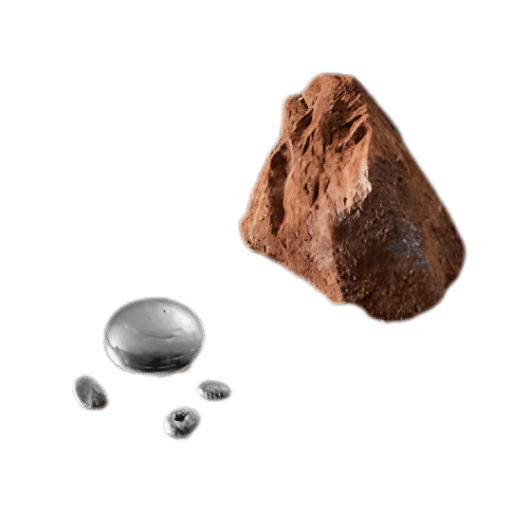
The production of aluminium (the production of aluminum, as it is termed in North American industry) from raw ore is one of the most energy-intensive manufacturing processes in the world — yet also one with exceptional energy recovery potential through recycling. Understanding the production chain matters for buyers: energy prices and ore availability directly drive the metal price you pay.
The 3-Stage Path from Rock to Metal
- Mining:1 Tonne of aluminium metal is extracted from approximately 4- 5 tonne of bauxite ore (which has an aluminium content of between 40- 60% in the form of aluminium oxides). Mined in open cast mines in tropical climates (with 4 huge exceptions) the majority of the world’s supplying Ore is mined in: Australia, Guinea, Brazil and Jamaica.
- Refineries: Crushed bauxite is dissolved in caustic soda (NaOH) at high temperature and pressure. The aluminium-bearing solution is separated from red mud (iron-oxide waste), then cooled and seeded to crystallise aluminium hydroxide. Calcination at ~1,000°C converts this to alumina (Al₂O₃) powder — the feedstock for smelting.
- Smelting — Hall-Héroult Process: Alumina is dissolved in molten cryolite at ~950°C and subjected to high-amperage electrolysis. The direct current splits Al₂O₃ into molten aluminium (collecting at the cathode) and oxygen (reacting with carbon anodes to form CO₂). The liquid metal is tapped, refined, and cast into ingots or billets.
The energy cost driver is the Hall-Hroult process. Based on data from the energy programme at Stanford University, it takes approximately 15,000 kWh (15 MWh) of electricity to produce 1 tonne of primary aluminium. At industrial electricity prices this energy cost can make up between 30-40% of the finalised cost of the finished metal. This is why aluminium smelters are situated in areas where there is cheap hydropower (Iceland, Norway, Canada, Yunnan in China), and why primary aluminium output is proportional to available power.
Why Recycled Aluminium Changes the Economics Entirely
The energy argument for recycled aluminium is radically different. The official lifecycle data from the International Aluminium Institute shows the primary energy required for recycled aluminium to be only 8.3 GJ/tonne, compared to the total for primary production being approximately 170 GJ/tonne. This works out at 95.5% less energy required for recycled aluminium. No other popular structural metal can be recycled with such an energy saving
‘The near–infinite recyclability of aluminium without any loss of properties results in it being a truly permanent material. Once its produced that metal can flow through the economy forever- the energy cost is only ever paid once’
— International Aluminium Institute, Sustainability Framework
Global primary aluminium production has been in steady growth. The first 6 months of 2025 produced 36.459 m/t of primary aluminium- up on 35.960 m/t in the first 6 months of 2024. China remains the dominant producer producing approximately 60% of global primary aluminium- with annual production estimates for 2025 predicted to reach almost 73–74 m/t
Aluminium vs Steel: Which Metal Should You Choose?
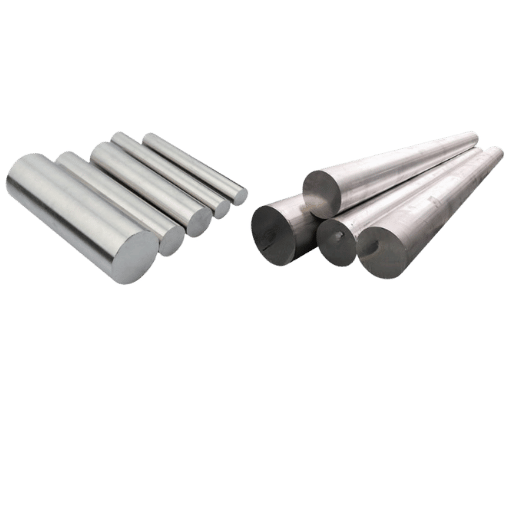
The aluminium versus steel selection is one of the most important material decisions during engineering design. They are both structural metals and both have applied, mature supply chains- but their physical and mechanical characteristics are so different that making the decision incorrectly leads to practical issues arising during operation that weren’t expected for months/years, using verified engineering data for this comparison table, you can compare side–by–side
| Property | Aluminium 6061-T6 | Carbon Steel (A36/S275) | Winner |
|---|---|---|---|
| Density (g/cm³) | 2.70 | 7.85 | Al (2.9× lighter) |
| UTS (MPa) | 310 | 400–550 | Steel |
| Yield Strength (MPa) | 276 | 250–450 | Context-dependent |
| Young’s Modulus (GPa) | 68.3 | 200 | Steel (3× stiffer) |
| Melting Point (°C) | 660 | 1,370–1,510 | Steel (high-temp) |
| Thermal Conductivity (W/(m·K)) | 237 | ~50 | Al (5× better) |
| Corrosion Resistance | Excellent (self-passivating) | Poor without coating | Al |
| Recyclability | 95.5% energy saving | ~25–30% energy saving | Al |
| Relative Material Cost | Higher per kg | Lower per kg | Steel |
Decision Framework: When to Choose Each Metal
Select Aluminium when:
- a) Weight limitations (Aerospace, electrical vehicles, portable structures and ships)
- b) The environment is extremely corrosion aggressive (marine, chemical or food processing) and painting isn’t permitted
- c) Electrical or thermal conductivity properties are a necessity (heat exchangers, busbars, instrumentation enclosures)
- d) The design requires non-magnetic, non-sparking features (explosive atmospheres, MRI scanning rooms)
- Sustainability mandates require recyclability and lower embodied carbon
Select Steel when:
- e) Temperatures during service are expected to be above 200°C (for example, in boilers, structural fireproofing and process piping)
- High stiffness is required: deflection-critical beams, shafts, pressure vessels
- f) Maximum wall strength per dollar is a requirement due to high internal pressures (piping, cylinders)
- g) The structure is to be the first thing to be painted and/or coated for corrosion prevention, first cost is King
- h) Fatigue issues result from repeated high tensile loading (steel has an actual fatigue limit, aluminium does not)
Engineers are often faced with aluminium tensile strength data sheet comparisons and will state “good enough” only to discover in service a deflection failure. Young’s modulus of steel is 200GPa whereas aluminium is 68.3GPa. Under equal load, a steel and aluminium beam of the same cross section will deflect 3 less. For stiffness critical applications (columns, cantilevers, long span structures etc.) this margin needs to be held in the design. Aluminium section increases alone are not structurally feasible as they may double the weight advantage.
At an equivalent safety factor, the comparative lifecycle cost for carbon steel seamless pipe in a high pressure industrial piping system is 30 40% less than aluminium tubulars when design pressure and temperature are the dominant selection criteria.
Aluminium Market Trends and Pricing Outlook 2025–2026
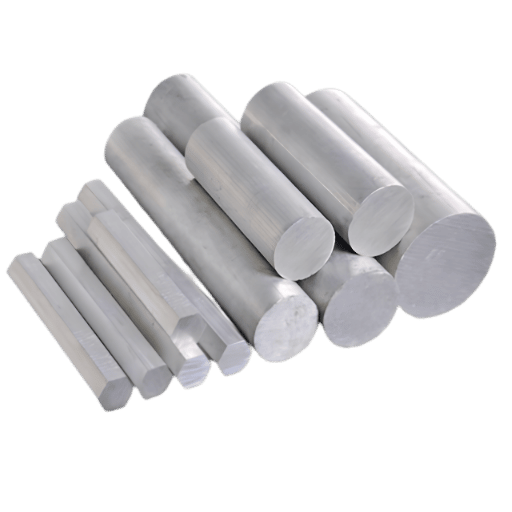
The aluminium industry in 2025 faced three simultaneous forces trade tariffs, geopolitical supply disruption and volume growth consumption from the energy transition. These three forces are now well understood in the global procurement operating environment.
Force 1 The energy transition multiplier. The International Energy Agency estimates that aluminium is a strategic material input in solar photovoltaic frames, wind turbine nacelles and electric vehicle battery enclosures. Expansion of solar panel aluminium frame demand is projected to grow through 2035 at a strong cluster of annual growth rate CAGR. Growth in aluminium use driven by the energy transition is not cyclical. It is a structural demand that results from EU, US, China and India decarbonisation policies.
Force 2 US tariff shocks and supply chain shuffling. The US raised Canadian aluminium tariffs to 50% in 2025 according to S&P Global Ratings data. Canadian aluminium shipments to the US in the months immediately following fell by 27% and resulted in a North American premium spike. US aluminium buyers should consider supplier distribution risk screening studies for 2025-2026 contract negotiations.
Force 3 Accelerating secondary aluminium demand. As carbon border adjustment mechanisms tighten in Europe and global corporate sustainability mandates multiply, secondary aluminium premiums are rising. Primary aluminium produces 4 17kg Co2e/ kg depending on electricity source, secondary less than 0.5. For any aluminium using brand with Scope 3 emissions reduction targets, specifying recycled content aluminium is a procurement policy. Investment in secondary smelters is globalising.
LME aluminium prices rose approximately 13% from the 2024 average ($2,419/t) to October 2025 (~$2,744/t). Geopolitical tensions, US tariffs and North American supply shocks have worsened the visibility of forward prices. If planning H2 2025/2026 procurement, do not enter fixed terms long term agreements without import price adjustment clause indexed to the LME. In negotiations prefer quarterly re-opener indices based on the LME official settlement [date].
Global primary aluminium production still on the rise. According to the IAI’s production figures the global primary production for March 2026 was 6,302 thousand metric tonnes; which projected to a total of nearly 75 million tonnes in the year. Approximately 60% of this volume is believed to be derived from China. The future prospects of the industry looks quite encouraging – there is currently no other substitute material that weighs as less, conducts as efficiently, is as easy to recycle and has such wide availability at a comparative price.
Frequently Asked Questions About Aluminium
What is aluminium in simple words?
View Answer
What is aluminium made of?
View Answer
Can aluminium conduct electricity?
View Answer
Will aluminium rust or corrode?
View Answer
Can aluminium be recycled?
View Answer
Is “aluminium” or “aluminum” the correct spelling?
View Answer
Evaluating Aluminium vs Steel for Your Application?
Engineered for your high-pressure, high-temperature, and critical industrial piping, our carbon steel seamless pipe has higher pressure ratings and costs less than aluminium tubing. Please compare specifications and ask for a quotation from our engineering team.
About This Analysis
Produced by the engineering and commercial team at Baling Steel based on up-to-date reference data supplied by the International Aluminium Institute, the US Department of Energy, the International Energy Agency and the Aluminum Association’s 2024 standards update. We have based our perspective on the realities of industrial metal choice – the compromises of using aluminium versus carbon seamless pipe in pressure and structural contexts. Where appropriate data is referenced to a primary source and date-stamped for Market Sensitive content.
References & Sources
- Aluminium Recycling Saves 95% of Primary Production Energy — International Aluminium Institute (IAI)
- Primary Aluminium Production Statistics — International Aluminium Institute (IAI)
- Electricity Consumption in U.S. Primary Aluminum Production — Stanford University Energy Programme
- U.S. Energy Requirements for Aluminum Production — U.S. Department of Energy, Energy Efficiency & Renewable Energy
- Aluminium — Industry and Energy Transition Role — International Energy Agency (IEA)
- Aluminum Standards & Data 2024 Edition — The Aluminum Association
- Aluminum 6061-T6 Material Data Sheet — ASM International / MatWeb
- U.S. Aluminum Supply Chain: Tariff Impact Analysis — S&P Global Ratings
- Global Aluminium Demand Forecast to 2030 — International Aluminium Institute (IAI)