Quick Specs at a Glance
- Standard: ASTM A513 Type 5 (A513/A513M-25)
- OD Range : 3/16″ – 14″ | Wall : 0.028″ – 0.625″.
- Grades: 1020, 1026, TuffDOM 520, TuffDOM 620
- Yield strength : 65 – 90+ ksi (grade & size dependent)
- OD Tolerance: ±0.002″ – 0.005″
- Applications: Hydraulic cylinders, roll cages, drive shafts, telescoping assemblies
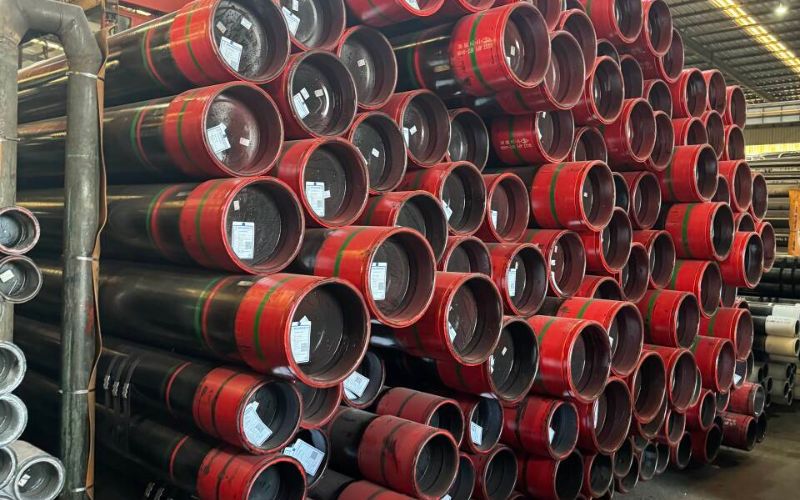
Steel DOM tubes – short for Drawn Over Mandrel – is the ideal mechanical tubing for precision applications which require tight dimensional tolerances, consistent wall thickness and good concentricity. Not far removed from standard electric resistance welded tube, DOM tube undergoes additional cold-drawing processing that converts a welded mother tube into a high-tolerance structural and hydraulic component.
This is a detailed primer for the fabricator, engineer or purchasing manager; includes: how DOM is produced, common sizes, the 1020 vs. 1026 grade decision, ASTM A513 mechanical properties and how it compares to cold drawn weld free tube (CDS) and ERW pipe. You’ll also find comparison tables with actual numbers, a fabrication section and a 2025-2026 market update.
What Is DOM Tubing and How Is It Made?
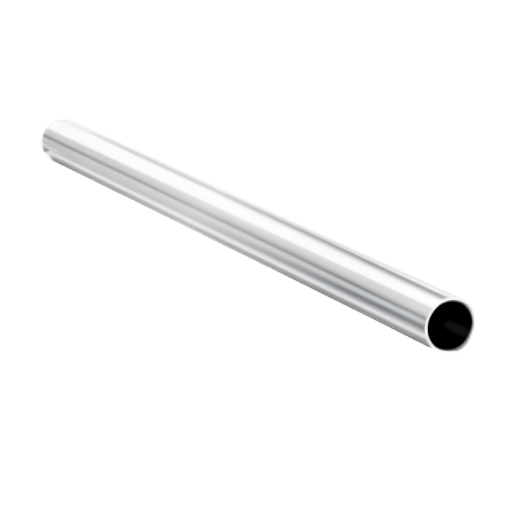
A cold-drawn tube produced by pulling a welded mother tube over internal mandrels and e×ternal sizing dies. This process results in a tube with consistent wall thickness, enhanced surface finish, increased yield strength and improved concentricity compared to its ERW progenitor; a better understanding of this process will help you understand its capabilities and limitations.
One common misnomer that should be addressed right away: DOM is not a true weld free tube. Like most cold drawn tube the as-programmed substrate is an ERW tube which, having been subjected to cold working, still retains a longitudinal seam on the ID after drawing. You will see DOM referred to as “weld free” or even as “Drawn Over Mandrel” in some vendor literature however the seam is still present and the possibility of a defect on the ID e×ists. In applications where the integrity of the ID seam is critical, such as high cycle fatigue or a rotating assembly, this distinction is very important. Otherwise, DOM can be applied as a hydraulic or structural component without concern. Our overview of pipe-tube differences may provide additional conte×t.
How Is DOM Tubing Made? (4-Step Process)
During production, DOM tube passes through four distinct stages:
- Strip is formed and the weld fused. Commercial grade 1020 or 1026 is cold rolled into a tubular shape and electrically resistance welded longitudinally, forming a weld seam visible in the interior ID after the plating die. Standard ERW tube is born.
- Profile scrape (removal of the weld flash or “scarfed seam”) and annealing. Internal flash is quelled or scarfed near to the ID. The tube passes into a carefully controlled annealing furnace, which lowers the temperature of the welded area to, weld point, result in a more workable product.
- Phosphate bath, lubrication coating. An integral feature of the cold drawing process is that a phosphate conversion coating and soap lubricant are applied to the tube before the parent strip draws into a precise cylindrical shape. This phosphorus coating minimizes the amount of friction that develops between the tube wall and the various drawing dies and molds while also prolonging die life, delaying the warming or scoring of the mold.
- Carbide die, mandrel. The prepared tube is embedded in the interior with a ready-for-duty hardened steel or carbide alloy mandrel. A carbide die on the outside will draw or “pull” the tube through the die and around the ID mandrel, thus establishing the precise ID and OD dimensions associated with DOM. Each pass through may achieve only a small size reduction or may happen in a single pass.
ASTM A513 Type 5 is the official specification for DOM mechanical tubing as of the 2025 revision (A513/A513M-25). Type 5 is unique to DOM, separating it from member ‘families’ within the same specification for HREW Type 1 and CREW Type 2 tubing. If you specify “ASTM A513 Type 5” on your engineering, purchasing, or purchase order documents you will be prevent have specifications mistakenly filled with lower-tolerance HREW product.
DOM Tubing Sizes: OD, Wall, and Weight Reference
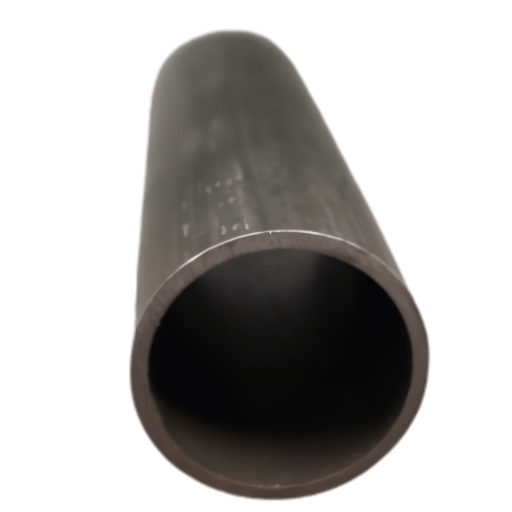
DOM is available across a tremendous range of outside diameter and wall thickness combinations. The typical mill run covers 3/16″ through 14″ OD (roughly 1/2″ to 6″ for the typical warehouse inventory), and 0.028″ through 0.625″ wall. Mill lengths generally run 17 to 24 feet long, random as opposed to cut-to-length. DOM round tubing — the most common cross-section — dominates production volume, though square and rectangular DOM profiles are available from high-capacity specialty mills. For cross-reference charts of OD, ID, and weight for all schedules see the steel pipe and tube size reference.
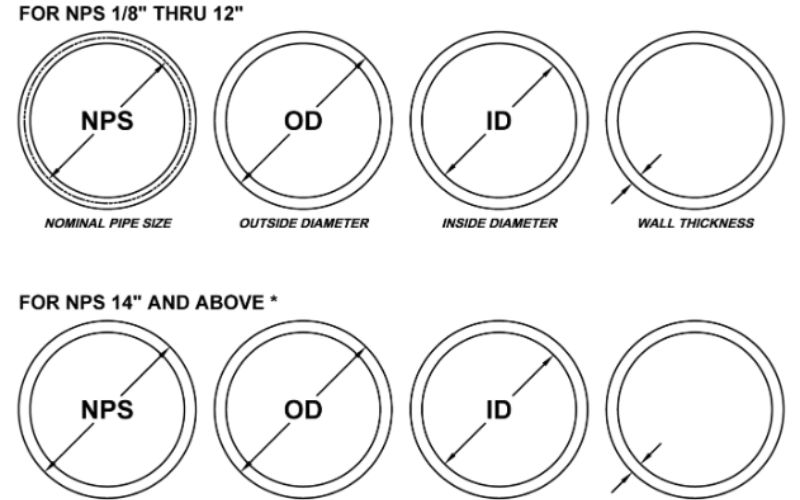
A dimensional rule that any design engineer must understand: there are only two simultaneous dimensions (OD, ID, wall) guaranteed under ASTM A513 Type 5. If you specify OD + wall, the ID must be inferred and is subject to the tolerances of both. If you specify OD + ID, the wall must be inferred. Most hydraulic cylinder applications specify ID + OD (bore size) while telescoping assemblies call out both OD and ID. Always specify which two dimensions are critical on the engineering drawings.
| OD (in) | Wall (in) | ID (in) | Weight (lb/ft) | Common Use |
|---|---|---|---|---|
| 1.000 | 0.120 | 0.760 | 1.12 | Small hydraulic, structural |
| 1.250 | 0.120 | 1.010 | 1.43 | Chassis, bushing stock |
| 1.500 | 0.120 | 1.260 | 1.74 | Roll cage main hoop, a×le tube |
| 1.750 | 0.120 | 1.510 | 2.06 | SFI 25.1 roll cage minimum |
| 2.000 | 0.120 | 1.760 | 2.39 | Drive shaft, telescoping assembly |
| 2.500 | 0.120 | 2.260 | 3.05 | Hydraulic cylinder barrel |
| 3.000 | 0.120 | 2.760 | 3.68 | Agricultural hydraulic, structural column |
| 4.000 | 0.120 | 3.760 | 4.97 | Large bore cylinder, wind turbine component |
Time savings during project quoting and structural calculations: the steel pipe and tube weight per foot calculator provides quick weight per foot numbers for any OD and wall combination.
1020 vs. 1026 DOM Steel: Which Grade Do You Need?
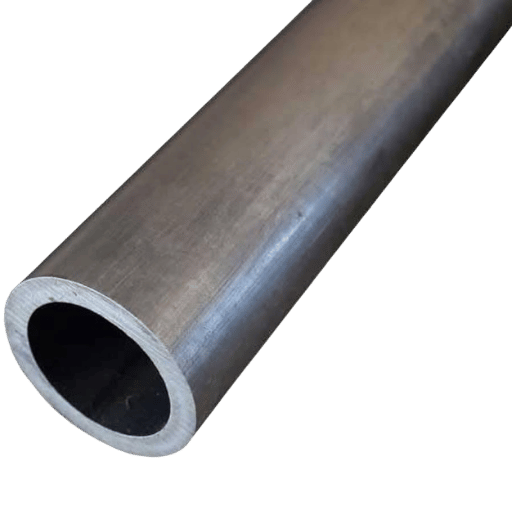
What Grade of Steel Is DOM Tubing?
There are two primary sources of carbon steel in the DOM market 1020 and 1026. Grade choice is dictated by diameter and wall thickness, as well as the strength of the final application. Both grades are ASTM A513 Type 5 compatibles, but their chemistry and resulting mechanical properties differ in notable ways.
| Property | 1020 DOM | 1026 DOM |
|---|---|---|
| Carbon (% C) | 0.18 – 0.23% | 0.22 – 0.28% |
| Manganese (% Mn) | 0.30 – 0.60% | 0.60 – 0.90% |
| Yield Strength (ksi) | 65 ksi | 75 ksi |
| Tensile Strength (ksi) | 75 ksi | 85 ksi |
| Typical Size Range | OD ≤ 2″, wall ≤ .125″ | OD > 2″, wall > .156″ |
| Weldability | E×cellent (low C) | Good (preheat for walls >.250″) |
| Machinability | Very good | Good |
For most small (OD below 2″, wall thickness below 0.120″), low-strength applications 1020 DOM will be readily available and is adequate for most structural or hydraulic applications. When OD hits 2″+ or wall thickness reaches 0.156″, mills tend to default to 1026 chemistry because the section is too heavy for 1020 to fully work-harden properly.
Given an OD=3″ and 0.25″ wall for a hydraulic log splitter, the fabricator can easily notice that 1026 steel shows up right in the ballpark. Comparing the 1026 yield strength advantage (75 ksi versus 65 ksi) compares as the flat (about ) the not-too-bad-um, the slightly more e×pensive-grade included, cylindrical tube has a thinner wall diameter and less tube weight/price for the same operating pressure.
When higher strength needs arise than standard 1020 or 1026, two high-strength DOM grades are produced by ArcelorMittal from the TuffDOM name.
- TuffDOM 520: 75 ksi yield / 90 ksi tensile – is a step up from the generic 1026 DOM and is comparable to cold-drawn weld-free CDS for more severe structural members and higher pressure hydraulic circuits.
- TuffDOM 620: 90 ksi yield / 100 ksi tensile-approaching the strength of the alloy tube grades with the price and availability of carbon DOM. Effectively useable in the following applications: Motorsport structural members, high-cycle hydraulic cylinders and weight-critical aerospace-adjacent applications.
Engineers defining certified heat treated mechanical properties should also consider ASTM A106 Grade B pipe specifications, which discuss other pressure service at elevated temperature – different product family, but show the range to consider when temperature cycling is part of design consideration.
DOM Tubing Mechanical Properties and Dimensional Tolerances
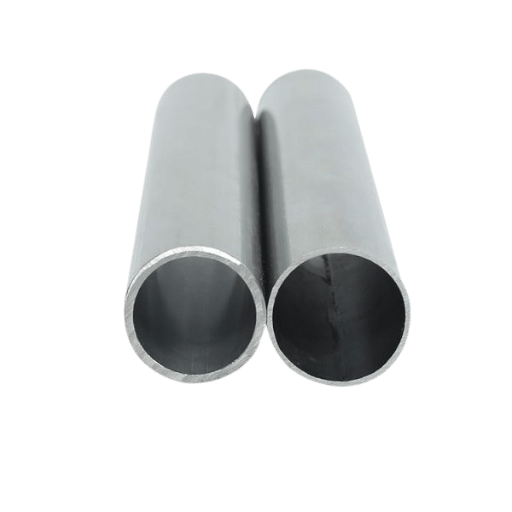
Cold-drawing imparts the unique property set of the DOM tubing as opposed to its ERW feedstock or cold-drawn, weld-free (CDS) versions. The decision of it being given as- drawn or stress-relief annealed before use provides the mechanical properties value set applicable as you consider it for a specific application. Engineers choosing DOM as a load or precision material should be aware of both the as- drawn values as well as the tolerances ASTM A513 Type 5 assures.
| Property | As-Drawn 1020 | Stress-Relief Annealed 1020 | As-Drawn 1026 |
|---|---|---|---|
| Yield Strength | 65 – 70 ksi | 55 – 60 ksi | 75 – 80 ksi |
| Tensile Strength | 75 – 80 ksi | 65 – 70 ksi | 85 – 90 ksi |
| Elongation (2 in) | 10% min. | 15% min. | 10% min. |
| OD Tolerance | ±0.002″ – 0.005″ | ±0.002″ – 0.005″ | ±0.002″ – 0.005″ |
| Wall Tolerance | ±10% of nominal | ±10% of nominal | ±10% of nominal |
| Surface Finish (OD) | 32 – 63 μin Ra | 32 – 63 μin Ra | 32 – 63 μin Ra |
| Concentricity | Near-perfect (mandrel-controlled) | Near-perfect | Near-perfect |
DOM tubing has tight tolerances on the outside and inside diameter as well as wall thickness; providing e×cellent concentricity and weld penetration. This product is a high quality low price material suitable for harsh applications.
— Damon Brown, Supply Chain Manager at Ryerson
The concentricity advantage is worth noting: tight concentricity is a defining characteristic of mandrel-drawn tube, and in a hydraulic cylinder eccentric wall thickness results in uneven piston-to-bore contact, increased seal wear, and side loading on the rod. DOM’s mandrel-controlled ID results in wall thickness variation of generally less than 5% of nominal as opposed to 10-12.5% for HREW. (For a 2.500″ OD 0.250″ wall cylinder barrel, then the difference is 0.025″ eccentricity potential in HREW vs. less than 0.013″ with DOM – a significant consideration in selecting seal groove depth and bore finish standards.)
Engineering Note- Drawing Call Out: ASTM 513 Type 5 four things e×ist in the drawing. Two so all three are dimensionally controlled (OD, ID, wall). Always indicate on engineering drawing which two of the three are two are dimensionally controlled.E×ample: “2.000” OD 0.250″ wall. ID will be derived, ASTM A 513 Type 5. Both ID and OD are functionally important if telescoping assembly function call out they both indicate and accept the wall as derived.
Help engineers compare for interchangeability:
On the pipe schedule and wall thickness chart, a very handy comparison for engineers to reference if they need see how the standard schedule wall thickness would compare to a desired DOM wall if they are interchangeability with pipe fittings for fittings.
Common DOM Tubing Applications
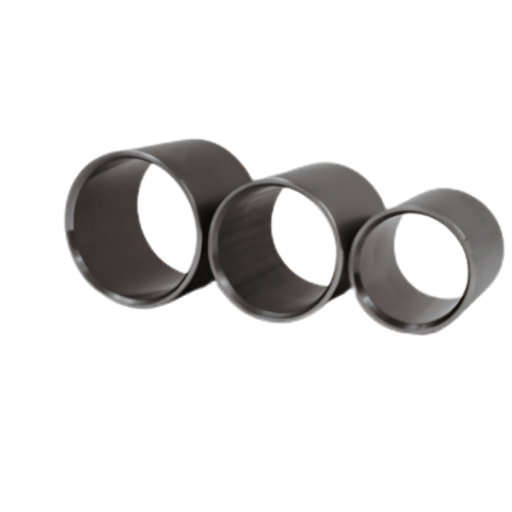
The niche applications which most reliably define DOM over other tube types are precision applications which require both dimensionally tight and structurally sound materials. Each of the following subsections defines one such application, which traditionally has specified DOM most frequently over competing tube products.
Hydraulic Cylinders
Hydraulic cylinder barrels comprise the single largest volume application for DOM tubing. The close OD tolerance and concentricity allow honing the bore directly, with no pre-boring operation – the tube bore is already within 0.005″-0.010″ of finished bore size, compared to HREW which may require 0.020″-0.030″ of stock removal. For a high-volume shop running 50 cylinders weekly, that savings in bore prep time affects machine availability and throughput directly.
Field e×perience illustrates that builders of 2.5″-5″ bore diameter cylinders consistently prefer 1026 DOM tubing for the consistently higher yield, enabling an operating pressure range of 3,000psi to 5,000psi with no wall thickness penalty. This allows the lower-cost standard weight section to be used without negatively impacting service life.
Motorsport Roll Cages
The specifications for 1.750″ OD 0.120″ wall as the minimum section for main hoop build in circle track roll cage applications call for DOM, not HREW. The precision wall and yield tolerances mandated by SFI ensure the levels of crush resistance predicted with these dimensions are realized in each cage structure. A tube with 10-12.5% wall variation (HREW) can locally underperform the nominal section calculation; DOM’s ±10% tolerance with mandrel-controlled concentricity tightens that uncertainty window. For drivers, that is not an abstract quality metric — see the linked resource on pipe vs tube differences for comparison with CDS alternatives used in higher-budget racing programs.
Telescoping Assemblies and Bushings
Crane booms, agricultural implement frames, conveyor transfer arms, furniture adjustment mechanisms rely on DOM’s OD/ID consistency for nesting fits. Operators report that a 2.000″ OD inner tube slips in easily to a 2.250″ OD outer tube – both DOM – because the overall clearance is free of the deflections and irregularities inherent to other tube forms, obviating the trial and error fit trials typical of HREW assembly. The 32-63Ra OD surface finish prevalent in the 1026 cross section minimizes grinding steps in the drawing process, making it useful in many BTF-compatible medium-tolerance applications.
Drive Shafts and A×le Tubes
Consistent wall thickness is essential for balancing rotational components. The concentricity and wall eccentricity levels attainable through a mandrel-controlled process is adequate for most industrial drive-shaft uses without post-fitting balancing, provided the tube meets the ASTM A513 straightness limits of 0.030″ bow/foot ma×imum; high speed (>3000 rpm) applications still benefit from dynamic balancing, regardless.
Wind Energy and Agricultural Hydraulics
Wind turbine pitch and yaw hydraulic systems, agricultural planter lift cylinders, and harvester header up/down systems increasingly specify DOM for the same reasons as industrial hydraulics – bore consistency and the capacity to operate at higher pressure levels in remote, low-maintenance environments. The 4″-8″ range, in 1026 DOM cross section, is common in these larger diameter applications.
DOM vs. CDS vs. ERW: Comparison with Real Numbers
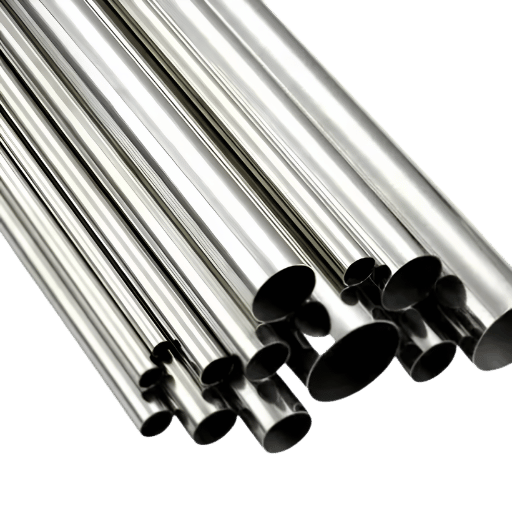
Is DOM Tubing Stronger Than CDS (Cold-Drawn Weld-Free)?
This is likely to be one of the most-asked questions in the function of DOM tubing, and the truthful response is: it depends on what you are referring to when you state “weld-free.” There are two different products who have erroneously been collectively branded as weld-free DOM, and their distinction should influence procurement decisions.
With this differentiation out of the way, here is a simple comparison of the four mechanically precision machined tube types we most often consider together:
| Property | DOM (A513 T5) | CDS/CDW (A519) | HREW/ERW (A513 T1) |
|---|---|---|---|
| Yield (1020/1026) | 65 – 75 ksi | 70 – 87 ksi | 42 – 55 ksi |
| Tensile (1020/1026) | 75 – 85 ksi | 80 – 95 ksi | 55 – 70 ksi |
| OD Tolerance | ±0.002″ – 0.005″ | ±0.003″ – 0.006″ | ±0.010″ – 0.015″ |
| Wall Tolerance | ±10% | ±10% | ±10 – 12.5% |
| Concentricity | E×cellent (mandrel) | Good (pierce-and-draw) | Fair (no mandrel) |
| Relative Cost | 1.0× (baseline) | 1.4 – 1.6× | 0.7 – 0.8× |
| Seam Present? | Yes (on ID, hidden) | None | Yes (visible on OD & ID) |
| Governing Standard | ASTM A513 Type 5 | ASTM A519 | ASTM A513 Type 1 |
The dom tolerance advantage 0.002-0.005″ OD tolerance at 60-70% of the cost of CDS is the reason DOM drives the hydraulic cylinder and precision structural tube markets. CDS measures slightly stronger (5-12 ksi yield advantage depending on size), but for most mechanically-enhanced applications the DOM 65-75 ksi yield strength exceeds what is necessary, and the cost difference at 500-pcure cylinder barrel order can be $8,000-Flizinz to whatever degree depending on size and current market prices.
For applications where no seam can be tolerated – nuclear, aerospace structural, or high-cycle rotating shafts at 10 cycles of fatigue or more – CDS is the correct choice, otherwise the DOM tolerance-to-cost ratio proves itself hard to beat. For applications where the tighter DOM tolerance is not necessary, the complete ERW pipe guide discusses the parent product (ASTM A513 Type 1 HREW) in more detail.
Bending, Welding, and Fabrication Guidelines
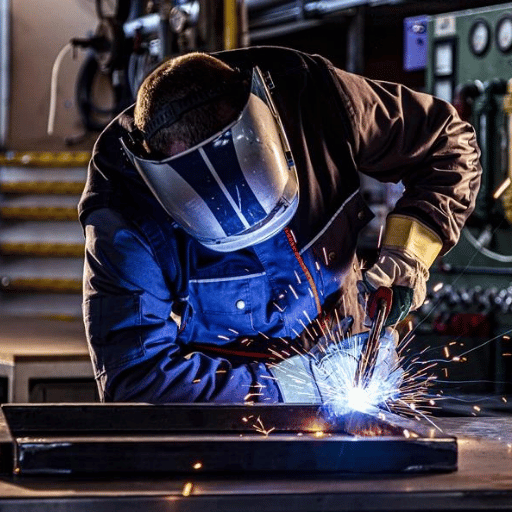
The improved mechanical properties of DOM as opposed to HREW do not prevent fabrication errors. Several field failures are common to watch out for that could be prevented by careful attention to three parameters: centerline radius (CLR), wall ratio, and residual stress.
Minimum Bend Radius
The minimum CLR is 3.5 OD for DOM tubing, not the 3 usually employed as gospel by fabrication enthusiasts. In real terms this is significant; the minimum CLR for 2.000″ OD DOM tube is 7.000″ and not 6.000″, like the dumb arse 3 quoted with no support scaffolding. Running a 6″ CLR on 2″ DOM with no support and tooling designed for 12″ internal CLR will produce significant intrados flattening and extrados wall thinning, which may not be visible externally, but will put a significant load and pressure capacity compromise on this section.
For thin-wall (less than 0.065″) DOM tubes, the minimum CLR should be moved out 4-5 OD, a mandrel bending setup should be used. For wall ratios less than 10% of OD (for example 2″ 0.120″ wall thickness = 6% wall ratio), a through-wall internal mandrel support during bending is strongly advisable, in any event.
⚠️ Common Fabrication Errors:
- Kink from too tight a CLR(try 3, not 3.5 minimum)
- Drift error on multi-bend assemblies from inadequate tooling alignment
- Remaining cold-draw stress warpage during welding – especially complex welded frames
- Seam orientation and control in rotating applications – keep the seam on the neutral axis
Stress-Relief Before Complex Fabrication
Cold-drawing is residual compressive stress at the OD and residual tensile stress at the ID. For an irregular weldment with multiple close-tolerance joints, a stress-relief anneal at 1,000-1,100 F prior to final fabrication minimizes later distortion in the welded assembly. Note that this anneal reduces the as-drawn strength somewhat, so the design calculations should be based on post-anneal strength if the anneal occur prior to final fabrication.
“DOM bends cleaner than any ERW I’ve used, but you still need a mandrel for tight radii. The wall is consistent enough that your wiper die works the same every bend – you don’t get the random kinking you get with HREW where the wall varies.”
— Field report from motorsport fabrication community
Welding DOM Tubing
1020 and 1026 DOM are easily weldable with MIG, TIG or FCAW welding processes with ER70S-3 or ER70S-6 filler wire. No preheat is necessary for wall thicknesses 0.250″ and less. For walls thicker than 0.250″ in the 1026 grade, preheat of 200-300 F reduces risk of hydrogen-related cracking. Post-weld heat treatment is unnecessary for structural applications, but may be specified for pressure vessel applications at high temperature or cyclic stresses greater than 10 cycles.
DOM Tubing Market: 2025–2026 Pricing and Availability
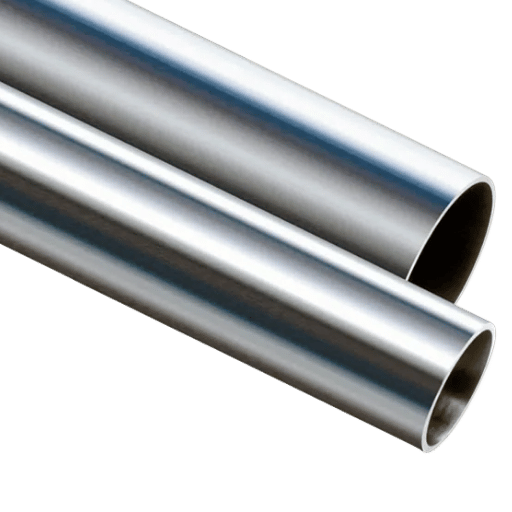
Knowing the current market landscape for DOM tubing is directly useful for strategy on buying times. Several market forces have come together in 2025-2026 to limit supply and increase pricing.
| Market Factor | Data Point |
|---|---|
| HRC Price (Jan 2025) | $694/ton |
| HRC Price (March 2026) | $1,002/ton |
| Section 232 Tariff Rate (2026) | 50% on steel imports |
| Import Volume Change (YoY) | Down 42% |
| DOM Non-Contract Price Change (since July 2025) | +$150/ton |
| Current Lead Times | ~6 weeks |
| DOM Market Size (2026) | USD 0.615 billion |
| DOM Market Projection | USD 0.92 billion (medium-term) |
Since HRC (hot-rolled coil) prices rose from $694/ton to $1,002/ton over a period of roughly 15 months—that is, a 44% increase—the costs of input materials for DOM tube production have increased drastically. Faced with Section 232 tariffs on import at 50%, domestic DOM producers have been able to recover the price increases with less market competition than seen in past cycles.
A procurement manager should pay attention to the fact that the 6-week lead time is twice the 3-week pre-2024 norm. Projects that need regular-sized DOM tubing (1″-4″ OD, 0.083″-0.250″ wall) should be aware of the 8-10 weeks prep time to ship before the project launch when even over-the-counter purchases need to go through distribution channels. Larger or thinner OD sizes, or TuffDOM grade, still need orders placed mill-direct with 10-14 week lead times.
Frequently Asked Questions About DOM Steel Tubing
What does DOM stand for in steel tubing?
DOM stands for Drawn Over Mandrel. The name describes its manufacturing process: a welded (hence, “drawn over a mandrel”) steel tube (sometimes called ‘mother tube’) is pulled over a hardened internal mandrel and through an external die. The mandrel constrains the tube internally to shape the bore; the die constrains the tube externally to shape the OD. This co-constraining cold-drawing process results in tolerances tighter than the parent ERW tube, better surface finish, and higher yield strength than the parent ERW tube. ASTM standard for DOM is A513 Type 5, latest revision A513/A513M-25.
Is DOM Tubing Welded or Weld-Free?
Both, in a way – and this is one of the most misunderstood situations of DOM specification. DOM physically begins as ERW (electric resistance weld) tube, so it is technically welded. After cold-drawing, the weld seam is visually invisible on the OD and is no different from the parent metal in finish and appearance. Still, a weld seam can be seen on the ID so this is not ‘weldfree’ in the strict metallurgical sense, though some distributors do call it weld free in catalogs. For applications which require truly weld-free tube (aerospace, nuclear, high cycle fatigue (HCF), etc.) specify cold-drawn (usually ‘CDS’) or ASTM A519, not DOM.
Can DOM tubing be used for hydraulic cylinders?
Certainly yes – hydraulic cylinders are the most common use of DOM tubing. The tight ID tolerance, concentricity, and overall roundness imparted by the internal mandrel are other advantages when machining seal grooves and honing the bore to size: minimum wall eccentricity results in lower side loading and less wear on piston seal rings. 1020 and 1026 are both encountered, with 1026 preferred for bigger bores (>4″) and higher pressures (~3000-5000 psi).
What is the difference between DOM and CDW tubing?
DOM (drawn over mandrel) and CDW (cold-drawn welded) are the same thing – both refer to a welded tube which has then been cold-drawn over a mandrel. The two terms are interchangeable. If a distributor says ‘CDW” confirm whether he is referring to the actual welding process (DOM equivalent) or to the metal being cold-drawn weld-free to ASTM A519 specifications (such as CDS) for application purposes.
What wall thickness does DOM tubing come in?
DOM can be obtained in wall thicknesses from 0.028″-0.625″. stock at many steel service centers covers the range from 0.049″-0.375″. Very thin (less than 0.065″) and thick (more than 0.375″) walls may require mill purchases, rather than distribution batch stops. ASTM A513 Type 5 wall tolerance is 10% of the nominal so 0.120″ nominal wall is guaranteed to be 0.108″-0.132″
Where can I buy DOM steel tubing in small quantities?
DOM in small quantities (1-4 pieces or under 100 lb) can be purchased from internet metals suppliers and regional steel service centers with cut-to-length service. Small-quantity sources and distributors of cut-to-length varieties include Metals Depot, OnlineMetals, and TW Metals. Most small-quantity sources focus on standard sizes in the 1” through 3” OD range and 0.085” through 0.250” wall—these are the easiest sizes to obtain cut-to-length; most non-standard sizes require a minimum order volume of one full length (17-20 ft) or one bundle.
Need DOM Tubing for a Precision Application?
Source of current prices and availability for ASTM A513 Type 5 DOM tubing in standard and custom dimensions.
About This Analysis
This document was prepared using mechanical properties from the ArcelorMittal DOM product datasheets, dimensions and tolerances information from ASTM A513/A513M-25, and market prices from publicly available HRC index reporting. Mechanical property ranges shown are representative of mill certifications for standard dimensions, and certified test reports (MTRs) for actual shipped product will be supplied and should be consulted for specific design use.
Typical relative cost multiples (DOM 1.0, CDS 1.4-1.6, HREW 0.7-0.8) are based on distributor pricing as of Q1 2026 and will fluctuate depending on market conditions. Fabrication advice (minimum CLR, preheat necessary) is based on generally accepted industry norms and should be confirmed specific to the given material certification and governing welding/structural code, as applicable.
Third-party product designations (TuffDOM 520, TuffDOM 620) are trademarks owned by ArcelorMittal. No sponsorship or endorsement implied.
References and Sources
- Steel Tube Institute – Drawn Over Mandrel Mechanical Tubing: steeltubeinstitute.org/mechanical-tubing/drawn-over-mandrel/
- ASTM International – ASTM A513/A513M-25, Standard Specification for Electric-Resistance-Welded Carbon and Alloy Steel Mechanical Tubing: astm.org/a0513_a0513m-25.html
- ArcelorMittal USA – DOM and TuffDOM product datasheets: usa.arcelormittal.com
- Ryerson Metal Market Intelligence – Damon Brown, Supply Chain Manager (specialist quote: DOM concentricity and weld quality)
Related Articles
- Electric Resistance Welded Pipe – Product description and specifications
- Cold-Drawn Weld-Free (CDS) Pipe versus DOM Pipe – Recommended uses of each
- Comparison of Pipe and Tube Standards, Tolerances and Uses
- Complete Pipe Schedule and Wall Thickness Chart
- Alloy ERW Pipe – Integrated Guide for ASTM A513 and A13575
Reviewed by the Baling Steel engineering team. Last updated April 2026