Quick Specs
| Who this guide is for | Contractors, engineers, and procurement managers sourcing carbon or stainless steel pipe |
| Standards referenced | ASTM A53/A53M-2022, A106 Grade B, API 5L; ASME B36.10M |
| Typical price range | $0.80–$8.00/ft (SCH 40 carbon, varies by size and market — request current quote) |
| Key vetting tool | Mill Test Certificate (MTC/MTR) — request before payment, not after |
| Tariff conte×t | Section 232 tariffs rose to 50% in June 2025 — recalculate import economics |
Searching for steel pipe distributors won’t just help you smooth a project; it’s likely to save you a huge headache, by preventing an expensive delay. What makes the difference?
Who you call, what you order, and the documentation you require. Whether you’re googling ‘metal pipe suppliers near me’ or beginning a search with an overseas vendor in mind, this guide will take you through every step of the process. Starting with the distribution supply chain and moving through issuing a purchase order with all the proper mill documentation, we’ll walk you through the entire process; from locating pipe distributors to shelf prices, to running a seven-point evaluation checklist, to reading the current market.
What Is a Steel Pipe Distributor? (Steel Pipe Industry Roles Explained)
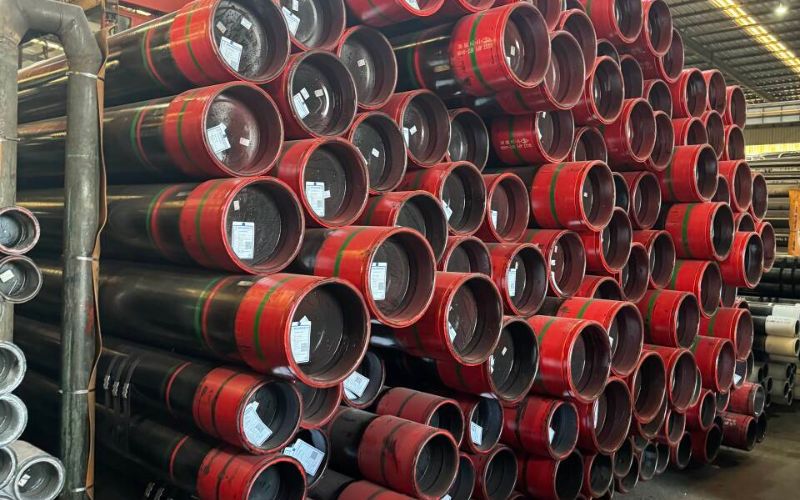
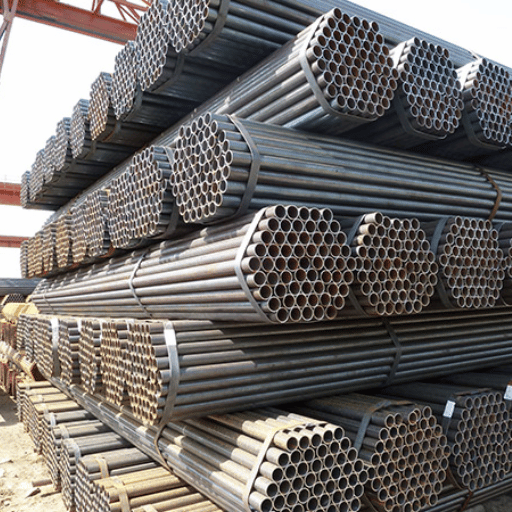
A steel pipe distributor itself does not produce any of the pipe but buys them off the mill. They sell pipe which is kept in stock. Identifying the position of the distributor in the supply chain, indicates the cost, availability and the extent to which the pipe can be modified to meet your requirements.
There are four levels of distributors:
| Tier | Role | Min. Order | Lead Time (stock) |
|---|---|---|---|
| Steel Mill | Manufactures pipe from raw steel — no resale inventory | ≥500 tons typical | 8–20 weeks (production run) |
| Master Distributor | Buys in very large volumes from mills; redistributes to regional distributors and service centers | 10–200 tons | 2–10 business days |
| Regional Distributor / pipe supplier near me | Stocks standard grades locally; fastest turnaround for most buyers | 1–20 tons | 1–5 business days |
| Service Center | Adds value: cutting, threading, beveling, coating — often the right choice for processed pipe | 1 piece | 2–7 business days (processing time) |
What steel pipe distributors are in the USA?
NASPD lists over 100 member companies throughout the U.S. Key national wholesalers include American Piping Products (Chesterfield, MO), Kelly Pipe (California and Gulf Coast), United Pipe & Steel, and Federal Steel Supply. NASPD’s member directory organizes listings by state — making it the fastest route to a vetted local steel pipe supplier.
📐 Distributor vs. Mill vs. Import — Decision Framework
- Volume >500 tons, standard grade: Details on the mill directly or through a master distributor for mill pricing
- Volume 10-500 tons: Regional distributor or master distributor- best compromise of price and lead time
- Volume <10 tons or time-sensitive order: local service center or regional distributor—quickest delivery of in-stock products
- Import sourcing: Need verified ASTM compliance + import duties (Section 232 tariff at 50% as of June 2025) – make sure to factor in full landed cost before you compare to domestic pricing
Carbon Steel, Stainless & Tube Types: Steel Pipe Products at Distributors
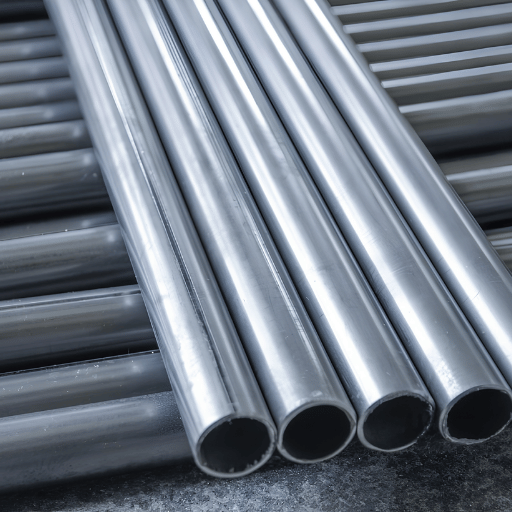
Most steel pipe distributors carry multiple product families, including carbon steel pipe and tubing, as well as ferritic, austenitic, heat-resisting, and other alloy and stainless grades. Always choose the appropriate material type in the beginning to prevent expensive reorders—what works in one application is perhaps totally unsuitable in another.
| Type | Standard | Primary Application | Notes |
|---|---|---|---|
| Black Carbon (Welded/Seamless) | ASTM A53/A53M-2022 | Structural, low-pressure piping, steam, gas | Grade B: min tensile 60,000 PSI — standard for most applications |
| Carbon Seamless (High-Temp) | ASTM A106 Grade B | High-temperature service, steam, pressure lines | Seamless only; rated up to ~750°F with ASME derating |
| Stainless Steel | ASTM A312 TP304/316 | Corrosive media, food/pharma, marine | 3–5× price premium over carbon; 316 for chloride environments |
| Galvanized Carbon | ASTM A53 Hot-dip | Above-grade water, HVAC, sprinkler (not buried gas) | 15–25% cost premium over black; not for direct-buried gas lines per IFGC 404.1 |
| Line Pipe | API 5L Grade B/X42/X52 | Oil and gas transmission pipelines | Higher yield strength than standard pipe grades; sour service variants available |
📐 Engineering Note — Gas Line Selection
According to IFGC Section 404.1, ASTM A53 Grade B carbon steel pipe is the standard specification for residential and commercial gas distribution pipe. Zinc coat galvanized pipe is specifically listed as an unacceptable material for direct-buried gas applications—the zinc coating deteriorates through direct soil contact with gas media. Doublecheck your service reason with your distributor when a specification is requested; contrasting Grade A (minimum 48 KSI) and Grade B (minimum 60 KSI) pressure service is a most common procurement mistake.
What is the strongest type of metal pipe?
As far as pure tensile strength, chromoly alloy piping (ASTM A335 P-grade) is the strongest, then carbon seamless (A106 Grade C: min 70,000 PSI tensile), then ordinary carbon (A106/A53 Grade B: 60,000 PSI), then stainless, then galvanized. But the tensile strength alone is almost never the deciding factor – temperature rating, corrosion resistance, and governing code are factors that actually make the choice clear.
- No longitudinal weld seam — uniform stress distribution
- Preferred for high-pressure, high-temperature service
- Tighter dimensional tolerances on wall thickness
- Required by some codes for critical pressure service
- Seam weld is potential failure point under cyclic loading
- Lower cost and faster availability than seamless
- Suitable for structural and low-to-medium pressure applications
- Available in large diameter sizes not economically feasible for SMLS manufacturing
Pipe Schedule, Grade & Size: What to Specify Before You Order
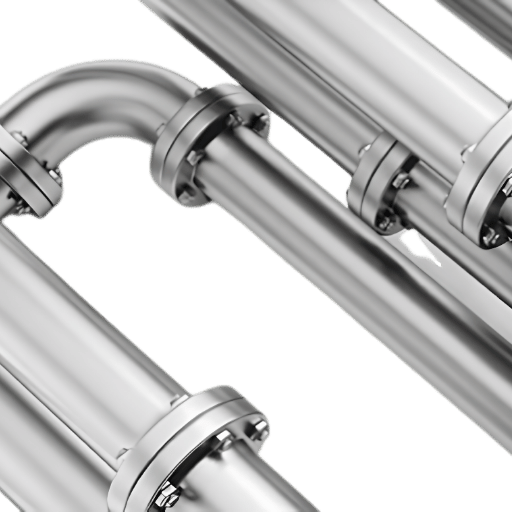
Poly-accounting errors often occur in the coarse. Incomplete specs are the most frequent. Rephrasing “2-inch schedule 40” as “Two inch ASTM A53 grade B hot-rolled seamless steel pipe schedule 40” leaves the correct material specification, standards, seller documentation, and appropriate diameter unwritten. Incomplete specs such as this cost not only money but also time at every point in the project. Specifying the factors below fully at the time of a purchase order can save time and money.
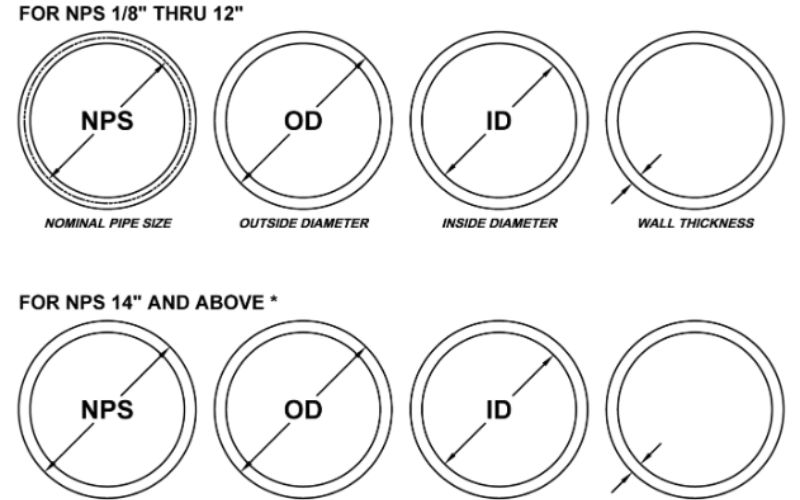
📐 Engineering Note — NPS ≠ Actual Outer Diameter
Nominal Pipe Size (NPS) is a designation, not a measurement: NPS 2″ pipes are actually 2.375″ OD per ASME B36.10M – designations for NPS are not directly linked to actual physical OD for sizes > 1/2″. Always verify OD when ordering for close-tolerance fits, structural sleeving, or mating with flanges or fittings of a different manufacturer. Writing “OD + wall thickness” and not just “NPS + schedule” clears this up.
| NPS | OD (in) | SCH 40 Wall (in) | SCH 40 Wt (lb/ft) | SCH 80 Wall (in) | SCH 80 Wt (lb/ft) |
|---|---|---|---|---|---|
| 1″ | 1.315 | 0.133 | 1.68 | 0.179 | 2.17 |
| 2″ | 2.375 | 0.154 | 3.65 | 0.218 | 5.02 |
| 4″ | 4.500 | 0.237 | 10.79 | 0.337 | 14.98 |
| 6″ | 6.625 | 0.280 | 18.97 | 0.432 | 28.57 |
Move from SCH 40 to SCH 80 when:(1) operating pressure exceeds ~300 PSI, (2) threaded connections are desired – additional thickness allows threading without dropping below minimum wall thickness, or (3) if environment is corrosive and thickness loss over time is likely. For any structural use under modest pressure, SCH 40 usually suffices and saves money. See the full pipe schedule chart and pipe weight per foot reference for additional sizes.
How to Find Steel Pipe Distributors by Location (and Online)
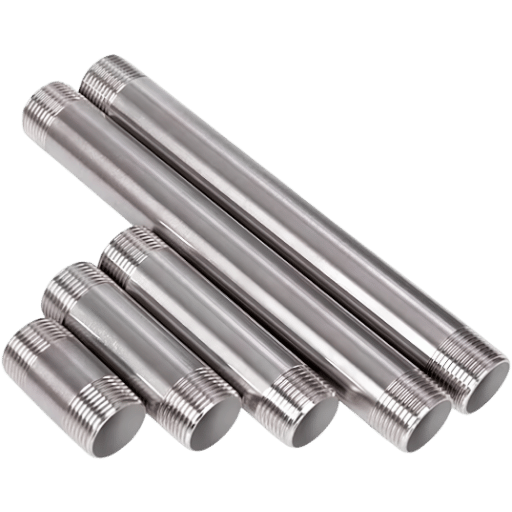
How to find qualified metal pipe suppliers near me is a question of which avenues lead to vetted, ASTM compliant inventory, not to the top few Google search results.
- NASPD Member Directory – naspd.com shows over 100 accurately-vetted member distributors by state. Members commit to industry standards; this is the best way to identify local sources.
- Thomas Network (thomasnet.com) – the biggest North American network of industrial vendors. Filter by material type, location and certifications. Can identify specialty or regional sources missing from the NASPD directory.
- Mill Direct Referrals – Nucor, US Steel, Tenaris and other large mills own authorized distributor networks. Telling a mill direct that you are interested in your local accredited distributor can prove successful compared to blind searching.
- Industry Shows – the NASPD trade conference for pipe distributors and the American Welding Society trade bazaar for welded supply. Meeting face to face clears many objections quickly.
A Dallas-area MEP contractor procurement manger stuck in traffic used the NASPD directory to identify three local candidates. After a day of calls he got three competing prices for 4,000′ of 4″ A106 Grade B, seamless, pipe. The range was 14% between the high and low. This savings would have been invisible without multiple-bid procurement. The distributor giving the winning bid actually had mill test certificates on hand with the quote, not later in the day.
| Factor | Domestic Distributor (Stock) | Overseas Mill (Import) |
|---|---|---|
| Lead Time | 2–5 business days | 8–14 weeks (transit + customs) |
| MOQ | 1 piece / 1 ton | 10–50 tons typical |
| Mill Cert Reliability | High — direct chain of custody | Variable — verify ASTM compliance and third-party testing |
| Tariff Cost (2025) | No Section 232 duty | +50% Section 232 tariff on most steel imports (June 2025) |
| Price per ton | Higher ex-works, but no import duties | Lower mill price, but landed cost often higher after 50% tariff |
Always ask a distributor to confirm the footage that is ready to ship from their warehouse before finalizing your project timeline. Simply being able to “get it” almost always means a mill order — 4 to 12 weeks of additional wait. Immediately available stock ships in 2–5 business days. This difference can be prohibitively expensive if your schedule is dictated by a fixed point in time. Confirm in writing and request the pickup location at the specified warehouse.
The 7-Point Checklist to Vet Any Steel Pipe Distributor
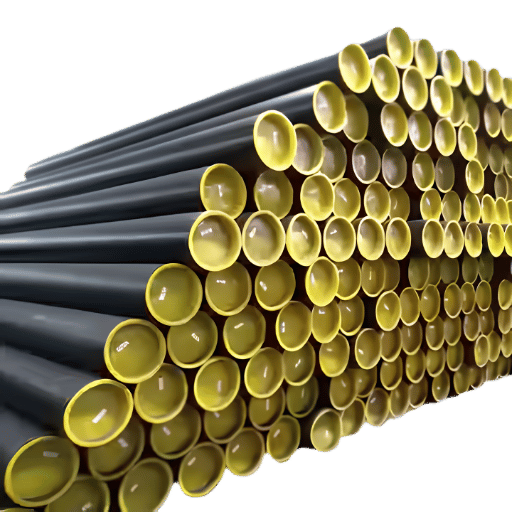
Quality failures in the procurement of industrial pipe can almost always be traced to failing one of the following seven checks. Run each as a vetting requirement before issuing a large order — not during receipt at site. A distributor with genuine expertise will clear all seven without hesitation.
“Procurement engineers on Eng-Tips have reported purchasing four pieces of Chinese origin 316/L pipe – all of a single heat number – from a respected major US distributor. Without hesitation, that distributor passed the material along. An upfront MTR request, with multiple pieces cross-referenced for heat number, would have caught this before it reached the welder.”
— Industry procurement experience, Eng-Tips forum (fraudulent mill certs thread)
- 1.
Mill Test Certificate (MTC/MTR) — Request before payment, not after. The MTC must show: heat number, chemical composition (C, Mn, P, S percentages), and mechanical test results (yield, tensile, elongation) against the specified ASTM standard. Reject suppliers who cannot provide this automatically.
- 2.
ASTM/API Standard Compliance — The specific standard (e.g., ASTM A53/A53M-2022 Grade B, A106 Grade B, API 5L X52) must appear on the MTC. Note: as of July 1, 2025, PHMSA now requires compliance with ASTM A53/A53M-2022 for pipeline service — not earlier editions. Verify the edition year on the cert.
- 3.
ISO 9001 or Equivalent Quality Management System — Ask for the QMS certificate and confirm the expiry date. Scope of certification must cover pipe distribution and processing — not just a parent company’s manufacturing operations. An expired or out-of-scope ISO certificate is not a valid quality signal.
- 4.
Inventory Depth & On-Hand Verification — Ask for actual on-hand footage at the specific warehouse. “We have it” is not confirmation. Request the warehouse location, cut-length capability, and available quantity before issuing a PO. Distributors with legitimate stock can provide this instantly.
- 5.
Written Lead Time Confirmation — Get the lead time in writing, specifying whether the material is (a) domestic stock, (b) domestic mill order, or (c) import. Each category has a fundamentally different timeline. An oral “a couple weeks” can mean 2 weeks or 12 weeks depending on which category applies.
- 6.
References from Similar Projects — Request two references from buyers in your industry and application type (e.g., if you’re specifying for oil and gas, ask for oil and gas project references). A distributor with 100+ customers should be able to provide two vetted references within 24 hours. Reluctance to provide references is a signal worth noting.
- 7.
Nonconformance and Returns Policy — Ask how the distributor handles off-spec material: What is the claim process? Is there a written nonconformance procedure? How quickly are replacement orders processed? Reputable distributors have written procedures; those that improvise this process create risk for your project.
If any distributor is reticent to provide mill Test Reports prior to a payment transaction, they are not conducting business in a manner in-line with industry norms. A reputable metal pipe distributor will routinely furnish certified mill docs with a quote and order confirmation; any reticence to do so is the best single red flag for sourcing material from other than scrupulous channels.
A general contractor ordered 1,200′ of 4″ A106 Grade B pipe for a process run, without ever requesting Mill Test Reports. After installation, hydro-testing revealed the pipe was grossly under specification for the customers initial design parameters. A chemical analysis showed the pipe was A36 structural steel – a differently composed alloy and of significantly lower mechanical strength than the requested specification. The pipe had been marked incorrectly, most likely at a trading post in the import chain. Fixing the mistake was more costly than the entire pipe procurement cost to that point. Unless and until a project cannot be built due to material quality, request the MTR when the initial quote is received – checked for matching heat numbers on the mills test report and the pipe stencil.
Steel Pipe Pricing & Delivery Timelines for Construction Projects: 2025–2026
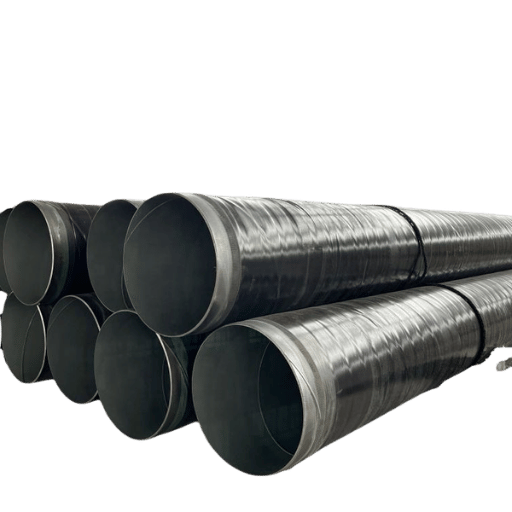
Steel pipe prices are governed primarily by supply/demand fundamentals in the world steel trade, foreign trade policy, and US based distributor inventory policies – all of which have changed dramatically through 2026. The US BLS Producer Price Index for iron and steel pipe and tube manufacturing (PCU3312103312100) was at 501.051 in March 2026, up from 486.449 in January 2026 – a 3.0% increase in two months. Use the chart above for market trend reference; always request a formal, written price quote prior to project budget finalization.
| Product | Size | Est. Range ($/ft) | Standard |
|---|---|---|---|
| SCH 40 Black Carbon | 1″ | $0.80–$1.50 | ASTM A53 Grade B |
| SCH 40 Black Carbon | 2″ | $1.50–$2.50 | ASTM A53 Grade B |
| SCH 40 Black Carbon | 4″ | $3.50–$5.50 | ASTM A53 Grade B |
| SCH 40 Black Carbon | 6″ | $5.50–$8.00 | ASTM A53 Grade B |
| SCH 80 Black Carbon | 2″ | $2.50–$3.80 | ASTM A53/A106 |
| SCH 80 Black Carbon | 4″ | $5.00–$7.50 | ASTM A53/A106 |
| Stainless 304 | 2″ | $9.00–$16.00 | ASTM A312 TP304 |
Prices on the chart are typical price points for 2nd quarter 2026, and never guarantee current pricing. Request current quotations for active projecs. Steel pipe pricing can fluctuate by 5-15% upon WorldSteelTrade Tariff intoductions, HRC bull and bear futures shifts, in the span of a week or less.
| Source Category | Typical Lead Time | Minimum Order |
|---|---|---|
| Domestic Stock (distributor warehouse) | 2–5 business days | 1 piece |
| Domestic Mill Order | 4–8 weeks | 10–50 tons typical |
| Overseas Mill (Import) | 8–14 weeks (+ customs clearance) | 25–100 tons typical |
Request a formal written quote referencing a 30 day hold open window. A pipeline construction company in the state of Texas locked in pricing for 60,000′ of 6″ A106 Grade B seamless pipe in January of the projec’ton year for a Q3 2025 project – the WorldSteelTrade Section 232 tariff announcement in June of the projec’ton year caused the domestic price index to rise well above the locked price in anticipation of times ahead. At installation, that locked quote represented meaningful savings against prevailing market prices.
Value-Added Processing Services: Beyond Basic Pipe Supply
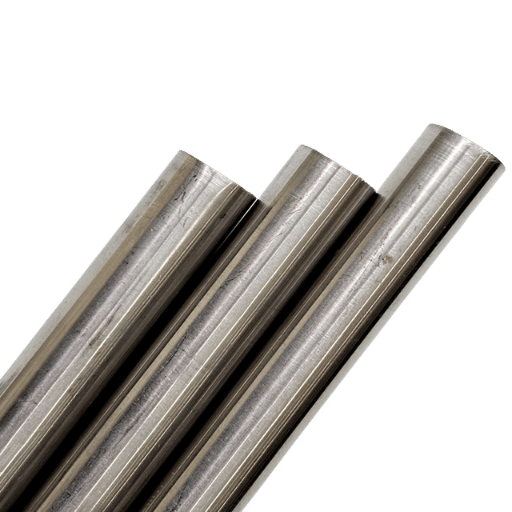
Most steel pipe distributors offer pipe products alongside fabrication and processing services — converting mill-length random pipe into project-ready product. Bundling these with your sourcing partner upfront tends to lower total project cost and reduces coordination logistics across multiple vendors.
- Cut-to-Length – Mechanical saw or torch cutting to specified lengths. Typical tolerance: 1/16”. Most distributors require minimum 20′ order quantities for cutting; confirm minimums before specifying custom lengths on small orders.
- End Preparation – Beveling for weld joints (30 bevel to AWS/ASME standards); NPT or BSPT threading for screwed connections. Threading removes material – confirm your wall thickness supports threading before ordering SCH 40 for this application.
- Coatings – Fusion bond epoxy (FBE), hot-dip galvanizing, or prime/paint. FBE is standard for buried gas and water lines; galvanizing standard for above-grade applications; epoxy paint standard for exposed structural applications.
- Flanging & Fittings – Some service centers produce total spool packages, including flanged assemblies and fittings, minimizing field labor.
- Just-in-Time Delivery – Staged releases from distributor inventory against a blanket purchase order. Promotes streamlined scheduling on multi-phase jobs, where storage is limited.
Distributors differ in minimums on processing. Many require a 20′ minimum order to absorb machine setup; others cut to one-foot increments with no surcharge above a base order minimum. Making this clear before the quoting stage saves surprises when your engineering docs specify custom lengths.
Steel Pipe Distribution: Market Trends & Outlook 2025–2026
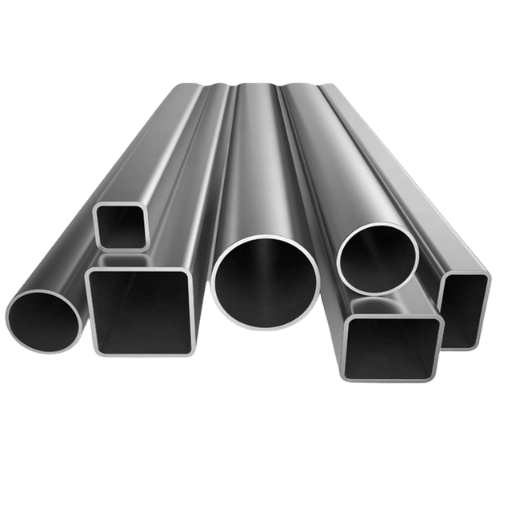
Two state and federal regulatory changes and one new pricing dynamic is likely to alter the way the teams procuring steel pipe distributors and their consumers should plan for 2025-2026 projects.
Section 232 Tariff Doubling (June 2025). Section 232 steel tariffs on imported steel products, including pipe and tube, increased from 25% to 50% effective June 4, 2025. While likely not an immediate cost to the end user, this change more than doubled the landed duty. Updated U.S. Department of Commerce data shows the tariff broadly applies across categories of steel pipe and tube. Mean: any comparative landed cost calculation made prior to June 2025 will need to be updated. Buy locally and receive a higher-cost, more competitive domestic delivered cost.
ASTM A53/A53M-2022 Now Federally Mandated. Effective July 1, 2025, PHMSA (Pipeline and Hazardous Materials Safety Administration) updated federal pipeline safety regulations to mandate ASTM A53/A53M-2022. Purchasers specifying A53 for regulated pipeline work should verify that their distributor’s mill test certificates reference the 2022 edition. PHMSA’s 2025 IBR standards update (effective June 17, 2025) incorporates over 35 revised standards — active project specifications may require review.
Demand Growth in the World Steel Pipe Market. According to industry sources, the world market for steel pipe and tube approached US$168 billion in 2025 and is expected to expand at a compounded annual growth rate of about 6.5 percent through 2030, fueled primarily by investments in energy infrastructure, construction of LNG facilities and the replacement of aging water systems. In 2025, the market for electric resistance-welded (ERW) pipe and tube accounted for a value of roughly US$34.7 billion worldwide. In contrast, the growth rate for seamless pipe is outpacing ERW growth in oil and gas applications — specifically high-pressure sour-service work where weld-free pipe is required.
BLS Price Index Drives Prices Upward in the Pipeline. The BLS Producer Price Index for the production of iron and steel pipe and tube (PCU3312103312100) climbed from 486.449 in January 2026 to 501.051 in March 2026—a 3.0 percent increase in just 2 months, in line with the supply constraints tightening documented above due to tariffs. Buyers with projects scheduled for Q3-Q4 2026, lock in prices in Q2 to prevent the cost escalations associated with peak-season construction surges.
For all projects with a Q3 or Q4 2026 installation schedule, contact distributors and pre-negotiate pricing in May-June 2026. Rising costs from three simultaneous forces — 50% Section 232 tariffs, upward BLS PPI momentum, and seasonal construction demand spikes — mean early commitment costs less than waiting. Always ask for quotations with 30- to 60-day-price confirmation and verify the default edition from all mill test reports.
Frequently Asked Questions
How expensive is steel pipe?
View Answer
How much does Schedule 40 pipe cost per foot?
View Answer
What is the difference between a pipe distributor and a pipe manufacturer?
View Answer
How do I request a Mill Test Certificate (MTR) from a steel pipe distributor?
View Answer
Ask for MTR at time of quoting – not after payment. Ask for the ASTM standard (e.g. ASTM A53/A53M- 2022 Grade B), not just the grade.
Run the full MTC format (heat number, chemical analysis C Mn P S, mechanical test results 22, tensile strength, elongation…). Good distributors will include all this immediately with your quote. A red flag I look for is if the distributor can not confirm available MTRs immediately for the material on the shelf.
What is a master distributor of steel pipe?
View Answer
Need a Quote on Seamless or Carbon Steel Pipe?
Baling Steel deliver seamless steel pipe, ERW pipe, line pipe and associated products with all the relevant ASTM documentation, Mill Test Certificates (MTC) included with each delivery
About This Guide
This guide was written by Baling Steel’s technical team to general Baling Steel sourcing specifications used in steel pipe procurement for industrial and infrastructure projects. The specifications cited here – re: ASTM A53/A53M-2022 dimensions, ASME B36.10M pipe dimensions, Section 232 tariff data – are sourced from publicly available federal and industry sources listed throughout the document. Price ranges are based on market estimates for the second quarter of 2026; steel prices have fluctuated significantly and all values should be confirmed with a current supplier quotation in preparation for project calculations.
References & Sources
- National Association of Steel Pipe Distributors (NASPD)-Trade association representing U.S. steel pipe distributors
- Producer Price Index: Iron and Steel Pipe and Tube Manufacturing (PCU3312103312100) – U.S. Bureau of Labor Statistics through FRED, Federal Reserve Bank of St. Louis
- Pipeline Safety: Standards Update — ASTM A53/A53M — U.S. Federal Register, April 24, 2026
- 2025 IBR Standards Update Fact Sheet For more information, please contact: (202) 366-0040 or webwriter@mail.srs.dot.gov Source: U. S. Pipeline and Hazardous Materials Safety Administration (PHMSA/DOT) 2025 IBR Standards Update Fact Sheet
- Section 232 Investigation on the Effect of Imports of Steel on U.S. National Security — U.S. Department of Commerce
- Mill Test Reports in Metal Manufacturing: Technical Reference Guide — NDT.net
Related Articles
- Essential Guide to Seamless Steel Pipe: Specifications, Grades & Applications
- Stainless Steel Pipe Suppliers: Grades, Specs & Applications
- Steel Pipe Size Chart: NPS, OD & Wall Thickness Reference
- ERW Pipe Guide: Manufacturing Process, Specifications & Applications
- ASTM A106 Grade B Seamless Pipe: Complete Specification Guide