Updated November 2026 · Engineering Specification & Service-Life Reference
External fusion bond epoxy (FBE) provides 25 to 40+ years of corrosion protection on buried steel pipelines with active cathodic current. This field record responds to the query “how long does FBE coating last?” with regards to buried service conditions. Fusion bond epoxy coating is a thermosetting dry powder barrier fused onto grit-blasted steel pipe at 180 to 250 °C. External oil and gas lines follow ISO 21809-2:2026 external FBE standards, while internal potable water linings deliver 15 to 25 years under AWWA C213-22 without cathodic current. Uncovered yard pipe in full sun starts losing measurable film thickness within 9 to 18 months.
Quick Specs: Fusion Bond Epoxy (FBE) Pipe Coating
| Buried External Life (with Active CP) | 25 to 40+ years (commercial line pipe service documented since 1960) |
| Internal Water / Brine Lining Life (No CP) | 15 to 25 years (potable water per AWWA C213-22); 10 to 18 years (oilfield brine) |
| Nominal Single-Layer Coating Thickness | 300 to 500 μm (12 to 20 mils) external; 200 μm (8 mils) minimum on AWWA C550 valves |
| Continuous Operating Temperature Ceiling | 65 °C (standard 206N at 14 mils) to 95 °C (enhanced 6233/226N+ at 15 mils); 110 to 155 °C (Dualkote ARO & novolac) |
| Outdoor Uncovered UV Stockpile Window | 9 to 18 months to measurable loss; 1.0 to 2.0 mils crown loss at 16 to 21 months |
| Governing Standards (2026) | ISO 21809-2:2026, CSA Z245.20 SERIES:26, AMPP/NACE SP0394-2023, AWWA C213-22 |
How Long Does FBE Coating Last in Buried Pipeline Service?

Field excavations in AMPP external FBE pipeline evaluations confirm intact bond strength after 40 years on cathodic-protected steel transmission pipelines, establishing a 25 to 40+ year buried service benchmark. Above each powder’s wet-service rating (65 to 95 °C for standard and enhanced single-layer grades) in wet clay, or without cathodic protection, barrier life drops sharply.
The first commercial FBE-coated line pipe to go in the ground was in 1960, per a South Dakota Public Utilities Commission Docket Brief. Since 1960, this epoxy-based powder coating has been widely used to protect steel across North America oil and gas pipelines. Engineers reviewing FBE coated steel pipe specifications couple service life targets with factors like the temperature of the soil, the size of the backfill rock and continuity of cathodic current. Rocky trenches, hot wet clay, and yard sunlight each drive separate degradation clocks.
Four gates decide whether single-layer or dual-layer FBE provides 25-40+ years of service life underground under the 4-Gate Coating Longevity Screen. Gate 1 requires polarized cathodic potentials to be maintained at or more negative than -850 mV CSE without overvoltage disbondment. Gate 2 keeps maximum wet operating temperature within the powder manufacturer’s continuous rating and below moisture-depressed glass transition temperature (Tg). Gate 3 tarps outdoor yard stacks before 9 months of sunlight. Gate 4 matches the abrasion resistance of the FBE to trench rock or horizontal directional drilling pullback stress.
| Service Environment | Specified DFT Window | Operating / Lifespan Benchmark | Governing Failure Clock | Mandatory Spec Action |
|---|---|---|---|---|
| Screened-soil buried gas/oil main (active CP) | 350–500 μm (14–20 mils) | ≤65 °C; 25 to 40+ years | Slow moisture permeation & CP overvoltage at holidays | Standard single-layer FBE per ISO 21809-2:2026 |
| Warm wet-clay transmission line (65–95 °C, active CP) | 381–762 μm (15–30 mils) | 65 to 110 °C continuous rating | Hydrothermal Tg depression & cathodic disbondment growth | Enhanced single-layer (15 mils) or Dualkote ARO (30 mils) |
| High-temperature flowline (compressor / subsea) | 400–650 μm (16–26 mils) | 110 to 155 °C continuous rating | Thermal oxidation & soft-film soil shear stress | High-Tg novolac FBE (Tg2 = 160 ± 9 °C) or 3LPP |
| Horizontal directional drilling (HDD) & rocky trench | 635–1,000 μm (25–40 mils) | ≤110 °C; 25 to 40+ years | Pullback gouging through base barrier to bare steel | Dual-layer FBE with abrasion-resistant overcoat (ARO) |
| Subsea flowline under concrete weight coating | 400–650 μm (16–26 mils) | ≤95 °C (or 155 °C novolac) | Lay-barge shear slip & bracelet anode depletion | Rough-coat anti-slip FBE top layer + marine CP design |
| Internal potable water main (AWWA C213-22, no CP) | 250–400 μm (10–16 mils) | 15 to 25 years (CP-free bore) | Unprotected anodic pitting at unsealed pinholes | 67.5 V wet-sponge holiday pass + NSF/ANSI/CAN 61 powder |
| Internal oilfield brine & injection bore (no CP) | 350–500 μm (14–20 mils) | 10 to 18 years (≤75 °C brine) | Osmotic blistering, wireline scrape & chloride attack | Phenolic-novolac internal FBE over liquid phenolic primer |
| Buried municipal water valve & hydrant (AWWA C550-24) | 200–300 μm (8–12 mils) | Ambient municipal water service | Cast-iron porosity outgassing & flange bolt impact | Pre-bake casting outgas cycle + holiday-free edge build |
| Uncovered outdoor pipe-yard stockpile (full UV sun) | Loses 10–40 μm/yr once chalking | 9 to 18 months onset window | UV chain scission, surface chalking & cold-bend cracking | Opaque UV tarp before 9 months or aliphatic PU topcoat |
Source basis: Compiled from AMPP field excavation records, South Dakota PUC UV brief, AWWA C213-22, AWWA C550-24, 3M External Coatings Guide, and Axalta Nap-Gard 7-2555 datasheet.
How Fusion Bond Epoxy Cross-Linking Creates a Fail-Safe Steel Pipe Barrier

Plant fusion-bonding brings cleaned and heated grit-blasted pipe to an application temperature of 180 to 250 °C (356 to 482 °F), converting dry epoxy powder into a cross-linked barrier within 10 to 60 seconds. Differential scanning calorimetry (DSC) logs hold glass-transition shift (ΔTg) within 3 to 5 °C so under-cured films never blister.
Think of FBE as kiln-fired porcelain enamel: assisted by heat, the liquid FBE film wets and flows across rough blast peaks. Unlike house paint, FBE begins as a dry powder. By contrast, assisted by heat, dry powder is sprayed onto preheated steel and melts into a low-viscosity fluid first. The liquid FBE film wets and flows onto the steel surface to fill every 50 to 100 μm blast anchor valley before hardener components lock the polymer network.
Once curing takes place, the thermoset reaction in this case is irreversible. Reheating the coated pipe will never remelt the epoxy layer. Hydroxyl groups along the resin chain form polar bonds with iron oxide on the steel substrate, protecting steel from moisture. Corrosion specialists therefore classify FBE as a “fail-safe” non-shielding barrier. A 2024 Materials Chemistry and Physics CP permeability study confirmed that disbonded FBE still conducts protective cathodic current to underlying steel. Thick extruded polyolefin sheets instead block current and trap corrosive water beneath disbonded pockets.
What is an FBE coating and how is it applied to steel pipe?
An FBE coating is a one-part, heat-curable thermoset epoxy powder coating. This dry fbe powder coating is widely used to protect steel pipe used in pipeline construction against soil electrolytes. During this mill application method, cleaned and heated bare pipe enters a booth where FBE powder is sprayed onto the rotating pipe surface electrostatically. The dry powder melts on contact and soon becomes a solid coating by chemical cross-linking.
Accredited coating mills run four tightly instrumented stages during the application process. First, twin wheel blasters clean the exterior to ISO 8501-1 Sa 2.5 near-white metal, followed by phosphoric acid washing and deionized rinsing. Second, induction coils heat the steel substrate to 180 to 250 °C without surface oxidation. Third, electrostatic guns run dry powder application at 60 to 100 kV so powder fusion builds a typical coating of 350 to 500 μm while masking both pipe ends. Fourth, retained heat or an application of further heating finishes cross-link conversion before water quench rings cool the bonded coating to 35 to 90 °C.
Operating Temperature and Outdoor UV Storage Limits for Fusion Bond Epoxy Coating

Standard and enhanced bisphenol-A FBE coatings handle 65 to 95 °C (149 to 203 °F) in continuous buried wet service, while novolac high-Tg powders operate up to 155 °C (311 °F). Outdoors, uncovered pipe stockpiles lose 1.0 to 2.0 mils of crown thickness over 16 to 21 months of sunlight. Exceeding wet Tg triggers blistering.
Published datasheets list 65 °C, 95 °C, or 110 °C because continuous ratings shift with both resin chemistry and dry film thickness. Absorbed soil moisture plasticizes cured epoxy and depresses its dry glass transition temperature. In 3M Scotchkote ratings, Scotchkote 206N at 14 mils (355 μm) carries a 65 °C (149 °F) continuous ceiling. Scotchkote 6233 and 226N+ step from 95 °C at 15 mils (about 381 μm; 3M’s guide prints 406 μm, which equals 16 mils) up to 110 °C in 30-mil (762 μm) Dualkote ARO builds. For hot compressor-discharge lines, USPTO Patent Application US20070293614A1 (assigned to DuPont) notes conventional pipe FBE cures near Tg = 110 °C, whereas brominated epoxy FBE with 0.5 to 5 wt% zinc borate exceeds Tg = 120 °C. Commercial ultra-high-Tg grades such as Axalta Nap-Gard 7-2555 reach Tg1 = 63 ± 8 °C, Tg2 = 160 ± 9 °C, gel time of 9 ± 2 seconds at 205 °C, and 155 °C continuous service.
| FBE Powder Tier & Grade Example | Specified DFT | Cured Dry Tg (DSC) | Vendor Max Continuous Temp | Target Pipeline Service |
|---|---|---|---|---|
| Standard Bisphenol-A (3M Scotchkote 206N) | 355 μm (14 mils) | ~95–102 °C | 65 °C (149 °F) | Ambient municipal water & gas distribution mains |
| Enhanced Single-Layer (3M Scotchkote 6233 / 226N+) | 381–406 μm (15–16 mils) | ~110 °C | 95 °C (203 °F) | Cross-country oil and gas transmission pipelines |
| Dualkote System (15-mil Base + 15-mil 6352 ARO) | 762 μm (30 mils total) | ~110–115 °C | 110 °C (230 °F) per 3M guide | Warm wet-clay lines, river crossings & HDD bores |
| Brominated Epoxy FBE (DuPont US20070293614A1) | 250–450 μm (10–18 mils) | 123–151 °C | 95 °C (203 °F) wet soak tested | Compressor discharge & warm gathering flowlines |
| Ultra-High-Tg Novolac (Axalta Nap-Gard 7-2555) | 400–650 μm (16–26 mils) | 160 ± 9 °C (Tg2) | 155 °C (311 °F) per Axalta TDS | High-temperature multiphase & subsea flowlines |
Can Fusion Bonded Epoxy be used outdoors without a topcoat?
No. Aromatic epoxy rings absorb solar ultraviolet radiation near 300 nm, initiating measurable chalking loss within 9 to 18 months at 10 to 40 μm (0.375 to 1.5 mil) per year. Permanent aboveground risers and pipe bridges require an aliphatic polyurethane or polyester UV topcoat over the FBE base when used to protect steel pipe used in pipeline construction.
Construction yards often left bare, green FBE pipes out in the elements for up to 2 years under normal storage conditions. Testing for the 3,700-km Alliance Pipeline UV study in Oil & Gas Journal showed that chalking is not just an aesthetic concern. Full sunlight over 16 to 21 months stripped 1.0 to 2.0 mils (25 to 50 μm) from the 12 o’clock pipe crown and reduced cold-bend flexibility. Cover outdoor pipe stacks with ventilated opaque black tarps before 9 months, and re-verify thickness and holiday continuity before lowering pipe into the ditch.
Dry Film Thickness, Blast Preparation, and Cathodic Protection Window for a 40-Year Pipeline

Reaching a 30-to-40-year underground life requires 300 to 500 μm (12 to 20 mils) of single-layer FBE over an ISO 8501-1 Sa 2.5 blast. Anchor roughness should typically hold 50 to 100 μm (2.0 to 4.0 mils). Polarized cathodic potentials must meet the -850 mV CSE floor without overvoltage disbondment, and excessive single-layer thickness risks cold-bend cracking.
“(c) The amount of cathodic protection must be controlled so as not to damage the protective coating or the pipe.”
U.S. PHMSA Federal Pipeline Safety Regulations, 49 CFR § 192.463(c)
Under 49 CFR Part 192 Appendix D cathodic criteria, buried steel pipe requires at least -0.85 V (-850 mV) vs. a saturated CSE half-cell, or a 100 mV polarization shift. Equivalent half-cell floors equal -0.78 V vs. saturated KCl calomel and -0.80 V vs. Ag/AgCl in seawater. Excessive negative rectifier voltage evolves hydrogen gas at pinholes and speeds up cathodic disbondment. Separately, 49 CFR § 192.461(f) through (h) post-backfill rules mandate DCVG or ACVG coating surveys within 6 months on new onshore transmission replacements ≥1,000 ft. Operators must repair severe anomalies (>60% DCVG voltage drop or >70 dBμV ACVG) within 6 months, and notify PHMSA 90 days ahead before using alternate survey tools.
How thick is an FBE coating in mils and microns?
Typical coating thickness ranges from 14 to 20 mils (350 to 500 μm) under ISO 21809-2:2026 and CSA Z245.20 SERIES:26, with a 12-mil (305 μm) minimum under AMPP/NACE SP0394-2023 and AWWA C213-22. Potable water linings run 10 to 16 mils (250 to 400 μm), while dual-layer ARO FBE builds are 25 to 40 mils (635 to 1,000 μm).
Buyers sometimes order extra-thick single-layer FBE expecting double service life. This practice has the adverse effect of decreasing the crack and strain resistance of the film. Calibrate high-voltage DC holiday detectors to actual film thickness, about 2,000 to 2,100 V for a 16-mil FBE film, so inspection sparks find pinholes without burning sound epoxy. The use of high voltages for detecting holidays can cause burn-through of the epoxy. For spray-booth pinhole root causes, read our what causes FBE coating holidays engineering answer.
| Standard Edition | Application Scope | Blast Cleanliness & Profile | Minimum / Nominal DFT | Key Lab Qualification Test |
|---|---|---|---|---|
| ISO 21809-2:2026 | External single-layer oil & gas pipe | ISO 8501-1 Sa 2.5; 50–100 μm | 350 μm min / 400–500 μm typ. | 24-hr & 28-day cathodic disbondment; DSC ΔTg ≤5 °C |
| CSA Z245.20 SERIES:26 | System 1A single-layer & 2B dual-layer | SSPC-SP 10 / Sa 2.5; 50–100 μm | 350 μm (1A); 650–1,000 μm (2B) | Sub-zero strap bend flexibility & hot water soak adhesion |
| AMPP/NACE SP0394-2023 | Plant-applied external FBE pipe coating | Near-white Sa 2.5; 1.5–4.0 mils | 12 mils (305 μm) min; 14–18 mils typ. | Full-length electrical holiday test at V = 525 × sqrt(mils) |
| AWWA C213-22 | Steel water pipeline interior & exterior | SSPC-SP 10; 1.5–3.5 mils angular | 12 mils (305 μm) ext.; 10–16 mils int. | 67.5 V wet-sponge lining check; NSF/ANSI/CAN 61 potable certification |
Worked holiday inspection voltage check (1): Assumed inputs: nominal 16-mil (406-micron) external FBE film on clean dry steel pipe at ambient temperature. NACE SP0394 holiday inspection voltage equation V = 525 * sqrt(16) = 2,100 V compares directly against the 125 V/mil = 2,000 V field rule-of-thumb. On these inputs, inspectors calibrate the DC holiday detector to 2,000 to 2,100 V. That setting tests a 16-mil FBE barrier and doesn’t apply to thick 3LPE polyolefin jackets.
Single-Layer FBE vs. Dual-Layer ARO vs. 3LPE Coating: Service Life and Shielding Trade-Offs

Single-layer FBE (300 to 500 μm per ISO 21809-2:2026 for ISO 13623 pipeline systems), dual-layer ARO FBE (635 to 1,000 μm), and 3LPE (1,800 to 3,700 μm per ISO 21809-1) all achieve 25 to 40+ years underground. Dual layer ARO FBE resists HDD rock gouging, and yet, remains permeable to cathodic current. Disbonded 3LPE sheets can shield cathodic current at compromised field joints.
EPC contractors often assume thick 3LPE automatically outlasts FBE in every soil. Actually, every 3LPE coating system relies on an inner 8 to 10-mil (200 to 250 μm) FBE primer for primary steel adhesion beneath copolymer adhesive and extruded polyethylene. If the prep of the girth welds is done poorly and allows water to get between the stiff polyethylene and the pipe, the polyethylene will insulate the steel from the CP. Dual-layer FBE solves trenchless abrasion without CP shielding by spraying a modified epoxy ARO or moisture-resistant MRO topcoat (such as 3M Dualkote 6352 or Sherwin-Williams Pipeclad 2060 MRO) onto gelled base FBE. Bare single-layer FBE must not be pulled through unscreened angular rock trenches or HDD bores without an ARO overcoat.
Where unscreened boulder backfill or arctic handling demands polyolefins with heavy impact resistance, engineers specify 3LPE coated steel pipe with verified peel-strength logs. Subsea marsh crossings encased in concrete weight jackets instead pair standard FBE with a sintered rough-coat anti-slip layer. For cross-family comparisons including polyurethane and coal-tar systems, review our buried steel pipe coating selection across soil conditions guide.
| Coating System Architecture | Total Nominal DFT | Max Continuous Wet Temp | CP Shielding Behavior | Do Not Specify When (Disqualifier) |
|---|---|---|---|---|
| 1. Standard Single-Layer FBE (ISO 21809-2) | 300–500 μm (12–20 mils) | 65–95 °C | Non-shielding (CP-permeable) | Unscreened angular rock trench or bare HDD pullback |
| 2a. High-Tg Single-Layer Novolac FBE | 400–650 μm (16–26 mils) | 110–155 °C | Non-shielding (CP-permeable) | Cold field bends tighter than 1.5° per pipe diameter |
| 2b. Dual-Layer FBE + Abrasion Overcoat (ARO) | 635–1,000 μm (25–40 mils) | 95–110 °C | Non-shielding (CP-permeable) | Permanent uncovered aboveground UV exposure |
| 2c. Dual-Layer FBE + Moisture Barrier (MRO) | 650–900 μm (26–36 mils) | 95–110 °C | Low moisture uptake; CP-compatible | Operating temperatures above 120 °C wet steam |
| 2d. Dual-Layer Rough-Coat Anti-Slip FBE | 450–700 μm (18–28 mils) | 80–95 °C | Non-shielding under concrete coat | Slick HDD bore pullback where low drag friction is required |
| 3. Three-Layer Polyethylene (3LPE, ISO 21809-1) | 1,800–3,700 μm (71–146 mils) | Polyethylene softening ceiling | Shields CP current if disbonded | High-temperature wet flowlines above PE softening limit |
| 4. Three-Layer Polypropylene (3LPP, ISO 21809-1) | 1,800–3,500 μm (71–138 mils) | 110–140 °C | Shields CP current if disbonded | Sub-zero handling below -20 °C without impact grade PP |
| 5a. Solvent-Free Two-Part Liquid Epoxy (ISO 21809-3) | 500–1,000 μm (20–40 mils) | 65–95 °C | Non-shielding at girth welds & valves | Pipe skin below dew point + 3 °C or ambient cure <5 °C |
| 5b. Aliphatic Polyurethane UV Topcoat over FBE | 350 μm FBE + 75 μm PU | 65–85 °C atmospheric | Aboveground atmospheric barrier | Continuous submerged or hot wet-clay burial |
Internal FBE Pipe Linings, Valves and Fittings, and Field Joint Holiday Repair

Internal FBE pipe linings last 15 to 25 years in AWWA C213-22 (250 to 400 μm DFT) municipal potable water service and 10 to 18 years in oilfield brine service. Because internal bores lack continuous cathodic protection, any unsealed pinhole becomes an active corrosion cell; sour condensate above 75 °C requires phenolic-novolac linings. In such a case, a phenolic-novolac lining should be used.
Per AMPP internal FBE pipe lining guidelines, smooth thermosetting bores also lower hydraulic friction and deliver strong chemical resistance against dissolved CO2 and chlorides. Beyond straight pipe, FBE can be applied by fluidized bed or electrostatic lance to cast valve bodies, hydrant barrels, and Tees or fittings. AWWA C550-24 mandates a holiday-free minimum film of 8 mils (200 μm) on water valves. Applicators pre-bake porous iron castings above cure temperature first so trapped gas cannot blow pinholes when the coating is applied.
Can fusion bonded epoxy repair be done on-site?
Yes. Crews patch pinholes and minor scrapes up to 25 mm (1 in.) wide on-site using hot-melt epoxy sticks, whereas melt sticks are barred on defects wider than 25 mm or full girth welds. Repair of scratches and pinholes wider than 25 mm or a full girth weld is done using solvent-free two-part liquid Novolac epoxy or portable induction field FBE.
Field crews often ruin patch life by smearing a melt stick onto glossy dirty FBE with a smoky torch before the molten film wets and flows onto the steel surface. Those unbonded smears blister soon after burial. Under AMPP/NACE SP0394-2023 and ISO 21809-3, crews must solvent-clean the spot, abrade bare steel, and feather 15 to 25 mm of surrounding FBE first. For two-part liquid novolac patches larger than 25 mm, steel skin temperature must stay at least 3 °C above ambient dew point during brush application, followed by electrical holiday re-testing.
| Field Repair / Joint Method | Permitted Defect / Zone Size | Required Surface Prep | Target Dry Film Thickness |
|---|---|---|---|
| Hot-melt FBE patch stick | Pinholes ≤25 mm (1.0 in.) max width | Power-wire/sandpaper roughen + clean flameless heat gun | ≥350 μm (14 mils) feathered overlap |
| Solvent-free two-part liquid epoxy | Patches >25 mm, fittings & girth welds | SSPC-SP 10 blast (or SP 11 power-tool on minor patches) | 500–750 μm (20–30 mils) |
| Portable induction field FBE ring | Mainline & subsea girth-weld cutbacks | Sa 2.5 grit blast + 200–240 °C induction coil preheat | 400–600 μm (16–24 mils) |
| 3-layer FBE-primed heat-shrink sleeve | Full circumference field weld cutbacks | Sa 2.5 blast + liquid epoxy primer + 50 mm FBE overlap | 1,500–2,500 μm total sleeve build |
FBE Coating Cost per Square Meter, Lead Times, and Pipe Order Economics

Mill-integrated export FBE coating adds an indicative $3.80 to $5.00/m² ($0.35 to $0.46/ft²) on bare carbon steel pipe orders per Baling Steel’s published FBE pipe reference, whereas standalone regional toll coating plants charge higher rates on small third-party batches due to double handling. Coating and witness inspection are scheduled alongside mill finishing.
Integrated export mills feed hydrotested API 5L carbon steel line pipe grades straight into continuous induction coating lines without double truck handling. Theoretical coverage of coating raw powder stands at 135.4 ft²/lb/mil (with a specific gravity of 1.42 ± 0.05 based on Axalta Nap-Gard 7-2555 data) prior to booth overspray and anchor-profile fill. Rates quoted in m² must be converted to linear meters and 12-meter joints for accurate budgeting of pipe coating add-ons.
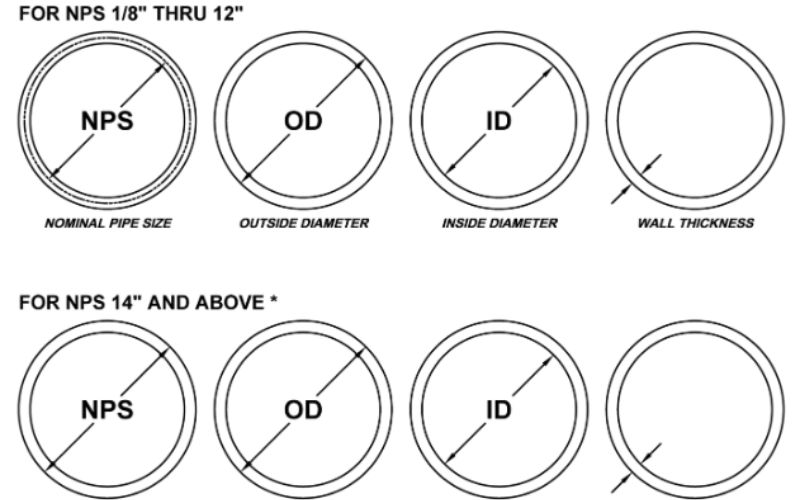
Worked pipe surface-area cost conversion (2): Assumed inputs: 12.0 m API 5L line pipe joint with 150 mm bare weld cutbacks at both ends (11.70 m net coated length). External area per meter equals π × OD, giving 0.688 m²/m on 8-inch NPS (219.1 mm OD, 0.688 m²/m) and 1.915 m²/m on 24-inch NPS (609.6 mm OD, 1.915 m²/m) API 5L line pipe. Multiplying by 11.70 m across mill-integrated ($3.80 to $5.00/m²) rates yields the joint add-ons below.
| Nominal Pipe Size (OD) | External Area / Meter | Coated Area / 12-m Joint | Rate at $3.80/m² (Low Band) | Rate at $5.00/m² (High Band) |
|---|---|---|---|---|
| 4-inch NPS (114.3 mm OD) | 0.359 m²/m | 4.20 m²/joint | $1.36/m · $15.96/joint | $1.80/m · $21.00/joint |
| 8-inch NPS (219.1 mm OD) | 0.688 m²/m | 8.05 m²/joint | $2.61/m · $30.59/joint | $3.44/m · $40.25/joint |
| 16-inch NPS (406.4 mm OD) | 1.277 m²/m | 14.94 m²/joint | $4.85/m · $56.77/joint | $6.39/m · $74.70/joint |
| 24-inch NPS (609.6 mm OD) | 1.915 m²/m | 22.41 m²/joint | $7.28/m · $85.16/joint | $9.58/m · $112.05/joint |
On these inputs, external FBE coating adds $30.59 to $40.25 per 8-inch joint and $85.16 to $112.05 per 24-inch joint. The $3.80 to $5.00/m² range covers the external mill coating step only; steel grade, DFT tier, powder brand, freight, and witness inspection scope are added on top of it in the delivered CIF pipe total.
Standards Scope, Qualified FBE Powders, and Coated Steel Pipe Procurement Checklist

Single-layer external FBE purchase orders must cite ISO 21809-2:2026, CSA Z245.20 SERIES:26, AMPP/NACE SP0394-2023, or AWWA C213-22. Every coated heat lot requires DSC ΔTg cure traces, 24-hour or 28-day cathodic disbondment ring records, and full-length electrical holiday logs. Purchase orders that do not specify the powder brand and lot traceability risk off-grade resin substitution.
Distributor catalogs often mistakenly paste ISO 21809-1 or DIN 30670 thickness tables (1.8 to 4.7 mm) onto single-layer FBE inquiries. Under standard paints and coating nomenclature, ISO 21809-1 and DIN 30670 cover extruded three-layer polyethylene (3LPE) and polypropylene (3LPP). Single-layer thermoset FBE powder coatings fall under ISO 21809-2:2026 (3rd edition, with Edition 4 ISO/AWI 21809-2 active). Laboratory standards from ASTM International (including epoxy-coated rebar and cathodic disbondment cell procedures) supplement pipeline specs from ISO, CSA, and the American Water Works Association.
| Standard / Powder Category | Correct Scope | Common Procurement Mistake to Block |
|---|---|---|
| ISO 21809-2:2026 / CSA Z245.20 / NACE SP0394-2023 | Plant-applied external single-layer & dual-layer FBE line pipe (300–1,000 μm) | Never substitute ISO 21809-1 or DIN 30670 (those specify 1.8–4.7 mm 3LPE/3LPP) |
| AWWA C213-22 & AWWA C550-24 | Potable/raw steel water pipe (C213) & ductile-iron/steel water valves (C550) | Require NSF/ANSI/CAN 61 certified epoxy powder for potable drinking water contact |
| ISO 21809-3 | Field girth-weld coatings (liquid epoxy, field FBE, heat-shrink sleeves) | Verify compatibility overlap shear strength with the plant FBE parent film |
| Qualified Raw FBE Powder Grades | 3M Scotchkote (206N, 226N+, 6233, 6352 ARO), Axalta Nap-Gard (7-2555 tested per CSA Z245.20-22), Sherwin-Williams Pipeclad (2060 MRO) | Audit cold-storage logs (≤25 °C and 50% RH, 9 months shelf life on Nap-Gard 7-2555) & 9 ± 2 s gel time |
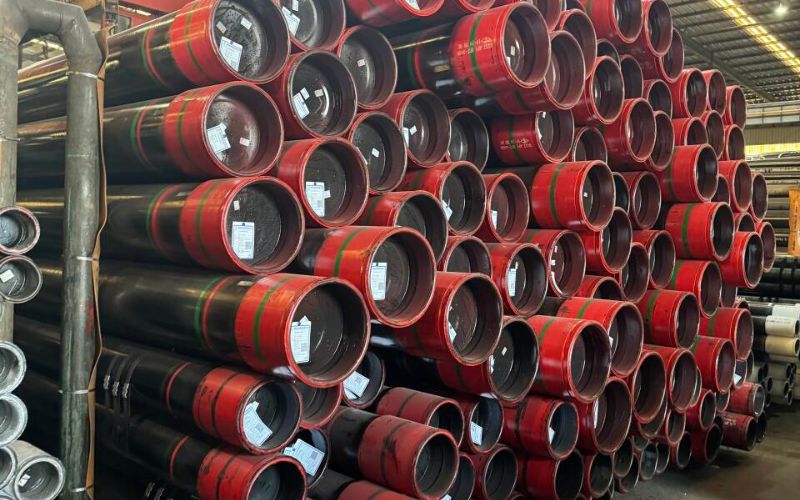
Raw powder makers test resin batches to standards such as CSA Z245.20-22 (published on Axalta Nap-Gard 7-2555 datasheets), whereas pipe mills qualify each production ring to the project’s ISO 21809-2:2026 or AWWA C213-22 ITP. Hunan Baling Steel Co., Ltd (Baling Steel) supplies external and internal FBE coated carbon steel pipes in 200, 250, 300, and 500 micron builds across DN 15 to DN 1200+. Available base pipe specifications include API 5L Grade B through X80, ASTM A53, A106, and A252. Published mill-integrated coating rates run $3.80 to $5.00/m² for FBE and do not cover the polyolefin systems in the ISO 21809-1 and DIN 30670 tables. Thermoset FBE powder is environmentally-safe with zero VOC solvent emissions when applied correctly. Buyers pair third-party coating and mill inspection services (SGS, BV, or TUV) with EN 10204 3.1 vs. 3.2 mill inspection certificates.
RFQ checklist — copy these into your quote request:
| Parameter | Recommended range | Why it matters | How to verify |
|---|---|---|---|
| Governing FBE Standard | ISO 21809-2:2026, CSA Z245.20 SERIES:26, or AWWA C213-22 | Blocks accidental 3LPE/DIN 30670 spec mix-ups | PO clause & approved ITP header |
| Powder Grade & Cured Tg | Dry Tg ~95–112 °C (standard) or 123–160 °C (novolac) | Absorbed water lowers Tg by 10–20 °C; hold wet operating temp to the vendor rating (generic margin: 15–25 °C below dry Tg) | Powder manufacturer CoA & lot number |
| Abrasive Blast & Salt Limit | ISO 8501-1 Sa 2.5; 50–100 μm profile; ≤20 mg/m² NaCl | Prevents osmotic under-film blistering in wet clay | Replica tape log & Bresle salt patch test |
| Target Dry Film Thickness | 350–500 μm single-layer; 635–1,000 μm ARO | Balances barrier life against cold-bend cracking | Calibrated magnetic gauge log per shift |
| DSC Cure Conversion (ΔTg) | ΔTg ≤3 to 5 °C between Tg3 and Tg2 scans | Confirms full cross-linking before water quench | Lab DSC thermogram per production shift |
| Cathodic Disbondment Radius | 24-hr (65 °C) & 28 days (95 °C, 3% NaCl, 3 mm holiday) | Proves corrosion resistance under active CP voltage | CSA Z245.20 / ISO 21809-2 ring test report |
| Cutback Length & Yard Packing | 150 ± 20 mm bare ends; bevel caps + UV tarp | Protects weld bevels and prevents crown UV chalking | Pre-shipment packing check & EN 10204 3.1/3.2 MTC |
Attach the mill’s pre-production qualification ring report (covering -30 °C bend straps and 28-day disbondment trays) to the purchase order before mass coating starts.
External FBE coating achieves 25 to 40+ years underground when paired with -850 mV CSE cathodic protection, wet operating temperatures within the powder maker’s continuous rating and below wet Tg, Dual-Layer ARO in rocky bores, and UV tarping before 9 months.
Specify Mill-Tested FBE Coated Line Pipe for Your Next Pipeline
Preparing a tender for buried API 5L transmission line pipe, AWWA C213 water mains, or dual-layer ARO river crossings? Share your pipe diameter, wall schedule, operating temperature, and governing standard with Baling Steel’s coating engineers for an ITP-backed quotation.
Frequently Asked Questions About FBE Coating Service Life
Q: How long does an epoxy bond last on steel vs. concrete floors?
Plant-applied FBE on buried steel pipe lasts 25 to 40+ years, far outlasting ambient-cured two-part liquid epoxy brushed or rolled onto concrete floors.
Concrete garage floor epoxies cure at room temp over porous slabs, exposed to tire shear, moisture vapor drive, and UV yellowing. Pipeline FBE provides irreversible covalent adhesion on Sa 2.5 grit-blasted steel at 180 to 250 °C alongside active cathodic protection.
Q: What are the temperature limits for FBE coatings in wet vs. dry service?
Standard and enhanced bisphenol-A FBE handle 65 to 95 °C in continuous wet soil, whereas Dualkote ARO and novolac grades reach 110 to 155 °C.
In the absence of liquid water, cured resins don’t plasticize. Hot, saturated clay depresses Tg and requires a 30-mil Dualkote build or high-Tg novolac powders.
Q: What surface preparation does the FBE coating process require before powder spray?
Steel pipe requires solvent degreasing and abrasive grit blasting to ISO 8501-1 Sa 2.5 (SSPC-SP 10) near-white metal cleanliness.
Under ISO 21809-2:2026 and CSA Z245.20, blasting cuts a 50 to 100 μm (2.0 to 4.0 mil) angular anchor profile, whereas AMPP/NACE SP0394-2023 permits 1.5 to 4.0 mils. During this application method, mills also wash soluble salts with phosphoric acid and deionized water before heating, then coat electrostatically so hardener components cure cleanly.
Q: How do you know if FBE epoxy powder is expired before coating application?
Expired FBE powder forms hard sintered lumps, misses gel-time windows, or fails DSC cure conversion.
Verify cold-storage logs below 25 °C at 50% RH (9 months shelf life on Nap-Gard 7-2555) and run a 205 °C gel-time test before spraying.
Q: Is fusion bonded epoxy application suitable for both new and existing pipelines?
FBE powder coating suits new pipeline construction, where it protects steel pipe and field girth welds. For existing pipelines, liquid coatings are better for OTD (over-the-ditch) rehabilitation.
It isn’t feasible to heat pipe to a temperature of 200 °C to line an extended length of trench. Operators rehabilitating buried pipelines apply FBE-compatible solvent-free plural-component liquid epoxies and polyurethanes over field-blasted steel.
Q: What should buyers check before selecting FBE coated steel pipe suppliers?
Verify if the supplier performs in-house wheel-blast and induction coating or subcontracts bare pipe to outside coaters, and examine pre-production qualification ring records first.
During shop audits, inspect climate-controlled powder rooms (≤25 °C), abrasive grit separators, acid-wash rinse conductivity meters, and optical pyrometers ahead of the spray booth. Check the virgin-to-recycled powder feed ratio where FBE powder is sprayed onto preheated steel. Witness bend-strap testing on your ordered wall thickness. Also verify nylon-sling container loading plans.
References & Sources
- ISO 21809-2:2026 & ISO/AWI 21809-2 External Single-Layer Fusion-Bonded Epoxy Coatings International Organization for Standardization (ISO)
- FBE: Stand-Alone, Dual-, and Multilayer External Pipeline Coatings Association for Materials Protection and Performance (AMPP)
- Docket HP14-002 Technical Exhibit on Fusion-Bonded Epoxy Pipeline Coating History South Dakota Public Utilities Commission
- Permeability of Fusion-Bonded Epoxy Coating to Cathodic Protection Current on Buried Steel Pipelines (2024) Materials Chemistry and Physics (ScienceDirect)
- US Patent Application Publication US20070293614A1: High-Tg Fusion Bonded Epoxy Powder Coating United States Patent and Trademark Office (USPTO)
- Stockpiled FBE-Coated Line Pipe Can Be Subject to UV Degradation (Alliance Pipeline Study) Oil & Gas Journal
- 49 CFR § 192.463 External Corrosion Control: Cathodic Protection U.S. Department of Transportation, Pipeline and Hazardous Materials Safety Administration (PHMSA)
- 49 CFR Part 192 Appendix D: Criteria for Cathodic Protection and Determination of Measurements U.S. Department of Transportation, PHMSA
- 49 CFR § 192.461 External Corrosion Control: Protective Coating & Post-Backfill Surveys U.S. Department of Transportation, PHMSA
- Internal FBE Pipe Linings: Corrosion Mechanisms and Design Limits Association for Materials Protection and Performance (AMPP)
About This Pipeline Coating Engineering Analysis
This guide benchmarks fusion bond epoxy coating service life, wet Tg cutoffs, and cathodic protection windows for API 5L and AWWA C213 pipe buyers. All thickness, holiday voltage, and $/m² joint conversions cross-reference ISO 21809-2:2026, 49 CFR Part 192, and mill inspection records. Reviewed by the Hunan Baling Steel Co., Ltd (Baling Steel) technical team.