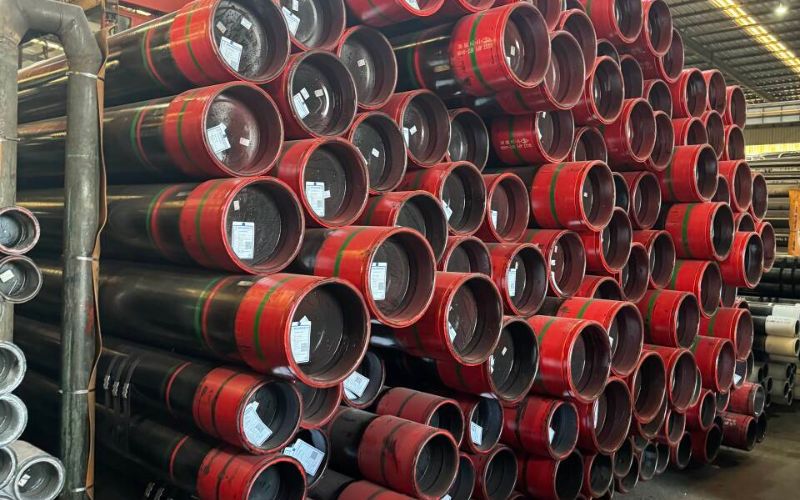
Purchasing the wrong stainless steel grade will ultimately cost you more than the material price-with downtime, labor to remove/replace components, and system failure that doesn’t issue prior warnings being key factors-particularly for engineers and procurement agents who rely on 316 stainless steel tubing. These questions typically arise when they are specifying 316 stainless steel tubing: How do I decide if standard 316 is OK versus 316L?
At what price point will the use of 304 become practical? and Which ASTM specification should I be ordering?
It steps through the choices and decisions – the choice of alloy chemistries, the grade choice, and to even the requirements of ASTM standards, the geometric parameters that need to be identified, to the industry sectors for which the price of 316 stainless steel tubing commands a price premium. In short, this is the tech guide for our 316 stainless steel welded pipe product line.
Quick Specs: 316 Stainless Steel Tubing (UNS S31600)
| UNS Designation | S31600 (316) / S31603 (316L) |
| Type | Austenitic stainless steel |
| Key Alloy Addition | Molybdenum 2–3% — distinguishes 316 from 304 |
| Primary Standard | ASTM A269 (general corrosion service) |
| Typical O.D. Range | 1/16″ (1.6 mm) to 4.00″ (101.6 mm) and larger |
| Typical Wall Thickness | 0.028″ (0.71 mm) to 0.500″ (12.7 mm) |
What Is 316 Stainless Steel Tubing? Composition and Material Properties
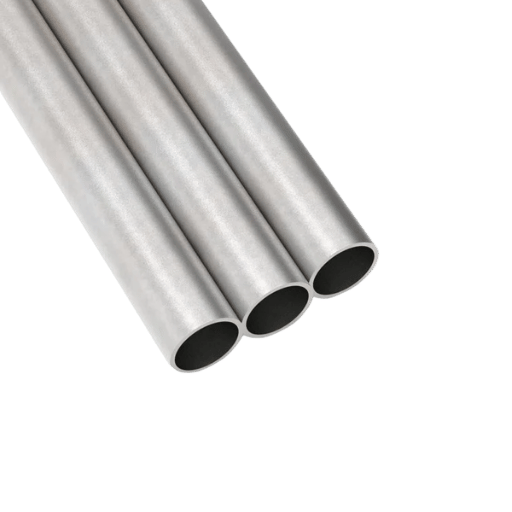
A chromium-nickel alloy tube, 316 stainless steel tubing belongs to the austenitic group of stainless steels, but its primary distinguishing characteristic from any other 300-grade stainless is its addition of 2-3% molybdenum. In addition, the molybdenum greatly increases the value of the Pitting Resistant Equivalent Number (PREN) in relation to grade 304, a fact that has led 316 to become a choice steel for virtually any atmosphere exposing a tube to the corrosive influences of salts, acids or many thermal cycles.
They fall into groups UNS S31600 (basic 316) and UNS S31603 (316L, low carbon) in North American standard identification system, referred to by AISI 316 in North American mill sheets. austenitic stainless steels aren’t magnetic (in solution annealed condition), can readily be formed and normally don’t need post-weld annealing where ambient temperature services and don’t generally need the post-weld annealing requirements as ferritic and martensitic grades, enabling easier fabrication.
You wanna look our article comparing tube & pipe specification in details. Refer to our quick look on pipe vs tube: key differences.
Chemical Composition and Mechanical Properties
| Property | 316 (UNS S31600) | Note |
|---|---|---|
| Chromium (Cr) | 16.0–18.0% | Forms passive oxide film; minimum 16% required |
| Nickel (Ni) | 10.0–14.0% | Stabilizes austenitic structure; higher than 304 |
| Molybdenum (Mo) | 2.00–3.00% | Key differentiator vs. 304; resists chloride pitting |
| Carbon (C) | ≤0.080% | 316L: ≤0.030% (low carbon) |
| Manganese (Mn) | ≤2.00% | — |
| Tensile Strength | 75 ksi (515 MPa) min | ASTM A269 minimum; annealed |
| Yield Strength (0.2% OS) | 30 ksi (205 MPa) min | 316L: 25 ksi (170 MPa) min |
| Elongation | 35% min | Good formability for bending and flaring |
| Density | 7.99 g/cm³ | Thermal conductivity 16.3 W/m·K |
The chromium nickel matrix itself is basic 304 grade level corrosion resistance and the molybdenum element is only added to increase resistance to the pitting and crevice corrosion which occurs in service with a halide environment that’s more typically the way in which tubing of 316 SS grade will be tested for failure in the marine, chemical and pharmaceutical services. The alloy property of this selection isn’t strength, it’s corrosion resistance in a chloride-laden corrosive environment.
316 vs 316L Stainless Steel Tubing: When the “L” Grade Actually Matters
The main distinction between 316 and 316L stainless steel tube is carbon content. “Normal 316 has a maximum carbon content of 0.080%; 316L is limited to a maximum of 0.030%.” For applications at room temperature and “non-welding” conditions corrosion resistance is practically identical between them, as they share the same chromium, nickel, and molybdenum ranges, and deliver equivalent pitting performance. Where the difference matter is during welding and at high temperature service.
What about stainless steel 316 versus 316L on welds? In a process known as sensitization, carbon within austenitic stainless steels forms chromium carbides along the grain boundaries, and precipitation occurs at temperatures between 800 F and 1,500 F (427-816 C). The area in these sensitized zones-where chromium is reduced-becomes active for intergranular corrosion since the passive film on the boundary is destroyed. Any heat produced from a weld pass will carry the metal through this temperature zone, and due to the 316’s greater carbide-forming capabilities as a result of its higher carbon content, a HAZ in 316 material is more likely to be sensitized than that in 316L.
| Property | 316 (S31600) | 316L (S31603) |
|---|---|---|
| Carbon content | ≤0.080% | ≤0.030% |
| Sensitization risk in HAZ | Higher | Significantly reduced |
| Yield strength (annealed) | 30 ksi (205 MPa) min | 25 ksi (170 MPa) min |
| Post-weld annealing | Often recommended in aggressive service | Not required for most applications |
| Price vs standard 316 | Baseline | ~3–8% higher |
| Typical application | Non-welded, ambient-temperature corrosion service | Welded assemblies, high-purity, food & beverage |
Is 316 or 316L Stainless Steel Tubing Better for Welding?
Where corrosion is a factor Chemical Process (CP), pharmaceutical skids, and sanitary food and beverage systems The standard recommendation for all CP, pharma and F&B skids, or any other welded assembly expected to see an exposure environment in the form of water, wet process streams or even regular washdown is 316. This is because the lower carbon limit on 316 (0.08max for 316, 0.03max for 316L) prevents the formation of chromium-carbides at grain boundaries when the material is heated to welding temperatures.
Non welded tube runs at or below ambient temp There’s very little chance that the tube will be exposed to any chlorides or anything else corrosive. The higher yield strength of 316 provides a benefit here so it’s preferred though 304 could certainly work as a “budget version”. The tubing mill material specs are a little bit of a confusing area in my experience, dual-certified 316/316L is very common, as if they’re meeting both the carbon limit of 316 and 316L. If you know the tube won’t be welded, and won’t be exposed to chlorides, go 304 with no fear.
316 vs 304 Stainless Steel Tubing: Which Grade Do You Actually Need?
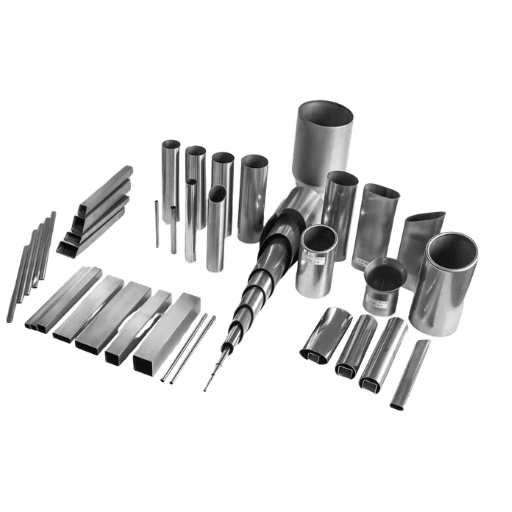
This is an argument we’ve in almost every stainless steel component specification, the selection of 316 or 304. both are austenitic stainless steels, both are weldable, and both have good corrosion resistance in most non chloride environments. This is the one environmental factor that creates an “either/or” decision, both being relatively close to each other.
When Does 316 Stainless Steel Outperform 304?
When it comes down to it, when there’s a possibility of exposure to chlorides, you need 316 stainless steel. according to the Australian Stainless Steel Development Association (ASSDA) technical guide lines, 304/304L is suitable in neutral conditions for up to about 200 ppm chloride, and 316/316L is suitable up to nearly 1000 ppm chloride before corrosion becomes a factor. Above 1000 ppm, one starts looking at duplex alloys.
It’s a situation where we routinely see, in service exposure, exceed 200 ppm; whether in the marine environment, offshore platforms, brackish water, and especially in various chemical process streams. This is why 316 is the alloy selection for these environments rather than a simple preference. We don’t merely recommend 316 and simply say “316 is better”, because of the failure mechanism — which is called pitting — and how pitting is a phenomenon of chloride exposure and temperature — and there’s simply more molybdenum to keep the critical pitting temperature significantly higher on 316 than 304.
| Property | 304 Stainless Steel | 316 Stainless Steel |
|---|---|---|
| Chromium | ~18% | 16–18% |
| Nickel | ~8% | 10–14% |
| Molybdenum | None | 2–3% |
| Chloride tolerance (neutral, ambient) | ~200 ppm max | ~1,000 ppm max |
| Pitting resistance | Moderate | High (molybdenum contribution) |
| Typical price premium | Baseline | 10–30% higher |
| Best service environment | Indoor, low-chloride, dry, general fabrication | Marine, chemical, coastal, pharmaceutical |
The 316 vs 304 tubing selection guide for selecting when that bit of added expense for Moly is justified.
Specify 316 stainless steel tubing when:
- Chloride-rich process streams or direct-line wash down exposures or outdoor marine environment.
- The assembly will be welded and will likely be exposed to some kind of corrosive medium post welding (e.g., chemicals, hot water). Use 316L for better weld zone performance without the need for post-weld heat treatment.
- The application involve pharmaceutical, medical, or high-purity process contact
- Process streams involving hot, concentrated acids, halide exposure (especially from sea salt air) or hot/cold wet-dry cycles.
- Corrosion failure would create safety or regulatory compliance consequences
304 is the appropriate grade when:
- An indoor environment with humidity control and minimal/no likelihood of exposure to chlorides.
- General atmospheric corrosion protection is adequate; there are no chlorides and thus no risk of pitting.
- Cost is a critical factor and budget constraints dictate no allowance for the Moly premium found in 316 grades.
For more detail on 304 alloy chemistry, see 304 stainless steel properties. For an explanation of why 316 stainless doesn’t rust the way carbon steel does, but can still corrode under specific conditions, see does stainless steel rust.
Seamless vs Welded 316 Stainless Steel Tubing: Manufacturing Methods Compared
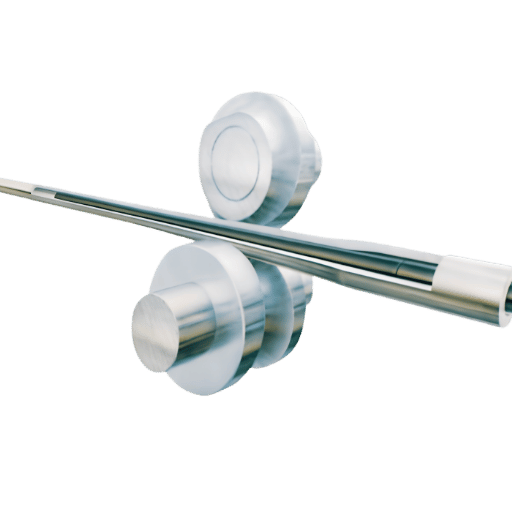
316 SS tubing is manufactured in two main types: seamless tubing and welded tubing. Both types meet the same material composition standards and mechanical properties specified by the ASTM A269, although the internal structural integrity of each type is different, which is important in pressure-sensitive applications and in highly pure product pathways.
Seamless pipe is made by boring out a solid billet. There’s no longitudinal weld in the product, resulting in a uniform cross-section that’s entirely homogeneous. No “weld zone” or inconsistencies exist in the material. Seamless is the specification of choice for hydraulic lines, subsea tubing, and instrumentation, where constant cycling against pressure and/or the critical need for fluid purity preclude the possibility of a weld.
Welded tube is produced from strip or sheet, which is shaped into a cylinder and joined along its longitudinal edge by either TIG or electric resistance welding and subsequently fully annealed. 316 stainless steel welded tube to ASTM A269 is supplied as standard with hydrostatic or NDE (Non-Destructive Examination) testing. Economical for most applications including general service corrosion, food-grade products, and process piping, when properly heat-treated, a weld seam in 316 SS tube has little detrimental impact on corrosion performance unless the process involves high-cycle pressure operation.
| Factor | Seamless | Welded |
|---|---|---|
| Weld seam | None | Present (annealed and tested) |
| Pressure service | Preferred for high-pressure hydraulic/instrument duty | General corrosion and process service |
| Relative cost | Higher (billet starting material) | 15–25% lower |
| Available O.D. range | 1/16″ to ~2-3/4″ (standard sizes) | 1/16″ to 12″ and larger |
| ASTM standard (316 grade) | A213 (boiler/HX) or A269 (general) | A249 (boiler/HX) or A269 (general) |
| Typical application | Instrumentation, hydraulic lines, heat exchanger, aerospace | Chemical processing, food service, large-bore process piping |
Balingsteel supplies both types. For large-diameter 316 welded product in pressure and process applications, see the 316 stainless steel welded pipe product page and the ultimate guide to stainless steel welded pipe. For seamless product lines, see seamless stainless steel pipe.
ASTM Standards for 316 Stainless Steel Tubing: A269, A213, A249 and A312
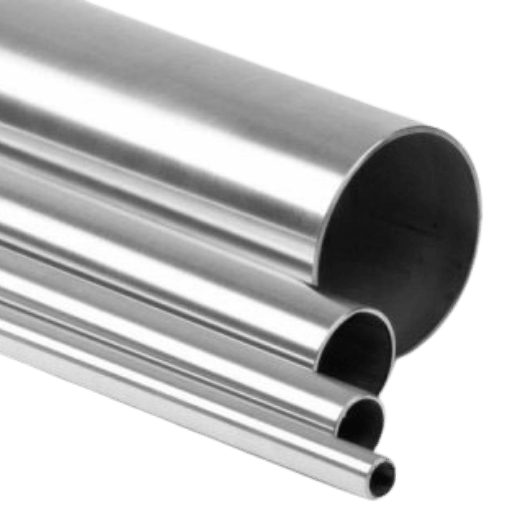
When procuring 316 and 316L tubing, the specified ASTM standard on a purchase order is not an idle formality – it outlines the scope of testing and quality control that the pipe mill must meet. Most 316 SS tubing purchased for various applications falls into four ASTM standards:
| Standard | Scope | Mfg. Type | Grade Designation |
|---|---|---|---|
| ASTM A269 | General corrosion service — most commonly specified | Seamless & welded | TP316, TP316L |
| ASTM A213 | Boiler, superheater, and heat exchanger service | Seamless only | TP316, TP316L, TP316H |
| ASTM A249 | Boiler, superheater, and heat exchanger service | Welded only | TP316, TP316L |
| ASTM A312 | Pipe (NPS ordering), not tube — high-temp general service | Seamless & welded | TP316, TP316L |
The ASTM A269 is appropriate for most orders of general 316 and 316L stainless tubing for applications such as process piping, instrumentation runs, food service applications and in marine environments. Where the tube will be used for boiler tubes, heat exchangers, or in superheater service, ASTM A213 (Seamless Tubes For Use In High Pressure Service) may be specified. A213 contains more strict requirements regarding high temperature properties and NDE testing. Note: ordering A312 applies only when ordering pipe and when specifying in NPS and schedules.
What Does ASTM A269 Mean on a 316 Stainless Steel Tubing Certificate?
The details on an ASTM A269 TP316 Mill Test Certificate (MTC) typically should include the following information for traceability and verification:
- Heat Number — the unique designation of the melt of the metal, tied to all material mill certifications for traceability to origin.
- Chemical Analysis — usually listed as percentage. Verify Cr(min 16% to 18%), Ni (min 10% to 14%), and Mo (min 2% to 3%), and minimum/maximum Carbon.
- Mechanical Testing — the results of the Tensile and Yield Strength testing. These values are always stated as minimum.
- Hydrostatic or nondestructive test confirmationrequired under A269
- Grade — TP316 or TP316L will be clearly marked, often as an abbreviation of the standard, e.g., “A269-TP316”, versus simply “316 SS”.
316 Stainless Steel Tubing Specifications: O.D., Wall Thickness and Available Product Forms
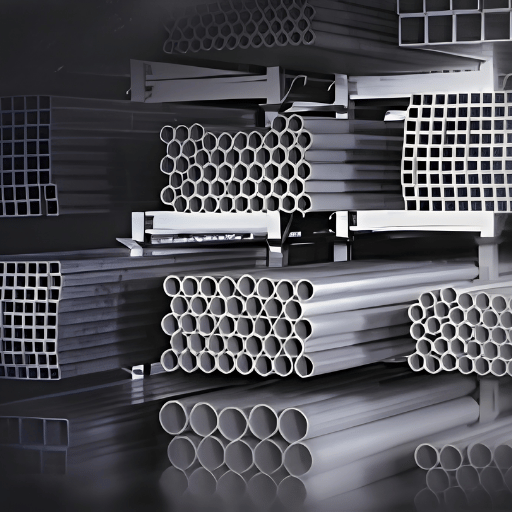
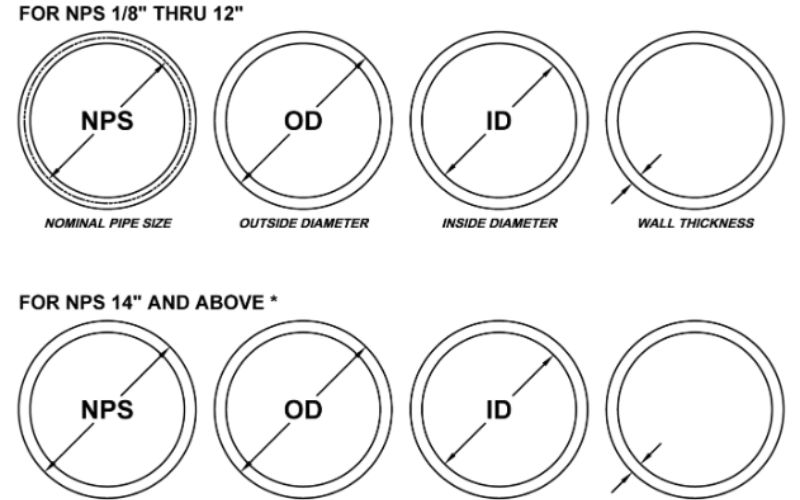
316 SS tubing is ordered by outside diameter (O.D.) and wall thickness, not by nominal pipe size (NPS) and Schedule as is standard practice for pipe. O.D. and wall thickness must appear on every purchase order for tubing — simply ordering “1-inch 316 stainless tube” is insufficient information for the supplier. Inside diameter (I.D.) is derived as: O.D. − (2 × wall thickness).
| Product Form | Typical O.D. Range | Common Wall Thickness | Note |
|---|---|---|---|
| Round — general service | 1/16″–4.00″ | 0.028″–0.500″ | Most common form; ASTM A269 |
| Round — instrumentation | 1/8″–1″ | 0.028″, 0.035″, 0.049″, 0.065″ | Compression fitting service; close wall tolerance |
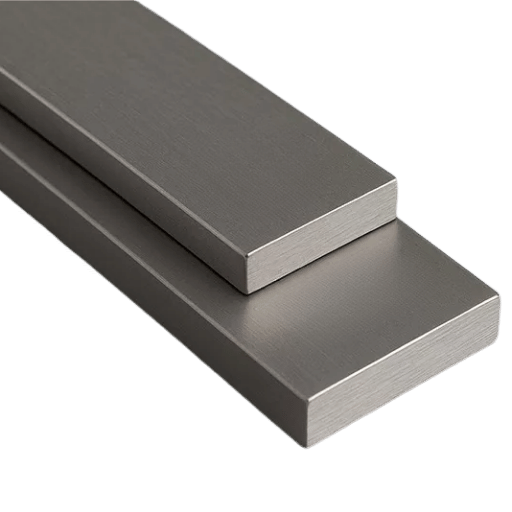
| Square | 1/4″–4″ (side) | 0.049″–0.250″ | Structural; ornamental tubing; architectural |
| Rectangular | Custom dimensions | 0.049″–0.250″ | Frame structures, handrails, cryogenic supports |
| Large O.D. (pipe-range) | 4″–12″ and larger | SCH 10S–SCH 80S | Often ordered as 316 stainless pipe |
Mill lengths are most commonly 20 ft. (6.1 m) random-cut on 316 SS, round products. Custom cut-to-length may be provided at service centers, with additional costs for longer pieces on a per order basis. Analytical service or instrument tubing, however, most commonly require extremely stringent tolerances, which on a 0.500 in.
O.D. product will be under ASTM A269 requirements: – 0.005 in. O.D. and – 10% wall.
Surface finish domestic bright-annealed (BA) tubing provides the cleanest I.D. for high-purity service. Imported 316 ss tubing is conventionally solution annealed with #320-grit O.D. finish. On mill order, special finishes, including #4, #8 (mirror), electropolished I.D., may be ordered. Balingsteel also supplies 316 in flat-rolled form; see stainless steel sheet and stainless steel coil.
Key Industry Applications of 316 Stainless Steel Tubing
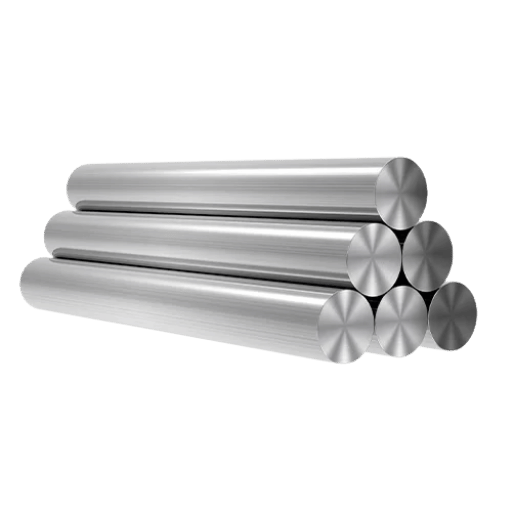
You might be able to pick out the unifying characteristics of these specific industries for specifying 316 SS tubing: chlorides, aggressive chemicals, high temps, or strict regulatory compliance related to pure, cleanable conditions. Here’s a breakdown of those most important applications, including the critical reason they choose 316 tubing versus lower alloy options:
| Industry | Typical Application | Why 316 SS Tubing |
|---|---|---|
| Chemical Processing | Process piping, heat exchangers, reactor lines | Chloride-rich and acidic corrosive environments require molybdenum content |
| Marine & Offshore | Hydraulic lines, umbilicals, seawater cooling, deck hardware | Marine applications demand chloride resistance; 304 pits in salt air |
| Pharmaceutical & Biotech | High-purity process tubing, CIP/SIP lines | FDA compliance; cleanability; 316L resists CIP chemical cycling |
| Food & Beverage | Sanitary process lines, dairy transfer, beverage piping | USDA/NSF compliance; no flavor migration; ASTM A270 sanitary tube |
| Oil and Gas | Control line tubing, instrumentation, subsea umbilicals | Sour gas (H₂S) and chloride environments in subsea and topside service |
| Aerospace | Hydraulic tubing, fuel lines, oxygen system tubing | High strength-to-weight; non-magnetic; temperature durability |
| Power Generation | Heat exchanger tube bundles, condenser tubes | ASTM A213 TP316 for boiler/HX; corrosive water-side conditions |
| Instrumentation & Analytical | HPLC tubing, hydraulic control lines, sample loops | Smooth bore; rated for cryogenic to elevated temperature service ranges |
316 Stainless Steel Tubing in 2025–2026: Market Trends and Procurement Outlook
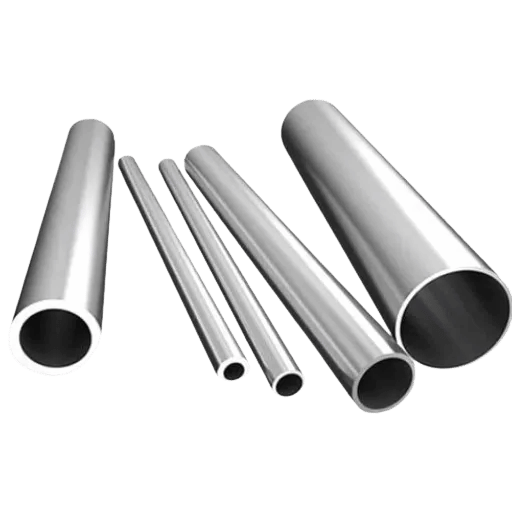
In 2025 global stainless steel price drivers come down to the two most influencing raw materials influencing price levels for 316 product grades; nickel and molybdenum. From the FastMarkets 2025 market outlook we predict nickel to be in a trading range through 2025 as a function of Indonesian mining quota decisions, and substitution from ev battery production demand. Chromium has come down from prices seen in previous months, but has an element of uncertainty around supply from South Africa to remain an open question.
The molybdenum added for the 316 grade also represents a second price variable that isn’t present with 304. If molybdenum spot prices surge (often due to strong demand in sectors like defense, energy and specialty steels), the standard 10-30% price premium of 316 over 304 could drift towards the high end of the spread. Purchasers who secured their pricing during molybdenum’s low levels in 2023 and into 2024 found they could buy at a substantial discount to the spot price.
In global stainless steel seamless pipes market is set to grow from USD 3.37 billion in 2024 to USD 5.15 billion by 2030 at a CAGR of 5.8%, supported by the demand coming from oil and gas industry, chemical processing industry, desalination – top end markets for stainless steel tube grade 316. In the short-to-medium term, with range-bound price trend recorded in Q1 2026 according to the price index from Procurement Resource, the China Stainless steel output adjustment has produced limited time arbitrage opportunity for import grade stainless steel tubing 316.
• Lock in pricing on large 316 SS orders when nickel is in the lower portion of the $15K–$17K/tonne range
• Consider dual-certified 316/316L tubing to preserve welding option value without carrying two separate inventory grades
• Request mill origin documentation — domestic bright-annealed vs. import solution-annealed finishing affects dimensional tolerance and surface specification
Frequently Asked Questions: 316 Stainless Steel Tubing
Is there a difference between stainless steel 316 tube and stainless steel 316L tube?
What separates the grades? The answer is carbon. The C limit for grade 316 is 0.080%. The limit for 316L is 0.030%. In general applications where neither the welded joint nor raised temperatures are factors, grades 316 and 316L are equally corrosion resistant. Where it becomes critical is in welded applications where an aggressively corroding medium is present; a lower carbon content in 316L will limit the sensitization (which will cause the formation of carbide precipitates at grain boundaries) that takes place in the weld heat-affected zone of a standard 316 part. You’ll probably only find 316L tubing available (which meets both specifications simultaneously in terms of C limit), not separately designated grade 316 tubing.
Is 316 stainless steel tubing food-grade and FDA-compliant?
316L, as approved Food Contact Standard, both by FDA & USDA as well as 3-A Sanitary Standards, for food & beverage process tube. The low carbon in 316L limits iron contamination during recurring CIP (clean-in-place) chemical cleaning, while the inner surface can be polished to meet your needs (e.g. 32 Ra inside or better). ASTM A270 also specifies sanitary tubing.
If I write a purchase order for 316 stainless steel tube which ASTM standard should I be specifying?
• GENERAL CORROSION SERVICE (Marine, Food, Industrial, chemical): ASTM A269 TP316 or TP316L.
• BOILER OR HEAT EXCHANGER SERVICE, SEAMLESS: ASTM A213 TP316.
• BOILER OR HEAT EXCHANGER SERVICE, WELDED: ASTM A249 TP316. NOTE: ASTM A312 standardizes dimension by NPS rather than by OD as with tube, verify what dimensioning system applies to the pipe you have chosen before placing the order.
Can 316 stainless steel tubing be welded ? Requires subsequent treatment after welding?
Yes. The 316 and 316L grade are weldable by TIG, MIG or plasma arc processes without difficulty. A post-weld solution annealing treatment is usually not necessary for 316L for the conditions under which it will be service used. In the more severe environments, a solution annealing at temperatures above 1,065C (1,950F) followed by quick quenching will resolve HAZ corrosion resistance. The use of 316L welding wire, ER316L, will be necessary to prevent carbon being introduced into the weld pool.
What’s good for 316 stainless steel in marine environment and in seawater?
316 is vastly superior to 304 in marine service. According to ASSDA technical guidance, 316/316L can withstand up to approximately 1000ppm chloride in a neutral aqueous environment, while 304 can tolerate about 200ppm. Seawater contains between 19000 and 35000 ppm chloride which is far more than either grade and so full seawater immersion service requires a duplex or even super-duplex grade. Nonetheless, 316 is suitable in a marine atmospheric environment (coastal air, salt spray, splash zones) whereas 304 will be attacked by pitting and form holes in a relatively short period of time.
The maximum service temperature of 316 stainless steel tube is
SS 316 exhibits good oxidation resistance to temperatures in the vicinity of 870 °C ( 1600 °F) at intervals and 925 °C ( 1700 °F) continuously. Under continuous conditions it has been demonstrated that the application limitations are reduced in terms of wet corrosion due to sensitisition of a conventional 316 at temperatures between 427 and 816 °C (800 °F and 1500 °F) as evidenced by the selection of 316L in such applications. SS 316 remains tough at low temperatures down to that of liquid nitrogen ( 196 °C / 321 °F ) and may be used in liquid or vapour transfer lines and in the instrumentation associated with such systems.
Where Do I check on the Quality on the 316 stainless steel tubing Mill Test certificate (MTC)?
Look For In The ASTM A269 TP316 MTC; (1) heat/lot number correlates to what is marked on the metal, (2) the chemistry looks good (Cr 16-18, Ni 10-14, Mo 2-3, C within range specified by grade), (3) mechanical testing passes for this grade (tensile = 75 ksi, yield = 30 ksi, El = 35%min) and (4) NDE or Hydro testing was passed and it is clearly called TP316 or TP316L. Beware of certificates with no heat #, elements just on the edge of specification or the ubiquitous certificates that make reference to no specific ASTM standards.
Related Resources from Balingsteel