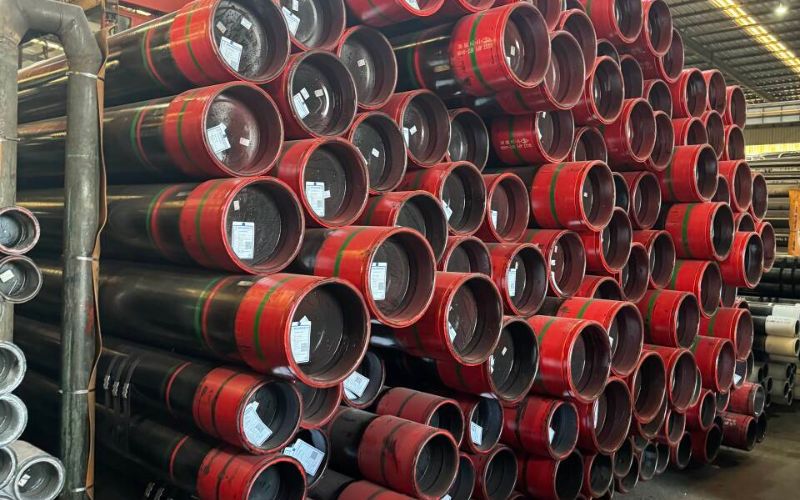
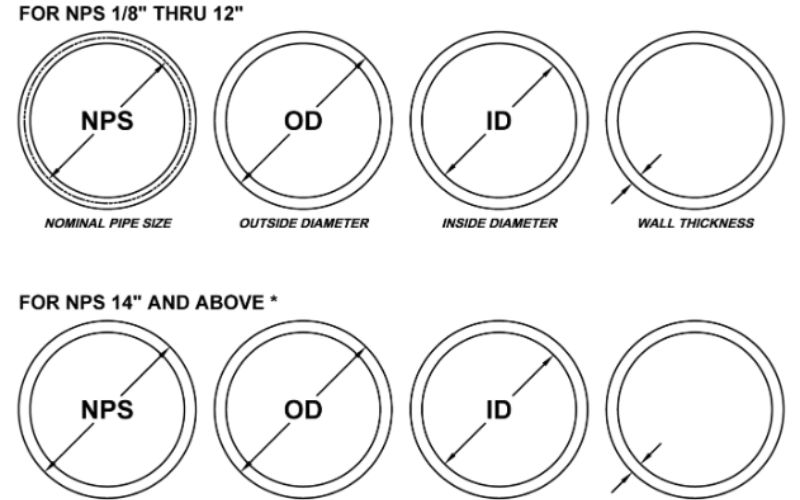
Quick Specs: Stainless Steel Sch 10 Pipe
| Wall Designation | Schedule 10 / 10S (ASME B36.19M) |
| Common Grades | 304/304L, 316/316L austenitic stainless steel |
| Primary Standard | ASTM A312/A312M-22 |
| OD Range | 0.840″–30.000″ (NPS 1/2″–30″) |
| Wall Thickness Range | 0.083″–0.312″ (size-dependent) |
| Typical Applications | Food/beverage, chemical processing, pharmaceutical, water treatment |
| Manufacturing | Welded (ERW/TIG) or Seamless |
Stainless steel sch 10 pipe is the thinnest standard wall designation for austenitic stainless piping under ASME B36.19M. Engineers and procurement teams choose schedule 10 when the system pressure falls well below the pipe’s rated capacity and the priority shifts to reducing material cost, installed weight, and welding labor. This guide covers every specification you need to write a purchase order or validate a piping design: e×act dimensions by NPS size, verified weight-per-foot data, ASME B31.3 pressure calculations, grade selection between 304 and 316, and joining methods for thin-wall stainless pipe.
In This Guide
What Is Schedule 10 Stainless Steel Pipe?
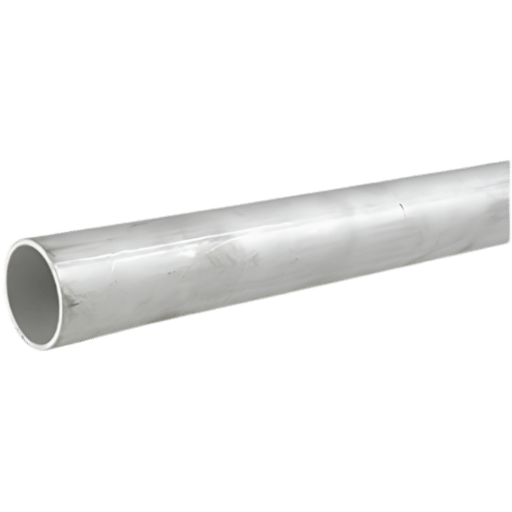
Schedule 10 stainless steel pipe is a thin-wall pipe classification defined by ASME B36.19M. The schedule number originated from a formula relating internal pressure to allowable stress: Schedule = 1,000 × P / S, where P is the internal working pressure in psi and S is the allowable stress of the material. A lower schedule number means a thinner wall relative to the pipe’s outside diameter.
Stainless steel has the same NPS pipe size as carbon steel outside diameter. The schedule pressure is also the same but there is a different code governing the steel thickness B36.19M. This the same 2″ NPS schedule 10 stainless pipe has the same 2.375″ outside diameter as a 2″ carbon pipe but is governed by a different table.
In the real world, schedule 10 is the thinnest wall commonly available in regular production for most NPS sizes. It is the preferred wall selection for low pressure stainless piping systems where the corrosion resistance of the material is more important than the mechanical performance of the wall. Typical areas of use are food-, drug- and water-plant facilities-anywhere that the pipe contains clean fluids at pressures significantly below the pipe’s burst pressure.
💡 Sch 10 vs Sch 10S — What’s the Difference? The “S” suffi× in schedule 10S indicates the dimension is taken from ASME B36.19M (the stainless steel pipe table), while schedule 10 without the suffi× follows B36.10M (the carbon steel table). For NPS 1/8″ through 12″, the wall thickness values for Sch 10 and Sch 10S are identical. They diverge above 12″ NPS. When specifying stainless pipe, always reference “Sch 10S per ASME B36.19M” to avoid ambiguity.
A link within to our entire range of stainless steel welded pipe which offers all of the schedules e.g. 10S, 40 S and 80 S.
Schedule 10 Stainless Steel Pipe Dimensions & Sizes Chart
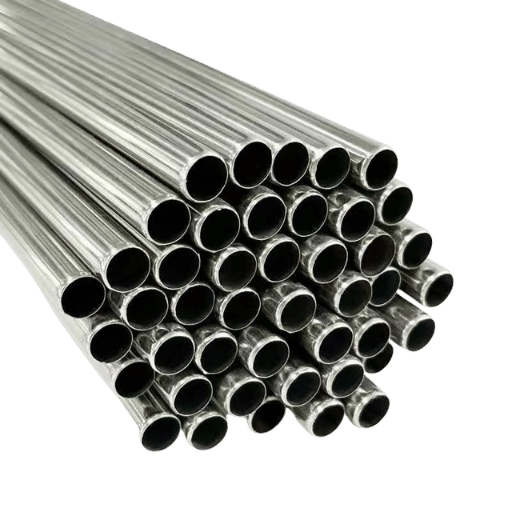
The dimension table below lists every standard NPS size for schedule 10S stainless steel pipe per ASME B36.19M. All outside diameter and wall thickness values have been cross-validated against two independent sources.
| NPS | OD (in) | OD (mm) | Wall (in) | Wall (mm) | Weight (lb/ft) | Weight (kg/m) |
|---|---|---|---|---|---|---|
| 1/2″ | 0.840 | 21.3 | 0.083 | 2.11 | 0.68 | 1.00 |
| 3/4″ | 1.050 | 26.7 | 0.083 | 2.11 | 0.87 | 1.29 |
| 1″ | 1.315 | 33.4 | 0.109 | 2.77 | 1.41 | 2.11 |
| 1-1/4″ | 1.660 | 42.2 | 0.109 | 2.77 | 1.82 | 2.71 |
| 1-1/2″ | 1.900 | 48.3 | 0.109 | 2.77 | 2.10 | 3.13 |
| 2″ | 2.375 | 60.3 | 0.109 | 2.77 | 2.66 | 3.96 |
| 2-1/2″ | 2.875 | 73.0 | 0.120 | 3.05 | 3.56 | 5.29 |
| 3″ | 3.500 | 88.9 | 0.120 | 3.05 | 4.37 | 6.50 |
| 4″ | 4.500 | 114.3 | 0.120 | 3.05 | 5.66 | 8.42 |
| 5″ | 5.563 | 141.3 | 0.134 | 3.40 | 7.82 | 11.64 |
| 6″ | 6.625 | 168.3 | 0.134 | 3.40 | 9.35 | 13.91 |
| 8″ | 8.625 | 219.1 | 0.148 | 3.76 | 13.50 | 20.10 |
| 10″ | 10.750 | 273.1 | 0.165 | 4.19 | 18.79 | 27.96 |
| 12″ | 12.750 | 323.9 | 0.180 | 4.57 | 24.34 | 36.22 |
| 14″ | 14.000 | 355.6 | 0.188 | 4.78 | 27.97 | 41.62 |
| 16″ | 16.000 | 406.4 | 0.188 | 4.78 | 32.02 | 47.65 |
| 18″ | 18.000 | 457.0 | 0.188 | 4.78 | 36.05 | 53.65 |
| 20″ | 20.000 | 508.0 | 0.218 | 5.54 | 46.42 | 69.09 |
| 24″ | 24.000 | 610.0 | 0.250 | 6.35 | 63.93 | 95.13 |
| 30″ | 30.000 | 762.0 | 0.312 | 7.92 | 99.60 | 148.22 |
Source: ASME B36.19M. All dimensions by pipe. ASTM A312/A312M-22 limits the dimensions of the pipe.
OD (outside diameter) are the nominal outside diameter (nominal NPS designation).
Please realize that from NPS 1/2″ through 1-1/2″, schedule 10S has only two wall thicknesses; the 0.083″ and 0.109″. After 2-1/2″ (0.120″), the wall starts fining up and continues to do so until the large-bore NPS sizes (16 and 18″) have the same 0.188″ thickness. This is useful information when analyzing the required pipe support spans for large bore piping.
Steel pipe sizes. For a complete guide across all pipe schedules and sizes look at our steel pipe sizes chart.
Schedule 10 Stainless Steel Pipe Weight per Foot
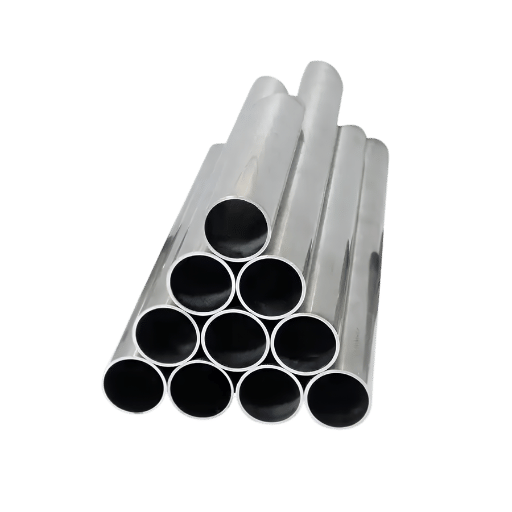
How Much Does Schedule 10 Stainless Steel Pipe Weigh?
Weight per linear foot is important for shipping loads, support members, and rigging calculations. The weights, below, are taken from the above dimension table and confirmed using published tables in ASME B36.19M.
| NPS | Wall (in) | lb/ft | kg/m |
|---|---|---|---|
| 1″ | 0.109 | 1.41 | 2.11 |
| 2″ | 0.109 | 2.66 | 3.96 |
| 3″ | 0.120 | 4.37 | 6.50 |
| 4″ | 0.120 | 5.66 | 8.42 |
| 6″ | 0.134 | 9.35 | 13.91 |
| 8″ | 0.148 | 13.50 | 20.10 |
| 10″ | 0.165 | 18.79 | 27.96 |
| 12″ | 0.180 | 24.34 | 36.22 |
| 16″ | 0.188 | 32.02 | 47.65 |
In the case of long weight data for multiple schedules, our pipe weight per foot table covers the full range of data.
📐 Engineering Note: Weight Calculation Formula
W (lb/ft) = 10.6906 t (D t)
Where D = outer diameter (in), and t = wall thickness (in).
Worked example for 4″ NPS Sch 10S: W = 10.6906 × 0.120 × (4.500 − 0.120) = 10.6906 × 0.120 × 4.380 = 5.62 lb/ft. The published value is 5.66 lb/ft—the 0.7% variance comes from rounding in the nominal wall thickness. This formula works for any schedule and any pipe material.
That actual weight difference is more likely to be an issue for even scheduled pipe, such as 40. For instance, a 200′ length of 4″ Sch 10S has an actual weight of 1,132 lb while the same length of 4″ Sch 40S weights 1,824 lb. As can be seen that’s 692 lb difference that will have a direct impact for the number of pipe hangers needed, the steel tube sizing for the pipe support frames and loads for the crane rigging.
Pressure Ratings for Schedule 10 Stainless Steel Pipe
The most frequently asked question regarding scheduling of 10 STAINLESS pipe is “Can schedule 10 stainless pipe handle this system? “The thin wall of schedule 10 stainless pipe calls into question its pressure handling capacity for any system. The answer to this question hinges on several factors including pipe size, operating temperature, welded versus non-welded construction, and the piping code used.
📐 Engineering Note: ASME B31.3 Pressure Design Formula
P = 2 × S × E × t / (D − 2 × Y × t)
Where: S = allowable stress (304 SS: 20,000 psi at 100°F per ASME B31.3 Table A-1), E = weld joint efficiency (0.85 for welded pipe, 1.0 for seamless), t = wall thickness, D = outside diameter, Y = 0.4 for austenitic stainless below 900°F.
Worked example for 2″ Sch 10S welded pipe at 100°F:
P = 2 × 20,000 × 0.85 × 0.109 / (2.375 − 2 × 0.4 × 0.109) = 3,706 / 2.288 = 1,620 psi. That is the maximum allowable working pressure at ambient temperature for 2″ Sch 10S 304 welded pipe under ASME B31.3 conditions.
The table below shows calculated burst pressure (Barlow’s formula, S = 70,000 psi UTS for 304 stainless) and the corresponding conservative working pressure using a 4:1 safety factor with 0.70 joint efficiency:
| NPS | Sch 10S Burst (psi) | Working Pressure (psi) | Sch 40S Burst (psi) |
|---|---|---|---|
| 1/2″ | 17,215 | 3,013 | 22,607 |
| 1″ | 11,005 | 1,926 | 14,160 |
| 2″ | 6,425 | 1,124 | 9,078 |
| 4″ | 3,733 | 653 | 7,373 |
| 6″ | 2,832 | 496 | 5,917 |
| 8″ | 2,402 | 420 | 5,227 |
| 10″ | 2,149 | 376 | 4,753 |
| 12″ | 1,976 | 346 | 4,458 |
⚠️ Pressure Is Not the Only Design Criterion — A mechanical engineer on Eng-Tips cautions: “Although it may easily withstand internal pressure, you may come across serious problems when you do a fle×ibility analysis. If it ever needs to withstand vacuum, it is fairly useless.” Schedule 10 pipe can buckle under e×ternal pressure or vacuum conditions, and its low stiffness creates larger thermal expansion deflections that complicate flexibility analysis. Always run a stress analysis for elevated-temperature piping systems, not just a pressure check.
Real-world scenario: A dairy processing plant in Wisconsin was upgrading its CIP (clean-in-place) system and needed to verify that 2″ Sch 10S 304L pipe could handle 150 psi at 180°F. Using the ASME B31.3 formula above with temperature-derated allowable stress (approximately 18,800 psi at 200°F), the calculated working pressure came to roughly 1,440 psi—nearly ten times the operating pressure. The plant engineer approved Sch 10S, saving over $3,200 compared to Sch 40S across 400 feet of CIP supply and return lines. The gas purge system for the pasteurizer operated at only 15 psi, well within the pipe’s capacity.
304 vs 316 Stainless Steel: Which Grade for Sch 10 Pipe?
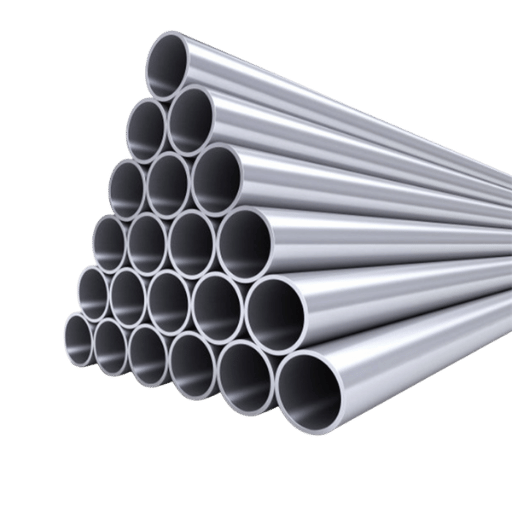
Grade selection determines corrosion performance, weldability, and project cost. The two dominant grades for schedule 10 stainless pipe are 304/304L and 316/316L, both austenitic alloys covered under ASTM A312.
| Property | 304 / 304L | 316 / 316L |
|---|---|---|
| Chromium (%) | 18.0–20.0 | 16.0–18.0 |
| Nickel (%) | 8.0–10.5 | 10.0–14.0 |
| Molybdenum (%) | — | 2.0–3.0 |
| Carbon (max %) | 0.08 (304) / 0.03 (304L) | 0.08 (316) / 0.03 (316L) |
| UTS (psi) | 75,000 min | 75,000 min |
| Pitting Resistance (PREN) | ~19 | ~25 |
| Price Premium vs 304 | Baseline | +20–40% |
The 2% molybdenum addition in 316 is what lends it substantially improved resistance to chloride pitting corrosion and the primary reason why 316L has become the industry standard for coastal environments, chemical plant chloride solution handling, and pharmaceutical clean rooms demanding enhanced product purity. For indoor locations with chloride levels below 200 ppm-such as municipal water delivery, HVAC condensate drains, or brewery CIP lines-304 stainless provides similar service at a lower material expense.
Read more about 304 stainless properties and corrosion in our stainless steel alloy 304 properties guide and our corrosion resistance articles.
A field note from welding practitioners: most contractors consider using 316L filler metal on 304 base metal a waste of money. The filler should match the base grade unless the weld joint itself will face a more aggressive environment than the parent pipe.
Grade Selection Framework
| Condition | Recommended Grade | ASTM Designation |
|---|---|---|
| Indoor, chloride < 200 ppm, temp < 400°F | 304 / 304L | A312 TP304L |
| Marine, coastal, chloride > 200 ppm | 316 / 316L | A312 TP316L |
| Pharmaceutical, high purity, low carbon required | 316L | A312 TP316L |
| Budget-constrained, mild environment | 304 | A312 TP304 (saves 20–40%) |
Schedule 10 vs Schedule 40 Stainless Steel Pipe
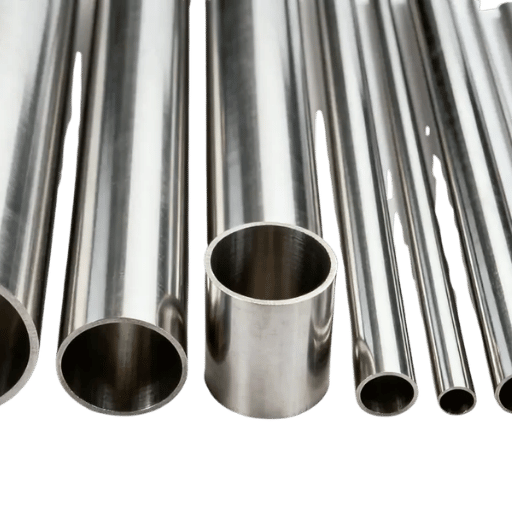
What Is the Difference Between SCH 10 and SCH 40 Stainless Steel Pipe?
The main differentiator between schedule 10 and schedule 40 stainless pipe is the thickness of wall-that then drives several other factors: pressure rating, weight, cost, and how it behaves while being fabricated. Both use the same at NPS for any given outside diameter so a 4″ Sch 10 pipe fits the same fittings and flanges as a 4″ Sch 40 pipe. It is the internal diameter that is different.
| NPS | Sch 10S Wall (in) | Sch 40S Wall (in) | Sch 10S Weight (lb/ft) | Sch 40S Weight (lb/ft) | Weight Savings |
|---|---|---|---|---|---|
| 1″ | 0.109 | 0.133 | 1.41 | 1.68 | 16% |
| 2″ | 0.109 | 0.154 | 2.66 | 3.66 | 27% |
| 4″ | 0.120 | 0.237 | 5.66 | 10.79 | 48% |
| 6″ | 0.134 | 0.280 | 9.35 | 19.00 | 51% |
| 8″ | 0.148 | 0.322 | 13.50 | 28.58 | 53% |
The weight saving percentage increases substantially as the nominal bore of the pipe increases. For a 4″ NPS pipe, Sch 10S is 48 percent lighter than Sch 40S. Above 6″ NPS, the savings are >50% across the board.
The 60/40 Rule for Schedule 10 Specification
In low-pressure stainless piping systems (food/beverage, water treatment, HVAC), roughly 60% of piping runs carry fluid at pressures well below 150 psi—where schedule 10S is structurally sufficient. Switching these qualifying runs from Sch 40S to Sch 10S typically yields a 40% reduction in installed pipe weight and a 15–20% decrease in material cost. The remaining 40% of runs—those near pumps, in high-vibration zones, or subject to external loading—should stay at Sch 40S or heavier. The savings come from auditing the system pressure-by-run, not from blanket down-specification.
Sch 10 Advantages
- 35–53% weight reduction (4″–8″ NPS)
- 15–20% lower material cost per foot
- Faster welding cycles (thinner wall = less filler)
- Larger bore = lower friction loss for same NPS size
- Easier handling on scaffolding and elevated work
Sch 10 Limitations
- Lower pressure capacity (about 50% of Sch 40S)
- Cannot withstand vacuum or external pressure loads
- Requires more pipe supports (closer spacing)
- Higher distortion risk during welding and cutting
- Socket-weld fittings may not meet Class 6000 minimums
A veteran mechanical engineer on Eng-Tips reported the real-world tension around schedule selection: “Procurement managers like to propose Sch 10S due to ‘significant cost savings.’ They get big bonuses. The engineers then get dumped on.” The hidden cost that often negates the material savings is support spacing—Sch 10 pipe requires closer pipe supports due to its lower moment of inertia, and the additional hangers, structural steel, and labor can eat into the price advantage.
Real-world scenario: A municipal water treatment facility in Texas had specified Sch 40S for all low-pressure distribution lines by default. During value engineering, the piping contractor identified 2,000 feet of 4″ and 6″ runs operating below 80 psi at ambient temperature. Switching those qualifying runs to Sch 10S reduced the total pipe weight by 35%—from 31,580 lb to 20,400 lb—and cut material cost by approximately 18%, or about $12,000. The additional pipe supports added roughly $2,800, yielding a net savings of $9,200.
Schedule Selection Decision Matrix
| System Pressure (NPS ≤ 4″) | Recommended Schedule |
|---|---|
| < 150 psi at ambient | Schedule 10S (sufficient) |
| 150–300 psi | Calculate per B31.3—Sch 10S may work for larger NPS |
| > 300 psi or code-mandated minimum wall | Schedule 40S or per code |
| High vibration, cyclic loading, or vacuum | Schedule 40S minimum (structural margin) |
Welded vs Seamless Sch 10 Pipe: ASTM A312 & Manufacturing Standards
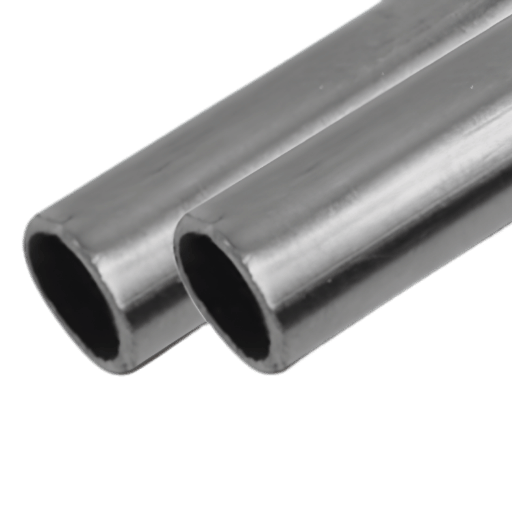
The ASTM standard you reference on a purchase order will determine the manufacturing methodology for your schedule 10 stainless pipe and the testing required. Be sure to get this right or risk rejected material, delay, and code compliance issues.
| Standard | Scope | Method | Typical Application |
|---|---|---|---|
| ASTM A312/A312M-22 | Austenitic SS pipe, all sizes | Seamless + Welded | Process piping, high-temp service |
| ASTM A358 | Large-bore electric fusion welded | Welded only | Large-diameter (typically > 8″) |
| ASTM A778 | Light-gauge welded (no heat treatment) | Welded only | General corrosion service, low-pressure |
| ASTM A269 | Austenitic SS tubing | Seamless + Welded | Instrumentation, heat exchangers |
The standard ASTM A312 is one you will see most often for schedule 10 stainless pipe. It enumerates welded and non-welded (pierced/extruded) pipe manufacturing in one standard, applying separate test requirements for each. Welded pipe manufactured under A312 requires nondestructive examination of the weld seam-Weld Seam Efficiency Factor (E = 0.85 for welded, E= 1.0 for seamless)-directly impacts the ASME B31.3 allowable working pressure calculations.
The big differentiators between ERW and TIG-welded pipe manufacturing is weld quality and therefore the heat involved in making the weld. ERW pipe brings a high frequency current through the steel to effect the forge weld, whereas TIG welding directs a tungsten arc with filler wire into the weld joint. If you are working with a seamless stainless pipe, then the weld joint/heat affected zone goes away completely. Our stainless steel welded pipe manufacturing guide walks you through the process.
When ordering schedule 10S pipe for process piping, always confirm your ASTM standard covers your needed NDE requirement. A312 examines the weld seam, A778 does not, so A778 pipe may be the proper purchase but won’t meet ASME B31.3 without additional examination.
A purchase order line item for the above purchase order would be written as follows: “ASTM A312 TP304L, Sch 10S, Welded, 2″ NPS 20 ft random length, per ASME B36.19M. ” This provides clarity on grade, schedule, manufacturer, and dimension standard. Confusing tubing for pipe (or the other way around) is the most common mistake we see in purchases. (See-out pipe vs tube-for the difference.)
Common Applications for Schedule 10 Stainless Pipe
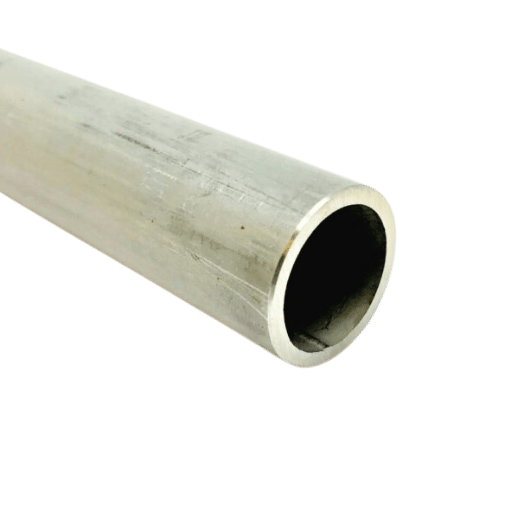
The ideal use for Schedule 10 stainless pipe is within the industrial setting where a piping system will be transporting non-flowing or slightly corrosive liquids at relatively low pressure. The thin construction allows for both reduced cost of material and installation, and the stainless material adds necessary corrosion protection.
| Industry | Typical NPS Range | Grade | Relevant Code / Standard |
|---|---|---|---|
| Food & Beverage (CIP systems) | 1″–4″ | 304L | 3-A Sanitary Standards, FDA 21 CFR |
| Pharmaceutical | 1/2″–3″ | 316L | ASME BPE |
| Water Treatment (above grade) | 2″–8″ | 304L / 316L | AWWA C220, EPA AIS |
| Chemical Processing (dilute acids) | 2″–6″ | 316L | ASME B31.3 |
| Fire Sprinkler (CPVC alternative) | 1″–3″ | 304 | NFPA 13 |
| Exhaust / Turbo (automotive) | 1-1/2″–3″ | 304 | Custom fabrication |
In stainless water piping systems, Sch 10S seems well-suited to above grade distribution. For fire sprinkler piping, stainless Sch 10 is occasionally listed as a corrosion resistant substitute for black steel in corrosive environments (elevated humidity, chemical exposure).
⚠️ Misapplication Warning: Schedule 10 stainless pipe should not be used in buried or submerged wastewater applications, vacuum service, or systems subject to high cyclic vibration without stress analysis. As noted on Eng-Tips: “Sch 10 is usually used above grade in food plants, not in wastewater applications.” Buried pipe faces external soil and traffic loads that demand heavier wall schedules. For high-vibration exhaust manifold applications without proper support, thin-wall Sch 10 is susceptible to fatigue cracking at weld joints.
Real-world scenario: A chemical processing facility in Louisiana needed 500 feet of 4″ pipe for transferring a dilute sulfuric acid solution (pH 4.5, ambient temperature, 60 psi operating pressure). The initial specification called for 316 Sch 40S. After the piping engineer ran the ASME B31.3 pressure calculation showing that 4″ Sch 10S 316L welded pipe was rated for 653 psi working pressure at ambient—more than ten times the operating pressure—the project switched to Sch 10S. The material cost dropped from approximately $38,500 to $24,500, a savings of $14,000, while still exceeding every code requirement for the service.
Selecting Fittings & Joining Methods for Schedule 10 Pipe
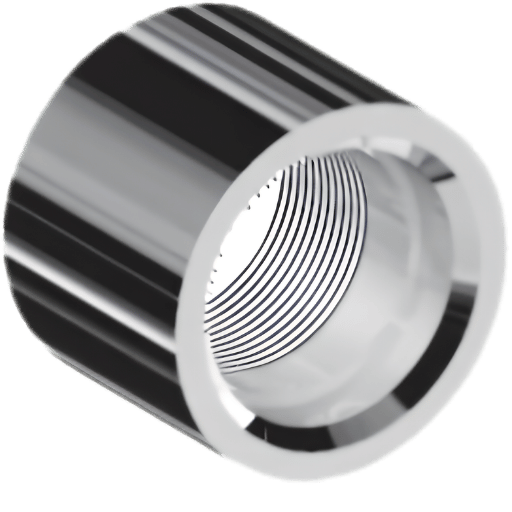
Schedule 10 joins must be more carefully heat controlled and fit up than the heavier schedules. The very thin wall (as low as 0.083″ for 1/2″ NPS) means less room for error during welding, and not all fits are appropriate.
| Joining Method | Size Range | Notes for Sch 10 |
|---|---|---|
| Butt Weld (TIG) | All NPS | Preferred method. Back-purge with 99.99% Ar mandatory. Filler: ER308L (304) or ER316L (316). |
| Socket Weld | ≤ 2″ NPS | Per ASME B16.11. Sch 10 may not meet wall minimum for Class 6000 fittings above certain sizes. |
| Threaded | ≤ 2″ NPS | Limited by wall thickness; thread depth may consume too much of the wall. |
| Press-Fit / Grooved | 1/2″–4″ | Manufacturer-specific. Verify Sch 10 compatibility with the fitting system. |
For butt weld pipe fittings, use the fitting schedule that corresponds to the pipe schedule. At the joint, unmatching wall thickness creates a concentration of stress.
Welders who work with schedule 10 stainless regularly emphasize root fusion technique over gapping. One welder on Reddit advised: “2″ s/10 ss pipe needs no gap. Just fuse the root—you get a better looking weld which will pass any test.” Another tip that comes up consistently: “Start colder than you think you should be, then work up in heat until you get the penetration you’re looking for.”
For large-diameter Sch 10 (10″ and above), cutting and welding can cause distortion. An Eng-Tips poster documented severe issues: “My contractor is having a very tough time with buttwelding 12″ schedule 10 SS 304L pipe. Every time they cut it, it distorts and goes out of round.” The solution is controlled heat input, proper clamping or fixturing, and staggered weld sequences. If you need to weld external attachments like pipe shoes or stiffening rings, heat control becomes even more critical—excessive input will warp the pipe wall.
📐 Engineering Note: Socket-Weld Fitting Limitation
Per ASME B16.11, socket-weld fittings have minimum wall thickness requirements. Schedule 10 pipe may not qualify for Class 6000 socket-weld fittings above certain NPS sizes—always verify against B16.11 Table 2 before specifying. For branch connections using weldolets on Sch 10 pipe, the industry rule-of-thumb from Eng-Tips is to “drop down at least 2 sizes and go up at least one wall thickness” to maintain adequate reinforcement at the branch.
💡 Purge Welding Tip for Large-Diameter Sch 10: For 16″ Sch 10 and above, use rice paper and rice tape to build dams on both sides of the weld joint, leaving room for heat dissipation. Purge from the weld joint outward with 99.99% argon. This keeps the back side of the weld free from oxidation (sugaring) without requiring a full-bore purge of the entire pipe length—which in large diameters wastes significant gas.
Stainless Steel Pipe Market: What’s Changing in 2025–2026
The local market has ramped up production of stainless steel pipe to meet the increased demand from the new investments. In addition, increased focus on food safety, environmental issues, and water treatment have led to upgrades of existing infrastructure, increasing the need for stainless steel pipe. This supply-side trend is useful for procurement teams in timing their purchases.
Market Data
$5.38B – Global stainless steel plumbing pipes and fittings market in 2026 rising to $6.79B by 2031 at a CAGR of 4.78%
Source: Mordor Intelligence (2026)
Many trends will impact stainless pipe supply and pricing through 2026. Here are a few examples:
-
- Search demand growth: DataForSEO keyword data shows “stainless steel sch 10 pipe” search volume grew 31% sequentially in Q1 2026, and “304 stainless steel pipe” surged 71%. This signals rising specification activity across engineering and procurement teams.
-
- Non-welded pipe premium: The non-welded (pierced) stainless steel pipe segment is growing at 7.5% CAGR (2024–2031), faster than the welded segment. As demand for weld-free pipe increases, price premiums may widen—which makes welded Sch 10S an even more cost-effective choice for low-pressure service.
-
- Welded tube price stabilization: After sustained pricing pressure throughout 2025, welded stainless tube prices began stabilizing in late 2025. Mills have absorbed raw material cost increases and inventory drawdowns are leveling off.
-
- Green manufacturing: European and North American mills are investing in lower-carbon production methods for stainless steel, driven by ESG reporting requirements. This may add a modest cost premium but could become a supply advantage in government projects requiring environmental compliance documentation.
💡 Procurement Action Item: If you are specifying large-diameter Sch 10S welded pipe for a 2026 project, request current mill pricing during Q2 2026. Welded tube costs are trending lower after the 2025 pricing pressure, and locking in pricing before the infrastructure spending wave drives another demand surge could save 5–10% compared to Q4 spot pricing. For projects with long lead times, consider blanket purchase orders with quarterly price adjustments.
Frequently Asked Questions
What is SS 304 Schedule 10 pipe?
View Answer
SS 304 Schedule 10 pipe is austenitic stainless steel pipe. It is manufactured from SAE/AISI 304 alloy. The wall thickness of Schedule 10S pipes is specified as the schedule 10S in ASME B36.19M.
The steel is made to ASTM A312 TP304 specification. It finds application in processing of foods, water treatment plants and heat ventilation etc.
What is SCH 10 pipe made of?
View Answer
Schedule 10 pipe is available in either carbon steel(Astm A53, asme B36.10M) or stainless steel(ASTM A312, ASME B36.19M). Stainless steel is typically based on austenitic alloys-namely 304, 304L, 316 or 316L, and consists of 16-20% chromium and 8-14% nickel. Schedule 10 is a reference to the wall thickness not the material.
What is the wall thickness of schedule 10 stainless steel pipe?
View Answer
Wall thickness: NPS sizes vary. Typical values (per ASME B36.19M): 1″ NPS = 0.109″ (2.77 mm), 2″ NPS = 0.109″ (2.77 mm), 4″ NPS=0.120″ (3.05 mm), 6″ NPS=0.134″ (3.40 mm). Range from 0.083″ (2.11 mm) for NPS 1/2″ to 0.312″ (7.92 mm) for NPS 30″.
See the full dimension table in the Sizes Chart section above.
Can schedule 10 stainless steel pipe be used for gas lines?
View Answer
Yes, but only if. For lower system pressures, under the calculated allowable working pressure of the pipe per the piping code applicable to your situation (ASME B31.3 for process gas, NFPA 54/IFGC for fuel gas), schedule 10S stainless (minimum wall thickness, see below) will pass pressure calculations. Low pressure gas distribution systems (less than 5 psi) will be fine with Sch10 S stainless pipe as they do not need to have their pressure calculated, they only have to be capable of passing the minimum code requirement for an allowable pressure. Many codes have minimum wall thickness rules for gas service other than high-pressure calculations, so always check with the AHJ before specifying Sch10 pipe for gas.
What is the difference between Schedule 10 and Schedule 10S?
View Answer
The dimensions for schedule 10 are from ASME B36.10M (carbon steel pipe table) and the dimensions for schedule 10S are from ASME B36.19M (stainless steel pipe table). The wall thickness values for schedule 10 and schedule 10S are the same for NPS 1/8″ through 12″. The schedule 10S wall thickness values are larger at NPS 14″ and above. Use “Sch 10S” when specifying stainless pipe.
How do you weld schedule 10 stainless steel pipe?
View Answer
Schedule 10 can be welded using the same GTAW (TIG) welding parameters as schedule 10 carbon steel pipe. Use ER308L wire for welding 304 base-metal or ER316L wire for 316 base-metal. Back-purging the inside of the pipe with 99.99% argon while welding will prevent oxidation of the pipe (sugaring). When butt welding small diameter pipe (under 3 inch NPS), maintain the fit-up with no gap and fuse the root without a gap using a lower amperage than you expect the root to draw, and then build up to the amperage you will need in short order. When welding pipe 10 inches and above, use fixtures and spacers to prevent distortion from heat build-up. Thin-wall pipe grow out of circular while welding and cutting; hot to cold often creates a change of one-eighth (1/8) to one quarter (1/4) of an inch.
Need Sch 10S Stainless Steel Pipe?
Baling Steel supplies ASTM A312 schedule 10S pipe cut to length in 304/304L and 316/316L to your specifications. Call or request a quote for your job.
How We Verified the Data in This Schedule 10 Pipe Guide
All dimension, weight, and system pressure information in this article was researched using the ASME B36.19M and ASTM A312/A312M-22-the required standards for stainless pipe. Every value in the dimensional table was verified against the ASME B36.19M and the ASTM A312/A312M-22 standards by two other published sources. The pressure calculations use the ASME B31.3 methodology with published allowable stresses. Market data references named research firms with date published noted. Welding and fabrication advice is based on practitioner experience from engineering input forums, attributed where possible. Pricing data is based on April 2026 published prices from U.S. distributors, at the time of publication, and may not reflect the published prices at the reader’s current date of reference.
References & Sources
- ASME B36.19M – Stainless Steel Pipe – American Society of Mechanical Engineers
http://www.asme.org/resources/publications/engineering-journal-digest/metal-pipe-stainless-steel-household-appliances-steel-electronicassembly - ASTM A312/A312M-22 – Standard Specification for Austenitic Stainless Steel Pipe – ASTM International
https://standards.globalspec.com/std/107755/A31222 - ASME B31.3 Process Piping Guide – Los Alamos National Laboratory
https://pppl.llnl.gov/lab-docs/pdf/pppl-b31-3.pdf - American Iron and Steel (AIS) Requirement – U.S. Environmental Protection Agency
https://nepis.epa.gov/EPA/www.epa.gov/superfund/pdfs/ais4.pdf - Vessel Sanitation Construction Standards – Centers for Disease Control and Prevention
https://www.cdc.gov/healthywater/pdf/systems/vent_asstdvn_spcr.pdf - Stainless Steel Plumbing Pipes and Fittings Market Report – Mordor Intelligence (2026)
https://www.mordor intelligence.com/industry-reports/stainless-steel-plumbing-pipes-fittings-market - Steel Pipes and Tubes Market Report – Grand View Research
https://www.grandviewresearch.com/industry-analysis/steel-pipes-tubes-market
Related Articles
- Complete Guide to Stainless Steel Welded Pipe
https://www.tubingchina.com/blog-details/522/complete-guide-to-stainless-steel-welded-pipe.html - Steel Pipe Sizes: NPS Reference Chart
- Pipe Weight per Foot Calculator & Tables
https://www.engineeringtoolbox.com/weight-pipe-d_950.html - Seamless vs Welded Pipe: Key Differences Explained
https://www.xpressmetal.com/seamless-vs-welded-pipe/ - Steel Elbow Fittings: Types & Selection Guide
https://www.steel pipes.com/steel-elbow-fittings/
Baling Steel engineering team has reviewed. Updated on 2026 April.